EV Charger Installation in York, PA
Home Level 2 charging, panel upgrades and condo installs in York — matched to licensed local installers, with the local facts that shape the job set out below.
The charger is the visible tenth of the project. Below it sit a load calculation, a wire run, a statute, a tariff and a permit — and in York each of those has a local answer. York itself is home to about 44,938 people. Pennsylvania's fleet stood at 113,400 battery-electric vehicles plus 55,900 plug-in hybrids through 2025, so the local answers are no longer theoretical: installers here run this job weekly. What follows gathers the York version of each layer — utility programs as they actually stand, condo and HOA law as written, permit practice, and the survey data on the housing stock — so the one conversation that matters, the site visit, starts informed.
One honest note before the detail: PlugReady USA does not install chargers. We collect your requirements and pass them to licensed installers who cover York, and this page exists so that you can judge those conversations with the local facts already in hand.
The registration ledger for the York–Hanover metro reads: Baltimore exurb spillover. Ledgers like this are what installer rounds are built from — they show where the cars already are, which is where the circuits get requested, permitted and inspected week after week.
Three percentages describe the working conditions for charging in York: 44% owner-occupied, 22% single-unit detached, and a median household income of $48,420 standing behind both. Everything in the sections below — panels, permissions, metering — is commentary on those proportions.

The composite picture matters more than any single statistic. In York: an older housing fabric, where panel archaeology is a normal part of the first visit; a genuinely mixed city — houses, townhouses and larger buildings all carry weight; buildings of five or more units are a visible minority of the stock; meanwhile, renters form a large share of households, so the landlord conversation is a first-class topic here. A page that ignored that profile would give the same advice everywhere; this one is ordered by it.
Keep six figures and you keep York's whole electrical character: 19,505 housing units; 17,893 occupied homes; 7,826 owner-occupied; 4,318 detached houses; 16,720 pre-1980 homes; 2,962 homes in buildings of five or more units. Percentages elsewhere on this page are these numbers in disguise — the counts are the originals, and they are the numbers a local installer's experience is actually made of. The page's geography is equally concrete: 8 ZIP codes across York, centred near 39.96 degrees north latitude. The city anchors the York–Hanover metropolitan area, home to roughly 455,000 people on the research file's metro estimate — the wider labour and housing market this page's installers work across.
The same survey release fills in the household economics around the housing stock: a median home value of $119,700, median gross rent of $1,014, per-capita income of $26,308, and a median resident age of 34. And the daily rhythms behind the housing numbers: 65% of York workers drive to work alone — the commute pattern home charging is built around; 11% work from home, a population whose cars charge on daytime and overnight schedules alike; 4% commute by public transit; 18% of adults hold a bachelor's degree or higher. The survey's vehicle table is the one an EV page should quote first: 3,652 of York's households have no vehicle at all, while 6,346 have two or more — the multi-car households for whom the second circuit is a when, not an if.
Household structure, from the same release: 55% of York households are family households. The burden shares behind the housing stock: 53% of renting households are cost-burdened at the 30%-of-income line, as are 0% of mortgaged owners — context for why the overnight rate window, once set, is treated here as a household fixture rather than a hobby.
The signature matters because installs follow it, street by street. The oldest housing throws the longest shadows over an install: knob-and-tube remnants in the attic, ungrounded receptacles, services sized for iceboxes and radios that now feed induction ranges and heat pumps. Where form is mixed, advice must be conditional — the honest page, like the honest installer, keeps asking which housing the reader actually lives in before prescribing.
Where renting dominates, the successful install is a document before it is a device — installer licence, insurance, metering clarity, end-of-tenancy position — assembled to make a landlord's yes the path of least resistance. The install market that serves modest incomes runs on referrals and repetition: neighbourhoods where one good install, fairly scoped, produces the street's next five customers. The commission's calendar quietly schedules the market: when a new time-of-use design is approved, installer phones ring in a pattern the docket predicted months earlier.
Households here are rarely the first on their street; the local knowledge pool — which installer, which tariff, which board precedent — is deep and shared freely. The permit counter in a smaller city is a conversation, not a queue: applications are read by people who may know the street, and complete paperwork is remembered kindly. Without a state charging statute, shared-property approvals in this metro are won on paper quality: metering clarity, licensed installers, insurance, reversibility — the complete package the guides set out.
The electrical reality in York homes
York's housing, in Census Bureau survey numbers: a median build year of 1941, 86% of units predating 1980, a stock that is 22% single-unit detached, and 44% of occupied homes owned by their occupants. Everything in this section is commentary on those four facts. A housing stock this age leans on smaller electrical services — 100-amp panels are common, and fuse-era equipment still turns up in the oldest streets. For many of those homes the honest answer is a panel upgrade or a load-management device before the charger circuit goes in, and a good installer will show you the load calculation rather than asking you to take it on faith. Housing age also tracks wire-run reality: older homes more often place the panel in a basement or interior wall far from the garage, and distance is copper, conduit and labour.
The fuel table adds one more local fact: 4,516 York homes — 25% of the stock — heat with electricity. Those households already think in kilowatts through the winter, their panels carry the load to prove it, and a charger's overnight appetite joins a system that is, in the useful sense, already electrified.
One further split matters for how this page is organised: about 10,067 of York's occupied homes are renter-occupied. Everything above assumes you can approve your own electrical work; where you cannot, the approval layer — landlord or association — becomes part of the job, which is why the law section carries unusual weight here.
One more structural fact shapes York's charging map: 15% of the city's housing units sit in buildings of five or more units. Those households cannot simply book a circuit — their charger runs through a building, a board and a shared electrical service, which is why the multifamily service and the law section below carry unusual weight on this page.
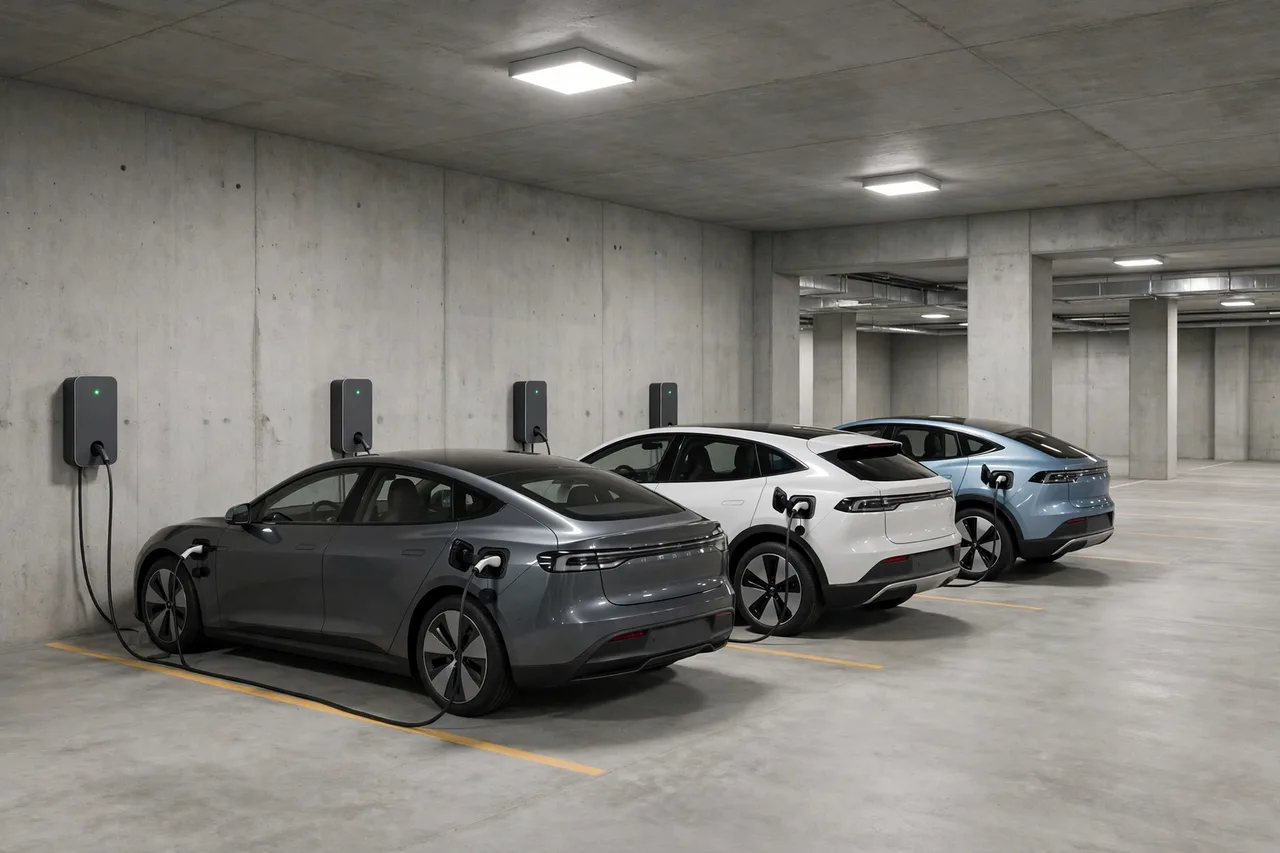
EV charging services in York
The services below are ordered by what York households most often need first, judged from the housing and fleet facts on this page. The full menu follows in the grid — every service is offered in this metro.
Home EV Charger Installation in York
One circuit, one station, one inspection: the residential install in its usual form. An installer sizes the circuit to the household's driving, mounts the station where the cable reaches the port without drama, sets its output to the circuit it landed on, and leaves the paperwork filed with the house.
In York: the core residential job in York: circuit, mounting, configuration and inspection in one visit pattern.
Dedicated Circuit & Electrical Panel Upgrade in York
Where the load calculation fails the existing service, the upgrade is not an upsell — it is the finding. Done under permit with the utility's meter work coordinated, it converts the charger project into the house's electrical reset, and every later project inherits the headroom.
In York: service work that turns 'no room' into a circuit with headroom in York homes.
Level 2 Charger Installation in York
Level 2 is where home charging becomes effortless: a dedicated 240-volt circuit returning a full battery overnight instead of a partial one by morning. The installer's work is the circuit itself — breaker, conductor, connection type — and the station's settings matched to it.
In York: 240 volts, sized honestly — the working definition of home charging in York.
Utility programs and electricity in York
Electricity in York comes from PECO Energy Co. Parts of the wider metro are served by PPL Electric Utilities Corp, Metropolitan Edison Co, Adams Electric Cooperative Inc. The utility matters twice over for a charger install: it sets the time-of-use rates that decide what overnight charging costs you, and it is the organisation that may — or may not — currently help pay for the equipment.
The honest incentive position in York is: nothing verified to claim. The federal charger credit (30C) ended on September 30, 2025; Pennsylvania runs no state replacement for typical home installs; and in the utility and state sources checked for this page, PECO Energy Co had no active residential charger rebate to point to. Programs reopen — when one does, it will be on the utility's own site with terms and dates. Anything an installer describes without that paper trail should be treated as conversation, not money.
Net-metering households — rooftop solar is common across the metro — should tell the installer: charging schedules and load management are planned differently when the house generates as well as consumes.
Condos, HOAs and the law in Pennsylvania
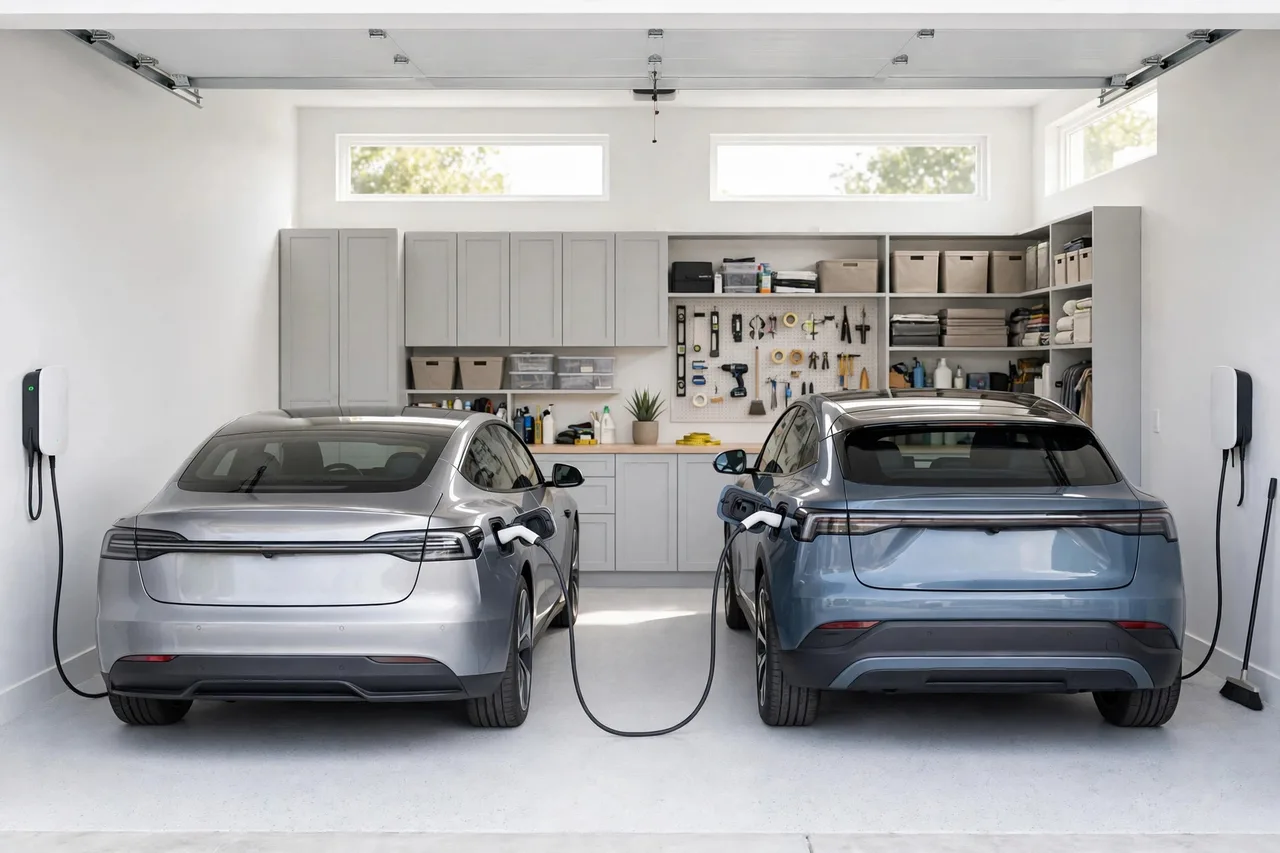
No statute promises a charger approval in Pennsylvania. Unlike the states that have enacted right-to-charge laws, Pennsylvania leaves the question entirely to each community's covenants and board discretion. For York owners that is not the end of the road — it is a sign that the negotiation, the metering design and the written application carry the weight a statute would otherwise carry.
Strategy, then, is the local substitute for statute. In York the applications that succeed tend to share a shape: they arrive before the meeting rather than at it, they answer metering and insurance in the first paragraph, and they offer the board a design it can approve once and reuse for the next owner who asks.
For the full playbook — application contents, metering designs, the questions boards ask — see the condo and HOA charging guide. In York it should be read as a negotiation manual, because negotiation is what the absence of a statute leaves you.
Climate, garages and charger placement
Freeze-thaw cycles test the install's civil engineering more than its electronics: pedestal foundations heave, conduit seals work, driveway surfaces move. A local installer has watched a decade of winters grade the neighbourhood's installs and specifies the foundation accordingly.
A four-season spec sheet is a compromise written in equipment ratings: cable jackets flexible at the January low, electronics rated past the July high, an enclosure indifferent to both. The listed gear covers it; placement decides the rest.

Permits and inspection in York
Bring the panel schedule up to date while the electrician is in it — the new circuit labelled, in the directory, in pen. Inspectors notice; future electricians bless you for it; and the load calculation for any second circuit starts from that card.

Neighbourhoods and ZIP codes served
The page covers 8 ZIP codes in and around York — including 17401, 17402, 17403, 17404, 17405, 17406, 17407, 17408 — across York. If your ZIP is not in the first set shown, ask anyway: installer coverage follows the metro, not a postcode fence.
The same working area takes in the neighbouring localities of Rossville, Emigsville, Dallastown, York New Salem, Codorus, Manchester, Seven Valleys, Mount Wolf, Loganville, Dover, Red Lion, Thomasville, Windsor, Spring Grove — the county ring an installer based in York actually drives. Requests from those communities route exactly as city requests do: same services, same permit discipline, same local facts where they differ.
York County accounts for 49 of the ZIP codes and 38 named postal localities in the research file, the nearest of them Rossville, Emigsville, Dallastown, York New Salem, Codorus. The survey counts 462,924 residents in the county, with a median household income of $84,829 and a median home value of $248,600. Measured across its ZIP codes, the York footprint runs about 9 miles north to south and 11 east to west, from ZIP 17401 to 17408 — the ground an installer based here actually covers in a working week.
Beyond the county seats, the working area takes in Rossville, Emigsville, Dallastown, York New Salem, Codorus, Manchester, Seven Valleys, Mount Wolf, Loganville, Dover, Red Lion, Thomasville, Windsor, Bainbridge, Spring Grove, Maytown, York Haven, Wrightsville, East Prospect, Marietta, Felton, Craley, Glen Rock, Porters Sideling, Wellsville, Railroad, Shrewsbury, Rheems, Elizabethtown, Stewartstown, Glenville, New Freedom, East Berlin, Abbottstown, Brogue, Hanover, Maryland Line, Lineboro, Freeland, New Park, New Oxford, Mc Sherrystown, York Springs, Fawn Grove, Parkton, White Hall, Hampstead, Littlestown, Pylesville, Peach Glen, Gettysburg, Westminster, Biglerville — the named localities for which York is the nearest metro in the network (neighbouring metros' pages cover their own ground), each routing to the same installer-matching service.
The wider working area also reaches Etters, Highspire, Franklintown, New Cumberland, Landisville, Lancaster, Airville, Camp Hill, Mechanicsburg, Manheim, Campbelltown, West Willow, Boiling Springs, Idaville, Grantville, Cornwall, Lititz, Drumore, Monkton, Marysville, Witmer, Butler, Talmage, Leola, Arendtsville, Schaefferstown, Baldwin, Mc Knightstown, Phoenix, Fallston, Gordonville, Kleinfeltersville, Bel Air, Myerstown, Glen Arm — ground shared with neighbouring metros, where installers cross the same county lines in both directions.
ZIP codes in that shared ground include 17003, 17012, 17027, 17043, 17065, 17068, 17069, 17072, 17077, 17088, 17102, 17103, 17104, 17107, 17109, 17120, 17121, 17124, 17125, 17128, 17129, 17241, 17257, 17261, 17304, 17314, 17319, 17320, 17323, 17343, 17507, 17534, 17535, 17555, 17560, 17568, 17569, 17579, 17582, 17583.
The largest communities in that working area after York itself, by the GeoNames populated-place file: Hanover (population 15,496), Weigelstown (population 12,875), Elizabethtown (population 11,586), Shiloh (population 11,218), East York (population 8,777), Gettysburg (population 7,608), Parkville (population 6,706), Red Lion (population 6,321), Manchester (population 5,408), Spry (population 4,891), New Freedom (population 4,585), West York (population 4,569), Mount Pleasant (population 4,497), Littlestown (population 4,478), Dallastown (population 4,017), Shrewsbury (population 3,863), Maytown (population 3,824), Grantley (population 3,628), McSherrystown (population 3,067), Valley View (population 2,817). Charging demand follows those populations — the subdivisions and town centres where the next driveways, and the next panels, are.
Adams County reaches into the working area with 106,115 residents, a median household income of $84,092 and a median home value of $268,500; its localities on this page include East Berlin, Abbottstown, New Oxford, Mc Sherrystown, York Springs. Lancaster County reaches into the working area with 557,931 residents, a median household income of $86,959 and a median home value of $301,100; its localities on this page include Bainbridge, Maytown, Marietta, Rheems, Elizabethtown.
| ZIP | Locality | County |
|---|---|---|
| 17401 | York | York |
| 17403 | York | York |
| 17358 | Rossville | York |
| 17404 | York | York |
| 17402 | York | York |
| 17318 | Emigsville | York |
| 17408 | York | York |
| 17313 | Dallastown | York |
| 17371 | York New Salem | York |
| 17407 | York | York |
| 17311 | Codorus | York |
| 17345 | Manchester | York |
| 17360 | Seven Valleys | York |
| 17347 | Mount Wolf | York |
| 17342 | Loganville | York |
| 17315 | Dover | York |
| 17356 | Red Lion | York |
| 17405 | York | York |
| 17406 | York | York |
| 17364 | Thomasville | York |
| 17366 | Windsor | York |
| 17502 | Bainbridge | Lancaster |
| 17362 | Spring Grove | York |
| 17550 | Maytown | Lancaster |
| 17370 | York Haven | York |
| 17368 | Wrightsville | York |
| 17317 | East Prospect | York |
| 17547 | Marietta | Lancaster |
| 17322 | Felton | York |
| 17312 | Craley | York |
| 17327 | Glen Rock | York |
| 17354 | Porters Sideling | York |
| 17365 | Wellsville | York |
| 17355 | Railroad | York |
| 17361 | Shrewsbury | York |
| 17570 | Rheems | Lancaster |
| 17022 | Elizabethtown | Lancaster |
| 17363 | Stewartstown | York |
| 17329 | Glenville | York |
| 17349 | New Freedom | York |
| 17316 | East Berlin | Adams |
| 17301 | Abbottstown | Adams |
| 17309 | Brogue | York |
| 17334 | Hanover | York |
| 17335 | Hanover | York |
| 21105 | Maryland Line | Baltimore |
| 17332 | Hanover | York |
| 17333 | Hanover | York |
| 21088 | Lineboro | Carroll |
| 17331 | Hanover | York |
| 21053 | Freeland | Baltimore |
| 17352 | New Park | York |
| 17350 | New Oxford | Adams |
| 17344 | Mc Sherrystown | Adams |
| 17372 | York Springs | Adams |
| 17321 | Fawn Grove | York |
| 21102 | Manchester | Carroll |
| 21120 | Parkton | Baltimore |
| 21161 | White Hall | Harford |
| 21074 | Hampstead | Carroll |
| 17340 | Littlestown | Adams |
| 21132 | Pylesville | Harford |
| 17375 | Peach Glen | Adams |
| 17325 | Gettysburg | Adams |
| 21158 | Westminster | Carroll |
| 17307 | Biglerville | Adams |

Planning the install: from panel to parking
The order of operations protects you. Load calculation before equipment choice, because the circuit sizes the station's settings. Route before purchase, because reach decides models. Permit before work, because inspection closes the file the insurer will one day read. In York the sequence is the same as everywhere — what varies is only how much of it your particular house asks for, and finding that out is the site visit's entire purpose.
Plan for the household you will be, not just the car you have. A second EV is the most common reason a charger circuit gets revisited, and the cheap moment to prepare for it — conduit sized up, panel capacity reserved, station placement that serves two bays — is during the first install, while the permit is open and the electrician is already in the panel.
Home charging know-how for York households
The sounds a station makes
A charging station is mostly silent, but not entirely: a contactor's clunk when a session starts, a faint hum under load, occasionally a small fan in warm weather. These are the sounds of switching and cooling, and they are normal. The sounds that earn attention are changes — buzzing that was not there last month, clicking cycles, a hum that grows. Electricity should be boring to listen to; when it stops being boring, that is information, and the correct response is an electrician rather than a search engine.
What an outage does and does not change
When the grid goes down, a standard home charging station goes quiet with everything else — it is a load, not a source, and it neither drains the car nor feeds the house. Sessions resume or restart when power returns, and the car's own settings govern which. Households in outage country plan around this plainly: charge ahead of forecast storms the way you would fill a fuel tank, and treat the car as the household's largest battery-shaped object — one that, with today's standard equipment, keeps its energy to itself.
The driveway is shared infrastructure
In households where the charger serves a shared driveway, the install acquires a social protocol alongside its electrical one: whose night, which side, how the cable crosses, what happens when guests park across the route. The designs that work settle the protocol physically — a station reachable from both bays, a cable path that crosses no one's door swing — rather than relying on nightly negotiation. Infrastructure that requires diplomacy every evening was under-designed in the morning.
The new owner's first week
Week one with a home charger is about building the reflex: park, plug, forget. Set the schedule once, against your rate window; confirm the car wakes to the charge level your commute wants; learn where the station's indicator confirms a session at a glance from the door. By the second week the public-charging arithmetic of the old routine — detours, queues, weather — is already hard to remember. The households that struggle are the ones still treating the wall like a petrol station: sessions are not events, they are the background of parking.
Frequently asked questions
What happened to the federal home-charger credit in York, PA?
Treat the answer as a standing no with a watching brief. The 30C credit is finished, Pennsylvania has not replaced it for homeowners, and no verified PECO Energy Co rebate was running in the sources checked for this page. Should that change, the utility's program page will say so first — and this page will be updated to match.
Can my HOA or condo board in York, PA refuse my charger?
As the law stands, yes: without a Pennsylvania right-to-charge statute, an association in York may refuse or condition a charger under its own documents. The practical counterweight is preparation — a complete written package, a metering answer, and a request that the refusal, if it comes, be issued in writing with the covenant cited.
Will my York, PA home need a panel upgrade for a Level 2 charger?
Start from the median, then verify: the median York home was built in 1941, and 86% of the stock predates 1980, so 100-amp panels are a normal sight here — and a normal candidate for either an upgrade or a load-management device. The load calculation distinguishes the two in one visit, and any quote that skips it is guessing with your money.
How much faster is Level 2 charging at home in York, PA?
In parked hours: a Level 1 cord returns about 3–5 miles for each of them, and a Level 2 circuit returns roughly 25–40, set by its amperage and the car's acceptance. For a York household parking ten hours, that is the difference between recovering a short errand day and recovering any day the car can legally drive.
What happens after I request an installer through this page?
Three steps: the request routes to installers who work York, Pennsylvania; one contacts you to walk the property; the walk produces the written quote. Everything on this page — the utility position, the law, the housing data — is yours to check that quote against.
Does PECO Energy Co offer a time-of-use rate for EV charging in York?
Check your tariff before the install rather than after: time-of-use plans are common, and an overnight window changes nothing about the circuit but everything about what charging costs across a year. Your installer can set the station's schedule to the window during commissioning — after that the habit is automatic.
Nearby cities in Pennsylvania
- EV charger installation in Harrisburg — about 22 miles from York, metro population 600,000
- EV charger installation in Lancaster — about 24 miles from York, metro population 575,000
- EV charger installation in Lebanon — about 31 miles from York, metro population 145,000
- EV charger installation in Reading — about 51 miles from York, metro population 430,000
- EV charger installation in Allentown — about 82 miles from York, metro population 875,000
- EV charger installation in State College — about 84 miles from York, metro population 160,000
- EV charger installation in Baltimore, MD — about 46 miles from York, metro population 2,850,000
- EV charger installation in Hagerstown, MD — about 60 miles from York, metro population 295,000
- EV charger installation in Washington, DC — about 74 miles from York, metro population 6,400,000
Ready to charge at home in York?
Two minutes of form, and the request is in front of licensed installers who cover this city — quotes follow site visits, in writing.