EV Charger Installation in Harrisburg, PA
Everything a Harrisburg homeowner needs before booking a charger install — the panel question, the utility's current programs, the HOA law and the permit — sourced, dated and local.
Nobody buys an electric car for the wiring, yet the wiring is what the ownership experience quietly runs on. Getting it right in Harrisburg means answering local questions with local facts. Harrisburg itself is home to about 50,287 people. Statewide the registered fleet reached 113,400 battery-electric vehicles plus 55,900 plug-in hybrids through 2025, and the installers working this metro have settled into the patterns this page describes: the panel conversation, the utility's current position, the association's rules, and the inspection that closes the job.
Treat what follows as the site visit in written form. Each section is one of the stops a thorough installer makes — panel, tariff, property rules, permit — written out with Harrisburg's facts in place, so that when the visit happens for real you can follow the reasoning and question it where it matters.
The demand picture for the Harrisburg–Carlisle metro, from the registration data this site is built on: PA capital. Registration counts are the honest way to size a charging market — they count households, not headlines — and they are why Harrisburg sits where it does in our build order (rank 89 of 300 metros, Tier B).
Three percentages describe the working conditions for charging in Harrisburg: 37% owner-occupied, 14% single-unit detached, and a median household income of $48,099 standing behind both. Everything in the sections below — panels, permissions, metering — is commentary on those proportions.

Put the survey together and Harrisburg's charging profile reads like this: an older housing fabric, where panel archaeology is a normal part of the first visit; a genuinely mixed city — houses, townhouses and larger buildings all carry weight; buildings of five or more units hold a substantial share of homes, which keeps the multifamily sections of this page in daily use; and renters form a large share of households, so the landlord conversation is a first-class topic here. That combination — more than any single number — is what the installers working here plan around, and it is the lens for everything on this page.
The counts behind the percentages, for the record: Harrisburg has 24,130 housing units on the survey's count, 22,137 of them occupied, and 8,093 owner-occupied households making their own electrical decisions. Detached houses number 3,390; homes built before 1980 number 20,594; units in buildings of five or more number 6,641. An installer's week in this city is a walk through exactly that distribution. The page's geography is equally concrete: 26 ZIP codes across Dauphin, centred near 40.26 degrees north latitude. The city anchors the Harrisburg–Carlisle metropolitan area, home to roughly 600,000 people on the research file's metro estimate — the wider labour and housing market this page's installers work across.
The same survey release fills in the household economics around the housing stock: a median home value of $124,200, median gross rent of $1,062, per-capita income of $27,330, and a median resident age of 33. And the daily rhythms behind the housing numbers: 57% of Harrisburg workers drive to work alone — the commute pattern home charging is built around; 16% work from home, a population whose cars charge on daytime and overnight schedules alike; 5% commute by public transit; 26% of adults hold a bachelor's degree or higher. The survey's vehicle table is the one an EV page should quote first: 5,377 of Harrisburg's households have no vehicle at all, while 5,766 have two or more — the multi-car households for whom the second circuit is a when, not an if.
The cost-burden lines say who feels housing costs most in Harrisburg: 46% of renters spend 30% or more of income on rent, and 0% of owners with mortgages spend the same share on housing costs. Family households are 48% of all households — the two-car, school-run demographic whose charging patterns this page's planning sections keep circling back to.
What follows is the city read as an electrical place rather than a dot on a map. A stock this old wires its history into the walls: cloth-wrapped conductors in the deepest streets, fuse boxes that outlived their century, panels added in layers by generations of electricians each solving their own decade's problem. Multifamily weight changes the installer market too — the firms that thrive here carry association paperwork fluency alongside their licences, and their references are buildings, not just households.
Where renting dominates, the successful install is a document before it is a device — installer licence, insurance, metering clarity, end-of-tenancy position — assembled to make a landlord's yes the path of least resistance. Budget discipline shapes the specification — the circuit sized exactly, the management device considered wherever it defers a service upgrade, every scope line asked to justify itself. Filed tariffs and public dockets give this territory a paper trail most markets lack: the diligent household can read the utility's own electrification plan and know which programmes are funded, piloted or merely proposed.
The used-EV wave has arrived at this fleet scale, and it democratises the install question: households that bought electric second-hand, at family-car money, asking the same panel questions as the pioneers — with better local answers available. The diary economics differ from the biggest metros: good installers book in weeks, not months, and the household that calls in spring is rarely queueing behind a season of work. Without a state charging statute, shared-property approvals in this metro are won on paper quality: metering clarity, licensed installers, insurance, reversibility — the complete package the guides set out.
The electrical reality in Harrisburg homes
The Census Bureau's latest American Community Survey puts the median Harrisburg home's build year at 1947: about 85% of the city's housing units were built before 1980, 14% are single-unit detached houses, and 37% of occupied homes are owner-occupied. Those three numbers predict most of what an installer will find. Age shows up electrically before it shows up anywhere else: services sized for a house with a third of today's appliances. Expect the first conversation to be about capacity — what the panel is, what it already feeds, and which of the three routes (circuit, management, upgrade) your numbers support. Housing age also tracks wire-run reality: older homes more often place the panel in a basement or interior wall far from the garage, and distance is copper, conduit and labour.
The fuel table adds one more local fact: 7,661 Harrisburg homes — 35% of the stock — heat with electricity. Those households already think in kilowatts through the winter, their panels carry the load to prove it, and a charger's overnight appetite joins a system that is, in the useful sense, already electrified.
Renters are the other constituency in these numbers: about 14,044 of Harrisburg's occupied homes are rented rather than owned. Their charging route runs through a landlord conversation instead of a panel they control — a different project, covered by the rentals guide and the law section below, but a routine one in a city with this many renting households.
One more structural fact shapes Harrisburg's charging map: 28% of the city's housing units sit in buildings of five or more units. Those households cannot simply book a circuit — their charger runs through a building, a board and a shared electrical service, which is why the multifamily service and the law section below carry unusual weight on this page.
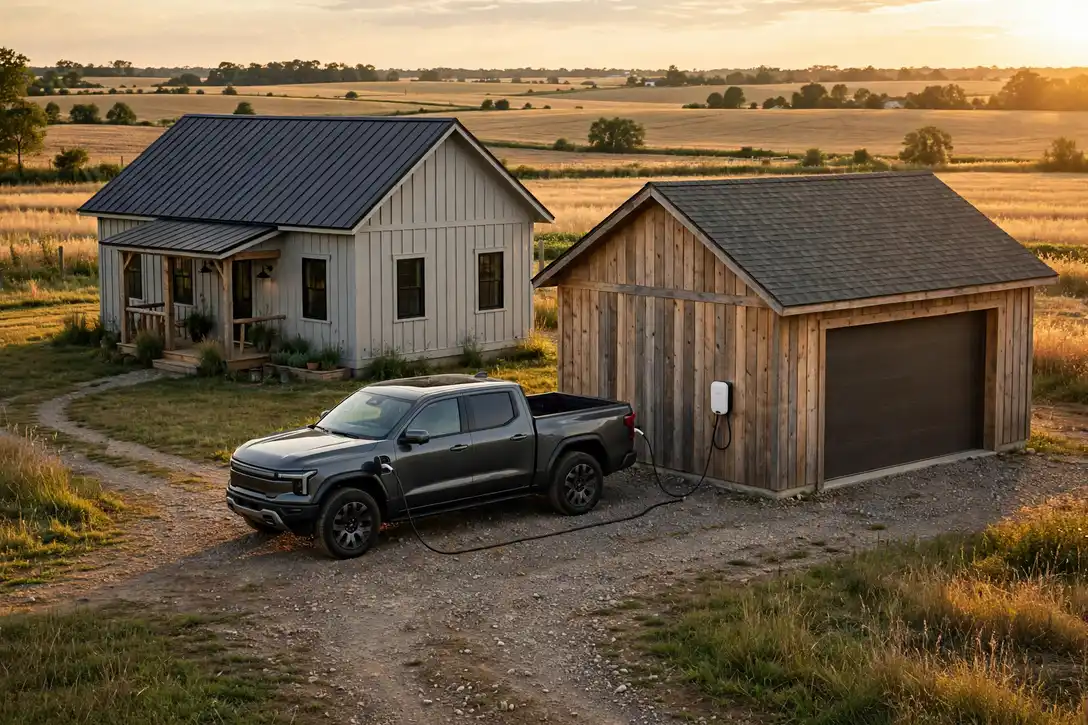
EV charging services in Harrisburg
Ten services cover the work installers do in Harrisburg. Three lead the list here because of what this city's housing and law actually look like — each links to its national service page, where scope and process are set out in full.
Home EV Charger Installation in Harrisburg
The standard first install: a dedicated circuit from the panel to the parking space, a station mounted and configured to that circuit, and a passed inspection to close it out. What changes from house to house is never the recipe — it is the panel's spare capacity, the length of the run, and how the car actually parks.
In Harrisburg: the default first install for Harrisburg's EV households — a station where the car already parks.
Dedicated Circuit & Electrical Panel Upgrade in Harrisburg
A service change is the least reversible and most enabling job on this page: it re-bases the whole house's electrical life. Done inside the charger project, it shares the permit, the utility visit and the electrician's day with the circuit it makes room for.
In Harrisburg: service work that turns 'no room' into a circuit with headroom in Harrisburg homes.
Level 2 Charger Installation in Harrisburg
What is being bought is time: the hours between arriving home and leaving again, converted into range at 240 volts. The conversion hardware is ordinary — breaker, conductor, station — and the design work is matching the three to the household's miles and the panel's arithmetic.
In Harrisburg: the upgrade from a wall outlet to a dedicated 240-volt circuit, and the end of range arithmetic at bedtime.
Utility programs and electricity in Harrisburg
Electricity in Harrisburg comes from PPL Electric Utilities Corp. Parts of the wider metro are served by Metropolitan Edison Co, Borough of Royalton, Borough of Middletown. The utility matters twice over for a charger install: it sets the time-of-use rates that decide what overnight charging costs you, and it is the organisation that may — or may not — currently help pay for the equipment.
The honest incentive position in Harrisburg is: nothing verified to claim. The federal charger credit (30C) ended on September 30, 2025; Pennsylvania runs no state replacement for typical home installs; and in the utility and state sources checked for this page, PPL Electric Utilities Corp had no active residential charger rebate to point to. Programs reopen — when one does, it will be on the utility's own site with terms and dates. Anything an installer describes without that paper trail should be treated as conversation, not money.
While you are reading your tariff, check how your plan treats the evening peak. A charger scheduled to start after the peak window is the single easiest saving in home charging, and it is set once, in the car or the station, then forgotten.
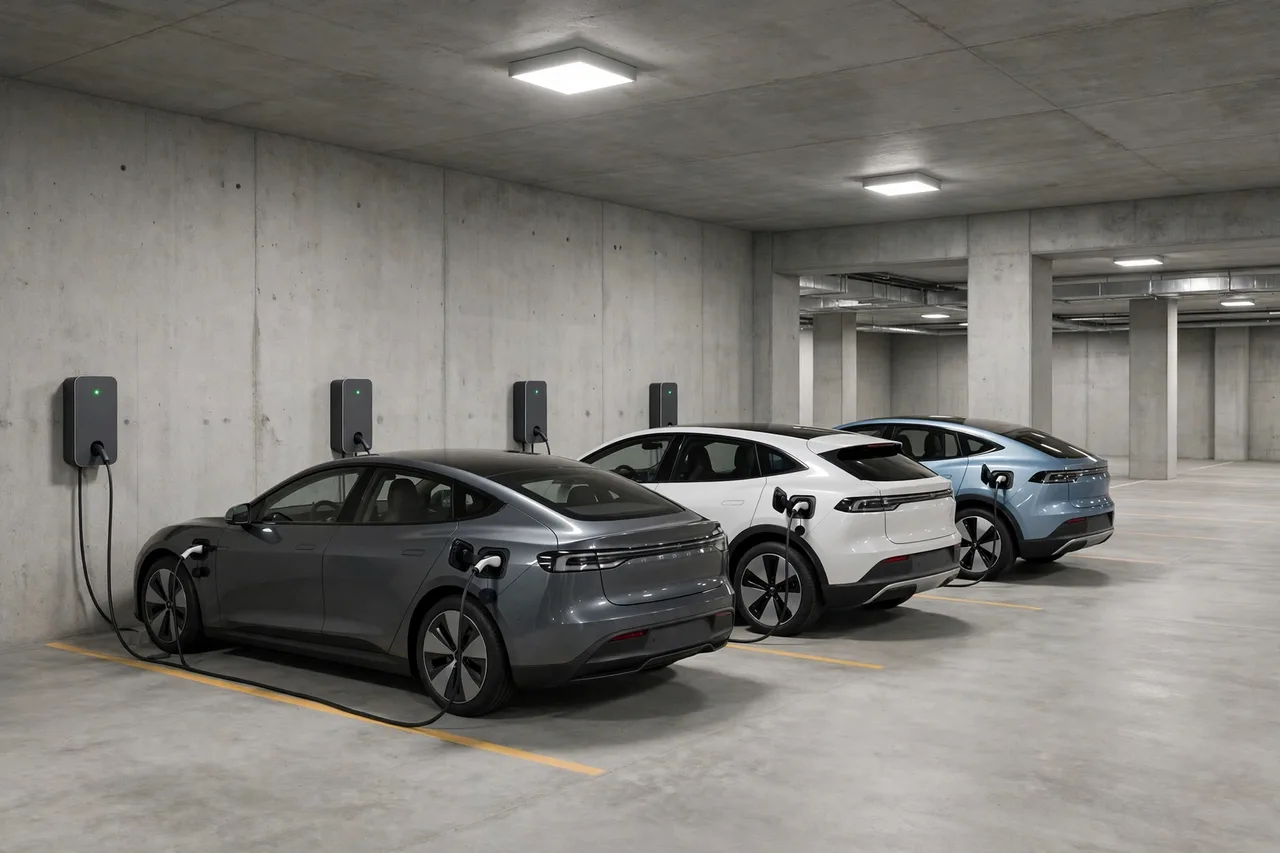
Condos, HOAs and the law in Pennsylvania
There is no Pennsylvania right-to-charge statute to lean on. Some national roundups list protection that does not exist in this state's code; the statute indexes checked for this page are clear. In Harrisburg, a condo or HOA charger is approved — or not — under the community's own documents, which makes the quality of your application the whole ballgame.
Owners of single-family homes in HOA communities should also check the covenants before assuming the driveway is uncomplicated: exterior-equipment and architectural-approval clauses can apply to a visible wall-mounted station even where the garage interior is entirely the owner's business.
Our condo and HOA guide was written for both kinds of state; the chapters on application packages, metering and cost allocation are the ones that matter in Harrisburg, where no statute does the persuading for you.
Climate, garages and charger placement
Garages in this region do double duty across the year — summer's workshop, winter's storage — and the charger competes for wall space with all of it. Mounting height, cable reach and a holster placed for the car's real parking position decide whether the station is used daily or negotiated with. The installer who measures the car in place is designing for the household you actually are.
Humidity is the slow variable: it works on exterior connections across seasons rather than in a single event, which is why coastal-grade habits — protected terminations, sealed entries, a yearly glance at the connector — pay off even well inland in a four-season climate.
Permits and inspection in Harrisburg
If your install is part of a larger job — a panel upgrade, a garage build — the charger usually rides on the same permit set. Ask for the charger circuit to be listed explicitly so the inspection record shows it.

Neighbourhoods and ZIP codes served
The page covers 26 ZIP codes in and around Harrisburg — including 17101, 17102, 17103, 17104, 17105, 17106, 17107, 17108, 17109, 17110, 17111, 17112, 17113, 17120, 17121, 17122, 17123, 17124, 17125, 17126, 17127, 17128, 17129, 17130, 17140, 17177 — across Dauphin. If your ZIP is not in the first set shown, ask anyway: installer coverage follows the metro, not a postcode fence.
The same working area takes in the neighbouring localities of Highspire, Dauphin, Middletown, Hummelstown, Hershey, Grantville, Halifax, Elizabethville, Millersburg, Berrysburg, Wiconisco, Lykens, Gratz, Williamstown — the county ring an installer based in Harrisburg actually drives. Requests from those communities route exactly as city requests do: same services, same permit discipline, same local facts where they differ.
Dauphin County accounts for 41 of the ZIP codes and 16 named postal localities in the research file, the nearest of them Highspire, Dauphin, Middletown, Hummelstown, Hershey. The survey counts 289,593 residents in the county, with a median household income of $76,242 and a median home value of $236,400. Measured across its ZIP codes, the Harrisburg footprint runs about 7 miles north to south and 5 east to west, from ZIP 17101 to 17177 — the ground an installer based here actually covers in a working week.
Beyond the county seats, the working area takes in Lemoyne, Camp Hill, New Cumberland, Enola, Summerdale, Highspire, Marysville, Lewisberry, Mechanicsburg, Etters, Dauphin, Middletown, Grantham, Hummelstown, New Kingstown, Hershey, Grantville, Duncannon, New Buffalo, Dillsburg, Halifax, Franklintown, Boiling Springs, Shermans Dale, Carlisle, Mount Holly Springs, New Bloomfield, Elizabethville, Millersburg, Newport, Plainfield, Gardners, Liverpool, Berrysburg, Millerstown, Idaville, Landisburg, Lykens, Gratz, Elliottsburg, Pillow, Dalmatia, Aspers, Bendersville, Thompsontown, Newville, Herndon, Loysville, Port Trevorton, Ickesburg, Walnut Bottom, Mexico, Cocolamus, Richfield, Mount Pleasant Mills, Mc Alisterville, Dornsife, Freeburg, Blain, Paxtonville, Kreamer, Middleburg, Selinsgrove, Hummels Wharf, Shamokin Dam, Sunbury, Penns Creek, New Berlin, Winfield, Northumberland — the named localities for which Harrisburg is the nearest metro in the network (neighbouring metros' pages cover their own ground), each routing to the same installer-matching service.
The wider working area also reaches Manchester, Elizabethtown, York, Thomasville, Rossville, Mount Joy, Cornwall, Spring Grove, Landisville, Red Lion, Seven Valleys, Loganville, Muir, Washington Boro, Peach Glen, Glen Rock, Leck Kill, Ravine, Oakland Mills, Kleinfeltersville, Gettysburg, Railroad, Pitman, Conestoga, Mc Knightstown, Bethel, Littlestown, Tremont, Newmanstown, Trevorton, Brownstown, Orrtanna, Talmage, Beavertown, Leola — ground shared with neighbouring metros, where installers cross the same county lines in both directions.
ZIP codes in that shared ground include 17038, 17042, 17044, 17046, 17058, 17067, 17083, 17088, 17240, 17244, 17254, 17257, 17302, 17310, 17315, 17325, 17345, 17347, 17352, 17353, 17355, 17358, 17371, 17402, 17404, 17501, 17533, 17537, 17540, 17549, 17550, 17560, 17567, 17572, 17603, 17605, 17606, 17611, 17622, 17699.
The largest communities in that working area after Harrisburg itself, by the GeoNames populated-place file: Carlisle (population 19,143), Hershey (population 14,257), Colonial Park (population 13,229), Progress (population 9,765), Sunbury (population 9,652), Middletown (population 9,117), Mechanicsburg (population 8,999), Camp Hill (population 7,923), New Cumberland (population 7,295), Milton (population 6,928), Lower Allen (population 6,694), Linglestown (population 6,334), Enola (population 6,111), Steelton (population 5,932), Selinsgrove (population 5,792), Lewisburg (population 5,774), Paxtonia (population 5,412), Schlusser (population 5,265), Lemoyne (population 4,636), Hummelstown (population 4,561). Charging demand follows those populations — the subdivisions and town centres where the next driveways, and the next panels, are.
Cumberland County reaches into the working area with 268,323 residents, a median household income of $87,494 and a median home value of $277,600; its localities on this page include Lemoyne, Camp Hill, New Cumberland. Perry County reaches into the working area with 46,239 residents, a median household income of $79,444 and a median home value of $236,400; its localities on this page include Marysville, Duncannon, New Buffalo, Shermans Dale, New Bloomfield. Juniata County reaches into the working area with 23,379 residents, a median household income of $66,318 and a median home value of $217,000; its localities on this page include Thompsontown, Mexico, Cocolamus, Richfield, Mc Alisterville. York County reaches into the working area with 462,924 residents, a median household income of $84,829 and a median home value of $248,600; its localities on this page include Lewisberry, Etters, Dillsburg, Franklintown. Adams County reaches into the working area with 106,115 residents, a median household income of $84,092 and a median home value of $268,500; its localities on this page include Gardners, Idaville, Aspers, Bendersville.
| ZIP | Locality | County |
|---|---|---|
| 17101 | Harrisburg | Dauphin |
| 17127 | Harrisburg | Dauphin |
| 17129 | Harrisburg | Dauphin |
| 17126 | Harrisburg | Dauphin |
| 17120 | Harrisburg | Dauphin |
| 17125 | Harrisburg | Dauphin |
| 17123 | Harrisburg | Dauphin |
| 17124 | Harrisburg | Dauphin |
| 17130 | Harrisburg | Dauphin |
| 17128 | Harrisburg | Dauphin |
| 17102 | Harrisburg | Dauphin |
| 17122 | Harrisburg | Dauphin |
| 17105 | Harrisburg | Dauphin |
| 17104 | Harrisburg | Dauphin |
| 17043 | Lemoyne | Cumberland |
| 17103 | Harrisburg | Dauphin |
| 17121 | Harrisburg | Dauphin |
| 17107 | Harrisburg | Dauphin |
| 17012 | Camp Hill | Cumberland |
| 17113 | Harrisburg | Dauphin |
| 17106 | Harrisburg | Dauphin |
| 17110 | Harrisburg | Dauphin |
| 17089 | Camp Hill | Cumberland |
| 17011 | Camp Hill | Cumberland |
| 17177 | Harrisburg | Dauphin |
| 17070 | New Cumberland | Cumberland |
| 17140 | Harrisburg | Dauphin |
| 17001 | Camp Hill | Cumberland |
| 17025 | Enola | Cumberland |
| 17109 | Harrisburg | Dauphin |
| 17093 | Summerdale | Cumberland |
| 17111 | Harrisburg | Dauphin |
| 17108 | Harrisburg | Dauphin |
| 17034 | Highspire | Dauphin |
| 17053 | Marysville | Perry |
| 17112 | Harrisburg | Dauphin |
| 17339 | Lewisberry | York |
| 17050 | Mechanicsburg | Cumberland |
| 17319 | Etters | York |
| 17055 | Mechanicsburg | Cumberland |
| 17018 | Dauphin | Dauphin |
| 17057 | Middletown | Dauphin |
| 17027 | Grantham | Cumberland |
| 17036 | Hummelstown | Dauphin |
| 17072 | New Kingstown | Cumberland |
| 17033 | Hershey | Dauphin |
| 17028 | Grantville | Dauphin |
| 17020 | Duncannon | Perry |
| 17069 | New Buffalo | Perry |
| 17019 | Dillsburg | York |
| 17032 | Halifax | Dauphin |
| 17323 | Franklintown | York |
| 17007 | Boiling Springs | Cumberland |
| 17090 | Shermans Dale | Perry |
| 17013 | Carlisle | Cumberland |
| 17065 | Mount Holly Springs | Cumberland |
| 17015 | Carlisle | Cumberland |
| 17068 | New Bloomfield | Perry |
| 17023 | Elizabethville | Dauphin |
| 17061 | Millersburg | Dauphin |
| 17074 | Newport | Perry |
| 17081 | Plainfield | Cumberland |
| 17324 | Gardners | Adams |
| 17045 | Liverpool | Perry |
| 17005 | Berrysburg | Dauphin |
| 17062 | Millerstown | Perry |
| 17337 | Idaville | Adams |
| 17040 | Landisburg | Perry |
| 17048 | Lykens | Dauphin |
| 17030 | Gratz | Dauphin |
| 17024 | Elliottsburg | Perry |
| 17080 | Pillow | Dauphin |
| 17017 | Dalmatia | Northumberland |
| 17304 | Aspers | Adams |
| 17306 | Bendersville | Adams |
| 17094 | Thompsontown | Juniata |
| 17241 | Newville | Cumberland |
| 17830 | Herndon | Northumberland |
| 17047 | Loysville | Perry |
| 17864 | Port Trevorton | Snyder |
| 17037 | Ickesburg | Perry |
| 17266 | Walnut Bottom | Cumberland |
| 17056 | Mexico | Juniata |
| 17014 | Cocolamus | Juniata |
| 17086 | Richfield | Juniata |
| 17853 | Mount Pleasant Mills | Snyder |
| 17049 | Mc Alisterville | Juniata |
| 17823 | Dornsife | Northumberland |
| 17827 | Freeburg | Snyder |
| 17006 | Blain | Perry |

Planning the install: from panel to parking
A useful way to read any Harrisburg quote is to ask which of three jobs it describes. Job one: the panel has room and the run is short — a circuit and a station. Job two: the panel is full — capacity work joins the quote, as an upgrade or as load management. Job three: the property adds people — an HOA, a landlord, a building's shared service — and the approvals timeline joins the electrical one. None of the three is a bad job; they are simply different scopes, and a clear quote says which one you are in.
Plan for the household you will be, not just the car you have. A second EV is the most common reason a charger circuit gets revisited, and the cheap moment to prepare for it — conduit sized up, panel capacity reserved, station placement that serves two bays — is during the first install, while the permit is open and the electrician is already in the panel.
Home charging know-how for Harrisburg households
Making the rate window automatic
Time-of-use tariffs reward households whose charging happens while the grid sleeps, and the reward compounds silently: every night, for the life of the car. The mechanism is trivial — a schedule set in the vehicle or the station — but the details decide whether it survives contact with real life: the window must fit the household's latest departure, the schedule must yield gracefully on the nights the car comes home empty, and the settings must live somewhere the household can find them again. Set it up at commissioning, with the installer, and the saving becomes infrastructure rather than intention.
The school-run charge window
Households organised around school runs live on a distinctive charge curve: two short hops, a long parked day, an afternoon of activities. The car sits at home for the middle of the day — which, for solar households, is precisely the generation window, and for everyone else makes the overnight session almost an afterthought. Scheduling follows the family's actual day, not the tariff's assumption of one, and the installer who asks about the school run is designing, not chatting.
Retrofitting the older apartment building
Older multifamily buildings meet charging with a capacity question before any other: the service was sized for another era's loads. The professional answer is a load study — what the building actually draws across its day — followed by a managed design that fits charging into the valleys, with make-ready capacity for the applicants who have not yet appeared. It is slower than a house install and more deliberate, and it is the reason experienced multifamily installers start with the building's electrical room rather than its car park.
Workplace charging as a policy, not a perk war
Workplace stations fail socially before they fail electrically: the same cars parked all day, visitors boxed out, no rule for the growing queue. The installs that work pair the hardware with a light policy from the start — session lengths matched to the shift, access that distinguishes staff from guests, and pricing or etiquette that keeps a full battery from squatting until six. The electrical design and the policy design are one conversation, because the dwell pattern the policy sets is the load pattern the circuit must serve.
Etiquette for shared stations
Shared stations run on norms before they run on rules. The norms that work: move the car when the session ends, coil the cable for the next driver, report a fault rather than stepping over it, and never unplug a stranger's session except under the building's posted arrangement. Buildings formalise this gradually — a group message thread, a simple rota in high season — and the households that start with courtesy rarely need the formal version. The equipment is shared; so is the goodwill it runs on.

Frequently asked questions
Is the federal charger tax credit still available in Harrisburg, PA?
You cannot — it no longer exists. The 30C credit closed to equipment placed in service after September 30, 2025, and no Pennsylvania program replaced it for home installs. Nor did the sources checked for this page show a live PPL Electric Utilities Corp residential rebate. Treat any 'credit' mentioned in a quote as a request for paperwork.
What can my HOA in Harrisburg, PA do about a charger install?
They hold the stronger hand in Pennsylvania: with no right-to-charge statute on the books, a Harrisburg association's covenants are the law of the car park. The applications that succeed anyway share a shape — owner-funded, licensed installer, metered energy, insured, reversible — because they answer the board's risk questions in advance and in writing.
Does a Level 2 charger mean a panel upgrade for a Harrisburg, PA home?
Nobody can answer that from a photograph of your panel's door, and you should be suspicious of anyone who tries. In a city where the median home dates to 1947 and about 85% of units predate 1980, the honest answer is a load calculation: what your service is, what it already carries, and what a continuous charger load does to the total. Then the options — circuit, load management, or upgrade — compare on paper.
How much faster is Level 2 charging at home in Harrisburg, PA?
Think of it in parked hours. Level 1 gives you back 3–5 miles for each of them; Level 2 gives back about 25–40, set by the circuit's amperage and what the car can accept. Overnight, that is the gap between 'enough for tomorrow' and 'full, every morning'.
How does the installer matching on this page work?
Three things happen, in order. Your request is routed to licensed installers who work in Harrisburg; one of them contacts you to book a site visit; and the visit produces a written quote based on your actual panel and parking. PlugReady USA runs the matching, not the tools — the contractor on the job is the installer who visits.
My Harrisburg home has no garage — where does the charger go?
Outdoor mounting is a standard configuration, not a compromise: stations listed for exterior use mount on the house wall by the drive or on a post at the pad. Your installer will check enclosure rating, drainage, cable reach to the port, and clearance from vehicle swing — the four things that decide whether an outdoor install feels designed or improvised.
Nearby cities in Pennsylvania
- EV charger installation in York — about 22 miles from Harrisburg, metro population 455,000
- EV charger installation in Lebanon — about 27 miles from Harrisburg, metro population 145,000
- EV charger installation in Lancaster — about 34 miles from Harrisburg, metro population 575,000
- EV charger installation in Reading — about 53 miles from Harrisburg, metro population 430,000
- EV charger installation in State College — about 65 miles from Harrisburg, metro population 160,000
- EV charger installation in Allentown — about 82 miles from Harrisburg, metro population 875,000
- EV charger installation in Hagerstown, MD — about 64 miles from Harrisburg, metro population 295,000
- EV charger installation in Baltimore, MD — about 68 miles from Harrisburg, metro population 2,850,000
- EV charger installation in Washington, DC — about 93 miles from Harrisburg, metro population 6,400,000
Ready to charge at home in Harrisburg?
Two minutes of form, and the request is in front of licensed installers who cover this city — quotes follow site visits, in writing.