EV Charger Installation in Baltimore, MD
Everything a Baltimore homeowner needs before booking a charger install — the panel question, the utility's current programs, the HOA law and the permit — sourced, dated and local.
Homeowners in Baltimore tend to research the charger first and the circuit second; installers work the other way round. The circuit is the project — its capacity, its route, its paperwork — and the station is the appliance that hangs off the end of it. Baltimore itself is home to about 573,243 people, and Maryland's roads carried 120,500 battery-electric vehicles and 41,500 plug-in hybrids by the end of 2025. This page is organised the installer's way: panel and housing realities first, then the utility's programs and tariffs, the law for shared properties, climate placement, and the permit that closes the job out properly.
Treat what follows as the site visit in written form. Each section is one of the stops a thorough installer makes — panel, tariff, property rules, permit — written out with Baltimore's facts in place, so that when the visit happens for real you can follow the reasoning and question it where it matters.
What the Experian and AFDC registration data say about Baltimore–Columbia–Towson: MD 120.5K BEVs; right-to-charge. Translated out of market language: your neighbours are already charging at home, the permit office already knows the paperwork, and the installers already know the housing stock.
Three survey lines do most of the predictive work on this page. Income — a median of $62,177 per household — tracks the pace at which Baltimore households adopt EVs at all. Tenure — 48% owner-occupied — decides whose signature the work needs. And structure — 15% single-unit detached — decides how often the answer is a simple garage circuit rather than a building negotiation.

The composite picture matters more than any single statistic. In Baltimore: an older housing fabric, where panel archaeology is a normal part of the first visit; a genuinely mixed city — houses, townhouses and larger buildings all carry weight; buildings of five or more units hold a substantial share of homes, which keeps the multifamily sections of this page in daily use; meanwhile, renters form a large share of households, so the landlord conversation is a first-class topic here. A page that ignored that profile would give the same advice everywhere; this one is ordered by it.
The counts behind the percentages, for the record: Baltimore has 295,032 housing units on the survey's count, 255,668 of them occupied, and 121,471 owner-occupied households making their own electrical decisions. Detached houses number 43,373; homes built before 1980 number 240,794; units in buildings of five or more number 72,906. An installer's week in this city is a walk through exactly that distribution. The page's geography is equally concrete: 42 ZIP codes across Anne Arundel, Baltimore, Baltimore (city), centred near 39.29 degrees north latitude. The city anchors the Baltimore–Columbia–Towson metropolitan area, home to roughly 2,850,000 people on the research file's metro estimate — the wider labour and housing market this page's installers work across.
The same survey release fills in the household economics around the housing stock: a median home value of $247,400, median gross rent of $1,345, per-capita income of $41,644, and a median resident age of 36. And the daily rhythms behind the housing numbers: 56% of Baltimore workers drive to work alone — the commute pattern home charging is built around; 14% work from home, a population whose cars charge on daytime and overnight schedules alike; 10% commute by public transit; 38% of adults hold a bachelor's degree or higher. Vehicle ownership, from the same release: 80,801 households in Baltimore run two or more vehicles, and 74,075 run none — the two ends of the market this page serves and does not serve.
Household structure, from the same release: 47% of Baltimore households are family households. The burden shares behind the housing stock: 51% of renting households are cost-burdened at the 30%-of-income line, as are 0% of mortgaged owners — context for why the overnight rate window, once set, is treated here as a household fixture rather than a hobby.
None of these facts is trivia; each one moves a real decision in the project. Where so much of the stock predates modern code cycles, the site visit doubles as a survey — grounding electrode, service entrance, panel provenance — before it is ever a quote. The mixed stock means the city's charging statistics will always be two statistics wearing one coat: a domestic-circuit count and a building-project count, growing on different clocks for different reasons.
Where renting dominates, the successful install is a document before it is a device — installer licence, insurance, metering clarity, end-of-tenancy position — assembled to make a landlord's yes the path of least resistance. Households here run the numbers — which is why the honest sections of this page, the ones that say what is verified and what is not, earn their keep. A large utility's scale cuts both ways — programme budgets that dwarf a small co-op's, and call-centre distance between a household and anyone who can decide anything. The published page rules; keep it bookmarked.
At this volume the binding constraints move upstream — panel capacity in older districts, transformer headroom on particular streets, the diary of the good installer rather than the existence of one. At this scale the city's charging infrastructure is legible — a household can learn the whole local system, its programmes, precedents and people, in an evening's reading. This page is most of that evening. The association dimension, at least, comes with a statutory frame in this state — the law section above sets out what boards may and may not do, and applications written inside that frame travel noticeably faster.
The electrical reality in Baltimore homes
The Census Bureau counts Baltimore's housing in ways that turn out to be an installer's briefing: the median home dates to 1947, 82% of units stood before 1980, 15% are detached single-unit houses, and 48% of occupied homes belong to their occupants. Panel sizes, wire routes and even permit histories track those proportions street by street. A housing stock this age leans on smaller electrical services — 100-amp panels are common, and fuse-era equipment still turns up in the oldest streets. For many of those homes the honest answer is a panel upgrade or a load-management device before the charger circuit goes in, and a good installer will show you the load calculation rather than asking you to take it on faith. Garages here earn their keep across the year — workshop, storage and storm shelter by turns — so a station position that survives the household's real parking pattern matters more than the technically neatest wall.
Heating fuel is the survey's quiet clue to panel life: in Baltimore, 32% of homes heat electrically (83,820 households), against 63% heating with gas. A house already heating electrically has a service sized with that load in its history; a gas-heated house may have capacity to spare — either way the fuel mix is part of what the installer is reading.
The tenure split cuts the other way too: roughly 134,197 occupied homes in Baltimore are rented. For those households the charger question is a negotiation with a property owner — written proposal, licensed installer, metering clarity — and it succeeds often enough that installers here keep the pattern ready.
And 25% of Baltimore's homes are in buildings with five or more units — apartments and condominiums where charging is a building decision before it is an electrical one. If that is your situation, the law and multifamily sections of this page are the ones written for you.
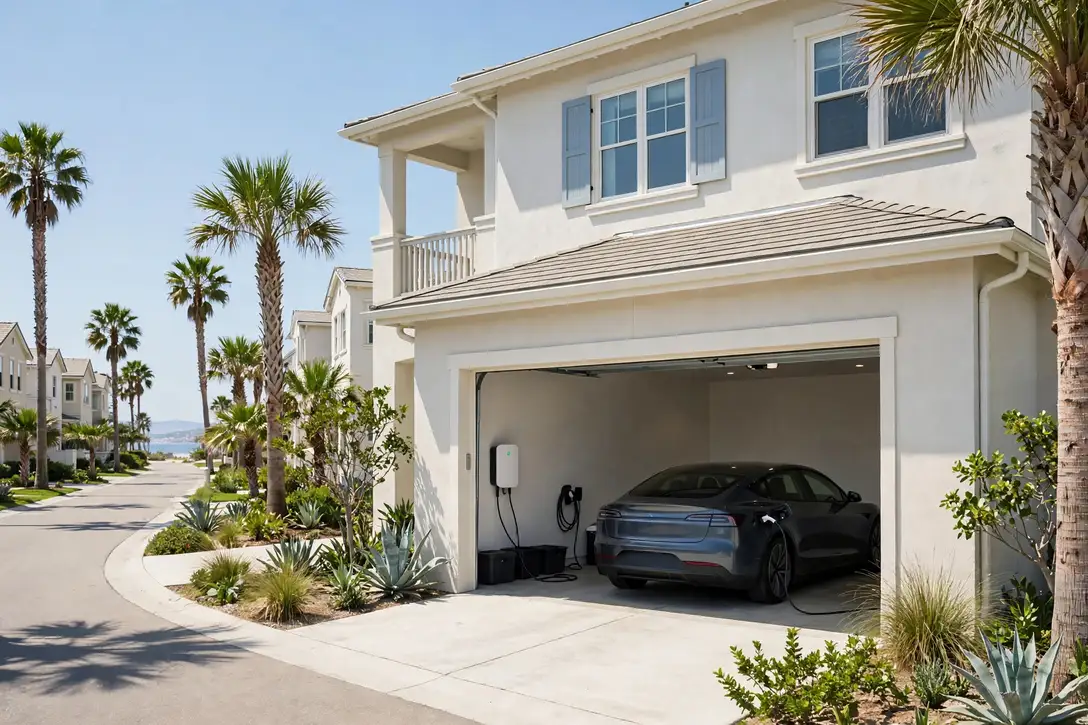
EV charging services in Baltimore
Ten services cover the work installers do in Baltimore. Three lead the list here because of what this city's housing and law actually look like — each links to its national service page, where scope and process are set out in full.
Home EV Charger Installation in Baltimore
Think of it as plumbing for electrons, done once: capacity checked, circuit run, station mounted and configured, inspection passed. The households that report the smoothest projects describe the same shape — a visit that measured, a quote that itemised, and a car that simply charged from the first night.
In Baltimore: usually the first job a new EV household in Baltimore books, scoped to the panel the house already has.
Dedicated Circuit & Electrical Panel Upgrade in Baltimore
The upgrade is unglamorous and transformative: a modern panel with honest capacity, labelled circuits, and room for the decade's next three electrical ideas after the charger. Houses rarely regret capacity; they regret its absence annually.
In Baltimore: relevant in Baltimore wherever a 100-amp panel already carries cooking, heating and hot water before a charger asks for room.
Multifamily & Condo EV Charging in Baltimore
The multifamily install is a small constitution before it is a circuit: who may charge, on whose meter, under what cost split, with what path for the next ten applicants. Buildings that write that constitution once stop re-litigating it at every annual meeting.
In Baltimore: constitutions for shared charging in Baltimore buildings: metering, load and approvals.
Utility programs and electricity in Baltimore
Electricity in Baltimore comes from Baltimore Gas & Electric Co. The utility matters twice over for a charger install: it sets the time-of-use rates that decide what overnight charging costs you, and it is the organisation that may — or may not — currently help pay for the equipment.
Frame the Baltimore incentive question correctly and it answers itself. Three pots could in principle fund part of a home charger: a federal credit, a Maryland program, a Baltimore Gas & Electric Co rebate. The first ended on September 30, 2025. The second does not exist for typical home installs. The third, in the sources checked for this page, is not currently offered for residential customers. Zero plus zero plus zero is the honest budget line — and any future change will arrive through the utility's own program page, with dates, which is where this page will take it from.
While you are reading your tariff, check how your plan treats the evening peak. A charger scheduled to start after the peak window is the single easiest saving in home charging, and it is set once, in the car or the station, then forgotten.
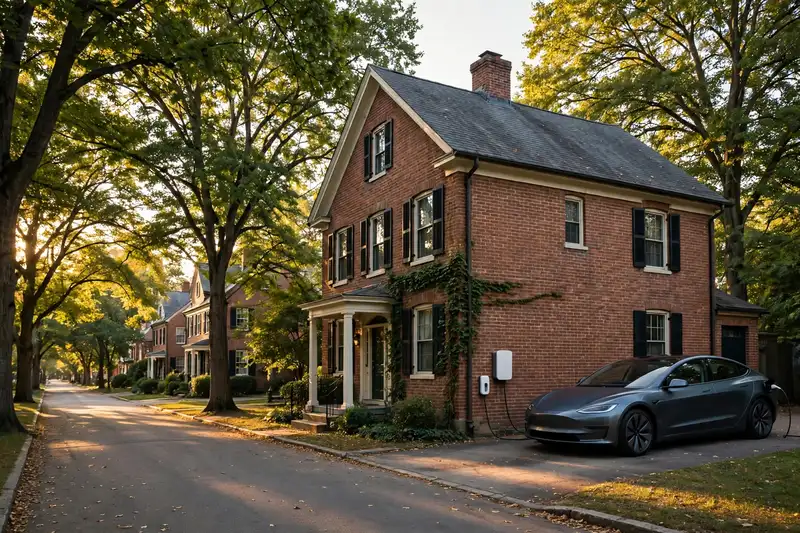
Condos, HOAs and the law in Maryland
Maryland law protects an owner's charger. Real Prop. §11-111.4; §11B-111.8 gives owners in association communities a statutory route to a charging station in their own space: the association may set reasonable conditions on how the installation looks, where exactly it sits, and how it is insured, but a flat prohibition is not one of its options. Owners fund the work, use licensed installers, and remain responsible for the equipment — the statute allocates the burdens; it does not remove them.
For renters, coverage in Maryland is recorded as: Owners. If you rent in Baltimore, the practical route is still a written proposal to the landlord — dedicated circuit, licensed installer, your name on the permit — because a charger-ready space is an asset most landlords keep when you leave.
Start with the condo and HOA guide for the application itself, and the multifamily service page for how the electrical design is usually laid out in Maryland buildings.
Climate, garages and charger placement
Charging through hurricane season is mostly a paperwork virtue: the documented, inspected install is the one insurers process without argument afterwards. It is one more reason the permit file matters more on this coastline than the equipment's colour does.
Storm surge and wind-driven rain redraw the map of good positions: the station belongs above the remembered water line, on the wall the prevailing weather reaches last, with the run's exterior penetrations sealed against driven rain rather than polite rain. Coastal installers carry this checklist in their sleep.

Permits and inspection in Baltimore
Inspection day itself is undramatic by design: access to the panel and the station, the calculation on hand, the equipment's settings matching the circuit. Jobs fail inspection on paperwork mismatches far more often than on wiring — a fact that quietly grades installers.

Neighbourhoods and ZIP codes served
The page covers 42 ZIP codes in and around Baltimore — including 21201, 21202, 21203, 21205, 21206, 21209, 21210, 21211, 21212, 21213, 21214, 21215, 21216, 21217, 21218, 21223, 21224, 21229, 21230, 21231, 21233, 21235, 21239, 21240, 21241, 21250, 21251, 21263, 21264, 21270, 21273, 21275, 21278, 21279, 21280, 21281, 21287, 21288, 21289, 21290, 21297, 21298 — across Anne Arundel, Baltimore, Baltimore (city). If your ZIP is not in the first set shown, ask anyway: installer coverage follows the metro, not a postcode fence.
The same working area takes in the neighbouring localities of Brooklyn, Halethorpe, Linthicum Heights, Catonsville, Gwynn Oak, Curtis Bay, Rosedale, Towson, Dundalk, Brooklandville, Pikesville, Parkville, Riderwood, Glen Burnie — the county ring an installer based in Baltimore actually drives. Requests from those communities route exactly as city requests do: same services, same permit discipline, same local facts where they differ.
Baltimore County accounts for 53 of the ZIP codes and 45 named postal localities in the research file, the nearest of them Halethorpe, Catonsville, Gwynn Oak, Rosedale, Towson. The survey counts 850,796 residents in the county, with a median household income of $91,768 and a median home value of $349,300. Anne Arundel County accounts for 43 of the ZIP codes and 33 named postal localities in the research file, the nearest of them Brooklyn, Linthicum Heights, Curtis Bay, Glen Burnie, Harmans. The survey counts 598,166 residents in the county, with a median household income of $124,911 and a median home value of $467,900. Baltimore (city) County accounts for 39 of the ZIP codes in the research file. The survey counts 573,243 residents in the county, with a median household income of $62,177 and a median home value of $229,600. Measured across its ZIP codes, the Baltimore footprint runs about 18 miles north to south and 9 east to west, from ZIP 21201 to 21298 — the ground an installer based here actually covers in a working week.
Beyond the county seats, the working area takes in Brooklyn, Halethorpe, Linthicum Heights, Catonsville, Gwynn Oak, Curtis Bay, Rosedale, Towson, Dundalk, Brooklandville, Pikesville, Parkville, Riderwood, Glen Burnie, Windsor Mill, Stevenson, Elkridge, Essex, Lutherville Timonium, Ellicott City, Nottingham, Harmans, Sparrows Point, Hanover, Randallstown, Fort Howard, Middle River, Perry Hall, Severn, Owings Mills, Woodstock, Glen Arm, Hunt Valley, Columbia, Millersville, Phoenix, White Marsh, Long Green, Jessup, Cockeysville, Pasadena, Fort George G Meade, Annapolis Junction, Chase, Hydes, Severna Park, Savage, Reisterstown, Odenton, Fork, Upper Falls, Kingsville, Marriottsville, Glyndon, Laurel, Crownsville, Baldwin, Joppa, Butler, Sparks Glencoe, Gambrills, Simpsonville, Gibson Island, Arnold, Boring, Annapolis, Monkton, West Friendship, Clarksville, Fallston, Crofton, Benson, Edgewood, Gunpowder, Dayton, Cooksville, Upperco, Finksburg, Glenwood, Abingdon, Glenelg, Sykesville, Bel Air, Forest Hill, Jarrettsville, Riva, Rock Hall, Woodbine, Belcamp, Lisbon, Perryman, Westminster, Churchville, Street, Aberdeen, Worton, Stevensville, Chester, New Windsor, Aberdeen Proving Ground, Chestertown, Mount Airy, Betterton, Still Pond, Havre De Grace, Queenstown, Grasonville, Perry Point, Perryville, Claiborne, Mcdaniel, Wittman, Saint Michaels, Bozman — the named localities for which Baltimore is the nearest metro in the network (neighbouring metros' pages cover their own ground), each routing to the same installer-matching service.
The wider working area also reaches Highland, Glenn Dale, Olney, College Park, Hyattsville, Riverdale, Bladensburg, Manchester, Upper Marlboro, Capitol Heights, Lineboro, Montgomery Village, Shady Side, Shrewsbury, West River, Potomac, Union Bridge, Glen Rock, Churchton, Monrovia, Southern Md Facility, Deale, Centreville, Glen Echo, Andrews Air Force Base, Tracys Landing, Libertytown, Ijamsville, Fort Myer, Porters Sideling, Brogue, Millington, Charlestown, Woodsboro, Greenway — ground shared with neighbouring metros, where installers cross the same county lines in both directions.
ZIP codes in that shared ground include 17311, 17331, 17335, 17342, 17344, 17360, 17361, 17371, 17532, 17563, 19362, 20002, 20005, 20007, 20020, 20029, 20036, 20038, 20043, 20045, 20047, 20050, 20052, 20056, 20057, 20062, 20065, 20073, 20203, 20206, 20215, 20226, 20235, 20237, 20240, 20261, 20266, 20277, 20289, 20299.
The largest communities in that working area after Baltimore itself, by the GeoNames populated-place file: Columbia (population 99,615), Glen Burnie (population 67,639), Ellicott City (population 65,834), Dundalk (population 63,597), Towson (population 55,197), South Bel Air (population 48,828), Bel Air South (population 47,709), Gwynn Oak (population 47,092). Charging demand follows those populations — the subdivisions and town centres where the next driveways, and the next panels, are.
Howard County reaches into the working area with 336,328 residents, a median household income of $149,763 and a median home value of $597,900; its localities on this page include Elkridge, Ellicott City, Columbia, Jessup.
| ZIP | Locality | County |
|---|---|---|
| 21201 | Baltimore | Baltimore (city) |
| 21290 | Baltimore | Baltimore (city) |
| 21203 | Baltimore | Baltimore (city) |
| 21233 | Baltimore | Baltimore (city) |
| 21235 | Baltimore | Baltimore (city) |
| 21241 | Baltimore | Baltimore (city) |
| 21263 | Baltimore | Baltimore (city) |
| 21264 | Baltimore | Baltimore (city) |
| 21270 | Baltimore | Baltimore (city) |
| 21273 | Baltimore | Baltimore (city) |
| 21275 | Baltimore | Baltimore (city) |
| 21278 | Baltimore | Baltimore (city) |
| 21279 | Baltimore | Baltimore (city) |
| 21280 | Baltimore | Baltimore (city) |
| 21281 | Baltimore | Baltimore (city) |
| 21288 | Baltimore | Baltimore (city) |
| 21289 | Baltimore | Baltimore (city) |
| 21297 | Baltimore | Baltimore (city) |
| 21298 | Baltimore | Baltimore (city) |
| 21202 | Baltimore | Baltimore (city) |
| 21217 | Baltimore | Baltimore (city) |
| 21223 | Baltimore | Baltimore (city) |
| 21287 | Baltimore | Baltimore (city) |
| 21231 | Baltimore | Baltimore (city) |
| 21230 | Baltimore | Baltimore (city) |
| 21218 | Baltimore | Baltimore (city) |
| 21205 | Baltimore | Baltimore (city) |
| 21211 | Baltimore | Baltimore (city) |
| 21216 | Baltimore | Baltimore (city) |
| 21213 | Baltimore | Baltimore (city) |
| 21229 | Baltimore | Baltimore (city) |
| 21224 | Baltimore | Baltimore (city) |
| 21210 | Baltimore | Baltimore (city) |
| 21215 | Baltimore | Baltimore (city) |
| 21212 | Baltimore | Baltimore (city) |
| 21225 | Brooklyn | Anne Arundel |
| 21239 | Baltimore | Baltimore (city) |
| 21214 | Baltimore | Baltimore (city) |
| 21250 | Baltimore | Baltimore |
| 21206 | Baltimore | Baltimore (city) |
| 21227 | Halethorpe | Baltimore |
| 21209 | Baltimore | Baltimore (city) |
| 21090 | Linthicum Heights | Anne Arundel |
| 21228 | Catonsville | Baltimore |
| 21207 | Gwynn Oak | Baltimore |
| 21226 | Curtis Bay | Anne Arundel |
| 21237 | Rosedale | Baltimore |
| 21252 | Towson | Baltimore |
| 21284 | Towson | Baltimore |
| 21285 | Towson | Baltimore |
| 21222 | Dundalk | Baltimore |
| 21022 | Brooklandville | Baltimore |
| 21282 | Pikesville | Baltimore |
| 21204 | Towson | Baltimore |
| 21234 | Parkville | Baltimore |
| 21139 | Riderwood | Baltimore |
| 21208 | Pikesville | Baltimore |
| 21240 | Baltimore | Anne Arundel |
| 21286 | Towson | Baltimore |
| 21060 | Glen Burnie | Anne Arundel |
| 21061 | Glen Burnie | Anne Arundel |
| 21244 | Windsor Mill | Baltimore |
| 21153 | Stevenson | Baltimore |
| 21075 | Elkridge | Howard |
| 21221 | Essex | Baltimore |
| 21093 | Lutherville Timonium | Baltimore |
| 21043 | Ellicott City | Howard |
| 21094 | Lutherville Timonium | Baltimore |
| 21251 | Baltimore | Baltimore |
| 21236 | Nottingham | Baltimore |
| 21077 | Harmans | Anne Arundel |
| 21219 | Sparrows Point | Baltimore |
| 21076 | Hanover | Anne Arundel |
| 21133 | Randallstown | Baltimore |
| 21052 | Fort Howard | Baltimore |
| 21220 | Middle River | Baltimore |
| 21128 | Perry Hall | Baltimore |
| 21144 | Severn | Anne Arundel |
| 21117 | Owings Mills | Baltimore |
| 21163 | Woodstock | Baltimore |
| 21057 | Glen Arm | Baltimore |
| 21031 | Hunt Valley | Baltimore |
| 21045 | Columbia | Howard |
| 21042 | Ellicott City | Howard |
| 21108 | Millersville | Anne Arundel |
| 21131 | Phoenix | Baltimore |
| 21065 | Hunt Valley | Baltimore |
| 21162 | White Marsh | Baltimore |
| 21092 | Long Green | Baltimore |
| 20794 | Jessup | Howard |

Planning the install: from panel to parking
Two decisions shape every Baltimore install, and both are made before any equipment is ordered. The first is electrical: the load calculation that decides between a straight circuit, a panel upgrade and load management. The second is physical: where the station lives — which wall, which side of the car the charge port sits on, and whether the cable reaches a second vehicle or a future one. Installers in Baltimore see the same housing patterns repeat street by street, which is why a ten-minute site visit produces a firmer quote than any online form: the form starts the conversation, the visit settles it.
Future-proofing, in this trade, is mostly conduit and capacity: an oversized conduit run costs little during the first install and everything later; a panel position reserved is a breaker that never has to move. If a second EV, a workshop or an electrified water heater is anywhere in your five-year picture, say so at the site visit.
Home charging know-how for Baltimore households
Dust, grime and the working garage
Garages are workshops, and workshops make dust. A charging connector living in one needs its holster the way a tool needs its hook — off the bench, out of the sawdust's fall line, capped by its dock rather than dangling. Metal filings and charger contacts are particular enemies; grinding and charging do not share a corner happily. None of this asks for a cleanroom — just the ordinary discipline of a space that works for a living, extended to the one appliance that is also a fuel line.
Breakers: the household's safety switches
A breaker is a switch that watches current and opens when the current stops being safe — heat in a conductor is the thing it exists to prevent. Two household rules follow. First, a tripping breaker is reporting, not malfunctioning by default: reset once, and if it repeats, the circuit gets an electrician, not another reset. Second, the forbidden fix: never answer a trip by fitting a larger breaker. The breaker protects the wire in the wall; upsizing the guard without upsizing the wire removes the protection and keeps the problem.
The insurance conversation
A permitted charger installation is a short conversation with your insurer, and it is worth having before rather than after. The documented install — permit, inspection, listed equipment, licensed electrician — is the version insurers process without friction, because every question they ask is answered by the file. Undocumented electrical work is where claims go to become arguments. Tell the insurer the circuit exists, keep the paperwork with the policy documents, and the charger's insurance chapter closes in one phone call.
Homework that sharpens the site visit
You can cut a site visit's uncertainty in half with a phone camera. Photograph the panel — door open, directory card legible, the rating label in frame — plus the wall where the station would go and the car's parking position with the port side visible. Send them with the request. The installer arrives already knowing the panel's make and spare spaces, the run's likely route, and which questions remain live ones. Quotes get firmer, visits get shorter, and nobody discovers the decisive fact at the door.
Orientation: the garage's compass
A garage's orientation decides its microclimate: south- and west-facing doors take the day's heat load, north-facing ones hold the cold. The charger inherits the microclimate — electronics ageing in the hot wall's summer, cables stiffening in the cold one's January. Orientation is nobody's choice by install time, but it informs placement inside the room: the interior wall over the door wall, the shaded corner over the sun line, decided by someone who has read the room's compass.

Frequently asked questions
Can I still get the federal tax credit for a home charger in Baltimore, MD?
You cannot — it no longer exists. The 30C credit closed to equipment placed in service after September 30, 2025, and no Maryland program replaced it for home installs. Nor did the sources checked for this page show a live Baltimore Gas & Electric Co residential rebate. Treat any 'credit' mentioned in a quote as a request for paperwork.
What can my HOA in Baltimore, MD do about a charger install?
Only within limits the statute sets. Maryland law (Real Prop. §11-111.4; §11B-111.8) protects an owner's right to install in their own space; associations may regulate placement, appearance and insurance and require restoration on removal, but a blanket refusal is not theirs to give. If a board stalls, a complete written application citing the statute is the standard remedy.
Will my Baltimore, MD home need a panel upgrade for a Level 2 charger?
It hinges on two numbers you cannot read off the panel door: the service's rating, and what the load calculation says it already carries. The vintage of Baltimore's stock — median build year 1947, about 82% of homes from before 1980 — means both answers are common here. The charger enters the arithmetic at 125% of its draw; whatever room survives that entry decides between a circuit, a management device, and an upgrade.
How quickly will a Level 2 charger fill my car in Baltimore, MD?
Level 2 is several-fold faster in the only unit that matters — miles back per hour parked: roughly 25–40 against Level 1's 3–5. The exact figure follows the circuit: a 40-amp circuit and a 60-amp circuit are both Level 2, and the car's onboard limit may sit below either. Your installer matches the three numbers at the site visit.
What happens next after I send a request?
Three steps: the request routes to installers who work Baltimore, Maryland; one contacts you to walk the property; the walk produces the written quote. Everything on this page — the utility position, the law, the housing data — is yours to check that quote against.
Does Baltimore Gas & Electric Co offer a time-of-use rate for EV charging in Baltimore?
Many Baltimore Gas & Electric Co customers can choose a time-of-use tariff; whether yours is one, and where its cheap window sits, decides how the charger should be scheduled from night one. Two minutes with your tariff sheet during the planning stage is the whole task — the installer sets the schedule to match while commissioning the station.
Nearby cities in Maryland
- EV charger installation in Hagerstown — about 66 miles from Baltimore, metro population 295,000
- EV charger installation in Salisbury — about 83 miles from Baltimore, metro population 425,000
- EV charger installation in Washington, DC — about 34 miles from Baltimore, metro population 6,400,000
- EV charger installation in York, PA — about 46 miles from Baltimore, metro population 455,000
- EV charger installation in Lancaster, PA — about 57 miles from Baltimore, metro population 575,000
Ready to charge at home in Baltimore?
Two minutes of form, and the request is in front of licensed installers who cover this city — quotes follow site visits, in writing.