EV Charger Installation in Lancaster, PA
Charging where you park, in Lancaster: the utility programs, state law, permit process and housing facts behind a home charger install, gathered in one place.
The charger is the visible tenth of the project. Below it sit a load calculation, a wire run, a statute, a tariff and a permit — and in Lancaster each of those has a local answer. Lancaster itself is home to about 57,719 people. Pennsylvania's fleet stood at 113,400 battery-electric vehicles plus 55,900 plug-in hybrids through 2025, so the local answers are no longer theoretical: installers here run this job weekly. What follows gathers the Lancaster version of each layer — utility programs as they actually stand, condo and HOA law as written, permit practice, and the survey data on the housing stock — so the one conversation that matters, the site visit, starts informed.
How to read this page in four minutes: the data band tells you what kind of housing city Lancaster is; the utility section tells you whether money is on the table; the law section tells you whether permission is a process or a negotiation; and the permit section tells you what proof the finished job leaves behind. The rest is elaboration.
Measured demand, not enthusiasm, put Lancaster in Tier B of this network: PA growth county. For a homeowner the useful translation is simpler — installers here do this work weekly, know the local permit counter, and have seen your housing stock before.
Read the survey numbers as an installer reads them. A median household income of $63,690 and an owner-occupation rate of 49% describe a city where most charger decisions are made by the person who owns the panel — no landlord layer, no board layer for the typical job. The 12% of homes that are single-unit detached are the straightforward installs: garage or driveway, one owner, one circuit.

The composite picture matters more than any single statistic. In Lancaster: an older housing fabric, where panel archaeology is a normal part of the first visit; a genuinely mixed city — houses, townhouses and larger buildings all carry weight; buildings of five or more units are a visible minority of the stock; meanwhile, renters form a large share of households, so the landlord conversation is a first-class topic here. A page that ignored that profile would give the same advice everywhere; this one is ordered by it.
Keep six figures and you keep Lancaster's whole electrical character: 23,049 housing units; 21,971 occupied homes; 10,673 owner-occupied; 2,676 detached houses; 19,839 pre-1980 homes; 4,255 homes in buildings of five or more units. Percentages elsewhere on this page are these numbers in disguise — the counts are the originals, and they are the numbers a local installer's experience is actually made of. The page's geography is equally concrete: 11 ZIP codes across Lancaster, centred near 40.08 degrees north latitude. The city anchors the Lancaster metropolitan area, home to roughly 575,000 people on the research file's metro estimate — the wider labour and housing market this page's installers work across.
The same survey release fills in the household economics around the housing stock: a median home value of $219,500, median gross rent of $1,240, per-capita income of $31,159, and a median resident age of 32. And the daily rhythms behind the housing numbers: 60% of Lancaster workers drive to work alone — the commute pattern home charging is built around; 10% work from home, a population whose cars charge on daytime and overnight schedules alike; 4% commute by public transit; 29% of adults hold a bachelor's degree or higher. And the fleet in the driveways: 9,750 households in Lancaster have exactly one vehicle, 8,943 have two or more, and 3,278 have none.
The cost-burden lines say who feels housing costs most in Lancaster: 45% of renters spend 30% or more of income on rent, and 0% of owners with mortgages spend the same share on housing costs. Family households are 55% of all households — the two-car, school-run demographic whose charging patterns this page's planning sections keep circling back to.
None of these facts is trivia; each one moves a real decision in the project. The oldest housing throws the longest shadows over an install: knob-and-tube remnants in the attic, ungrounded receptacles, services sized for iceboxes and radios that now feed induction ranges and heat pumps. The mixed stock means the city's charging statistics will always be two statistics wearing one coat: a domestic-circuit count and a building-project count, growing on different clocks for different reasons.
Where renting dominates, the successful install is a document before it is a device — installer licence, insurance, metering clarity, end-of-tenancy position — assembled to make a landlord's yes the path of least resistance. Here the tariff conversation is a budget conversation: the overnight window's arithmetic, done honestly once, pays out every night of the car's life without further attention. The regulatory calendar is the programme calendar: rate cases, electrification plans and pilot approvals move through the commission on public timetables, and installers plan their marketing around them.
Households here are rarely the first on their street; the local knowledge pool — which installer, which tariff, which board precedent — is deep and shared freely. At this scale the city's charging infrastructure is legible — a household can learn the whole local system, its programmes, precedents and people, in an evening's reading. This page is most of that evening. Without a state charging statute, shared-property approvals in this metro are won on paper quality: metering clarity, licensed installers, insurance, reversibility — the complete package the guides set out.
The electrical reality in Lancaster homes
The survey's housing portrait for Lancaster opens with its median: a home built in 1938, in a stock where 86% of units predate 1980 and 12% stand detached on their own lots. 49% of occupied homes are owner-occupied. An installer reads those lines as a weather forecast: mostly settled conditions, with older wiring fronts moving through the pre-1980 districts. A housing stock this age leans on smaller electrical services — 100-amp panels are common, and fuse-era equipment still turns up in the oldest streets. For many of those homes the honest answer is a panel upgrade or a load-management device before the charger circuit goes in, and a good installer will show you the load calculation rather than asking you to take it on faith. Porches, carports and parking pads carry a real share of this city's charging, because the stock predates the two-car garage as a standard feature — outdoor-rated equipment is a local staple, not an edge case.
Heating fuel is the survey's quiet clue to panel life: in Lancaster, 27% of homes heat electrically (5,879 households), against 63% heating with gas. A house already heating electrically has a service sized with that load in its history; a gas-heated house may have capacity to spare — either way the fuel mix is part of what the installer is reading.
Renters are the other constituency in these numbers: about 11,298 of Lancaster's occupied homes are rented rather than owned. Their charging route runs through a landlord conversation instead of a panel they control — a different project, covered by the rentals guide and the law section below, but a routine one in a city with this many renting households.
One more structural fact shapes Lancaster's charging map: 18% of the city's housing units sit in buildings of five or more units. Those households cannot simply book a circuit — their charger runs through a building, a board and a shared electrical service, which is why the multifamily service and the law section below carry unusual weight on this page.
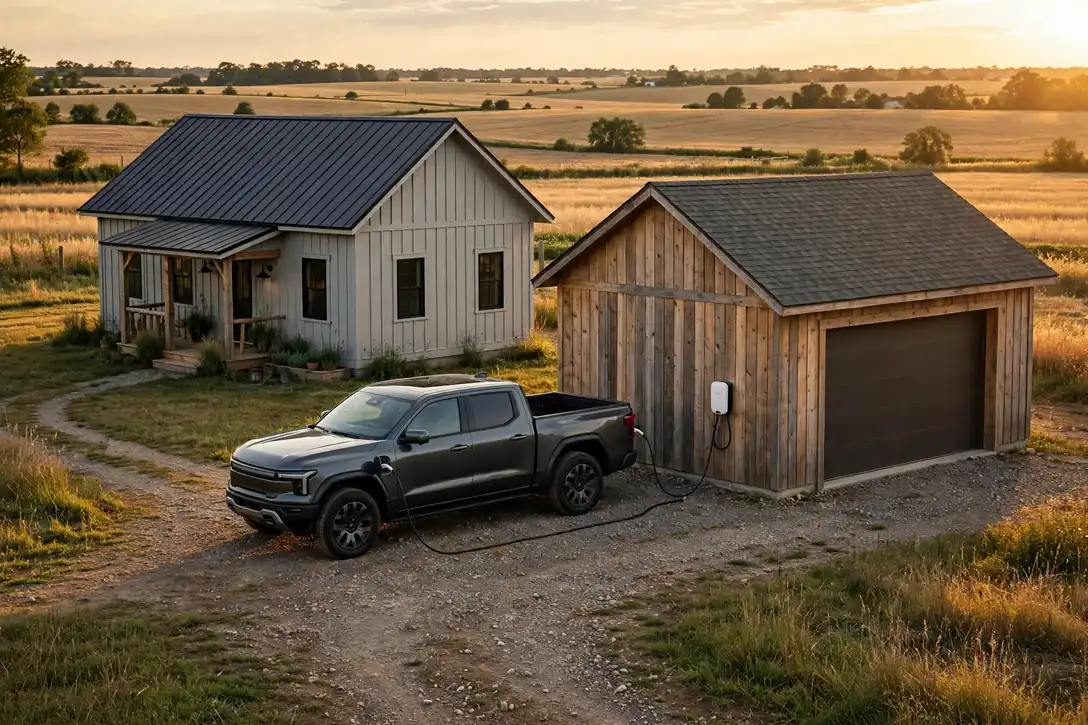
EV charging services in Lancaster
Installers in Lancaster book the same ten services as everywhere — but not in the same proportions. The three leading cards below are this city's pattern, set by its panels, its buildings and its statute book.
Home EV Charger Installation in Lancaster
The core service, stated plainly: a dedicated 240-volt circuit run from your panel to your parking place, a station mounted and configured to that circuit, and the paperwork closed out with the permit office. Everything else in this section of the site exists to support or unblock this one job.
In Lancaster: the core residential job in Lancaster: circuit, mounting, configuration and inspection in one visit pattern.
Dedicated Circuit & Electrical Panel Upgrade in Lancaster
The capacity project behind the charger project. A load calculation decides whether the answer is a service increase, a panel replacement, a subpanel or load management — and the work is sequenced with the utility and the inspector so the house is live again the same day in most cases.
In Lancaster: the job that surfaces wherever housing is older — and Lancaster's stock makes it a routine conversation, settled by a load calculation.
Level 2 Charger Installation in Lancaster
The step from a household receptacle to a Level 2 circuit is the step from sipping to drinking: the car takes energy at the rate family life actually consumes it. The work is a breaker, a run of appropriately gauged conductor, and a connection made to torque — modest materials, permanent consequences.
In Lancaster: what most Lancaster drivers mean when they say they want 'a real charger' — 240 volts, sized to the circuit.
Utility programs and electricity in Lancaster
Electricity in Lancaster comes from PPL Electric Utilities Corp. Parts of the wider metro are served by Metropolitan Edison Co, Borough of Ephrata. The utility matters twice over for a charger install: it sets the time-of-use rates that decide what overnight charging costs you, and it is the organisation that may — or may not — currently help pay for the equipment.
There is a strategic consequence to the empty incentive shelf in Lancaster: the install decision reduces to the work itself and the tariff it runs on. With no rebate distorting the comparison, quotes compete on scope, licensing and the load calculation's honesty — which is the competition homeowners should want. And the overnight rate window, where PPL Electric Utilities Corp offers one, quietly returns more over the car's life than most one-off rebates ever did.
Renters and condo owners should note the metering question early: whose meter the charger hangs off decides who pays for the energy, and PPL Electric Utilities Corp's options for submetering are part of the multifamily conversation below.
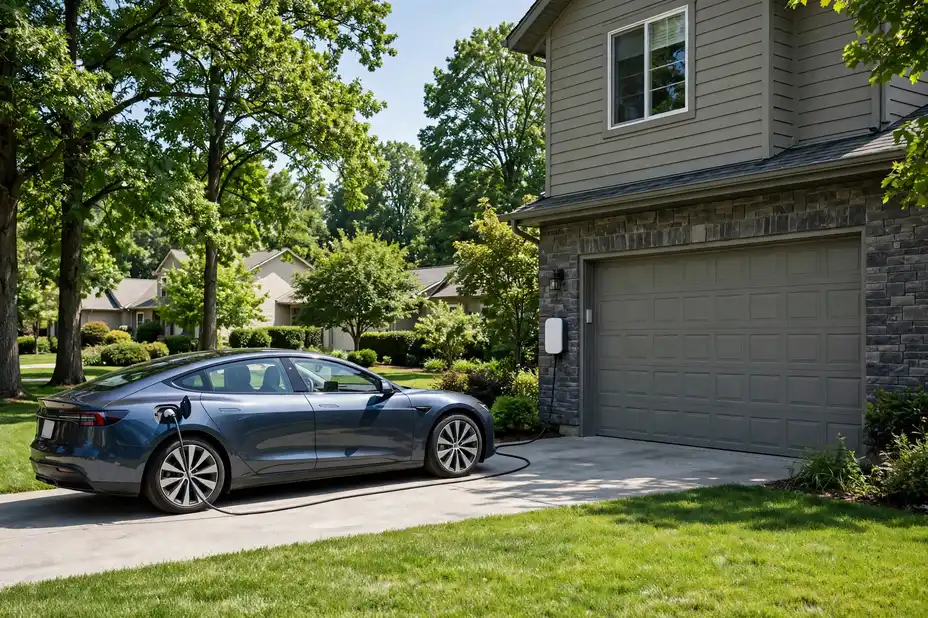
Condos, HOAs and the law in Pennsylvania
There is no Pennsylvania right-to-charge statute to lean on. Some national roundups list protection that does not exist in this state's code; the statute indexes checked for this page are clear. In Lancaster, a condo or HOA charger is approved — or not — under the community's own documents, which makes the quality of your application the whole ballgame.
No law does not mean no path. Boards approve chargers every week when the proposal answers their real concerns in advance: a licensed installer, a dedicated circuit that touches nothing shared, metering that keeps the electricity cost on the owner, insurance, and a commitment to restore the space on removal. Bring that package, in writing, before the meeting — not during it.
For the full playbook — application contents, metering designs, the questions boards ask — see the condo and HOA charging guide. In Lancaster it should be read as a negotiation manual, because negotiation is what the absence of a statute leaves you.
Climate, garages and charger placement
Humidity is the slow variable: it works on exterior connections across seasons rather than in a single event, which is why coastal-grade habits — protected terminations, sealed entries, a yearly glance at the connector — pay off even well inland in a four-season climate.
Storm seasons punctuate the year here, and the installation's weather manners are set at mounting time: enclosures sealed as listed, exterior runs pitched so water travels away from entries, and a station position that the roof's drip line does not cross. Five minutes of the site visit, decades of consequence.

Permits and inspection in Lancaster
The permit trail also protects the next transaction: a charger circuit on the inspection record is an asset a buyer's inspector reads in one line, while an undocumented circuit is a question that follows the sale. Installers who work this metro treat the filing as part of the deliverable, not an errand.

Neighbourhoods and ZIP codes served
The page covers 11 ZIP codes in and around Lancaster — including 17601, 17602, 17603, 17604, 17605, 17606, 17607, 17608, 17611, 17622, 17699 — across Lancaster. If your ZIP is not in the first set shown, ask anyway: installer coverage follows the metro, not a postcode fence.
The same working area takes in the neighbouring localities of East Petersburg, Bausman, Bart, Penryn, Witmer, Landisville, Millersville, Talmage, Brownstown, Leola, Smoketown, Mountville, Silver Spring, Bird In Hand — the county ring an installer based in Lancaster actually drives. Requests from those communities route exactly as city requests do: same services, same permit discipline, same local facts where they differ.
Lancaster County accounts for 73 of the ZIP codes and 62 named postal localities in the research file, the nearest of them East Petersburg, Bausman, Bart, Penryn, Witmer. The survey counts 557,931 residents in the county, with a median household income of $86,959 and a median home value of $301,100. Measured across its ZIP codes, the Lancaster footprint runs about 7 miles north to south and 4 east to west, from ZIP 17601 to 17699 — the ground an installer based here actually covers in a working week.
Beyond the county seats, the working area takes in East Petersburg, Bausman, Bart, Penryn, Witmer, Landisville, Millersville, Talmage, Brownstown, Leola, Smoketown, Mountville, Silver Spring, Bird In Hand, Lampeter, West Willow, Lititz, Willow Street, Akron, Ronks, Manheim, Elm, Washington Boro, Conestoga, Ephrata, Refton, Columbia, Strasburg, Mount Joy, Gordonville, Intercourse, Pequea, New Providence, Stevens, New Holland, Paradise, Martindale, Blue Ball, Holtwood, Kinzers, Quarryville, Gap, Drumore, Airville, Christiana, Atglen, Kirkwood, Peach Bottom, Delta, Parkesburg, Sadsburyville, Pomeroy, Whiteford, Cochranville, Oxford, Nottingham, Conowingo, Darlington, Kelton, Rising Sun, Colora, Lincoln University, West Grove, Chatham, Lewisville, Port Deposit, Avondale, Toughkenamon, Kemblesville, Landenberg, New London, North East, Childs — the named localities for which Lancaster is the nearest metro in the network (neighbouring metros' pages cover their own ground), each routing to the same installer-matching service.
The wider working area also reaches Wrightsville, Craley, Reamstown, Rexmont, Denver, Terre Hill, Kleinfeltersville, Lawn, Goodville, Windsor, Reinholds, Bowmansville, Wernersville, Emigsville, New Park, York Haven, Brandamore, Fredericksburg, Pylesville, Highspire, Grantville, Bernville, York New Salem, Leesport, Shrewsbury, Strausstown, Railroad, New Freedom, Lewisberry, Maryland Line, Shartlesville, Centerport, Pine Grove, Ravine, Camp Hill — ground shared with neighbouring metros, where installers cross the same county lines in both directions.
ZIP codes in that shared ground include 17003, 17011, 17016, 17025, 17028, 17030, 17032, 17041, 17046, 17088, 17107, 17120, 17122, 17123, 17126, 17129, 17309, 17319, 17321, 17332, 17333, 17344, 17354, 17356, 17358, 17362, 17368, 17401, 17406, 17407, 17502, 17507, 17547, 17570, 17923, 17933, 17963, 17964, 17966, 17978.
The largest communities in that working area after Lancaster itself, by the GeoNames populated-place file: Ephrata (population 13,861), Landenberg (population 11,757), Columbia (population 10,388), Lititz (population 9,225), Millersville (population 8,420), Mount Joy (population 8,071), Willow Street (population 7,578), Leola (population 7,214), New Holland (population 5,430), Oxford (population 5,385), Manheim (population 4,870), East Petersburg (population 4,525), Akron (population 3,993), North East (population 3,723), Parkesburg (population 3,687), Reamstown (population 3,361), Airville (population 3,100), Rothsville (population 3,044), Strasburg (population 2,906), Upland (population 2,895). Charging demand follows those populations — the subdivisions and town centres where the next driveways, and the next panels, are.
Chester County reaches into the working area with 547,840 residents, a median household income of $127,208 and a median home value of $485,600; its localities on this page include Atglen, Parkesburg, Sadsburyville, Pomeroy, Cochranville. York County reaches into the working area with 462,924 residents, a median household income of $84,829 and a median home value of $248,600; its localities on this page include Airville, Delta.
| ZIP | Locality | County |
|---|---|---|
| 17601 | Lancaster | Lancaster |
| 17604 | Lancaster | Lancaster |
| 17606 | Lancaster | Lancaster |
| 17622 | Lancaster | Lancaster |
| 17611 | Lancaster | Lancaster |
| 17520 | East Petersburg | Lancaster |
| 17602 | Lancaster | Lancaster |
| 17504 | Bausman | Lancaster |
| 17503 | Bart | Lancaster |
| 17564 | Penryn | Lancaster |
| 17605 | Lancaster | Lancaster |
| 17607 | Lancaster | Lancaster |
| 17608 | Lancaster | Lancaster |
| 17699 | Lancaster | Lancaster |
| 17603 | Lancaster | Lancaster |
| 17585 | Witmer | Lancaster |
| 17538 | Landisville | Lancaster |
| 17551 | Millersville | Lancaster |
| 17580 | Talmage | Lancaster |
| 17508 | Brownstown | Lancaster |
| 17540 | Leola | Lancaster |
| 17576 | Smoketown | Lancaster |
| 17554 | Mountville | Lancaster |
| 17575 | Silver Spring | Lancaster |
| 17505 | Bird In Hand | Lancaster |
| 17537 | Lampeter | Lancaster |
| 17583 | West Willow | Lancaster |
| 17543 | Lititz | Lancaster |
| 17584 | Willow Street | Lancaster |
| 17501 | Akron | Lancaster |
| 17573 | Ronks | Lancaster |
| 17545 | Manheim | Lancaster |
| 17572 | Ronks | Lancaster |
| 17521 | Elm | Lancaster |
| 17582 | Washington Boro | Lancaster |
| 17516 | Conestoga | Lancaster |
| 17522 | Ephrata | Lancaster |
| 17568 | Refton | Lancaster |
| 17512 | Columbia | Lancaster |
| 17579 | Strasburg | Lancaster |
| 17552 | Mount Joy | Lancaster |
| 17529 | Gordonville | Lancaster |
| 17534 | Intercourse | Lancaster |
| 17565 | Pequea | Lancaster |
| 17560 | New Providence | Lancaster |
| 17578 | Stevens | Lancaster |
| 17557 | New Holland | Lancaster |
| 17562 | Paradise | Lancaster |
| 17549 | Martindale | Lancaster |
| 17506 | Blue Ball | Lancaster |
| 17532 | Holtwood | Lancaster |
| 17535 | Kinzers | Lancaster |
| 17566 | Quarryville | Lancaster |
| 17527 | Gap | Lancaster |
| 17518 | Drumore | Lancaster |
| 17302 | Airville | York |
| 17509 | Christiana | Lancaster |
| 19310 | Atglen | Chester |
| 17536 | Kirkwood | Lancaster |
| 17563 | Peach Bottom | Lancaster |
| 17314 | Delta | York |
| 19365 | Parkesburg | Chester |
| 19369 | Sadsburyville | Chester |
| 19367 | Pomeroy | Chester |
| 21160 | Whiteford | Harford |
| 19330 | Cochranville | Chester |
| 19363 | Oxford | Chester |
| 19362 | Nottingham | Chester |
| 21918 | Conowingo | Cecil |
| 21034 | Darlington | Harford |
| 19346 | Kelton | Chester |
| 21911 | Rising Sun | Cecil |
| 21917 | Colora | Cecil |
| 19352 | Lincoln University | Chester |
| 19390 | West Grove | Chester |
| 19318 | Chatham | Chester |
| 19351 | Lewisville | Chester |
| 21904 | Port Deposit | Cecil |
| 19311 | Avondale | Chester |
| 19374 | Toughkenamon | Chester |
| 19347 | Kemblesville | Chester |
| 19350 | Landenberg | Chester |
| 19360 | New London | Chester |
| 21901 | North East | Cecil |
| 21916 | Childs | Cecil |

Planning the install: from panel to parking
Consider the two households inside every Lancaster install. The first owns the panel, the parking and the decision; the second — a partner, a teenager with the next car, a future buyer — inherits all three. Designing for the second household is the difference between an install and an asset: capacity reserved, conduit honest, paperwork filed. The first conversation with an installer should name both households explicitly.
One more piece of sequencing advice Lancaster installers give consistently: if the panel is being opened anyway, settle the other electrical maybes in the same visit — the circuit you will want next year costs least while the permit and the electrician are already in the house.
Home charging know-how for Lancaster households
When the garage is detached
A detached garage changes the install's centre of gravity: the circuit must travel. The route is usually a buried conduit run from the house panel, with depth, conduit type and the trench's path past roots, irrigation and paving all settled at the design stage — or, where the run is long and the loads justify it, a subpanel in the garage that also serves the workshop the building inevitably becomes. The charger at the end of that run behaves exactly like any other; it is the journey, measured in copper and digging, that defines the job.
The sounds a station makes
A charging station is mostly silent, but not entirely: a contactor's clunk when a session starts, a faint hum under load, occasionally a small fan in warm weather. These are the sounds of switching and cooling, and they are normal. The sounds that earn attention are changes — buzzing that was not there last month, clicking cycles, a hum that grows. Electricity should be boring to listen to; when it stops being boring, that is information, and the correct response is an electrician rather than a search engine.
The driveway is shared infrastructure
In households where the charger serves a shared driveway, the install acquires a social protocol alongside its electrical one: whose night, which side, how the cable crosses, what happens when guests park across the route. The designs that work settle the protocol physically — a station reachable from both bays, a cable path that crosses no one's door swing — rather than relying on nightly negotiation. Infrastructure that requires diplomacy every evening was under-designed in the morning.
A word about the word 'charger'
Strictly speaking, the charger lives in the car: the onboard unit that converts alternating current from the wall into the direct current the battery stores. The box on your wall is supply equipment — it negotiates, switches and protects, but the conversion happens in the vehicle. The distinction explains two practical things: why the car's acceptance rate caps every circuit conversation, and why the same wall equipment serves different cars at different speeds. Installers use 'charger' for the wall box anyway, as does this page — but the mental model is worth owning.
Bidirectional charging, honestly framed
Vehicles that can return energy to a house or the grid exist, and the standards enabling them are settling — but for most households today it is a horizon technology, not a purchase category: it needs a compatible vehicle, bidirectional equipment, utility interconnection approval and a tariff that rewards it. None of that changes today's installation advice, except in one detail: conduit and panel capacity installed generously now are the same provisions a future bidirectional setup would want. Buy for the car you have; leave room for the one the industry is promising.

Frequently asked questions
Is the federal charger tax credit still available in Lancaster, PA?
The three possible pots are all, at present, empty for a Lancaster homeowner: no PPL Electric Utilities Corp residential rebate in current published sources, no Pennsylvania home programme, and a federal credit that closed on September 30, 2025. Programmes do relaunch — on the utility's site, with dates — and until one does, the honest quote is the one with no rebate line at all.
What can my HOA in Lancaster, PA do about a charger install?
In Lancaster the honest answer is yes, they can refuse: Pennsylvania gives owners no statutory charging right, so the board's discretion governs. What changes outcomes is the quality of the file in front of them — drawings, metering, insurance, a named licensed installer — and a growing number of boards here approve exactly that file.
Does a Level 2 charger mean a panel upgrade for a Lancaster, PA home?
Sometimes, and the honest route to the answer is arithmetic rather than opinion. Lancaster's median home was built in 1938; roughly 86% of the stock predates 1980, which is where the 100-amp panels concentrate. If yours is one, expect the upgrade-or-management conversation; if it is a modern 200-amp service with spare spaces, expect a circuit. The site visit's calculation decides, and you are entitled to see it.
How much faster is Level 2 charging at home in Lancaster, PA?
In parked hours: a Level 1 cord returns about 3–5 miles for each of them, and a Level 2 circuit returns roughly 25–40, set by its amperage and the car's acceptance. For a Lancaster household parking ten hours, that is the difference between recovering a short errand day and recovering any day the car can legally drive.
What happens next after I send a request?
Send the request and it is matched against installers covering Lancaster — your service, ZIP, property type and timing travel with it. An installer then arranges the site visit and quotes in writing. Our role ends at the introduction; your contract, permit and paperwork are with the installer.
Do installers cover the communities around Lancaster, PA?
Yes — an installer's working area is the county ring, not the city limit. From this page the same request flow covers East Petersburg, Bausman, Bart, Penryn, Witmer and the rest of Lancaster's surrounding localities, under the same permit discipline and the same local facts where they differ.
Nearby cities in Pennsylvania
- EV charger installation in Lebanon — about 18 miles from Lancaster, metro population 145,000
- EV charger installation in York — about 24 miles from Lancaster, metro population 455,000
- EV charger installation in Reading — about 28 miles from Lancaster, metro population 430,000
- EV charger installation in Harrisburg — about 34 miles from Lancaster, metro population 600,000
- EV charger installation in Allentown — about 59 miles from Lancaster, metro population 875,000
- EV charger installation in Philadelphia — about 66 miles from Lancaster, metro population 6,100,000
- EV charger installation in Baltimore, MD — about 57 miles from Lancaster, metro population 2,850,000
- EV charger installation in Dover, DE — about 78 miles from Lancaster, metro population 170,000
- EV charger installation in Vineland, NJ — about 83 miles from Lancaster, metro population 155,000
Ready to charge at home in Lancaster?
Tell us the job — service, ZIP and property type — and licensed local installers will take it from there.