EV Charger Installation in Allentown, PA
Charging where you park, in Allentown: the utility programs, state law, permit process and housing facts behind a home charger install, gathered in one place.
Charging at home is the version of EV ownership that actually works day to day, and in Allentown it starts with a straightforward question: where will the car sleep, and what can the electrical panel behind that wall honestly support? Allentown itself is home to about 127,225 people, and 113,400 battery-electric vehicles plus 55,900 plug-in hybrids were registered across Pennsylvania by the end of 2025 — every one of them a household that charges somewhere. This page gathers what a homeowner in Allentown needs to know before booking an installer: the local utility and its current charger programs, the state law that applies in condos and HOA communities, the permit process, and the housing realities that decide how simple or involved an installation will be.
One honest note before the detail: PlugReady USA does not install chargers. We collect your requirements and pass them to licensed installers who cover Allentown, and this page exists so that you can judge those conversations with the local facts already in hand.
The demand picture for the Allentown–Bethlehem–Easton metro, from the registration data this site is built on: Lehigh Valley growth. Registration counts are the honest way to size a charging market — they count households, not headlines — and they are why Allentown sits where it does in our build order (rank 63 of 300 metros, Tier B).
Read the survey numbers as an installer reads them. A median household income of $47,463 and an owner-occupation rate of 44% describe a city where most charger decisions are made by the person who owns the panel — no landlord layer, no board layer for the typical job. The 25% of homes that are single-unit detached are the straightforward installs: garage or driveway, one owner, one circuit.
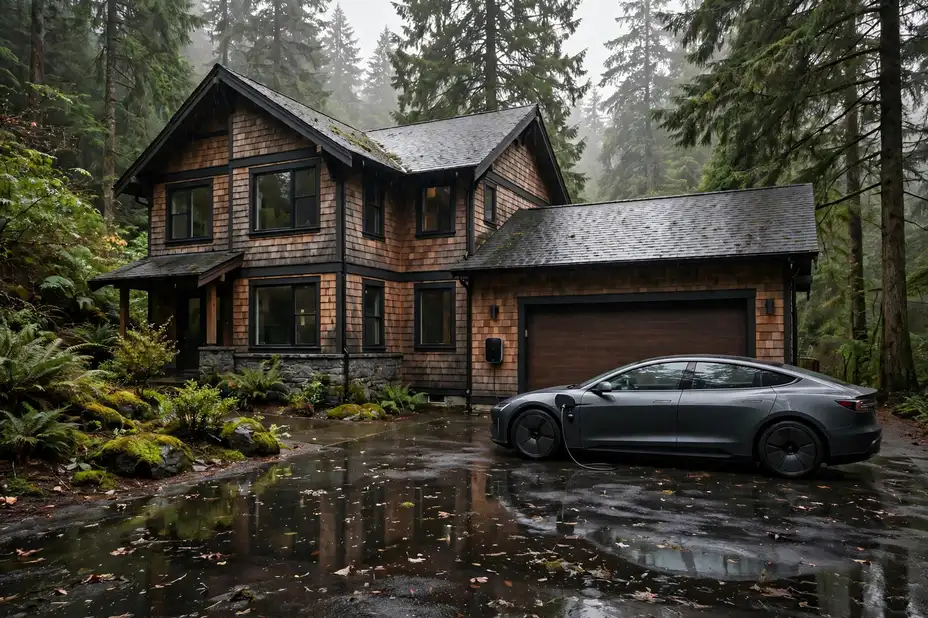
Every city charges differently, and Allentown's difference is legible in the data: an older housing fabric, where panel archaeology is a normal part of the first visit; a genuinely mixed city — houses, townhouses and larger buildings all carry weight; buildings of five or more units hold a substantial share of homes, which keeps the multifamily sections of this page in daily use; renters form a large share of households, so the landlord conversation is a first-class topic here. Read the sections below through that profile and the local advice resolves into specifics — which questions are routine here, and which are rare.
Keep six figures and you keep Allentown's whole electrical character: 47,980 housing units; 43,767 occupied homes; 19,384 owner-occupied; 11,764 detached houses; 39,130 pre-1980 homes; 9,880 homes in buildings of five or more units. Percentages elsewhere on this page are these numbers in disguise — the counts are the originals, and they are the numbers a local installer's experience is actually made of. The page's geography is equally concrete: 8 ZIP codes across Lehigh, centred near 40.60 degrees north latitude. The city anchors the Allentown–Bethlehem–Easton metropolitan area, home to roughly 875,000 people on the research file's metro estimate — the wider labour and housing market this page's installers work across.
The same survey release fills in the household economics around the housing stock: a median home value of $206,600, median gross rent of $1,317, per-capita income of $26,892, and a median resident age of 33. How the city moves completes the picture: 70% of Allentown workers drive to work alone — the commute pattern home charging is built around; 9% work from home, a population whose cars charge on daytime and overnight schedules alike; 3% commute by public transit; 19% of adults hold a bachelor's degree or higher. Vehicle ownership, from the same release: 16,392 households in Allentown run two or more vehicles, and 7,940 run none — the two ends of the market this page serves and does not serve.
Household structure, from the same release: 61% of Allentown households are family households. The burden shares behind the housing stock: 64% of renting households are cost-burdened at the 30%-of-income line, as are 0% of mortgaged owners — context for why the overnight rate window, once set, is treated here as a household fixture rather than a hobby.
Read together, the local facts draw a recognisable picture. The oldest housing throws the longest shadows over an install: knob-and-tube remnants in the attic, ungrounded receptacles, services sized for iceboxes and radios that now feed induction ranges and heat pumps. Where form is mixed, advice must be conditional — the honest page, like the honest installer, keeps asking which housing the reader actually lives in before prescribing.
Renter weight gives this metro's charging story a negotiation at its centre: the circuit is easy, the permission is the project, and the paperwork patterns in the guides matter as much as any load calculation. The install market that serves modest incomes runs on referrals and repetition: neighbourhoods where one good install, fairly scoped, produces the street's next five customers. Investor-owned utility territory runs on published tariffs and regulator-approved programmes: everything material about charging economics here exists in a filed document with an effective date, findable by anyone who reads filings.
Households here are rarely the first on their street; the local knowledge pool — which installer, which tariff, which board precedent — is deep and shared freely. At this scale the city's charging infrastructure is legible — a household can learn the whole local system, its programmes, precedents and people, in an evening's reading. This page is most of that evening. Boards here decide without a statutory script, which makes precedent the currency: the first well-built application in a community quietly writes the policy for everyone after it.
The electrical reality in Allentown homes
The Census Bureau counts Allentown's housing in ways that turn out to be an installer's briefing: the median home dates to 1954, 82% of units stood before 1980, 25% are detached single-unit houses, and 44% of occupied homes belong to their occupants. Panel sizes, wire routes and even permit histories track those proportions street by street. Age shows up electrically before it shows up anywhere else: services sized for a house with a third of today's appliances. Expect the first conversation to be about capacity — what the panel is, what it already feeds, and which of the three routes (circuit, management, upgrade) your numbers support. Attics, basements and interior panel locations are common in this vintage of stock, which is why the run's route gets its own line in any serious quote: distance and finish decide labour more than the charger does.
One further survey line belongs in any Allentown install conversation: 40% of the city's homes heat with electricity — 18,313 households whose panels already carry a major winter load before a charger is contemplated. Electric heat and EV charging are the two largest discretionary loads a house can host, and where they coincide, the load calculation stops being a formality.
The tenure split cuts the other way too: roughly 24,383 occupied homes in Allentown are rented. For those households the charger question is a negotiation with a property owner — written proposal, licensed installer, metering clarity — and it succeeds often enough that installers here keep the pattern ready.
One more structural fact shapes Allentown's charging map: 21% of the city's housing units sit in buildings of five or more units. Those households cannot simply book a circuit — their charger runs through a building, a board and a shared electrical service, which is why the multifamily service and the law section below carry unusual weight on this page.
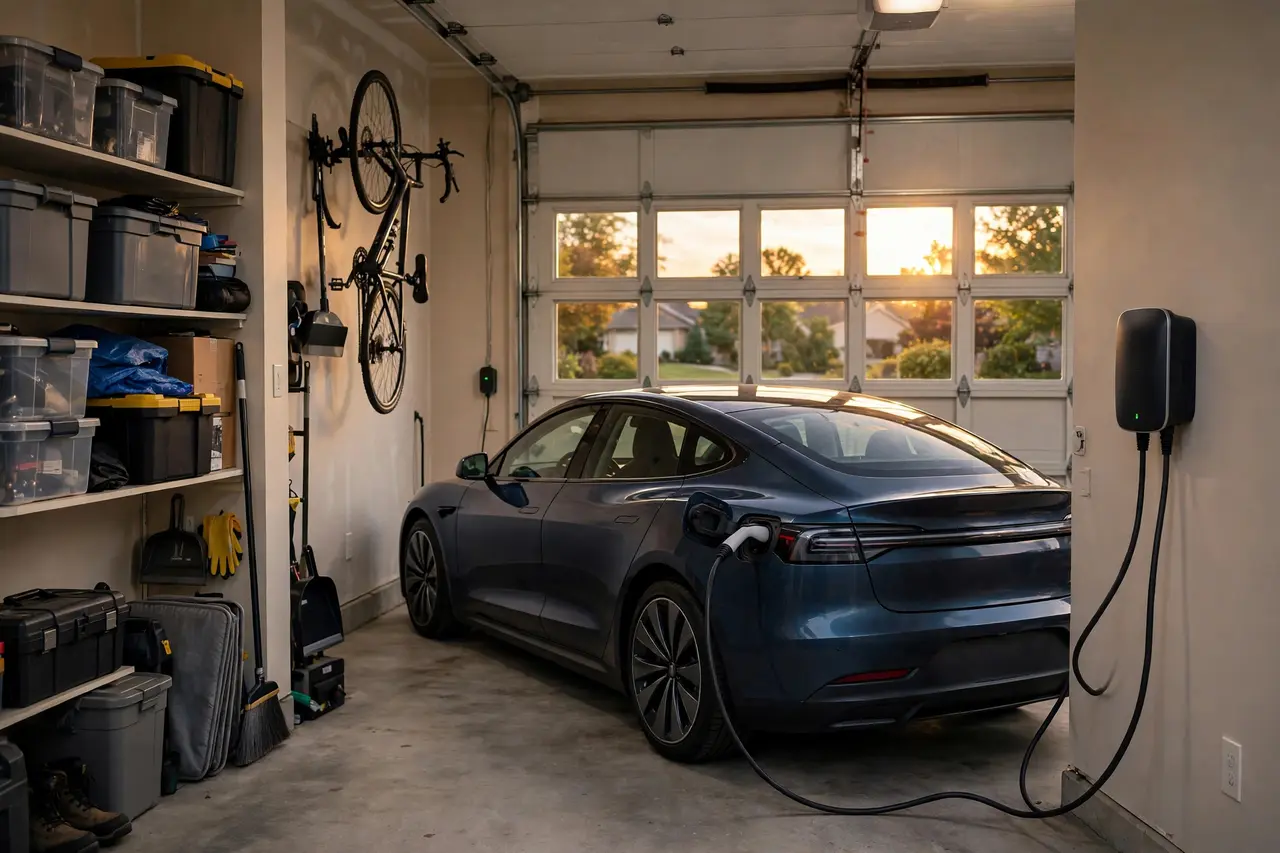
EV charging services in Allentown
The services below are ordered by what Allentown households most often need first, judged from the housing and fleet facts on this page. The full menu follows in the grid — every service is offered in this metro.
Home EV Charger Installation in Allentown
Start to finish, the domestic install is a half-day of electrical work wrapped in a week of scheduling: the survey, the circuit, the mounting, the configuration, the inspection. What the household experiences is simpler — a car that is full every morning and a cable that lives where the car does.
In Allentown: usually the first job a new EV household in Allentown books, scoped to the panel the house already has.
Dedicated Circuit & Electrical Panel Upgrade in Allentown
The upgrade is unglamorous and transformative: a modern panel with honest capacity, labelled circuits, and room for the decade's next three electrical ideas after the charger. Houses rarely regret capacity; they regret its absence annually.
In Allentown: relevant in Allentown wherever a 100-amp panel already carries cooking, heating and hot water before a charger asks for room.
Level 2 Charger Installation in Allentown
The step from a household receptacle to a Level 2 circuit is the step from sipping to drinking: the car takes energy at the rate family life actually consumes it. The work is a breaker, a run of appropriately gauged conductor, and a connection made to torque — modest materials, permanent consequences.
In Allentown: what most Allentown drivers mean when they say they want 'a real charger' — 240 volts, sized to the circuit.
Utility programs and electricity in Allentown
Electricity in Allentown comes from PPL Electric Utilities Corp. Parts of the wider metro are served by Metropolitan Edison Co. The utility matters twice over for a charger install: it sets the time-of-use rates that decide what overnight charging costs you, and it is the organisation that may — or may not — currently help pay for the equipment.
The honest incentive position in Allentown is: nothing verified to claim. The federal charger credit (30C) ended on September 30, 2025; Pennsylvania runs no state replacement for typical home installs; and in the utility and state sources checked for this page, PPL Electric Utilities Corp had no active residential charger rebate to point to. Programs reopen — when one does, it will be on the utility's own site with terms and dates. Anything an installer describes without that paper trail should be treated as conversation, not money.
Solar households should read the export terms alongside the charging ones: the pair decides whether midday charging on home-working days beats the overnight window, and the answer is written in your tariff, not in general advice.
Condos, HOAs and the law in Pennsylvania
There is no Pennsylvania right-to-charge statute to lean on. Some national roundups list protection that does not exist in this state's code; the statute indexes checked for this page are clear. In Allentown, a condo or HOA charger is approved — or not — under the community's own documents, which makes the quality of your application the whole ballgame.
There is also a longer game available to Allentown owners: associations revise their documents, boards turn over, and state legislatures have been adding right-to-charge laws year after year. A written application — and, if it comes to it, a written refusal — is the record that each of those futures works from.
Our condo and HOA guide was written for both kinds of state; the chapters on application packages, metering and cost allocation are the ones that matter in Allentown, where no statute does the persuading for you.
Climate, garages and charger placement
Garages in this region do double duty across the year — summer's workshop, winter's storage — and the charger competes for wall space with all of it. Mounting height, cable reach and a holster placed for the car's real parking position decide whether the station is used daily or negotiated with. The installer who measures the car in place is designing for the household you actually are.
Leaf-fall and pollen sound beneath an electrician's notice until they are inside a connector left lying open. The holster habit — connector docked, cap where the design provides one — is the entire countermeasure, and it is free.
Permits and inspection in Allentown
Bring the panel schedule up to date while the electrician is in it — the new circuit labelled, in the directory, in pen. Inspectors notice; future electricians bless you for it; and the load calculation for any second circuit starts from that card.

Neighbourhoods and ZIP codes served
The page covers 8 ZIP codes in and around Allentown — including 18101, 18102, 18103, 18104, 18105, 18106, 18109, 18195 — across Lehigh. If your ZIP is not in the first set shown, ask anyway: installer coverage follows the metro, not a postcode fence.
The same working area takes in the neighbouring localities of Catasauqua, Whitehall, Emmaus, Coplay, Center Valley, Bethlehem, East Texas, Limeport, Orefield, Macungie, Coopersburg, Trexlertown, Old Zionsville, Laurys Station — the county ring an installer based in Allentown actually drives. Requests from those communities route exactly as city requests do: same services, same permit discipline, same local facts where they differ.
Lehigh County accounts for 34 of the ZIP codes and 25 named postal localities in the research file, the nearest of them Catasauqua, Whitehall, Emmaus, Coplay, Center Valley. The survey counts 378,792 residents in the county, with a median household income of $80,079 and a median home value of $300,400. Measured across its ZIP codes, the Allentown footprint runs about 4 miles north to south and 10 east to west, from ZIP 18101 to 18195 — the ground an installer based here actually covers in a working week.
Beyond the county seats, the working area takes in Catasauqua, Whitehall, Bethlehem, Emmaus, Coplay, Lehigh Valley, Center Valley, East Texas, Limeport, Northampton, Orefield, Macungie, Coopersburg, Trexlertown, Hellertown, Old Zionsville, Laurys Station, Zionhill, Zionsville, Alburtis, Treichlers, Schnecksville, Neffs, Fogelsville, Springtown, Breinigsville, Cherryville, Bath, Spinnerstown, Hereford, Easton, Richlandtown, Milford Square, Walnutport, Slatington, Palm, Maxatawny, Nazareth, Quakertown, Danielsville, East Greenville, Durham, Riegelsville, Mertztown, Trumbauersville, Slatedale, Topton, Pennsburg, Bally, Kintnersville, Tatamy, New Tripoli, Stockertown, Germansville, Red Hill, Aquashicola, Lyon Station, Barto, Palmerton, Ferndale, Wind Gap, Green Lane, Bowmanstown, Revere, Ashfield, Tylersport, Sellersville, Parryville, Sassamansville, Sumneytown, Phillipsburg, Perkasie, Upper Black Eddy, Frederick, Ottsville, Perkiomenville, Lehighton, Bedminster, Woxall, Blooming Glen, Earlington, Milford, Pen Argyl, Martins Creek, Kresgeville, Telford, Kunkletown, Salford, Stewartsville, Bloomsbury, Silverdale, Saylorsburg, Franconia, Gilbert, Dublin, Salfordville, Zieglerville, Erwinna, Andreas, Spring Mount, Hilltown, Harleysville, Souderton, Brodheadsville, Plumsteadville, Pipersville, Fountainville, Sciota, Jim Thorpe, Bangor, Schwenksville, Broadway, Effort, Asbury, Albrightsville, Nesquehoning, Summit Hill, Lansford, Belvidere, Hampton, Washington, Mount Bethel, Coaldale, Stroudsburg, Oxford, Bartonsville, Reeders, Delaware, Portland, Changewater, Weatherly, Tamaqua, Pocono Lake Preserve, Buttzville, Glen Gardner, Delaware Water Gap, Columbia, Minisink Hills, Port Murray, Beaver Meadows, Great Meadows, East Stroudsburg, Junedale, Shawnee On Delaware, Hope, Tresckow, Mcadoo, Kelayres, Vienna, Blairstown, Hackettstown, Johnsonburg, Allamuchy, Greendell, Tranquility, Stillwater — the named localities for which Allentown is the nearest metro in the network (neighbouring metros' pages cover their own ground), each routing to the same installer-matching service.
The wider working area also reaches Bechtelsville, Gilbertsville, Hatfield, Danboro, Blandon, Kulpsville, Limekiln, Skippack, Doylestown, Cedars, Douglassville, Royersford, Norristown, Mainland, Lumberville, Temple, Mechanicsville, Hamburg, Creamery, North Wales, Montgomeryville, Port Clinton, Fairview Village, Mohrsville, Spring House, New Hope, Leesport, Ambler, Blue Bell, Tuscarora, Kimberton, Wycombe, Lambertville, Pocono Pines, Flemington — ground shared with neighbouring metros, where installers cross the same county lines in both directions.
ZIP codes in that shared ground include 08504, 08834, 08868, 08870, 08876, 08887, 17567, 17925, 17932, 17946, 17948, 17960, 17970, 18221, 18225, 18234, 18245, 18249, 18320, 18326, 18334, 18342, 18346, 18347, 18350, 18355, 18370, 18610, 18913, 18922, 18925, 18938, 18956, 18977, 19001, 19002, 19003, 19006, 19008, 19012.
The largest communities in that working area after Allentown itself, by the GeoNames populated-place file: Bethlehem (population 74,892), Easton (population 26,915), Whitehall Township (population 24,896), Fullerton (population 14,925), Phillipsburg (population 14,515), Emmaus (population 11,368), East Stroudsburg (population 10,140), Northampton (population 9,860). Charging demand follows those populations — the subdivisions and town centres where the next driveways, and the next panels, are.
Northampton County reaches into the working area with 318,580 residents, a median household income of $89,184 and a median home value of $308,600; its localities on this page include Bethlehem, Lehigh Valley. Bucks County reaches into the working area with 647,461 residents, a median household income of $114,764 and a median home value of $445,700; its localities on this page include Zionhill, Springtown, Spinnerstown, Richlandtown, Milford Square. Berks County reaches into the working area with 433,015 residents, a median household income of $79,777 and a median home value of $257,300; its localities on this page include Hereford, Maxatawny, Mertztown, Topton, Bally.
| ZIP | Locality | County |
|---|---|---|
| 18101 | Allentown | Lehigh |
| 18102 | Allentown | Lehigh |
| 18103 | Allentown | Lehigh |
| 18105 | Allentown | Lehigh |
| 18109 | Allentown | Lehigh |
| 18104 | Allentown | Lehigh |
| 18032 | Catasauqua | Lehigh |
| 18052 | Whitehall | Lehigh |
| 18018 | Bethlehem | Northampton |
| 18098 | Emmaus | Lehigh |
| 18099 | Emmaus | Lehigh |
| 18037 | Coplay | Lehigh |
| 18015 | Bethlehem | Northampton |
| 18002 | Lehigh Valley | Northampton |
| 18034 | Center Valley | Lehigh |
| 18049 | Emmaus | Lehigh |
| 18025 | Bethlehem | Lehigh |
| 18017 | Bethlehem | Northampton |
| 18001 | Lehigh Valley | Northampton |
| 18003 | Lehigh Valley | Northampton |
| 18016 | Bethlehem | Northampton |
| 18046 | East Texas | Lehigh |
| 18060 | Limeport | Lehigh |
| 18067 | Northampton | Northampton |
| 18106 | Allentown | Lehigh |
| 18069 | Orefield | Lehigh |
| 18062 | Macungie | Lehigh |
| 18036 | Coopersburg | Lehigh |
| 18087 | Trexlertown | Lehigh |
| 18055 | Hellertown | Northampton |
| 18068 | Old Zionsville | Lehigh |
| 18195 | Allentown | Lehigh |
| 18059 | Laurys Station | Lehigh |
| 18020 | Bethlehem | Northampton |
| 18981 | Zionhill | Bucks |
| 18092 | Zionsville | Lehigh |
| 18011 | Alburtis | Lehigh |
| 18086 | Treichlers | Northampton |
| 18078 | Schnecksville | Lehigh |
| 18065 | Neffs | Lehigh |
| 18051 | Fogelsville | Lehigh |
| 18081 | Springtown | Bucks |
| 18031 | Breinigsville | Lehigh |
| 18035 | Cherryville | Northampton |
| 18014 | Bath | Northampton |
| 18968 | Spinnerstown | Bucks |
| 18056 | Hereford | Berks |
| 18045 | Easton | Northampton |
| 18955 | Richlandtown | Bucks |
| 18935 | Milford Square | Bucks |
| 18088 | Walnutport | Northampton |
| 18080 | Slatington | Lehigh |
| 18070 | Palm | Montgomery |
| 19538 | Maxatawny | Berks |
| 18064 | Nazareth | Northampton |
| 18951 | Quakertown | Bucks |
| 18038 | Danielsville | Northampton |
| 18041 | East Greenville | Montgomery |
| 18039 | Durham | Bucks |
| 18077 | Riegelsville | Bucks |
| 18042 | Easton | Northampton |
| 19539 | Mertztown | Berks |
| 18970 | Trumbauersville | Bucks |
| 18079 | Slatedale | Lehigh |
| 19562 | Topton | Berks |
| 18073 | Pennsburg | Montgomery |
| 19503 | Bally | Berks |
| 18043 | Easton | Northampton |
| 18044 | Easton | Northampton |
| 18930 | Kintnersville | Bucks |
| 18085 | Tatamy | Northampton |
| 18066 | New Tripoli | Lehigh |
| 18083 | Stockertown | Northampton |
| 18053 | Germansville | Lehigh |
| 18076 | Red Hill | Montgomery |
| 18012 | Aquashicola | Carbon |
| 19536 | Lyon Station | Berks |
| 19504 | Barto | Berks |
| 18071 | Palmerton | Carbon |
| 18921 | Ferndale | Bucks |
| 18091 | Wind Gap | Northampton |
| 18040 | Easton | Northampton |
| 18054 | Green Lane | Montgomery |
| 18030 | Bowmanstown | Carbon |
| 18953 | Revere | Bucks |
| 18212 | Ashfield | Carbon |
| 18971 | Tylersport | Montgomery |
| 18960 | Sellersville | Bucks |
| 18244 | Parryville | Carbon |
| 19472 | Sassamansville | Montgomery |

Planning the install: from panel to parking
Experienced Allentown installers talk about 'the tell': the small observation that predicts the job. A panel directory in pencil with three generations of handwriting. A garage converted, then converted back. A charger-shaped hole in the household's plans — the second car already ordered. Mention your own tells at the visit; they are scope information, and scope named early is scope settled fairly.
Finally, photograph the finished work — station, nameplate, panel directory with the new breaker labelled — and file it with the inspection record. When the car changes, the house sells or a second station joins the first, that folder is the difference between a five-minute answer and an archaeological dig.
Home charging know-how for Allentown households
Making the rate window automatic
Time-of-use tariffs reward households whose charging happens while the grid sleeps, and the reward compounds silently: every night, for the life of the car. The mechanism is trivial — a schedule set in the vehicle or the station — but the details decide whether it survives contact with real life: the window must fit the household's latest departure, the schedule must yield gracefully on the nights the car comes home empty, and the settings must live somewhere the household can find them again. Set it up at commissioning, with the installer, and the saving becomes infrastructure rather than intention.
Dust, grime and the working garage
Garages are workshops, and workshops make dust. A charging connector living in one needs its holster the way a tool needs its hook — off the bench, out of the sawdust's fall line, capped by its dock rather than dangling. Metal filings and charger contacts are particular enemies; grinding and charging do not share a corner happily. None of this asks for a cleanroom — just the ordinary discipline of a space that works for a living, extended to the one appliance that is also a fuel line.
Timing the install with other work
The least disruptive charger circuit is the one installed while other electrical work is already open. A renovation, a panel project, a garage build — each already carries the mobilisation, the permit process and the opened walls that a standalone charger job must pay for alone. The sequencing conversation costs nothing: tell the installer what else the house has planned in the next two years, and let the scope absorb the charger while the house is already a building site. The same logic in reverse — roughing in during this project for a charger planned later — is the EV-ready idea, and it belongs in the same sentence.
Getting onto the board's agenda
Association decisions happen inside a procedure, and the procedure has a door: the agenda. Applications that miss the submission deadline wait a full cycle regardless of merit, so the first question for any board is clerical — when do items close for the next meeting, and in what format. Arrive inside the procedure with a complete package and the discussion is about your design; arrive outside it and the discussion is about process, and process always wins the evening. Property managers, asked politely, will tell you the format they prefer applications in.
Planning for the second EV
The second electric car rarely arrives as a surprise — it is the household's own verdict on the first one. Planning for it at the first install costs little: conduit sized a step up, panel capacity reserved on the schedule, and a station position that can serve a second bay or share its circuit through power-sharing equipment. Retrofitting the same readiness later means reopening finished work. Installers ask about the five-year picture during the site visit because the honest answers change today's scope more cheaply than any other conversation in the project.

Frequently asked questions
Is the federal charger tax credit still available in Allentown, PA?
The three possible pots are all, at present, empty for a Allentown homeowner: no PPL Electric Utilities Corp residential rebate in current published sources, no Pennsylvania home programme, and a federal credit that closed on September 30, 2025. Programmes do relaunch — on the utility's site, with dates — and until one does, the honest quote is the one with no rebate line at all.
What can my HOA in Allentown, PA do about a charger install?
Possibly, yes. Pennsylvania has no statewide right-to-charge law in the authoritative indexes checked for this page, so your community's covenants govern. A complete written application — licensed installer, dedicated circuit, owner-paid metering and insurance — is the approach that gets approvals here.
Will my Allentown, PA home need a panel upgrade for a Level 2 charger?
It hinges on two numbers you cannot read off the panel door: the service's rating, and what the load calculation says it already carries. The vintage of Allentown's stock — median build year 1954, about 82% of homes from before 1980 — means both answers are common here. The charger enters the arithmetic at 125% of its draw; whatever room survives that entry decides between a circuit, a management device, and an upgrade.
How quickly will a Level 2 charger fill my car in Allentown, PA?
Level 2 is several-fold faster in the only unit that matters — miles back per hour parked: roughly 25–40 against Level 1's 3–5. The exact figure follows the circuit: a 40-amp circuit and a 60-amp circuit are both Level 2, and the car's onboard limit may sit below either. Your installer matches the three numbers at the site visit.
What happens next after I send a request?
Three things happen, in order. Your request is routed to licensed installers who work in Allentown; one of them contacts you to book a site visit; and the visit produces a written quote based on your actual panel and parking. PlugReady USA runs the matching, not the tools — the contractor on the job is the installer who visits.
My Allentown home has no garage — where does the charger go?
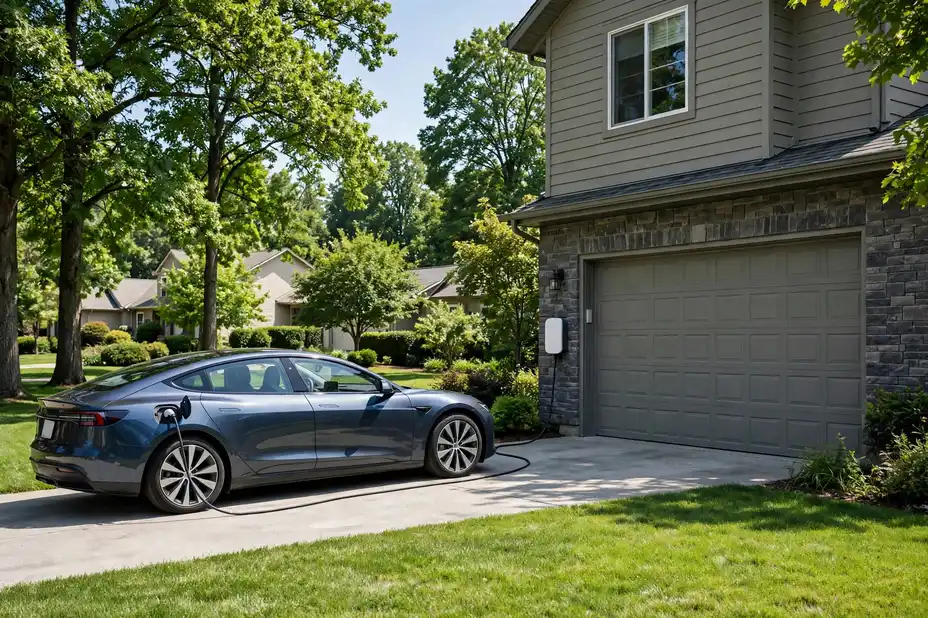
Outdoor mounting is a standard configuration, not a compromise: stations listed for exterior use mount on the house wall by the drive or on a post at the pad. Your installer will check enclosure rating, drainage, cable reach to the port, and clearance from vehicle swing — the four things that decide whether an outdoor install feels designed or improvised.
Nearby cities in Pennsylvania
- EV charger installation in Reading — about 31 miles from Allentown, metro population 430,000
- EV charger installation in Philadelphia — about 46 miles from Allentown, metro population 6,100,000
- EV charger installation in Lebanon — about 55 miles from Allentown, metro population 145,000
- EV charger installation in Scranton — about 56 miles from Allentown, metro population 575,000
- EV charger installation in Lancaster — about 59 miles from Allentown, metro population 575,000
- EV charger installation in Harrisburg — about 82 miles from Allentown, metro population 600,000
- EV charger installation in Trenton, NJ — about 47 miles from Allentown, metro population 390,000
- EV charger installation in Vineland, NJ — about 81 miles from Allentown, metro population 155,000
- EV charger installation in New York, NY — about 82 miles from Allentown, metro population 19,900,000
Ready to charge at home in Allentown?
Two minutes of form, and the request is in front of licensed installers who cover this city — quotes follow site visits, in writing.