EV Charger Installation in Reading, PA
Charging where you park, in Reading: the utility programs, state law, permit process and housing facts behind a home charger install, gathered in one place.
The economics of home charging are made in two places: the tariff you charge on, and the circuit you charge through. Both are decided locally, and both are decided before the hardware is chosen. Reading itself is home to about 96,008 people; Pennsylvania counted 113,400 battery-electric vehicles and 55,900 plug-in hybrids by the end of 2025, and the metro's households are making these two decisions every week. Below: the utility position for Reading as verified, the state law on association charging, the permit route, and the housing-stock numbers that tell you how much panel conversation to expect at your own address.
A word on how to use the page: each section answers one of the questions an installer will ask you anyway — panel, utility, property rules, permits — with Reading's actual answers. Read the two that apply to your house and you will start the quoting conversation several steps ahead.
Measured demand, not enthusiasm, put Reading in Tier C of this network: PA stock. For a homeowner the useful translation is simpler — installers here do this work weekly, know the local permit counter, and have seen your housing stock before.
Survey context for Reading, in the three lines installers actually use: median household income $40,081; owner-occupation at 43%; single-unit detached homes at 8%. Income tracks adoption pace, tenure decides whose signature a job needs, and structure decides whether the answer is a garage circuit or a building negotiation.

Put the survey together and Reading's charging profile reads like this: an older housing fabric, where panel archaeology is a normal part of the first visit; a genuinely mixed city — houses, townhouses and larger buildings all carry weight; buildings of five or more units hold a substantial share of homes, which keeps the multifamily sections of this page in daily use; and renters form a large share of households, so the landlord conversation is a first-class topic here. That combination — more than any single number — is what the installers working here plan around, and it is the lens for everything on this page.
Keep six figures and you keep Reading's whole electrical character: 35,408 housing units; 33,334 occupied homes; 14,241 owner-occupied; 2,905 detached houses; 31,675 pre-1980 homes; 7,309 homes in buildings of five or more units. Percentages elsewhere on this page are these numbers in disguise — the counts are the originals, and they are the numbers a local installer's experience is actually made of. The page's geography is equally concrete: 12 ZIP codes across Berks, centred near 40.35 degrees north latitude. The city anchors the Reading metropolitan area, home to roughly 430,000 people on the research file's metro estimate — the wider labour and housing market this page's installers work across.
The same survey release fills in the household economics around the housing stock: a median home value of $157,200, median gross rent of $1,119, per-capita income of $19,034, and a median resident age of 32. How the city moves completes the picture: 56% of Reading workers drive to work alone — the commute pattern home charging is built around; 6% work from home, a population whose cars charge on daytime and overnight schedules alike; 3% commute by public transit; 14% of adults hold a bachelor's degree or higher. Vehicle ownership, from the same release: 10,264 households in Reading run two or more vehicles, and 7,649 run none — the two ends of the market this page serves and does not serve.
Two burden statistics frame the economics: in Reading, 58% of renters and 0% of mortgage-holding owners are housing-cost burdened at the standard 30% threshold. And 62% of households are family households, the segment most likely to run the two-vehicle, two-schedule pattern the second-vehicle planning notes address.
Read together, the local facts draw a recognisable picture. The oldest housing throws the longest shadows over an install: knob-and-tube remnants in the attic, ungrounded receptacles, services sized for iceboxes and radios that now feed induction ranges and heat pumps. Mixed form means mixed timelines: a homeowner's install is a fortnight's scheduling, a condo's is a season's governance; the metro's charging growth arrives on both clocks at once.
Property managers are the metro's charging gatekeepers at this tenure mix, and the installers who thrive are the ones whose proposals arrive manager-shaped: standardised, insured, reversible on paper. Budget discipline shapes the specification — the circuit sized exactly, the management device considered wherever it defers a service upgrade, every scope line asked to justify itself. Tariff design is the quiet policy: the shape of the overnight window, the demand charges commercial customers face, the interconnection queue's pace — all set in dockets the diligent can read.
The used-EV wave has arrived at this fleet scale, and it democratises the install question: households that bought electric second-hand, at family-car money, asking the same panel questions as the pioneers — with better local answers available. Smaller metros adopt on their own clock: the fleet follows the dealers and the demographics, and each install is a visible event a street notices. Without a state charging statute, shared-property approvals in this metro are won on paper quality: metering clarity, licensed installers, insurance, reversibility — the complete package the guides set out.
The electrical reality in Reading homes
The Census Bureau's latest American Community Survey puts the median Reading home's build year at 1938: about 89% of the city's housing units were built before 1980, 8% are single-unit detached houses, and 43% of occupied homes are owner-occupied. Those three numbers predict most of what an installer will find. Age shows up electrically before it shows up anywhere else: services sized for a house with a third of today's appliances. Expect the first conversation to be about capacity — what the panel is, what it already feeds, and which of the three routes (circuit, management, upgrade) your numbers support. Porches, carports and parking pads carry a real share of this city's charging, because the stock predates the two-car garage as a standard feature — outdoor-rated equipment is a local staple, not an edge case.
Heating fuel is the survey's quiet clue to panel life: in Reading, 28% of homes heat electrically (9,338 households), against 57% heating with gas. A house already heating electrically has a service sized with that load in its history; a gas-heated house may have capacity to spare — either way the fuel mix is part of what the installer is reading.
One further split matters for how this page is organised: about 19,093 of Reading's occupied homes are renter-occupied. Everything above assumes you can approve your own electrical work; where you cannot, the approval layer — landlord or association — becomes part of the job, which is why the law section carries unusual weight here.
The city's stock is not all houses: 21% of units are in structures of five or more. Shared buildings mean shared panels, assigned parking and association process — the substance of the multifamily sections below.
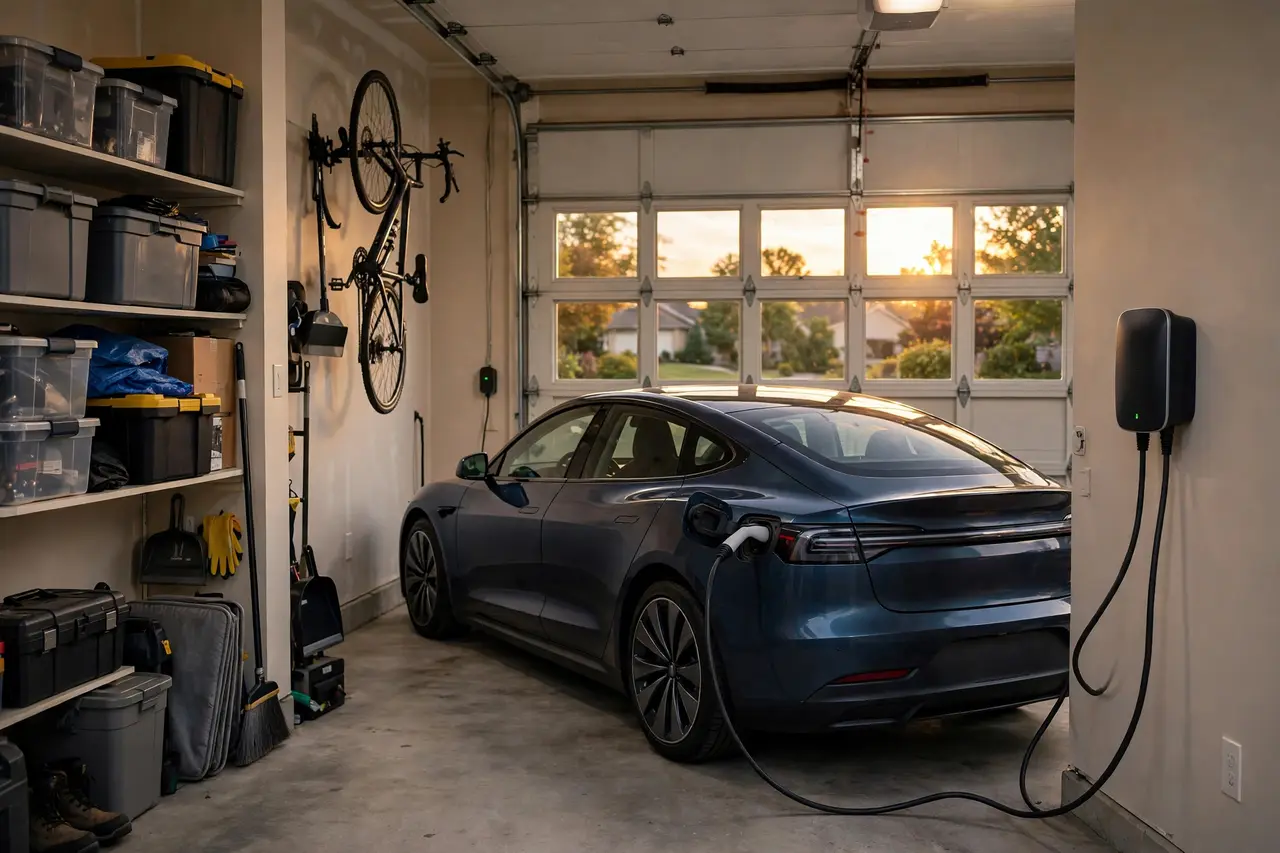
EV charging services in Reading
Installers in Reading book the same ten services as everywhere — but not in the same proportions. The three leading cards below are this city's pattern, set by its panels, its buildings and its statute book.
Home EV Charger Installation in Reading
The residential standard: a station where the car sleeps, on a circuit of its own, installed under permit. Variations are all local — the panel's spare room, the run's route through the house's fabric, and the parking pattern the cable has to serve.
In Reading: where most Reading projects start and finish: one circuit, one station, one inspection.
Dedicated Circuit & Electrical Panel Upgrade in Reading
A service change is the least reversible and most enabling job on this page: it re-bases the whole house's electrical life. Done inside the charger project, it shares the permit, the utility visit and the electrician's day with the circuit it makes room for.
In Reading: the capacity fix that lets the charger circuit go in without the rest of the house living at its limit.
Level 2 Charger Installation in Reading
What is being bought is time: the hours between arriving home and leaving again, converted into range at 240 volts. The conversion hardware is ordinary — breaker, conductor, station — and the design work is matching the three to the household's miles and the panel's arithmetic.
In Reading: the 240-volt step that turns overnight charging in Reading from a trickle into a full battery by morning.
Utility programs and electricity in Reading
Electricity in Reading comes from PPL Electric Utilities Corp. Parts of the wider metro are served by Metropolitan Edison Co, Borough of Kutztown. The utility matters twice over for a charger install: it sets the time-of-use rates that decide what overnight charging costs you, and it is the organisation that may — or may not — currently help pay for the equipment.
Why does this page labour the absence of a rebate? Because in Reading the phantom rebate is the most common distortion in charger quotes: a figure justified by money that is not, at present, claimable. The verified position: federal 30C ended September 30, 2025; no Pennsylvania replacement for typical home installs; no PPL Electric Utilities Corp residential charger rebate in the sources checked. If someone quotes you a rebate, the follow-up is one sentence — show me the program page — and its answer decides the quote's credibility.
While you are reading your tariff, check how your plan treats the evening peak. A charger scheduled to start after the peak window is the single easiest saving in home charging, and it is set once, in the car or the station, then forgotten.
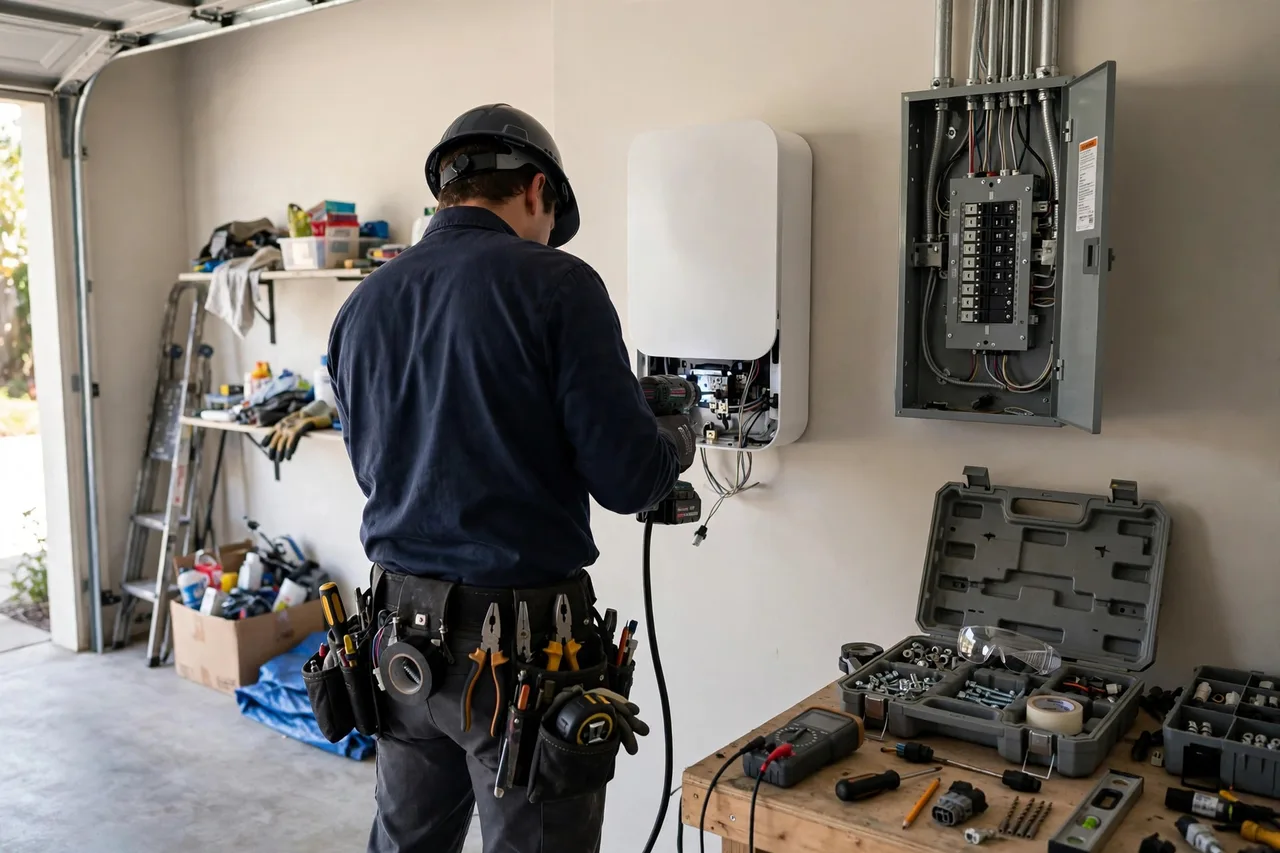
Condos, HOAs and the law in Pennsylvania
Pennsylvania has no statewide right-to-charge law. That needs saying plainly, because roundups on the internet sometimes claim otherwise: in the authoritative statute indexes checked for this page, no Pennsylvania law prevents a homeowners association or condominium from refusing a charger in a common or assigned space. Your community's own covenants and board govern the question in Reading.
Metering is the objection that sinks more applications than any other, and it is the easiest to pre-empt: propose, in the application itself, how the electricity will be measured and paid for by you — a submeter, a separately metered circuit, or a flat arrangement the board can audit. Boards refuse ambiguity far more often than they refuse chargers.
Our condo and HOA guide was written for both kinds of state; the chapters on application packages, metering and cost allocation are the ones that matter in Reading, where no statute does the persuading for you.
Climate, garages and charger placement
Storm seasons punctuate the year here, and the installation's weather manners are set at mounting time: enclosures sealed as listed, exterior runs pitched so water travels away from entries, and a station position that the roof's drip line does not cross. Five minutes of the site visit, decades of consequence.
Freeze-thaw cycles test the install's civil engineering more than its electronics: pedestal foundations heave, conduit seals work, driveway surfaces move. A local installer has watched a decade of winters grade the neighbourhood's installs and specifies the foundation accordingly.

Permits and inspection in Reading
Timelines are set by the city's counter, not the installer: the electrical work itself is typically a day, while permit issuance and the inspection visit follow the department's queue. A quote that promises a date should tell you which parts of that date the installer actually controls.

Neighbourhoods and ZIP codes served
The page covers 12 ZIP codes in and around Reading — including 19601, 19602, 19603, 19604, 19605, 19606, 19607, 19608, 19609, 19610, 19611, 19612 — across Berks. If your ZIP is not in the first set shown, ask anyway: installer coverage follows the metro, not a postcode fence.
The same working area takes in the neighbouring localities of Temple, Leesport, Mohnton, Blandon, Limekiln, Birdsboro, Wernersville, Oley, Fleetwood, Mohrsville, Shoemakersville, Centerport, Robesonia, Earlville — the county ring an installer based in Reading actually drives. Requests from those communities route exactly as city requests do: same services, same permit discipline, same local facts where they differ.
Berks County accounts for 53 of the ZIP codes and 42 named postal localities in the research file, the nearest of them Temple, Leesport, Mohnton, Blandon, Limekiln. The survey counts 433,015 residents in the county, with a median household income of $79,777 and a median home value of $257,300. Measured across its ZIP codes, the Reading footprint runs about 10 miles north to south and 8 east to west, from ZIP 19601 to 19612 — the ground an installer based here actually covers in a working week.
Beyond the county seats, the working area takes in Temple, Leesport, Mohnton, Blandon, Limekiln, Birdsboro, Wernersville, Oley, Fleetwood, Adamstown, Mohrsville, Shoemakersville, Centerport, Reinholds, Robesonia, Bowmansville, Earlville, Geigertown, Douglassville, Virginville, Denver, Bernville, Morgantown, Reamstown, Bowers, Pine Forge, Hamburg, Terre Hill, Shartlesville, Kutztown, East Earl, Boyertown, Narvon, Elverson, Goodville, Saint Peters, Lenhartsville, New Berlinville, Port Clinton, Bechtelsville, Suplee, Pottstown, Honey Brook, Gilbertsville, Glenmoore, Kempton, Auburn, Brandamore, Parker Ford, Uwchland, Orwigsburg, Lyndell, Spring City, Schuylkill Haven, Chester Springs, Royersford, Kimberton, New Ringgold, Coatesville, Downingtown, Thorndale, Exton, Wagontown, Southeastern, Birchrunville, Port Carbon, Modena, Cumbola, New Philadelphia, Middleport, Mary D, Brockton, Tuscarora, Barnesville, Unionville, Mahanoy City, Delano, Quakake, Sheppton, Oneida, Zion Grove, Nuremberg — the named localities for which Reading is the nearest metro in the network (neighbouring metros' pages cover their own ground), each routing to the same installer-matching service.
The wider working area also reaches Strausstown, Mertztown, Akron, Palm, New Tripoli, Gap, Zieglerville, Sadsburyville, Ronks, Smoketown, Cornwall, Pomeroy, Spring Mount, Orefield, Schwenksville, Green Lane, Salfordville, Germansville, Fredericksburg, Andreas, Quentin, Mar Lin, Schnecksville, Seltzer, Strasburg, Llewellyn, Oaks, Ravine, Mount Gretna, Skippack, Valley Forge, Branchdale, Trumbauersville, Bausman, West Chester — ground shared with neighbouring metros, where installers cross the same county lines in both directions.
ZIP codes in that shared ground include 17038, 17073, 17077, 17085, 17087, 17088, 17312, 17406, 17520, 17527, 17529, 17533, 17551, 17552, 17554, 17560, 17570, 17578, 17580, 17604, 17605, 17607, 17608, 17611, 17699, 17901, 17920, 17932, 17938, 17963, 17978, 17981, 17983, 18002, 18031, 18032, 18034, 18041, 18042, 18049.
The largest communities in that working area after Reading itself, by the GeoNames populated-place file: Pottstown (population 22,664), Limerick (population 18,074), Coatesville (population 13,148), Wyomissing (population 10,469), Sanatoga (population 8,378), Downingtown (population 7,946), Chester Springs (population 7,520), Blandon (population 7,152), Lionville (population 6,189), Shillington (population 5,265), Schuylkill Haven (population 5,228), Birdsboro (population 5,159), Kutztown (population 5,028), Gilbertsville (population 4,832), Royersford (population 4,771), Whitfield (population 4,733), Hamburg (population 4,398), Lorane (population 4,236), Pennside (population 4,215), West Reading (population 4,191). Charging demand follows those populations — the subdivisions and town centres where the next driveways, and the next panels, are.
Chester County reaches into the working area with 547,840 residents, a median household income of $127,208 and a median home value of $485,600; its localities on this page include Elverson, Saint Peters, Suplee, Pottstown, Honey Brook. Schuylkill County reaches into the working area with 143,558 residents, a median household income of $68,313 and a median home value of $153,000; its localities on this page include Port Clinton, Auburn, Orwigsburg, Schuylkill Haven, New Ringgold. Lancaster County reaches into the working area with 557,931 residents, a median household income of $86,959 and a median home value of $301,100; its localities on this page include Adamstown, Reinholds, Bowmansville, Denver, Reamstown. Montgomery County reaches into the working area with 867,573 residents, a median household income of $113,915 and a median home value of $436,700; its localities on this page include Pottstown, Gilbertsville, Royersford.
| ZIP | Locality | County |
|---|---|---|
| 19601 | Reading | Berks |
| 19604 | Reading | Berks |
| 19602 | Reading | Berks |
| 19611 | Reading | Berks |
| 19610 | Reading | Berks |
| 19605 | Reading | Berks |
| 19603 | Reading | Berks |
| 19609 | Reading | Berks |
| 19606 | Reading | Berks |
| 19560 | Temple | Berks |
| 19607 | Reading | Berks |
| 19533 | Leesport | Berks |
| 19608 | Reading | Berks |
| 19540 | Mohnton | Berks |
| 19612 | Reading | Berks |
| 19510 | Blandon | Berks |
| 19535 | Limekiln | Berks |
| 19508 | Birdsboro | Berks |
| 19565 | Wernersville | Berks |
| 19547 | Oley | Berks |
| 19522 | Fleetwood | Berks |
| 19501 | Adamstown | Lancaster |
| 19541 | Mohrsville | Berks |
| 19555 | Shoemakersville | Berks |
| 19516 | Centerport | Berks |
| 17569 | Reinholds | Lancaster |
| 19551 | Robesonia | Berks |
| 17507 | Bowmansville | Lancaster |
| 19519 | Earlville | Berks |
| 19523 | Geigertown | Berks |
| 19518 | Douglassville | Berks |
| 19564 | Virginville | Berks |
| 17517 | Denver | Lancaster |
| 19506 | Bernville | Berks |
| 19543 | Morgantown | Berks |
| 17567 | Reamstown | Lancaster |
| 19511 | Bowers | Berks |
| 19548 | Pine Forge | Berks |
| 19526 | Hamburg | Berks |
| 17581 | Terre Hill | Lancaster |
| 19554 | Shartlesville | Berks |
| 19530 | Kutztown | Berks |
| 17519 | East Earl | Lancaster |
| 19512 | Boyertown | Berks |
| 17555 | Narvon | Lancaster |
| 19520 | Elverson | Chester |
| 17528 | Goodville | Lancaster |
| 19470 | Saint Peters | Chester |
| 19534 | Lenhartsville | Berks |
| 19545 | New Berlinville | Berks |
| 19549 | Port Clinton | Schuylkill |
| 19505 | Bechtelsville | Berks |
| 19371 | Suplee | Chester |
| 19465 | Pottstown | Chester |
| 19344 | Honey Brook | Chester |
| 19464 | Pottstown | Montgomery |
| 19525 | Gilbertsville | Montgomery |
| 19343 | Glenmoore | Chester |
| 19529 | Kempton | Berks |
| 17922 | Auburn | Schuylkill |
| 19316 | Brandamore | Chester |
| 19457 | Parker Ford | Chester |
| 19480 | Uwchland | Chester |
| 17961 | Orwigsburg | Schuylkill |
| 19354 | Lyndell | Chester |
| 19475 | Spring City | Chester |
| 17972 | Schuylkill Haven | Schuylkill |
| 19425 | Chester Springs | Chester |
| 19468 | Royersford | Montgomery |
| 19442 | Kimberton | Chester |
| 17960 | New Ringgold | Schuylkill |
| 19320 | Coatesville | Chester |
| 19335 | Downingtown | Chester |
| 19372 | Thorndale | Chester |
| 19341 | Exton | Chester |
| 19376 | Wagontown | Chester |
| 19397 | Southeastern | Chester |
| 19398 | Southeastern | Chester |
| 19399 | Southeastern | Chester |
| 19421 | Birchrunville | Chester |
| 17965 | Port Carbon | Schuylkill |
| 19358 | Modena | Chester |
| 17930 | Cumbola | Schuylkill |
| 17959 | New Philadelphia | Schuylkill |
| 17953 | Middleport | Schuylkill |
| 17952 | Mary D | Schuylkill |
| 17925 | Brockton | Schuylkill |
| 17982 | Tuscarora | Schuylkill |
| 18214 | Barnesville | Schuylkill |
| 19375 | Unionville | Chester |

Planning the install: from panel to parking
The order of operations protects you. Load calculation before equipment choice, because the circuit sizes the station's settings. Route before purchase, because reach decides models. Permit before work, because inspection closes the file the insurer will one day read. In Reading the sequence is the same as everywhere — what varies is only how much of it your particular house asks for, and finding that out is the site visit's entire purpose.
One more piece of sequencing advice Reading installers give consistently: if the panel is being opened anyway, settle the other electrical maybes in the same visit — the circuit you will want next year costs least while the permit and the electrician are already in the house.
Home charging know-how for Reading households
Shutoffs and sensible safety
Every charger installation contains its own off switch: the breaker in the panel, and, on larger circuits, a disconnect within sight of the equipment that the code requires. Knowing where both are — and that the station itself stops the session when the connector is unlatched — is the whole safety briefing, and a good installer gives it unprompted at handover. The equipment is listed, protected and designed to be operated daily by non-electricians; the homeowner's part is simply to know the two switches and to treat any change in behaviour — heat, noise, repeated trips — as a reason to call rather than to reset.
The driveway is shared infrastructure
In households where the charger serves a shared driveway, the install acquires a social protocol alongside its electrical one: whose night, which side, how the cable crosses, what happens when guests park across the route. The designs that work settle the protocol physically — a station reachable from both bays, a cable path that crosses no one's door swing — rather than relying on nightly negotiation. Infrastructure that requires diplomacy every evening was under-designed in the morning.
Home as the road-trip base
A home charger changes road trips at both ends. Departure: the car leaves full, on the household's lowest-cost energy, at the household's chosen hour. Return: it arrives home low without anxiety, because the recovery is the driveway rather than a detour. The middle belongs to the public networks; the ends — the parts travellers actually remember — belong to the wall at home. Households that tour often find this, quietly, is the feature they would surrender last.
The charger among workshop loads
Garages that double as workshops put the charger in interesting company: welders, compressors, dust collectors — loads with appetites and opinions. The load calculation for such a house reads the whole tenancy, and the honest conversation includes which loads genuinely coincide. A station scheduled into the workshop's quiet hours lives peacefully; one competing with the table saw's startup surge teaches the household about breaker curves the experiential way.

Frequently asked questions
Is the federal charger tax credit still available in Reading, PA?
No. The federal Alternative Fuel Refueling Property Credit (30C) ended for equipment placed in service after September 30, 2025. In the sources checked for this page, PPL Electric Utilities Corp had no verified residential charger rebate running either — if an installer names a current program, ask for its published terms.
Can my HOA or condo board in Reading, PA refuse my charger?
In Reading, they can — there is no Pennsylvania statute stopping them. Right-to-charge protection simply has not been enacted here, so the board's own rules decide. Owners do still get approved regularly: the applications that succeed answer the board's concerns (metering, insurance, restoration, a licensed installer) before the meeting, in writing.
Does a Level 2 charger mean a panel upgrade for a Reading, PA home?
The answer lives in your panel's directory and its arithmetic, not in the car's requirements. With 89% of Reading's homes predating 1980 (median build 1938), local installers see both situations weekly: the 200-amp panel that takes the circuit directly, and the full 100-amp service that needs capacity work first. The site visit exists to sort your house into one of those two piles, on numbers.
How quickly will a Level 2 charger fill my car in Reading, PA?
In parked hours: a Level 1 cord returns about 3–5 miles for each of them, and a Level 2 circuit returns roughly 25–40, set by its amperage and the car's acceptance. For a Reading household parking ten hours, that is the difference between recovering a short errand day and recovering any day the car can legally drive.
How does the installer matching on this page work?
Your request — service, Reading ZIP, property type and timing — goes to licensed local installers who cover Reading. They contact you directly to arrange a site visit and quote. PlugReady USA is the matching service, not the installer, and the sections above exist so you can judge any quote against the local facts.
How long does a typical home charger installation take in Reading, PA?
Plan on a day of electrical work for the standard layout, plus the permit and inspection appointments that bracket it on the city's calendar. Capacity work — an upgrade or a subpanel — extends the electrical day; approvals in a condo or HOA extend the calendar, not the tools. Your site visit ends with all three durations stated separately.
Nearby cities in Pennsylvania
- EV charger installation in Lebanon — about 26 miles from Reading, metro population 145,000
- EV charger installation in Lancaster — about 28 miles from Reading, metro population 575,000
- EV charger installation in Allentown — about 31 miles from Reading, metro population 875,000
- EV charger installation in Philadelphia — about 51 miles from Reading, metro population 6,100,000
- EV charger installation in York — about 51 miles from Reading, metro population 455,000
- EV charger installation in Harrisburg — about 53 miles from Reading, metro population 600,000
- EV charger installation in Trenton, NJ — about 68 miles from Reading, metro population 390,000
- EV charger installation in Vineland, NJ — about 79 miles from Reading, metro population 155,000
- EV charger installation in Baltimore, MD — about 82 miles from Reading, metro population 2,850,000
Ready to charge at home in Reading?
Send the essentials — what you need, where, and what kind of property — and a licensed local installer will pick it up from there.