EV Charger Installation in Hagerstown, MD
Home Level 2 charging, panel upgrades and condo installs in Hagerstown — matched to licensed local installers, with the local facts that shape the job set out below.
Every home charger installation is the same four decisions wearing local clothes: capacity in the panel, a route for the circuit, a position for the station, and paperwork that proves it was done properly. What changes from city to city is the content of those decisions — and in Hagerstown the content is specific. Hagerstown itself is home to about 43,665 people. Maryland's registered fleet stood at 120,500 battery-electric vehicles and 41,500 plug-in hybrids at the end of 2025, and this page works through the local version of each decision: your utility and its programs, your state's association law, your permit counter, and your housing stock's electrical habits.
One honest note before the detail: PlugReady USA does not install chargers. We collect your requirements and pass them to licensed installers who cover Hagerstown, and this page exists so that you can judge those conversations with the local facts already in hand.
What the Experian and AFDC registration data say about Hagerstown–Martinsburg: MD right-to-charge. Translated out of market language: your neighbours are already charging at home, the permit office already knows the paperwork, and the installers already know the housing stock.
Three percentages describe the working conditions for charging in Hagerstown: 43% owner-occupied, 33% single-unit detached, and a median household income of $52,221 standing behind both. Everything in the sections below — panels, permissions, metering — is commentary on those proportions.

Put the survey together and Hagerstown's charging profile reads like this: an older housing fabric, where panel archaeology is a normal part of the first visit; a genuinely mixed city — houses, townhouses and larger buildings all carry weight; buildings of five or more units hold a substantial share of homes, which keeps the multifamily sections of this page in daily use; and renters form a large share of households, so the landlord conversation is a first-class topic here. That combination — more than any single number — is what the installers working here plan around, and it is the lens for everything on this page.
The counts behind the percentages, for the record: Hagerstown has 19,679 housing units on the survey's count, 18,144 of them occupied, and 7,850 owner-occupied households making their own electrical decisions. Detached houses number 6,548; homes built before 1980 number 13,283; units in buildings of five or more number 4,329. An installer's week in this city is a walk through exactly that distribution. The page's geography is equally concrete: 6 ZIP codes across Washington, centred near 39.63 degrees north latitude. The city anchors the Hagerstown–Martinsburg metropolitan area, home to roughly 295,000 people on the research file's metro estimate — the wider labour and housing market this page's installers work across.
The same survey release fills in the household economics around the housing stock: a median home value of $224,500, median gross rent of $1,114, per-capita income of $30,461, and a median resident age of 36. How the city moves completes the picture: 68% of Hagerstown workers drive to work alone — the commute pattern home charging is built around; 12% work from home, a population whose cars charge on daytime and overnight schedules alike; 2% commute by public transit; 20% of adults hold a bachelor's degree or higher. Vehicle ownership, from the same release: 7,418 households in Hagerstown run two or more vehicles, and 2,926 run none — the two ends of the market this page serves and does not serve.
Household structure, from the same release: 52% of Hagerstown households are family households. The burden shares behind the housing stock: 49% of renting households are cost-burdened at the 30%-of-income line, as are 0% of mortgaged owners — context for why the overnight rate window, once set, is treated here as a household fixture rather than a hobby.
Read together, the local facts draw a recognisable picture. A stock this old wires its history into the walls: cloth-wrapped conductors in the deepest streets, fuse boxes that outlived their century, panels added in layers by generations of electricians each solving their own decade's problem. Installers here run two trades in one van — domestic circuits in the morning, a building's shared-service design in the afternoon — and the city's pages, this one included, have to serve both readers.
Renter weight gives this metro's charging story a negotiation at its centre: the circuit is easy, the permission is the project, and the paperwork patterns in the guides matter as much as any load calculation. The install market that serves modest incomes runs on referrals and repetition: neighbourhoods where one good install, fairly scoped, produces the street's next five customers. Scale brings a call centre, but it also brings published everything — interconnection standards, programme terms, complaint statistics — and the published page, not the phone call, is where this utility is most honest.
Volume professionalises everyone it touches: permit clerks who process charger applications as routine, inspectors who have seen every configuration, dealers who ask about home charging as a standard part of the sale. The permit counter in a smaller city is a conversation, not a queue: applications are read by people who may know the street, and complete paperwork is remembered kindly. Where the state's statute speaks, the local conversation changes register: installers quote the framework, boards keep counsel's template, and approvals become administrative.
The electrical reality in Hagerstown homes
The Census Bureau counts Hagerstown's housing in ways that turn out to be an installer's briefing: the median home dates to 1962, 67% of units stood before 1980, 33% are detached single-unit houses, and 43% of occupied homes belong to their occupants. Panel sizes, wire routes and even permit histories track those proportions street by street. A housing stock this age leans on smaller electrical services — 100-amp panels are common, and fuse-era equipment still turns up in the oldest streets. For many of those homes the honest answer is a panel upgrade or a load-management device before the charger circuit goes in, and a good installer will show you the load calculation rather than asking you to take it on faith. Attics, basements and interior panel locations are common in this vintage of stock, which is why the run's route gets its own line in any serious quote: distance and finish decide labour more than the charger does.
Heating fuel is the survey's quiet clue to panel life: in Hagerstown, 49% of homes heat electrically (8,894 households), against 40% heating with gas. A house already heating electrically has a service sized with that load in its history; a gas-heated house may have capacity to spare — either way the fuel mix is part of what the installer is reading.
One further split matters for how this page is organised: about 10,294 of Hagerstown's occupied homes are renter-occupied. Everything above assumes you can approve your own electrical work; where you cannot, the approval layer — landlord or association — becomes part of the job, which is why the law section carries unusual weight here.
One more structural fact shapes Hagerstown's charging map: 22% of the city's housing units sit in buildings of five or more units. Those households cannot simply book a circuit — their charger runs through a building, a board and a shared electrical service, which is why the multifamily service and the law section below carry unusual weight on this page.
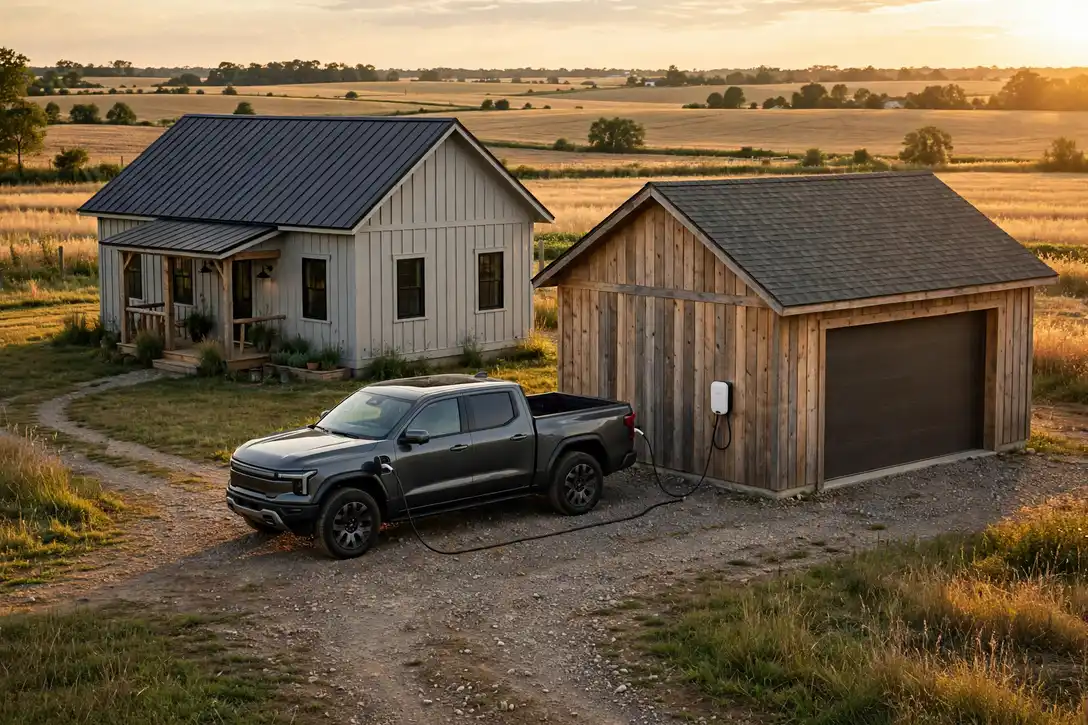
EV charging services in Hagerstown
Three of the network's services lead this page because local conditions put them first; the remaining seven are one click away and equally available here. Each card states what the service involves — the matching itself is free of obligation until you accept an installer's quote.
Home EV Charger Installation in Hagerstown
The core service, stated plainly: a dedicated 240-volt circuit run from your panel to your parking place, a station mounted and configured to that circuit, and the paperwork closed out with the permit office. Everything else in this section of the site exists to support or unblock this one job.
In Hagerstown: the install Hagerstown's new EV households book first, and the one the rest of this page keeps returning to.
Dedicated Circuit & Electrical Panel Upgrade in Hagerstown
Panel work is the one part of a charger project that outlives the car, the station and possibly the household's tenure. Specified generously and documented properly, it is less an expense than a permanent alteration in what the house can do.
In Hagerstown: relevant in Hagerstown wherever a 100-amp panel already carries cooking, heating and hot water before a charger asks for room.
Multifamily & Condo EV Charging in Hagerstown
Assigned-space and shared charging for buildings: the application package, the metering arrangement, the load design that lets several cars share one service, and the circuit — in that order, because the first three decide whether the fourth ever happens.
In Hagerstown: constitutions for shared charging in Hagerstown buildings: metering, load and approvals.
Utility programs and electricity in Hagerstown
Electricity in Hagerstown comes from The Potomac Edison Company. Parts of the wider metro are served by Hagerstown Light Department, Town of Williamsport. The utility matters twice over for a charger install: it sets the time-of-use rates that decide what overnight charging costs you, and it is the organisation that may — or may not — currently help pay for the equipment.
Why does this page labour the absence of a rebate? Because in Hagerstown the phantom rebate is the most common distortion in charger quotes: a figure justified by money that is not, at present, claimable. The verified position: federal 30C ended September 30, 2025; no Maryland replacement for typical home installs; no The Potomac Edison Company residential charger rebate in the sources checked. If someone quotes you a rebate, the follow-up is one sentence — show me the program page — and its answer decides the quote's credibility.
Renters and condo owners should note the metering question early: whose meter the charger hangs off decides who pays for the energy, and The Potomac Edison Company's options for submetering are part of the multifamily conversation below.
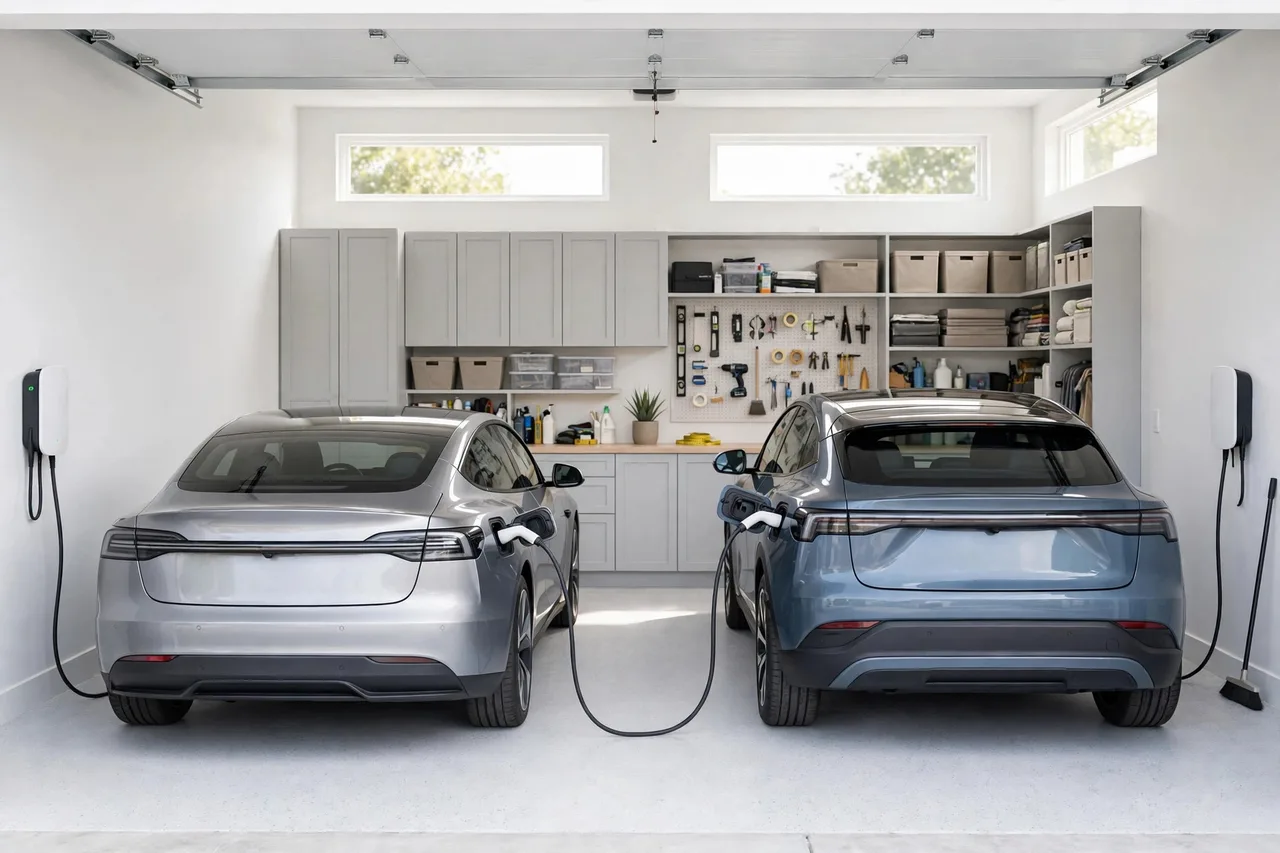
Condos, HOAs and the law in Maryland
An association in Maryland cannot simply say no. The right-to-charge law recorded for this state (Real Prop. §11-111.4; §11B-111.8) entitles an owner to install charging equipment for their own vehicle in their own parking space, subject to reasonable association conditions on placement, insurance and eventual restoration. For a Hagerstown owner, the practical consequence is that the application is a compliance exercise — equipment, circuit, paperwork — rather than a popularity contest at a board meeting.
In practice, boards in Maryland process charger applications the way they process any exterior electrical work — drawings, equipment listing, the installer's licence and insurance — with the statute standing behind the timeline. Applications in Hagerstown that arrive complete are typically answered in one meeting cycle; incomplete ones teach their owners the meeting calendar.
Read the full process in our guide to installing an EV charger in a condo or HOA community, and the multifamily and condo charging service page for how shared and assigned-space installs are designed.
Climate, garages and charger placement
Coastal charging inherits the coast's oldest rule — everything metal near salt water is on a clock. Listed outdoor equipment, stainless fixings, sealed entries: the specification is short, and local installers recite it from memory.
Salt air grades hardware on a curve of its own: finishes, fasteners and enclosures chosen inland can show their age early near the water. Local installers stock what survives the local air — another argument, beyond the electrical, for hiring inside the metro rather than importing a kit and a hope.
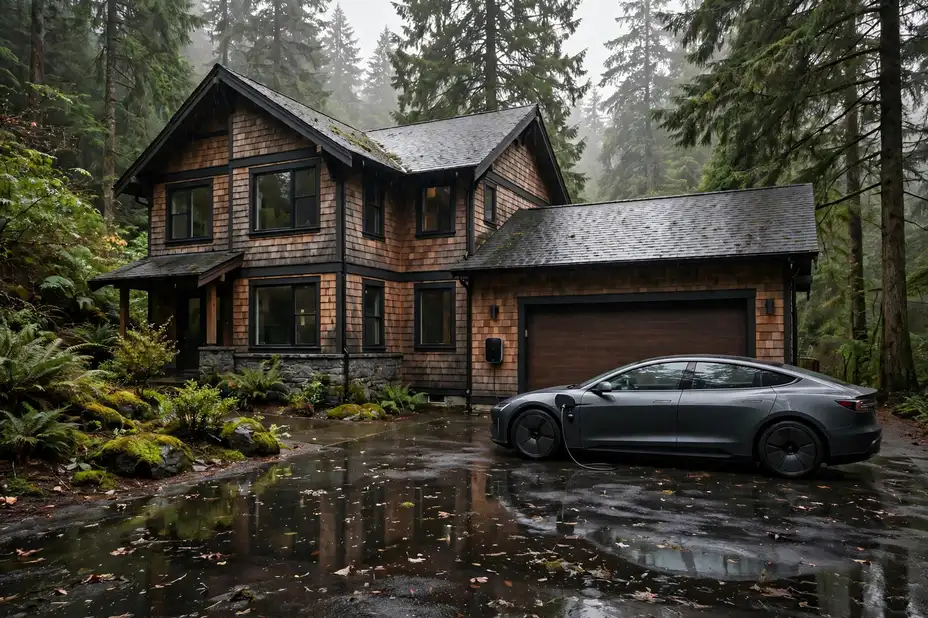
Permits and inspection in Hagerstown
The permit trail also protects the next transaction: a charger circuit on the inspection record is an asset a buyer's inspector reads in one line, while an undocumented circuit is a question that follows the sale. Installers who work this metro treat the filing as part of the deliverable, not an errand.

Neighbourhoods and ZIP codes served
The page covers 6 ZIP codes in and around Hagerstown — including 21740, 21741, 21742, 21746, 21747, 21749 — across Washington. If your ZIP is not in the first set shown, ask anyway: installer coverage follows the metro, not a postcode fence.
The same working area takes in the neighbouring localities of Funkstown, Saint James, Maugansville, Williamsport, Fairplay, Chewsville, Boonsboro, Cavetown, Smithsburg, Clear Spring, Keedysville, Sharpsburg, Rohrersville, Cascade — the county ring an installer based in Hagerstown actually drives. Requests from those communities route exactly as city requests do: same services, same permit discipline, same local facts where they differ.
Washington County accounts for 23 of the ZIP codes and 18 named postal localities in the research file, the nearest of them Funkstown, Saint James, Maugansville, Williamsport, Fairplay. The survey counts 155,709 residents in the county, with a median household income of $77,747 and a median home value of $296,100. Measured across its ZIP codes, the Hagerstown footprint runs about 6 miles north to south and 2 east to west, from ZIP 21740 to 21749 — the ground an installer based here actually covers in a working week.
Beyond the county seats, the working area takes in Funkstown, Saint James, Maugansville, Williamsport, Fairplay, Chewsville, Boonsboro, State Line, Cavetown, Falling Waters, Smithsburg, Clear Spring, Greencastle, Shady Grove, Zullinger, Keedysville, Myersville, Waynesboro, Sharpsburg, Martinsburg, Rohrersville, Rouzerville, Cascade, Quincy, Shepherdstown, Big Pool, Sabillasville, Marion, Mercersburg, Blue Ridge Summit, Middletown, Lemasters, Brownsville, Burkittsville, Mont Alto, Frederick, Shenandoah Junction, Thurmont, Braddock Heights, Chambersburg, Knoxville, South Mountain, Saint Thomas, Hedgesville, Jefferson, Harpers Ferry, Big Cove Tannery, Fayetteville, Halltown, Emmitsburg, Rocky Ridge, Brunswick, Fairfield, Walkersville, Fort Loudon, Hancock, Scotland, New Midway, Ladiesburg, Woodsboro, Keymar, Mc Connellsburg, Orrtanna, Point Of Rocks, Buckeystown, Warfordsburg, Cashtown, Mc Knightstown, Needmore, Tuscarora, Adamstown, Lovettsville, Libertytown, Upperstrasburg, Pleasant Hall, New Market, Harrisonville, Fannettsburg, Orrstown, Shippensburg, Arendtsville, Taneytown, Burnt Cabins, Ijamsville, Hustontown, Unionville, Leesburg, Fort Littleton, Lurgan, Roxbury, Willow Hill, Crystal Spring, Union Bridge, Neelyton, Little Orleans, Newburg, Amberson, Spring Run, Breezewood, Dry Run, Artemas, Shade Gap, Doylesburg, Clearville — the named localities for which Hagerstown is the nearest metro in the network (neighbouring metros' pages cover their own ground), each routing to the same installer-matching service.
The wider working area also reaches Berkeley Springs, Bunker Hill, Glengary, Ridgeway, Summit Point, Brucetown, Clear Brook, Purcellville, Peach Glen, Round Hill, Berryville, Mount Airy, Bendersville, Littlestown, Boyds, Damascus, Ashburn, Waterfall, Westminster, Wells Tannery, Idaville, Three Springs, New Oxford, Concord, Mc Sherrystown, Germantown, Lisbon, Millwood, Gaithersburg, Saltillo, Orbisonia, Robertsdale, York Springs, Sykesville, Bethesda — ground shared with neighbouring metros, where installers cross the same county lines in both directions.
ZIP codes in that shared ground include 15537, 16674, 16694, 17243, 17266, 17301, 17306, 17324, 17332, 17337, 20130, 20148, 20149, 20160, 20175, 20813, 20827, 20838, 20841, 20871, 20876, 20884, 20885, 20889, 20898, 20899, 21157, 21797, 22603, 22611, 22637, 22646, 22656, 22663, 25405, 25421, 25428, 25438, 25441, 26817.
The largest communities in that working area after Hagerstown itself, by the GeoNames populated-place file: Frederick (population 69,479), Chambersburg (population 20,691), Ballenger Creek (population 18,274), Martinsburg (population 17,700), Waynesboro (population 10,848), Halfway (population 10,701), Urbana (population 9,175), Linganore (population 8,543), Robinwood (population 6,918), Taneytown (population 6,746), Thurmont (population 6,454), Brunswick (population 6,116), Walkersville (population 5,993), Spring Ridge (population 5,795), Fountainhead-Orchard Hills (population 5,666), Shippensburg (population 5,559), Middletown (population 4,469), Greencastle (population 4,043), Carroll Valley (population 3,941), Clover Hill (population 3,542). Charging demand follows those populations — the subdivisions and town centres where the next driveways, and the next panels, are.
Frederick County reaches into the working area with 287,048 residents, a median household income of $122,002 and a median home value of $464,600; its localities on this page include Myersville, Sabillasville, Middletown, Burkittsville, Frederick. Carroll County reaches into the working area with 175,321 residents, a median household income of $118,211 and a median home value of $434,000; its localities on this page include Keymar.
| ZIP | Locality | County |
|---|---|---|
| 21740 | Hagerstown | Washington |
| 21741 | Hagerstown | Washington |
| 21747 | Hagerstown | Washington |
| 21749 | Hagerstown | Washington |
| 21734 | Funkstown | Washington |
| 21742 | Hagerstown | Washington |
| 21781 | Saint James | Washington |
| 21767 | Maugansville | Washington |
| 21795 | Williamsport | Washington |
| 21746 | Hagerstown | Washington |
| 21733 | Fairplay | Washington |
| 21721 | Chewsville | Washington |
| 21713 | Boonsboro | Washington |
| 17263 | State Line | Franklin |
| 21720 | Cavetown | Washington |
| 25419 | Falling Waters | Berkeley |
| 21783 | Smithsburg | Washington |
| 21722 | Clear Spring | Washington |
| 17225 | Greencastle | Franklin |
| 17256 | Shady Grove | Franklin |
| 17272 | Zullinger | Franklin |
| 21756 | Keedysville | Washington |
| 21773 | Myersville | Frederick |
| 17268 | Waynesboro | Franklin |
| 21782 | Sharpsburg | Washington |
| 25404 | Martinsburg | Berkeley |
| 21779 | Rohrersville | Washington |
| 17250 | Rouzerville | Franklin |
| 21719 | Cascade | Washington |
| 17247 | Quincy | Franklin |
| 25443 | Shepherdstown | Jefferson |
| 21711 | Big Pool | Washington |
| 25403 | Martinsburg | Berkeley |
| 21780 | Sabillasville | Frederick |
| 17235 | Marion | Franklin |
| 17236 | Mercersburg | Franklin |
| 17214 | Blue Ridge Summit | Franklin |
| 21769 | Middletown | Frederick |
| 17231 | Lemasters | Franklin |
| 25402 | Martinsburg | Berkeley |
| 21715 | Brownsville | Washington |
| 21718 | Burkittsville | Frederick |
| 17237 | Mont Alto | Franklin |
| 25401 | Martinsburg | Berkeley |
| 21702 | Frederick | Frederick |
| 25442 | Shenandoah Junction | Jefferson |
| 21788 | Thurmont | Frederick |
| 21714 | Braddock Heights | Frederick |
| 17202 | Chambersburg | Franklin |
| 21758 | Knoxville | Frederick |
| 17261 | South Mountain | Franklin |
| 17252 | Saint Thomas | Franklin |
| 25427 | Hedgesville | Berkeley |
| 17201 | Chambersburg | Franklin |
| 21755 | Jefferson | Frederick |
| 25425 | Harpers Ferry | Jefferson |
| 17212 | Big Cove Tannery | Fulton |
| 21709 | Frederick | Frederick |
| 17222 | Fayetteville | Franklin |
| 25423 | Halltown | Jefferson |
| 21727 | Emmitsburg | Frederick |
| 21778 | Rocky Ridge | Frederick |
| 21716 | Brunswick | Frederick |
| 17320 | Fairfield | Adams |
| 21705 | Frederick | Frederick |
| 21703 | Frederick | Frederick |
| 21793 | Walkersville | Frederick |
| 17224 | Fort Loudon | Franklin |
| 21750 | Hancock | Washington |
| 17254 | Scotland | Franklin |
| 21775 | New Midway | Frederick |
| 21759 | Ladiesburg | Frederick |
| 21798 | Woodsboro | Frederick |
| 21757 | Keymar | Carroll |
| 21701 | Frederick | Frederick |
| 17233 | Mc Connellsburg | Fulton |
| 17353 | Orrtanna | Adams |
| 21777 | Point Of Rocks | Frederick |
| 21717 | Buckeystown | Frederick |
| 17267 | Warfordsburg | Fulton |
| 17310 | Cashtown | Adams |
| 21704 | Frederick | Frederick |
| 17343 | Mc Knightstown | Adams |
| 17238 | Needmore | Fulton |
| 21790 | Tuscarora | Frederick |
| 21710 | Adamstown | Frederick |
| 20180 | Lovettsville | Loudoun |
| 21762 | Libertytown | Frederick |
| 17265 | Upperstrasburg | Franklin |
| 17246 | Pleasant Hall | Franklin |

Planning the install: from panel to parking
Consider the two households inside every Hagerstown install. The first owns the panel, the parking and the decision; the second — a partner, a teenager with the next car, a future buyer — inherits all three. Designing for the second household is the difference between an install and an asset: capacity reserved, conduit honest, paperwork filed. The first conversation with an installer should name both households explicitly.
Finally, photograph the finished work — station, nameplate, panel directory with the new breaker labelled — and file it with the inspection record. When the car changes, the house sells or a second station joins the first, that folder is the difference between a five-minute answer and an archaeological dig.
Home charging know-how for Hagerstown households
The charger among the electrification stack
Few households electrify one appliance at a time for long. The charger arrives, then the heat pump conversation starts, then the induction range. Each addition is a load-calculation event, and the households that fare well treat them as one programme: capacity planned once, circuits sequenced, the panel schedule telling the whole story. If your five-year list includes more than the car, hand the list to the installer at the first visit — the most economical capacity is the capacity planned before it is needed.
Depots and small fleets
A business running a handful of vehicles meets charging as an operations problem: vehicles dwell overnight, leave together, and must all be ready — while the building's service also runs the business. The design answers are load management across the pool, scheduling aligned to departure rather than arrival, and make-ready capacity for the vehicles not yet bought. It is the domestic pattern scaled by consequence, and it is planned from the load curve of the site rather than from the count of vehicles on day one.
When the garage is detached
A detached garage changes the install's centre of gravity: the circuit must travel. The route is usually a buried conduit run from the house panel, with depth, conduit type and the trench's path past roots, irrigation and paving all settled at the design stage — or, where the run is long and the loads justify it, a subpanel in the garage that also serves the workshop the building inevitably becomes. The charger at the end of that run behaves exactly like any other; it is the journey, measured in copper and digging, that defines the job.
Garage layout: the unglamorous decider
More charging routines are decided by garage geography than by equipment. Which bay the EV takes, which side its port sits on, where the freezer, bikes and workbench have permanent tenure — the station belongs at the intersection of those facts, with a cable that reaches the port without crossing the walking line to the door. Installers who walk the layout with the car in place are not being thorough for its own sake; they are preventing the daily, decade-long annoyance of a station mounted for a parking pattern nobody uses.

Frequently asked questions
What happened to the federal home-charger credit in Hagerstown, MD?
Treat the answer as a standing no with a watching brief. The 30C credit is finished, Maryland has not replaced it for homeowners, and no verified The Potomac Edison Company rebate was running in the sources checked for this page. Should that change, the utility's program page will say so first — and this page will be updated to match.
Can my HOA or condo board in Hagerstown, MD refuse my charger?
Not outright. Under Real Prop. §11-111.4; §11B-111.8, Maryland associations cannot prohibit an owner's charger; they can condition it — reasonably — on placement, insurance and restoration, with the owner funding the work. The disputes that do arise are usually about conditions, and they settle fastest when the application answers them in advance.
Does a Level 2 charger mean a panel upgrade for a Hagerstown, MD home?
Sometimes, and the honest route to the answer is arithmetic rather than opinion. Hagerstown's median home was built in 1962; roughly 67% of the stock predates 1980, which is where the 100-amp panels concentrate. If yours is one, expect the upgrade-or-management conversation; if it is a modern 200-amp service with spare spaces, expect a circuit. The site visit's calculation decides, and you are entitled to see it.
How much faster is Level 2 charging at home in Hagerstown, MD?
Think of it in parked hours. Level 1 gives you back 3–5 miles for each of them; Level 2 gives back about 25–40, set by the circuit's amperage and what the car can accept. Overnight, that is the gap between 'enough for tomorrow' and 'full, every morning'.
What happens next after I send a request?
Three things happen, in order. Your request is routed to licensed installers who work in Hagerstown; one of them contacts you to book a site visit; and the visit produces a written quote based on your actual panel and parking. PlugReady USA runs the matching, not the tools — the contractor on the job is the installer who visits.
Do installers cover the communities around Hagerstown, MD?
They do. Coverage follows the metro: Funkstown, Saint James, Maugansville, Williamsport, Fairplay and their neighbouring communities are worked by the same installers who cover Hagerstown itself, and a request from those ZIP codes routes identically — service, property type and timing are all the form asks for.
Nearby cities in Maryland
- EV charger installation in Baltimore — about 66 miles from Hagerstown, metro population 2,850,000
- EV charger installation in Salisbury — about 145 miles from Hagerstown, metro population 425,000
- EV charger installation in Winchester, VA — about 39 miles from Hagerstown, metro population 135,000
- EV charger installation in York, PA — about 60 miles from Hagerstown, metro population 455,000
- EV charger installation in Washington, DC — about 64 miles from Hagerstown, metro population 6,400,000
Ready to charge at home in Hagerstown?
Tell us the job — service, ZIP and property type — and licensed local installers will take it from there.