EV Charger Installation in Visalia, CA
Home Level 2 charging, panel upgrades and condo installs in Visalia — matched to licensed local installers, with the local facts that shape the job set out below.
There is a reason most charging happens at home: it is the most convenient fuelling an EV owner will ever use, and it happens while the car sits idle anyway. In Visalia, getting set up means answering a handful of local questions first. Visalia itself is home to about 146,263 people, inside a state that registered 1,843,100 battery-electric vehicles and 490,900 plug-in hybrids through 2025. Which utility serves your address, whether it currently funds part of a charger install, what your panel can carry, and what your HOA or condo board can and cannot say no to — this page covers each of them for Visalia specifically.
A word on how to use the page: each section answers one of the questions an installer will ask you anyway — panel, utility, property rules, permits — with Visalia's actual answers. Read the two that apply to your house and you will start the quoting conversation several steps ahead.
Measured demand, not enthusiasm, put Visalia in Tier B of this network: CA Central Valley. For a homeowner the useful translation is simpler — installers here do this work weekly, know the local permit counter, and have seen your housing stock before.
Read the survey numbers as an installer reads them. A median household income of $84,781 and an owner-occupation rate of 63% describe a city where most charger decisions are made by the person who owns the panel — no landlord layer, no board layer for the typical job. The 79% of homes that are single-unit detached are the straightforward installs: garage or driveway, one owner, one circuit.

Put the survey together and Visalia's charging profile reads like this: a housing stock of mixed vintages, where both electrical eras appear on the same street; overwhelmingly a detached-house city, so most installs are the simple garage pattern; larger buildings are a small share, so the multifamily route matters to a minority of readers; and owners hold a working majority, with renters a significant minority. That combination — more than any single number — is what the installers working here plan around, and it is the lens for everything on this page.
The counts behind the percentages, for the record: Visalia has 51,136 housing units on the survey's count, 49,287 of them occupied, and 30,970 owner-occupied households making their own electrical decisions. Detached houses number 40,577; homes built before 1980 number 18,586; units in buildings of five or more number 3,807. An installer's week in this city is a walk through exactly that distribution. The page's geography is equally concrete: 6 ZIP codes across Tulare, centred near 36.31 degrees north latitude. The city anchors the Visalia metropolitan area, home to roughly 475,000 people on the research file's metro estimate — the wider labour and housing market this page's installers work across.
The same survey release fills in the household economics around the housing stock: a median home value of $407,800, median gross rent of $1,628, per-capita income of $38,281, and a median resident age of 35. And the daily rhythms behind the housing numbers: 75% of Visalia workers drive to work alone — the commute pattern home charging is built around; 8% work from home, a population whose cars charge on daytime and overnight schedules alike; 1% commute by public transit; 26% of adults hold a bachelor's degree or higher. Vehicle ownership, from the same release: 33,814 households in Visalia run two or more vehicles, and 1,628 run none — the two ends of the market this page serves and does not serve.
The cost-burden lines say who feels housing costs most in Visalia: 49% of renters spend 30% or more of income on rent, and 0% of owners with mortgages spend the same share on housing costs. Family households are 72% of all households — the two-car, school-run demographic whose charging patterns this page's planning sections keep circling back to.
What follows is the city read as an electrical place rather than a dot on a map. The stock reads in strata: a pre-war core, a ranch-era ring, subdivisions from the nineties, infill from the last decade — four electrical eras sharing one permit office and one installer workforce. House-by-house urbanism gives the metro a house-by-house charging pattern — no building-scale projects, just thousands of individual circuits appearing one permit at a time.
Tenure splits the readership cleanly down the middle: owners reading for circuits, renters reading for proposals, both arriving at the same page with different first questions. Households here run the numbers — which is why the honest sections of this page, the ones that say what is verified and what is not, earn their keep. Scale brings a call centre, but it also brings published everything — interconnection standards, programme terms, complaint statistics — and the published page, not the phone call, is where this utility is most honest.
At this fleet volume the questions mature: not whether to install, but how the second circuit shares capacity, how buildings retrofit at scale, how the grid's evening ramp is managed street by street. At this scale the city's charging infrastructure is legible — a household can learn the whole local system, its programmes, precedents and people, in an evening's reading. This page is most of that evening. Where the state's statute speaks, the local conversation changes register: installers quote the framework, boards keep counsel's template, and approvals become administrative.
The electrical reality in Visalia homes
The Census Bureau counts Visalia's housing in ways that turn out to be an installer's briefing: the median home dates to 1992, 36% of units stood before 1980, 79% are detached single-unit houses, and 63% of occupied homes belong to their occupants. Panel sizes, wire routes and even permit histories track those proportions street by street. The metro's building booms left two electrical eras side by side. Post-1990s subdivisions were wired for modern loads and usually take a charger circuit directly; the established in-town stock asks harder questions of its panels. Knowing which era your street belongs to tells you most of what your site visit will conclude. Porches, carports and parking pads carry a real share of this city's charging, because the stock predates the two-car garage as a standard feature — outdoor-rated equipment is a local staple, not an edge case.
Heating fuel is the survey's quiet clue to panel life: in Visalia, 18% of homes heat electrically (8,376 households), against 79% heating with gas. A house already heating electrically has a service sized with that load in its history; a gas-heated house may have capacity to spare — either way the fuel mix is part of what the installer is reading.
One further split matters for how this page is organised: about 18,317 of Visalia's occupied homes are renter-occupied. Everything above assumes you can approve your own electrical work; where you cannot, the approval layer — landlord or association — becomes part of the job, which is why the law section carries unusual weight here.
The city's stock is not all houses: 7% of units are in structures of five or more. Shared buildings mean shared panels, assigned parking and association process — the substance of the multifamily sections below.
EV charging services in Visalia
Three of the network's services lead this page because local conditions put them first; the remaining seven are one click away and equally available here. Each card states what the service involves — the matching itself is free of obligation until you accept an installer's quote.
Home EV Charger Installation in Visalia
Think of it as plumbing for electrons, with the same virtues: correct sizing, honest materials, tidy runs, tested joints. The installers who do it weekly follow a pattern — assess, calculate, route, mount, configure, document — and the pattern is why their installs rarely make news afterwards.
In Visalia: the install Visalia's new EV households book first, and the one the rest of this page keeps returning to.
Dedicated Circuit & Electrical Panel Upgrade in Visalia
When the arithmetic says the service is full, this is the enabling job: a larger panel, or a new dedicated circuit with capacity planned in, done under the same permit umbrella as the charger it feeds. It is also the upgrade the rest of the house quietly benefits from for decades.
In Visalia: service work that turns 'no room' into a circuit with headroom in Visalia homes.
Multifamily & Condo EV Charging in Visalia
In a multifamily building the charger is the easy half. The craft is the route to yes: a complete board application, a metering design that bills the right owner, load management that shares the building's capacity, and only then the circuit. Installers who do this work weekly carry the paperwork templates with them.
In Visalia: the approvals-plus-wiring job for Visalia's condos and HOA communities, where the process matters as much as the circuit.
Utility programs and electricity in Visalia
Electricity in Visalia comes from Pacific Gas & Electric Co.. Parts of the wider metro are served by Southern California Edison Co. The utility matters twice over for a charger install: it sets the time-of-use rates that decide what overnight charging costs you, and it is the organisation that may — or may not — currently help pay for the equipment.
Plan on no rebate in Visalia at the moment. In the sources checked for this page, Pacific Gas & Electric Co. publishes no residential charger rebate, California runs no state scheme for typical home installs, and the federal credit that once filled this gap closed on September 30, 2025. Installers quote the work; utilities fund programs; the second list is currently empty here, and any quote that implies otherwise should come with the program's published terms attached.
While you are reading your tariff, check how your plan treats the evening peak. A charger scheduled to start after the peak window is the single easiest saving in home charging, and it is set once, in the car or the station, then forgotten.
Condos, HOAs and the law in California
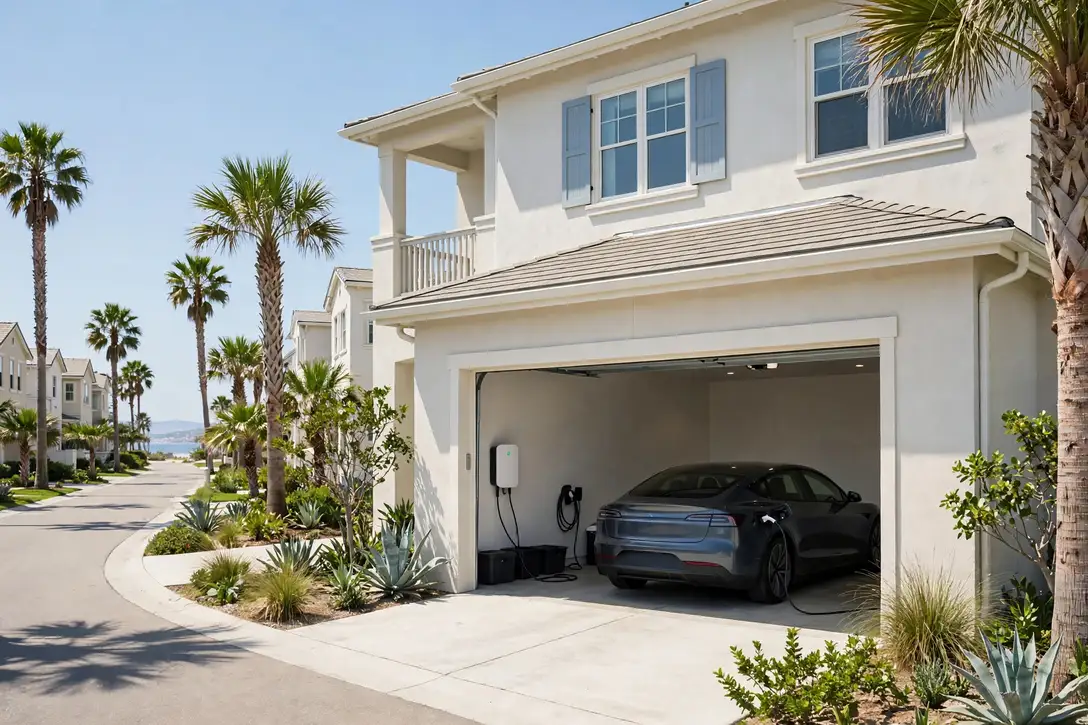
Charging is a protected right for association owners in California. The state's right-to-charge statute (Civ. Code §4745; §1947.6 (renters)) stops a homeowners association or condominium from banning an owner's charging station outright. Conditions still exist — placement, appearance, insurance and restoration can all be regulated, and the owner pays — yet the starting position is yes-with-rules rather than no-unless-persuaded, and that difference decides most applications before they are written.
Two practical corollaries follow for Visalia owners. First, assigned spaces are the clean case: the statute's protection is clearest where the parking is deeded or exclusively assigned. Second, insurance conditions are real but bounded — if a board's requirement looks invented, asking for its basis in the statute is a reasonable, usually decisive, question.
Start with the condo and HOA guide for the application itself, and the multifamily service page for how the electrical design is usually laid out in California buildings.
Climate, garages and charger placement
Humidity is the slow variable: it works on exterior connections across seasons rather than in a single event, which is why coastal-grade habits — protected terminations, sealed entries, a yearly glance at the connector — pay off even well inland in a four-season climate.
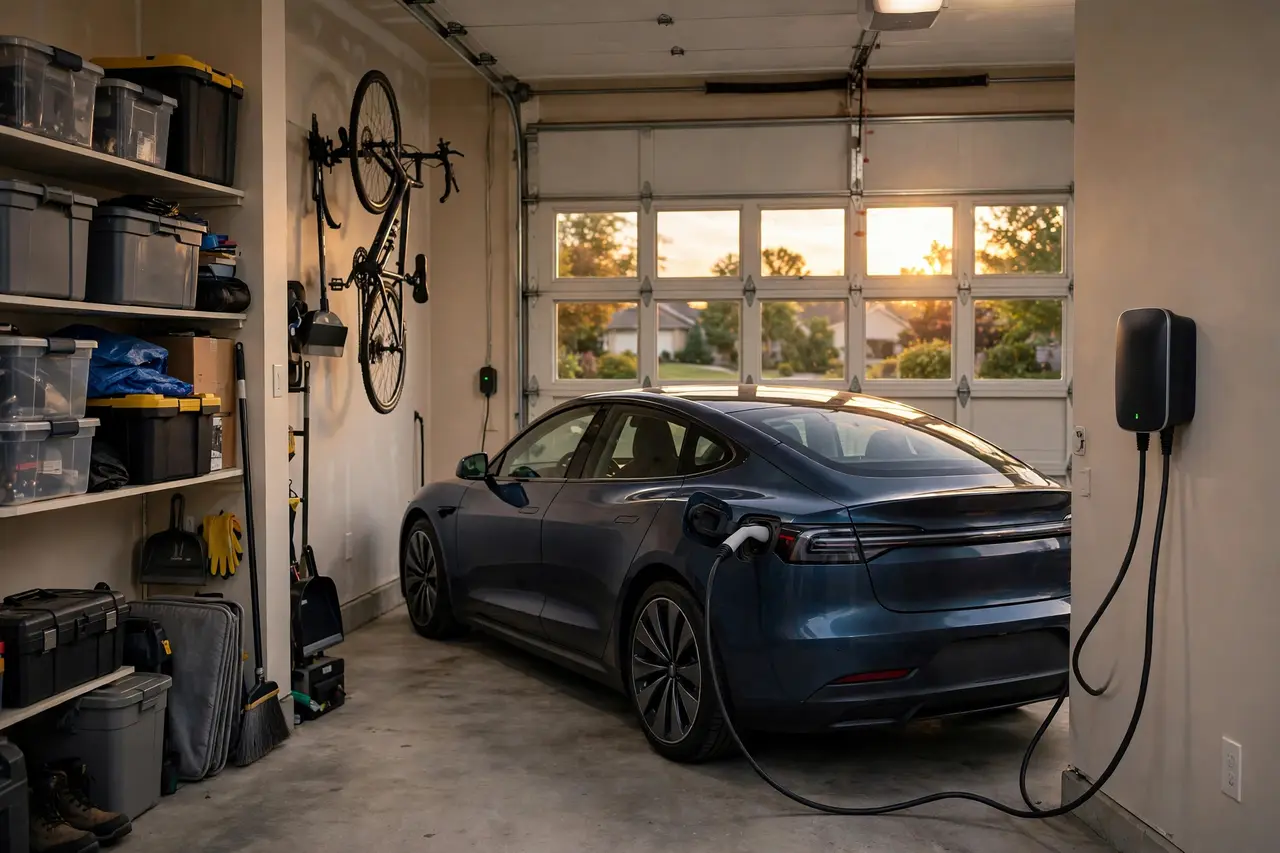
Garages in this region do double duty across the year — summer's workshop, winter's storage — and the charger competes for wall space with all of it. Mounting height, cable reach and a holster placed for the car's real parking position decide whether the station is used daily or negotiated with. The installer who measures the car in place is designing for the household you actually are.
Permits and inspection in Visalia
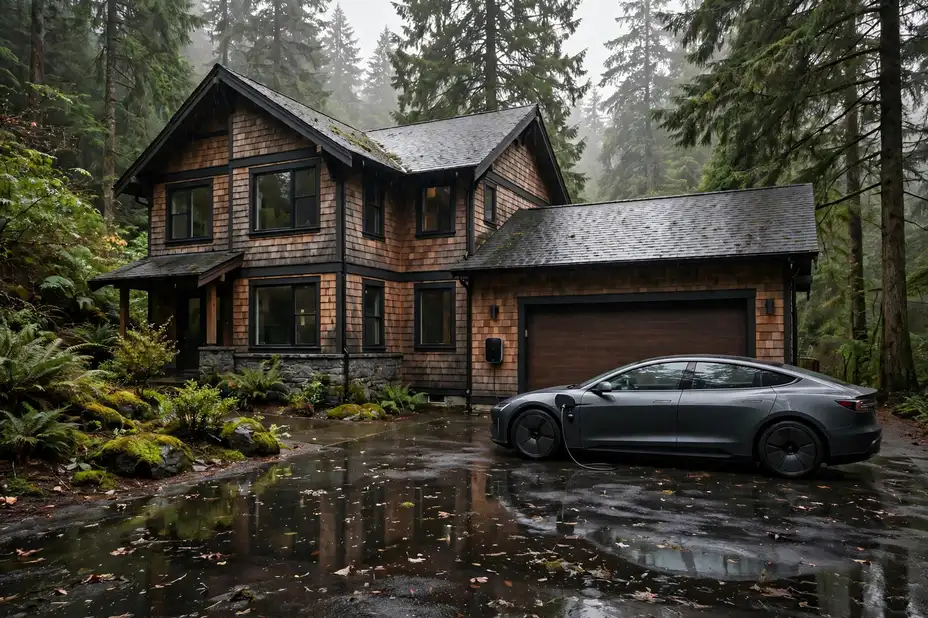
The permit trail also protects the next transaction: a charger circuit on the inspection record is an asset a buyer's inspector reads in one line, while an undocumented circuit is a question that follows the sale. Installers who work this metro treat the filing as part of the deliverable, not an errand.

Neighbourhoods and ZIP codes served
The page covers 6 ZIP codes in and around Visalia — including 93277, 93278, 93279, 93290, 93291, 93292 — across Tulare. If your ZIP is not in the first set shown, ask anyway: installer coverage follows the metro, not a postcode fence.
The same working area takes in the neighbouring localities of Farmersville, Ivanhoe, Goshen, Tulare, Exeter, Yettem, Lindsay, Traver, Woodlake, Cutler, Dinuba, Sultana, Orosi, Strathmore — the county ring an installer based in Visalia actually drives. Requests from those communities route exactly as city requests do: same services, same permit discipline, same local facts where they differ.
Tulare County accounts for 42 of the ZIP codes and 35 named postal localities in the research file, the nearest of them Farmersville, Ivanhoe, Goshen, Tulare, Exeter. The survey counts 478,693 residents in the county, with a median household income of $71,300 and a median home value of $330,100. Measured across its ZIP codes, the Visalia footprint runs about 3 miles north to south and 1 east to west, from ZIP 93277 to 93292 — the ground an installer based here actually covers in a working week.
Beyond the county seats, the working area takes in Farmersville, Ivanhoe, Goshen, Tulare, Exeter, Yettem, Lindsay, Woodlake, Cutler, Dinuba, Sultana, Orosi, Strathmore, Tipton, Lemon Cove, Reedley, Orange Cove, Porterville, Three Rivers, Pixley, Kaweah, Badger, Yokuts, Terra Bella, Miramonte, Earlimart, Springville, Alpaugh, Dunlap, Ducor, Kings Canyon National Pk, Hume, Sequoia National Park, Camp Nelson — the named localities for which Visalia is the nearest metro in the network (neighbouring metros' pages cover their own ground), each routing to the same installer-matching service.
The wider working area also reaches Traver, Waukena, Hanford, Kingsburg, Corcoran, Armona, Laton, Parlier, Selma, Lemoore, Del Rey, Fowler, Stratford, Sanger, Fresno, Riverdale, Caruthers, Richgrove, Piedra, Delano, Burrel, Raisin City, Clovis, Kettleman City, Mc Farland, Huron, Five Points — ground shared with neighbouring metros, where installers cross the same county lines in both directions.
ZIP codes in that shared ground include 93202, 93215, 93232, 93242, 93261, 93266, 93282, 93607, 93609, 93611, 93612, 93616, 93625, 93631, 93657, 93673, 93701, 93705, 93706, 93707, 93709, 93710, 93715, 93716, 93725, 93740, 93741, 93744, 93747, 93761, 93772, 93773, 93775, 93777, 93778, 93791, 93792, 93793, 93794, 93844.
The largest communities in that working area after Visalia itself, by the GeoNames populated-place file: Tulare (population 62,315), Porterville (population 56,058), Reedley (population 25,569), Dinuba (population 23,702), Lindsay (population 13,217), Farmersville (population 10,774), Exeter (population 10,548), Orange Cove (population 9,598), Orosi (population 8,770), Earlimart (population 8,537), Woodlake (population 7,654), East Porterville (population 6,767), Cutler (population 5,000), Ivanhoe (population 4,495), Pixley (population 3,310), Terra Bella (population 3,310), Yokuts Valley (population 3,162), Goshen (population 3,006), Strathmore (population 2,819), Tipton (population 2,543). Charging demand follows those populations — the subdivisions and town centres where the next driveways, and the next panels, are.
Fresno County reaches into the working area with 1,016,725 residents, a median household income of $74,201 and a median home value of $388,800; its localities on this page include Reedley, Orange Cove, Yokuts, Miramonte, Dunlap.
| ZIP | Locality | County |
|---|---|---|
| 93277 | Visalia | Tulare |
| 93290 | Visalia | Tulare |
| 93278 | Visalia | Tulare |
| 93279 | Visalia | Tulare |
| 93292 | Visalia | Tulare |
| 93291 | Visalia | Tulare |
| 93223 | Farmersville | Tulare |
| 93235 | Ivanhoe | Tulare |
| 93227 | Goshen | Tulare |
| 93275 | Tulare | Tulare |
| 93274 | Tulare | Tulare |
| 93221 | Exeter | Tulare |
| 93670 | Yettem | Tulare |
| 93247 | Lindsay | Tulare |
| 93286 | Woodlake | Tulare |
| 93615 | Cutler | Tulare |
| 93618 | Dinuba | Tulare |
| 93666 | Sultana | Tulare |
| 93647 | Orosi | Tulare |
| 93267 | Strathmore | Tulare |
| 93272 | Tipton | Tulare |
| 93244 | Lemon Cove | Tulare |
| 93654 | Reedley | Fresno |
| 93646 | Orange Cove | Fresno |
| 93257 | Porterville | Tulare |
| 93271 | Three Rivers | Tulare |
| 93256 | Pixley | Tulare |
| 93237 | Kaweah | Tulare |
| 93258 | Porterville | Tulare |
| 93603 | Badger | Tulare |
| 93675 | Yokuts | Fresno |
| 93270 | Terra Bella | Tulare |
| 93641 | Miramonte | Fresno |
| 93219 | Earlimart | Tulare |
| 93265 | Springville | Tulare |
| 93201 | Alpaugh | Tulare |
| 93621 | Dunlap | Fresno |
| 93218 | Ducor | Tulare |
| 93633 | Kings Canyon National Pk | Tulare |
| 93628 | Hume | Fresno |
| 93262 | Sequoia National Park | Tulare |
| 93208 | Camp Nelson | Tulare |

Planning the install: from panel to parking
Think of the project as a chain with four links: capacity, route, placement, paperwork. Capacity is the load calculation. Route is the path copper takes from panel to parking — through a shared wall if you are lucky, across a ceiling or a trench if you are not. Placement is the unglamorous decision that governs daily life with the car for a decade: reach, cable slack, and which side the port is on. Paperwork is the permit and the passed inspection, the proof that outlives the installer's visit.
Plan for the household you will be, not just the car you have. A second EV is the most common reason a charger circuit gets revisited, and the cheap moment to prepare for it — conduit sized up, panel capacity reserved, station placement that serves two bays — is during the first install, while the permit is open and the electrician is already in the panel.
Home charging know-how for Visalia households
Two kinds of protection, one circuit
Modern charging circuits sit at the meeting point of two protection philosophies: the breaker's ground-fault protection watching the circuit, and the station's own ground-fault and monitoring systems watching the session. Coordinating them is a specification task — which device leads, which breaker types the station manufacturer lists as compatible, whether the installation is hardwired or receptacle-fed. Done at design time, the two systems coexist silently for decades; done by trial, they announce themselves at 3 am.
Light, reach and the midnight plug-in
Most charging happens in the dark, in winter clothes, carrying something. The installations that feel effortless share three traits: light where the connector lives, a mounting height that asks no stretching or crouching, and a cable path with nothing to trip over between the car door and the wall. Households with mobility limits in the family should say so at the site visit — height, reach and holster style are all adjustable at install time and awkward afterwards. Design for the worst trip, not the easiest one.
When the garage is detached
A detached garage changes the install's centre of gravity: the circuit must travel. The route is usually a buried conduit run from the house panel, with depth, conduit type and the trench's path past roots, irrigation and paving all settled at the design stage — or, where the run is long and the loads justify it, a subpanel in the garage that also serves the workshop the building inevitably becomes. The charger at the end of that run behaves exactly like any other; it is the journey, measured in copper and digging, that defines the job.
The new owner's first week
Week one with a home charger is about building the reflex: park, plug, forget. Set the schedule once, against your rate window; confirm the car wakes to the charge level your commute wants; learn where the station's indicator confirms a session at a glance from the door. By the second week the public-charging arithmetic of the old routine — detours, queues, weather — is already hard to remember. The households that struggle are the ones still treating the wall like a petrol station: sessions are not events, they are the background of parking.
Selling a house that charges
A documented charger has become a listing fact: the housing market's filters increasingly include charging, and the buyers behind them read a permitted, inspected installation as maintained infrastructure. The operative word is documented. The permit and inspection record, the panel schedule showing the circuit, and the station's manual together convert the charger from a question a buyer's inspector raises into a feature the listing can name. If a sale is anywhere on the horizon, the paperwork conversation with your installer is worth having at install time, while it is free.

Frequently asked questions
Is the federal charger tax credit still available in Visalia, CA?
Treat the answer as a standing no with a watching brief. The 30C credit is finished, California has not replaced it for homeowners, and no verified Pacific Gas & Electric Co. rebate was running in the sources checked for this page. Should that change, the utility's program page will say so first — and this page will be updated to match.
Can my HOA or condo board in Visalia, CA refuse my charger?
Only within limits the statute sets. California law (Civ. Code §4745; §1947.6 (renters)) protects an owner's right to install in their own space; associations may regulate placement, appearance and insurance and require restoration on removal, but a blanket refusal is not theirs to give. If a board stalls, a complete written application citing the statute is the standard remedy.
Will my Visalia, CA home need a panel upgrade for a Level 2 charger?
Nobody can answer that from a photograph of your panel's door, and you should be suspicious of anyone who tries. In a city where the median home dates to 1992 and about 36% of units predate 1980, the honest answer is a load calculation: what your service is, what it already carries, and what a continuous charger load does to the total. Then the options — circuit, load management, or upgrade — compare on paper.
How much faster is Level 2 charging at home in Visalia, CA?
In parked hours: a Level 1 cord returns about 3–5 miles for each of them, and a Level 2 circuit returns roughly 25–40, set by its amperage and the car's acceptance. For a Visalia household parking ten hours, that is the difference between recovering a short errand day and recovering any day the car can legally drive.
What happens after I request an installer through this page?
Three steps: the request routes to installers who work Visalia, California; one contacts you to walk the property; the walk produces the written quote. Everything on this page — the utility position, the law, the housing data — is yours to check that quote against.
Can a charger be added to a detached garage in Visalia?
Yes — the charger itself is the same; the route to it is the project. From the house panel, a buried conduit run reaches the garage, or a subpanel goes in out there where distance and future loads argue for it. In Visalia, with about 79% of homes detached, local installers quote this shape routinely — the trench and the run, settled from a site walk, are the substance of it.
Nearby cities in California
- EV charger installation in Hanford — about 19 miles from Visalia, metro population 155,000
- EV charger installation in Fresno — about 46 miles from Visalia, metro population 1,000,000
- EV charger installation in Madera — about 54 miles from Visalia, metro population 160,000
- EV charger installation in Bakersfield — about 66 miles from Visalia, metro population 925,000
- EV charger installation in Merced — about 93 miles from Visalia, metro population 290,000
- EV charger installation in San Luis Obispo — about 104 miles from Visalia, metro population 285,000
- EV charger installation in Reno, NV — about 224 miles from Visalia, metro population 500,000
- EV charger installation in Las Vegas, NV — about 231 miles from Visalia, metro population 2,300,000
- EV charger installation in Lake Havasu City, AZ — about 301 miles from Visalia, metro population 215,000
Ready to charge at home in Visalia?
Send the essentials — what you need, where, and what kind of property — and a licensed local installer will pick it up from there.