EV Charger Installation in Bakersfield, CA
Charging where you park, in Bakersfield: the utility programs, state law, permit process and housing facts behind a home charger install, gathered in one place.
There is a reason most charging happens at home: it is the most convenient fuelling an EV owner will ever use, and it happens while the car sits idle anyway. In Bakersfield, getting set up means answering a handful of local questions first. Bakersfield itself is home to about 417,461 people, inside a state that registered 1,843,100 battery-electric vehicles and 490,900 plug-in hybrids through 2025. Which utility serves your address, whether it currently funds part of a charger install, what your panel can carry, and what your HOA or condo board can and cannot say no to — this page covers each of them for Bakersfield specifically.
A note on what PlugReady USA is and is not: we publish the local research and run the matching; the installation itself belongs to licensed electricians and installer companies working in Bakersfield. Everything below is written so you can hold your own in that conversation — numbers first, sales language nowhere.
The demand picture for the Bakersfield metro, from the registration data this site is built on: CA Central Valley. Registration counts are the honest way to size a charging market — they count households, not headlines — and they are why Bakersfield sits where it does in our build order (rank 62 of 300 metros, Tier B).
The Census Bureau's portrait of Bakersfield — median household income $82,093, 61% of occupied homes owner-occupied, 73% of units in single-unit detached houses — is, read correctly, a charging forecast. Owners approve their own work; detached houses host their own circuits; the remaining share is where the interesting projects live.

The composite picture matters more than any single statistic. In Bakersfield: a housing stock of mixed vintages, where both electrical eras appear on the same street; overwhelmingly a detached-house city, so most installs are the simple garage pattern; buildings of five or more units are a visible minority of the stock; meanwhile, owners hold a working majority, with renters a significant minority. A page that ignored that profile would give the same advice everywhere; this one is ordered by it.
In absolute terms, the survey counts 139,391 housing units in Bakersfield — 133,186 occupied, 81,790 of them by their owners. The stock resolves into 102,427 single-unit detached houses, 45,905 homes standing since before 1980, and 17,290 units in larger buildings. Those six counts are the city's charging map drawn without percentages, and every section of this page is a consequence of one of them. The page's geography is equally concrete: 22 ZIP codes across Kern, centred near 35.39 degrees north latitude. The city anchors the Bakersfield metropolitan area, home to roughly 925,000 people on the research file's metro estimate — the wider labour and housing market this page's installers work across.
The same survey release fills in the household economics around the housing stock: a median home value of $406,500, median gross rent of $1,708, per-capita income of $33,380, and a median resident age of 33. And the daily rhythms behind the housing numbers: 77% of Bakersfield workers drive to work alone — the commute pattern home charging is built around; 8% work from home, a population whose cars charge on daytime and overnight schedules alike; 1% commute by public transit; 24% of adults hold a bachelor's degree or higher. Vehicle ownership, from the same release: 86,687 households in Bakersfield run two or more vehicles, and 9,836 run none — the two ends of the market this page serves and does not serve.
The cost-burden lines say who feels housing costs most in Bakersfield: 57% of renters spend 30% or more of income on rent, and 0% of owners with mortgages spend the same share on housing costs. Family households are 75% of all households — the two-car, school-run demographic whose charging patterns this page's planning sections keep circling back to.
What follows is the city read as an electrical place rather than a dot on a map. The stock reads in strata: a pre-war core, a ranch-era ring, subdivisions from the nineties, infill from the last decade — four electrical eras sharing one permit office and one installer workforce. Single-family form factor means the approval chain has one link. The design conversation is about copper and placement, not about committees, covenants or common elements.
A balanced tenure map makes the landlord conversation a standard local genre — proposal letters, metering arrangements, restoration clauses — familiar to installers and property managers alike. Middle-income arithmetic governs the metro's installs: the circuit specced to the need, the schedule set to the overnight window, the tariff read carefully because the monthly difference is real money over a car's life. The regulatory calendar is the programme calendar: rate cases, electrification plans and pilot approvals move through the commission on public timetables, and installers plan their marketing around them.
The state's fleet has reached the scale where charging is unremarkable infrastructure: installers booked out, permit clerks fluent, neighbours comparing circuits over fences. Bakersfield sits inside that normalisation. Mid-sized metros feel fleet growth personally: each year's registrations are visible in the school car park and the permit statistics, and the installer market grows in step rather than in surges. Shared-property households here work with a written legal position rather than a board's mood, which changes the application from a petition into a procedure.
The electrical reality in Bakersfield homes
Read the stock the way a panel schedule reads it. Median build year 1992 means half of Bakersfield's homes were wired to codes of that era or earlier; 33% predate 1980 entirely. 73% of units are detached houses, and 61% of occupied homes are owned by their occupants — so most charger conversations here happen between a homeowner and an electrician, with no third party at the table. The metro's building booms left two electrical eras side by side. Post-1990s subdivisions were wired for modern loads and usually take a charger circuit directly; the established in-town stock asks harder questions of its panels. Knowing which era your street belongs to tells you most of what your site visit will conclude. Garages here earn their keep across the year — workshop, storage and storm shelter by turns — so a station position that survives the household's real parking pattern matters more than the technically neatest wall.
The fuel table adds one more local fact: 46,903 Bakersfield homes — 35% of the stock — heat with electricity. Those households already think in kilowatts through the winter, their panels carry the load to prove it, and a charger's overnight appetite joins a system that is, in the useful sense, already electrified.
Renters are the other constituency in these numbers: about 51,396 of Bakersfield's occupied homes are rented rather than owned. Their charging route runs through a landlord conversation instead of a panel they control — a different project, covered by the rentals guide and the law section below, but a routine one in a city with this many renting households.
One more structural fact shapes Bakersfield's charging map: 12% of the city's housing units sit in buildings of five or more units. Those households cannot simply book a circuit — their charger runs through a building, a board and a shared electrical service, which is why the multifamily service and the law section below carry unusual weight on this page.
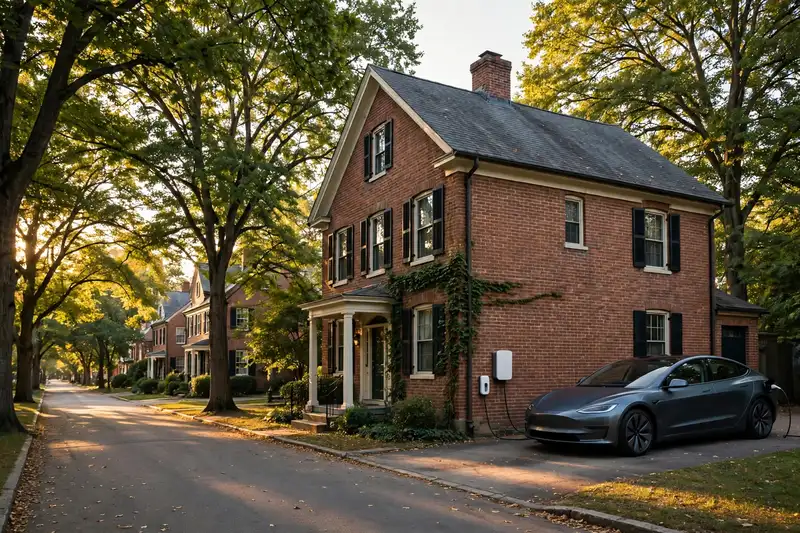
EV charging services in Bakersfield
An installer's work in Bakersfield usually starts with one of the three lead services below. The cards describe the job as it is actually scoped; the grid underneath carries the rest of the menu.
Home EV Charger Installation in Bakersfield
The core service, stated plainly: a dedicated 240-volt circuit run from your panel to your parking place, a station mounted and configured to that circuit, and the paperwork closed out with the permit office. Everything else in this section of the site exists to support or unblock this one job.
In Bakersfield: the core residential job in Bakersfield: circuit, mounting, configuration and inspection in one visit pattern.
Multifamily & Condo EV Charging in Bakersfield
Assigned-space and shared charging for buildings: the application package, the metering arrangement, the load design that lets several cars share one service, and the circuit — in that order, because the first three decide whether the fourth ever happens.
In Bakersfield: the route from board agenda to working charger in Bakersfield's communities.
Level 2 Charger Installation in Bakersfield
What is being bought is recovery rate. A Level 2 circuit returns in one overnight session what a household receptacle returns in a day and a half, and that margin is the difference between planning around the car and forgetting about it.
In Bakersfield: 240 volts, sized honestly — the working definition of home charging in Bakersfield.
Utility programs and electricity in Bakersfield
Electricity in Bakersfield comes from Pacific Gas & Electric Co.. Parts of the wider metro are served by Southern California Edison Co. The utility matters twice over for a charger install: it sets the time-of-use rates that decide what overnight charging costs you, and it is the organisation that may — or may not — currently help pay for the equipment.
Program status is a snapshot, and this page dates its snapshot: sources checked at build time found no Pacific Gas & Electric Co. residential charger rebate, no California home-charger program, and a federal credit that ended September 30, 2025. Bakersfield households should treat that as the position until a utility announcement changes it — utilities publish openings prominently when budgets exist, because unspent program money is a problem for them too.
Solar households should read the export terms alongside the charging ones: the pair decides whether midday charging on home-working days beats the overnight window, and the answer is written in your tariff, not in general advice.
Condos, HOAs and the law in California
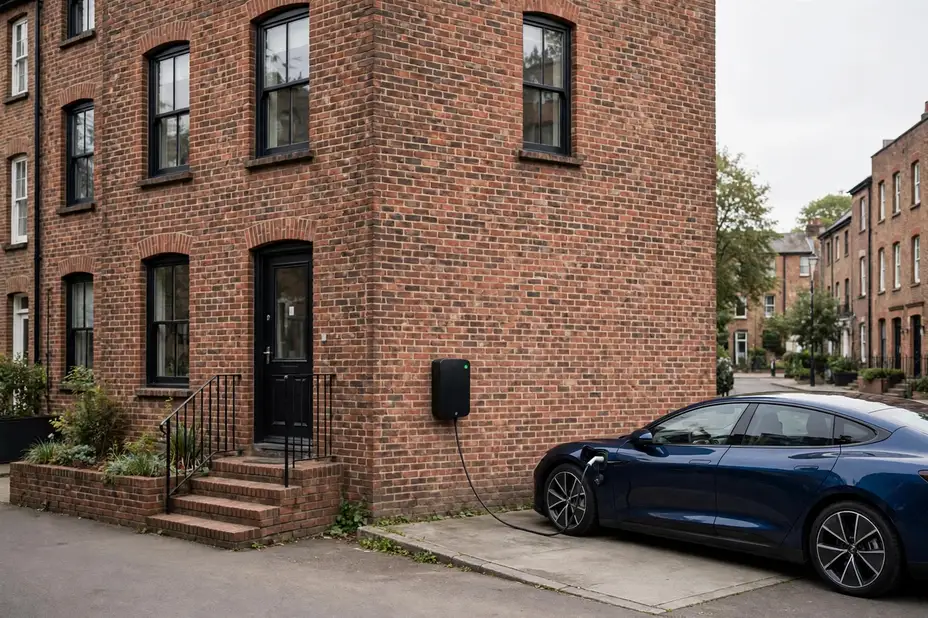
An association in California cannot simply say no. The right-to-charge law recorded for this state (Civ. Code §4745; §1947.6 (renters)) entitles an owner to install charging equipment for their own vehicle in their own parking space, subject to reasonable association conditions on placement, insurance and eventual restoration. For a Bakersfield owner, the practical consequence is that the application is a compliance exercise — equipment, circuit, paperwork — rather than a popularity contest at a board meeting.
In practice, boards in California process charger applications the way they process any exterior electrical work — drawings, equipment listing, the installer's licence and insurance — with the statute standing behind the timeline. Applications in Bakersfield that arrive complete are typically answered in one meeting cycle; incomplete ones teach their owners the meeting calendar.
The step-by-step version lives in our guide to installing an EV charger in a condo or HOA community — the application sequence, the metering designs and the questions boards ask, in order.
Climate, garages and charger placement
A four-season spec sheet is a compromise written in equipment ratings: cable jackets flexible at the January low, electronics rated past the July high, an enclosure indifferent to both. The listed gear covers it; placement decides the rest.
The seasons rotate the charging advice: precondition from the wall in winter, dodge the afternoon peak in summer, and let the shoulder months do what they like. Households here learn the two settings and change them with the clocks.

Permits and inspection in Bakersfield
What the inspector is checking, in plain terms: conductor size against breaker size, the continuous-load calculation, terminations torqued, protection where the code wants it, and a station whose settings match the circuit it landed on. It is a short visit that validates everything you cannot see.

Neighbourhoods and ZIP codes served
The page covers 22 ZIP codes in and around Bakersfield — including 93301, 93302, 93303, 93304, 93305, 93306, 93307, 93308, 93309, 93311, 93312, 93313, 93314, 93380, 93383, 93384, 93385, 93386, 93387, 93388, 93389, 93390 — across Kern. If your ZIP is not in the first set shown, ask anyway: installer coverage follows the metro, not a postcode fence.
The same working area takes in the neighbouring localities of Edison, Lamont, Shafter, Arvin, Tupman, Mc Farland, Woody, Buttonwillow, Keene, Delano, Taft, Glennville, Wasco, Caliente — the county ring an installer based in Bakersfield actually drives. Requests from those communities route exactly as city requests do: same services, same permit discipline, same local facts where they differ.
Kern County accounts for 67 of the ZIP codes and 39 named postal localities in the research file, the nearest of them Edison, Lamont, Shafter, Arvin, Tupman. The survey counts 915,075 residents in the county, with a median household income of $70,210 and a median home value of $338,300. Measured across its ZIP codes, the Bakersfield footprint runs about 9 miles north to south and 15 east to west, from ZIP 93301 to 93390 — the ground an installer based here actually covers in a working week.
Beyond the county seats, the working area takes in Edison, Lamont, Shafter, Arvin, Tupman, Mc Farland, Woody, Buttonwillow, Keene, Delano, Taft, Glennville, Richgrove, Wasco, Caliente, Maricopa, Fellows, Bodfish, Mc Kittrick, Posey, Tehachapi, Lebec, Lake Isabella, Pine Mountain Club, Frazier Park, Wofford Heights, California Hot Springs, Lost Hills, Kernville, Weldon — the named localities for which Bakersfield is the nearest metro in the network (neighbouring metros' pages cover their own ground), each routing to the same installer-matching service.
The wider working area also reaches Ducor, Earlimart, Terra Bella, Pixley, Alpaugh, Porterville — ground shared with neighbouring metros, where installers cross the same county lines in both directions.
The largest communities in that working area after Bakersfield itself, by the GeoNames populated-place file: Delano (population 52,733), Oildale (population 32,684), Ridgecrest (population 28,780), Wasco (population 26,279), Arvin (population 20,876), Shafter (population 18,336), Rosamond (population 18,150), Lamont (population 15,120), Rosedale (population 14,058), McFarland (population 13,985), California City (population 13,277), Tehachapi (population 13,021), Taft (population 9,495), Golden Hills (population 8,656), Alta Sierra (population 7,047), Greenacres (population 5,566), Bear Valley Springs (population 5,172), Ford City (population 4,278), Mojave (population 4,238), Greenfield (population 3,991). Charging demand follows those populations — the subdivisions and town centres where the next driveways, and the next panels, are.
Tulare County reaches into the working area with 478,693 residents, a median household income of $71,300 and a median home value of $330,100; its localities on this page include Richgrove, Posey, California Hot Springs.
| ZIP | Locality | County |
|---|---|---|
| 93301 | Bakersfield | Kern |
| 93302 | Bakersfield | Kern |
| 93384 | Bakersfield | Kern |
| 93305 | Bakersfield | Kern |
| 93308 | Bakersfield | Kern |
| 93304 | Bakersfield | Kern |
| 93309 | Bakersfield | Kern |
| 93306 | Bakersfield | Kern |
| 93307 | Bakersfield | Kern |
| 93312 | Bakersfield | Kern |
| 93313 | Bakersfield | Kern |
| 93311 | Bakersfield | Kern |
| 93314 | Bakersfield | Kern |
| 93220 | Edison | Kern |
| 93303 | Bakersfield | Kern |
| 93380 | Bakersfield | Kern |
| 93383 | Bakersfield | Kern |
| 93385 | Bakersfield | Kern |
| 93386 | Bakersfield | Kern |
| 93387 | Bakersfield | Kern |
| 93388 | Bakersfield | Kern |
| 93389 | Bakersfield | Kern |
| 93390 | Bakersfield | Kern |
| 93241 | Lamont | Kern |
| 93263 | Shafter | Kern |
| 93203 | Arvin | Kern |
| 93276 | Tupman | Kern |
| 93250 | Mc Farland | Kern |
| 93287 | Woody | Kern |
| 93206 | Buttonwillow | Kern |
| 93531 | Keene | Kern |
| 93216 | Delano | Kern |
| 93268 | Taft | Kern |
| 93226 | Glennville | Kern |
| 93215 | Delano | Kern |
| 93261 | Richgrove | Tulare |
| 93280 | Wasco | Kern |
| 93518 | Caliente | Kern |
| 93252 | Maricopa | Kern |
| 93224 | Fellows | Kern |
| 93205 | Bodfish | Kern |
| 93251 | Mc Kittrick | Kern |
| 93260 | Posey | Tulare |
| 93561 | Tehachapi | Kern |
| 93581 | Tehachapi | Kern |
| 93243 | Lebec | Kern |
| 93240 | Lake Isabella | Kern |
| 93222 | Pine Mountain Club | Kern |
| 93225 | Frazier Park | Kern |
| 93285 | Wofford Heights | Kern |
| 93207 | California Hot Springs | Tulare |
| 93249 | Lost Hills | Kern |
| 93238 | Kernville | Kern |
| 93283 | Weldon | Kern |

Planning the install: from panel to parking
Think of the project as a chain with four links: capacity, route, placement, paperwork. Capacity is the load calculation. Route is the path copper takes from panel to parking — through a shared wall if you are lucky, across a ceiling or a trench if you are not. Placement is the unglamorous decision that governs daily life with the car for a decade: reach, cable slack, and which side the port is on. Paperwork is the permit and the passed inspection, the proof that outlives the installer's visit.
One more piece of sequencing advice Bakersfield installers give consistently: if the panel is being opened anyway, settle the other electrical maybes in the same visit — the circuit you will want next year costs least while the permit and the electrician are already in the house.
Home charging know-how for Bakersfield households
Workplace charging as a policy, not a perk war
Workplace stations fail socially before they fail electrically: the same cars parked all day, visitors boxed out, no rule for the growing queue. The installs that work pair the hardware with a light policy from the start — session lengths matched to the shift, access that distinguishes staff from guests, and pricing or etiquette that keeps a full battery from squatting until six. The electrical design and the policy design are one conversation, because the dwell pattern the policy sets is the load pattern the circuit must serve.
After the power comes back
Outages end untidily: a surge as the grid re-energises, a station mid-session interrupted, a car that resumes charging on its own schedule or waits for instruction depending on its settings. The household habits are minimal — know what your car and station each do on restoration, let the first post-outage session be a watched one, and treat any new tripping afterwards as information rather than nuisance. Equipment that rode out a storm badly usually says so promptly.
The paperwork is part of the installation
A finished install leaves two legacies: a working charger and a file. The file — permit, passed inspection, the station's configuration recorded, the panel schedule updated, a photograph of the finished work — is what the future runs on. It answers the insurer's question, the buyer's question, the second installer's load calculation, and the warranty conversation, each in one page. Households that treat the paperwork as part of the deliverable never have to reconstruct it; households that do not, eventually do. Ask for the file at handover and keep it with the house documents.
The autumn checklist
Households in seasonal country develop a small autumn ritual around the charger: the connector and holster checked before the weather turns, the cable's route confirmed clear of the snow-storage corner and the plough's line, the schedule revisited against winter tariffs and winter range. Ten minutes, once a year, timed with the rest of the house's changeover. It belongs to the same family as the inspection file — the unglamorous habits that make an installation feel, five winters later, like it was designed by someone who had met the climate before.
A word about the word 'charger'
Strictly speaking, the charger lives in the car: the onboard unit that converts alternating current from the wall into the direct current the battery stores. The box on your wall is supply equipment — it negotiates, switches and protects, but the conversion happens in the vehicle. The distinction explains two practical things: why the car's acceptance rate caps every circuit conversation, and why the same wall equipment serves different cars at different speeds. Installers use 'charger' for the wall box anyway, as does this page — but the mental model is worth owning.

Frequently asked questions
Can I still get the federal tax credit for a home charger in Bakersfield, CA?
Nothing is currently on offer that you should plan around. The federal 30C credit ended on September 30, 2025; California operates no replacement for typical home installs; and the sources checked for this page showed no live residential rebate from Pacific Gas & Electric Co.. Programs do reopen — on the utility's own pages, with dates. Until one does, the install stands or falls on its own merits.
What can my HOA in Bakersfield, CA do about a charger install?
Not outright. Under Civ. Code §4745; §1947.6 (renters), California associations cannot prohibit an owner's charger; they can condition it — reasonably — on placement, insurance and restoration, with the owner funding the work. The disputes that do arise are usually about conditions, and they settle fastest when the application answers them in advance.
Panel upgrade or not — how do Bakersfield, CA homeowners find out?
Start from the median, then verify: the median Bakersfield home was built in 1992, and 33% of the stock predates 1980, so 100-amp panels are a normal sight here — and a normal candidate for either an upgrade or a load-management device. The load calculation distinguishes the two in one visit, and any quote that skips it is guessing with your money.
How much faster is Level 2 charging at home in Bakersfield, CA?
Level 1 — the cord in the boot, on a normal outlet — returns about 3–5 miles of range an hour. Level 2 on its own 240-volt circuit returns roughly 25–40. A Bakersfield commuter who parks at seven and leaves at seven stops doing battery arithmetic entirely.
How does the installer matching on this page work?
Three steps: the request routes to installers who work Bakersfield, California; one contacts you to walk the property; the walk produces the written quote. Everything on this page — the utility position, the law, the housing data — is yours to check that quote against.
Does Pacific Gas & Electric Co. offer a time-of-use rate for EV charging in Bakersfield?
Worth checking before the install, because it changes the setup rather than the circuit: if Pacific Gas & Electric Co. offers your address a time-of-use plan, the station's schedule is programmed to its overnight window at commissioning. The tariff pages or a call to the utility confirm your plan's windows; guessing from a neighbour's bill is how households end up charging at peak by default.
Nearby cities in California
- EV charger installation in Visalia — about 66 miles from Bakersfield, metro population 475,000
- EV charger installation in Hanford — about 74 miles from Bakersfield, metro population 155,000
- EV charger installation in Santa Barbara — about 77 miles from Bakersfield, metro population 450,000
- EV charger installation in Oxnard — about 81 miles from Bakersfield, metro population 850,000
- EV charger installation in San Luis Obispo — about 91 miles from Bakersfield, metro population 285,000
- EV charger installation in Los Angeles — about 106 miles from Bakersfield, metro population 13,200,000
- EV charger installation in Las Vegas, NV — about 222 miles from Bakersfield, metro population 2,300,000
- EV charger installation in Lake Havasu City, AZ — about 265 miles from Bakersfield, metro population 215,000
- EV charger installation in Reno, NV — about 289 miles from Bakersfield, metro population 500,000
Ready to charge at home in Bakersfield?
Send the essentials — what you need, where, and what kind of property — and a licensed local installer will pick it up from there.