EV Charger Installation in Hanford, CA
Charging where you park, in Hanford: the utility programs, state law, permit process and housing facts behind a home charger install, gathered in one place.
The overnight plug is the least glamorous and most consequential part of owning an electric car, and Hanford households have been adopting it at pace: 1,843,100 battery-electric vehicles and 490,900 plug-in hybrids were registered across California by the end of 2025. Hanford itself is home to about 59,754 people. What follows is the local field guide — utility programs as they actually stand, the association law as it actually reads, the permit as it is actually filed, and the housing numbers that predict your install before anyone opens the panel.
How to read this page in four minutes: the data band tells you what kind of housing city Hanford is; the utility section tells you whether money is on the table; the law section tells you whether permission is a process or a negotiation; and the permit section tells you what proof the finished job leaves behind. The rest is elaboration.
What the Experian and AFDC registration data say about Hanford–Corcoran: Central Valley. Translated out of market language: your neighbours are already charging at home, the permit office already knows the paperwork, and the installers already know the housing stock.
Three percentages describe the working conditions for charging in Hanford: 62% owner-occupied, 74% single-unit detached, and a median household income of $76,461 standing behind both. Everything in the sections below — panels, permissions, metering — is commentary on those proportions.

The composite picture matters more than any single statistic. In Hanford: a housing stock of mixed vintages, where both electrical eras appear on the same street; overwhelmingly a detached-house city, so most installs are the simple garage pattern; buildings of five or more units are a visible minority of the stock; meanwhile, owners hold a working majority, with renters a significant minority. A page that ignored that profile would give the same advice everywhere; this one is ordered by it.
The counts behind the percentages, for the record: Hanford has 20,433 housing units on the survey's count, 19,518 of them occupied, and 12,112 owner-occupied households making their own electrical decisions. Detached houses number 15,186; homes built before 1980 number 7,934; units in buildings of five or more number 1,966. An installer's week in this city is a walk through exactly that distribution. The page's geography is equally concrete: 2 ZIP codes across Kings, centred near 36.33 degrees north latitude. The city anchors the Hanford–Corcoran metropolitan area, home to roughly 155,000 people on the research file's metro estimate — the wider labour and housing market this page's installers work across.
The same survey release fills in the household economics around the housing stock: a median home value of $349,400, median gross rent of $1,309, per-capita income of $33,147, and a median resident age of 32. How the city moves completes the picture: 75% of Hanford workers drive to work alone — the commute pattern home charging is built around; 7% work from home, a population whose cars charge on daytime and overnight schedules alike; 0% commute by public transit; 18% of adults hold a bachelor's degree or higher. Vehicle ownership, from the same release: 12,262 households in Hanford run two or more vehicles, and 1,516 run none — the two ends of the market this page serves and does not serve.
The cost-burden lines say who feels housing costs most in Hanford: 46% of renters spend 30% or more of income on rent, and 0% of owners with mortgages spend the same share on housing costs. Family households are 72% of all households — the two-car, school-run demographic whose charging patterns this page's planning sections keep circling back to.
The signature matters because installs follow it, street by street. The stock reads in strata: a pre-war core, a ranch-era ring, subdivisions from the nineties, infill from the last decade — four electrical eras sharing one permit office and one installer workforce. Detached stock also spreads the work out: longer driveways, detached garages at the lot's far corner, panel-to-parking distances that make the route, not the circuit, the engineering.
The balance of tenure keeps both crafts alive locally: firms that run domestic circuits all week, and firms whose week is landlord letters and board packs — with the good ones fluent in both. Households at this band comparison-shop on scope rather than on slogans, which rewards the installer whose quote shows its working — the load study, the route, the permit, itemised. The regulatory calendar is the programme calendar: rate cases, electrification plans and pilot approvals move through the commission on public timetables, and installers plan their marketing around them.
Scale brings specialisation: firms here can afford to do nothing but charging installs, and their process shows it — templated applications, standing inspector relationships, diaries booked in weeks. Smaller metros adopt on their own clock: the fleet follows the dealers and the demographics, and each install is a visible event a street notices. The association dimension, at least, comes with a statutory frame in this state — the law section above sets out what boards may and may not do, and applications written inside that frame travel noticeably faster.
The electrical reality in Hanford homes
Read the stock the way a panel schedule reads it. Median build year 1987 means half of Hanford's homes were wired to codes of that era or earlier; 39% predate 1980 entirely. 74% of units are detached houses, and 62% of occupied homes are owned by their occupants — so most charger conversations here happen between a homeowner and an electrician, with no third party at the table. The metro's building booms left two electrical eras side by side. Post-1990s subdivisions were wired for modern loads and usually take a charger circuit directly; the established in-town stock asks harder questions of its panels. Knowing which era your street belongs to tells you most of what your site visit will conclude. Garages here earn their keep across the year — workshop, storage and storm shelter by turns — so a station position that survives the household's real parking pattern matters more than the technically neatest wall.
Heating fuel is the survey's quiet clue to panel life: in Hanford, 24% of homes heat electrically (4,624 households), against 73% heating with gas. A house already heating electrically has a service sized with that load in its history; a gas-heated house may have capacity to spare — either way the fuel mix is part of what the installer is reading.
Renters are the other constituency in these numbers: about 7,406 of Hanford's occupied homes are rented rather than owned. Their charging route runs through a landlord conversation instead of a panel they control — a different project, covered by the rentals guide and the law section below, but a routine one in a city with this many renting households.
And 10% of Hanford's homes are in buildings with five or more units — apartments and condominiums where charging is a building decision before it is an electrical one. If that is your situation, the law and multifamily sections of this page are the ones written for you.
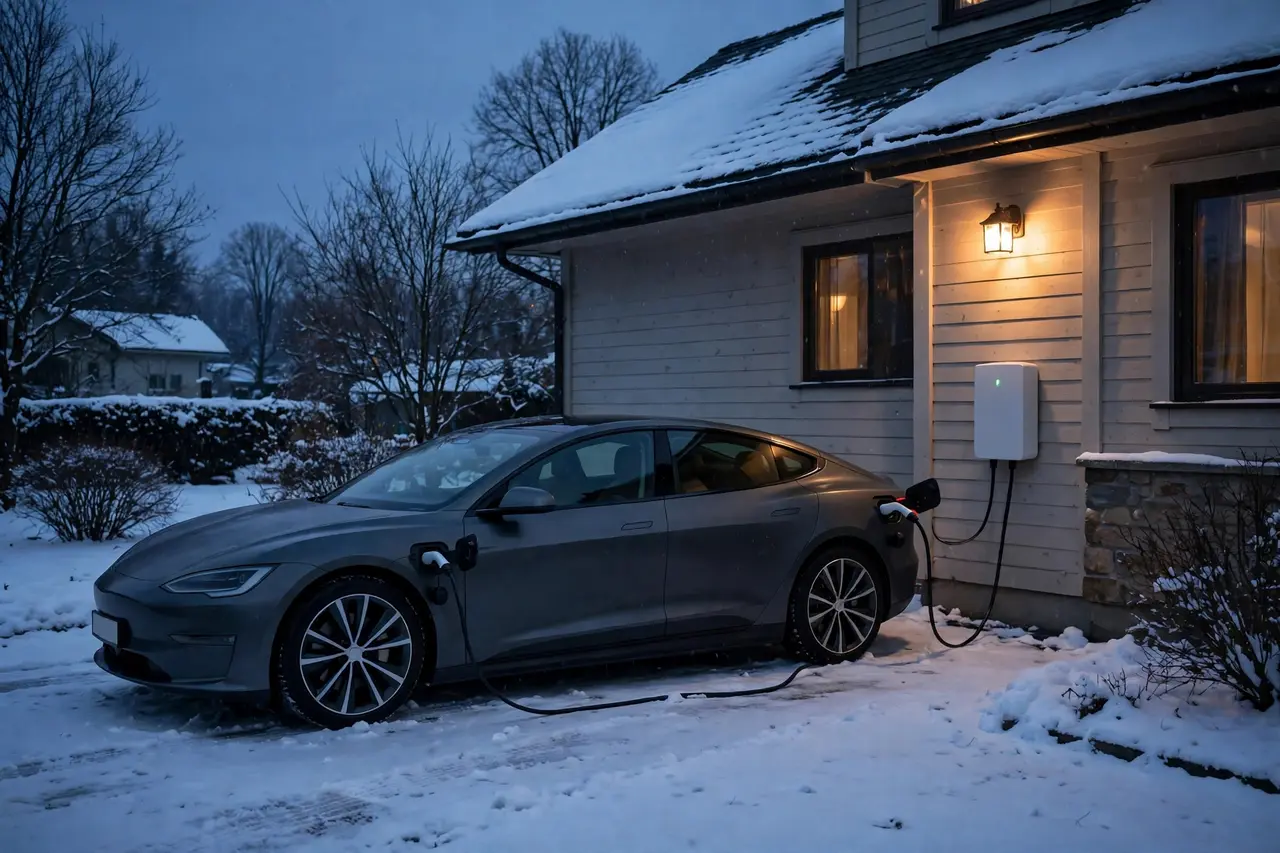
EV charging services in Hanford
Installers in Hanford book the same ten services as everywhere — but not in the same proportions. The three leading cards below are this city's pattern, set by its panels, its buildings and its statute book.
Home EV Charger Installation in Hanford
The standard first install: a dedicated circuit from the panel to the parking space, a station mounted and configured to that circuit, and a passed inspection to close it out. What changes from house to house is never the recipe — it is the panel's spare capacity, the length of the run, and how the car actually parks.
In Hanford: the core residential job in Hanford: circuit, mounting, configuration and inspection in one visit pattern.
Dedicated Circuit & Electrical Panel Upgrade in Hanford
Panel work is the one part of a charger project that outlives the car, the station and possibly the household's tenure. Specified generously and documented properly, it is less an expense than a permanent alteration in what the house can do.
In Hanford: relevant in Hanford wherever a 100-amp panel already carries cooking, heating and hot water before a charger asks for room.
Multifamily & Condo EV Charging in Hanford
Shared buildings convert charging from a purchase into a policy, and the installers fluent here speak both languages — amperage and agenda items. The electrical design that wins approval is the one whose metering and load answers arrive attached to the application.
In Hanford: the approvals-plus-wiring job for Hanford's condos and HOA communities, where the process matters as much as the circuit.
Utility programs and electricity in Hanford
Electricity in Hanford comes from Pacific Gas & Electric Co.. Parts of the wider metro are served by Southern California Edison Co. The utility matters twice over for a charger install: it sets the time-of-use rates that decide what overnight charging costs you, and it is the organisation that may — or may not — currently help pay for the equipment.
Why does this page labour the absence of a rebate? Because in Hanford the phantom rebate is the most common distortion in charger quotes: a figure justified by money that is not, at present, claimable. The verified position: federal 30C ended September 30, 2025; no California replacement for typical home installs; no Pacific Gas & Electric Co. residential charger rebate in the sources checked. If someone quotes you a rebate, the follow-up is one sentence — show me the program page — and its answer decides the quote's credibility.
Solar households should read the export terms alongside the charging ones: the pair decides whether midday charging on home-working days beats the overnight window, and the answer is written in your tariff, not in general advice.
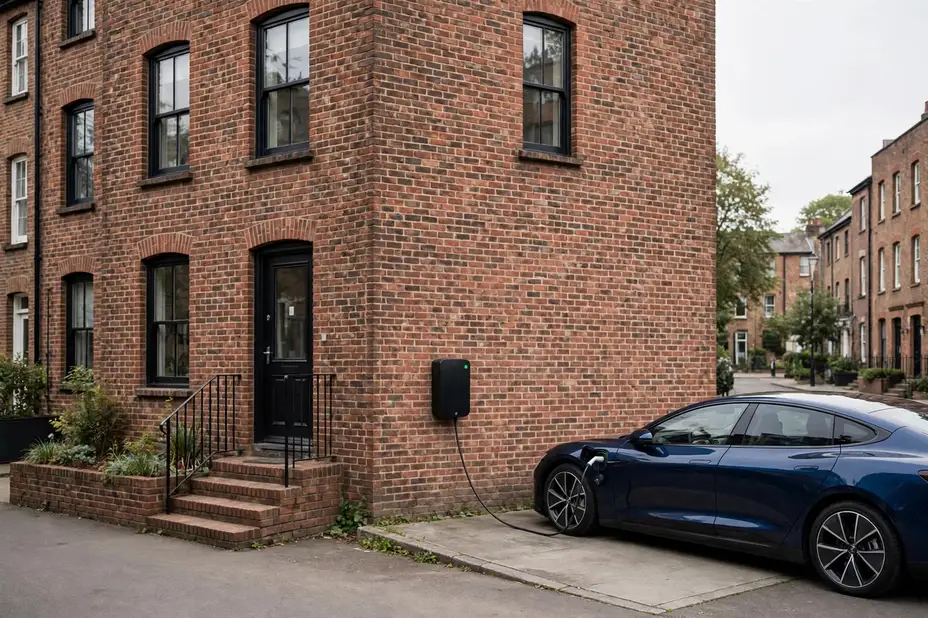
Condos, HOAs and the law in California
California law protects an owner's charger. Civ. Code §4745; §1947.6 (renters) gives owners in association communities a statutory route to a charging station in their own space: the association may set reasonable conditions on how the installation looks, where exactly it sits, and how it is insured, but a flat prohibition is not one of its options. Owners fund the work, use licensed installers, and remain responsible for the equipment — the statute allocates the burdens; it does not remove them.
If your board is stalling, the sequence that works in Hanford is boring and effective: cite the statute, submit a complete application (equipment, circuit, installer licence, insurance), and keep everything in writing.
Read the full process in our guide to installing an EV charger in a condo or HOA community, and the multifamily and condo charging service page for how shared and assigned-space installs are designed.
Climate, garages and charger placement
Seasonal scheduling is the quiet optimisation here: summer peaks and winter range loss both argue for charging deep in the overnight window, when rates and temperatures are kindest. Set the schedule once, in the car or the station, and the seasons stop appearing in the household's charging routine at all.
Storm seasons punctuate the year here, and the installation's weather manners are set at mounting time: enclosures sealed as listed, exterior runs pitched so water travels away from entries, and a station position that the roof's drip line does not cross. Five minutes of the site visit, decades of consequence.

Permits and inspection in Hanford
The permit trail also protects the next transaction: a charger circuit on the inspection record is an asset a buyer's inspector reads in one line, while an undocumented circuit is a question that follows the sale. Installers who work this metro treat the filing as part of the deliverable, not an errand.

Neighbourhoods and ZIP codes served
The page covers 2 ZIP codes in and around Hanford — including 93230, 93232 — across Kings. If your ZIP is not in the first set shown, ask anyway: installer coverage follows the metro, not a postcode fence.
The same working area takes in the neighbouring localities of Armona, Lemoore, Stratford, Corcoran, Kettleman City, Avenal — the county ring an installer based in Hanford actually drives. Requests from those communities route exactly as city requests do: same services, same permit discipline, same local facts where they differ.
Kings County accounts for 9 of the ZIP codes and 7 named postal localities in the research file, the nearest of them Armona, Lemoore, Stratford, Corcoran, Kettleman City. The survey counts 153,298 residents in the county, with a median household income of $70,995 and a median home value of $324,300.
Beyond the county seats, the working area takes in Armona, Laton, Lemoore, Traver, Kingsburg, Riverdale, Stratford, Waukena, Selma, Corcoran, Caruthers, Parlier, Five Points, Huron, Kettleman City, Avenal, Coalinga — the named localities for which Hanford is the nearest metro in the network (neighbouring metros' pages cover their own ground), each routing to the same installer-matching service.
The wider working area also reaches Fresno, Fowler, Sultana, Yettem, Farmersville, Orange Cove, Exeter, Strathmore, San Joaquin, Kerman, Porterville, Cantua Creek, Badger, Miramonte, Three Rivers, Delano, Ducor, Wasco, Shandon, Coarsegold, Big Creek, Raymond, Lakeshore, Mc Kittrick, Tupman, El Nido, San Lucas, Templeton, Fellows, Catheys Valley, King City, Bodfish, Los Banos, Lamont, Hornitos — ground shared with neighbouring metros, where installers cross the same county lines in both directions.
ZIP codes in that shared ground include 93208, 93220, 93221, 93224, 93227, 93235, 93238, 93240, 93249, 93256, 93258, 93262, 93265, 93277, 93303, 93305, 93306, 93308, 93309, 93313, 93387, 93402, 93406, 93409, 93424, 93432, 93446, 93448, 93449, 93450, 93465, 93518, 93530, 93549, 93604, 93610, 93614, 93618, 93633, 93634.
The largest communities in that working area after Hanford itself, by the GeoNames populated-place file: Lemoore (population 25,647), Selma (population 24,414), Corcoran (population 22,477), Coalinga (population 16,564), Parlier (population 15,138), Avenal (population 13,301), Kingsburg (population 11,824), Lemoore Station (population 7,438), Huron (population 6,836), Armona (population 4,156), Lucerne (population 3,443), Riverdale (population 3,153), Caruthers (population 2,497), Laton (population 1,824), Home Garden (population 1,761), Kettleman City (population 1,439), Stratford (population 1,277), Traver (population 713), Lanare (population 589). Charging demand follows those populations — the subdivisions and town centres where the next driveways, and the next panels, are.
Fresno County reaches into the working area with 1,016,725 residents, a median household income of $74,201 and a median home value of $388,800; its localities on this page include Laton, Kingsburg, Riverdale, Selma, Caruthers. Tulare County reaches into the working area with 478,693 residents, a median household income of $71,300 and a median home value of $330,100; its localities on this page include Traver, Waukena.
| ZIP | Locality | County |
|---|---|---|
| 93230 | Hanford | Kings |
| 93232 | Hanford | Kings |
| 93202 | Armona | Kings |
| 93242 | Laton | Fresno |
| 93245 | Lemoore | Kings |
| 93673 | Traver | Tulare |
| 93631 | Kingsburg | Fresno |
| 93656 | Riverdale | Fresno |
| 93266 | Stratford | Kings |
| 93282 | Waukena | Tulare |
| 93662 | Selma | Fresno |
| 93212 | Corcoran | Kings |
| 93609 | Caruthers | Fresno |
| 93246 | Lemoore | Kings |
| 93648 | Parlier | Fresno |
| 93624 | Five Points | Fresno |
| 93234 | Huron | Fresno |
| 93239 | Kettleman City | Kings |
| 93204 | Avenal | Kings |
| 93210 | Coalinga | Fresno |

Planning the install: from panel to parking
Consider the two households inside every Hanford install. The first owns the panel, the parking and the decision; the second — a partner, a teenager with the next car, a future buyer — inherits all three. Designing for the second household is the difference between an install and an asset: capacity reserved, conduit honest, paperwork filed. The first conversation with an installer should name both households explicitly.
Plan for the household you will be, not just the car you have. A second EV is the most common reason a charger circuit gets revisited, and the cheap moment to prepare for it — conduit sized up, panel capacity reserved, station placement that serves two bays — is during the first install, while the permit is open and the electrician is already in the panel.
Home charging know-how for Hanford households
The charger among workshop loads
Garages that double as workshops put the charger in interesting company: welders, compressors, dust collectors — loads with appetites and opinions. The load calculation for such a house reads the whole tenancy, and the honest conversation includes which loads genuinely coincide. A station scheduled into the workshop's quiet hours lives peacefully; one competing with the table saw's startup surge teaches the household about breaker curves the experiential way.
The sounds a station makes
A charging station is mostly silent, but not entirely: a contactor's clunk when a session starts, a faint hum under load, occasionally a small fan in warm weather. These are the sounds of switching and cooling, and they are normal. The sounds that earn attention are changes — buzzing that was not there last month, clicking cycles, a hum that grows. Electricity should be boring to listen to; when it stops being boring, that is information, and the correct response is an electrician rather than a search engine.
Charging with an accessory dwelling
Houses with a second unit — a garage apartment, a granny flat, a rented studio — add a cast member to the charging design: another household. The questions multiply politely. Whose panel carries the circuit? Whose meter records the energy? Does the tenancy agreement mention the charger at all? None are hard questions, and all are cheaper answered at design time than at the first shared bill. Where the second unit has its own meter and panel, the design is simply two small domestic installs sharing an address.
Dust, grime and the working garage
Garages are workshops, and workshops make dust. A charging connector living in one needs its holster the way a tool needs its hook — off the bench, out of the sawdust's fall line, capped by its dock rather than dangling. Metal filings and charger contacts are particular enemies; grinding and charging do not share a corner happily. None of this asks for a cleanroom — just the ordinary discipline of a space that works for a living, extended to the one appliance that is also a fuel line.

Frequently asked questions
Is the federal charger tax credit still available in Hanford, CA?
You cannot — it no longer exists. The 30C credit closed to equipment placed in service after September 30, 2025, and no California program replaced it for home installs. Nor did the sources checked for this page show a live Pacific Gas & Electric Co. residential rebate. Treat any 'credit' mentioned in a quote as a request for paperwork.
Can my association in Hanford, CA say no to a home charger?
California law (Civ. Code §4745; §1947.6 (renters)) limits that: associations cannot prohibit an owner's charger outright, though they can impose reasonable conditions on placement, insurance and restoration, and the owner pays for the installation. The process section above walks through it.
Panel upgrade or not — how do Hanford, CA homeowners find out?
The question has a correct instrument: the load calculation. It totals what your service already carries — with the code's demand factors, not nameplate panic — and sets the charger's continuous load against the remainder. In Hanford, where the median home dates to 1987 and about 39% of units predate 1980, the answer splits by street: post-war and newer 200-amp homes usually proceed; older 100-amp homes choose between capacity work and load management. Anyone answering without the calculation is guessing in a uniform.
How much faster is Level 2 charging at home in Hanford, CA?
In parked hours: a Level 1 cord returns about 3–5 miles for each of them, and a Level 2 circuit returns roughly 25–40, set by its amperage and the car's acceptance. For a Hanford household parking ten hours, that is the difference between recovering a short errand day and recovering any day the car can legally drive.
How does the installer matching on this page work?
Three steps: the request routes to installers who work Hanford, California; one contacts you to walk the property; the walk produces the written quote. Everything on this page — the utility position, the law, the housing data — is yours to check that quote against.
Can a charger be added to a detached garage in Hanford?
Yes — the charger itself is the same; the route to it is the project. From the house panel, a buried conduit run reaches the garage, or a subpanel goes in out there where distance and future loads argue for it. In Hanford, with about 74% of homes detached, local installers quote this shape routinely — the trench and the run, settled from a site walk, are the substance of it.
Nearby cities in California
- EV charger installation in Visalia — about 19 miles from Hanford, metro population 475,000
- EV charger installation in Fresno — about 36 miles from Hanford, metro population 1,000,000
- EV charger installation in Madera — about 45 miles from Hanford, metro population 160,000
- EV charger installation in Bakersfield — about 74 miles from Hanford, metro population 925,000
- EV charger installation in Merced — about 80 miles from Hanford, metro population 290,000
- EV charger installation in San Luis Obispo — about 92 miles from Hanford, metro population 285,000
- EV charger installation in Reno, NV — about 221 miles from Hanford, metro population 500,000
- EV charger installation in Las Vegas, NV — about 250 miles from Hanford, metro population 2,300,000
- EV charger installation in Lake Havasu City, AZ — about 319 miles from Hanford, metro population 215,000
Ready to charge at home in Hanford?
Send the essentials — what you need, where, and what kind of property — and a licensed local installer will pick it up from there.