EV Charger Installation in Fresno, CA
Charging where you park, in Fresno: the utility programs, state law, permit process and housing facts behind a home charger install, gathered in one place.
Every home charger installation is the same four decisions wearing local clothes: capacity in the panel, a route for the circuit, a position for the station, and paperwork that proves it was done properly. What changes from city to city is the content of those decisions — and in Fresno the content is specific. Fresno itself is home to about 550,091 people. California's registered fleet stood at 1,843,100 battery-electric vehicles and 490,900 plug-in hybrids at the end of 2025, and this page works through the local version of each decision: your utility and its programs, your state's association law, your permit counter, and your housing stock's electrical habits.
How PlugReady USA works, in one breath: you describe the job once, licensed local installers who cover Fresno receive it, and the conversations happen with them directly. The rest of this page exists so those conversations start from facts — yours about the house, ours about the metro — rather than from a sales script.
What the Experian and AFDC registration data say about Fresno: Central Valley CA stock. Translated out of market language: your neighbours are already charging at home, the permit office already knows the paperwork, and the installers already know the housing stock.
The Census Bureau's portrait of Fresno — median household income $74,491, 51% of occupied homes owner-occupied, 62% of units in single-unit detached houses — is, read correctly, a charging forecast. Owners approve their own work; detached houses host their own circuits; the remaining share is where the interesting projects live.

Put the survey together and Fresno's charging profile reads like this: an older housing fabric, where panel archaeology is a normal part of the first visit; a detached-house majority with a real attached and multifamily minority; buildings of five or more units hold a substantial share of homes, which keeps the multifamily sections of this page in daily use; and owners hold a working majority, with renters a significant minority. That combination — more than any single number — is what the installers working here plan around, and it is the lens for everything on this page.
The counts behind the percentages, for the record: Fresno has 189,450 housing units on the survey's count, 181,398 of them occupied, and 93,036 owner-occupied households making their own electrical decisions. Detached houses number 116,969; homes built before 1980 number 89,221; units in buildings of five or more number 40,041. An installer's week in this city is a walk through exactly that distribution. The page's geography is equally concrete: 58 ZIP codes across Fresno, centred near 36.84 degrees north latitude. The city anchors the Fresno metropolitan area, home to roughly 1,000,000 people on the research file's metro estimate — the wider labour and housing market this page's installers work across.
The same survey release fills in the household economics around the housing stock: a median home value of $396,300, median gross rent of $1,552, per-capita income of $31,943, and a median resident age of 34. The movement data matters as much as the money data: 71% of Fresno workers drive to work alone — the commute pattern home charging is built around; 9% work from home, a population whose cars charge on daytime and overnight schedules alike; 2% commute by public transit; 25% of adults hold a bachelor's degree or higher. Vehicle ownership, from the same release: 104,185 households in Fresno run two or more vehicles, and 16,540 run none — the two ends of the market this page serves and does not serve.
Two burden statistics frame the economics: in Fresno, 56% of renters and 0% of mortgage-holding owners are housing-cost burdened at the standard 30% threshold. And 69% of households are family households, the segment most likely to run the two-vehicle, two-schedule pattern the second-vehicle planning notes address.
What follows is the city read as an electrical place rather than a dot on a map. Pre-war and immediate post-war streets dominate the map, and their electrical fabric is stratified — original services beneath mid-century additions beneath modern subpanels, an archaeology the load calculation reads layer by layer. The built form refuses a single story: houses with garages on one side of the arterial, garden apartments and mid-rise condos on the other, each population charging by different rules.
High renter share also means charging follows the lease cycle: applications cluster at move-in, installations at renewal leverage, and the whole market breathes on the rental calendar. Households at this band comparison-shop on scope rather than on slogans, which rewards the installer whose quote shows its working — the load study, the route, the permit, itemised. Investor-owned utility territory runs on published tariffs and regulator-approved programmes: everything material about charging economics here exists in a filed document with an effective date, findable by anyone who reads filings.
The state's fleet has reached the scale where charging is unremarkable infrastructure: installers booked out, permit clerks fluent, neighbours comparing circuits over fences. Fresno sits inside that normalisation. At this scale the city's charging infrastructure is legible — a household can learn the whole local system, its programmes, precedents and people, in an evening's reading. This page is most of that evening. Shared-property households here work with a written legal position rather than a board's mood, which changes the application from a petition into a procedure.
The electrical reality in Fresno homes
The survey's housing portrait for Fresno opens with its median: a home built in 1982, in a stock where 47% of units predate 1980 and 62% stand detached on their own lots. 51% of occupied homes are owner-occupied. An installer reads those lines as a weather forecast: mostly settled conditions, with older wiring fronts moving through the pre-1980 districts. A housing stock this age leans on smaller electrical services — 100-amp panels are common, and fuse-era equipment still turns up in the oldest streets. For many of those homes the honest answer is a panel upgrade or a load-management device before the charger circuit goes in, and a good installer will show you the load calculation rather than asking you to take it on faith. Housing age also tracks wire-run reality: older homes more often place the panel in a basement or interior wall far from the garage, and distance is copper, conduit and labour.
The fuel table adds one more local fact: 74,219 Fresno homes — 41% of the stock — heat with electricity. Those households already think in kilowatts through the winter, their panels carry the load to prove it, and a charger's overnight appetite joins a system that is, in the useful sense, already electrified.
One further split matters for how this page is organised: about 88,362 of Fresno's occupied homes are renter-occupied. Everything above assumes you can approve your own electrical work; where you cannot, the approval layer — landlord or association — becomes part of the job, which is why the law section carries unusual weight here.
The city's stock is not all houses: 21% of units are in structures of five or more. Shared buildings mean shared panels, assigned parking and association process — the substance of the multifamily sections below.
EV charging services in Fresno
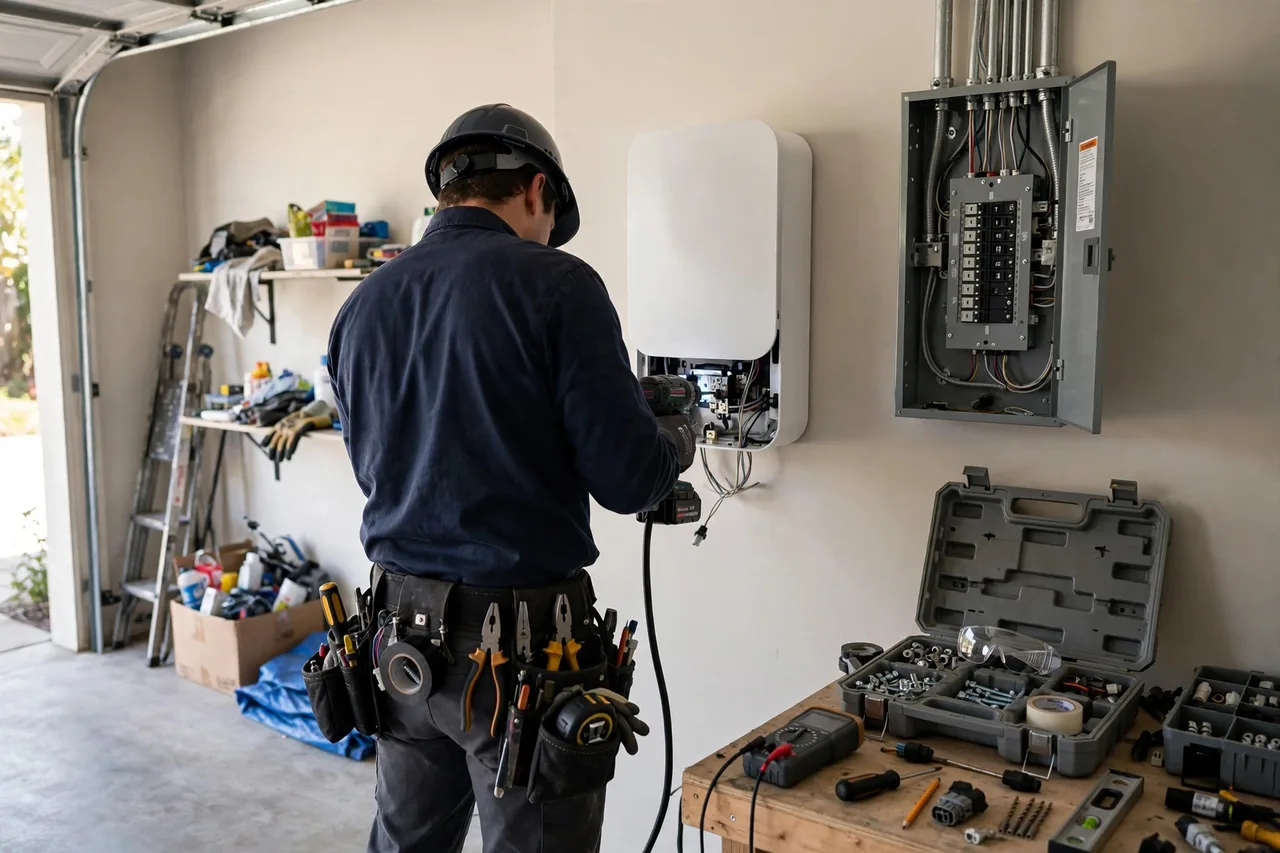
Ten services cover the work installers do in Fresno. Three lead the list here because of what this city's housing and law actually look like — each links to its national service page, where scope and process are set out in full.
Home EV Charger Installation in Fresno
The residential standard: a station where the car sleeps, on a circuit of its own, installed under permit. Variations are all local — the panel's spare room, the run's route through the house's fabric, and the parking pattern the cable has to serve.
In Fresno: the core residential job in Fresno: circuit, mounting, configuration and inspection in one visit pattern.
Dedicated Circuit & Electrical Panel Upgrade in Fresno
When the arithmetic says the service is full, this is the enabling job: a larger panel, or a new dedicated circuit with capacity planned in, done under the same permit umbrella as the charger it feeds. It is also the upgrade the rest of the house quietly benefits from for decades.
In Fresno: relevant in Fresno wherever a 100-amp panel already carries cooking, heating and hot water before a charger asks for room.
Multifamily & Condo EV Charging in Fresno
The multifamily install is a small constitution before it is a circuit: who may charge, on whose meter, under what cost split, with what path for the next ten applicants. Buildings that write that constitution once stop re-litigating it at every annual meeting.
In Fresno: the approvals-plus-wiring job for Fresno's condos and HOA communities, where the process matters as much as the circuit.
Utility programs and electricity in Fresno
Electricity in Fresno comes from Pacific Gas & Electric Co.. Parts of the wider metro are served by Southern California Edison Co, Kings River Conservation Dist, WAPA-- Western Area Power Administration. The utility matters twice over for a charger install: it sets the time-of-use rates that decide what overnight charging costs you, and it is the organisation that may — or may not — currently help pay for the equipment.
The honest incentive position in Fresno is: nothing verified to claim. The federal charger credit (30C) ended on September 30, 2025; California runs no state replacement for typical home installs; and in the utility and state sources checked for this page, Pacific Gas & Electric Co. had no active residential charger rebate to point to. Programs reopen — when one does, it will be on the utility's own site with terms and dates. Anything an installer describes without that paper trail should be treated as conversation, not money.
Net-metering households — rooftop solar is common across the metro — should tell the installer: charging schedules and load management are planned differently when the house generates as well as consumes.
Condos, HOAs and the law in California
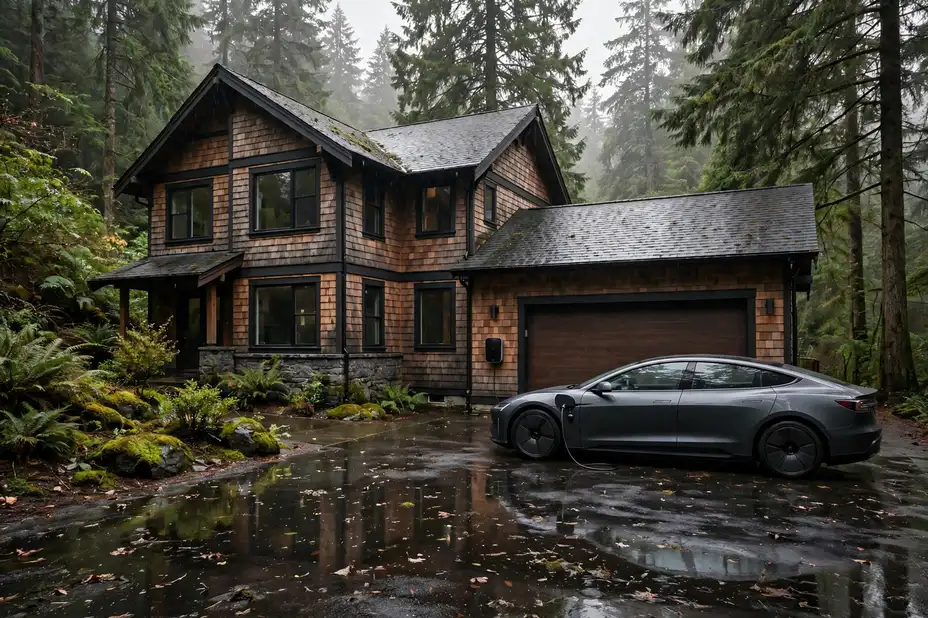
California has a right-to-charge law. Under Civ. Code §4745; §1947.6 (renters), a homeowners association or condominium cannot simply prohibit an owner from installing a charging station in their own parking space. The law does not make the process free or instant — owners typically carry the cost, must use a licensed installer, carry any insurance the statute specifies, and can be required to restore the space if they remove the equipment — but it converts the conversation from a request for permission into a defined process with rules on both sides.
Two practical corollaries follow for Fresno owners. First, assigned spaces are the clean case: the statute's protection is clearest where the parking is deeded or exclusively assigned. Second, insurance conditions are real but bounded — if a board's requirement looks invented, asking for its basis in the statute is a reasonable, usually decisive, question.
Both the process and the paperwork are covered in the condo and HOA guide; Fresno readers can skip the chapters about persuading reluctant boards and go straight to the compliance checklist.
Climate, garages and charger placement
The seasons rotate the charging advice: precondition from the wall in winter, dodge the afternoon peak in summer, and let the shoulder months do what they like. Households here learn the two settings and change them with the clocks.
Mixed-climate households discover the schedule twice a year: the winter window that suits the battery's warming and the summer window that dodges the afternoon peak are different settings, and the households that thrive change them with the clocks. It is the entire seasonal maintenance programme of a home charger.
Permits and inspection in Fresno
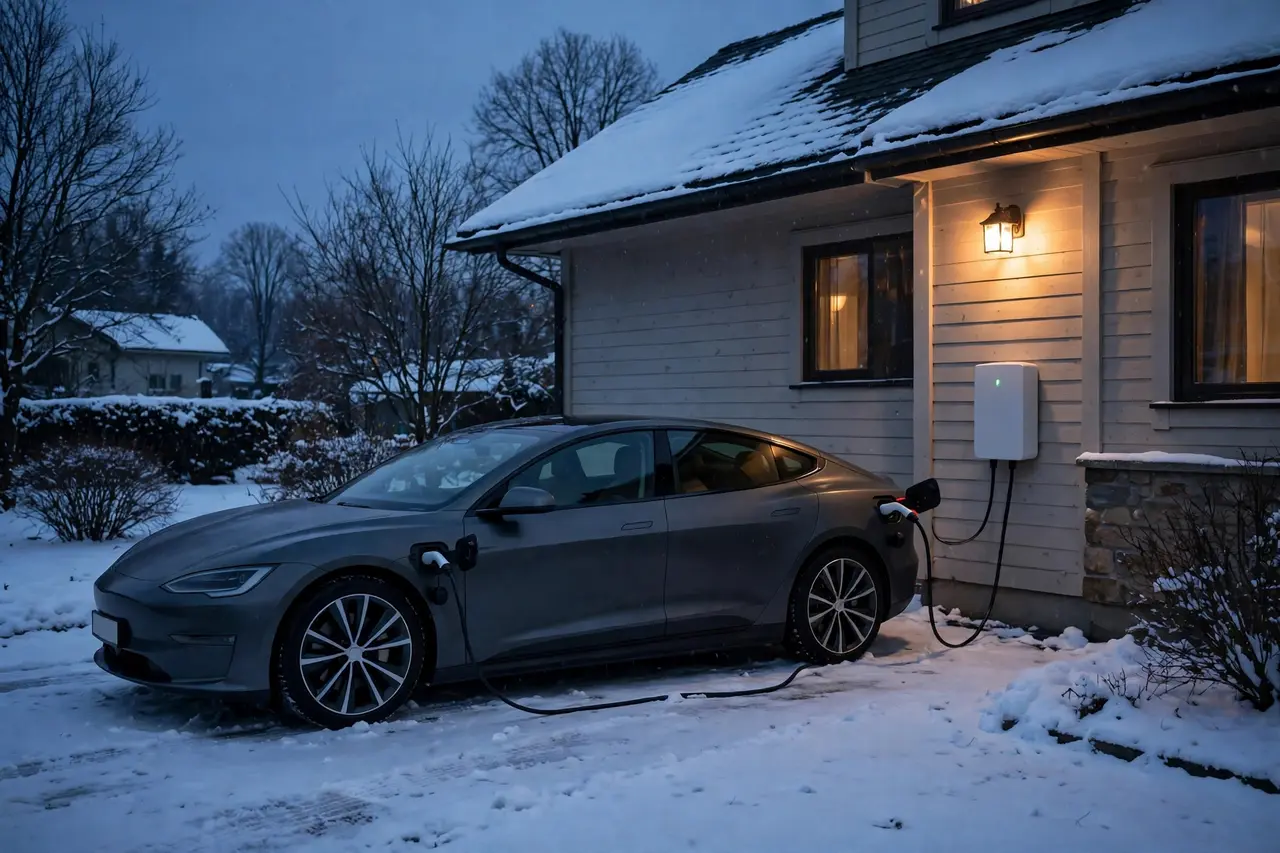
The permit trail also protects the next transaction: a charger circuit on the inspection record is an asset a buyer's inspector reads in one line, while an undocumented circuit is a question that follows the sale. Installers who work this metro treat the filing as part of the deliverable, not an errand.

Neighbourhoods and ZIP codes served
The page covers 58 ZIP codes in and around Fresno — including 93650, 93701, 93702, 93703, 93704, 93705, 93706, 93707, 93708, 93709, 93710, 93711, 93712, 93714, 93715, 93716, 93717, 93718, 93720, 93721, 93722, 93723, 93724, 93725, 93726, 93727, 93728, 93729, 93730, 93737, 93740, 93741, 93744, 93745, 93747, 93750, 93755, 93760, 93761, 93764, 93765, 93771, 93772, 93773, 93774, 93775, 93776, 93777, 93778, 93779, 93786, 93790, 93791, 93792, 93793, 93794, 93844, 93888 — across Fresno. If your ZIP is not in the first set shown, ask anyway: installer coverage follows the metro, not a postcode fence.
The same working area takes in the neighbouring localities of Clovis, Biola, Friant, Sanger, Fowler, Kerman, Del Rey, Raisin City, Burrel, Prather, Caruthers, Selma, Parlier, Auberry — the county ring an installer based in Fresno actually drives. Requests from those communities route exactly as city requests do: same services, same permit discipline, same local facts where they differ.
Fresno County accounts for 98 of the ZIP codes and 39 named postal localities in the research file, the nearest of them Clovis, Biola, Friant, Sanger, Fowler. The survey counts 1,016,725 residents in the county, with a median household income of $74,201 and a median home value of $388,800. Measured across its ZIP codes, the Fresno footprint runs about 18 miles north to south and 20 east to west, from ZIP 93650 to 93888 — the ground an installer based here actually covers in a working week.
Beyond the county seats, the working area takes in Clovis, Biola, Sanger, Fowler, Kerman, Del Rey, Raisin City, Burrel, Prather, Piedra, Tollhouse, San Joaquin, Helm, Tranquillity, Shaver Lake, Cantua Creek — the named localities for which Fresno is the nearest metro in the network (neighbouring metros' pages cover their own ground), each routing to the same installer-matching service.
The wider working area also reaches Madera, Friant, Caruthers, Selma, Parlier, O Neals, Auberry, Reedley, Kingsburg, Laton, Riverdale, Orange Cove, Raymond, Chowchilla, Traver, Sultana, Wishon, Mendota, Orosi, Yokuts, Cutler, Bass Lake, Oakhurst, Hanford, Armona, Five Points, Goshen, Ahwahnee, Big Creek, Lemoore, Planada, Miramonte, Visalia, Huron, Ivanhoe — ground shared with neighbouring metros, where installers cross the same county lines in both directions.
ZIP codes in that shared ground include 93202, 93230, 93235, 93242, 93245, 93291, 93601, 93602, 93604, 93605, 93610, 93614, 93615, 93618, 93621, 93622, 93623, 93624, 93626, 93631, 93634, 93638, 93639, 93640, 93641, 93643, 93644, 93645, 93646, 93647, 93648, 93653, 93654, 93656, 93662, 93666, 93673, 93675, 95317, 95333.
The largest communities in that working area after Fresno itself, by the GeoNames populated-place file: Clovis (population 104,180), Sanger (population 24,950), Kerman (population 14,475), Fowler (population 6,266), Old Fig Garden (population 5,365), Sunnyside (population 4,235), San Joaquin (population 4,022), Tarpey Village (population 3,888), Bishop (population 3,806), Dixon Lane-Meadow Creek (population 2,645), West Bishop (population 2,607), Easton (population 2,083), Del Rey (population 1,639), Biola (population 1,623), West Park (population 1,157), Minkler (population 1,003), Malaga (population 947), Calwa (population 818), Tranquillity (population 799), Rolling Hills (population 742). Charging demand follows those populations — the subdivisions and town centres where the next driveways, and the next panels, are.
Tulare County reaches into the working area with 478,693 residents, a median household income of $71,300 and a median home value of $330,100; its localities on this page include Clovis.
| ZIP | Locality | County |
|---|---|---|
| 93650 | Fresno | Fresno |
| 93711 | Fresno | Fresno |
| 93720 | Fresno | Fresno |
| 93710 | Fresno | Fresno |
| 93704 | Fresno | Fresno |
| 93726 | Fresno | Fresno |
| 93730 | Fresno | Fresno |
| 93705 | Fresno | Fresno |
| 93612 | Clovis | Fresno |
| 93703 | Fresno | Fresno |
| 93613 | Clovis | Fresno |
| 93722 | Fresno | Fresno |
| 93728 | Fresno | Fresno |
| 93701 | Fresno | Fresno |
| 93737 | Fresno | Fresno |
| 93611 | Clovis | Fresno |
| 93721 | Fresno | Fresno |
| 93702 | Fresno | Fresno |
| 93727 | Fresno | Fresno |
| 93619 | Clovis | Tulare |
| 93723 | Fresno | Fresno |
| 93707 | Fresno | Fresno |
| 93708 | Fresno | Fresno |
| 93709 | Fresno | Fresno |
| 93712 | Fresno | Fresno |
| 93714 | Fresno | Fresno |
| 93715 | Fresno | Fresno |
| 93716 | Fresno | Fresno |
| 93717 | Fresno | Fresno |
| 93718 | Fresno | Fresno |
| 93724 | Fresno | Fresno |
| 93729 | Fresno | Fresno |
| 93740 | Fresno | Fresno |
| 93741 | Fresno | Fresno |
| 93744 | Fresno | Fresno |
| 93745 | Fresno | Fresno |
| 93747 | Fresno | Fresno |
| 93750 | Fresno | Fresno |
| 93755 | Fresno | Fresno |
| 93760 | Fresno | Fresno |
| 93761 | Fresno | Fresno |
| 93764 | Fresno | Fresno |
| 93765 | Fresno | Fresno |
| 93771 | Fresno | Fresno |
| 93772 | Fresno | Fresno |
| 93773 | Fresno | Fresno |
| 93774 | Fresno | Fresno |
| 93775 | Fresno | Fresno |
| 93776 | Fresno | Fresno |
| 93777 | Fresno | Fresno |
| 93778 | Fresno | Fresno |
| 93779 | Fresno | Fresno |
| 93786 | Fresno | Fresno |
| 93790 | Fresno | Fresno |
| 93791 | Fresno | Fresno |
| 93792 | Fresno | Fresno |
| 93793 | Fresno | Fresno |
| 93794 | Fresno | Fresno |
| 93844 | Fresno | Fresno |
| 93888 | Fresno | Fresno |
| 93606 | Biola | Fresno |
| 93725 | Fresno | Fresno |
| 93657 | Sanger | Fresno |
| 93625 | Fowler | Fresno |
| 93630 | Kerman | Fresno |
| 93706 | Fresno | Fresno |
| 93616 | Del Rey | Fresno |
| 93652 | Raisin City | Fresno |
| 93607 | Burrel | Fresno |
| 93651 | Prather | Fresno |
| 93649 | Piedra | Fresno |
| 93667 | Tollhouse | Fresno |
| 93660 | San Joaquin | Fresno |
| 93627 | Helm | Fresno |
| 93668 | Tranquillity | Fresno |
| 93664 | Shaver Lake | Fresno |
| 93608 | Cantua Creek | Fresno |

Planning the install: from panel to parking
A useful way to read any Fresno quote is to ask which of three jobs it describes. Job one: the panel has room and the run is short — a circuit and a station. Job two: the panel is full — capacity work joins the quote, as an upgrade or as load management. Job three: the property adds people — an HOA, a landlord, a building's shared service — and the approvals timeline joins the electrical one. None of the three is a bad job; they are simply different scopes, and a clear quote says which one you are in.
Plan for the household you will be, not just the car you have. A second EV is the most common reason a charger circuit gets revisited, and the cheap moment to prepare for it — conduit sized up, panel capacity reserved, station placement that serves two bays — is during the first install, while the permit is open and the electrician is already in the panel.
Home charging know-how for Fresno households
Charging on a shift worker's clock
Night-shift households run the tariff backwards: the car works while others charge and charges through the day while others work. Their design questions differ — daytime sessions against the household's sleeping hours, schedules that flip with the rota, and the second car's opposite rhythm. None of it is complicated, but all of it must be said at the site visit, because the default schedule baked into every station assumes a nine-to-five that this household does not live.
Selling a house that charges
A documented charger has become a listing fact: the housing market's filters increasingly include charging, and the buyers behind them read a permitted, inspected installation as maintained infrastructure. The operative word is documented. The permit and inspection record, the panel schedule showing the circuit, and the station's manual together convert the charger from a question a buyer's inspector raises into a feature the listing can name. If a sale is anywhere on the horizon, the paperwork conversation with your installer is worth having at install time, while it is free.
Amps, volts and kilowatts without tears
Three numbers describe every charging session. Volts are the pressure — 240 of them on a Level 2 circuit. Amps are the flow — the circuit's rating, of which the car may continuously use eighty percent. Kilowatts are the product of the two and the speedometer of charging: volts times amps, divided by a thousand. A 40-amp circuit at 240 volts delivers 9.6 kilowatts; over a ten-hour night that is roughly 96 kilowatt-hours before losses — more than most batteries hold. Once the multiplication is familiar, every quote and specification sheet becomes readable.
The charger among the electrification stack
Few households electrify one appliance at a time for long. The charger arrives, then the heat pump conversation starts, then the induction range. Each addition is a load-calculation event, and the households that fare well treat them as one programme: capacity planned once, circuits sequenced, the panel schedule telling the whole story. If your five-year list includes more than the car, hand the list to the installer at the first visit — the most economical capacity is the capacity planned before it is needed.
Charging with an accessory dwelling
Houses with a second unit — a garage apartment, a granny flat, a rented studio — add a cast member to the charging design: another household. The questions multiply politely. Whose panel carries the circuit? Whose meter records the energy? Does the tenancy agreement mention the charger at all? None are hard questions, and all are cheaper answered at design time than at the first shared bill. Where the second unit has its own meter and panel, the design is simply two small domestic installs sharing an address.

Frequently asked questions
What happened to the federal home-charger credit in Fresno, CA?
Nothing is currently on offer that you should plan around. The federal 30C credit ended on September 30, 2025; California operates no replacement for typical home installs; and the sources checked for this page showed no live residential rebate from Pacific Gas & Electric Co.. Programs do reopen — on the utility's own pages, with dates. Until one does, the install stands or falls on its own merits.
What can my HOA in Fresno, CA do about a charger install?
California law (Civ. Code §4745; §1947.6 (renters)) limits that: associations cannot prohibit an owner's charger outright, though they can impose reasonable conditions on placement, insurance and restoration, and the owner pays for the installation. The process section above walks through it.
Does a Level 2 charger mean a panel upgrade for a Fresno, CA home?
The question has a correct instrument: the load calculation. It totals what your service already carries — with the code's demand factors, not nameplate panic — and sets the charger's continuous load against the remainder. In Fresno, where the median home dates to 1982 and about 47% of units predate 1980, the answer splits by street: post-war and newer 200-amp homes usually proceed; older 100-amp homes choose between capacity work and load management. Anyone answering without the calculation is guessing in a uniform.
Level 1 or Level 2 in Fresno, CA — what is the real difference?
Think of it in parked hours. Level 1 gives you back 3–5 miles for each of them; Level 2 gives back about 25–40, set by the circuit's amperage and what the car can accept. Overnight, that is the gap between 'enough for tomorrow' and 'full, every morning'.
What happens next after I send a request?
Your request is matched to licensed installers covering Fresno, California — service, ZIP, property type and timing travel with it. The installer who takes it arranges the site visit and quotes in writing; PlugReady USA's part is the research on this page and the introduction, and your contract is with the installer throughout.
Does Pacific Gas & Electric Co. offer a time-of-use rate for EV charging in Fresno?
Many Pacific Gas & Electric Co. customers can choose a time-of-use tariff; whether yours is one, and where its cheap window sits, decides how the charger should be scheduled from night one. Two minutes with your tariff sheet during the planning stage is the whole task — the installer sets the schedule to match while commissioning the station.
Nearby cities in California
- EV charger installation in Madera — about 9 miles from Fresno, metro population 160,000
- EV charger installation in Hanford — about 36 miles from Fresno, metro population 155,000
- EV charger installation in Visalia — about 46 miles from Fresno, metro population 475,000
- EV charger installation in Merced — about 48 miles from Fresno, metro population 290,000
- EV charger installation in Modesto — about 88 miles from Fresno, metro population 575,000
- EV charger installation in Salinas — about 103 miles from Fresno, metro population 450,000
- EV charger installation in Reno, NV — about 185 miles from Fresno, metro population 500,000
- EV charger installation in Las Vegas, NV — about 262 miles from Fresno, metro population 2,300,000
- EV charger installation in Lake Havasu City, AZ — about 342 miles from Fresno, metro population 215,000
Ready to charge at home in Fresno?
Two minutes of form, and the request is in front of licensed installers who cover this city — quotes follow site visits, in writing.