EV Charger Installation in Corvallis, OR
Everything a Corvallis homeowner needs before booking a charger install — the panel question, the utility's current programs, the HOA law and the permit — sourced, dated and local.
Start with the vehicle you already own and the driveway it already sleeps in: home charging succeeds when the electrical side is treated as a small building project rather than an accessory purchase. In Corvallis that project has local coordinates. Corvallis itself is home to about 59,960 people, inside a state counting 98,000 battery-electric vehicles and 38,900 plug-in hybrids through 2025. The utility serving your street, the vintage of your panel, the rules of your community and the habits of your permit office are the four coordinates — this page fixes each one for Corvallis.
How to read this page in four minutes: the data band tells you what kind of housing city Corvallis is; the utility section tells you whether money is on the table; the law section tells you whether permission is a process or a negotiation; and the permit section tells you what proof the finished job leaves behind. The rest is elaboration.
Why Corvallis ranks 209 in this network's 300-metro build order: OSU market. Those are registration figures, not projections, and they translate directly into installation work — every newly registered plug-in vehicle is a household deciding where it will charge.
The Census Bureau's portrait of Corvallis — median household income $65,012, 42% of occupied homes owner-occupied, 47% of units in single-unit detached houses — is, read correctly, a charging forecast. Owners approve their own work; detached houses host their own circuits; the remaining share is where the interesting projects live.

The composite picture matters more than any single statistic. In Corvallis: an older housing fabric, where panel archaeology is a normal part of the first visit; a genuinely mixed city — houses, townhouses and larger buildings all carry weight; buildings of five or more units hold a substantial share of homes, which keeps the multifamily sections of this page in daily use; meanwhile, renters form a large share of households, so the landlord conversation is a first-class topic here. A page that ignored that profile would give the same advice everywhere; this one is ordered by it.
The counts behind the percentages, for the record: Corvallis has 25,628 housing units on the survey's count, 23,980 of them occupied, and 10,011 owner-occupied households making their own electrical decisions. Detached houses number 12,140; homes built before 1980 number 13,806; units in buildings of five or more number 8,330. An installer's week in this city is a walk through exactly that distribution. The page's geography is equally concrete: 4 ZIP codes across Benton, centred near 44.59 degrees north latitude. The city anchors the Corvallis metropolitan area, home to roughly 100,000 people on the research file's metro estimate — the wider labour and housing market this page's installers work across.
The same survey release fills in the household economics around the housing stock: a median home value of $502,900, median gross rent of $1,391, per-capita income of $40,092, and a median resident age of 28. How the city moves completes the picture: 56% of Corvallis workers drive to work alone — the commute pattern home charging is built around; 19% work from home, a population whose cars charge on daytime and overnight schedules alike; 2% commute by public transit; 61% of adults hold a bachelor's degree or higher. The survey's vehicle table is the one an EV page should quote first: 2,320 of Corvallis's households have no vehicle at all, while 12,605 have two or more — the multi-car households for whom the second circuit is a when, not an if.
The cost-burden lines say who feels housing costs most in Corvallis: 59% of renters spend 30% or more of income on rent, and 0% of owners with mortgages spend the same share on housing costs. Family households are 44% of all households — the two-car, school-run demographic whose charging patterns this page's planning sections keep circling back to.
This is the context an installer works against, whether it is written down or not. Where so much of the stock predates modern code cycles, the site visit doubles as a survey — grounding electrode, service entrance, panel provenance — before it is ever a quote. Multifamily weight changes the installer market too — the firms that thrive here carry association paperwork fluency alongside their licences, and their references are buildings, not just households.
Where renting dominates, the successful install is a document before it is a device — installer licence, insurance, metering clarity, end-of-tenancy position — assembled to make a landlord's yes the path of least resistance. Here the tariff conversation is a budget conversation: the overnight window's arithmetic, done honestly once, pays out every night of the car's life without further attention. The regulatory calendar is the programme calendar: rate cases, electrification plans and pilot approvals move through the commission on public timetables, and installers plan their marketing around them.
The growth market's households are researchers by necessity: fewer neighbours to copy, thinner local precedent, and pages like this one carrying more of the orientation load. The permit counter in a smaller city is a conversation, not a queue: applications are read by people who may know the street, and complete paperwork is remembered kindly. Where the state's statute speaks, the local conversation changes register: installers quote the framework, boards keep counsel's template, and approvals become administrative.
The electrical reality in Corvallis homes
Four numbers organise everything an installer expects in Corvallis: median build year 1978; 54% of units built before 1980; 47% of the stock detached; 42% of occupied homes owner-occupied. Capacity, circuit routes and approval layers all correlate with those four. The paragraphs below are their commentary. Age shows up electrically before it shows up anywhere else: services sized for a house with a third of today's appliances. Expect the first conversation to be about capacity — what the panel is, what it already feeds, and which of the three routes (circuit, management, upgrade) your numbers support. Housing age also tracks wire-run reality: older homes more often place the panel in a basement or interior wall far from the garage, and distance is copper, conduit and labour.
The fuel table adds one more local fact: 14,494 Corvallis homes — 60% of the stock — heat with electricity. Those households already think in kilowatts through the winter, their panels carry the load to prove it, and a charger's overnight appetite joins a system that is, in the useful sense, already electrified.
One further split matters for how this page is organised: about 13,969 of Corvallis's occupied homes are renter-occupied. Everything above assumes you can approve your own electrical work; where you cannot, the approval layer — landlord or association — becomes part of the job, which is why the law section carries unusual weight here.
And 33% of Corvallis's homes are in buildings with five or more units — apartments and condominiums where charging is a building decision before it is an electrical one. If that is your situation, the law and multifamily sections of this page are the ones written for you.
EV charging services in Corvallis
The services below are ordered by what Corvallis households most often need first, judged from the housing and fleet facts on this page. The full menu follows in the grid — every service is offered in this metro.
Home EV Charger Installation in Corvallis
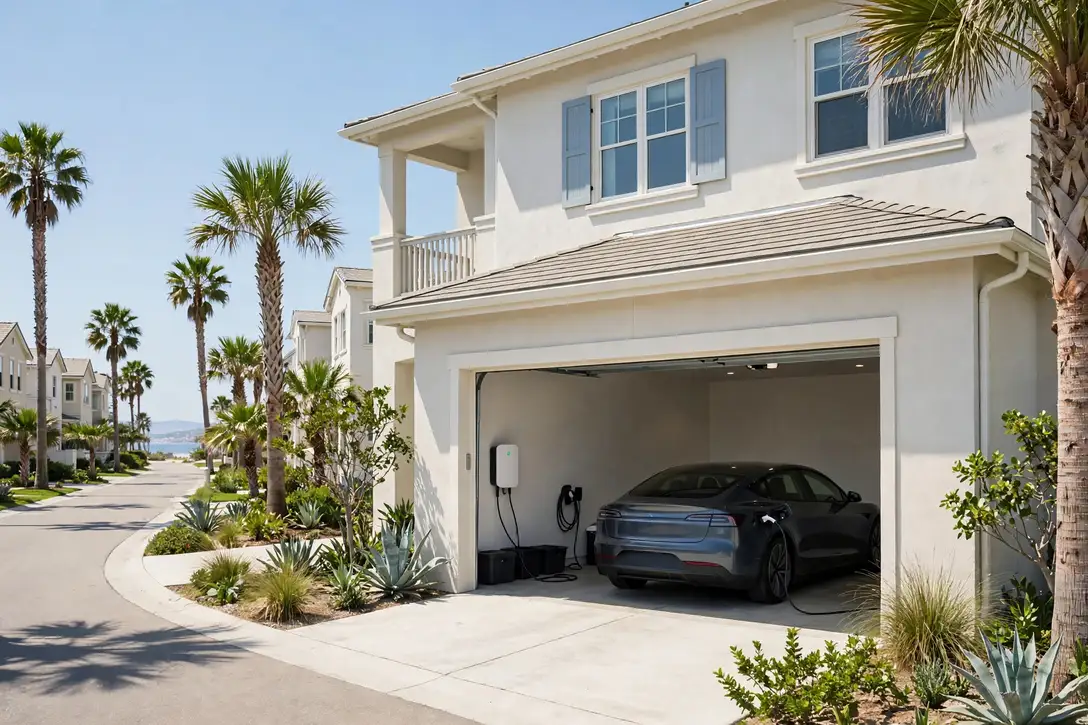
For most households this is the whole project: a Level 2 station mounted where the car sleeps, fed by its own 240-volt circuit. The visit pattern is consistent — load calculation, route the run, mount and configure, inspect — and the variables are your panel, your parking and your permit office.
In Corvallis: the install Corvallis's new EV households book first, and the one the rest of this page keeps returning to.
Dedicated Circuit & Electrical Panel Upgrade in Corvallis
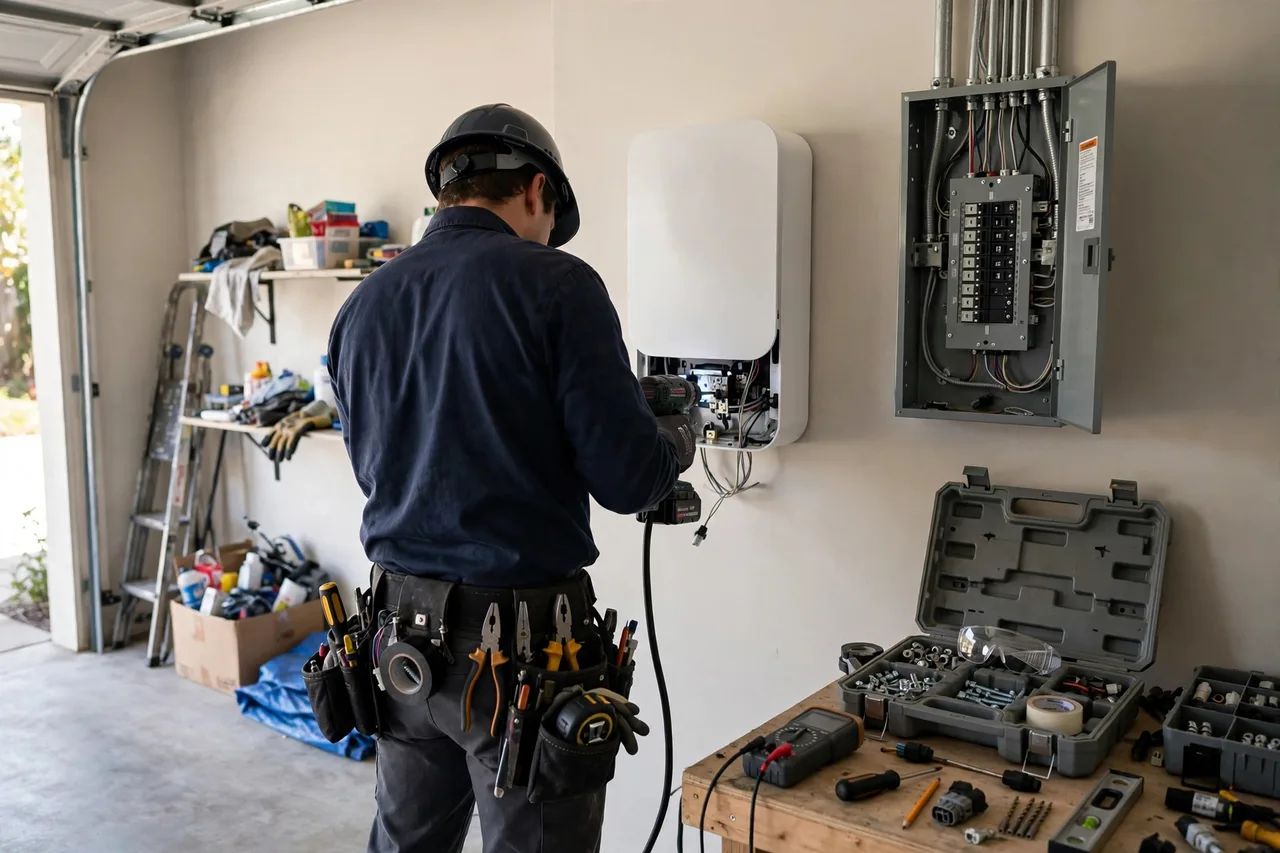
Where the load calculation fails the existing service, the upgrade is not an upsell — it is the finding. Done under permit with the utility's meter work coordinated, it converts the charger project into the house's electrical reset, and every later project inherits the headroom.
In Corvallis: relevant in Corvallis wherever a 100-amp panel already carries cooking, heating and hot water before a charger asks for room.
Multifamily & Condo EV Charging in Corvallis
In shared buildings the deliverable is a system, not a socket: an approved application, a metering design the treasurer can audit, capacity shared by rule rather than by argument, and only then conduit and copper. Firms fluent in the sequence are worth their diary time.
In Corvallis: the service behind the law section below — boards, applications and shared electrical capacity in Corvallis buildings.
Utility programs and electricity in Corvallis
Electricity in Corvallis comes from PacifiCorp. Parts of the wider metro are served by Emerald People's Utility Dist, Consumers Power, Inc. The utility matters twice over for a charger install: it sets the time-of-use rates that decide what overnight charging costs you, and it is the organisation that may — or may not — currently help pay for the equipment.
No verified residential charger rebate was in place for PacifiCorp in the sources checked for this page (the federal Alternative Fuel Refueling Property Credit ended on September 30, 2025, and no Oregon state program replaced it for typical home installs). That can change — utilities open and close funded rounds — so an installer quoting you today should be able to name any current program precisely, with its published terms. If they cannot name it, it is not part of your job.
Solar households should read the export terms alongside the charging ones: the pair decides whether midday charging on home-working days beats the overnight window, and the answer is written in your tariff, not in general advice.
Condos, HOAs and the law in Oregon
Oregon has a right-to-charge law. Under ORS 94.762 (HOA); §100.627 (condo); §90.462 (renters), a homeowners association or condominium cannot simply prohibit an owner from installing a charging station in their own parking space. The law does not make the process free or instant — owners typically carry the cost, must use a licensed installer, carry any insurance the statute specifies, and can be required to restore the space if they remove the equipment — but it converts the conversation from a request for permission into a defined process with rules on both sides.
If your board is stalling, the sequence that works in Corvallis is boring and effective: cite the statute, submit a complete application (equipment, circuit, installer licence, insurance), and keep everything in writing.
Both the process and the paperwork are covered in the condo and HOA guide; Corvallis readers can skip the chapters about persuading reluctant boards and go straight to the compliance checklist.
Climate, garages and charger placement
Snow management decides charger geography in cold metros more than any electrical factor: the station out of the plough's throw, the parking position out of the drift line, the cable route off the shovelled path. Walk the site in your head in February before signing the layout in June.
The plugged-in car is the winter-ready car: battery held at a kinder temperature by the wall, cabin preconditioned without draining the pack, departure on schedule regardless of the night's low. Households in cold metros describe the home charger less as fuelling than as winter equipment outright.

Permits and inspection in Corvallis
The permit trail also protects the next transaction: a charger circuit on the inspection record is an asset a buyer's inspector reads in one line, while an undocumented circuit is a question that follows the sale. Installers who work this metro treat the filing as part of the deliverable, not an errand.

Neighbourhoods and ZIP codes served
The page covers 4 ZIP codes in and around Corvallis — including 97330, 97331, 97333, 97339 — across Benton. If your ZIP is not in the first set shown, ask anyway: installer coverage follows the metro, not a postcode fence.
The same working area takes in the neighbouring localities of Philomath, Monroe, Blodgett, Alsea — the county ring an installer based in Corvallis actually drives. Requests from those communities route exactly as city requests do: same services, same permit discipline, same local facts where they differ.
Benton County accounts for 8 of the ZIP codes and 5 named postal localities in the research file, the nearest of them Philomath, Monroe, Blodgett, Alsea. The survey counts 96,303 residents in the county, with a median household income of $77,702 and a median home value of $513,000. Measured across its ZIP codes, the Corvallis footprint runs about 4 miles north to south and 1 east to west, from ZIP 97330 to 97339 — the ground an installer based here actually covers in a working week.
Beyond the county seats, the working area takes in Philomath, Shedd, Halsey, Monroe, Blodgett, Falls City, Alsea, Eddyville, Logsden, Siletz, Toledo, Tidewater, Seal Rock, Newport, South Beach, Waldport, Otter Rock, Lincoln City, Depoe Bay, Gleneden Beach, Otis, Neotsu, Yachats, Neskowin — the named localities for which Corvallis is the nearest metro in the network (neighbouring metros' pages cover their own ground), each routing to the same installer-matching service.
The wider working area also reaches Crabtree, Dallas, Brownsville, Crawfordsville, Cheshire, Blachly, Sweet Home, Eugene, Marcola, Veneta, Lyons, Springfield, Foster, Mount Angel, Woodburn, Saint Paul, Pleasant Hill, Carlton, Gates, Dexter, Newberg, Saint Benedict, Molalla, Canby, Cottage Grove, Westlake, Beaverton, West Linn, Lake Oswego, Netarts, Happy Valley, Bay City, Manning, Oakridge, Garibaldi — ground shared with neighbouring metros, where installers cross the same county lines in both directions.
ZIP codes in that shared ground include 97003, 97004, 97006, 97007, 97017, 97020, 97022, 97023, 97035, 97055, 97062, 97078, 97102, 97107, 97116, 97117, 97118, 97125, 97129, 97131, 97133, 97136, 97143, 97205, 97214, 97215, 97217, 97218, 97219, 97222, 97223, 97229, 97231, 97233, 97238, 97239, 97256, 97258, 97266, 97304.
The largest communities in that working area after Corvallis itself, by the GeoNames populated-place file: Agate Beach (population 12,351), Newport (population 10,268), Lincoln City (population 8,536), Philomath (population 4,599), Toledo (population 3,511), Waldport (population 2,130), Lincoln Beach (population 2,045), Rose Lodge (population 1,894), Depoe Bay (population 1,422), Siletz (population 1,221), Falls City (population 975), Halsey (population 942), Yachats (population 718), Monroe (population 621). Charging demand follows those populations — the subdivisions and town centres where the next driveways, and the next panels, are.
Lincoln County reaches into the working area with 50,964 residents, a median household income of $63,165 and a median home value of $410,800; its localities on this page include Eddyville, Logsden, Siletz, Toledo, Tidewater. Linn County reaches into the working area with 130,706 residents, a median household income of $76,329 and a median home value of $376,400; its localities on this page include Shedd, Halsey. Polk County reaches into the working area with 89,662 residents, a median household income of $85,118 and a median home value of $454,700; its localities on this page include Falls City.
| ZIP | Locality | County |
|---|---|---|
| 97330 | Corvallis | Benton |
| 97331 | Corvallis | Benton |
| 97339 | Corvallis | Benton |
| 97333 | Corvallis | Benton |
| 97370 | Philomath | Benton |
| 97377 | Shedd | Linn |
| 97348 | Halsey | Linn |
| 97456 | Monroe | Benton |
| 97326 | Blodgett | Benton |
| 97344 | Falls City | Polk |
| 97324 | Alsea | Benton |
| 97343 | Eddyville | Lincoln |
| 97357 | Logsden | Lincoln |
| 97380 | Siletz | Lincoln |
| 97391 | Toledo | Lincoln |
| 97390 | Tidewater | Lincoln |
| 97376 | Seal Rock | Lincoln |
| 97365 | Newport | Lincoln |
| 97366 | South Beach | Lincoln |
| 97394 | Waldport | Lincoln |
| 97369 | Otter Rock | Lincoln |
| 97367 | Lincoln City | Lincoln |
| 97341 | Depoe Bay | Lincoln |
| 97388 | Gleneden Beach | Lincoln |
| 97368 | Otis | Lincoln |
| 97364 | Neotsu | Lincoln |
| 97498 | Yachats | Lincoln |
| 97149 | Neskowin | Tillamook |

Planning the install: from panel to parking
Consider the two households inside every Corvallis install. The first owns the panel, the parking and the decision; the second — a partner, a teenager with the next car, a future buyer — inherits all three. Designing for the second household is the difference between an install and an asset: capacity reserved, conduit honest, paperwork filed. The first conversation with an installer should name both households explicitly.
Future-proofing, in this trade, is mostly conduit and capacity: an oversized conduit run costs little during the first install and everything later; a panel position reserved is a breaker that never has to move. If a second EV, a workshop or an electrified water heater is anywhere in your five-year picture, say so at the site visit.
Home charging know-how for Corvallis households
Charging for guests
A home charger quietly becomes hospitality infrastructure: the visiting family's EV, the friend's road-trip top-up, the neighbour mid-renovation. Households handle it with varying ceremony — a standing offer, a holster left accessible, a note in the guest room. The electrical system does not care; the point is social. The charger joins the spare bed and the good coffee in the category of things a house offers the people it likes.
Timing the install with other work
The least disruptive charger circuit is the one installed while other electrical work is already open. A renovation, a panel project, a garage build — each already carries the mobilisation, the permit process and the opened walls that a standalone charger job must pay for alone. The sequencing conversation costs nothing: tell the installer what else the house has planned in the next two years, and let the scope absorb the charger while the house is already a building site. The same logic in reverse — roughing in during this project for a charger planned later — is the EV-ready idea, and it belongs in the same sentence.
The school-run charge window
Households organised around school runs live on a distinctive charge curve: two short hops, a long parked day, an afternoon of activities. The car sits at home for the middle of the day — which, for solar households, is precisely the generation window, and for everyone else makes the overnight session almost an afterthought. Scheduling follows the family's actual day, not the tariff's assumption of one, and the installer who asks about the school run is designing, not chatting.
Getting onto the board's agenda
Association decisions happen inside a procedure, and the procedure has a door: the agenda. Applications that miss the submission deadline wait a full cycle regardless of merit, so the first question for any board is clerical — when do items close for the next meeting, and in what format. Arrive inside the procedure with a complete package and the discussion is about your design; arrive outside it and the discussion is about process, and process always wins the evening. Property managers, asked politely, will tell you the format they prefer applications in.

Frequently asked questions
What happened to the federal home-charger credit in Corvallis, OR?
You cannot — it no longer exists. The 30C credit closed to equipment placed in service after September 30, 2025, and no Oregon program replaced it for home installs. Nor did the sources checked for this page show a live PacifiCorp residential rebate. Treat any 'credit' mentioned in a quote as a request for paperwork.
Can my HOA or condo board in Corvallis, OR refuse my charger?
Not outright. Under ORS 94.762 (HOA); §100.627 (condo); §90.462 (renters), Oregon associations cannot prohibit an owner's charger; they can condition it — reasonably — on placement, insurance and restoration, with the owner funding the work. The disputes that do arise are usually about conditions, and they settle fastest when the application answers them in advance.
Does a Level 2 charger mean a panel upgrade for a Corvallis, OR home?
Sometimes — and Corvallis's housing stock is exactly why the question is worth asking properly. With a median build year of 1978 and roughly 54% of homes predating 1980, plenty of local panels are 100-amp units already carrying a full modern load. Those homes choose between an upgrade and load management; newer 200-amp homes usually just add the circuit. The site visit's load calculation is the decider.
How quickly will a Level 2 charger fill my car in Corvallis, OR?
Think of it in parked hours. Level 1 gives you back 3–5 miles for each of them; Level 2 gives back about 25–40, set by the circuit's amperage and what the car can accept. Overnight, that is the gap between 'enough for tomorrow' and 'full, every morning'.
How does the installer matching on this page work?
Three steps: the request routes to installers who work Corvallis, Oregon; one contacts you to walk the property; the walk produces the written quote. Everything on this page — the utility position, the law, the housing data — is yours to check that quote against.
My Corvallis home has no garage — where does the charger go?
On the exterior wall beside the driveway, on a pedestal at the parking pad, or in a carport — outdoor-rated equipment is routine. The design adds weather sealing, a cable route the weather and the snow shovel both respect, and a position checked against where the car actually noses in. A large share of installs in attached and urban housing are exactly this shape.
Nearby cities in Oregon
- EV charger installation in Albany — about 9 miles from Corvallis, metro population 135,000
- EV charger installation in Salem — about 29 miles from Corvallis, metro population 450,000
- EV charger installation in Eugene — about 38 miles from Corvallis, metro population 400,000
- EV charger installation in Portland — about 71 miles from Corvallis, metro population 2,500,000
- EV charger installation in Bend — about 114 miles from Corvallis, metro population 205,000
- EV charger installation in Medford — about 161 miles from Corvallis, metro population 220,000
- EV charger installation in Longview, WA — about 109 miles from Corvallis, metro population 115,000
- EV charger installation in Olympia, WA — about 169 miles from Corvallis, metro population 300,000
- EV charger installation in Yakima, WA — about 206 miles from Corvallis, metro population 255,000
Ready to charge at home in Corvallis?
Two minutes of form, and the request is in front of licensed installers who cover this city — quotes follow site visits, in writing.