EV Charger Installation in Yakima, WA
Everything a Yakima homeowner needs before booking a charger install — the panel question, the utility's current programs, the HOA law and the permit — sourced, dated and local.
Charging at home is the version of EV ownership that actually works day to day, and in Yakima it starts with a straightforward question: where will the car sleep, and what can the electrical panel behind that wall honestly support? Yakima itself is home to about 97,378 people, and 236,400 battery-electric vehicles plus 57,100 plug-in hybrids were registered across Washington by the end of 2025 — every one of them a household that charges somewhere. This page gathers what a homeowner in Yakima needs to know before booking an installer: the local utility and its current charger programs, the state law that applies in condos and HOA communities, the permit process, and the housing realities that decide how simple or involved an installation will be.
How PlugReady USA works, in one breath: you describe the job once, licensed local installers who cover Yakima receive it, and the conversations happen with them directly. The rest of this page exists so those conversations start from facts — yours about the house, ours about the metro — rather than from a sales script.
Why Yakima ranks 201 in this network's 300-metro build order: WA coverage. Those are registration figures, not projections, and they translate directly into installation work — every newly registered plug-in vehicle is a household deciding where it will charge.
Three percentages describe the working conditions for charging in Yakima: 50% owner-occupied, 57% single-unit detached, and a median household income of $63,781 standing behind both. Everything in the sections below — panels, permissions, metering — is commentary on those proportions.

Every city charges differently, and Yakima's difference is legible in the data: an older housing fabric, where panel archaeology is a normal part of the first visit; a detached-house majority with a real attached and multifamily minority; buildings of five or more units are a visible minority of the stock; owners hold a working majority, with renters a significant minority. Read the sections below through that profile and the local advice resolves into specifics — which questions are routine here, and which are rare.
The counts behind the percentages, for the record: Yakima has 39,468 housing units on the survey's count, 37,840 of them occupied, and 18,990 owner-occupied households making their own electrical decisions. Detached houses number 22,473; homes built before 1980 number 24,487; units in buildings of five or more number 7,796. An installer's week in this city is a walk through exactly that distribution. The page's geography is equally concrete: 7 ZIP codes across Yakima, centred near 46.60 degrees north latitude. The city anchors the Yakima metropolitan area, home to roughly 255,000 people on the research file's metro estimate — the wider labour and housing market this page's installers work across.
The same survey release fills in the household economics around the housing stock: a median home value of $297,600, median gross rent of $1,117, per-capita income of $30,483, and a median resident age of 34. And the daily rhythms behind the housing numbers: 79% of Yakima workers drive to work alone — the commute pattern home charging is built around; 8% work from home, a population whose cars charge on daytime and overnight schedules alike; 0% commute by public transit; 21% of adults hold a bachelor's degree or higher. The survey's vehicle table is the one an EV page should quote first: 3,265 of Yakima's households have no vehicle at all, while 22,685 have two or more — the multi-car households for whom the second circuit is a when, not an if.
Two burden statistics frame the economics: in Yakima, 43% of renters and 0% of mortgage-holding owners are housing-cost burdened at the standard 30% threshold. And 61% of households are family households, the segment most likely to run the two-vehicle, two-schedule pattern the second-vehicle planning notes address.
The signature matters because installs follow it, street by street. Pre-war and immediate post-war streets dominate the map, and their electrical fabric is stratified — original services beneath mid-century additions beneath modern subpanels, an archaeology the load calculation reads layer by layer. The mixed stock means the city's charging statistics will always be two statistics wearing one coat: a domestic-circuit count and a building-project count, growing on different clocks for different reasons.
Where renting dominates, the successful install is a document before it is a device — installer licence, insurance, metering clarity, end-of-tenancy position — assembled to make a landlord's yes the path of least resistance. Households at this band comparison-shop on scope rather than on slogans, which rewards the installer whose quote shows its working — the load study, the route, the permit, itemised. Investor-owned utility territory runs on published tariffs and regulator-approved programmes: everything material about charging economics here exists in a filed document with an effective date, findable by anyone who reads filings.
At this volume the binding constraints move upstream — panel capacity in older districts, transformer headroom on particular streets, the diary of the good installer rather than the existence of one. Smaller metros adopt on their own clock: the fleet follows the dealers and the demographics, and each install is a visible event a street notices. Where the state's statute speaks, the local conversation changes register: installers quote the framework, boards keep counsel's template, and approvals become administrative.
The electrical reality in Yakima homes
The Census Bureau's latest American Community Survey puts the median Yakima home's build year at 1972: about 62% of the city's housing units were built before 1980, 57% are single-unit detached houses, and 50% of occupied homes are owner-occupied. Those three numbers predict most of what an installer will find. Age shows up electrically before it shows up anywhere else: services sized for a house with a third of today's appliances. Expect the first conversation to be about capacity — what the panel is, what it already feeds, and which of the three routes (circuit, management, upgrade) your numbers support. Porches, carports and parking pads carry a real share of this city's charging, because the stock predates the two-car garage as a standard feature — outdoor-rated equipment is a local staple, not an edge case.
One further survey line belongs in any Yakima install conversation: 66% of the city's homes heat with electricity — 24,965 households whose panels already carry a major winter load before a charger is contemplated. Electric heat and EV charging are the two largest discretionary loads a house can host, and where they coincide, the load calculation stops being a formality.
One further split matters for how this page is organised: about 18,850 of Yakima's occupied homes are renter-occupied. Everything above assumes you can approve your own electrical work; where you cannot, the approval layer — landlord or association — becomes part of the job, which is why the law section carries unusual weight here.
One more structural fact shapes Yakima's charging map: 20% of the city's housing units sit in buildings of five or more units. Those households cannot simply book a circuit — their charger runs through a building, a board and a shared electrical service, which is why the multifamily service and the law section below carry unusual weight on this page.
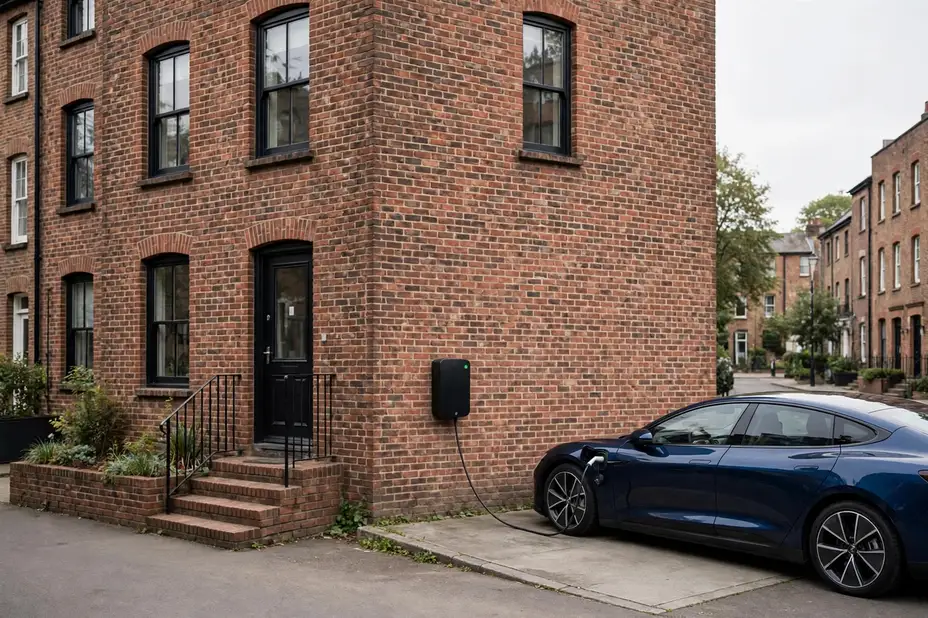
EV charging services in Yakima
Ten services cover the work installers do in Yakima. Three lead the list here because of what this city's housing and law actually look like — each links to its national service page, where scope and process are set out in full.
Home EV Charger Installation in Yakima
The residential standard: a station where the car sleeps, on a circuit of its own, installed under permit. Variations are all local — the panel's spare room, the run's route through the house's fabric, and the parking pattern the cable has to serve.
In Yakima: usually the first job a new EV household in Yakima books, scoped to the panel the house already has.
Dedicated Circuit & Electrical Panel Upgrade in Yakima
Some homes meet the charger at the panel door: the service is already spoken for by cooking, heating and hot water. This service is the honest fix — capacity added properly, grounding brought current, and a panel schedule that finally matches the house it feeds.
In Yakima: service work that turns 'no room' into a circuit with headroom in Yakima homes.
Multifamily & Condo EV Charging in Yakima
The multifamily install is a small constitution before it is a circuit: who may charge, on whose meter, under what cost split, with what path for the next ten applicants. Buildings that write that constitution once stop re-litigating it at every annual meeting.
In Yakima: assigned-space and shared charging for Yakima buildings, including the metering that keeps costs on the right owner.
Utility programs and electricity in Yakima
Electricity in Yakima comes from PacifiCorp. Parts of the wider metro are served by Benton Rural Electric Assn, PUD No 1 of Klickitat County, Yakama Power. The utility matters twice over for a charger install: it sets the time-of-use rates that decide what overnight charging costs you, and it is the organisation that may — or may not — currently help pay for the equipment.
Program status is a snapshot, and this page dates its snapshot: sources checked at build time found no PacifiCorp residential charger rebate, no Washington home-charger program, and a federal credit that ended September 30, 2025. Yakima households should treat that as the position until a utility announcement changes it — utilities publish openings prominently when budgets exist, because unspent program money is a problem for them too.
Before the install, it is worth a two-minute look at your tariff. Many PacifiCorp customers can move to a time-of-use plan where overnight energy is charged at a lower rate, and a scheduled charger makes that saving automatic.
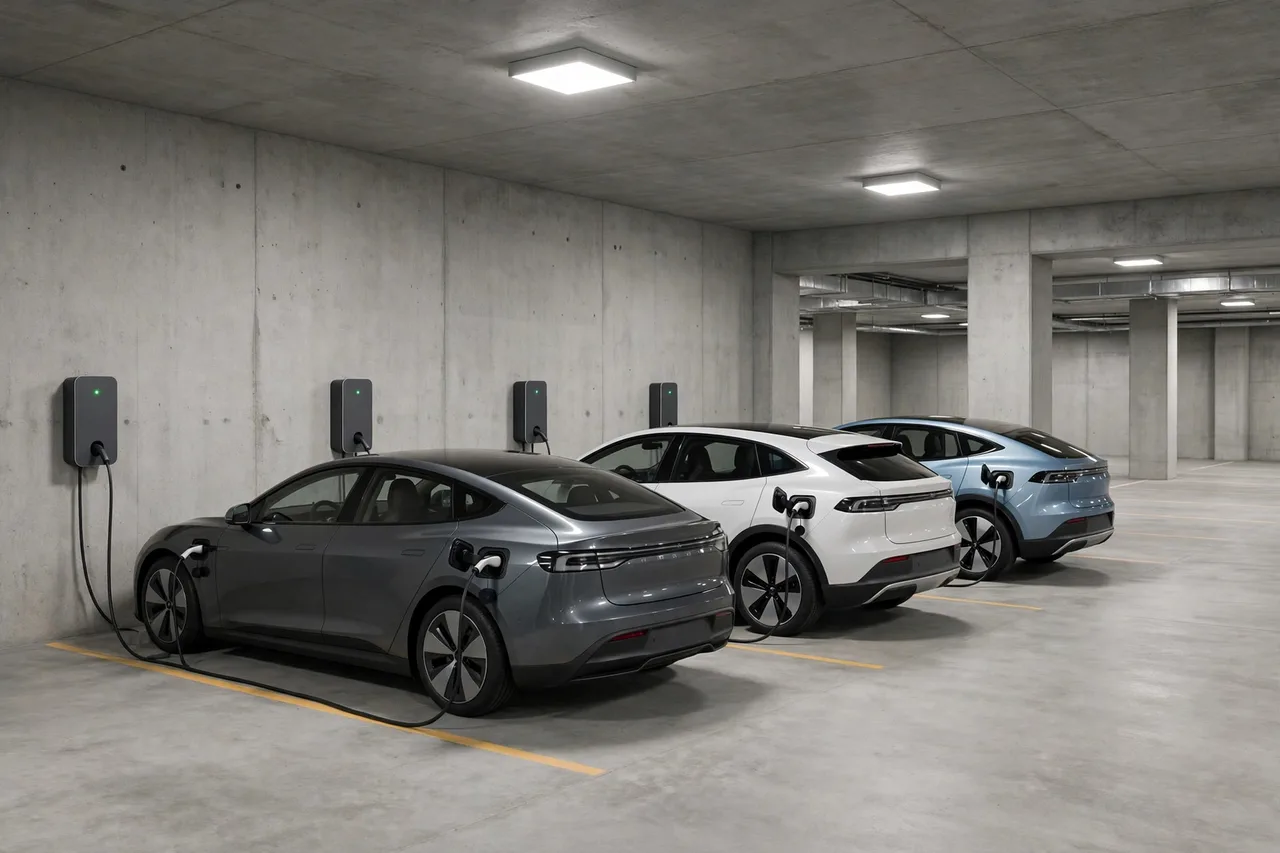
Condos, HOAs and the law in Washington
Washington law protects an owner's charger. RCW 64.90.510 and related association statutes gives owners in association communities a statutory route to a charging station in their own space: the association may set reasonable conditions on how the installation looks, where exactly it sits, and how it is insured, but a flat prohibition is not one of its options. Owners fund the work, use licensed installers, and remain responsible for the equipment — the statute allocates the burdens; it does not remove them.
Two practical corollaries follow for Yakima owners. First, assigned spaces are the clean case: the statute's protection is clearest where the parking is deeded or exclusively assigned. Second, insurance conditions are real but bounded — if a board's requirement looks invented, asking for its basis in the statute is a reasonable, usually decisive, question.
Start with the condo and HOA guide for the application itself, and the multifamily service page for how the electrical design is usually laid out in Washington buildings.
Climate, garages and charger placement
Preconditioning is the cold-climate feature owners actually use: the car warms its battery and cabin from the wall while it is still plugged in, leaving with a full battery instead of spending the first miles on heat. It only works if the car is connected overnight — which is the whole argument for a home circuit that is effortless to use in gloves, in the dark, in February.
Garage temperature is a charging feature here. An insulated garage that holds even a modest margin over the street's cold shortens the battery's warm-up and steadies winter range; a carport install accepts the full season and plans the circuit's headroom accordingly. Either works — they are simply different designs, and the site visit should name which one you own.

Permits and inspection in Yakima
The permit trail also protects the next transaction: a charger circuit on the inspection record is an asset a buyer's inspector reads in one line, while an undocumented circuit is a question that follows the sale. Installers who work this metro treat the filing as part of the deliverable, not an errand.

Neighbourhoods and ZIP codes served
The page covers 7 ZIP codes in and around Yakima — including 98901, 98902, 98903, 98904, 98907, 98908, 98909 — across Yakima. If your ZIP is not in the first set shown, ask anyway: installer coverage follows the metro, not a postcode fence.
The same working area takes in the neighbouring localities of Selah, Parker, Moxee, Wapato, Cowiche, Harrah, Brownstown, Tieton, Buena, Toppenish, Zillah, White Swan, Granger, Outlook — the county ring an installer based in Yakima actually drives. Requests from those communities route exactly as city requests do: same services, same permit discipline, same local facts where they differ.
Yakima County accounts for 25 of the ZIP codes and 19 named postal localities in the research file, the nearest of them Selah, Parker, Moxee, Wapato, Cowiche. The survey counts 257,152 residents in the county, with a median household income of $70,656 and a median home value of $310,100. Measured across its ZIP codes, the Yakima footprint runs about 6 miles north to south and 11 east to west, from ZIP 98901 to 98909 — the ground an installer based here actually covers in a working week.
Beyond the county seats, the working area takes in Selah, Parker, Moxee, Wapato, Cowiche, Harrah, Brownstown, Tieton, Buena, Toppenish, Zillah, White Swan, Granger, Kittitas, Ellensburg, Outlook, Naches, Sunnyside, Vantage, Beverly, Mabton, Grandview, Mattawa, Bickleton, Roosevelt, Goldendale, Glenwood — the named localities for which Yakima is the nearest metro in the network (neighbouring metros' pages cover their own ground), each routing to the same installer-matching service.
The wider working area also reaches Thorp, South Cle Elum, Prosser, George, Cle Elum, Roslyn, Ronald, Malaga, Quincy, Royal City, Rock Island, Easton, Wenatchee, East Wenatchee, Paterson — ground shared with neighbouring metros, where installers cross the same county lines in both directions.
ZIP codes in that shared ground include 98801, 98802, 98807, 98824, 98828, 98848, 98850, 98922, 98925, 98940, 98941, 98943, 98946, 99345, 99350, 99357.
The largest communities in that working area after Yakima itself, by the GeoNames populated-place file: Ellensburg (population 19,001), Sunnyside (population 16,325), The Dalles (population 15,340), West Valley (population 12,655), Toppenish (population 8,995), Selah (population 7,682), Terrace Heights (population 6,937), Union Gap (population 6,037), Wapato (population 5,068), Mattawa (population 4,548), Granger (population 3,695), Ahtanum (population 3,601), Goldendale (population 3,435), Zillah (population 3,138), Gleed (population 2,906), Mabton (population 2,302), Royal City (population 2,220), Chenoweth (population 1,855), Desert Aire (population 1,626), Kittitas (population 1,430). Charging demand follows those populations — the subdivisions and town centres where the next driveways, and the next panels, are.
Klickitat County reaches into the working area with 23,411 residents, a median household income of $71,042 and a median home value of $425,300; its localities on this page include Bickleton, Roosevelt, Goldendale, Glenwood. Kittitas County reaches into the working area with 47,172 residents, a median household income of $73,804 and a median home value of $497,400; its localities on this page include Kittitas, Ellensburg, Vantage. Grant County reaches into the working area with 101,799 residents, a median household income of $73,267 and a median home value of $299,500; its localities on this page include Beverly, Mattawa.
| ZIP | Locality | County |
|---|---|---|
| 98901 | Yakima | Yakima |
| 98909 | Yakima | Yakima |
| 98902 | Yakima | Yakima |
| 98907 | Yakima | Yakima |
| 98942 | Selah | Yakima |
| 98939 | Parker | Yakima |
| 98936 | Moxee | Yakima |
| 98904 | Yakima | Yakima |
| 98908 | Yakima | Yakima |
| 98951 | Wapato | Yakima |
| 98923 | Cowiche | Yakima |
| 98933 | Harrah | Yakima |
| 98903 | Yakima | Yakima |
| 98920 | Brownstown | Yakima |
| 98947 | Tieton | Yakima |
| 98921 | Buena | Yakima |
| 98948 | Toppenish | Yakima |
| 98953 | Zillah | Yakima |
| 98952 | White Swan | Yakima |
| 98932 | Granger | Yakima |
| 98934 | Kittitas | Kittitas |
| 98926 | Ellensburg | Kittitas |
| 98938 | Outlook | Yakima |
| 98937 | Naches | Yakima |
| 98944 | Sunnyside | Yakima |
| 98950 | Vantage | Kittitas |
| 99321 | Beverly | Grant |
| 98935 | Mabton | Yakima |
| 98930 | Grandview | Yakima |
| 99349 | Mattawa | Grant |
| 99322 | Bickleton | Klickitat |
| 99356 | Roosevelt | Klickitat |
| 98620 | Goldendale | Klickitat |
| 98619 | Glenwood | Klickitat |

Planning the install: from panel to parking
Homeowners sometimes ask why a job that looks like 'one outlet' needs a site visit at all. The visit exists because the three variables that set the scope — spare capacity, the run's route, and the property's approval layer — are all invisible from a photograph. In Yakima an experienced installer reads them in minutes, in the panel's directory card, the garage's geometry and the community's documents. The quote that follows a visit is a different species from the quote that precedes one: it can be held to.
Plan for the household you will be, not just the car you have. A second EV is the most common reason a charger circuit gets revisited, and the cheap moment to prepare for it — conduit sized up, panel capacity reserved, station placement that serves two bays — is during the first install, while the permit is open and the electrician is already in the panel.
Home charging know-how for Yakima households
Etiquette for shared stations
Shared stations run on norms before they run on rules. The norms that work: move the car when the session ends, coil the cable for the next driver, report a fault rather than stepping over it, and never unplug a stranger's session except under the building's posted arrangement. Buildings formalise this gradually — a group message thread, a simple rota in high season — and the households that start with courtesy rarely need the formal version. The equipment is shared; so is the goodwill it runs on.
Charging alongside rooftop solar
A house that generates as well as consumes plans its charging differently. The naive pattern — charge at night, export by day — is often fine; the refined pattern shifts some charging into the solar hours on home-working days, stores the commute in the car when the panels are producing, and leans on the overnight window only for the balance. None of this changes the circuit; it changes the schedule, and occasionally the case for a station whose output can follow the house's generation. Tell the installer the array exists — it belongs in the first conversation.
Protecting the station from the car
The most likely assailant of a garage charger is the car itself: a misjudged nose-in, a bicycle's handlebar, a ladder's fall. Placement is the first defence — out of the door swing, off the parking line's edge — and a simple bollard or wheel stop is the second where the geometry is tight. Outdoor pedestals earn the same thought against the snowplough's line and the delivery van's arc. It is carpentry, not electronics, and it belongs in the install conversation because the right time to protect a station is the day it is mounted.
Shutoffs and sensible safety
Every charger installation contains its own off switch: the breaker in the panel, and, on larger circuits, a disconnect within sight of the equipment that the code requires. Knowing where both are — and that the station itself stops the session when the connector is unlatched — is the whole safety briefing, and a good installer gives it unprompted at handover. The equipment is listed, protected and designed to be operated daily by non-electricians; the homeowner's part is simply to know the two switches and to treat any change in behaviour — heat, noise, repeated trips — as a reason to call rather than to reset.

Frequently asked questions
What happened to the federal home-charger credit in Yakima, WA?
You cannot — it no longer exists. The 30C credit closed to equipment placed in service after September 30, 2025, and no Washington program replaced it for home installs. Nor did the sources checked for this page show a live PacifiCorp residential rebate. Treat any 'credit' mentioned in a quote as a request for paperwork.
Can my association in Yakima, WA say no to a home charger?
Only within limits the statute sets. Washington law (RCW 64.90.510 and related association statutes) protects an owner's right to install in their own space; associations may regulate placement, appearance and insurance and require restoration on removal, but a blanket refusal is not theirs to give. If a board stalls, a complete written application citing the statute is the standard remedy.
Will my Yakima, WA home need a panel upgrade for a Level 2 charger?
Sometimes — and Yakima's housing stock is exactly why the question is worth asking properly. With a median build year of 1972 and roughly 62% of homes predating 1980, plenty of local panels are 100-amp units already carrying a full modern load. Those homes choose between an upgrade and load management; newer 200-amp homes usually just add the circuit. The site visit's load calculation is the decider.
Level 1 or Level 2 in Yakima, WA — what is the real difference?
Level 2 is several-fold faster in the only unit that matters — miles back per hour parked: roughly 25–40 against Level 1's 3–5. The exact figure follows the circuit: a 40-amp circuit and a 60-amp circuit are both Level 2, and the car's onboard limit may sit below either. Your installer matches the three numbers at the site visit.
What happens next after I send a request?
Three things happen, in order. Your request is routed to licensed installers who work in Yakima; one of them contacts you to book a site visit; and the visit produces a written quote based on your actual panel and parking. PlugReady USA runs the matching, not the tools — the contractor on the job is the installer who visits.
Do installers cover the communities around Yakima, WA?
They do. Coverage follows the metro: Selah, Parker, Moxee, Wapato, Cowiche and their neighbouring communities are worked by the same installers who cover Yakima itself, and a request from those ZIP codes routes identically — service, property type and timing are all the form asks for.
Nearby cities in Washington
- EV charger installation in Wenatchee — about 58 miles from Yakima, metro population 125,000
- EV charger installation in Kennewick — about 79 miles from Yakima, metro population 315,000
- EV charger installation in Seattle — about 122 miles from Yakima, metro population 4,000,000
- EV charger installation in Olympia — about 134 miles from Yakima, metro population 300,000
- EV charger installation in Bremerton — about 136 miles from Yakima, metro population 275,000
- EV charger installation in Longview — about 139 miles from Yakima, metro population 115,000
- EV charger installation in Portland, OR — about 142 miles from Yakima, metro population 2,500,000
- EV charger installation in Bend, OR — about 179 miles from Yakima, metro population 205,000
- EV charger installation in Salem, OR — about 179 miles from Yakima, metro population 450,000
Ready to charge at home in Yakima?
Send the essentials — what you need, where, and what kind of property — and a licensed local installer will pick it up from there.