EV Charger Installation in Seattle, WA
Everything a Seattle homeowner needs before booking a charger install — the panel question, the utility's current programs, the HOA law and the permit — sourced, dated and local.
Start with the vehicle you already own and the driveway it already sleeps in: home charging succeeds when the electrical side is treated as a small building project rather than an accessory purchase. In Seattle that project has local coordinates. Seattle itself is home to about 780,992 people, inside a state counting 236,400 battery-electric vehicles and 57,100 plug-in hybrids through 2025. The utility serving your street, the vintage of your panel, the rules of your community and the habits of your permit office are the four coordinates — this page fixes each one for Seattle.
How this page is organised matters less than what is in it: verified local facts, stated with their sources, so you can check them yourself. PlugReady USA matches homeowners in Seattle with licensed local installers; the detail below is the homework we would want done before anyone quotes the job.
The demand picture for the Seattle–Tacoma–Bellevue metro, from the registration data this site is built on: Experian No. 5: 35K+ new 2025; WA 236K BEVs ; right-to-charge incl. renters. Registration counts are the honest way to size a charging market — they count households, not headlines — and they are why Seattle sits where it does in our build order (rank 4 of 300 metros, Tier A).
Context from the Census Bureau's survey of Seattle: median household income $118,745; 42% of occupied homes are owner-occupied; 35% of housing units are single-unit detached houses. It is the profile of a city where the typical charger job is a homeowner job — scoped by the panel and the wire run, not by permissions.

The composite picture matters more than any single statistic. In Seattle: an older housing fabric, where panel archaeology is a normal part of the first visit; a genuinely mixed city — houses, townhouses and larger buildings all carry weight; buildings of five or more units hold a substantial share of homes, which keeps the multifamily sections of this page in daily use; meanwhile, renters form a large share of households, so the landlord conversation is a first-class topic here. A page that ignored that profile would give the same advice everywhere; this one is ordered by it.
Keep six figures and you keep Seattle's whole electrical character: 411,671 housing units; 383,698 occupied homes; 160,860 owner-occupied; 143,530 detached houses; 203,763 pre-1980 homes; 220,278 homes in buildings of five or more units. Percentages elsewhere on this page are these numbers in disguise — the counts are the originals, and they are the numbers a local installer's experience is actually made of. The page's geography is equally concrete: 59 ZIP codes across King, centred near 47.61 degrees north latitude. The city anchors the Seattle–Tacoma–Bellevue metropolitan area, home to roughly 4,000,000 people on the research file's metro estimate — the wider labour and housing market this page's installers work across.
The same survey release fills in the household economics around the housing stock: a median home value of $950,800, median gross rent of $2,007, per-capita income of $87,150, and a median resident age of 35. The movement data matters as much as the money data: 41% of Seattle workers drive to work alone — the commute pattern home charging is built around; 24% work from home, a population whose cars charge on daytime and overnight schedules alike; 15% commute by public transit; 70% of adults hold a bachelor's degree or higher. The survey's vehicle table is the one an EV page should quote first: 75,811 of Seattle's households have no vehicle at all, while 131,156 have two or more — the multi-car households for whom the second circuit is a when, not an if.
Household structure, from the same release: 40% of Seattle households are family households. The burden shares behind the housing stock: 42% of renting households are cost-burdened at the 30%-of-income line, as are 0% of mortgaged owners — context for why the overnight rate window, once set, is treated here as a household fixture rather than a hobby.
The signature matters because installs follow it, street by street. A stock this old wires its history into the walls: cloth-wrapped conductors in the deepest streets, fuse boxes that outlived their century, panels added in layers by generations of electricians each solving their own decade's problem. With this much of the stock in shared buildings, the city's charging map is drawn in boardrooms as much as in electrical rooms: deeded spaces, common services, metering subplots in every application.
High renter share also means charging follows the lease cycle: applications cluster at move-in, installations at renewal leverage, and the whole market breathes on the rental calendar. Affluence shows in the specification sheet — dual circuits roughed in together, capacity bought ahead of need, stations networked and managed rather than merely mounted. Tariff design is the quiet policy: the shape of the overnight window, the demand charges commercial customers face, the interconnection queue's pace — all set in dockets the diligent can read.
A large fleet normalises the paperwork: boards have seen the application before, landlords have a standard answer, permit counters process charger circuits as routine volume. As one of the country's largest metros, Seattle supports depth in every direction: specialist installers, competing quotes worth comparing, utility staff who handle charging questions daily. The association dimension, at least, comes with a statutory frame in this state — the law section above sets out what boards may and may not do, and applications written inside that frame travel noticeably faster.
The electrical reality in Seattle homes
Seattle's housing, in Census Bureau survey numbers: a median build year of 1981, 49% of units predating 1980, a stock that is 35% single-unit detached, and 42% of occupied homes owned by their occupants. Everything in this section is commentary on those four facts. Age shows up electrically before it shows up anywhere else: services sized for a house with a third of today's appliances. Expect the first conversation to be about capacity — what the panel is, what it already feeds, and which of the three routes (circuit, management, upgrade) your numbers support. Garages here earn their keep across the year — workshop, storage and storm shelter by turns — so a station position that survives the household's real parking pattern matters more than the technically neatest wall.
One further survey line belongs in any Seattle install conversation: 64% of the city's homes heat with electricity — 244,307 households whose panels already carry a major winter load before a charger is contemplated. Electric heat and EV charging are the two largest discretionary loads a house can host, and where they coincide, the load calculation stops being a formality.
One further split matters for how this page is organised: about 222,838 of Seattle's occupied homes are renter-occupied. Everything above assumes you can approve your own electrical work; where you cannot, the approval layer — landlord or association — becomes part of the job, which is why the law section carries unusual weight here.
And 54% of Seattle's homes are in buildings with five or more units — apartments and condominiums where charging is a building decision before it is an electrical one. If that is your situation, the law and multifamily sections of this page are the ones written for you.
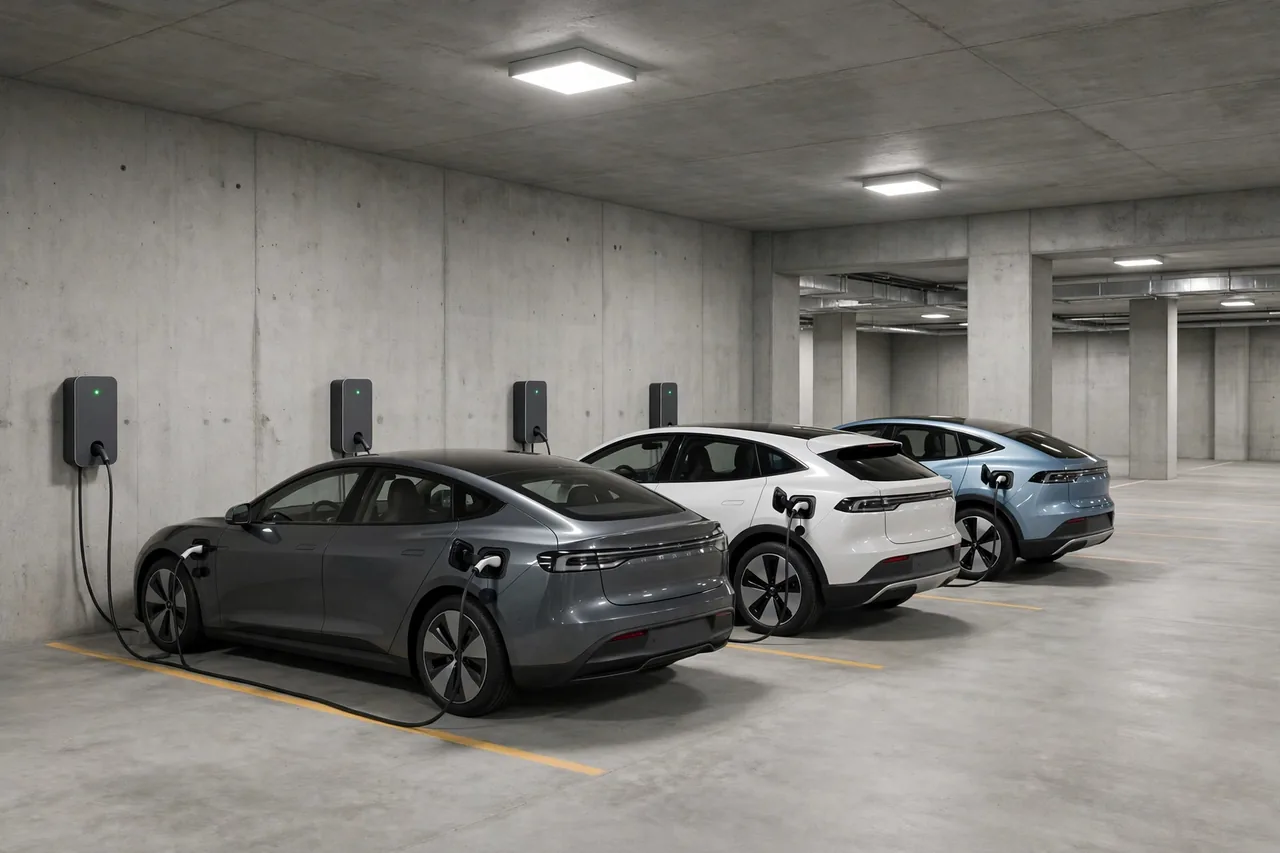
EV charging services in Seattle
The services below are ordered by what Seattle households most often need first, judged from the housing and fleet facts on this page. The full menu follows in the grid — every service is offered in this metro.
Home EV Charger Installation in Seattle
Think of it as plumbing for electrons, with the same virtues: correct sizing, honest materials, tidy runs, tested joints. The installers who do it weekly follow a pattern — assess, calculate, route, mount, configure, document — and the pattern is why their installs rarely make news afterwards.
In Seattle: where most Seattle projects start and finish: one circuit, one station, one inspection.
Dedicated Circuit & Electrical Panel Upgrade in Seattle
Some homes meet the charger at the panel door: the service is already spoken for by cooking, heating and hot water. This service is the honest fix — capacity added properly, grounding brought current, and a panel schedule that finally matches the house it feeds.
In Seattle: the job that surfaces wherever housing is older — and Seattle's stock makes it a routine conversation, settled by a load calculation.
Multifamily & Condo EV Charging in Seattle
Assigned-space and shared charging for buildings: the application package, the metering arrangement, the load design that lets several cars share one service, and the circuit — in that order, because the first three decide whether the fourth ever happens.
In Seattle: the approvals-plus-wiring job for Seattle's condos and HOA communities, where the process matters as much as the circuit.
Utility programs and electricity in Seattle
Electricity in Seattle comes from Puget Sound Energy Inc. Parts of the wider metro are served by City of Seattle, City of Tacoma, PUD No 1 of Chelan County. The utility matters twice over for a charger install: it sets the time-of-use rates that decide what overnight charging costs you, and it is the organisation that may — or may not — currently help pay for the equipment.
Rebate archaeology is a local sport: an old Puget Sound Energy Inc program page, a neighbour's 2023 install story, a screenshot of terms nobody can date. The record for Seattle, as checked for this page, is simpler. The federal credit closed on September 30, 2025; Washington operates no home-charger program; and no active Puget Sound Energy Inc residential charger rebate appears in current published sources. Funded rounds do reopen in this industry — on the utility's timetable, announced on the utility's site, and worth exactly what their published terms say on the day you read them.
One more utility habit worth copying from Seattle's EV owners: charge on the overnight rate window if your plan has one. The charger itself can usually be scheduled from the car or the station, so the habit costs nothing once it is set.
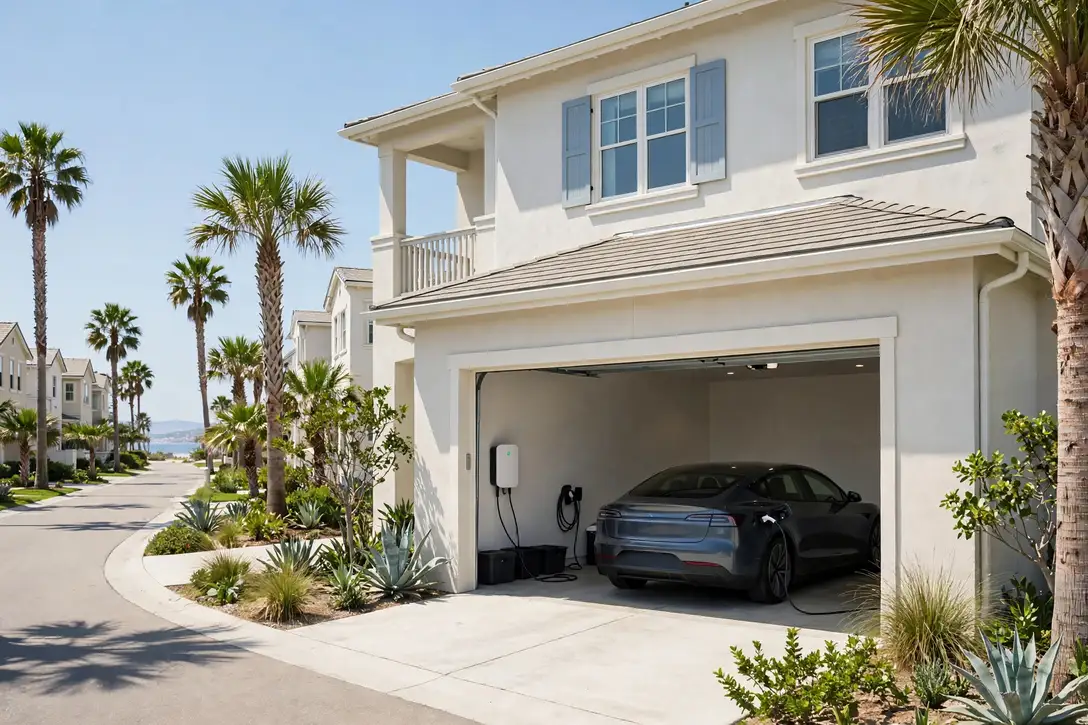
Condos, HOAs and the law in Washington
Washington law protects an owner's charger. RCW 64.90.510 and related association statutes gives owners in association communities a statutory route to a charging station in their own space: the association may set reasonable conditions on how the installation looks, where exactly it sits, and how it is insured, but a flat prohibition is not one of its options. Owners fund the work, use licensed installers, and remain responsible for the equipment — the statute allocates the burdens; it does not remove them.
Owners in Seattle should also know the statute travels with the space, not the car: a documented installation, permitted and recorded, stays an asset of the unit when it sells — one more reason the paperwork deserves the same care as the wiring.
Read the full process in our guide to installing an EV charger in a condo or HOA community, and the multifamily and condo charging service page for how shared and assigned-space installs are designed.
Climate, garages and charger placement
Cold rewrites the charging routine in this part of the country. Batteries accept charge more slowly when they are cold, range falls, and the car's own systems spend energy on warmth — so the overnight window matters more, not less. A Level 2 circuit sized generously is the household's answer: it restores the day's driving with hours to spare even in the slow weeks of January.
The first cold morning is the audit: cable flexibility, connector seating with gloved hands, the holster reachable without crossing the ice zone by the door. Installs designed in spring are graded in January, and local installers design for the grade.

Permits and inspection in Seattle
Timelines are set by the city's counter, not the installer: the electrical work itself is typically a day, while permit issuance and the inspection visit follow the department's queue. A quote that promises a date should tell you which parts of that date the installer actually controls.

Neighbourhoods and ZIP codes served
The page covers 59 ZIP codes in and around Seattle — including 98101, 98102, 98103, 98104, 98105, 98106, 98107, 98108, 98109, 98111, 98112, 98113, 98114, 98115, 98116, 98117, 98118, 98119, 98121, 98122, 98124, 98125, 98126, 98127, 98129, 98131, 98133, 98134, 98136, 98138, 98139, 98141, 98144, 98145, 98146, 98148, 98154, 98155, 98158, 98160, 98161, 98164, 98165, 98166, 98168, 98170, 98174, 98175, 98177, 98178, 98181, 98185, 98188, 98190, 98191, 98194, 98195, 98198, 98199 — across King. If your ZIP is not in the first set shown, ask anyway: installer coverage follows the metro, not a postcode fence.
The same working area takes in the neighbouring localities of Medina, Mercer Island, Bellevue, Kirkland, Seahurst, Kenmore, Renton, Bothell, Redmond, Vashon, Woodinville, Sammamish, Kent, Burton — the county ring an installer based in Seattle actually drives. Requests from those communities route exactly as city requests do: same services, same permit discipline, same local facts where they differ.
King County accounts for 120 of the ZIP codes and 33 named postal localities in the research file, the nearest of them Medina, Mercer Island, Bellevue, Kirkland, Seahurst. The survey counts 2,287,171 residents in the county, with a median household income of $124,746 and a median home value of $859,900. Measured across its ZIP codes, the Seattle footprint runs about 25 miles north to south and 8 east to west, from ZIP 98101 to 98199 — the ground an installer based here actually covers in a working week.
Beyond the county seats, the working area takes in Medina, Mercer Island, Bellevue, Kirkland, Seahurst, Kenmore, Renton, Bothell, Redmond, Mountlake Terrace, Lynnwood, Edmonds, Vashon, Woodinville, Sammamish, Kent, Burton, Everett, Issaquah, Mill Creek, Federal Way, Auburn, Mukilteo, Snohomish, Maple Valley, Tacoma, Preston, Duvall, Carnation, Clinton, Hobart, Pacific, Fall City, Milton, Monroe, Black Diamond, Puyallup, Sumner, Snoqualmie, Langley, Enumclaw, Ravensdale, North Bend, Bonney Lake, Buckley, South Prairie, Startup, Sultan, Orting, Wilkeson, Paradise Inn, Camp Murray, Carbonado, Gold Bar — the named localities for which Seattle is the nearest metro in the network (neighbouring metros' pages cover their own ground), each routing to the same installer-matching service.
The wider working area also reaches Southworth, South Colby, Rollingbay, Port Orchard, Retsil, Keyport, Kingston, Tracyton, Olalla, Silverdale, Burley, Port Gamble, Wauna, Hansville, Mcchord Afb, Port Ludlow, Seabeck, Vaughn, Lake Stevens, Marysville, Quilcene, Lakebay, Brinnon, Greenbank, Anderson Island, Port Hadlock, North Lakewood, Dupont, Tahuya, Graham, Lilliwaup, Arlington, Olympia, Port Townsend, Kapowsin — ground shared with neighbouring metros, where installers cross the same county lines in both directions.
ZIP codes in that shared ground include 98253, 98270, 98287, 98292, 98303, 98311, 98314, 98315, 98320, 98322, 98333, 98335, 98338, 98339, 98340, 98345, 98346, 98359, 98370, 98373, 98378, 98384, 98387, 98388, 98406, 98419, 98433, 98438, 98444, 98445, 98448, 98465, 98466, 98467, 98490, 98497, 98498, 98516, 98528, 98546.
The largest communities in that working area after Seattle itself, by the GeoNames populated-place file: Tacoma (population 222,906), Bellevue (population 139,820), Kent (population 126,952), Everett (population 108,010), Renton (population 100,242), Federal Way (population 95,171), Kirkland (population 87,281), Auburn (population 77,006), Redmond (population 60,598), Shoreline (population 55,439), South Hill (population 52,431), Sammamish (population 52,253), Burien (population 50,467), City of Sammamish (population 45,780), Bothell (population 42,939), Edmonds (population 41,375), Puyallup (population 39,659), Lynnwood (population 36,997), Issaquah (population 36,081), West Lake Sammamish (population 33,929). Charging demand follows those populations — the subdivisions and town centres where the next driveways, and the next panels, are.
Snohomish County reaches into the working area with 844,430 residents, a median household income of $111,246 and a median home value of $696,000; its localities on this page include Mountlake Terrace, Lynnwood, Edmonds, Bothell.
| ZIP | Locality | County |
|---|---|---|
| 98101 | Seattle | King |
| 98170 | Seattle | King |
| 98127 | Seattle | King |
| 98111 | Seattle | King |
| 98114 | Seattle | King |
| 98124 | Seattle | King |
| 98129 | Seattle | King |
| 98131 | Seattle | King |
| 98138 | Seattle | King |
| 98145 | Seattle | King |
| 98154 | Seattle | King |
| 98160 | Seattle | King |
| 98161 | Seattle | King |
| 98174 | Seattle | King |
| 98181 | Seattle | King |
| 98185 | Seattle | King |
| 98190 | Seattle | King |
| 98191 | Seattle | King |
| 98164 | Seattle | King |
| 98104 | Seattle | King |
| 98194 | Seattle | King |
| 98121 | Seattle | King |
| 98141 | Seattle | King |
| 98122 | Seattle | King |
| 98102 | Seattle | King |
| 98134 | Seattle | King |
| 98109 | Seattle | King |
| 98112 | Seattle | King |
| 98144 | Seattle | King |
| 98119 | Seattle | King |
| 98195 | Seattle | King |
| 98105 | Seattle | King |
| 98113 | Seattle | King |
| 98116 | Seattle | King |
| 98103 | Seattle | King |
| 98199 | Seattle | King |
| 98139 | Seattle | King |
| 98107 | Seattle | King |
| 98108 | Seattle | King |
| 98126 | Seattle | King |
| 98115 | Seattle | King |
| 98106 | Seattle | King |
| 98039 | Medina | King |
| 98118 | Seattle | King |
| 98117 | Seattle | King |
| 98136 | Seattle | King |
| 98040 | Mercer Island | King |
| 98004 | Bellevue | King |
| 98009 | Bellevue | King |
| 98015 | Bellevue | King |
| 98165 | Seattle | King |
| 98175 | Seattle | King |
| 98125 | Seattle | King |
| 98146 | Seattle | King |
| 98083 | Kirkland | King |
| 98168 | Seattle | King |
| 98133 | Seattle | King |
| 98033 | Kirkland | King |
| 98005 | Bellevue | King |
| 98177 | Seattle | King |
| 98178 | Seattle | King |
| 98062 | Seahurst | King |
| 98155 | Seattle | King |
| 98006 | Bellevue | King |
| 98007 | Bellevue | King |
| 98034 | Kirkland | King |
| 98028 | Kenmore | King |
| 98056 | Renton | King |
| 98166 | Seattle | King |
| 98158 | Seattle | King |
| 98057 | Renton | King |
| 98011 | Bothell | King |
| 98148 | Seattle | King |
| 98188 | Seattle | King |
| 98008 | Bellevue | King |
| 98052 | Redmond | King |
| 98055 | Renton | King |
| 98073 | Redmond | King |
| 98041 | Bothell | King |
| 98043 | Mountlake Terrace | Snohomish |
| 98036 | Lynnwood | Snohomish |
| 98020 | Edmonds | Snohomish |
| 98021 | Bothell | Snohomish |
| 98059 | Renton | King |
| 98046 | Lynnwood | Snohomish |
| 98070 | Vashon | King |
| 98198 | Seattle | King |
| 98026 | Edmonds | Snohomish |
| 98072 | Woodinville | King |
| 98074 | Sammamish | King |

Planning the install: from panel to parking
A useful way to read any Seattle quote is to ask which of three jobs it describes. Job one: the panel has room and the run is short — a circuit and a station. Job two: the panel is full — capacity work joins the quote, as an upgrade or as load management. Job three: the property adds people — an HOA, a landlord, a building's shared service — and the approvals timeline joins the electrical one. None of the three is a bad job; they are simply different scopes, and a clear quote says which one you are in.
Plan for the household you will be, not just the car you have. A second EV is the most common reason a charger circuit gets revisited, and the cheap moment to prepare for it — conduit sized up, panel capacity reserved, station placement that serves two bays — is during the first install, while the permit is open and the electrician is already in the panel.
Home charging know-how for Seattle households
The landlord's side of the charger
For a landlord, a charger circuit is an amenity with unusual arithmetic: it is visible in listings, filterable in searches, and durable across tenancies in a way paint is not. The questions that decide it are practical rather than visionary — whose meter the circuit hangs from, how the cost is recovered, what the end-of-tenancy position is — and each has a standard answer the multifamily sections of this site describe. Landlords who run the numbers tenant by tenant usually conclude the circuit earns its wall space.
A receptacle is not a station
The portable cord in the car's boot and a wall-mounted station both deliver Level 2 energy, and the resemblance ends there. The fixed station is torqued, configured, weather-sealed and holstered as a permanent appliance; the receptacle route asks a domestic outlet and plug to sustain a continuous load for a decade of nightly cycles. Both are legitimate in the code's eyes when done properly — but the daily-living difference, and the wear pattern on the receptacle, are why permanent parking places graduate to permanent equipment.
Workplace charging as a policy, not a perk war
Workplace stations fail socially before they fail electrically: the same cars parked all day, visitors boxed out, no rule for the growing queue. The installs that work pair the hardware with a light policy from the start — session lengths matched to the shift, access that distinguishes staff from guests, and pricing or etiquette that keeps a full battery from squatting until six. The electrical design and the policy design are one conversation, because the dwell pattern the policy sets is the load pattern the circuit must serve.
Shutoffs and sensible safety
Every charger installation contains its own off switch: the breaker in the panel, and, on larger circuits, a disconnect within sight of the equipment that the code requires. Knowing where both are — and that the station itself stops the session when the connector is unlatched — is the whole safety briefing, and a good installer gives it unprompted at handover. The equipment is listed, protected and designed to be operated daily by non-electricians; the homeowner's part is simply to know the two switches and to treat any change in behaviour — heat, noise, repeated trips — as a reason to call rather than to reset.
When protection trips, listen to it
Ground-fault protection and EV charging have a known friction: certain combinations of breaker protection and station electronics nuisance-trip each other, leaving a car uncharged by morning. The answers are design answers — a hardwired configuration, a breaker the station's manufacturer lists as compatible, protection delivered inside the equipment where the code allows — and they belong at install time, not after the third flat morning. A trip that begins months later is a different message: protection devices report faults, and a new trip pattern earns an electrician's visit, not a reset habit.

Frequently asked questions
Is the federal charger tax credit still available in Seattle, WA?
Treat the answer as a standing no with a watching brief. The 30C credit is finished, Washington has not replaced it for homeowners, and no verified Puget Sound Energy Inc rebate was running in the sources checked for this page. Should that change, the utility's program page will say so first — and this page will be updated to match.
Can my association in Seattle, WA say no to a home charger?
Not outright. Under RCW 64.90.510 and related association statutes, Washington associations cannot prohibit an owner's charger; they can condition it — reasonably — on placement, insurance and restoration, with the owner funding the work. The disputes that do arise are usually about conditions, and they settle fastest when the application answers them in advance.
Panel upgrade or not — how do Seattle, WA homeowners find out?
Sometimes, and the honest route to the answer is arithmetic rather than opinion. Seattle's median home was built in 1981; roughly 49% of the stock predates 1980, which is where the 100-amp panels concentrate. If yours is one, expect the upgrade-or-management conversation; if it is a modern 200-amp service with spare spaces, expect a circuit. The site visit's calculation decides, and you are entitled to see it.
How much faster is Level 2 charging at home in Seattle, WA?
Level 1 — the cord in the boot, on a normal outlet — returns about 3–5 miles of range an hour. Level 2 on its own 240-volt circuit returns roughly 25–40. A Seattle commuter who parks at seven and leaves at seven stops doing battery arithmetic entirely.
What happens after I request an installer through this page?
Send the request and it is matched against installers covering Seattle — your service, ZIP, property type and timing travel with it. An installer then arranges the site visit and quotes in writing. Our role ends at the introduction; your contract, permit and paperwork are with the installer.
Does Puget Sound Energy Inc offer a time-of-use rate for EV charging in Seattle?
Many utilities do — a tariff where overnight energy carries a lower rate, designed for exactly this load. Whether your current plan includes such a window is a two-minute check on your tariff or the utility's rate pages. If it does, the charger's schedule is set once, at commissioning, and the saving runs itself from then on.
Nearby cities in Washington
- EV charger installation in Bremerton — about 17 miles from Seattle, metro population 275,000
- EV charger installation in Olympia — about 51 miles from Seattle, metro population 300,000
- EV charger installation in Mount Vernon — about 57 miles from Seattle, metro population 130,000
- EV charger installation in Bellingham — about 79 miles from Seattle, metro population 240,000
- EV charger installation in Longview — about 107 miles from Seattle, metro population 115,000
- EV charger installation in Wenatchee — about 111 miles from Seattle, metro population 125,000
- EV charger installation in Portland, OR — about 146 miles from Seattle, metro population 2,500,000
- EV charger installation in Salem, OR — about 187 miles from Seattle, metro population 450,000
- EV charger installation in Albany, OR — about 209 miles from Seattle, metro population 135,000
Ready to charge at home in Seattle?
Two minutes of form, and the request is in front of licensed installers who cover this city — quotes follow site visits, in writing.