EV Charger Installation in Augusta, GA
Home Level 2 charging, panel upgrades and condo installs in Augusta — matched to licensed local installers, with the local facts that shape the job set out below.
Ask EV owners in Augusta what changed their routine and most give the same answer: the car charges where it parks. Augusta itself is home to about 201,930 people. Statewide, Georgia counted 161,200 battery-electric vehicles and 32,900 plug-in hybrids on the road through 2025, and the metro's share of that fleet keeps growing. A home charger installation is not complicated, but it is local — the utility that serves your street, the age of your panel, your community's rules and your city's permit office all shape the job. This page pulls those Augusta specifics together in one place, with the numbers sourced rather than rounded into slogans.
How to read this page in four minutes: the data band tells you what kind of housing city Augusta is; the utility section tells you whether money is on the table; the law section tells you whether permission is a process or a negotiation; and the permit section tells you what proof the finished job leaves behind. The rest is elaboration.
What the Experian and AFDC registration data say about Augusta–Richmond County: Georgia Power territory. Translated out of market language: your neighbours are already charging at home, the permit office already knows the paperwork, and the installers already know the housing stock.
Context from the Census Bureau's survey of Augusta: median household income $58,803; 50% of occupied homes are owner-occupied; 60% of housing units are single-unit detached houses. It is the profile of a city where the typical charger job is a homeowner job — scoped by the panel and the wire run, not by permissions.

The composite picture matters more than any single statistic. In Augusta: an older housing fabric, where panel archaeology is a normal part of the first visit; a detached-house majority with a real attached and multifamily minority; buildings of five or more units are a visible minority of the stock; meanwhile, renters form a large share of households, so the landlord conversation is a first-class topic here. A page that ignored that profile would give the same advice everywhere; this one is ordered by it.
Keep six figures and you keep Augusta's whole electrical character: 92,213 housing units; 79,634 occupied homes; 39,610 owner-occupied; 55,137 detached houses; 44,276 pre-1980 homes; 17,976 homes in buildings of five or more units. Percentages elsewhere on this page are these numbers in disguise — the counts are the originals, and they are the numbers a local installer's experience is actually made of. The page's geography is equally concrete: 13 ZIP codes across Columbia, Richmond, centred near 33.46 degrees north latitude. The city anchors the Augusta–Richmond County metropolitan area, home to roughly 625,000 people on the research file's metro estimate — the wider labour and housing market this page's installers work across.
The same survey release fills in the household economics around the housing stock: a median home value of $203,100, median gross rent of $1,328, per-capita income of $34,140, and a median resident age of 36. How the city moves completes the picture: 80% of Augusta workers drive to work alone — the commute pattern home charging is built around; 8% work from home, a population whose cars charge on daytime and overnight schedules alike; 1% commute by public transit; 24% of adults hold a bachelor's degree or higher. And the fleet in the driveways: 33,978 households in Augusta have exactly one vehicle, 38,758 have two or more, and 6,898 have none.
Household structure, from the same release: 61% of Augusta households are family households. The burden shares behind the housing stock: 50% of renting households are cost-burdened at the 30%-of-income line, as are 0% of mortgaged owners — context for why the overnight rate window, once set, is treated here as a household fixture rather than a hobby.
What follows is the city read as an electrical place rather than a dot on a map. A stock this old wires its history into the walls: cloth-wrapped conductors in the deepest streets, fuse boxes that outlived their century, panels added in layers by generations of electricians each solving their own decade's problem. Variety is the installer's training programme here: no two days alike, the van stocked for houses and buildings alike, and a diary that reads like the housing survey performed live.
Property managers are the metro's charging gatekeepers at this tenure mix, and the installers who thrive are the ones whose proposals arrive manager-shaped: standardised, insured, reversible on paper. Modest incomes make the overnight tariff the headline act: the difference between peak and off-peak charging, compounded nightly for years, is the largest single number in the ownership equation. The regulatory calendar is the programme calendar: rate cases, electrification plans and pilot approvals move through the commission on public timetables, and installers plan their marketing around them.
A fleet this size changes the questions at the kerb: not whether the neighbours approve of EVs, but whose installer did their circuit and whether the panel needed work — consumer intelligence, traded over fences. A mid-sized metro's market has a particular shape: a handful of established electrical firms, a few charging specialists, and word of mouth that travels fast enough to discipline all of them. Without a state charging statute, shared-property approvals in this metro are won on paper quality: metering clarity, licensed installers, insurance, reversibility — the complete package the guides set out.
The electrical reality in Augusta homes
Tenure first, because tenure allocates the decisions: 50% of Augusta's occupied homes are owner-occupied, free to commission electrical work outright. The stock they occupy has a median build year of 1982; 48% predates 1980; 60% is detached single-unit. For the owner-occupied majority, the charger question is purely electrical, and these are the electrical facts. A housing stock this age leans on smaller electrical services — 100-amp panels are common, and fuse-era equipment still turns up in the oldest streets. For many of those homes the honest answer is a panel upgrade or a load-management device before the charger circuit goes in, and a good installer will show you the load calculation rather than asking you to take it on faith. Housing age also tracks wire-run reality: older homes more often place the panel in a basement or interior wall far from the garage, and distance is copper, conduit and labour.
Heating fuel is the survey's quiet clue to panel life: in Augusta, 57% of homes heat electrically (43,236 households), against 42% heating with gas. A house already heating electrically has a service sized with that load in its history; a gas-heated house may have capacity to spare — either way the fuel mix is part of what the installer is reading.
One further split matters for how this page is organised: about 40,024 of Augusta's occupied homes are renter-occupied. Everything above assumes you can approve your own electrical work; where you cannot, the approval layer — landlord or association — becomes part of the job, which is why the law section carries unusual weight here.
One more structural fact shapes Augusta's charging map: 19% of the city's housing units sit in buildings of five or more units. Those households cannot simply book a circuit — their charger runs through a building, a board and a shared electrical service, which is why the multifamily service and the law section below carry unusual weight on this page.
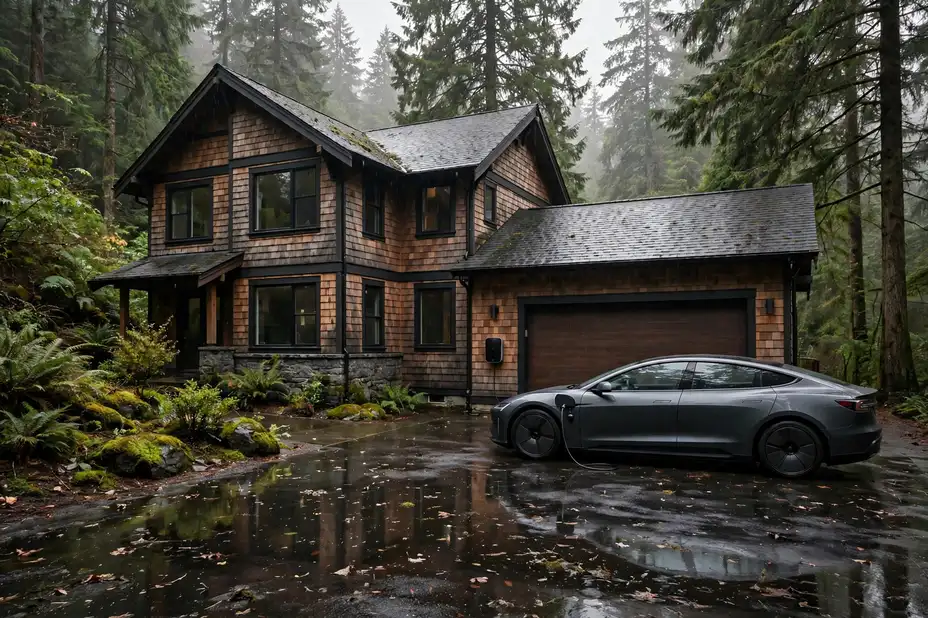
EV charging services in Augusta
The services below are ordered by what Augusta households most often need first, judged from the housing and fleet facts on this page. The full menu follows in the grid — every service is offered in this metro.
Home EV Charger Installation in Augusta
Think of it as plumbing for electrons, with the same virtues: correct sizing, honest materials, tidy runs, tested joints. The installers who do it weekly follow a pattern — assess, calculate, route, mount, configure, document — and the pattern is why their installs rarely make news afterwards.
In Augusta: the core residential job in Augusta: circuit, mounting, configuration and inspection in one visit pattern.
Dedicated Circuit & Electrical Panel Upgrade in Augusta
The capacity project behind the charger project. A load calculation decides whether the answer is a service increase, a panel replacement, a subpanel or load management — and the work is sequenced with the utility and the inspector so the house is live again the same day in most cases.
In Augusta: service work that turns 'no room' into a circuit with headroom in Augusta homes.
Level 2 Charger Installation in Augusta
Level 2 earns its keep on the worst week of the year: the cold snap, the back-to-back long days, the evening the car comes home empty with a dawn departure. A circuit sized for those weeks makes the ordinary ones invisible.
In Augusta: the 240-volt step that turns overnight charging in Augusta from a trickle into a full battery by morning.
Utility programs and electricity in Augusta
Electricity in Augusta comes from Georgia Power Co. Parts of the wider metro are served by Jefferson Electric Member Corp, Planters Electric Member Corp, City of Sylvania. The utility matters twice over for a charger install: it sets the time-of-use rates that decide what overnight charging costs you, and it is the organisation that may — or may not — currently help pay for the equipment.
Current program (verified 2026-10-25): Georgia Power Co runs the Georgia Power EV Charger Rebate (residential) — Up to $150 toward a qualifying Level 2 home charger installation (installations Jan 1 - Dec 31, 2026). Program terms and funding status are published by the utility; check the current status before you plan around it, because funded programs close when their budgets run out. Source: Georgia Power's published program terms, cross-checked against a national incentive listing in October 2026.
For businesses and multifamily properties in the metro, the same utility has also published: $250/kW Level 2 and $150/kW DC fast charging for business/multifamily, up to $30,000 per project / $60,000 per year.
Renters and condo owners should note the metering question early: whose meter the charger hangs off decides who pays for the energy, and Georgia Power Co's options for submetering are part of the multifamily conversation below.
Condos, HOAs and the law in Georgia
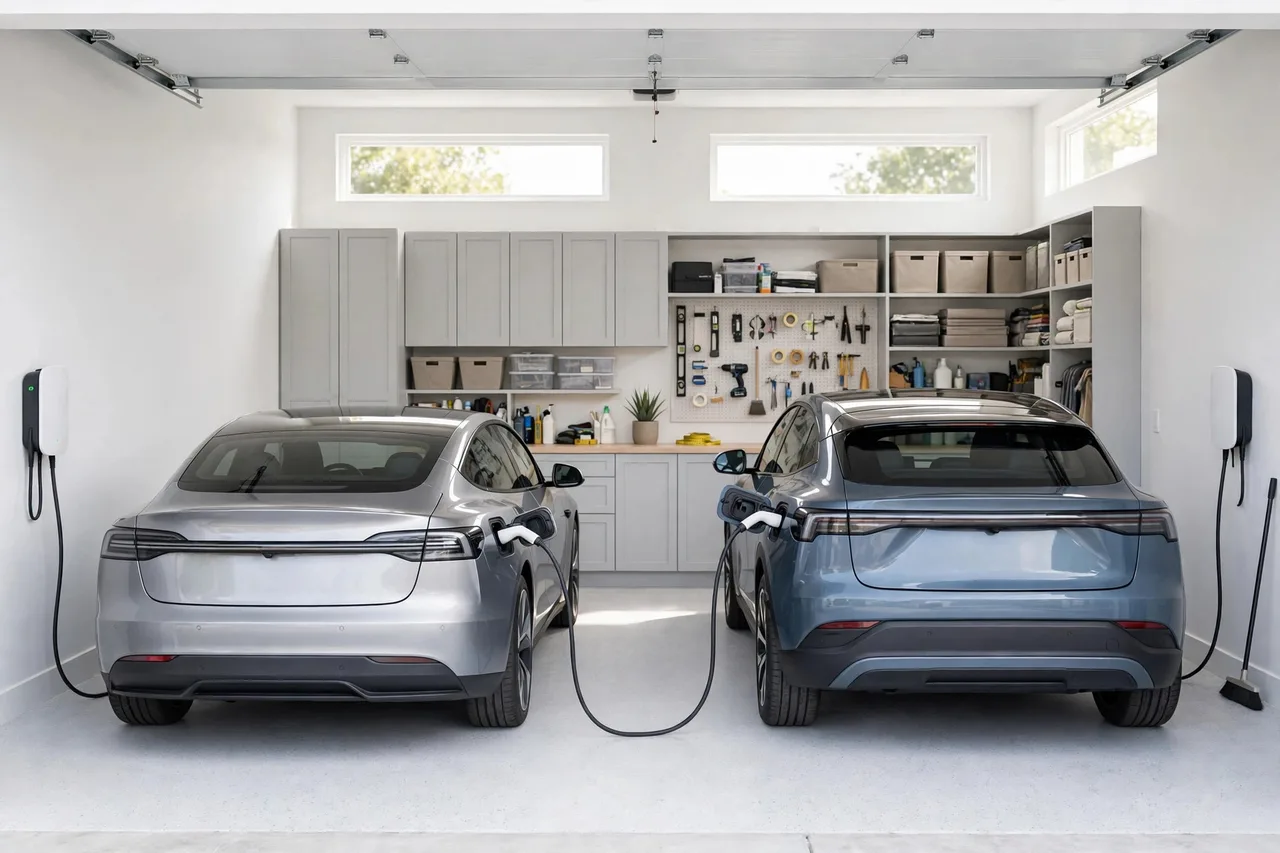
No statute promises a charger approval in Georgia. Unlike the states that have enacted right-to-charge laws, Georgia leaves the question entirely to each community's covenants and board discretion. For Augusta owners that is not the end of the road — it is a sign that the negotiation, the metering design and the written application carry the weight a statute would otherwise carry.
Strategy, then, is the local substitute for statute. In Augusta the applications that succeed tend to share a shape: they arrive before the meeting rather than at it, they answer metering and insurance in the first paragraph, and they offer the board a design it can approve once and reuse for the next owner who asks.
The negotiation playbook — application contents, metering options, the wording that answers boards' standard objections — is set out in our condo and HOA guide, read here as a persuasion manual rather than a rights manual.
Climate, garages and charger placement
Heat is the local design variable. A garage that bakes all afternoon asks more of a charging station than the nameplate assumes: electronics age faster, and a car that arrives hot from the road charges under the management of its own thermal system. Sensible installs here keep the station out of the direct sun line, favour walls with airflow, and leave the cable where it will not lie across sun-heated concrete all day.
Heat also argues for headroom in the circuit decision. A car managing a hot battery after a hot commute draws on its own schedule; a generously sized circuit finishes the session inside the cool window instead of straddling the morning. It is a small thing, decided once, felt all summer.

Permits and inspection in Augusta
What the inspector is checking, in plain terms: conductor size against breaker size, the continuous-load calculation, terminations torqued, protection where the code wants it, and a station whose settings match the circuit it landed on. It is a short visit that validates everything you cannot see.

Neighbourhoods and ZIP codes served
The page covers 13 ZIP codes in and around Augusta — including 30901, 30903, 30904, 30905, 30906, 30907, 30909, 30912, 30914, 30916, 30917, 30919, 30999 — across Columbia, Richmond. If your ZIP is not in the first set shown, ask anyway: installer coverage follows the metro, not a postcode fence.
The same working area takes in the neighbouring localities of Gracewood, Hephzibah, Evans, Grovetown, Blythe, Harlem, Appling, Arlington — the county ring an installer based in Augusta actually drives. Requests from those communities route exactly as city requests do: same services, same permit discipline, same local facts where they differ.
Richmond County accounts for 15 of the ZIP codes and 4 named postal localities in the research file, the nearest of them Gracewood, Hephzibah, Blythe. The survey counts 206,069 residents in the county, with a median household income of $55,637 and a median home value of $178,500. Columbia County accounts for 6 of the ZIP codes and 6 named postal localities in the research file, the nearest of them Evans, Grovetown, Harlem, Appling, Arlington. The survey counts 162,434 residents in the county, with a median household income of $95,592 and a median home value of $305,300. Measured across its ZIP codes, the Augusta footprint runs about 12 miles north to south and 15 east to west, from ZIP 30901 to 30999 — the ground an installer based here actually covers in a working week.
Beyond the county seats, the working area takes in North Augusta, Beech Island, Bath, Clearwater, Gracewood, Langley, Gloverville, Hephzibah, Evans, Warrenville, Graniteville, Grovetown, Jackson, Vaucluse, Aiken, New Ellenton, Clarks Hill, Blythe, Trenton, Harlem, Appling, Montmorenci, Modoc, Keysville, Dearing, Matthews, Edgefield, Waynesboro, Windsor, Parksville, Johnston, Wrens, Thomson, Gough, Plum Branch, Boneville, Williston, Monetta, Girard, Mc Cormick, Ward, Stapleton, Elko, Ridge Spring, Lincolnton, Mesena, Sardis, Martin, Gibson, Warrenton, Avera, Camak, Barnwell, Louisville, Perkins, Blackville, Saluda, Troy, Bradley, Hilda, Norwood, Mitchell, Midville — the named localities for which Augusta is the nearest metro in the network (neighbouring metros' pages cover their own ground), each routing to the same installer-matching service.
The wider working area also reaches Wagener, Batesburg, Salley, Springfield, Leesville — ground shared with neighbouring metros, where installers cross the same county lines in both directions.
The largest communities in that working area after Augusta itself, by the GeoNames populated-place file: Martinez (population 35,795), Aiken (population 30,604), Evans (population 29,011), North Augusta (population 22,522), Grovetown (population 13,093), Swainsboro (population 7,471), Thomson (population 6,689), Belvedere (population 5,792), Waynesboro (population 5,704), Boiling Springs (population 5,076), Edgefield (population 4,760), Barnwell (population 4,592), Clearwater (population 4,370), Hephzibah (population 3,936), Saluda (population 3,596), Denmark (population 3,315), Allendale (population 3,126), Williston (population 3,028), Harlem (population 2,967), Millen (population 2,925). Charging demand follows those populations — the subdivisions and town centres where the next driveways, and the next panels, are.
Burke County reaches into the working area with 24,470 residents, a median household income of $53,014 and a median home value of $151,600; its localities on this page include Keysville, Waynesboro, Gough, Girard, Sardis. Jefferson County reaches into the working area with 15,341 residents, a median household income of $53,014 and a median home value of $105,400; its localities on this page include Matthews, Wrens, Stapleton, Avera, Louisville. Warren County reaches into the working area with 5,170 residents, a median household income of $44,289 and a median home value of $67,100; its localities on this page include Mesena, Warrenton, Camak, Norwood. McDuffie County reaches into the working area with 21,718 residents, a median household income of $56,733 and a median home value of $170,200; its localities on this page include Dearing, Thomson, Boneville. Glascock County reaches into the working area with 2,932 residents, a median household income of $54,934 and a median home value of $123,800; its localities on this page include Gibson, Mitchell.
| ZIP | Locality | County |
|---|---|---|
| 30901 | Augusta | Richmond |
| 30912 | Augusta | Richmond |
| 30904 | Augusta | Richmond |
| 29861 | North Augusta | Aiken |
| 29841 | North Augusta | Aiken |
| 29842 | Beech Island | Aiken |
| 30909 | Augusta | Richmond |
| 29816 | Bath | Aiken |
| 29822 | Clearwater | Aiken |
| 30812 | Gracewood | Richmond |
| 30906 | Augusta | Richmond |
| 30907 | Augusta | Richmond |
| 29834 | Langley | Aiken |
| 30903 | Augusta | Richmond |
| 30914 | Augusta | Richmond |
| 30916 | Augusta | Richmond |
| 30919 | Augusta | Richmond |
| 30999 | Augusta | Richmond |
| 29828 | Gloverville | Aiken |
| 30905 | Augusta | Richmond |
| 29860 | North Augusta | Aiken |
| 30815 | Hephzibah | Richmond |
| 30809 | Evans | Columbia |
| 29851 | Warrenville | Aiken |
| 29829 | Graniteville | Aiken |
| 30813 | Grovetown | Columbia |
| 29831 | Jackson | Aiken |
| 29850 | Vaucluse | Aiken |
| 30917 | Augusta | Columbia |
| 29801 | Aiken | Aiken |
| 29802 | Aiken | Aiken |
| 29803 | Aiken | Aiken |
| 29809 | New Ellenton | Aiken |
| 29821 | Clarks Hill | McCormick |
| 30805 | Blythe | Richmond |
| 29847 | Trenton | Edgefield |
| 30814 | Harlem | Columbia |
| 30802 | Appling | Columbia |
| 29839 | Montmorenci | Aiken |
| 29804 | Aiken | Aiken |
| 29808 | Aiken | Aiken |
| 29838 | Modoc | McCormick |
| 30816 | Keysville | Burke |
| 30808 | Dearing | McDuffie |
| 30818 | Matthews | Jefferson |
| 29824 | Edgefield | Edgefield |
| 29805 | Aiken | Aiken |
| 30830 | Waynesboro | Burke |
| 29856 | Windsor | Aiken |
| 29844 | Parksville | McCormick |
| 29832 | Johnston | Edgefield |
| 30833 | Wrens | Jefferson |
| 30824 | Thomson | McDuffie |
| 30811 | Gough | Burke |
| 29845 | Plum Branch | McCormick |
| 30806 | Boneville | McDuffie |
| 29853 | Williston | Barnwell |
| 29105 | Monetta | Saluda |
| 30426 | Girard | Burke |
| 29899 | Mc Cormick | McCormick |
| 29166 | Ward | Saluda |
| 30823 | Stapleton | Jefferson |
| 29826 | Elko | Barnwell |
| 29129 | Ridge Spring | Saluda |
| 30817 | Lincolnton | Lincoln |
| 30819 | Mesena | Warren |
| 30456 | Sardis | Burke |
| 29835 | Mc Cormick | McCormick |
| 29836 | Martin | Allendale |
| 30810 | Gibson | Glascock |
| 30828 | Warrenton | Warren |
| 30803 | Avera | Jefferson |
| 30807 | Camak | Warren |
| 29812 | Barnwell | Barnwell |
| 30434 | Louisville | Jefferson |
| 30822 | Perkins | Jenkins |
| 29817 | Blackville | Barnwell |
| 29138 | Saluda | Saluda |
| 29848 | Troy | Greenwood |
| 29819 | Bradley | Greenwood |
| 29813 | Hilda | Barnwell |
| 30821 | Norwood | Warren |
| 30820 | Mitchell | Glascock |
| 30441 | Midville | Burke |

Planning the install: from panel to parking
Walk the route before anyone quotes the route. Between Augusta's panels and its parking spaces lie the job's real variables: a finished ceiling or an open one, a straight shot through a shared wall or a tour of the attic, forty feet of conductor or a hundred and forty. Installers who quote from photographs quote the average of all routes; installers who walk yours quote the one you actually have. The site visit is where the quote stops being a genre and becomes a document.
Future-proofing, in this trade, is mostly conduit and capacity: an oversized conduit run costs little during the first install and everything later; a panel position reserved is a breaker that never has to move. If a second EV, a workshop or an electrified water heater is anywhere in your five-year picture, say so at the site visit.
Home charging know-how for Augusta households
When protection trips, listen to it
Ground-fault protection and EV charging have a known friction: certain combinations of breaker protection and station electronics nuisance-trip each other, leaving a car uncharged by morning. The answers are design answers — a hardwired configuration, a breaker the station's manufacturer lists as compatible, protection delivered inside the equipment where the code allows — and they belong at install time, not after the third flat morning. A trip that begins months later is a different message: protection devices report faults, and a new trip pattern earns an electrician's visit, not a reset habit.
When the garage is detached
A detached garage changes the install's centre of gravity: the circuit must travel. The route is usually a buried conduit run from the house panel, with depth, conduit type and the trench's path past roots, irrigation and paving all settled at the design stage — or, where the run is long and the loads justify it, a subpanel in the garage that also serves the workshop the building inevitably becomes. The charger at the end of that run behaves exactly like any other; it is the journey, measured in copper and digging, that defines the job.
Workplace charging as a policy, not a perk war
Workplace stations fail socially before they fail electrically: the same cars parked all day, visitors boxed out, no rule for the growing queue. The installs that work pair the hardware with a light policy from the start — session lengths matched to the shift, access that distinguishes staff from guests, and pricing or etiquette that keeps a full battery from squatting until six. The electrical design and the policy design are one conversation, because the dwell pattern the policy sets is the load pattern the circuit must serve.
Bidirectional charging, honestly framed
Vehicles that can return energy to a house or the grid exist, and the standards enabling them are settling — but for most households today it is a horizon technology, not a purchase category: it needs a compatible vehicle, bidirectional equipment, utility interconnection approval and a tariff that rewards it. None of that changes today's installation advice, except in one detail: conduit and panel capacity installed generously now are the same provisions a future bidirectional setup would want. Buy for the car you have; leave room for the one the industry is promising.
Whose schedule? The car's or the station's
Two schedulers can govern a charging session — the vehicle's own charge timer and the station's app — and households inherit confusion when both are set at once. The discipline is simple: choose one governor. The car's timer travels with the car and knows its departure settings; the station's knows the tariff windows and the household's other loads. Either works; both together produce the 6 am mystery of the half-charged battery and a debugging session nobody enjoys.

Frequently asked questions
Does Georgia Power Co help pay for a home charger in Augusta, GA?
Yes — Georgia Power Co's Georgia Power EV Charger Rebate (residential) currently offers Up to $150 toward a qualifying Level 2 home charger installation (installations Jan 1 - Dec 31, 2026) (program details verified 2026-10-25; funded programs can close, so confirm current status when you book). The old federal 30C charger credit ended on September 30, 2025, and is not part of any current offer.
What can my HOA in Augusta, GA do about a charger install?
As the law stands, yes: without a Georgia right-to-charge statute, an association in Augusta may refuse or condition a charger under its own documents. The practical counterweight is preparation — a complete written package, a metering answer, and a request that the refusal, if it comes, be issued in writing with the covenant cited.
Does a Level 2 charger mean a panel upgrade for a Augusta, GA home?
Start from the median, then verify: the median Augusta home was built in 1982, and 48% of the stock predates 1980, so 100-amp panels are a normal sight here — and a normal candidate for either an upgrade or a load-management device. The load calculation distinguishes the two in one visit, and any quote that skips it is guessing with your money.
How much faster is Level 2 charging at home in Augusta, GA?
Level 1 — the cord in the boot, on a normal outlet — returns about 3–5 miles of range an hour. Level 2 on its own 240-volt circuit returns roughly 25–40. A Augusta commuter who parks at seven and leaves at seven stops doing battery arithmetic entirely.
What happens next after I send a request?
Three things happen, in order. Your request is routed to licensed installers who work in Augusta; one of them contacts you to book a site visit; and the visit produces a written quote based on your actual panel and parking. PlugReady USA runs the matching, not the tools — the contractor on the job is the installer who visits.
Does Georgia Power Co offer a time-of-use rate for EV charging in Augusta?
Many Georgia Power Co customers can choose a time-of-use tariff; whether yours is one, and where its cheap window sits, decides how the charger should be scheduled from night one. Two minutes with your tariff sheet during the planning stage is the whole task — the installer sets the schedule to match while commissioning the station.
Nearby cities in Georgia
- EV charger installation in Athens — about 85 miles from Augusta, metro population 215,000
- EV charger installation in Macon — about 101 miles from Augusta, metro population 235,000
- EV charger installation in Savannah — about 107 miles from Augusta, metro population 425,000
- EV charger installation in Warner Robins — about 110 miles from Augusta, metro population 190,000
- EV charger installation in Gainesville — about 118 miles from Augusta, metro population 210,000
- EV charger installation in Atlanta — about 141 miles from Augusta, metro population 6,100,000
- EV charger installation in Columbia, SC — about 64 miles from Augusta, metro population 850,000
- EV charger installation in Sumter, SC — about 95 miles from Augusta, metro population 110,000
- EV charger installation in Greenville, SC — about 99 miles from Augusta, metro population 975,000
Ready to charge at home in Augusta?
Tell us the job — service, ZIP and property type — and licensed local installers will take it from there.