EV Charger Installation in Sumter, SC
Everything a Sumter homeowner needs before booking a charger install — the panel question, the utility's current programs, the HOA law and the permit — sourced, dated and local.
There is a short list of things that never change about a charger install — it needs capacity, a route, a position and a permit — and a longer list of things that change with the ZIP code. This page is the longer list, for Sumter. Sumter itself is home to about 43,053 people. South Carolina's registered electric fleet reached 35,700 battery-electric vehicles and 13,700 plug-in hybrids through 2025, and the installers working this metro have local habits worth borrowing. The utility section states what is verified and what is not; the law section quotes the position as it stands; the housing section works from survey data rather than vibes.
How PlugReady USA works, in one breath: you describe the job once, licensed local installers who cover Sumter receive it, and the conversations happen with them directly. The rest of this page exists so those conversations start from facts — yours about the house, ours about the metro — rather than from a sales script.
The demand picture for the Sumter metro, from the registration data this site is built on: SC coverage. Registration counts are the honest way to size a charging market — they count households, not headlines — and they are why Sumter sits where it does in our build order (rank 218 of 300 metros, Tier C).
The same survey puts median household income in Sumter at $55,592, with 57% of occupied homes owner-occupied and 65% of the housing stock single-unit detached. For charging, those are the operative facts: owners can approve their own electrical work, and detached homes put the car, the panel and the parking under one roof.

The composite picture matters more than any single statistic. In Sumter: a housing stock of mixed vintages, where both electrical eras appear on the same street; a detached-house majority with a real attached and multifamily minority; buildings of five or more units are a visible minority of the stock; meanwhile, owners hold a working majority, with renters a significant minority. A page that ignored that profile would give the same advice everywhere; this one is ordered by it.
In absolute terms, the survey counts 18,739 housing units in Sumter — 16,081 occupied, 9,203 of them by their owners. The stock resolves into 12,204 single-unit detached houses, 7,823 homes standing since before 1980, and 2,976 units in larger buildings. Those six counts are the city's charging map drawn without percentages, and every section of this page is a consequence of one of them. The page's geography is equally concrete: 4 ZIP codes across Sumter, centred near 33.91 degrees north latitude. The city anchors the Sumter metropolitan area, home to roughly 110,000 people on the research file's metro estimate — the wider labour and housing market this page's installers work across.
The same survey release fills in the household economics around the housing stock: a median home value of $199,100, median gross rent of $1,076, per-capita income of $29,338, and a median resident age of 34. How the city moves completes the picture: 82% of Sumter workers drive to work alone — the commute pattern home charging is built around; 6% work from home, a population whose cars charge on daytime and overnight schedules alike; 0% commute by public transit; 29% of adults hold a bachelor's degree or higher. The survey's vehicle table is the one an EV page should quote first: 1,726 of Sumter's households have no vehicle at all, while 8,221 have two or more — the multi-car households for whom the second circuit is a when, not an if.
Two burden statistics frame the economics: in Sumter, 50% of renters and 0% of mortgage-holding owners are housing-cost burdened at the standard 30% threshold. And 63% of households are family households, the segment most likely to run the two-vehicle, two-schedule pattern the second-vehicle planning notes address.
None of these facts is trivia; each one moves a real decision in the project. Era boundaries here run down the middle of streets: a block of sixties ranches facing a row of 2000s builds, the panel stock changing allegiance house by house. Installers quote after looking, not after assuming, because the city's average describes no individual driveway. The housing variety shows up in the permit data as variety: single-family circuits in volume, building projects in ones and twos, each teaching the local workforce a different half of the trade.
The balance of tenure keeps both crafts alive locally: firms that run domestic circuits all week, and firms whose week is landlord letters and board packs — with the good ones fluent in both. Modest incomes make the overnight tariff the headline act: the difference between peak and off-peak charging, compounded nightly for years, is the largest single number in the ownership equation. The commission's calendar quietly schedules the market: when a new time-of-use design is approved, installer phones ring in a pattern the docket predicted months earlier.
The growth market's households are researchers by necessity: fewer neighbours to copy, thinner local precedent, and pages like this one carrying more of the orientation load. Smaller metros adopt on their own clock: the fleet follows the dealers and the demographics, and each install is a visible event a street notices. Without a state charging statute, shared-property approvals in this metro are won on paper quality: metering clarity, licensed installers, insurance, reversibility — the complete package the guides set out.
The electrical reality in Sumter homes
Start with the survey's three operative figures for Sumter: median build year 1986; 42% of housing units standing since before 1980; 65% of the stock in single-unit detached houses, with 57% of occupied homes owner-occupied. Between them, they sketch the electrical city an installer works in. The metro's building booms left two electrical eras side by side. Post-1990s subdivisions were wired for modern loads and usually take a charger circuit directly; the established in-town stock asks harder questions of its panels. Knowing which era your street belongs to tells you most of what your site visit will conclude. Detached houses matter for a practical reason: a garage or driveway on your own lot means the charger, the car and the circuit are all under one roof and one owner's control, which is the simplest configuration there is.
The fuel table adds one more local fact: 13,031 Sumter homes — 81% of the stock — heat with electricity. Those households already think in kilowatts through the winter, their panels carry the load to prove it, and a charger's overnight appetite joins a system that is, in the useful sense, already electrified.
Renters are the other constituency in these numbers: about 6,878 of Sumter's occupied homes are rented rather than owned. Their charging route runs through a landlord conversation instead of a panel they control — a different project, covered by the rentals guide and the law section below, but a routine one in a city with this many renting households.
One more structural fact shapes Sumter's charging map: 16% of the city's housing units sit in buildings of five or more units. Those households cannot simply book a circuit — their charger runs through a building, a board and a shared electrical service, which is why the multifamily service and the law section below carry unusual weight on this page.
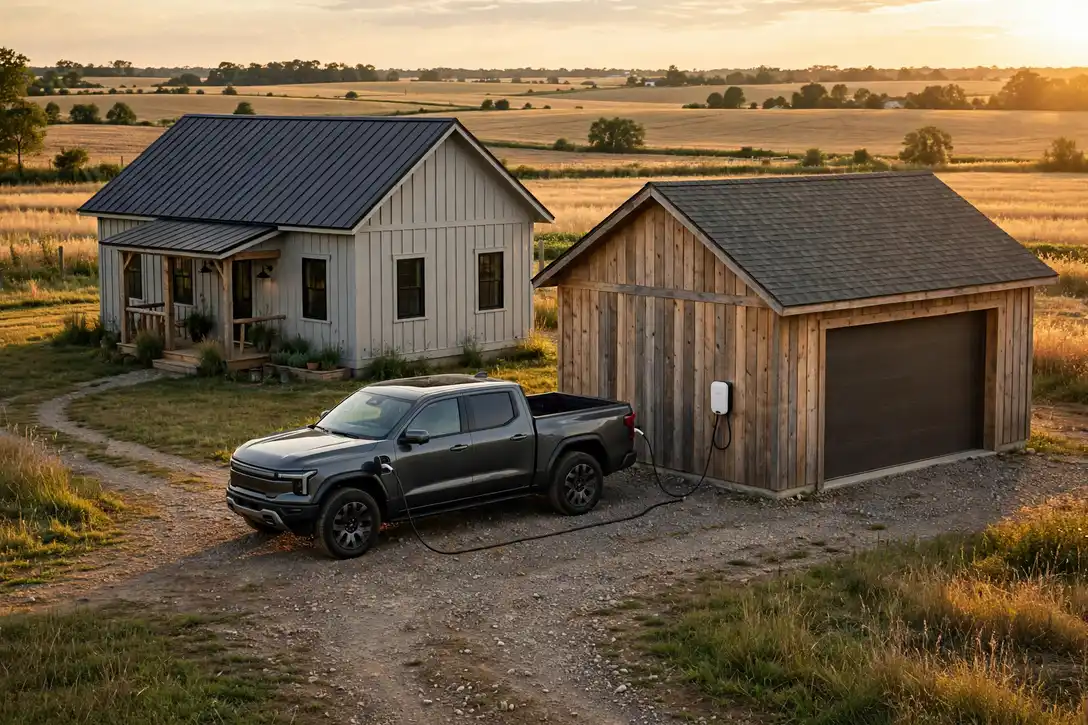
EV charging services in Sumter
An installer's work in Sumter usually starts with one of the three lead services below. The cards describe the job as it is actually scoped; the grid underneath carries the rest of the menu.
Home EV Charger Installation in Sumter
Start to finish, the domestic install is a half-day of electrical work wrapped in a week of scheduling: the survey, the circuit, the mounting, the configuration, the inspection. What the household experiences is simpler — a car that is full every morning and a cable that lives where the car does.
In Sumter: the core residential job in Sumter: circuit, mounting, configuration and inspection in one visit pattern.
Dedicated Circuit & Electrical Panel Upgrade in Sumter
Some homes meet the charger at the panel door: the service is already spoken for by cooking, heating and hot water. This service is the honest fix — capacity added properly, grounding brought current, and a panel schedule that finally matches the house it feeds.
In Sumter: relevant in Sumter wherever a 100-amp panel already carries cooking, heating and hot water before a charger asks for room.
Level 2 Charger Installation in Sumter
Level 2's numbers explain its dominance: several times the overnight recovery of a wall outlet, on equipment sized to the circuit by a factor the code fixes. The install is a circuit project with a station at the end of it, and it is quoted that way by anyone who does it weekly.
In Sumter: the 240-volt step that turns overnight charging in Sumter from a trickle into a full battery by morning.
Utility programs and electricity in Sumter
Electricity in Sumter comes from Duke Energy Progress. Parts of the wider metro are served by Black River Electric Coop, Inc, Tri-County Electric Coop, Inc (SC), City of Camden. The utility matters twice over for a charger install: it sets the time-of-use rates that decide what overnight charging costs you, and it is the organisation that may — or may not — currently help pay for the equipment.
There is a strategic consequence to the empty incentive shelf in Sumter: the install decision reduces to the work itself and the tariff it runs on. With no rebate distorting the comparison, quotes compete on scope, licensing and the load calculation's honesty — which is the competition homeowners should want. And the overnight rate window, where Duke Energy Progress offers one, quietly returns more over the car's life than most one-off rebates ever did.
Renters and condo owners should note the metering question early: whose meter the charger hangs off decides who pays for the energy, and Duke Energy Progress's options for submetering are part of the multifamily conversation below.
Condos, HOAs and the law in South Carolina
South Carolina has no statewide right-to-charge law. That needs saying plainly, because roundups on the internet sometimes claim otherwise: in the authoritative statute indexes checked for this page, no South Carolina law prevents a homeowners association or condominium from refusing a charger in a common or assigned space. Your community's own covenants and board govern the question in Sumter.
Timing helps too. Boards plan capital work annually; an application that arrives with the community's budget cycle, offering to coordinate with any planned electrical or repaving work, reads as a contribution rather than a demand.
For the full playbook — application contents, metering designs, the questions boards ask — see the condo and HOA charging guide. In Sumter it should be read as a negotiation manual, because negotiation is what the absence of a statute leaves you.
Climate, garages and charger placement
The overnight window in a hot metro is a thermal decision before it is a tariff one. Air that has given up the day's heat asks less of the car's cooling, less of the garage, less of the equipment — the schedule that saves money is the same schedule that is kind to hardware, and both point after midnight.
Heat also argues for headroom in the circuit decision. A car managing a hot battery after a hot commute draws on its own schedule; a generously sized circuit finishes the session inside the cool window instead of straddling the morning. It is a small thing, decided once, felt all summer.

Permits and inspection in Sumter
What the inspector is checking, in plain terms: conductor size against breaker size, the continuous-load calculation, terminations torqued, protection where the code wants it, and a station whose settings match the circuit it landed on. It is a short visit that validates everything you cannot see.

Neighbourhoods and ZIP codes served
The page covers 4 ZIP codes in and around Sumter — including 29150, 29151, 29153, 29154 — across Sumter. If your ZIP is not in the first set shown, ask anyway: installer coverage follows the metro, not a postcode fence.
The same working area takes in the neighbouring localities of Shaw Afb, Mayesville, Wedgefield, Dalzell, Pinewood, Horatio, Rembert — the county ring an installer based in Sumter actually drives. Requests from those communities route exactly as city requests do: same services, same permit discipline, same local facts where they differ.
Sumter County accounts for 11 of the ZIP codes and 8 named postal localities in the research file, the nearest of them Shaw Afb, Mayesville, Wedgefield, Dalzell, Pinewood. The survey counts 104,725 residents in the county, with a median household income of $56,693 and a median home value of $165,300. Measured across its ZIP codes, the Sumter footprint runs about 4 miles north to south and 5 east to west, from ZIP 29150 to 29154 — the ground an installer based here actually covers in a working week.
Beyond the county seats, the working area takes in Shaw Afb, Mayesville, Wedgefield, Dalzell, Gable, Pinewood, Horatio, Alcolu, Rembert, Sardinia, Elliott, Lynchburg, Turbeville, Eastover, New Zion, Manning, Bishopville, Summerton, Davis Station, Camden, Elloree, Greeleyville, Santee, Cassatt, Cameron, Bethune, Vance, Eutawville, Pineville, Salters, Lane, Holly Hill, Russellville, Bowman — the named localities for which Sumter is the nearest metro in the network (neighbouring metros' pages cover their own ground), each routing to the same installer-matching service.
The wider working area also reaches Gadsden, Lamar, Olanta, Timmonsville, Hopkins, Lydia, Cades, Lugoff, Elgin, Saint Matthews, Scranton, Columbia, Effingham, Hartsville, Coward, Lake City, Kingstree, State Park, Florence, Darlington, Mc Bee, Orangeburg, Westville, Blythewood, Cayce, West Columbia, Cross, Ridgeway, Pamplico, Gaston, Swansea, North, Liberty Hill, Cordova — ground shared with neighbouring metros, where installers cross the same county lines in both directions.
ZIP codes in that shared ground include 29016, 29033, 29039, 29045, 29069, 29079, 29101, 29115, 29117, 29118, 29135, 29147, 29160, 29169, 29170, 29201, 29206, 29207, 29208, 29210, 29211, 29215, 29216, 29219, 29220, 29221, 29225, 29227, 29229, 29240, 29260, 29292, 29502, 29505, 29506, 29518, 29551, 29556, 29560, 29591.
The largest communities in that working area after Sumter itself, by the GeoNames populated-place file: Camden (population 7,085), Manning (population 4,037), Bishopville (population 3,274), Kingstree (population 3,183), Dalzell (population 3,059), Lakewood (population 3,032), Cherryvale (population 2,496), South Sumter (population 2,411), Privateer (population 2,349), Saint Stephen (population 1,697), Wedgewood (population 1,628), Wedgefield (population 1,615), Stateburg (population 1,380), East Sumter (population 1,343), Holly Hill (population 1,237), Oakland (population 1,232), Cane Savannah (population 1,117), Branchville (population 989), Summerton (population 965), Santee (population 935). Charging demand follows those populations — the subdivisions and town centres where the next driveways, and the next panels, are.
Clarendon County reaches into the working area with 30,986 residents, a median household income of $52,401 and a median home value of $158,000; its localities on this page include Gable, Alcolu, Sardinia, Turbeville, New Zion. Orangeburg County reaches into the working area with 83,253 residents, a median household income of $45,675 and a median home value of $115,800; its localities on this page include Elloree, Santee, Vance, Eutawville, Holly Hill. Kershaw County reaches into the working area with 68,314 residents, a median household income of $68,231 and a median home value of $217,100; its localities on this page include Camden, Cassatt, Bethune. Lee County reaches into the working area with 16,166 residents, a median household income of $44,760 and a median home value of $104,600; its localities on this page include Elliott, Lynchburg, Bishopville. Williamsburg County reaches into the working area with 30,282 residents, a median household income of $46,213 and a median home value of $104,500; its localities on this page include Greeleyville, Salters, Lane.
| ZIP | Locality | County |
|---|---|---|
| 29150 | Sumter | Sumter |
| 29152 | Shaw Afb | Sumter |
| 29151 | Sumter | Sumter |
| 29153 | Sumter | Sumter |
| 29154 | Sumter | Sumter |
| 29104 | Mayesville | Sumter |
| 29168 | Wedgefield | Sumter |
| 29040 | Dalzell | Sumter |
| 29051 | Gable | Clarendon |
| 29125 | Pinewood | Sumter |
| 29062 | Horatio | Sumter |
| 29001 | Alcolu | Clarendon |
| 29128 | Rembert | Sumter |
| 29143 | Sardinia | Clarendon |
| 29046 | Elliott | Lee |
| 29080 | Lynchburg | Lee |
| 29162 | Turbeville | Clarendon |
| 29044 | Eastover | Richland |
| 29111 | New Zion | Clarendon |
| 29102 | Manning | Clarendon |
| 29010 | Bishopville | Lee |
| 29148 | Summerton | Clarendon |
| 29041 | Davis Station | Clarendon |
| 29020 | Camden | Kershaw |
| 29047 | Elloree | Orangeburg |
| 29021 | Camden | Kershaw |
| 29056 | Greeleyville | Williamsburg |
| 29142 | Santee | Orangeburg |
| 29032 | Cassatt | Kershaw |
| 29030 | Cameron | Calhoun |
| 29009 | Bethune | Kershaw |
| 29163 | Vance | Orangeburg |
| 29048 | Eutawville | Orangeburg |
| 29468 | Pineville | Berkeley |
| 29590 | Salters | Williamsburg |
| 29564 | Lane | Williamsburg |
| 29059 | Holly Hill | Orangeburg |
| 29476 | Russellville | Berkeley |
| 29018 | Bowman | Orangeburg |

Planning the install: from panel to parking
Two decisions shape every Sumter install, and both are made before any equipment is ordered. The first is electrical: the load calculation that decides between a straight circuit, a panel upgrade and load management. The second is physical: where the station lives — which wall, which side of the car the charge port sits on, and whether the cable reaches a second vehicle or a future one. Installers in Sumter see the same housing patterns repeat street by street, which is why a ten-minute site visit produces a firmer quote than any online form: the form starts the conversation, the visit settles it.
Finally, photograph the finished work — station, nameplate, panel directory with the new breaker labelled — and file it with the inspection record. When the car changes, the house sells or a second station joins the first, that folder is the difference between a five-minute answer and an archaeological dig.
Home charging know-how for Sumter households
After the power comes back
Outages end untidily: a surge as the grid re-energises, a station mid-session interrupted, a car that resumes charging on its own schedule or waits for instruction depending on its settings. The household habits are minimal — know what your car and station each do on restoration, let the first post-outage session be a watched one, and treat any new tripping afterwards as information rather than nuisance. Equipment that rode out a storm badly usually says so promptly.
Homework that sharpens the site visit
You can cut a site visit's uncertainty in half with a phone camera. Photograph the panel — door open, directory card legible, the rating label in frame — plus the wall where the station would go and the car's parking position with the port side visible. Send them with the request. The installer arrives already knowing the panel's make and spare spaces, the run's likely route, and which questions remain live ones. Quotes get firmer, visits get shorter, and nobody discovers the decisive fact at the door.
The school-run charge window
Households organised around school runs live on a distinctive charge curve: two short hops, a long parked day, an afternoon of activities. The car sits at home for the middle of the day — which, for solar households, is precisely the generation window, and for everyone else makes the overnight session almost an afterthought. Scheduling follows the family's actual day, not the tariff's assumption of one, and the installer who asks about the school run is designing, not chatting.
Whose schedule? The car's or the station's
Two schedulers can govern a charging session — the vehicle's own charge timer and the station's app — and households inherit confusion when both are set at once. The discipline is simple: choose one governor. The car's timer travels with the car and knows its departure settings; the station's knows the tariff windows and the household's other loads. Either works; both together produce the 6 am mystery of the half-charged battery and a debugging session nobody enjoys.

Frequently asked questions
Is the federal charger tax credit still available in Sumter, SC?
Treat the answer as a standing no with a watching brief. The 30C credit is finished, South Carolina has not replaced it for homeowners, and no verified Duke Energy Progress rebate was running in the sources checked for this page. Should that change, the utility's program page will say so first — and this page will be updated to match.
Can my association in Sumter, SC say no to a home charger?
In Sumter, they can — there is no South Carolina statute stopping them. Right-to-charge protection simply has not been enacted here, so the board's own rules decide. Owners do still get approved regularly: the applications that succeed answer the board's concerns (metering, insurance, restoration, a licensed installer) before the meeting, in writing.
Does a Level 2 charger mean a panel upgrade for a Sumter, SC home?
It hinges on two numbers you cannot read off the panel door: the service's rating, and what the load calculation says it already carries. The vintage of Sumter's stock — median build year 1986, about 42% of homes from before 1980 — means both answers are common here. The charger enters the arithmetic at 125% of its draw; whatever room survives that entry decides between a circuit, a management device, and an upgrade.
Level 1 or Level 2 in Sumter, SC — what is the real difference?
Level 2 is several-fold faster in the only unit that matters — miles back per hour parked: roughly 25–40 against Level 1's 3–5. The exact figure follows the circuit: a 40-amp circuit and a 60-amp circuit are both Level 2, and the car's onboard limit may sit below either. Your installer matches the three numbers at the site visit.
How does the installer matching on this page work?
Three steps: the request routes to installers who work Sumter, South Carolina; one contacts you to walk the property; the walk produces the written quote. Everything on this page — the utility position, the law, the housing data — is yours to check that quote against.
Does Duke Energy Progress offer a time-of-use rate for EV charging in Sumter?
Worth checking before the install, because it changes the setup rather than the circuit: if Duke Energy Progress offers your address a time-of-use plan, the station's schedule is programmed to its overnight window at commissioning. The tariff pages or a call to the utility confirm your plan's windows; guessing from a neighbour's bill is how households end up charging at peak by default.
Nearby cities in South Carolina
- EV charger installation in Florence — about 37 miles from Sumter, metro population 200,000
- EV charger installation in Columbia — about 38 miles from Sumter, metro population 850,000
- EV charger installation in Charleston — about 82 miles from Sumter, metro population 825,000
- EV charger installation in Myrtle Beach — about 86 miles from Sumter, metro population 550,000
- EV charger installation in Spartanburg — about 113 miles from Sumter, metro population 355,000
- EV charger installation in Hilton Head Island — about 120 miles from Sumter, metro population 225,000
- EV charger installation in Augusta, GA — about 95 miles from Sumter, metro population 625,000
- EV charger installation in Charlotte, NC — about 96 miles from Sumter, metro population 2,900,000
- EV charger installation in Fayetteville, NC — about 114 miles from Sumter, metro population 525,000
Ready to charge at home in Sumter?
Two minutes of form, and the request is in front of licensed installers who cover this city — quotes follow site visits, in writing.