EV Charger Installation in Sacramento, CA
Everything a Sacramento homeowner needs before booking a charger install — the panel question, the utility's current programs, the HOA law and the permit — sourced, dated and local.
There is a reason most charging happens at home: it is the most convenient fuelling an EV owner will ever use, and it happens while the car sits idle anyway. In Sacramento, getting set up means answering a handful of local questions first. Sacramento itself is home to about 535,787 people, inside a state that registered 1,843,100 battery-electric vehicles and 490,900 plug-in hybrids through 2025. Which utility serves your address, whether it currently funds part of a charger install, what your panel can carry, and what your HOA or condo board can and cannot say no to — this page covers each of them for Sacramento specifically.
How to read this page in four minutes: the data band tells you what kind of housing city Sacramento is; the utility section tells you whether money is on the table; the law section tells you whether permission is a process or a negotiation; and the permit section tells you what proof the finished job leaves behind. The rest is elaboration.
What the Experian and AFDC registration data say about Sacramento–Roseville–Folsom: Experian used-EV No. 4 DMA ; SMUD territory; state capital EV density. Translated out of market language: your neighbours are already charging at home, the permit office already knows the paperwork, and the installers already know the housing stock.
Three percentages describe the working conditions for charging in Sacramento: 51% owner-occupied, 59% single-unit detached, and a median household income of $91,387 standing behind both. Everything in the sections below — panels, permissions, metering — is commentary on those proportions.

Every city charges differently, and Sacramento's difference is legible in the data: an older housing fabric, where panel archaeology is a normal part of the first visit; a detached-house majority with a real attached and multifamily minority; buildings of five or more units hold a substantial share of homes, which keeps the multifamily sections of this page in daily use; owners hold a working majority, with renters a significant minority. Read the sections below through that profile and the local advice resolves into specifics — which questions are routine here, and which are rare.
In absolute terms, the survey counts 211,869 housing units in Sacramento — 198,965 occupied, 101,161 of them by their owners. The stock resolves into 124,498 single-unit detached houses, 109,931 homes standing since before 1980, and 49,713 units in larger buildings. Those six counts are the city's charging map drawn without percentages, and every section of this page is a consequence of one of them. The page's geography is equally concrete: 100 ZIP codes across Sacramento, centred near 38.58 degrees north latitude. The city anchors the Sacramento–Roseville–Folsom metropolitan area, home to roughly 2,400,000 people on the research file's metro estimate — the wider labour and housing market this page's installers work across.
The same survey release fills in the household economics around the housing stock: a median home value of $515,800, median gross rent of $1,846, per-capita income of $43,869, and a median resident age of 37. The movement data matters as much as the money data: 66% of Sacramento workers drive to work alone — the commute pattern home charging is built around; 16% work from home, a population whose cars charge on daytime and overnight schedules alike; 2% commute by public transit; 38% of adults hold a bachelor's degree or higher. And the fleet in the driveways: 75,303 households in Sacramento have exactly one vehicle, 105,754 have two or more, and 17,908 have none.
Household structure, from the same release: 58% of Sacramento households are family households. The burden shares behind the housing stock: 50% of renting households are cost-burdened at the 30%-of-income line, as are 0% of mortgaged owners — context for why the overnight rate window, once set, is treated here as a household fixture rather than a hobby.
This is the context an installer works against, whether it is written down or not. A stock this old wires its history into the walls: cloth-wrapped conductors in the deepest streets, fuse boxes that outlived their century, panels added in layers by generations of electricians each solving their own decade's problem. The built form refuses a single story: houses with garages on one side of the arterial, garden apartments and mid-rise condos on the other, each population charging by different rules.
Property managers are the metro's charging gatekeepers at this tenure mix, and the installers who thrive are the ones whose proposals arrive manager-shaped: standardised, insured, reversible on paper. The specification pattern at this income band is disciplined: capacity for today's car and a conduit sized for tomorrow's, the upgrade deferred until the load calculation insists. A large utility's scale cuts both ways — programme budgets that dwarf a small co-op's, and call-centre distance between a household and anyone who can decide anything. The published page rules; keep it bookmarked.
Scale brings specialisation: firms here can afford to do nothing but charging installs, and their process shows it — templated applications, standing inspector relationships, diaries booked in weeks. In a market this size the matching problem inverts: not finding an installer, but filtering — licence, charging specialism, diary, and references from your own quadrant of the metro. The association dimension, at least, comes with a statutory frame in this state — the law section above sets out what boards may and may not do, and applications written inside that frame travel noticeably faster.
The electrical reality in Sacramento homes
Tenure first, because tenure allocates the decisions: 51% of Sacramento's occupied homes are owner-occupied, free to commission electrical work outright. The stock they occupy has a median build year of 1978; 52% predates 1980; 59% is detached single-unit. For the owner-occupied majority, the charger question is purely electrical, and these are the electrical facts. Age shows up electrically before it shows up anywhere else: services sized for a house with a third of today's appliances. Expect the first conversation to be about capacity — what the panel is, what it already feeds, and which of the three routes (circuit, management, upgrade) your numbers support. Attics, basements and interior panel locations are common in this vintage of stock, which is why the run's route gets its own line in any serious quote: distance and finish decide labour more than the charger does.
One further survey line belongs in any Sacramento install conversation: 42% of the city's homes heat with electricity — 83,947 households whose panels already carry a major winter load before a charger is contemplated. Electric heat and EV charging are the two largest discretionary loads a house can host, and where they coincide, the load calculation stops being a formality.
One further split matters for how this page is organised: about 97,804 of Sacramento's occupied homes are renter-occupied. Everything above assumes you can approve your own electrical work; where you cannot, the approval layer — landlord or association — becomes part of the job, which is why the law section carries unusual weight here.
One more structural fact shapes Sacramento's charging map: 23% of the city's housing units sit in buildings of five or more units. Those households cannot simply book a circuit — their charger runs through a building, a board and a shared electrical service, which is why the multifamily service and the law section below carry unusual weight on this page.
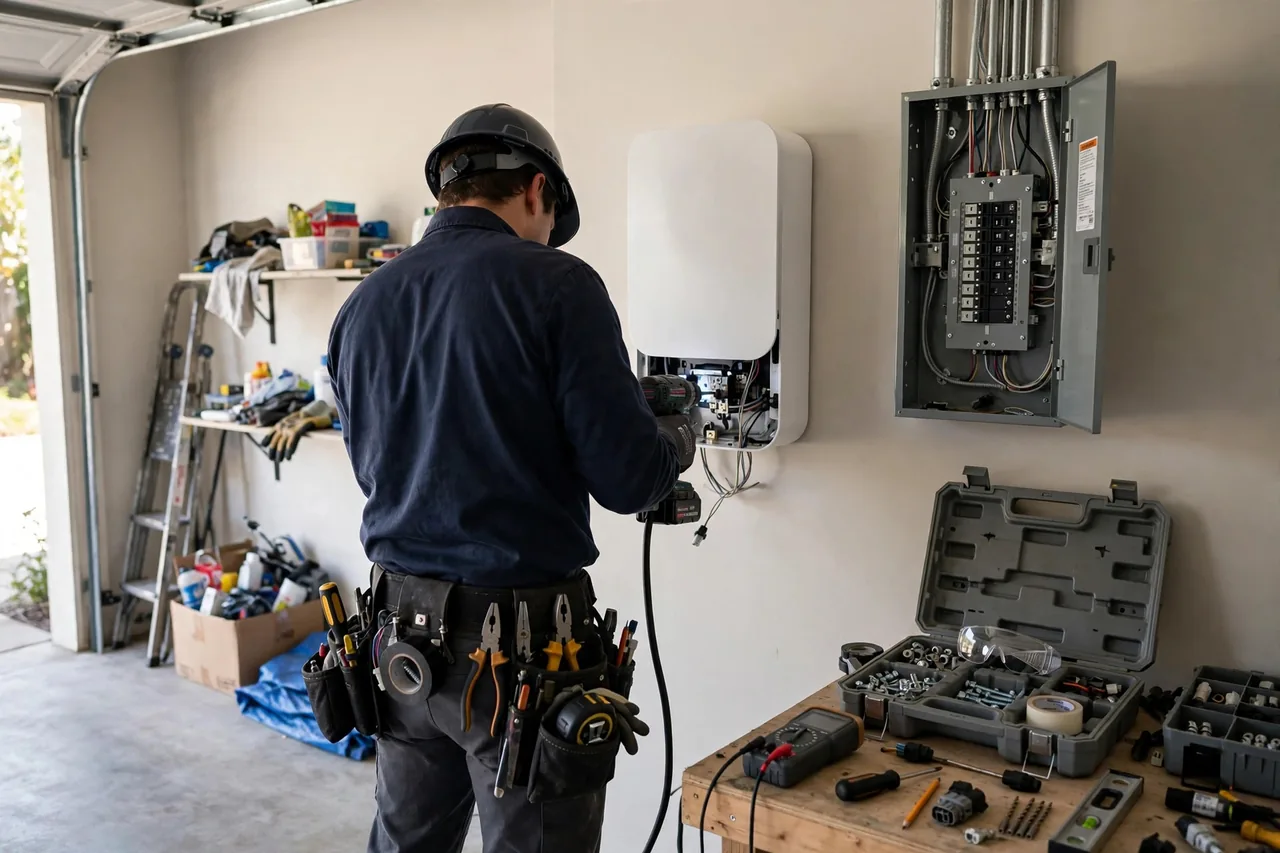
EV charging services in Sacramento
An installer's work in Sacramento usually starts with one of the three lead services below. The cards describe the job as it is actually scoped; the grid underneath carries the rest of the menu.
Home EV Charger Installation in Sacramento
The standard first install: a dedicated circuit from the panel to the parking space, a station mounted and configured to that circuit, and a passed inspection to close it out. What changes from house to house is never the recipe — it is the panel's spare capacity, the length of the run, and how the car actually parks.
In Sacramento: where most Sacramento projects start and finish: one circuit, one station, one inspection.
Dedicated Circuit & Electrical Panel Upgrade in Sacramento
When the arithmetic says the service is full, this is the enabling job: a larger panel, or a new dedicated circuit with capacity planned in, done under the same permit umbrella as the charger it feeds. It is also the upgrade the rest of the house quietly benefits from for decades.
In Sacramento: service work that turns 'no room' into a circuit with headroom in Sacramento homes.
Multifamily & Condo EV Charging in Sacramento
The building version of the home job, with a governance layer on top. Boards approve complete applications; residents pay for their own energy through the metering design; the building's capacity is shared by management rather than by argument. That system is what this service installs.
In Sacramento: the route from board agenda to working charger in Sacramento's communities.
Utility programs and electricity in Sacramento
Electricity in Sacramento comes from Pacific Gas & Electric Co.. Parts of the wider metro are served by Sacramento Municipal Util Dist, WAPA-- Western Area Power Administration. The utility matters twice over for a charger install: it sets the time-of-use rates that decide what overnight charging costs you, and it is the organisation that may — or may not — currently help pay for the equipment.
Frame the Sacramento incentive question correctly and it answers itself. Three pots could in principle fund part of a home charger: a federal credit, a California program, a Pacific Gas & Electric Co. rebate. The first ended on September 30, 2025. The second does not exist for typical home installs. The third, in the sources checked for this page, is not currently offered for residential customers. Zero plus zero plus zero is the honest budget line — and any future change will arrive through the utility's own program page, with dates, which is where this page will take it from.
Net-metering households — rooftop solar is common across the metro — should tell the installer: charging schedules and load management are planned differently when the house generates as well as consumes.
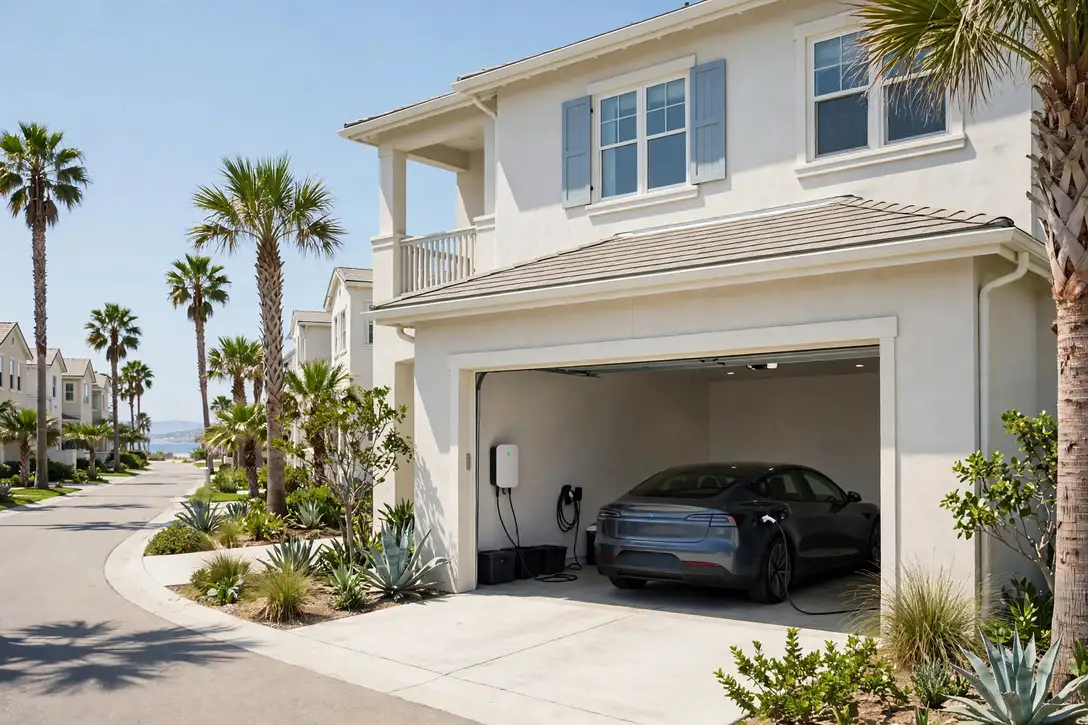
Condos, HOAs and the law in California
Charging is a protected right for association owners in California. The state's right-to-charge statute (Civ. Code §4745; §1947.6 (renters)) stops a homeowners association or condominium from banning an owner's charging station outright. Conditions still exist — placement, appearance, insurance and restoration can all be regulated, and the owner pays — yet the starting position is yes-with-rules rather than no-unless-persuaded, and that difference decides most applications before they are written.
The statute is the floor, not the whole negotiation: associations in California can still set reasonable conditions on placement, appearance and insurance. In Sacramento, the installers who do multifamily work regularly are the ones who arrive with the application already drafted.
The step-by-step version lives in our guide to installing an EV charger in a condo or HOA community — the application sequence, the metering designs and the questions boards ask, in order.
Climate, garages and charger placement
Garages in this region do double duty across the year — summer's workshop, winter's storage — and the charger competes for wall space with all of it. Mounting height, cable reach and a holster placed for the car's real parking position decide whether the station is used daily or negotiated with. The installer who measures the car in place is designing for the household you actually are.
Leaf-fall and pollen sound beneath an electrician's notice until they are inside a connector left lying open. The holster habit — connector docked, cap where the design provides one — is the entire countermeasure, and it is free.

Permits and inspection in Sacramento
Bring the panel schedule up to date while the electrician is in it — the new circuit labelled, in the directory, in pen. Inspectors notice; future electricians bless you for it; and the load calculation for any second circuit starts from that card.

Neighbourhoods and ZIP codes served
The page covers 100 ZIP codes in and around Sacramento — including 94203, 94204, 94205, 94206, 94207, 94208, 94209, 94211, 94229, 94230, 94232, 94234, 94235, 94236, 94237, 94239, 94240, 94244, 94245, 94247, 94248, 94249, 94250, 94252, 94254, 94256, 94257, 94258, 94259, 94261, 94262, 94263, 94267, 94268, 94269, 94271, 94273, 94274, 94277, 94278, 94279, 94280, 94282, 94283, 94284, 94285, 94286, 94287, 94288, 94289, 94290, 94291, 94293, 94294, 94295, 94296, 94297, 94298, 94299, 95811 — across Sacramento. If your ZIP is not in the first set shown, ask anyway: installer coverage follows the metro, not a postcode fence.
The same working area takes in the neighbouring localities of Mcclellan, Rio Linda, North Highlands, Carmichael, Elverta, Rancho Cordova, Elk Grove, Mather, Antelope, Citrus Heights, Fair Oaks, Hood, Orangevale, Folsom — the county ring an installer based in Sacramento actually drives. Requests from those communities route exactly as city requests do: same services, same permit discipline, same local facts where they differ.
Sacramento County accounts for 132 of the ZIP codes and 24 named postal localities in the research file, the nearest of them Mcclellan, Rio Linda, North Highlands, Carmichael, Elverta. The survey counts 1,594,006 residents in the county, with a median household income of $92,175 and a median home value of $534,200. Measured across its ZIP codes, the Sacramento footprint runs about 17 miles north to south and 18 east to west, from ZIP 94203 to 95899 — the ground an installer based here actually covers in a working week.
Beyond the county seats, the working area takes in West Sacramento, Mcclellan, Rio Linda, North Highlands, Carmichael, Elverta, Rancho Cordova, Elk Grove, Mather, Antelope, Davis, Citrus Heights, Clarksburg, Fair Oaks, Hood, Woodland, Roseville, Pleasant Grove, Orangevale, Folsom, Courtland, Wilton, Represa, Dixon, Rocklin, Granite Bay, Yolo, Sloughhouse, Loomis, Walnut Grove, Ryde, El Dorado Hills, Penryn, Newcastle, Rescue, Shingle Springs, Pilot Hill, Auburn, Plymouth, Cool, El Dorado, Lotus, Coloma, Drytown, Diamond Springs, Amador City, Placerville, Greenwood, Sutter Creek, Garden Valley, River Pines, Mount Aukum — the named localities for which Sacramento is the nearest metro in the network (neighbouring metros' pages cover their own ground), each routing to the same installer-matching service.
The wider working area also reaches Knights Landing, Robbins, Galt, Thornton, Herald, Winters, Rio Oso, Madison, Elmira, Zamora, Sheridan, Esparto, Rio Vista, Yuba City, Lodi, Capay, Victor, Lockeford, Olivehurst, Ione, Clements, Meridian, Fairfield, Beale Afb, Stockton, Bethel Island, Applegate, Marysville, Weimar, Martell, Guinda, Knightsen, Grass Valley, Sutter, Smartsville — ground shared with neighbouring metros, where installers cross the same county lines in both directions.
ZIP codes in that shared ground include 94511, 94533, 94548, 94571, 95201, 95202, 95204, 95209, 95211, 95212, 95225, 95227, 95237, 95241, 95242, 95253, 95267, 95602, 95625, 95632, 95637, 95638, 95641, 95653, 95659, 95674, 95681, 95686, 95687, 95694, 95698, 95722, 95736, 95901, 95903, 95912, 95949, 95961, 95991, 95992.
The largest communities in that working area after Sacramento itself, by the GeoNames populated-place file: Elk Grove (population 166,913), Roseville (population 130,269), Arden-Arcade (population 92,186), Citrus Heights (population 87,056), Folsom (population 76,375), Rancho Cordova (population 71,017), Davis (population 67,666), Carmichael (population 61,762), Rocklin (population 61,213), Woodland (population 58,567), West Sacramento (population 52,721), Florin (population 47,513), Laguna (population 46,621), Antelope (population 45,770), North Highlands (population 42,694), El Dorado Hills (population 42,108), Orangevale (population 33,960), Foothill Farms (population 33,121), Fair Oaks (population 30,912), Vineyard (population 24,836). Charging demand follows those populations — the subdivisions and town centres where the next driveways, and the next panels, are.
Yolo County reaches into the working area with 220,564 residents, a median household income of $91,752 and a median home value of $620,700; its localities on this page include West Sacramento.
| ZIP | Locality | County |
|---|---|---|
| 94203 | Sacramento | Sacramento |
| 94204 | Sacramento | Sacramento |
| 94205 | Sacramento | Sacramento |
| 94206 | Sacramento | Sacramento |
| 94207 | Sacramento | Sacramento |
| 94208 | Sacramento | Sacramento |
| 94209 | Sacramento | Sacramento |
| 94211 | Sacramento | Sacramento |
| 94229 | Sacramento | Sacramento |
| 94230 | Sacramento | Sacramento |
| 94232 | Sacramento | Sacramento |
| 94234 | Sacramento | Sacramento |
| 94235 | Sacramento | Sacramento |
| 94236 | Sacramento | Sacramento |
| 94237 | Sacramento | Sacramento |
| 94239 | Sacramento | Sacramento |
| 94240 | Sacramento | Sacramento |
| 94244 | Sacramento | Sacramento |
| 94245 | Sacramento | Sacramento |
| 94247 | Sacramento | Sacramento |
| 94248 | Sacramento | Sacramento |
| 94249 | Sacramento | Sacramento |
| 94250 | Sacramento | Sacramento |
| 94252 | Sacramento | Sacramento |
| 94254 | Sacramento | Sacramento |
| 94256 | Sacramento | Sacramento |
| 94257 | Sacramento | Sacramento |
| 94258 | Sacramento | Sacramento |
| 94259 | Sacramento | Sacramento |
| 94261 | Sacramento | Sacramento |
| 94262 | Sacramento | Sacramento |
| 94263 | Sacramento | Sacramento |
| 94267 | Sacramento | Sacramento |
| 94268 | Sacramento | Sacramento |
| 94269 | Sacramento | Sacramento |
| 94271 | Sacramento | Sacramento |
| 94273 | Sacramento | Sacramento |
| 94274 | Sacramento | Sacramento |
| 94277 | Sacramento | Sacramento |
| 94278 | Sacramento | Sacramento |
| 94279 | Sacramento | Sacramento |
| 94280 | Sacramento | Sacramento |
| 94282 | Sacramento | Sacramento |
| 94283 | Sacramento | Sacramento |
| 94284 | Sacramento | Sacramento |
| 94285 | Sacramento | Sacramento |
| 94286 | Sacramento | Sacramento |
| 94287 | Sacramento | Sacramento |
| 94288 | Sacramento | Sacramento |
| 94289 | Sacramento | Sacramento |
| 94290 | Sacramento | Sacramento |
| 94291 | Sacramento | Sacramento |
| 94293 | Sacramento | Sacramento |
| 94294 | Sacramento | Sacramento |
| 94295 | Sacramento | Sacramento |
| 94296 | Sacramento | Sacramento |
| 94297 | Sacramento | Sacramento |
| 94298 | Sacramento | Sacramento |
| 94299 | Sacramento | Sacramento |
| 95812 | Sacramento | Sacramento |
| 95840 | Sacramento | Sacramento |
| 95867 | Sacramento | Sacramento |
| 95894 | Sacramento | Sacramento |
| 95814 | Sacramento | Sacramento |
| 95811 | Sacramento | Sacramento |
| 95816 | Sacramento | Sacramento |
| 95818 | Sacramento | Sacramento |
| 95798 | West Sacramento | Yolo |
| 95605 | West Sacramento | Yolo |
| 95833 | Sacramento | Sacramento |
| 95817 | Sacramento | Sacramento |
| 95813 | Sacramento | Sacramento |
| 95851 | Sacramento | Sacramento |
| 95852 | Sacramento | Sacramento |
| 95853 | Sacramento | Sacramento |
| 95691 | West Sacramento | Yolo |
| 95819 | Sacramento | Sacramento |
| 95815 | Sacramento | Sacramento |
| 95834 | Sacramento | Sacramento |
| 95820 | Sacramento | Sacramento |
| 95799 | West Sacramento | Yolo |
| 95899 | Sacramento | Sacramento |
| 95825 | Sacramento | Sacramento |
| 95838 | Sacramento | Sacramento |
| 95822 | Sacramento | Sacramento |
| 95824 | Sacramento | Sacramento |
| 95865 | Sacramento | Sacramento |
| 95866 | Sacramento | Sacramento |
| 95835 | Sacramento | Sacramento |
| 95831 | Sacramento | Sacramento |

Planning the install: from panel to parking
Walk the route before anyone quotes the route. Between Sacramento's panels and its parking spaces lie the job's real variables: a finished ceiling or an open one, a straight shot through a shared wall or a tour of the attic, forty feet of conductor or a hundred and forty. Installers who quote from photographs quote the average of all routes; installers who walk yours quote the one you actually have. The site visit is where the quote stops being a genre and becomes a document.
Plan for the household you will be, not just the car you have. A second EV is the most common reason a charger circuit gets revisited, and the cheap moment to prepare for it — conduit sized up, panel capacity reserved, station placement that serves two bays — is during the first install, while the permit is open and the electrician is already in the panel.
Home charging know-how for Sacramento households
Reading the bill after the charger arrives
The first bills after an install reward a careful read. Charging appears as consumption, not as a line item — the household's kilowatt-hours rise by roughly the car's appetite, and the rate applied to the new hours depends on when they happened. Owners who check the schedule actually ran — that the car charged inside the intended window — catch the one configuration mistake that costs money monthly. After that, the bill becomes the household's quietest document: the car simply costs what the overnight rate says it should.
The charger among workshop loads
Garages that double as workshops put the charger in interesting company: welders, compressors, dust collectors — loads with appetites and opinions. The load calculation for such a house reads the whole tenancy, and the honest conversation includes which loads genuinely coincide. A station scheduled into the workshop's quiet hours lives peacefully; one competing with the table saw's startup surge teaches the household about breaker curves the experiential way.
Etiquette for shared stations
Shared stations run on norms before they run on rules. The norms that work: move the car when the session ends, coil the cable for the next driver, report a fault rather than stepping over it, and never unplug a stranger's session except under the building's posted arrangement. Buildings formalise this gradually — a group message thread, a simple rota in high season — and the households that start with courtesy rarely need the formal version. The equipment is shared; so is the goodwill it runs on.
Making the rate window automatic
Time-of-use tariffs reward households whose charging happens while the grid sleeps, and the reward compounds silently: every night, for the life of the car. The mechanism is trivial — a schedule set in the vehicle or the station — but the details decide whether it survives contact with real life: the window must fit the household's latest departure, the schedule must yield gracefully on the nights the car comes home empty, and the settings must live somewhere the household can find them again. Set it up at commissioning, with the installer, and the saving becomes infrastructure rather than intention.
Protecting the station from the car
The most likely assailant of a garage charger is the car itself: a misjudged nose-in, a bicycle's handlebar, a ladder's fall. Placement is the first defence — out of the door swing, off the parking line's edge — and a simple bollard or wheel stop is the second where the geometry is tight. Outdoor pedestals earn the same thought against the snowplough's line and the delivery van's arc. It is carpentry, not electronics, and it belongs in the install conversation because the right time to protect a station is the day it is mounted.

Frequently asked questions
What happened to the federal home-charger credit in Sacramento, CA?
That credit is finished: 30C ended on September 30, 2025. What about locally? In the utility and state sources checked for this page, nothing verified was running for Sacramento homeowners — no Pacific Gas & Electric Co. rebate, no state scheme. If one opens, it will appear on the utility's site with dates; plan your install without it meanwhile.
Can my HOA or condo board in Sacramento, CA refuse my charger?
Not outright. Under Civ. Code §4745; §1947.6 (renters), California associations cannot prohibit an owner's charger; they can condition it — reasonably — on placement, insurance and restoration, with the owner funding the work. The disputes that do arise are usually about conditions, and they settle fastest when the application answers them in advance.
Will my Sacramento, CA home need a panel upgrade for a Level 2 charger?
The question has a correct instrument: the load calculation. It totals what your service already carries — with the code's demand factors, not nameplate panic — and sets the charger's continuous load against the remainder. In Sacramento, where the median home dates to 1978 and about 52% of units predate 1980, the answer splits by street: post-war and newer 200-amp homes usually proceed; older 100-amp homes choose between capacity work and load management. Anyone answering without the calculation is guessing in a uniform.
Level 1 or Level 2 in Sacramento, CA — what is the real difference?
A Level 1 cord on a household outlet adds roughly 3–5 miles of range per hour; a Level 2 station on a 240-volt circuit typically adds about 25–40 miles per hour depending on the circuit's amperage and the vehicle. For most drivers that is the difference between rationing the battery and never thinking about it.
What happens next after I send a request?
Your request — service, Sacramento ZIP, property type and timing — goes to licensed local installers who cover Sacramento. They contact you directly to arrange a site visit and quote. PlugReady USA is the matching service, not the installer, and the sections above exist so you can judge any quote against the local facts.
Can a charger be added to a detached garage in Sacramento?
Yes — the charger itself is the same; the route to it is the project. From the house panel, a buried conduit run reaches the garage, or a subpanel goes in out there where distance and future loads argue for it. In Sacramento, with about 59% of homes detached, local installers quote this shape routinely — the trench and the run, settled from a site walk, are the substance of it.
Nearby cities in California
- EV charger installation in Yuba City — about 37 miles from Sacramento, metro population 185,000
- EV charger installation in Napa — about 43 miles from Sacramento, metro population 140,000
- EV charger installation in Stockton — about 45 miles from Sacramento, metro population 800,000
- EV charger installation in Vallejo — about 52 miles from Sacramento, metro population 450,000
- EV charger installation in Modesto — about 68 miles from Sacramento, metro population 575,000
- EV charger installation in Santa Rosa — about 70 miles from Sacramento, metro population 500,000
- EV charger installation in Reno, NV — about 114 miles from Sacramento, metro population 500,000
- EV charger installation in Medford, OR — about 267 miles from Sacramento, metro population 220,000
- EV charger installation in Bend, OR — about 380 miles from Sacramento, metro population 205,000
Ready to charge at home in Sacramento?
Tell us the job — service, ZIP and property type — and licensed local installers will take it from there.