EV Charger Installation in Napa, CA
Everything a Napa homeowner needs before booking a charger install — the panel question, the utility's current programs, the HOA law and the permit — sourced, dated and local.
Charging at home is the version of EV ownership that actually works day to day, and in Napa it starts with a straightforward question: where will the car sleep, and what can the electrical panel behind that wall honestly support? Napa itself is home to about 76,913 people, and 1,843,100 battery-electric vehicles plus 490,900 plug-in hybrids were registered across California by the end of 2025 — every one of them a household that charges somewhere. This page gathers what a homeowner in Napa needs to know before booking an installer: the local utility and its current charger programs, the state law that applies in condos and HOA communities, the permit process, and the housing realities that decide how simple or involved an installation will be.
PlugReady USA is a matching service, not the installer: you tell us the job, and we route the request to licensed local electricians and EV-installer companies who work in Napa. Use the local detail below to arrive at that conversation informed — the sections are ordered the way an installer will think about your project, from the panel outward.
Measured demand, not enthusiasm, put Napa in Tier C of this network: Affluent wine country. For a homeowner the useful translation is simpler — installers here do this work weekly, know the local permit counter, and have seen your housing stock before.
Three percentages describe the working conditions for charging in Napa: 63% owner-occupied, 64% single-unit detached, and a median household income of $118,732 standing behind both. Everything in the sections below — panels, permissions, metering — is commentary on those proportions.

Put the survey together and Napa's charging profile reads like this: an older housing fabric, where panel archaeology is a normal part of the first visit; a detached-house majority with a real attached and multifamily minority; buildings of five or more units are a visible minority of the stock; and owners hold a working majority, with renters a significant minority. That combination — more than any single number — is what the installers working here plan around, and it is the lens for everything on this page.
Keep six figures and you keep Napa's whole electrical character: 31,866 housing units; 29,218 occupied homes; 18,304 owner-occupied; 20,505 detached houses; 18,915 pre-1980 homes; 5,156 homes in buildings of five or more units. Percentages elsewhere on this page are these numbers in disguise — the counts are the originals, and they are the numbers a local installer's experience is actually made of. The page's geography is equally concrete: 3 ZIP codes across Napa, centred near 38.45 degrees north latitude. The city anchors the Napa metropolitan area, home to roughly 140,000 people on the research file's metro estimate — the wider labour and housing market this page's installers work across.
The same survey release fills in the household economics around the housing stock: a median home value of $856,400, median gross rent of $2,282, per-capita income of $56,032, and a median resident age of 42. And the daily rhythms behind the housing numbers: 71% of Napa workers drive to work alone — the commute pattern home charging is built around; 14% work from home, a population whose cars charge on daytime and overnight schedules alike; 1% commute by public transit; 38% of adults hold a bachelor's degree or higher. Vehicle ownership, from the same release: 18,935 households in Napa run two or more vehicles, and 1,365 run none — the two ends of the market this page serves and does not serve.
Household structure, from the same release: 64% of Napa households are family households. The burden shares behind the housing stock: 59% of renting households are cost-burdened at the 30%-of-income line, as are 0% of mortgaged owners — context for why the overnight rate window, once set, is treated here as a household fixture rather than a hobby.
This is the context an installer works against, whether it is written down or not. Pre-war and immediate post-war streets dominate the map, and their electrical fabric is stratified — original services beneath mid-century additions beneath modern subpanels, an archaeology the load calculation reads layer by layer. Installers here run two trades in one van — domestic circuits in the morning, a building's shared-service design in the afternoon — and the city's pages, this one included, have to serve both readers.
The balance of tenure keeps both crafts alive locally: firms that run domestic circuits all week, and firms whose week is landlord letters and board packs — with the good ones fluent in both. The income profile also bends the housing conversation: larger homes, three-car garages, gates and long driveways — runs measured in tens of metres and trenches dug accordingly. The regulatory calendar is the programme calendar: rate cases, electrification plans and pilot approvals move through the commission on public timetables, and installers plan their marketing around them.
Scale brings specialisation: firms here can afford to do nothing but charging installs, and their process shows it — templated applications, standing inspector relationships, diaries booked in weeks. A smaller metro runs on relationships: the electrical firms are few, known, and booked through reputations maintained across decades of local work. The association dimension, at least, comes with a statutory frame in this state — the law section above sets out what boards may and may not do, and applications written inside that frame travel noticeably faster.
The electrical reality in Napa homes
Four numbers organise everything an installer expects in Napa: median build year 1975; 59% of units built before 1980; 64% of the stock detached; 63% of occupied homes owner-occupied. Capacity, circuit routes and approval layers all correlate with those four. The paragraphs below are their commentary. A housing stock this age leans on smaller electrical services — 100-amp panels are common, and fuse-era equipment still turns up in the oldest streets. For many of those homes the honest answer is a panel upgrade or a load-management device before the charger circuit goes in, and a good installer will show you the load calculation rather than asking you to take it on faith. Porches, carports and parking pads carry a real share of this city's charging, because the stock predates the two-car garage as a standard feature — outdoor-rated equipment is a local staple, not an edge case.
The fuel table adds one more local fact: 8,393 Napa homes — 28% of the stock — heat with electricity. Those households already think in kilowatts through the winter, their panels carry the load to prove it, and a charger's overnight appetite joins a system that is, in the useful sense, already electrified.
One further split matters for how this page is organised: about 10,914 of Napa's occupied homes are renter-occupied. Everything above assumes you can approve your own electrical work; where you cannot, the approval layer — landlord or association — becomes part of the job, which is why the law section carries unusual weight here.
One more structural fact shapes Napa's charging map: 16% of the city's housing units sit in buildings of five or more units. Those households cannot simply book a circuit — their charger runs through a building, a board and a shared electrical service, which is why the multifamily service and the law section below carry unusual weight on this page.
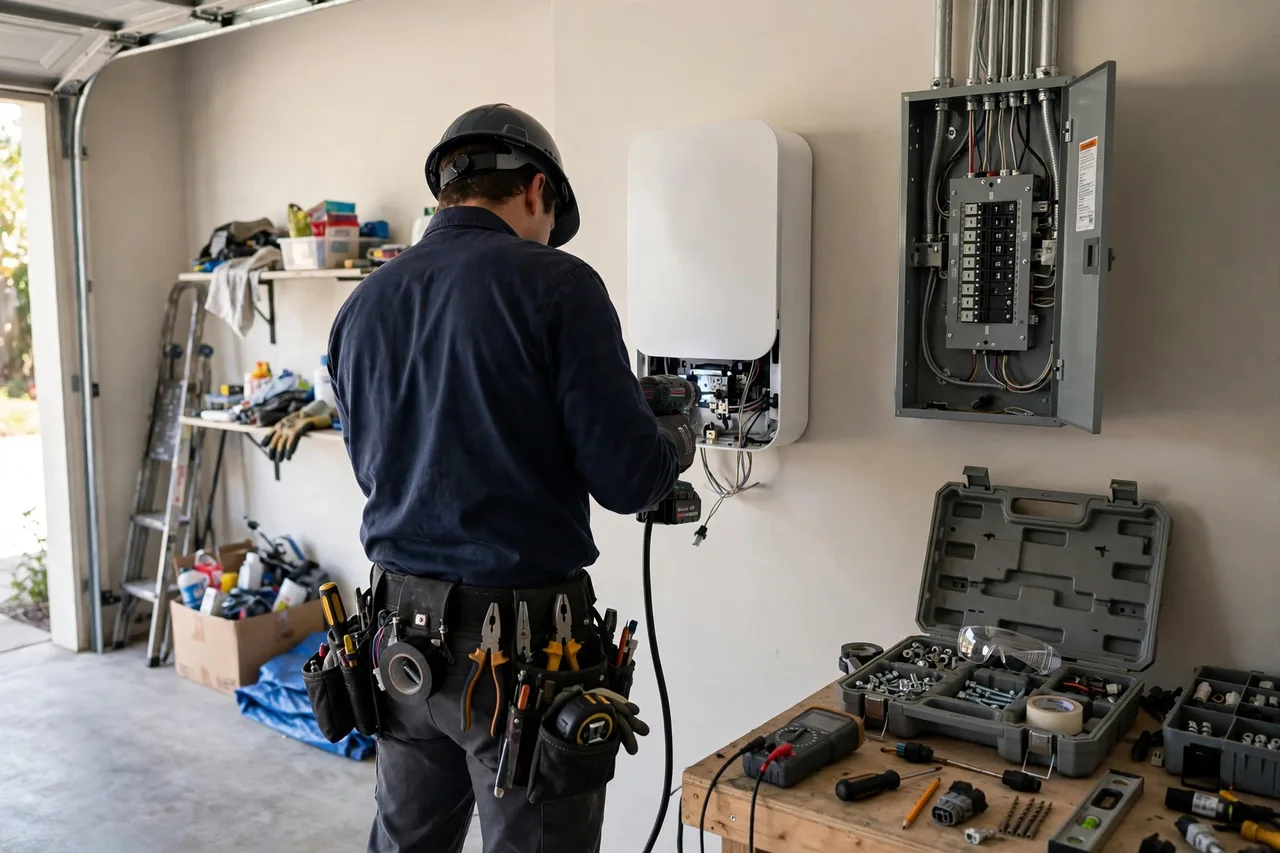
EV charging services in Napa
The full menu runs to ten services; the three cards at the top are the ones Napa's housing stock and state law push to the front. Everything links to its national service page for scope and process in full.
Home EV Charger Installation in Napa
Think of it as plumbing for electrons, done once: capacity checked, circuit run, station mounted and configured, inspection passed. The households that report the smoothest projects describe the same shape — a visit that measured, a quote that itemised, and a car that simply charged from the first night.
In Napa: usually the first job a new EV household in Napa books, scoped to the panel the house already has.
Dedicated Circuit & Electrical Panel Upgrade in Napa
Some homes meet the charger at the panel door: the service is already spoken for by cooking, heating and hot water. This service is the honest fix — capacity added properly, grounding brought current, and a panel schedule that finally matches the house it feeds.
In Napa: the capacity fix that lets the charger circuit go in without the rest of the house living at its limit.
Multifamily & Condo EV Charging in Napa
Buildings that solve charging solve it as infrastructure: a backbone capacity decision, a fair cost-allocation rule, and spaces that can be electrified in ones as residents arrive. The first installation is the constitution; the rest are amendments.
In Napa: constitutions for shared charging in Napa buildings: metering, load and approvals.
Utility programs and electricity in Napa
Electricity in Napa comes from Pacific Gas & Electric Co.. The utility matters twice over for a charger install: it sets the time-of-use rates that decide what overnight charging costs you, and it is the organisation that may — or may not — currently help pay for the equipment.
No verified residential charger rebate was in place for Pacific Gas & Electric Co. in the sources checked for this page (the federal Alternative Fuel Refueling Property Credit ended on September 30, 2025, and no California state program replaced it for typical home installs). That can change — utilities open and close funded rounds — so an installer quoting you today should be able to name any current program precisely, with its published terms. If they cannot name it, it is not part of your job.
Solar households should read the export terms alongside the charging ones: the pair decides whether midday charging on home-working days beats the overnight window, and the answer is written in your tariff, not in general advice.
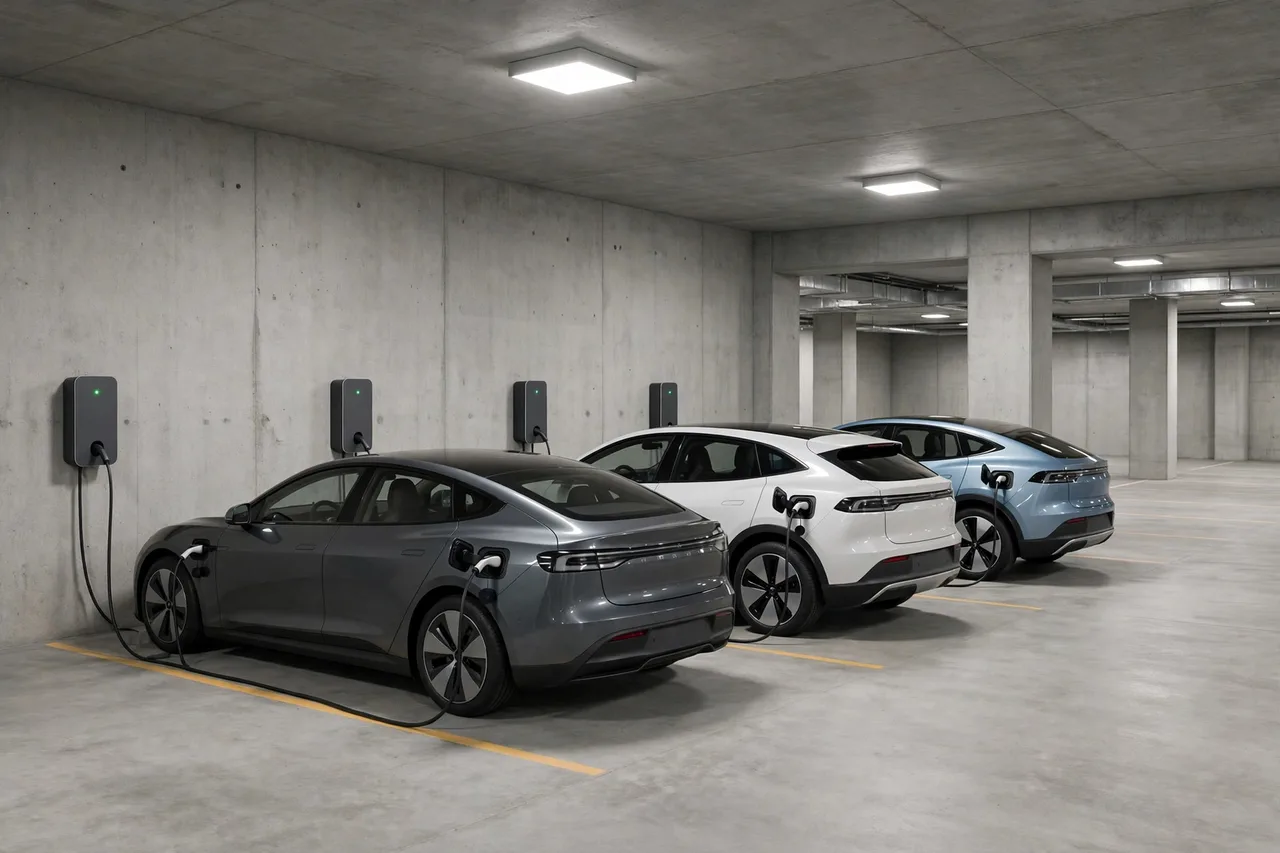
Condos, HOAs and the law in California
California has a right-to-charge law. Under Civ. Code §4745; §1947.6 (renters), a homeowners association or condominium cannot simply prohibit an owner from installing a charging station in their own parking space. The law does not make the process free or instant — owners typically carry the cost, must use a licensed installer, carry any insurance the statute specifies, and can be required to restore the space if they remove the equipment — but it converts the conversation from a request for permission into a defined process with rules on both sides.
For renters, coverage in California is recorded as: Yes. If you rent in Napa, the practical route is still a written proposal to the landlord — dedicated circuit, licensed installer, your name on the permit — because a charger-ready space is an asset most landlords keep when you leave.
The step-by-step version lives in our guide to installing an EV charger in a condo or HOA community — the application sequence, the metering designs and the questions boards ask, in order.
Climate, garages and charger placement
A four-season spec sheet is a compromise written in equipment ratings: cable jackets flexible at the January low, electronics rated past the July high, an enclosure indifferent to both. The listed gear covers it; placement decides the rest.
Four-season metros ask the install to be two things: kind to a battery in January and indifferent to a thunderstorm in July. The equipment is rated for both out of the box; the local craft is in the details — cable jacket chosen for cold flexibility, mounting placed with drainage in mind, a schedule that follows the seasons' rate windows.

Permits and inspection in Napa
The permit trail also protects the next transaction: a charger circuit on the inspection record is an asset a buyer's inspector reads in one line, while an undocumented circuit is a question that follows the sale. Installers who work this metro treat the filing as part of the deliverable, not an errand.

Neighbourhoods and ZIP codes served
The page covers 3 ZIP codes in and around Napa — including 94558, 94559, 94581 — across Napa. If your ZIP is not in the first set shown, ask anyway: installer coverage follows the metro, not a postcode fence.
The same working area takes in the neighbouring localities of Yountville, Oakville, Rutherford, Saint Helena, Angwin, Deer Park, Pope Valley, American Canyon, Calistoga — the county ring an installer based in Napa actually drives. Requests from those communities route exactly as city requests do: same services, same permit discipline, same local facts where they differ.
Napa County accounts for 12 of the ZIP codes and 10 named postal localities in the research file, the nearest of them Yountville, Oakville, Rutherford, Saint Helena, Angwin. The survey counts 134,869 residents in the county, with a median household income of $111,471 and a median home value of $869,500. Measured across its ZIP codes, the Napa footprint runs about 11 miles north to south and 2 east to west, from ZIP 94558 to 94581 — the ground an installer based here actually covers in a working week.
Beyond the county seats, the working area takes in Yountville, Oakville, Rutherford, Saint Helena, Vacaville, Angwin, Deer Park, Pope Valley, Winters, Elmira, Capay, Esparto, Madison, Brooks, Guinda, Rumsey — the named localities for which Napa is the nearest metro in the network (neighbouring metros' pages cover their own ground), each routing to the same installer-matching service.
The wider working area also reaches Glen Ellen, Vineburg, Sonoma, American Canyon, Dixon, Crockett, Fulton, Davis, Windsor, San Rafael, Sebastopol, Pinole, Martinez, San Pablo, Graton, Healdsburg, Rio Vista, Ross, Greenbrae, Kentfield, Albany, Corte Madera, Courtland, Marshall, Rio Nido, Point Reyes Station, Clearlake, Mill Valley, Isleton, Dillon Beach, Clayton, Monte Rio, Emeryville, Stinson Beach, Bolinas — ground shared with neighbouring metros, where installers cross the same county lines in both directions.
ZIP codes in that shared ground include 94010, 94030, 94035, 94039, 94060, 94080, 94086, 94103, 94108, 94109, 94115, 94116, 94118, 94134, 94141, 94145, 94147, 94151, 94158, 94160, 94161, 94172, 94204, 94209, 94230, 94240, 94245, 94250, 94259, 94262, 94267, 94268, 94269, 94278, 94282, 94283, 94290, 94296, 94303, 94304.
The largest communities in that working area after Napa itself, by the GeoNames populated-place file: Vacaville (population 96,803), Agua Caliente (population 27,090), Winters (population 7,034), Saint Helena (population 5,814), Fetters Hot Springs-Agua Caliente (population 4,144), Cottonwood (population 3,850), Esparto (population 3,108), Angwin (population 3,051), Yountville (population 3,017), Hartley (population 2,510), Allendale (population 1,506), Deer Park (population 1,267), Madison (population 503). Charging demand follows those populations — the subdivisions and town centres where the next driveways, and the next panels, are.
Yolo County reaches into the working area with 220,564 residents, a median household income of $91,752 and a median home value of $620,700; its localities on this page include Winters, Capay, Esparto, Madison, Brooks. Solano County reaches into the working area with 451,918 residents, a median household income of $100,401 and a median home value of $617,700; its localities on this page include Vacaville, Elmira.
| ZIP | Locality | County |
|---|---|---|
| 94558 | Napa | Napa |
| 94599 | Yountville | Napa |
| 94562 | Oakville | Napa |
| 94573 | Rutherford | Napa |
| 94574 | Saint Helena | Napa |
| 95696 | Vacaville | Solano |
| 94508 | Angwin | Napa |
| 94576 | Deer Park | Napa |
| 94567 | Pope Valley | Napa |
| 95688 | Vacaville | Solano |
| 95694 | Winters | Yolo |
| 95687 | Vacaville | Solano |
| 95625 | Elmira | Solano |
| 95607 | Capay | Yolo |
| 95627 | Esparto | Yolo |
| 95653 | Madison | Yolo |
| 95606 | Brooks | Yolo |
| 95637 | Guinda | Yolo |
| 95679 | Rumsey | Yolo |

Planning the install: from panel to parking
Think of the project as a chain with four links: capacity, route, placement, paperwork. Capacity is the load calculation. Route is the path copper takes from panel to parking — through a shared wall if you are lucky, across a ceiling or a trench if you are not. Placement is the unglamorous decision that governs daily life with the car for a decade: reach, cable slack, and which side the port is on. Paperwork is the permit and the passed inspection, the proof that outlives the installer's visit.
Plan for the household you will be, not just the car you have. A second EV is the most common reason a charger circuit gets revisited, and the cheap moment to prepare for it — conduit sized up, panel capacity reserved, station placement that serves two bays — is during the first install, while the permit is open and the electrician is already in the panel.
Home charging know-how for Napa households
Single-phase, three-phase, and your house
Home charging runs on the same single-phase service as the rest of the house — the 240 volts between the two legs of a standard residential service — and everything in the domestic sections of this site assumes exactly that. Three-phase power belongs to commercial and industrial buildings, where it changes the design of larger installations and the arithmetic of their load management. The distinction matters only when a quote crosses the two worlds: a household needs no three-phase anything, and a depot cannot plan without it. Knowing which world your property lives in keeps the conversation honest in both directions.
The driveway is shared infrastructure
In households where the charger serves a shared driveway, the install acquires a social protocol alongside its electrical one: whose night, which side, how the cable crosses, what happens when guests park across the route. The designs that work settle the protocol physically — a station reachable from both bays, a cable path that crosses no one's door swing — rather than relying on nightly negotiation. Infrastructure that requires diplomacy every evening was under-designed in the morning.
Historic districts and exterior rules
In a designated historic district, the charger's exterior footprint can need a second audience: the preservation commission, whose concern is the streetscape rather than the circuit. The designs that pass keep faith with that concern — equipment inside the garage where possible, conduit routed away from the principal facade, nothing mounted on historic fabric. It adds a step, not a saga, and local installers know their commission's habits the way they know their permit counter's.
After the power comes back
Outages end untidily: a surge as the grid re-energises, a station mid-session interrupted, a car that resumes charging on its own schedule or waits for instruction depending on its settings. The household habits are minimal — know what your car and station each do on restoration, let the first post-outage session be a watched one, and treat any new tripping afterwards as information rather than nuisance. Equipment that rode out a storm badly usually says so promptly.

Frequently asked questions
Can I still get the federal tax credit for a home charger in Napa, CA?
Treat the answer as a standing no with a watching brief. The 30C credit is finished, California has not replaced it for homeowners, and no verified Pacific Gas & Electric Co. rebate was running in the sources checked for this page. Should that change, the utility's program page will say so first — and this page will be updated to match.
Can my HOA or condo board in Napa, CA refuse my charger?
Only within limits the statute sets. California law (Civ. Code §4745; §1947.6 (renters)) protects an owner's right to install in their own space; associations may regulate placement, appearance and insurance and require restoration on removal, but a blanket refusal is not theirs to give. If a board stalls, a complete written application citing the statute is the standard remedy.
Panel upgrade or not — how do Napa, CA homeowners find out?
Start from the median, then verify: the median Napa home was built in 1975, and 59% of the stock predates 1980, so 100-amp panels are a normal sight here — and a normal candidate for either an upgrade or a load-management device. The load calculation distinguishes the two in one visit, and any quote that skips it is guessing with your money.
How much faster is Level 2 charging at home in Napa, CA?
Level 2 is several-fold faster in the only unit that matters — miles back per hour parked: roughly 25–40 against Level 1's 3–5. The exact figure follows the circuit: a 40-amp circuit and a 60-amp circuit are both Level 2, and the car's onboard limit may sit below either. Your installer matches the three numbers at the site visit.
What happens next after I send a request?
Three things happen, in order. Your request is routed to licensed installers who work in Napa; one of them contacts you to book a site visit; and the visit produces a written quote based on your actual panel and parking. PlugReady USA runs the matching, not the tools — the contractor on the job is the installer who visits.
Do installers cover the communities around Napa, CA?
They do. Coverage follows the metro: Yountville, Oakville, Rutherford, Saint Helena, Angwin and their neighbouring communities are worked by the same installers who cover Napa itself, and a request from those ZIP codes routes identically — service, property type and timing are all the form asks for.
Nearby cities in California
- EV charger installation in Vallejo — about 21 miles from Napa, metro population 450,000
- EV charger installation in Santa Rosa — about 28 miles from Napa, metro population 500,000
- EV charger installation in Sacramento — about 43 miles from Napa, metro population 2,400,000
- EV charger installation in San Francisco — about 47 miles from Napa, metro population 6,700,000
- EV charger installation in Yuba City — about 57 miles from Napa, metro population 185,000
- EV charger installation in Stockton — about 64 miles from Napa, metro population 800,000
- EV charger installation in Reno, NV — about 154 miles from Napa, metro population 500,000
- EV charger installation in Medford, OR — about 266 miles from Napa, metro population 220,000
- EV charger installation in Eugene, OR — about 390 miles from Napa, metro population 400,000
Ready to charge at home in Napa?
Two minutes of form, and the request is in front of licensed installers who cover this city — quotes follow site visits, in writing.