EV Charger Installation in Vallejo, CA
Home Level 2 charging, panel upgrades and condo installs in Vallejo — matched to licensed local installers, with the local facts that shape the job set out below.
There is a short list of things that never change about a charger install — it needs capacity, a route, a position and a permit — and a longer list of things that change with the ZIP code. This page is the longer list, for Vallejo. Vallejo itself is home to about 123,481 people. California's registered electric fleet reached 1,843,100 battery-electric vehicles and 490,900 plug-in hybrids through 2025, and the installers working this metro have local habits worth borrowing. The utility section states what is verified and what is not; the law section quotes the position as it stands; the housing section works from survey data rather than vibes.
A word on how to use the page: each section answers one of the questions an installer will ask you anyway — panel, utility, property rules, permits — with Vallejo's actual answers. Read the two that apply to your house and you will start the quoting conversation several steps ahead.
The demand picture for the Vallejo metro, from the registration data this site is built on: Solano County, Bay Area edge. Registration counts are the honest way to size a charging market — they count households, not headlines — and they are why Vallejo sits where it does in our build order (rank 184 of 300 metros, Tier C).
Survey context for Vallejo, in the three lines installers actually use: median household income $80,115; owner-occupation at 52%; single-unit detached homes at 68%. Income tracks adoption pace, tenure decides whose signature a job needs, and structure decides whether the answer is a garage circuit or a building negotiation.

The composite picture matters more than any single statistic. In Vallejo: an older housing fabric, where panel archaeology is a normal part of the first visit; a detached-house majority with a real attached and multifamily minority; buildings of five or more units are a visible minority of the stock; meanwhile, owners hold a working majority, with renters a significant minority. A page that ignored that profile would give the same advice everywhere; this one is ordered by it.
In absolute terms, the survey counts 49,478 housing units in Vallejo — 47,104 occupied, 24,489 of them by their owners. The stock resolves into 33,474 single-unit detached houses, 30,279 homes standing since before 1980, and 7,559 units in larger buildings. Those six counts are the city's charging map drawn without percentages, and every section of this page is a consequence of one of them. The page's geography is equally concrete: 4 ZIP codes across Solano, centred near 38.16 degrees north latitude. The city anchors the Vallejo metropolitan area, home to roughly 450,000 people on the research file's metro estimate — the wider labour and housing market this page's installers work across.
The same survey release fills in the household economics around the housing stock: a median home value of $597,100, median gross rent of $2,104, per-capita income of $42,799, and a median resident age of 41. How the city moves completes the picture: 75% of Vallejo workers drive to work alone — the commute pattern home charging is built around; 11% work from home, a population whose cars charge on daytime and overnight schedules alike; 5% commute by public transit; 28% of adults hold a bachelor's degree or higher. Vehicle ownership, from the same release: 30,275 households in Vallejo run two or more vehicles, and 3,711 run none — the two ends of the market this page serves and does not serve.
Household structure, from the same release: 63% of Vallejo households are family households. The burden shares behind the housing stock: 68% of renting households are cost-burdened at the 30%-of-income line, as are 0% of mortgaged owners — context for why the overnight rate window, once set, is treated here as a household fixture rather than a hobby.
None of these facts is trivia; each one moves a real decision in the project. A stock this old wires its history into the walls: cloth-wrapped conductors in the deepest streets, fuse boxes that outlived their century, panels added in layers by generations of electricians each solving their own decade's problem. Variety is the installer's training programme here: no two days alike, the van stocked for houses and buildings alike, and a diary that reads like the housing survey performed live.
Property managers are the metro's charging gatekeepers at this tenure mix, and the installers who thrive are the ones whose proposals arrive manager-shaped: standardised, insured, reversible on paper. Households at this band comparison-shop on scope rather than on slogans, which rewards the installer whose quote shows its working — the load study, the route, the permit, itemised. Tariff design is the quiet policy: the shape of the overnight window, the demand charges commercial customers face, the interconnection queue's pace — all set in dockets the diligent can read.
Scale brings specialisation: firms here can afford to do nothing but charging installs, and their process shows it — templated applications, standing inspector relationships, diaries booked in weeks. The permit counter in a smaller city is a conversation, not a queue: applications are read by people who may know the street, and complete paperwork is remembered kindly. Where the state's statute speaks, the local conversation changes register: installers quote the framework, boards keep counsel's template, and approvals become administrative.
The electrical reality in Vallejo homes
Tenure first, because tenure allocates the decisions: 52% of Vallejo's occupied homes are owner-occupied, free to commission electrical work outright. The stock they occupy has a median build year of 1975; 61% predates 1980; 68% is detached single-unit. For the owner-occupied majority, the charger question is purely electrical, and these are the electrical facts. Age shows up electrically before it shows up anywhere else: services sized for a house with a third of today's appliances. Expect the first conversation to be about capacity — what the panel is, what it already feeds, and which of the three routes (circuit, management, upgrade) your numbers support. Garages here earn their keep across the year — workshop, storage and storm shelter by turns — so a station position that survives the household's real parking pattern matters more than the technically neatest wall.
Heating fuel is the survey's quiet clue to panel life: in Vallejo, 36% of homes heat electrically (17,002 households), against 60% heating with gas. A house already heating electrically has a service sized with that load in its history; a gas-heated house may have capacity to spare — either way the fuel mix is part of what the installer is reading.
Renters are the other constituency in these numbers: about 22,615 of Vallejo's occupied homes are rented rather than owned. Their charging route runs through a landlord conversation instead of a panel they control — a different project, covered by the rentals guide and the law section below, but a routine one in a city with this many renting households.
One more structural fact shapes Vallejo's charging map: 15% of the city's housing units sit in buildings of five or more units. Those households cannot simply book a circuit — their charger runs through a building, a board and a shared electrical service, which is why the multifamily service and the law section below carry unusual weight on this page.
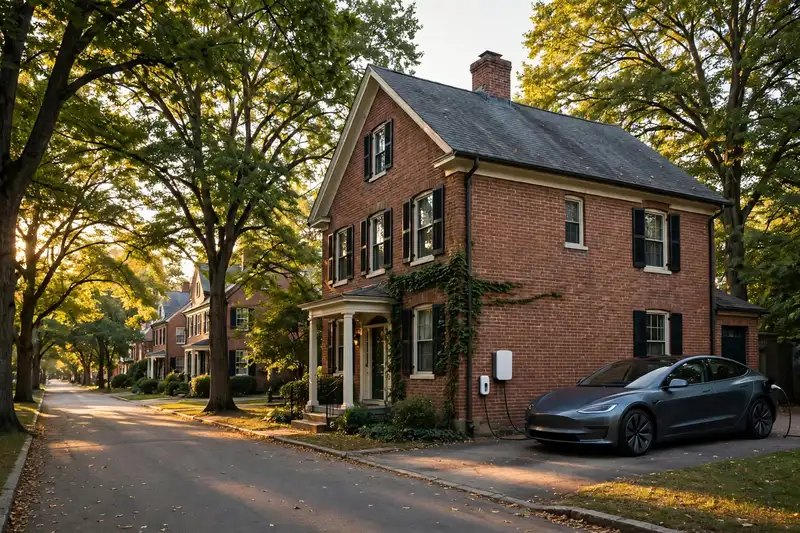
EV charging services in Vallejo
An installer's work in Vallejo usually starts with one of the three lead services below. The cards describe the job as it is actually scoped; the grid underneath carries the rest of the menu.
Home EV Charger Installation in Vallejo
The core service, stated plainly: a dedicated 240-volt circuit run from your panel to your parking place, a station mounted and configured to that circuit, and the paperwork closed out with the permit office. Everything else in this section of the site exists to support or unblock this one job.
In Vallejo: the install Vallejo's new EV households book first, and the one the rest of this page keeps returning to.
Dedicated Circuit & Electrical Panel Upgrade in Vallejo
Panel work is the one part of a charger project that outlives the car, the station and possibly the household's tenure. Specified generously and documented properly, it is less an expense than a permanent alteration in what the house can do.
In Vallejo: service work that turns 'no room' into a circuit with headroom in Vallejo homes.
Multifamily & Condo EV Charging in Vallejo
Buildings that solve charging solve it as infrastructure: a backbone capacity decision, a fair cost-allocation rule, and spaces that can be electrified in ones as residents arrive. The first installation is the constitution; the rest are amendments.
In Vallejo: the service behind the law section below — boards, applications and shared electrical capacity in Vallejo buildings.
Utility programs and electricity in Vallejo
Electricity in Vallejo comes from Pacific Gas & Electric Co.. Parts of the wider metro are served by WAPA-- Western Area Power Administration, Pittsburg Power Company. The utility matters twice over for a charger install: it sets the time-of-use rates that decide what overnight charging costs you, and it is the organisation that may — or may not — currently help pay for the equipment.
Do not budget for a rebate in Vallejo right now. As of the sources checked for this page, Pacific Gas & Electric Co. publishes no residential charger rebate, California offers no state program for typical home installs, and the federal 30C credit ended on September 30, 2025. If that changes, the utility's program page will say so with an as-of date — and this page will be updated to match. Until then, judge quotes on the work itself.
Renters and condo owners should note the metering question early: whose meter the charger hangs off decides who pays for the energy, and Pacific Gas & Electric Co.'s options for submetering are part of the multifamily conversation below.
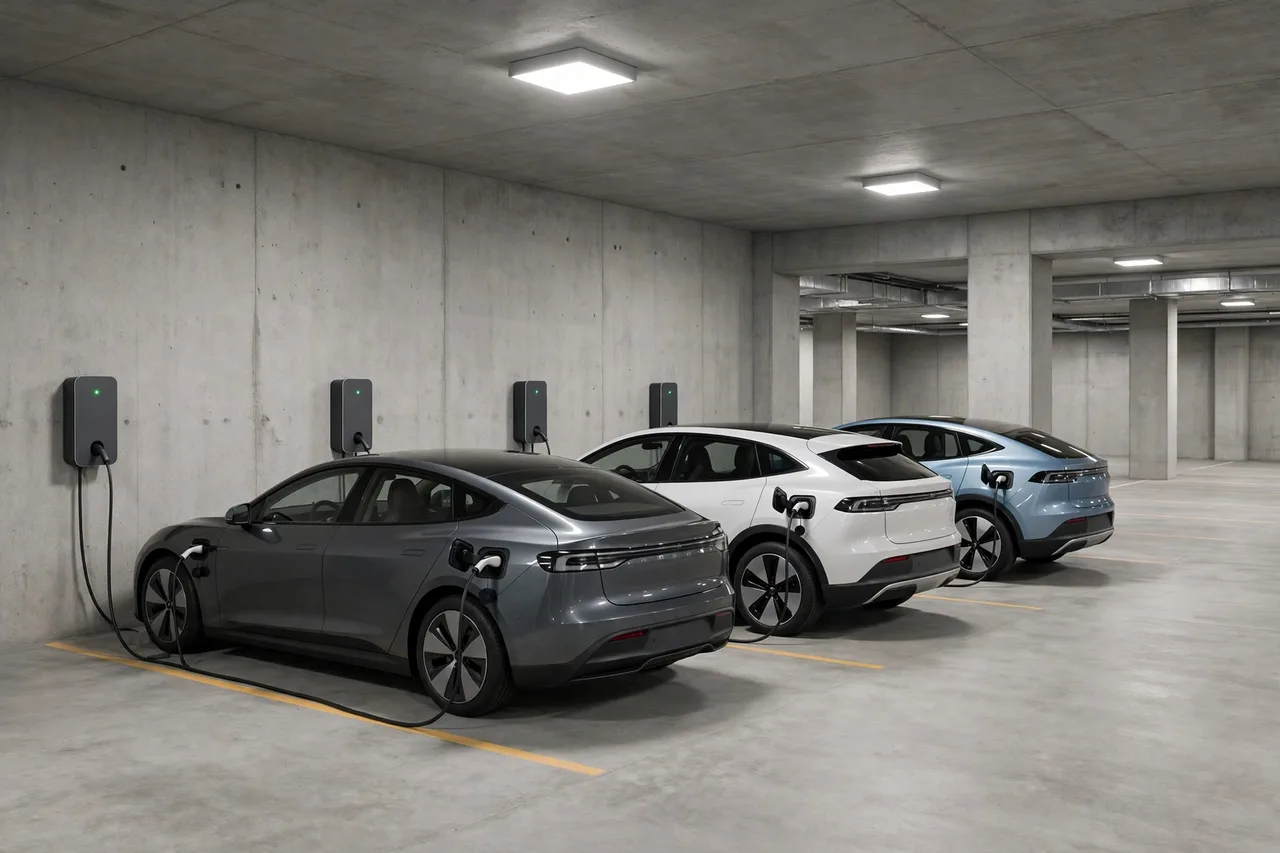
Condos, HOAs and the law in California
An association in California cannot simply say no. The right-to-charge law recorded for this state (Civ. Code §4745; §1947.6 (renters)) entitles an owner to install charging equipment for their own vehicle in their own parking space, subject to reasonable association conditions on placement, insurance and eventual restoration. For a Vallejo owner, the practical consequence is that the application is a compliance exercise — equipment, circuit, paperwork — rather than a popularity contest at a board meeting.
In practice, boards in California process charger applications the way they process any exterior electrical work — drawings, equipment listing, the installer's licence and insurance — with the statute standing behind the timeline. Applications in Vallejo that arrive complete are typically answered in one meeting cycle; incomplete ones teach their owners the meeting calendar.
Both the process and the paperwork are covered in the condo and HOA guide; Vallejo readers can skip the chapters about persuading reluctant boards and go straight to the compliance checklist.
Climate, garages and charger placement
A four-season spec sheet is a compromise written in equipment ratings: cable jackets flexible at the January low, electronics rated past the July high, an enclosure indifferent to both. The listed gear covers it; placement decides the rest.
Garages in this region do double duty across the year — summer's workshop, winter's storage — and the charger competes for wall space with all of it. Mounting height, cable reach and a holster placed for the car's real parking position decide whether the station is used daily or negotiated with. The installer who measures the car in place is designing for the household you actually are.

Permits and inspection in Vallejo
Inspection day itself is undramatic by design: access to the panel and the station, the calculation on hand, the equipment's settings matching the circuit. Jobs fail inspection on paperwork mismatches far more often than on wiring — a fact that quietly grades installers.

Neighbourhoods and ZIP codes served
The page covers 4 ZIP codes in and around Vallejo — including 94589, 94590, 94591, 94592 — across Solano. If your ZIP is not in the first set shown, ask anyway: installer coverage follows the metro, not a postcode fence.
The same working area takes in the neighbouring localities of Benicia, Fairfield, Suisun City, Travis Afb, Vacaville, Birds Landing, Elmira, Rio Vista, Dixon — the county ring an installer based in Vallejo actually drives. Requests from those communities route exactly as city requests do: same services, same permit discipline, same local facts where they differ.
Solano County accounts for 16 of the ZIP codes and 10 named postal localities in the research file, the nearest of them Benicia, Fairfield, Suisun City, Travis Afb, Vacaville. The survey counts 451,918 residents in the county, with a median household income of $100,401 and a median home value of $617,700. Measured across its ZIP codes, the Vallejo footprint runs about 4 miles north to south and 4 east to west, from ZIP 94589 to 94592 — the ground an installer based here actually covers in a working week.
Beyond the county seats, the working area takes in American Canyon, Crockett, Rodeo, Benicia, Napa, Port Costa, Fairfield, Hercules, Pinole, Vineburg, El Sobrante, San Pablo, Sonoma, Martinez, Suisun City, El Verano, Boyes Hot Springs, Novato, San Rafael, Pleasant Hill, Concord, Travis Afb, Walnut Creek, Pittsburg, Nicasio, Birds Landing, Clayton, Antioch — the named localities for which Vallejo is the nearest metro in the network (neighbouring metros' pages cover their own ground), each routing to the same installer-matching service.
The wider working area also reaches Eldridge, San Quentin, Petaluma, Greenbrae, Ross, Fairfax, Larkspur, San Francisco, Elmira, Diablo, Deer Park, Rio Vista, Dixon, Daly City, Castro Valley, Brisbane, Calistoga, Marshall, Sebastopol, Hayward, South San Francisco, Fulton, Brentwood, Knightsen, Bethel Island, Valley Ford, Pleasanton, Madison, Burlingame, Davis, Capay, Camp Meeker, Byron, Sunol, Belmont — ground shared with neighbouring metros, where installers cross the same county lines in both directions.
ZIP codes in that shared ground include 94002, 94011, 94015, 94016, 94102, 94112, 94119, 94121, 94125, 94129, 94137, 94139, 94151, 94160, 94164, 94177, 94404, 94506, 94507, 94514, 94537, 94542, 94549, 94571, 94573, 94574, 94575, 94576, 94577, 94583, 94601, 94602, 94604, 94605, 94610, 94613, 94614, 94660, 94661, 94702.
The largest communities in that working area after Vallejo itself, by the GeoNames populated-place file: Concord (population 128,667), Fairfield (population 112,970), Antioch (population 110,542), Napa (population 80,434), Pittsburg (population 69,424), Walnut Creek (population 68,910), Novato (population 55,530), Martinez (population 38,137), Pleasant Hill (population 34,810), Benicia (population 28,167), Suisun (population 28,111), Hercules (population 25,314), Bay Point (population 21,534), American Canyon (population 20,554), Pinole (population 19,269), El Sobrante (population 12,669), Clayton (population 11,867), Sonoma (population 11,037), Rodeo (population 8,679), Boyes Hot Springs (population 6,656). Charging demand follows those populations — the subdivisions and town centres where the next driveways, and the next panels, are.
Contra Costa County reaches into the working area with 1,165,012 residents, a median household income of $127,229 and a median home value of $866,800; its localities on this page include Crockett, Rodeo, Port Costa, Hercules, Pinole. Marin County reaches into the working area with 257,969 residents, a median household income of $149,091 and a median home value of $1,507,300; its localities on this page include Novato, San Rafael. Sonoma County reaches into the working area with 485,040 residents, a median household income of $104,674 and a median home value of $815,500; its localities on this page include Vineburg, Sonoma, El Verano, Boyes Hot Springs. Napa County reaches into the working area with 134,869 residents, a median household income of $111,471 and a median home value of $869,500; its localities on this page include American Canyon, Napa.
| ZIP | Locality | County |
|---|---|---|
| 94589 | Vallejo | Solano |
| 94503 | American Canyon | Napa |
| 94590 | Vallejo | Solano |
| 94592 | Vallejo | Solano |
| 94591 | Vallejo | Solano |
| 94525 | Crockett | Contra Costa |
| 94572 | Rodeo | Contra Costa |
| 94510 | Benicia | Solano |
| 94559 | Napa | Napa |
| 94569 | Port Costa | Contra Costa |
| 94581 | Napa | Napa |
| 94534 | Fairfield | Solano |
| 94547 | Hercules | Contra Costa |
| 94564 | Pinole | Contra Costa |
| 95487 | Vineburg | Sonoma |
| 94820 | El Sobrante | Contra Costa |
| 94803 | El Sobrante | Contra Costa |
| 94806 | San Pablo | Contra Costa |
| 95476 | Sonoma | Sonoma |
| 94553 | Martinez | Contra Costa |
| 94585 | Suisun City | Solano |
| 95433 | El Verano | Sonoma |
| 94533 | Fairfield | Solano |
| 95416 | Boyes Hot Springs | Sonoma |
| 94949 | Novato | Marin |
| 94998 | Novato | Marin |
| 94948 | Novato | Marin |
| 94945 | Novato | Marin |
| 94915 | San Rafael | Marin |
| 94947 | Novato | Marin |
| 94523 | Pleasant Hill | Contra Costa |
| 94520 | Concord | Contra Costa |
| 94522 | Concord | Contra Costa |
| 94524 | Concord | Contra Costa |
| 94529 | Concord | Contra Costa |
| 94903 | San Rafael | Marin |
| 94519 | Concord | Contra Costa |
| 94518 | Concord | Contra Costa |
| 94535 | Travis Afb | Solano |
| 94597 | Walnut Creek | Contra Costa |
| 94596 | Walnut Creek | Contra Costa |
| 94598 | Walnut Creek | Contra Costa |
| 94521 | Concord | Contra Costa |
| 94565 | Pittsburg | Contra Costa |
| 94527 | Concord | Contra Costa |
| 94946 | Nicasio | Marin |
| 94512 | Birds Landing | Solano |
| 94517 | Clayton | Contra Costa |
| 94509 | Antioch | Contra Costa |

Planning the install: from panel to parking
The order of operations protects you. Load calculation before equipment choice, because the circuit sizes the station's settings. Route before purchase, because reach decides models. Permit before work, because inspection closes the file the insurer will one day read. In Vallejo the sequence is the same as everywhere — what varies is only how much of it your particular house asks for, and finding that out is the site visit's entire purpose.
Finally, photograph the finished work — station, nameplate, panel directory with the new breaker labelled — and file it with the inspection record. When the car changes, the house sells or a second station joins the first, that folder is the difference between a five-minute answer and an archaeological dig.
Home charging know-how for Vallejo households
The school-run charge window
Households organised around school runs live on a distinctive charge curve: two short hops, a long parked day, an afternoon of activities. The car sits at home for the middle of the day — which, for solar households, is precisely the generation window, and for everyone else makes the overnight session almost an afterthought. Scheduling follows the family's actual day, not the tariff's assumption of one, and the installer who asks about the school run is designing, not chatting.
Two kinds of protection, one circuit
Modern charging circuits sit at the meeting point of two protection philosophies: the breaker's ground-fault protection watching the circuit, and the station's own ground-fault and monitoring systems watching the session. Coordinating them is a specification task — which device leads, which breaker types the station manufacturer lists as compatible, whether the installation is hardwired or receptacle-fed. Done at design time, the two systems coexist silently for decades; done by trial, they announce themselves at 3 am.
HOA rules and the single-family exterior
Owning the house does not always settle the charger's exterior chapter: architectural-approval clauses in many communities reach visible equipment, conduit runs on front elevations, and anything mounted streetside. The practical route is a five-minute check of the covenants before the install, and, where approval applies to exterior work, a small application — equipment photo, mounting position, conduit path — that reads as a courtesy because it is one. Interior garage installs in most single-family communities are entirely the owner's affair; it is the visible fraction that earns the paperwork.
Homework that sharpens the site visit
You can cut a site visit's uncertainty in half with a phone camera. Photograph the panel — door open, directory card legible, the rating label in frame — plus the wall where the station would go and the car's parking position with the port side visible. Send them with the request. The installer arrives already knowing the panel's make and spare spaces, the run's likely route, and which questions remain live ones. Quotes get firmer, visits get shorter, and nobody discovers the decisive fact at the door.

Frequently asked questions
Can I still get the federal tax credit for a home charger in Vallejo, CA?
The three possible pots are all, at present, empty for a Vallejo homeowner: no Pacific Gas & Electric Co. residential rebate in current published sources, no California home programme, and a federal credit that closed on September 30, 2025. Programmes do relaunch — on the utility's site, with dates — and until one does, the honest quote is the one with no rebate line at all.
Can my association in Vallejo, CA say no to a home charger?
Not outright. Under Civ. Code §4745; §1947.6 (renters), California associations cannot prohibit an owner's charger; they can condition it — reasonably — on placement, insurance and restoration, with the owner funding the work. The disputes that do arise are usually about conditions, and they settle fastest when the application answers them in advance.
Panel upgrade or not — how do Vallejo, CA homeowners find out?
It hinges on two numbers you cannot read off the panel door: the service's rating, and what the load calculation says it already carries. The vintage of Vallejo's stock — median build year 1975, about 61% of homes from before 1980 — means both answers are common here. The charger enters the arithmetic at 125% of its draw; whatever room survives that entry decides between a circuit, a management device, and an upgrade.
Level 1 or Level 2 in Vallejo, CA — what is the real difference?
Think of it in parked hours. Level 1 gives you back 3–5 miles for each of them; Level 2 gives back about 25–40, set by the circuit's amperage and what the car can accept. Overnight, that is the gap between 'enough for tomorrow' and 'full, every morning'.
How does the installer matching on this page work?
Your request is matched to licensed installers covering Vallejo, California — service, ZIP, property type and timing travel with it. The installer who takes it arranges the site visit and quotes in writing; PlugReady USA's part is the research on this page and the introduction, and your contract is with the installer throughout.
Do installers cover the communities around Vallejo, CA?
They do. Coverage follows the metro: Benicia, Fairfield, Suisun City, Travis Afb, Vacaville and their neighbouring communities are worked by the same installers who cover Vallejo itself, and a request from those ZIP codes routes identically — service, property type and timing are all the form asks for.
Nearby cities in California
- EV charger installation in Napa — about 21 miles from Vallejo, metro population 140,000
- EV charger installation in San Francisco — about 27 miles from Vallejo, metro population 6,700,000
- EV charger installation in Santa Rosa — about 33 miles from Vallejo, metro population 500,000
- EV charger installation in Sacramento — about 52 miles from Vallejo, metro population 2,400,000
- EV charger installation in Stockton — about 57 miles from Vallejo, metro population 800,000
- EV charger installation in San Jose — about 60 miles from Vallejo, metro population 2,000,000
- EV charger installation in Reno, NV — about 166 miles from Vallejo, metro population 500,000
- EV charger installation in Medford, OR — about 287 miles from Vallejo, metro population 220,000
- EV charger installation in Eugene, OR — about 410 miles from Vallejo, metro population 400,000
Ready to charge at home in Vallejo?
Tell us the job — service, ZIP and property type — and licensed local installers will take it from there.