EV Charger Installation in Wichita Falls, TX
Everything a Wichita Falls homeowner needs before booking a charger install — the panel question, the utility's current programs, the HOA law and the permit — sourced, dated and local.
Charging at home is the version of EV ownership that actually works day to day, and in Wichita Falls it starts with a straightforward question: where will the car sleep, and what can the electrical panel behind that wall honestly support? Wichita Falls itself is home to about 102,373 people, and 387,400 battery-electric vehicles plus 79,900 plug-in hybrids were registered across Texas by the end of 2025 — every one of them a household that charges somewhere. This page gathers what a homeowner in Wichita Falls needs to know before booking an installer: the local utility and its current charger programs, the state law that applies in condos and HOA communities, the permit process, and the housing realities that decide how simple or involved an installation will be.
How this page is organised matters less than what is in it: verified local facts, stated with their sources, so you can check them yourself. PlugReady USA matches homeowners in Wichita Falls with licensed local installers; the detail below is the homework we would want done before anyone quotes the job.
Why Wichita Falls ranks 263 in this network's 300-metro build order: North TX. Those are registration figures, not projections, and they translate directly into installation work — every newly registered plug-in vehicle is a household deciding where it will charge.
Survey context for Wichita Falls, in the three lines installers actually use: median household income $63,835; owner-occupation at 56%; single-unit detached homes at 71%. Income tracks adoption pace, tenure decides whose signature a job needs, and structure decides whether the answer is a garage circuit or a building negotiation.

Put the survey together and Wichita Falls's charging profile reads like this: an older housing fabric, where panel archaeology is a normal part of the first visit; overwhelmingly a detached-house city, so most installs are the simple garage pattern; buildings of five or more units are a visible minority of the stock; and owners hold a working majority, with renters a significant minority. That combination — more than any single number — is what the installers working here plan around, and it is the lens for everything on this page.
In absolute terms, the survey counts 43,762 housing units in Wichita Falls — 38,289 occupied, 21,615 of them by their owners. The stock resolves into 30,957 single-unit detached houses, 28,895 homes standing since before 1980, and 6,801 units in larger buildings. Those six counts are the city's charging map drawn without percentages, and every section of this page is a consequence of one of them. The page's geography is equally concrete: 8 ZIP codes across Wichita, centred near 33.91 degrees north latitude. The city anchors the Wichita Falls metropolitan area, home to roughly 150,000 people on the research file's metro estimate — the wider labour and housing market this page's installers work across.
The same survey release fills in the household economics around the housing stock: a median home value of $156,800, median gross rent of $1,022, per-capita income of $33,078, and a median resident age of 34. How the city moves completes the picture: 70% of Wichita Falls workers drive to work alone — the commute pattern home charging is built around; 7% work from home, a population whose cars charge on daytime and overnight schedules alike; 0% commute by public transit; 25% of adults hold a bachelor's degree or higher. Vehicle ownership, from the same release: 21,115 households in Wichita Falls run two or more vehicles, and 3,492 run none — the two ends of the market this page serves and does not serve.
The cost-burden lines say who feels housing costs most in Wichita Falls: 41% of renters spend 30% or more of income on rent, and 15% of owners with mortgages spend the same share on housing costs. Family households are 62% of all households — the two-car, school-run demographic whose charging patterns this page's planning sections keep circling back to.
None of these facts is trivia; each one moves a real decision in the project. The oldest housing throws the longest shadows over an install: knob-and-tube remnants in the attic, ungrounded receptacles, services sized for iceboxes and radios that now feed induction ranges and heat pumps. House-by-house urbanism gives the metro a house-by-house charging pattern — no building-scale projects, just thousands of individual circuits appearing one permit at a time.
Balanced tenure also means the city's charging map has two legends: the owner streets, where adoption is a purchase, and the rental districts, where it is a negotiation — both legible on this page's numbers. Households at this band comparison-shop on scope rather than on slogans, which rewards the installer whose quote shows its working — the load study, the route, the permit, itemised. The commission's calendar quietly schedules the market: when a new time-of-use design is approved, installer phones ring in a pattern the docket predicted months earlier.
Households here are rarely the first on their street; the local knowledge pool — which installer, which tariff, which board precedent — is deep and shared freely. At this scale the page's role sharpens — in a market without a crowd of specialists to interview, the household's own preparation carries more of the project's quality. The association dimension here runs on persuasion rather than statute — no state charging law frames the application, so the complete, professional proposal carries the whole argument, as the law section above explains.
The electrical reality in Wichita Falls homes
Start with the survey's three operative figures for Wichita Falls: median build year 1972; 66% of housing units standing since before 1980; 71% of the stock in single-unit detached houses, with 56% of occupied homes owner-occupied. Between them, they sketch the electrical city an installer works in. Age shows up electrically before it shows up anywhere else: services sized for a house with a third of today's appliances. Expect the first conversation to be about capacity — what the panel is, what it already feeds, and which of the three routes (circuit, management, upgrade) your numbers support. Garages here earn their keep across the year — workshop, storage and storm shelter by turns — so a station position that survives the household's real parking pattern matters more than the technically neatest wall.
Heating fuel is the survey's quiet clue to panel life: in Wichita Falls, 54% of homes heat electrically (20,478 households), against 46% heating with gas. A house already heating electrically has a service sized with that load in its history; a gas-heated house may have capacity to spare — either way the fuel mix is part of what the installer is reading.
One further split matters for how this page is organised: about 16,674 of Wichita Falls's occupied homes are renter-occupied. Everything above assumes you can approve your own electrical work; where you cannot, the approval layer — landlord or association — becomes part of the job, which is why the law section carries unusual weight here.
One more structural fact shapes Wichita Falls's charging map: 16% of the city's housing units sit in buildings of five or more units. Those households cannot simply book a circuit — their charger runs through a building, a board and a shared electrical service, which is why the multifamily service and the law section below carry unusual weight on this page.
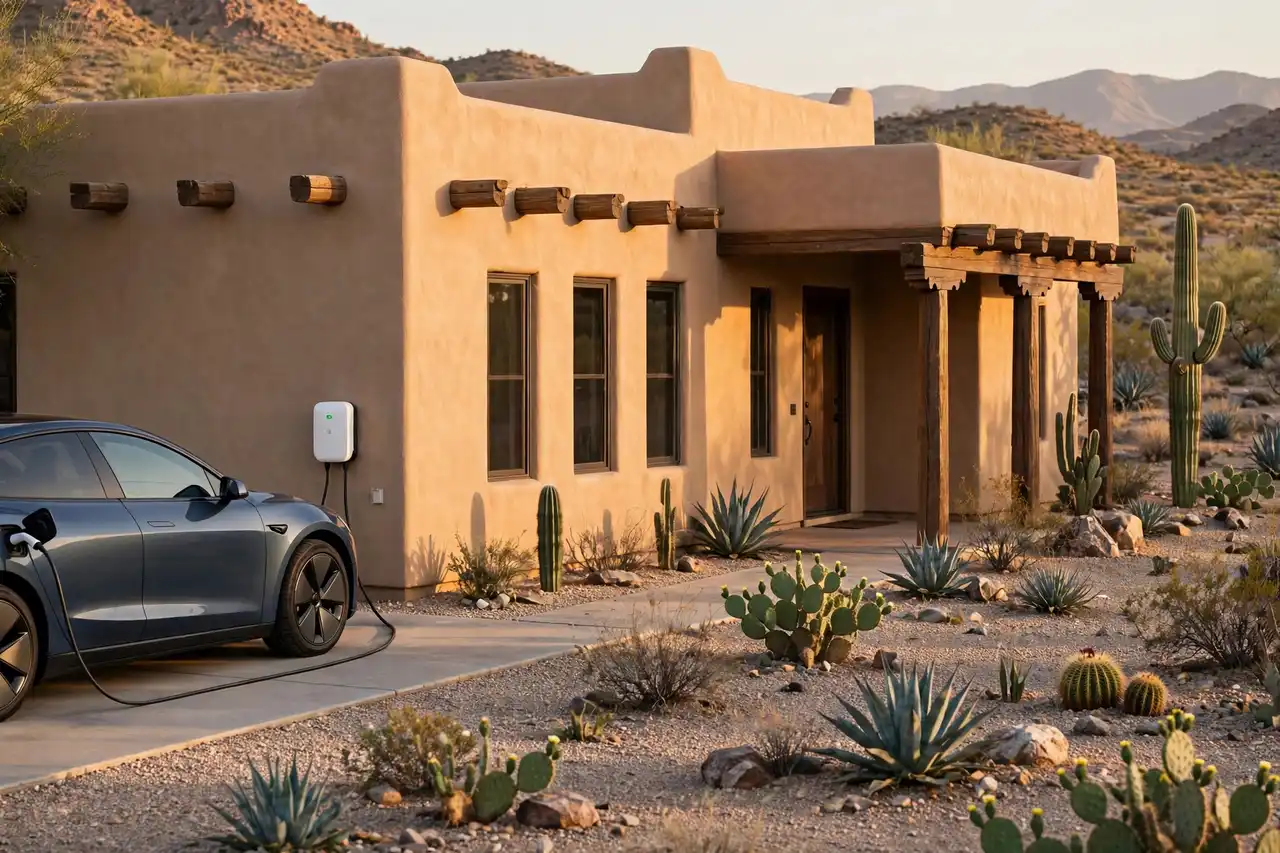
EV charging services in Wichita Falls
Three of the network's services lead this page because local conditions put them first; the remaining seven are one click away and equally available here. Each card states what the service involves — the matching itself is free of obligation until you accept an installer's quote.
Home EV Charger Installation in Wichita Falls
Think of it as plumbing for electrons, with the same virtues: correct sizing, honest materials, tidy runs, tested joints. The installers who do it weekly follow a pattern — assess, calculate, route, mount, configure, document — and the pattern is why their installs rarely make news afterwards.
In Wichita Falls: the core residential job in Wichita Falls: circuit, mounting, configuration and inspection in one visit pattern.
Dedicated Circuit & Electrical Panel Upgrade in Wichita Falls
A service change is the least reversible and most enabling job on this page: it re-bases the whole house's electrical life. Done inside the charger project, it shares the permit, the utility visit and the electrician's day with the circuit it makes room for.
In Wichita Falls: the job that surfaces wherever housing is older — and Wichita Falls's stock makes it a routine conversation, settled by a load calculation.
Level 2 Charger Installation in Wichita Falls
What is being bought is recovery rate. A Level 2 circuit returns in one overnight session what a household receptacle returns in a day and a half, and that margin is the difference between planning around the car and forgetting about it.
In Wichita Falls: the 240-volt step that turns overnight charging in Wichita Falls from a trickle into a full battery by morning.
Utility programs and electricity in Wichita Falls
Electricity in Wichita Falls comes from Oncor Electric Delivery Company LLC. Parts of the wider metro are served by City of Electra, Southwest Rural Elec Assn Inc, AEP Texas North Company. The utility matters twice over for a charger install: it sets the time-of-use rates that decide what overnight charging costs you, and it is the organisation that may — or may not — currently help pay for the equipment.
Plan on no rebate in Wichita Falls at the moment. In the sources checked for this page, Oncor Electric Delivery Company LLC publishes no residential charger rebate, Texas runs no state scheme for typical home installs, and the federal credit that once filled this gap closed on September 30, 2025. Installers quote the work; utilities fund programs; the second list is currently empty here, and any quote that implies otherwise should come with the program's published terms attached.
If your service includes a demand component, the charger's start time matters more than its size: staggered against the house's other big loads, the same circuit costs noticeably less to run across a year.
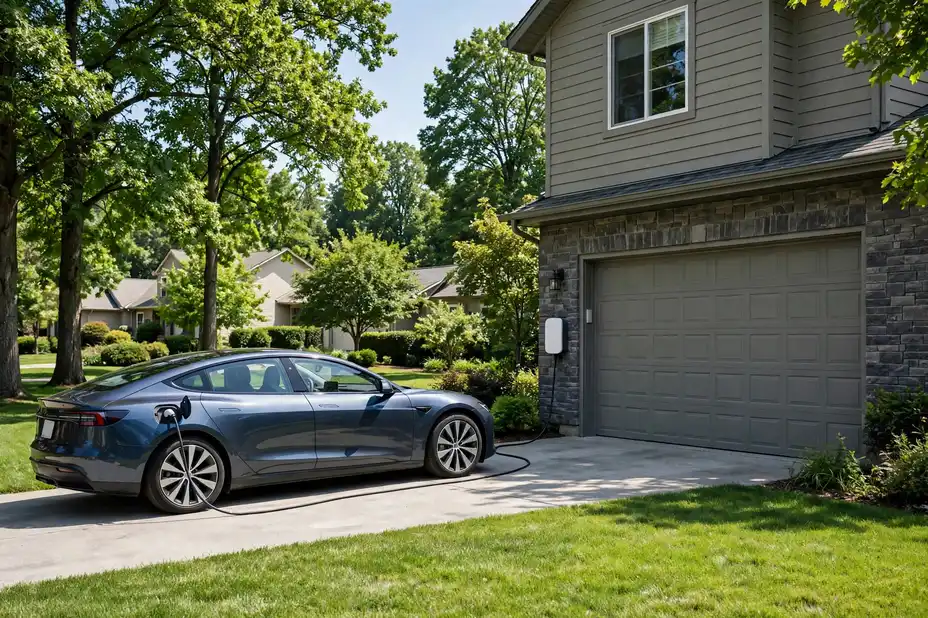
Condos, HOAs and the law in Texas
Texas has no statewide right-to-charge law. That needs saying plainly, because roundups on the internet sometimes claim otherwise: in the authoritative statute indexes checked for this page, no Texas law prevents a homeowners association or condominium from refusing a charger in a common or assigned space. Your community's own covenants and board govern the question in Wichita Falls.
No law does not mean no path. Boards approve chargers every week when the proposal answers their real concerns in advance: a licensed installer, a dedicated circuit that touches nothing shared, metering that keeps the electricity cost on the owner, insurance, and a commitment to restore the space on removal. Bring that package, in writing, before the meeting — not during it.
Our condo and HOA guide covers both kinds of state; in Wichita Falls the chapters on complete applications and cost allocation are the operative ones.
Climate, garages and charger placement
Parking orientation is a thermal decision in this metro: a car that bakes in western sun all afternoon starts its session hot, and both the car and the station manage heat before they manage charging. The overnight schedule is partly a shade strategy executed by clock.
The overnight window in a hot metro is a thermal decision before it is a tariff one. Air that has given up the day's heat asks less of the car's cooling, less of the garage, less of the equipment — the schedule that saves money is the same schedule that is kind to hardware, and both point after midnight.

Permits and inspection in Wichita Falls
The normal sequence is the same across the metro: the installer files the electrical permit, installs to the current National Electrical Code (a charger is a continuous load, so the circuit is sized at 125% of the draw), and the city inspects before the job is signed off. Keep the passed inspection record — insurers, future buyers and warranty claims all ask for it.

Neighbourhoods and ZIP codes served
The page covers 8 ZIP codes in and around Wichita Falls — including 76301, 76302, 76305, 76306, 76307, 76308, 76309, 76310 — across Wichita. If your ZIP is not in the first set shown, ask anyway: installer coverage follows the metro, not a postcode fence.
The same working area takes in the neighbouring localities of Sheppard Afb, Iowa Park, Burkburnett, Kamay, Electra — the county ring an installer based in Wichita Falls actually drives. Requests from those communities route exactly as city requests do: same services, same permit discipline, same local facts where they differ.
Wichita County accounts for 13 of the ZIP codes and 6 named postal localities in the research file, the nearest of them Sheppard Afb, Iowa Park, Burkburnett, Kamay, Electra. The survey counts 129,996 residents in the county, with a median household income of $63,524 and a median home value of $153,700. Measured across its ZIP codes, the Wichita Falls footprint runs about 10 miles north to south and 10 east to west, from ZIP 76301 to 76310 — the ground an installer based here actually covers in a working week.
Beyond the county seats, the working area takes in Sheppard Afb, Iowa Park, Holliday, Burkburnett, Henrietta, Petrolia, Kamay, Scotland, Randlett, Devol, Byers, Bluegrove, Windthorst, Grandfield, Electra, Archer City, Temple, Bellevue, Hastings, Ringgold, Ryan, Harrold, Walters, Waurika, Loveland, Chattanooga, Hollister, Addington, Terral, Faxon, Oklaunion, Megargel, Davidson, Olney, Geronimo, Nocona, Comanche, Bowie, Loving, Frederick, Jermyn — the named localities for which Wichita Falls is the nearest metro in the network (neighbouring metros' pages cover their own ground), each routing to the same installer-matching service.
The largest communities in that working area after Wichita Falls itself, by the GeoNames populated-place file: Lawton (population 96,655), Ardmore (population 25,176), Duncan (population 23,231), Altus (population 19,214), Burkburnett (population 11,043), Vernon (population 10,573), Graham (population 8,865), Iowa Park (population 6,344), Lone Grove (population 5,213), Bowie (population 5,126), Marlow (population 4,594), Jacksboro (population 4,424), Frederick (population 3,692), Hobart (population 3,621), Olney (population 3,179), Henrietta (population 3,014), Elgin (population 2,969), Nocona (population 2,939), Cache (population 2,925), Mangum (population 2,910). Charging demand follows those populations — the subdivisions and town centres where the next driveways, and the next panels, are.
Archer County reaches into the working area with 8,867 residents, a median household income of $72,159 and a median home value of $189,100; its localities on this page include Holliday, Scotland, Windthorst, Archer City, Megargel. Clay County reaches into the working area with 10,495 residents, a median household income of $80,114 and a median home value of $171,500; its localities on this page include Henrietta, Petrolia, Byers, Bluegrove, Bellevue. Jefferson County reaches into the working area with 253,878 residents, a median household income of $60,026 and a median home value of $169,500; its localities on this page include Hastings, Ryan, Waurika, Addington, Terral. Montague County reaches into the working area with 21,046 residents, a median household income of $64,545 and a median home value of $206,400; its localities on this page include Ringgold, Nocona, Bowie. Comanche County reaches into the working area with 13,950 residents, a median household income of $59,635 and a median home value of $155,600; its localities on this page include Chattanooga, Faxon, Geronimo.
| ZIP | Locality | County |
|---|---|---|
| 76301 | Wichita Falls | Wichita |
| 76307 | Wichita Falls | Wichita |
| 76309 | Wichita Falls | Wichita |
| 76302 | Wichita Falls | Wichita |
| 76306 | Wichita Falls | Wichita |
| 76308 | Wichita Falls | Wichita |
| 76311 | Sheppard Afb | Wichita |
| 76310 | Wichita Falls | Wichita |
| 76305 | Wichita Falls | Wichita |
| 76367 | Iowa Park | Wichita |
| 76366 | Holliday | Archer |
| 76354 | Burkburnett | Wichita |
| 76365 | Henrietta | Clay |
| 76377 | Petrolia | Clay |
| 76369 | Kamay | Wichita |
| 76379 | Scotland | Archer |
| 73562 | Randlett | Cotton |
| 73531 | Devol | Cotton |
| 76357 | Byers | Clay |
| 76352 | Bluegrove | Clay |
| 76389 | Windthorst | Archer |
| 73546 | Grandfield | Tillman |
| 76360 | Electra | Wichita |
| 76351 | Archer City | Archer |
| 73568 | Temple | Cotton |
| 76228 | Bellevue | Clay |
| 73548 | Hastings | Jefferson |
| 76261 | Ringgold | Montague |
| 73565 | Ryan | Jefferson |
| 76364 | Harrold | Wilbarger |
| 73572 | Walters | Cotton |
| 73573 | Waurika | Jefferson |
| 73553 | Loveland | Tillman |
| 73528 | Chattanooga | Comanche |
| 73551 | Hollister | Tillman |
| 73520 | Addington | Jefferson |
| 73569 | Terral | Jefferson |
| 73540 | Faxon | Comanche |
| 76373 | Oklaunion | Wilbarger |
| 76370 | Megargel | Archer |
| 73530 | Davidson | Tillman |
| 76374 | Olney | Young |
| 73543 | Geronimo | Comanche |
| 76255 | Nocona | Montague |
| 73529 | Comanche | Stephens |
| 76230 | Bowie | Montague |
| 76460 | Loving | Young |
| 73542 | Frederick | Tillman |
| 76459 | Jermyn | Jack |
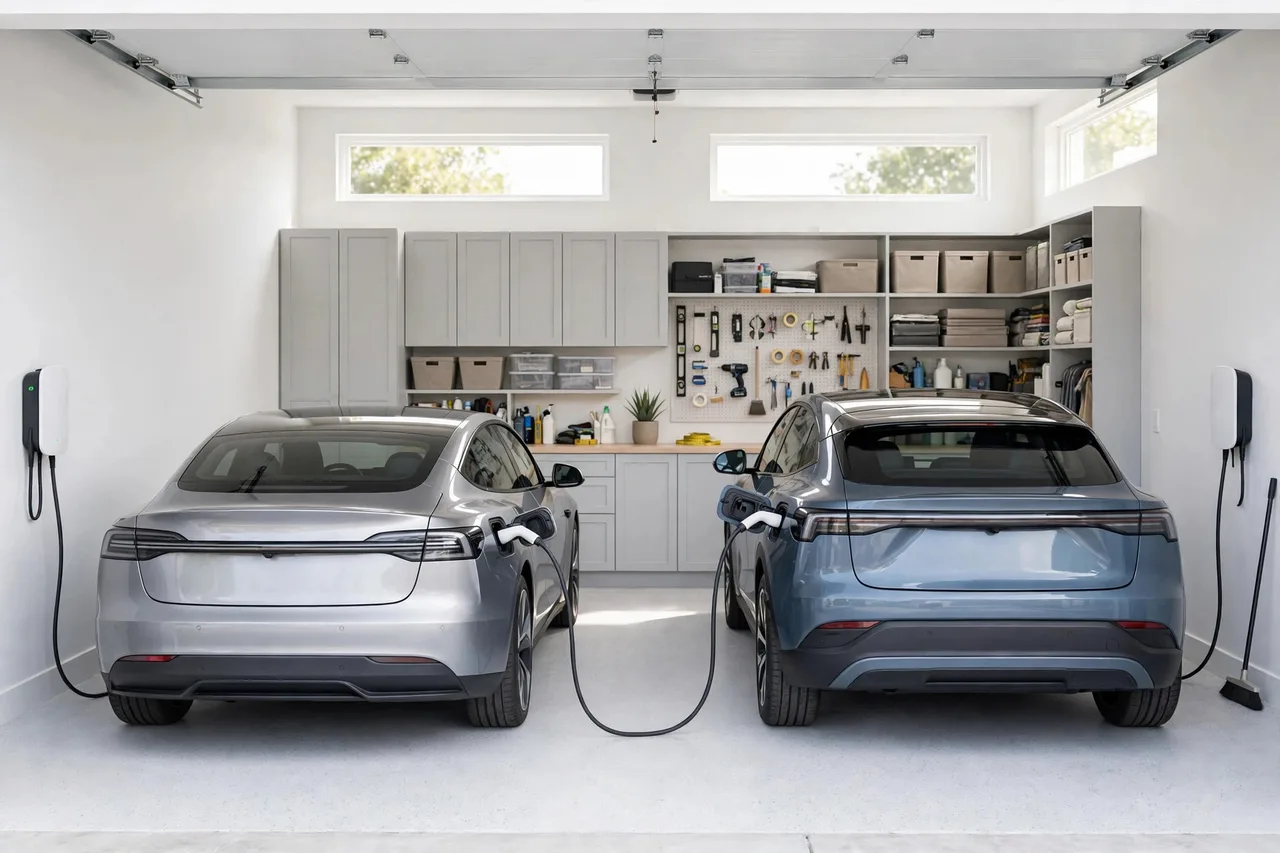
Planning the install: from panel to parking
A useful way to read any Wichita Falls quote is to ask which of three jobs it describes. Job one: the panel has room and the run is short — a circuit and a station. Job two: the panel is full — capacity work joins the quote, as an upgrade or as load management. Job three: the property adds people — an HOA, a landlord, a building's shared service — and the approvals timeline joins the electrical one. None of the three is a bad job; they are simply different scopes, and a clear quote says which one you are in.
Future-proofing, in this trade, is mostly conduit and capacity: an oversized conduit run costs little during the first install and everything later; a panel position reserved is a breaker that never has to move. If a second EV, a workshop or an electrified water heater is anywhere in your five-year picture, say so at the site visit.
Home charging know-how for Wichita Falls households
Whose meter? The metering designs
Every shared-parking install eventually asks the same question: whose electricity is this? The designs that answer it cleanly are few and known — a circuit from the owner's own meter where the geometry allows, a submeter on a shared supply with readings the association can audit, a networked station billing each user directly, or a flat arrangement the community's documents permit. The right choice is the one the building's wiring and its paperwork both support. What never works is leaving the question open: energy without an owner is the objection that sinks applications, so the metering design travels with the application, not after it.
Charging with an accessory dwelling
Houses with a second unit — a garage apartment, a granny flat, a rented studio — add a cast member to the charging design: another household. The questions multiply politely. Whose panel carries the circuit? Whose meter records the energy? Does the tenancy agreement mention the charger at all? None are hard questions, and all are cheaper answered at design time than at the first shared bill. Where the second unit has its own meter and panel, the design is simply two small domestic installs sharing an address.
Workplace charging as a policy, not a perk war
Workplace stations fail socially before they fail electrically: the same cars parked all day, visitors boxed out, no rule for the growing queue. The installs that work pair the hardware with a light policy from the start — session lengths matched to the shift, access that distinguishes staff from guests, and pricing or etiquette that keeps a full battery from squatting until six. The electrical design and the policy design are one conversation, because the dwell pattern the policy sets is the load pattern the circuit must serve.
Home as the road-trip base
A home charger changes road trips at both ends. Departure: the car leaves full, on the household's lowest-cost energy, at the household's chosen hour. Return: it arrives home low without anxiety, because the recovery is the driveway rather than a detour. The middle belongs to the public networks; the ends — the parts travellers actually remember — belong to the wall at home. Households that tour often find this, quietly, is the feature they would surrender last.

Frequently asked questions
Is the federal charger tax credit still available in Wichita Falls, TX?
Nothing is currently on offer that you should plan around. The federal 30C credit ended on September 30, 2025; Texas operates no replacement for typical home installs; and the sources checked for this page showed no live residential rebate from Oncor Electric Delivery Company LLC. Programs do reopen — on the utility's own pages, with dates. Until one does, the install stands or falls on its own merits.
Can my HOA or condo board in Wichita Falls, TX refuse my charger?
In Wichita Falls the honest answer is yes, they can refuse: Texas gives owners no statutory charging right, so the board's discretion governs. What changes outcomes is the quality of the file in front of them — drawings, metering, insurance, a named licensed installer — and a growing number of boards here approve exactly that file.
Does a Level 2 charger mean a panel upgrade for a Wichita Falls, TX home?
Start from the median, then verify: the median Wichita Falls home was built in 1972, and 66% of the stock predates 1980, so 100-amp panels are a normal sight here — and a normal candidate for either an upgrade or a load-management device. The load calculation distinguishes the two in one visit, and any quote that skips it is guessing with your money.
How much faster is Level 2 charging at home in Wichita Falls, TX?
Level 2 is several-fold faster in the only unit that matters — miles back per hour parked: roughly 25–40 against Level 1's 3–5. The exact figure follows the circuit: a 40-amp circuit and a 60-amp circuit are both Level 2, and the car's onboard limit may sit below either. Your installer matches the three numbers at the site visit.
What happens after I request an installer through this page?
Your request — service, Wichita Falls ZIP, property type and timing — goes to licensed local installers who cover Wichita Falls. They contact you directly to arrange a site visit and quote. PlugReady USA is the matching service, not the installer, and the sections above exist so you can judge any quote against the local facts.
How long does a typical home charger installation take in Wichita Falls, TX?
The electrical work itself is usually a half day to a day for a straightforward house — panel near the parking, one circuit, one station. Around it sit two calendars the installer does not control: the permit's issuance and the inspection visit, which follow the local department's queue. Ask any quote to separate the three timelines; a blended promise hides which part might slip.
Nearby cities in Texas
- EV charger installation in Abilene — about 120 miles from Wichita Falls, metro population 180,000
- EV charger installation in Dallas — about 121 miles from Wichita Falls, metro population 7,900,000
- EV charger installation in Waco — about 179 miles from Wichita Falls, metro population 285,000
- EV charger installation in Lubbock — about 187 miles from Wichita Falls, metro population 330,000
- EV charger installation in Killeen — about 197 miles from Wichita Falls, metro population 500,000
- EV charger installation in San Angelo — about 200 miles from Wichita Falls, metro population 125,000
- EV charger installation in Oklahoma City, OK — about 121 miles from Wichita Falls, metro population 1,450,000
- EV charger installation in Tulsa, OK — about 207 miles from Wichita Falls, metro population 1,050,000
- EV charger installation in Fort Smith, AR — about 247 miles from Wichita Falls, metro population 280,000
Ready to charge at home in Wichita Falls?
Send the essentials — what you need, where, and what kind of property — and a licensed local installer will pick it up from there.