EV Charger Installation in San Angelo, TX
Everything a San Angelo homeowner needs before booking a charger install — the panel question, the utility's current programs, the HOA law and the permit — sourced, dated and local.
Nobody buys an electric car for the wiring, yet the wiring is what the ownership experience quietly runs on. Getting it right in San Angelo means answering local questions with local facts. San Angelo itself is home to about 99,661 people. Statewide the registered fleet reached 387,400 battery-electric vehicles plus 79,900 plug-in hybrids through 2025, and the installers working this metro have settled into the patterns this page describes: the panel conversation, the utility's current position, the association's rules, and the inspection that closes the job.
Nothing on this page is decorative. The statutes are quoted because boards respect them, the survey numbers are shown because quotes should follow them, and the program status is stated plainly — including when the plain statement is that no verified program currently exists for San Angelo. Informed homeowners get better installs; this page is the informing.
What the Experian and AFDC registration data say about San Angelo: West TX. Translated out of market language: your neighbours are already charging at home, the permit office already knows the paperwork, and the installers already know the housing stock.
Context from the Census Bureau's survey of San Angelo: median household income $67,498; 54% of occupied homes are owner-occupied; 67% of housing units are single-unit detached houses. It is the profile of a city where the typical charger job is a homeowner job — scoped by the panel and the wire run, not by permissions.

Every city charges differently, and San Angelo's difference is legible in the data: an older housing fabric, where panel archaeology is a normal part of the first visit; a detached-house majority with a real attached and multifamily minority; buildings of five or more units hold a substantial share of homes, which keeps the multifamily sections of this page in daily use; owners hold a working majority, with renters a significant minority. Read the sections below through that profile and the local advice resolves into specifics — which questions are routine here, and which are rare.
The counts behind the percentages, for the record: San Angelo has 44,513 housing units on the survey's count, 41,727 of them occupied, and 22,599 owner-occupied households making their own electrical decisions. Detached houses number 29,716; homes built before 1980 number 21,234; units in buildings of five or more number 10,205. An installer's week in this city is a walk through exactly that distribution. The page's geography is equally concrete: 7 ZIP codes across Tom Green, centred near 31.48 degrees north latitude. The city anchors the San Angelo metropolitan area, home to roughly 125,000 people on the research file's metro estimate — the wider labour and housing market this page's installers work across.
The same survey release fills in the household economics around the housing stock: a median home value of $187,600, median gross rent of $1,153, per-capita income of $35,001, and a median resident age of 36. The movement data matters as much as the money data: 74% of San Angelo workers drive to work alone — the commute pattern home charging is built around; 9% work from home, a population whose cars charge on daytime and overnight schedules alike; 0% commute by public transit; 25% of adults hold a bachelor's degree or higher. The survey's vehicle table is the one an EV page should quote first: 3,411 of San Angelo's households have no vehicle at all, while 23,684 have two or more — the multi-car households for whom the second circuit is a when, not an if.
The cost-burden lines say who feels housing costs most in San Angelo: 40% of renters spend 30% or more of income on rent, and 16% of owners with mortgages spend the same share on housing costs. Family households are 63% of all households — the two-car, school-run demographic whose charging patterns this page's planning sections keep circling back to.
Read together, the local facts draw a recognisable picture. Pre-war and immediate post-war streets dominate the map, and their electrical fabric is stratified — original services beneath mid-century additions beneath modern subpanels, an archaeology the load calculation reads layer by layer. The housing variety shows up in the permit data as variety: single-family circuits in volume, building projects in ones and twos, each teaching the local workforce a different half of the trade.
High renter share also means charging follows the lease cycle: applications cluster at move-in, installations at renewal leverage, and the whole market breathes on the rental calendar. The specification pattern at this income band is disciplined: capacity for today's car and a conduit sized for tomorrow's, the upgrade deferred until the load calculation insists. Tariff design is the quiet policy: the shape of the overnight window, the demand charges commercial customers face, the interconnection queue's pace — all set in dockets the diligent can read.
A large fleet normalises the paperwork: boards have seen the application before, landlords have a standard answer, permit counters process charger circuits as routine volume. The permit counter in a smaller city is a conversation, not a queue: applications are read by people who may know the street, and complete paperwork is remembered kindly. The association dimension here runs on persuasion rather than statute — no state charging law frames the application, so the complete, professional proposal carries the whole argument, as the law section above explains.
The electrical reality in San Angelo homes
The survey's housing portrait for San Angelo opens with its median: a home built in 1981, in a stock where 48% of units predate 1980 and 67% stand detached on their own lots. 54% of occupied homes are owner-occupied. An installer reads those lines as a weather forecast: mostly settled conditions, with older wiring fronts moving through the pre-1980 districts. A housing stock this age leans on smaller electrical services — 100-amp panels are common, and fuse-era equipment still turns up in the oldest streets. For many of those homes the honest answer is a panel upgrade or a load-management device before the charger circuit goes in, and a good installer will show you the load calculation rather than asking you to take it on faith. Detached houses matter for a practical reason: a garage or driveway on your own lot means the charger, the car and the circuit are all under one roof and one owner's control, which is the simplest configuration there is.
One further survey line belongs in any San Angelo install conversation: 63% of the city's homes heat with electricity — 24,783 households whose panels already carry a major winter load before a charger is contemplated. Electric heat and EV charging are the two largest discretionary loads a house can host, and where they coincide, the load calculation stops being a formality.
One further split matters for how this page is organised: about 19,128 of San Angelo's occupied homes are renter-occupied. Everything above assumes you can approve your own electrical work; where you cannot, the approval layer — landlord or association — becomes part of the job, which is why the law section carries unusual weight here.
The city's stock is not all houses: 23% of units are in structures of five or more. Shared buildings mean shared panels, assigned parking and association process — the substance of the multifamily sections below.
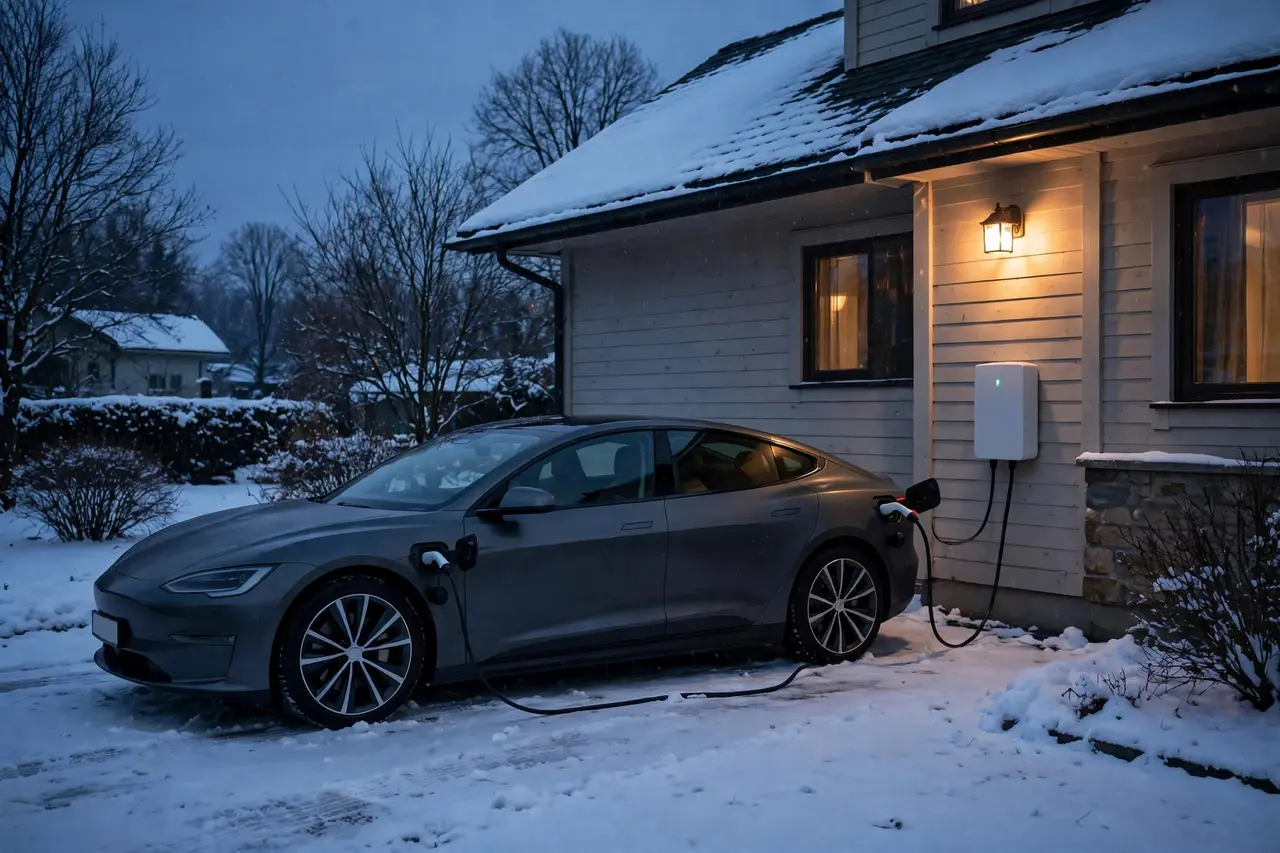
EV charging services in San Angelo
An installer's work in San Angelo usually starts with one of the three lead services below. The cards describe the job as it is actually scoped; the grid underneath carries the rest of the menu.
Home EV Charger Installation in San Angelo
The residential standard: a station where the car sleeps, on a circuit of its own, installed under permit. Variations are all local — the panel's spare room, the run's route through the house's fabric, and the parking pattern the cable has to serve.
In San Angelo: usually the first job a new EV household in San Angelo books, scoped to the panel the house already has.
Dedicated Circuit & Electrical Panel Upgrade in San Angelo
The capacity project behind the charger project. A load calculation decides whether the answer is a service increase, a panel replacement, a subpanel or load management — and the work is sequenced with the utility and the inspector so the house is live again the same day in most cases.
In San Angelo: the job that surfaces wherever housing is older — and San Angelo's stock makes it a routine conversation, settled by a load calculation.
Level 2 Charger Installation in San Angelo
The step up from a household outlet to a real circuit: 240 volts, sized as a continuous load, delivering several times the overnight range of a Level 1 cord. The craft is in matching circuit, station configuration and vehicle acceptance so the three agree.
In San Angelo: the 240-volt step that turns overnight charging in San Angelo from a trickle into a full battery by morning.
Utility programs and electricity in San Angelo
Electricity in San Angelo comes from Concho Valley Elec Coop Inc. Parts of the wider metro are served by Southwest Texas Elec Coop, Inc, Oncor Electric Delivery Company LLC, Coleman County Elec Coop, Inc. The utility matters twice over for a charger install: it sets the time-of-use rates that decide what overnight charging costs you, and it is the organisation that may — or may not — currently help pay for the equipment.
Plan on no rebate in San Angelo at the moment. In the sources checked for this page, Concho Valley Elec Coop Inc publishes no residential charger rebate, Texas runs no state scheme for typical home installs, and the federal credit that once filled this gap closed on September 30, 2025. Installers quote the work; utilities fund programs; the second list is currently empty here, and any quote that implies otherwise should come with the program's published terms attached.
Before the install, it is worth a two-minute look at your tariff. Many Concho Valley Elec Coop Inc customers can move to a time-of-use plan where overnight energy is charged at a lower rate, and a scheduled charger makes that saving automatic.
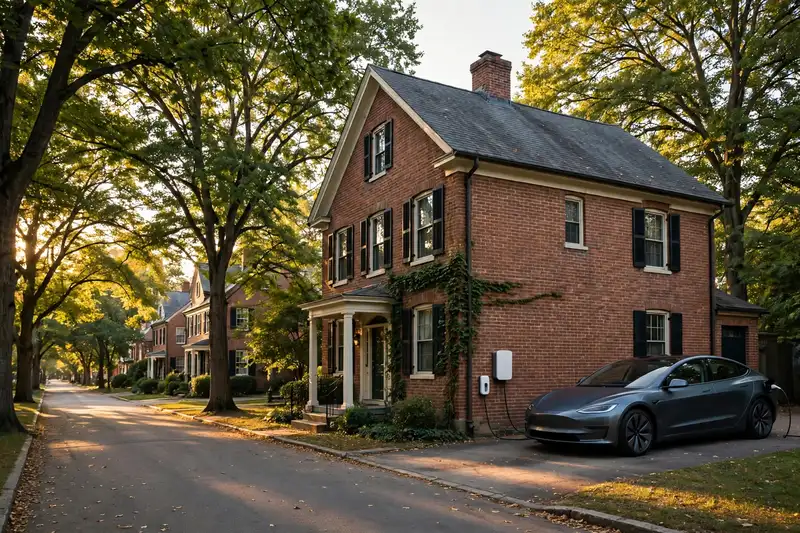
Condos, HOAs and the law in Texas
No statute promises a charger approval in Texas. Unlike the states that have enacted right-to-charge laws, Texas leaves the question entirely to each community's covenants and board discretion. For San Angelo owners that is not the end of the road — it is a sign that the negotiation, the metering design and the written application carry the weight a statute would otherwise carry.
Owners of single-family homes in HOA communities should also check the covenants before assuming the driveway is uncomplicated: exterior-equipment and architectural-approval clauses can apply to a visible wall-mounted station even where the garage interior is entirely the owner's business.
The general process, minus the statute, is still covered in our guide to installing an EV charger in a condo or HOA community — most of its application-package advice applies in San Angelo exactly as written.
Climate, garages and charger placement
Thermal habits separate durable installs from tired ones in this region: connectors holstered out of the sun, enclosures with room to breathe, and charge sessions pushed past midnight when the air gives the equipment its easiest working conditions of the day.
Parking orientation is a thermal decision in this metro: a car that bakes in western sun all afternoon starts its session hot, and both the car and the station manage heat before they manage charging. The overnight schedule is partly a shade strategy executed by clock.

Permits and inspection in San Angelo
Expect the permit to name the circuit, the breaker and the equipment. An installer who suggests skipping it is saving an afternoon by spending your liability; the inspection is also your independent check that the continuous-load sizing was done properly.

Neighbourhoods and ZIP codes served
The page covers 7 ZIP codes in and around San Angelo — including 76901, 76902, 76903, 76904, 76905, 76906, 76909 — across Tom Green. If your ZIP is not in the first set shown, ask anyway: installer coverage follows the metro, not a postcode fence.
The same working area takes in the neighbouring localities of Goodfellow Afb, Wall, Veribest, Carlsbad, Knickerbocker, Christoval, Water Valley, Mereta, Vancourt — the county ring an installer based in San Angelo actually drives. Requests from those communities route exactly as city requests do: same services, same permit discipline, same local facts where they differ.
Tom Green County accounts for 16 of the ZIP codes and 10 named postal localities in the research file, the nearest of them Goodfellow Afb, Wall, Veribest, Carlsbad, Knickerbocker. The survey counts 119,577 residents in the county, with a median household income of $68,370 and a median home value of $197,000. Measured across its ZIP codes, the San Angelo footprint runs about 4 miles north to south and 5 east to west, from ZIP 76901 to 76909 — the ground an installer based here actually covers in a working week.
Beyond the county seats, the working area takes in Goodfellow Afb, Wall, Veribest, Carlsbad, Knickerbocker, Christoval, Water Valley, Miles, Mereta, Tennyson, Vancourt, Eola, Mertzon, Lowake, Rowena, Robert Lee, Bronte, Paint Rock, Norton, Ballinger, Sterling City, Eden, Silver, Millersview, Eldorado, Barnhart, Voss, Doole, Fort Mc Kavett, Melvin, Menard, Gouldbusk — the named localities for which San Angelo is the nearest metro in the network (neighbouring metros' pages cover their own ground), each routing to the same installer-matching service.
The wider working area also reaches Blackwell, Wingate, Winters, Talpa, Maryneal, Valera, Novice, Nolan, Big Lake, Ovalo, Goldsboro — ground shared with neighbouring metros, where installers cross the same county lines in both directions.
ZIP codes in that shared ground include 76882, 76884, 76932, 79506, 79519, 79535, 79537, 79538, 79541, 79566, 79567.
The largest communities in that working area after San Angelo itself, by the GeoNames populated-place file: Brady (population 5,549), Ballinger (population 3,767), Big Lake (population 3,315), Ozona (population 3,225), Grape Creek (population 3,154), Sonora (population 2,863), Eden (population 2,786), Junction (population 2,444), Mason (population 2,139), Eldorado (population 1,810), Menard (population 1,420), Sterling City (population 1,049), Robert Lee (population 1,020), Bronte (population 972), Miles (population 864), Mertzon (population 758), Carlsbad (population 719), Christoval (population 504), Paint Rock (population 266). Charging demand follows those populations — the subdivisions and town centres where the next driveways, and the next panels, are.
Concho County reaches into the working area with 3,328 residents, a median household income of $65,795 and a median home value of $107,400; its localities on this page include Eola, Lowake, Paint Rock, Eden, Millersview. Runnels County reaches into the working area with 9,874 residents, a median household income of $62,632 and a median home value of $109,300; its localities on this page include Miles, Rowena, Norton, Ballinger. Coke County reaches into the working area with 3,353 residents, a median household income of $43,333 and a median home value of $117,900; its localities on this page include Tennyson, Robert Lee, Bronte, Silver. Irion County reaches into the working area with 1,409 residents, a median household income of $70,357 and a median home value of $204,400; its localities on this page include Mertzon, Barnhart. Coleman County reaches into the working area with 7,833 residents, a median household income of $49,159 and a median home value of $92,500; its localities on this page include Voss, Gouldbusk.
| ZIP | Locality | County |
|---|---|---|
| 76901 | San Angelo | Tom Green |
| 76903 | San Angelo | Tom Green |
| 76902 | San Angelo | Tom Green |
| 76906 | San Angelo | Tom Green |
| 76909 | San Angelo | Tom Green |
| 76904 | San Angelo | Tom Green |
| 76905 | San Angelo | Tom Green |
| 76908 | Goodfellow Afb | Tom Green |
| 76957 | Wall | Tom Green |
| 76886 | Veribest | Tom Green |
| 76934 | Carlsbad | Tom Green |
| 76939 | Knickerbocker | Tom Green |
| 76935 | Christoval | Tom Green |
| 76958 | Water Valley | Tom Green |
| 76861 | Miles | Runnels |
| 76940 | Mereta | Tom Green |
| 76953 | Tennyson | Coke |
| 76955 | Vancourt | Tom Green |
| 76937 | Eola | Concho |
| 76941 | Mertzon | Irion |
| 76855 | Lowake | Concho |
| 76875 | Rowena | Runnels |
| 76945 | Robert Lee | Coke |
| 76933 | Bronte | Coke |
| 76866 | Paint Rock | Concho |
| 76865 | Norton | Runnels |
| 76821 | Ballinger | Runnels |
| 76951 | Sterling City | Sterling |
| 76837 | Eden | Concho |
| 76949 | Silver | Coke |
| 76862 | Millersview | Concho |
| 76936 | Eldorado | Schleicher |
| 76930 | Barnhart | Irion |
| 76888 | Voss | Coleman |
| 76836 | Doole | McCulloch |
| 76841 | Fort Mc Kavett | Menard |
| 76858 | Melvin | McCulloch |
| 76859 | Menard | Menard |
| 76845 | Gouldbusk | Coleman |

Planning the install: from panel to parking
Walk the route before anyone quotes the route. Between San Angelo's panels and its parking spaces lie the job's real variables: a finished ceiling or an open one, a straight shot through a shared wall or a tour of the attic, forty feet of conductor or a hundred and forty. Installers who quote from photographs quote the average of all routes; installers who walk yours quote the one you actually have. The site visit is where the quote stops being a genre and becomes a document.
Plan for the household you will be, not just the car you have. A second EV is the most common reason a charger circuit gets revisited, and the cheap moment to prepare for it — conduit sized up, panel capacity reserved, station placement that serves two bays — is during the first install, while the permit is open and the electrician is already in the panel.
Home charging know-how for San Angelo households
Historic homes, modern loads
A house can be historically significant and electrically contemporary at once, but the marriage takes choreography: circuits routed through secondary spaces, equipment kept off protected fabric, the panel's growth planned where the preservation easement permits. The installers who do this work well treat the house's rules as a design brief rather than an obstacle, and the result — a period street front, a thoroughly modern garage — is the quiet norm in historic districts now.
Charging alongside rooftop solar
A house that generates as well as consumes plans its charging differently. The naive pattern — charge at night, export by day — is often fine; the refined pattern shifts some charging into the solar hours on home-working days, stores the commute in the car when the panels are producing, and leans on the overnight window only for the balance. None of this changes the circuit; it changes the schedule, and occasionally the case for a station whose output can follow the house's generation. Tell the installer the array exists — it belongs in the first conversation.
Planning for the second EV
The second electric car rarely arrives as a surprise — it is the household's own verdict on the first one. Planning for it at the first install costs little: conduit sized a step up, panel capacity reserved on the schedule, and a station position that can serve a second bay or share its circuit through power-sharing equipment. Retrofitting the same readiness later means reopening finished work. Installers ask about the five-year picture during the site visit because the honest answers change today's scope more cheaply than any other conversation in the project.
Bidirectional charging, honestly framed
Vehicles that can return energy to a house or the grid exist, and the standards enabling them are settling — but for most households today it is a horizon technology, not a purchase category: it needs a compatible vehicle, bidirectional equipment, utility interconnection approval and a tariff that rewards it. None of that changes today's installation advice, except in one detail: conduit and panel capacity installed generously now are the same provisions a future bidirectional setup would want. Buy for the car you have; leave room for the one the industry is promising.

Frequently asked questions
Is the federal charger tax credit still available in San Angelo, TX?
Checked and dated: in the sources reviewed for this page, Concho Valley Elec Coop Inc runs no residential charger rebate, Texas runs no home-charger programme, and the federal credit that once filled the gap ended on September 30, 2025. If a salesperson's spreadsheet shows a rebate line for a San Angelo install, the published programme page is the only acceptable evidence.
What can my HOA in San Angelo, TX do about a charger install?
They hold the stronger hand in Texas: with no right-to-charge statute on the books, a San Angelo association's covenants are the law of the car park. The applications that succeed anyway share a shape — owner-funded, licensed installer, metered energy, insured, reversible — because they answer the board's risk questions in advance and in writing.
Panel upgrade or not — how do San Angelo, TX homeowners find out?
It depends on the panel, and San Angelo's housing makes the question common: the median home here was built in 1981, and about 48% of housing units predate 1980. Homes with 100-amp service that is already well used often need an upgrade or a load-management device; homes with 200-amp service and spare breaker space usually do not. A load calculation during the site visit settles it — ask to see it.
How quickly will a Level 2 charger fill my car in San Angelo, TX?
Level 1 — the cord in the boot, on a normal outlet — returns about 3–5 miles of range an hour. Level 2 on its own 240-volt circuit returns roughly 25–40. A San Angelo commuter who parks at seven and leaves at seven stops doing battery arithmetic entirely.
How does the installer matching on this page work?
Your request is matched to licensed installers covering San Angelo, Texas — service, ZIP, property type and timing travel with it. The installer who takes it arranges the site visit and quotes in writing; PlugReady USA's part is the research on this page and the introduction, and your contract is with the installer throughout.
Can a charger be added to a detached garage in San Angelo?
Yes — the charger itself is the same; the route to it is the project. From the house panel, a buried conduit run reaches the garage, or a subpanel goes in out there where distance and future loads argue for it. In San Angelo, with about 67% of homes detached, local installers quote this shape routinely — the trench and the run, settled from a site walk, are the substance of it.
Nearby cities in Texas
- EV charger installation in Abilene — about 80 miles from San Angelo, metro population 180,000
- EV charger installation in Midland — about 94 miles from San Angelo, metro population 180,000
- EV charger installation in Odessa — about 105 miles from San Angelo, metro population 170,000
- EV charger installation in Killeen — about 154 miles from San Angelo, metro population 500,000
- EV charger installation in Lubbock — about 164 miles from San Angelo, metro population 330,000
- EV charger installation in Austin — about 169 miles from San Angelo, metro population 2,400,000
- EV charger installation in Oklahoma City, OK — about 320 miles from San Angelo, metro population 1,450,000
- EV charger installation in Las Cruces, NM — about 351 miles from San Angelo, metro population 220,000
- EV charger installation in Shreveport, LA — about 378 miles from San Angelo, metro population 395,000
Ready to charge at home in San Angelo?
Send the essentials — what you need, where, and what kind of property — and a licensed local installer will pick it up from there.