EV Charger Installation in Killeen, TX
Everything a Killeen homeowner needs before booking a charger install — the panel question, the utility's current programs, the HOA law and the permit — sourced, dated and local.
Homeowners in Killeen tend to research the charger first and the circuit second; installers work the other way round. The circuit is the project — its capacity, its route, its paperwork — and the station is the appliance that hangs off the end of it. Killeen itself is home to about 160,618 people, and Texas's roads carried 387,400 battery-electric vehicles and 79,900 plug-in hybrids by the end of 2025. This page is organised the installer's way: panel and housing realities first, then the utility's programs and tariffs, the law for shared properties, climate placement, and the permit that closes the job out properly.
How to read this page in four minutes: the data band tells you what kind of housing city Killeen is; the utility section tells you whether money is on the table; the law section tells you whether permission is a process or a negotiation; and the permit section tells you what proof the finished job leaves behind. The rest is elaboration.
The demand picture for the Killeen–Temple metro, from the registration data this site is built on: Fort Hood corridor; TX stock. Registration counts are the honest way to size a charging market — they count households, not headlines — and they are why Killeen sits where it does in our build order (rank 113 of 300 metros, Tier C).
Read the survey numbers as an installer reads them. A median household income of $60,141 and an owner-occupation rate of 49% describe a city where most charger decisions are made by the person who owns the panel — no landlord layer, no board layer for the typical job. The 61% of homes that are single-unit detached are the straightforward installs: garage or driveway, one owner, one circuit.

Put the survey together and Killeen's charging profile reads like this: a comparatively young housing fabric, where modern services are the default; a detached-house majority with a real attached and multifamily minority; buildings of five or more units are a visible minority of the stock; and renters form a large share of households, so the landlord conversation is a first-class topic here. That combination — more than any single number — is what the installers working here plan around, and it is the lens for everything on this page.
Keep six figures and you keep Killeen's whole electrical character: 66,889 housing units; 60,609 occupied homes; 29,807 owner-occupied; 40,747 detached houses; 15,943 pre-1980 homes; 9,643 homes in buildings of five or more units. Percentages elsewhere on this page are these numbers in disguise — the counts are the originals, and they are the numbers a local installer's experience is actually made of. The page's geography is equally concrete: 6 ZIP codes across Bell, centred near 31.12 degrees north latitude. The city anchors the Killeen–Temple metropolitan area, home to roughly 500,000 people on the research file's metro estimate — the wider labour and housing market this page's installers work across.
The same survey release fills in the household economics around the housing stock: a median home value of $239,200, median gross rent of $1,225, per-capita income of $27,518, and a median resident age of 30. The movement data matters as much as the money data: 74% of Killeen workers drive to work alone — the commute pattern home charging is built around; 6% work from home, a population whose cars charge on daytime and overnight schedules alike; 1% commute by public transit; 20% of adults hold a bachelor's degree or higher. The survey's vehicle table is the one an EV page should quote first: 4,119 of Killeen's households have no vehicle at all, while 33,647 have two or more — the multi-car households for whom the second circuit is a when, not an if.
Two burden statistics frame the economics: in Killeen, 54% of renters and 0% of mortgage-holding owners are housing-cost burdened at the standard 30% threshold. And 67% of households are family households, the segment most likely to run the two-vehicle, two-schedule pattern the second-vehicle planning notes address.
What follows is the city read as an electrical place rather than a dot on a map. Where the stock is this new, the city's charging story is a volume story — street after street of similar houses taking similar circuits, and installer pricing sharpened by repetition. Where form is mixed, advice must be conditional — the honest page, like the honest installer, keeps asking which housing the reader actually lives in before prescribing.
Renter weight gives this metro's charging story a negotiation at its centre: the circuit is easy, the permission is the project, and the paperwork patterns in the guides matter as much as any load calculation. Middle incomes discipline the specification toward the durable middle: not the minimum circuit that passes, not the maximal one that impresses — the one the load calculation actually indicates, documented. The regulatory calendar is the programme calendar: rate cases, electrification plans and pilot approvals move through the commission on public timetables, and installers plan their marketing around them.
The state fleet is well past the early-adopter chapter: dealer lots, workplace car parks and school runs all show it, and the installer market has professionalised in response. At this scale the page's role sharpens — in a market without a crowd of specialists to interview, the household's own preparation carries more of the project's quality. Boards here decide without a statutory script, which makes precedent the currency: the first well-built application in a community quietly writes the policy for everyone after it.
The electrical reality in Killeen homes
Four numbers organise everything an installer expects in Killeen: median build year 1999; 24% of units built before 1980; 61% of the stock detached; 49% of occupied homes owner-occupied. Capacity, circuit routes and approval layers all correlate with those four. The paragraphs below are their commentary. Newer stock, newer services: 200-amp panels are the norm in the recent subdivisions, and the charger conversation moves quickly from 'can we' to 'where exactly'. The variables left are the run's length and the station's position relative to the car's port. Porches, carports and parking pads carry a real share of this city's charging, because the stock predates the two-car garage as a standard feature — outdoor-rated equipment is a local staple, not an edge case.
Heating fuel is the survey's quiet clue to panel life: in Killeen, 89% of homes heat electrically (53,396 households), against 8% heating with gas. A house already heating electrically has a service sized with that load in its history; a gas-heated house may have capacity to spare — either way the fuel mix is part of what the installer is reading.
One further split matters for how this page is organised: about 30,802 of Killeen's occupied homes are renter-occupied. Everything above assumes you can approve your own electrical work; where you cannot, the approval layer — landlord or association — becomes part of the job, which is why the law section carries unusual weight here.
The city's stock is not all houses: 14% of units are in structures of five or more. Shared buildings mean shared panels, assigned parking and association process — the substance of the multifamily sections below.
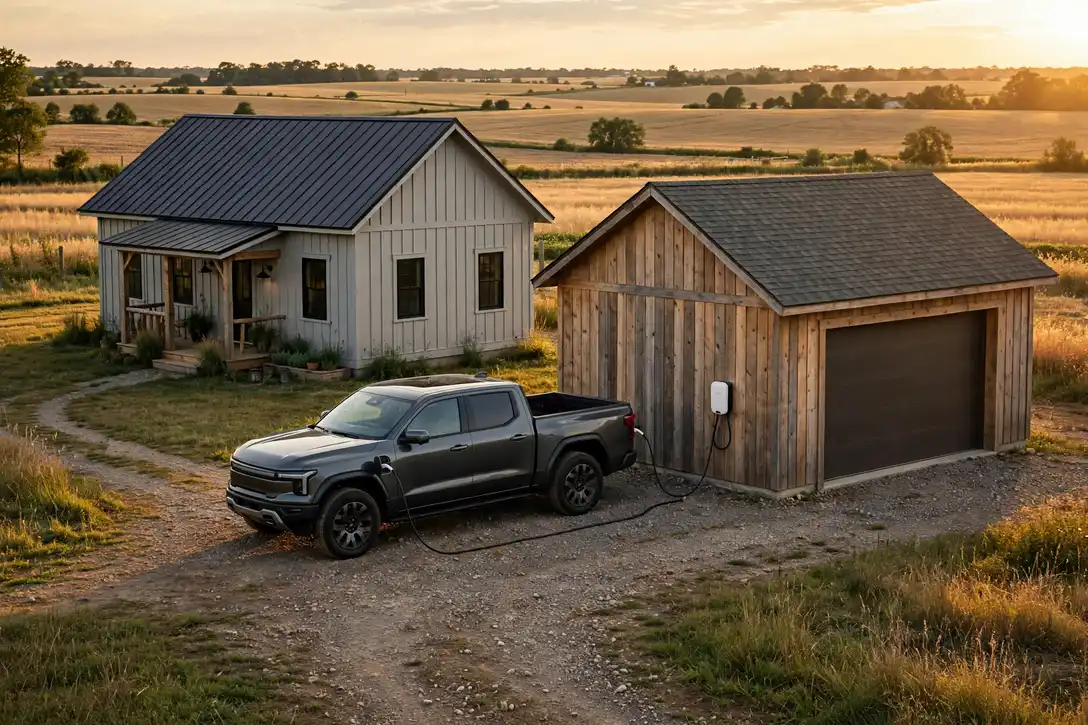
EV charging services in Killeen
The full menu runs to ten services; the three cards at the top are the ones Killeen's housing stock and state law push to the front. Everything links to its national service page for scope and process in full.
Home EV Charger Installation in Killeen
The core service, stated plainly: a dedicated 240-volt circuit run from your panel to your parking place, a station mounted and configured to that circuit, and the paperwork closed out with the permit office. Everything else in this section of the site exists to support or unblock this one job.
In Killeen: usually the first job a new EV household in Killeen books, scoped to the panel the house already has.
Level 2 Charger Installation in Killeen
What is being bought is time: the hours between arriving home and leaving again, converted into range at 240 volts. The conversion hardware is ordinary — breaker, conductor, station — and the design work is matching the three to the household's miles and the panel's arithmetic.
In Killeen: what most Killeen drivers mean when they say they want 'a real charger' — 240 volts, sized to the circuit.
Load Management & Smart Charging Setup in Killeen
Smart scheduling pairs with smart limiting here — charge inside the cheap rate window, at whatever rate the house can spare at that moment. For many homes it converts an upgrade-sized problem into a device-sized one, with the same full battery by morning.
In Killeen: letting a full Killeen panel tell the truth about its valleys.
Utility programs and electricity in Killeen
Electricity in Killeen comes from Pedernales Electric Coop, Inc. Parts of the wider metro are served by Heart of Texas Electric Coop, Bartlett Electric Coop, Inc, Oncor Electric Delivery Company LLC. The utility matters twice over for a charger install: it sets the time-of-use rates that decide what overnight charging costs you, and it is the organisation that may — or may not — currently help pay for the equipment.
Rebate archaeology is a local sport: an old Pedernales Electric Coop, Inc program page, a neighbour's 2023 install story, a screenshot of terms nobody can date. The record for Killeen, as checked for this page, is simpler. The federal credit closed on September 30, 2025; Texas operates no home-charger program; and no active Pedernales Electric Coop, Inc residential charger rebate appears in current published sources. Funded rounds do reopen in this industry — on the utility's timetable, announced on the utility's site, and worth exactly what their published terms say on the day you read them.
While you are in the tariff pages, look at how the plan values the evening ramp — the hours when cooking, cooling and charging would otherwise stack. A charger that starts after the ramp is the simplest scheduling decision in home charging, and it is set once.
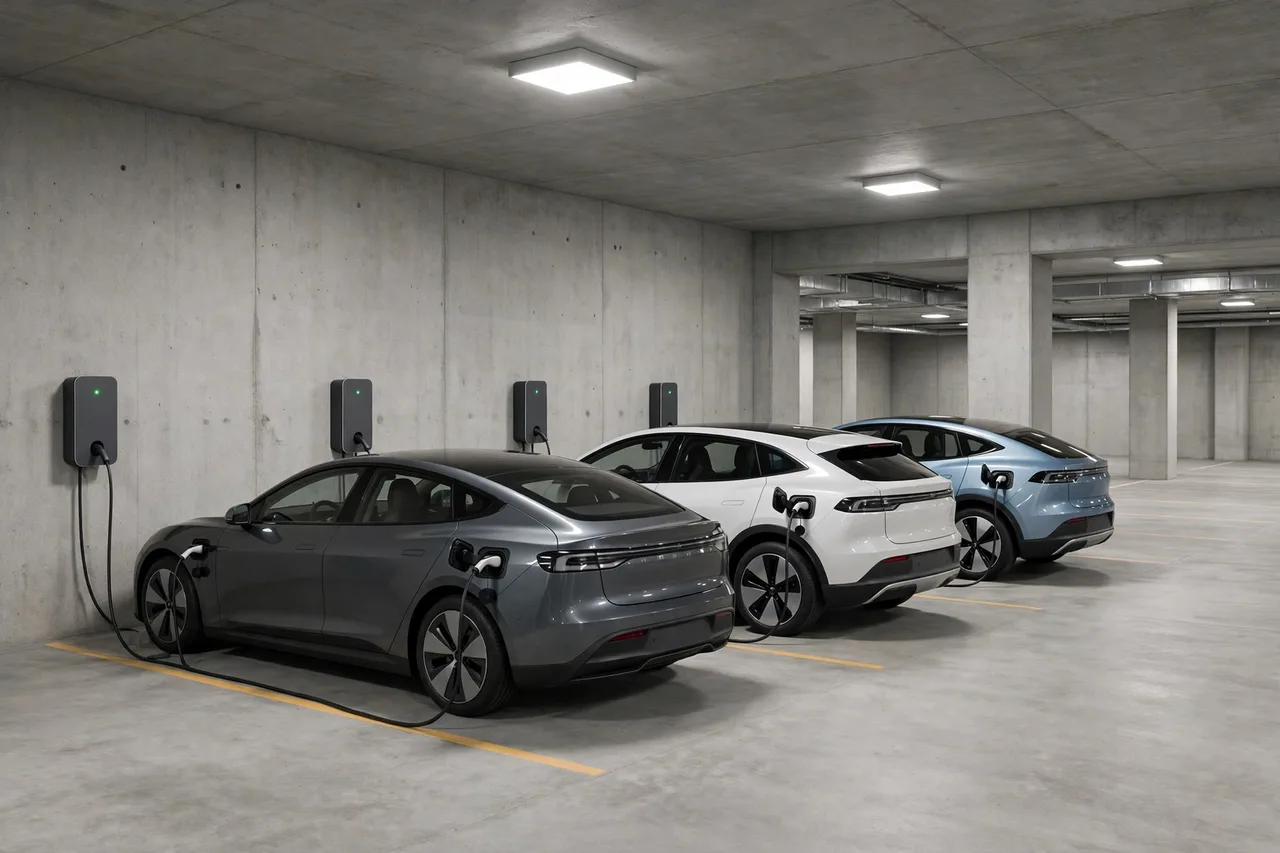
Condos, HOAs and the law in Texas
No statute promises a charger approval in Texas. Unlike the states that have enacted right-to-charge laws, Texas leaves the question entirely to each community's covenants and board discretion. For Killeen owners that is not the end of the road — it is a sign that the negotiation, the metering design and the written application carry the weight a statute would otherwise carry.
Owners of single-family homes in HOA communities should also check the covenants before assuming the driveway is uncomplicated: exterior-equipment and architectural-approval clauses can apply to a visible wall-mounted station even where the garage interior is entirely the owner's business.
For the full playbook — application contents, metering designs, the questions boards ask — see the condo and HOA charging guide. In Killeen it should be read as a negotiation manual, because negotiation is what the absence of a statute leaves you.
Climate, garages and charger placement
The overnight window in a hot metro is a thermal decision before it is a tariff one. Air that has given up the day's heat asks less of the car's cooling, less of the garage, less of the equipment — the schedule that saves money is the same schedule that is kind to hardware, and both point after midnight.
In this climate the overnight window does double duty — rates are kinder and so are temperatures. Scheduling the charge for the small hours lets the car and the station work in the coolest air the day offers, which is easier on both. An installer who raises scheduling unprompted during the site visit is telling you they install in this heat regularly.

Permits and inspection in Killeen
The normal sequence is the same across the metro: the installer files the electrical permit, installs to the current National Electrical Code (a charger is a continuous load, so the circuit is sized at 125% of the draw), and the city inspects before the job is signed off. Keep the passed inspection record — insurers, future buyers and warranty claims all ask for it.

Neighbourhoods and ZIP codes served
The page covers 6 ZIP codes in and around Killeen — including 76540, 76541, 76542, 76543, 76547, 76549 — across Bell. If your ZIP is not in the first set shown, ask anyway: installer coverage follows the metro, not a postcode fence.
The same working area takes in the neighbouring localities of Fort Hood, Nolanville, Harker Heights, Heidenheimer, Temple, Belton, Salado, Pendleton, Little River Academy, Troy, Holland, Bartlett, Rogers — the county ring an installer based in Killeen actually drives. Requests from those communities route exactly as city requests do: same services, same permit discipline, same local facts where they differ.
Bell County accounts for 23 of the ZIP codes and 14 named postal localities in the research file, the nearest of them Fort Hood, Nolanville, Harker Heights, Heidenheimer, Temple. The survey counts 386,897 residents in the county, with a median household income of $68,865 and a median home value of $241,000. Measured across its ZIP codes, the Killeen footprint runs about 8 miles north to south and 10 east to west, from ZIP 76540 to 76549 — the ground an installer based here actually covers in a working week.
Beyond the county seats, the working area takes in Fort Hood, Nolanville, Harker Heights, Copperas Cove, Heidenheimer, Temple, Belton, Flat, Kempner, Salado, Mound, Briggs, Gatesville, Moody, Florence, Pendleton, Little River Academy, Jarrell, Schwertner, Troy, Holland, Lampasas, Walburg, Bartlett, Evant, Purmela, Rogers, Granger, Jonesboro, Bertram, Davilla, Buckholts, Lometa, Burnet, Star, Bend, Tow, Hamilton — the named localities for which Killeen is the nearest metro in the network (neighbouring metros' pages cover their own ground), each routing to the same installer-matching service.
The wider working area also reaches Oglesby, Georgetown, Eddy, Mc Gregor, Bruceville, Weir, Round Rock, Liberty Hill, Lorena, Crawford, Lott, Leander, Hewitt, Chilton, Woodway, Valley Mills, Waco, Rosebud, Taylor, Hutto, Austin, Cedar Park, Satin, Burlington, Thrall, Cranfills Gap, China Spring — ground shared with neighbouring metros, where installers cross the same county lines in both directions.
ZIP codes in that shared ground include 76524, 76561, 76570, 76574, 76578, 76630, 76633, 76637, 76643, 76655, 76656, 76657, 76685, 76701, 76702, 76703, 76706, 76707, 76708, 76710, 76712, 76714, 76715, 76716, 76797, 76798, 76799, 78613, 78626, 78627, 78628, 78630, 78641, 78642, 78646, 78665, 78680, 78682, 78683, 78717.
The largest communities in that working area after Killeen itself, by the GeoNames populated-place file: Temple (population 72,277), Copperas Cove (population 33,081), Fort Cavazos (population 29,589), Harker Heights (population 29,142), Belton (population 20,547), Gatesville (population 15,724), Lampasas (population 7,687), Burnet (population 6,239), Nolanville (population 4,774), Sparks (population 4,211), Comanche (population 4,197), Morgans Point Resort (population 4,170), Dublin (population 3,664), Llano (population 3,341), San Saba (population 3,030), Hamilton (population 2,937), Bartlett (population 2,761), Salado (population 2,140), Little River-Academy (population 1,959), Goldthwaite (population 1,860). Charging demand follows those populations — the subdivisions and town centres where the next driveways, and the next panels, are.
Coryell County reaches into the working area with 84,748 residents, a median household income of $71,301 and a median home value of $195,300; its localities on this page include Copperas Cove, Flat, Mound, Gatesville. Williamson County reaches into the working area with 672,688 residents, a median household income of $111,340 and a median home value of $447,000; its localities on this page include Florence, Jarrell, Schwertner, Walburg, Granger. Lampasas County reaches into the working area with 22,715 residents, a median household income of $81,736 and a median home value of $250,400; its localities on this page include Kempner, Lampasas, Lometa, Bend. Burnet County reaches into the working area with 52,652 residents, a median household income of $78,732 and a median home value of $344,000; its localities on this page include Briggs, Bertram, Burnet. Milam County reaches into the working area with 25,567 residents, a median household income of $66,141 and a median home value of $189,800; its localities on this page include Davilla, Buckholts.
| ZIP | Locality | County |
|---|---|---|
| 76540 | Killeen | Bell |
| 76547 | Killeen | Bell |
| 76541 | Killeen | Bell |
| 76544 | Fort Hood | Bell |
| 76543 | Killeen | Bell |
| 76542 | Killeen | Bell |
| 76559 | Nolanville | Bell |
| 76548 | Harker Heights | Bell |
| 76549 | Killeen | Bell |
| 76522 | Copperas Cove | Coryell |
| 76533 | Heidenheimer | Bell |
| 76508 | Temple | Bell |
| 76513 | Belton | Bell |
| 76526 | Flat | Coryell |
| 76539 | Kempner | Lampasas |
| 76571 | Salado | Bell |
| 76558 | Mound | Coryell |
| 78608 | Briggs | Burnet |
| 76502 | Temple | Bell |
| 76596 | Gatesville | Coryell |
| 76597 | Gatesville | Coryell |
| 76598 | Gatesville | Coryell |
| 76557 | Moody | McLennan |
| 76504 | Temple | Bell |
| 76528 | Gatesville | Coryell |
| 76527 | Florence | Williamson |
| 76564 | Pendleton | Bell |
| 76501 | Temple | Bell |
| 76554 | Little River Academy | Bell |
| 76537 | Jarrell | Williamson |
| 76503 | Temple | Bell |
| 76573 | Schwertner | Williamson |
| 76599 | Gatesville | Coryell |
| 76579 | Troy | Bell |
| 76534 | Holland | Bell |
| 76550 | Lampasas | Lampasas |
| 78673 | Walburg | Williamson |
| 76511 | Bartlett | Bell |
| 76525 | Evant | Coryell |
| 76566 | Purmela | Coryell |
| 76569 | Rogers | Bell |
| 76530 | Granger | Williamson |
| 76538 | Jonesboro | Coryell |
| 78605 | Bertram | Burnet |
| 76523 | Davilla | Milam |
| 76518 | Buckholts | Milam |
| 76853 | Lometa | Lampasas |
| 78611 | Burnet | Burnet |
| 76880 | Star | Mills |
| 76824 | Bend | Lampasas |
| 78672 | Tow | Llano |
| 76531 | Hamilton | Hamilton |

Planning the install: from panel to parking
Experienced Killeen installers talk about 'the tell': the small observation that predicts the job. A panel directory in pencil with three generations of handwriting. A garage converted, then converted back. A charger-shaped hole in the household's plans — the second car already ordered. Mention your own tells at the visit; they are scope information, and scope named early is scope settled fairly.
One more piece of sequencing advice Killeen installers give consistently: if the panel is being opened anyway, settle the other electrical maybes in the same visit — the circuit you will want next year costs least while the permit and the electrician are already in the house.
Home charging know-how for Killeen households
Long runs and voltage drop
Distance taxes a circuit twice: in materials, and in voltage. A long run at charging currents loses voltage along its length, and the code's remedy is conductor sized a step beyond the minimum so the station at the far end still receives what it expects. This is one of the reasons a detached structure or a far-corner panel turns a simple circuit into a designed one — the arithmetic is easy, but it has to be done, and it is invisible in any quote that scopes the job from the charger box alone. The site visit is where the tape measure settles it.
Breaker spaces are not capacity
Two different shortages hide inside the phrase 'my panel is full'. A panel can run out of breaker spaces while its service still has honest capacity — answered with a subpanel or, where the listing permits, tandem breakers. Or it can run out of capacity while spaces remain — answered with a service increase or a management system. The load calculation distinguishes the two in minutes, and the distinction is worth real scope: one answer is an afternoon's work, the other is a project. Any quote that treats them as the same problem has skipped the arithmetic.
The charger and the home network
A networked station asks one thing of the house: a wireless signal that actually reaches the garage. Exterior walls, metal cladding and distance tax domestic Wi-Fi exactly where chargers live, and the household that checks signal strength at the mounting position before install day avoids the dead-zone discovery afterwards. Where the signal will not reach, the honest options are a network extension, a station chosen for offline competence, or cellular-connected equipment — decided in advance, not improvised on the day.
Historic homes, modern loads
A house can be historically significant and electrically contemporary at once, but the marriage takes choreography: circuits routed through secondary spaces, equipment kept off protected fabric, the panel's growth planned where the preservation easement permits. The installers who do this work well treat the house's rules as a design brief rather than an obstacle, and the result — a period street front, a thoroughly modern garage — is the quiet norm in historic districts now.

Frequently asked questions
Is the federal charger tax credit still available in Killeen, TX?
Checked and dated: in the sources reviewed for this page, Pedernales Electric Coop, Inc runs no residential charger rebate, Texas runs no home-charger programme, and the federal credit that once filled the gap ended on September 30, 2025. If a salesperson's spreadsheet shows a rebate line for a Killeen install, the published programme page is the only acceptable evidence.
Can my HOA or condo board in Killeen, TX refuse my charger?
As the law stands, yes: without a Texas right-to-charge statute, an association in Killeen may refuse or condition a charger under its own documents. The practical counterweight is preparation — a complete written package, a metering answer, and a request that the refusal, if it comes, be issued in writing with the covenant cited.
Panel upgrade or not — how do Killeen, TX homeowners find out?
Start from the median, then verify: the median Killeen home was built in 1999, and 24% of the stock predates 1980, so 100-amp panels are a normal sight here — and a normal candidate for either an upgrade or a load-management device. The load calculation distinguishes the two in one visit, and any quote that skips it is guessing with your money.
Level 1 or Level 2 in Killeen, TX — what is the real difference?
A Level 1 cord on a household outlet adds roughly 3–5 miles of range per hour; a Level 2 station on a 240-volt circuit typically adds about 25–40 miles per hour depending on the circuit's amperage and the vehicle. For most drivers that is the difference between rationing the battery and never thinking about it.
What happens after I request an installer through this page?
Send the request and it is matched against installers covering Killeen — your service, ZIP, property type and timing travel with it. An installer then arranges the site visit and quotes in writing. Our role ends at the introduction; your contract, permit and paperwork are with the installer.
How long does a typical home charger installation take in Killeen, TX?
Separate the three clocks. The installer's clock: typically a day of electrical work for the standard layout. The permit office's clock: issuance on the department's queue. The inspector's clock: a visit scheduled after the work. A realistic quote in Killeen, Texas names all three; the total is usually days to a few weeks, dominated by the two clocks nobody on the crew controls.
Nearby cities in Texas
- EV charger installation in Waco — about 44 miles from Killeen, metro population 285,000
- EV charger installation in Austin — about 55 miles from Killeen, metro population 2,400,000
- EV charger installation in College Station — about 86 miles from Killeen, metro population 275,000
- EV charger installation in San Antonio — about 122 miles from Killeen, metro population 2,650,000
- EV charger installation in Dallas — about 126 miles from Killeen, metro population 7,900,000
- EV charger installation in Abilene — about 144 miles from Killeen, metro population 180,000
- EV charger installation in Shreveport, LA — about 240 miles from Killeen, metro population 395,000
- EV charger installation in Lake Charles, LA — about 258 miles from Killeen, metro population 210,000
- EV charger installation in Alexandria, LA — about 291 miles from Killeen, metro population 150,000
Ready to charge at home in Killeen?
Tell us the job — service, ZIP and property type — and licensed local installers will take it from there.