EV Charger Installation in Waco, TX
Everything a Waco homeowner needs before booking a charger install — the panel question, the utility's current programs, the HOA law and the permit — sourced, dated and local.
Ask EV owners in Waco what changed their routine and most give the same answer: the car charges where it parks. Waco itself is home to about 146,603 people. Statewide, Texas counted 387,400 battery-electric vehicles and 79,900 plug-in hybrids on the road through 2025, and the metro's share of that fleet keeps growing. A home charger installation is not complicated, but it is local — the utility that serves your street, the age of your panel, your community's rules and your city's permit office all shape the job. This page pulls those Waco specifics together in one place, with the numbers sourced rather than rounded into slogans.
How to read this page in four minutes: the data band tells you what kind of housing city Waco is; the utility section tells you whether money is on the table; the law section tells you whether permission is a process or a negotiation; and the permit section tells you what proof the finished job leaves behind. The rest is elaboration.
The demand picture for the Waco metro, from the registration data this site is built on: I-35 corridor. Registration counts are the honest way to size a charging market — they count households, not headlines — and they are why Waco sits where it does in our build order (rank 265 of 300 metros, Tier C).
Survey context for Waco, in the three lines installers actually use: median household income $56,548; owner-occupation at 48%; single-unit detached homes at 60%. Income tracks adoption pace, tenure decides whose signature a job needs, and structure decides whether the answer is a garage circuit or a building negotiation.

Every city charges differently, and Waco's difference is legible in the data: an older housing fabric, where panel archaeology is a normal part of the first visit; a detached-house majority with a real attached and multifamily minority; buildings of five or more units hold a substantial share of homes, which keeps the multifamily sections of this page in daily use; renters form a large share of households, so the landlord conversation is a first-class topic here. Read the sections below through that profile and the local advice resolves into specifics — which questions are routine here, and which are rare.
Keep six figures and you keep Waco's whole electrical character: 62,409 housing units; 56,469 occupied homes; 26,899 owner-occupied; 37,229 detached houses; 30,555 pre-1980 homes; 16,139 homes in buildings of five or more units. Percentages elsewhere on this page are these numbers in disguise — the counts are the originals, and they are the numbers a local installer's experience is actually made of. The page's geography is equally concrete: 16 ZIP codes across McLennan, centred near 31.55 degrees north latitude. The city anchors the Waco metropolitan area, home to roughly 285,000 people on the research file's metro estimate — the wider labour and housing market this page's installers work across.
The same survey release fills in the household economics around the housing stock: a median home value of $221,700, median gross rent of $1,165, per-capita income of $30,942, and a median resident age of 30. The movement data matters as much as the money data: 76% of Waco workers drive to work alone — the commute pattern home charging is built around; 10% work from home, a population whose cars charge on daytime and overnight schedules alike; 1% commute by public transit; 29% of adults hold a bachelor's degree or higher. The survey's vehicle table is the one an EV page should quote first: 3,773 of Waco's households have no vehicle at all, while 31,092 have two or more — the multi-car households for whom the second circuit is a when, not an if.
Two burden statistics frame the economics: in Waco, 55% of renters and 0% of mortgage-holding owners are housing-cost burdened at the standard 30% threshold. And 58% of households are family households, the segment most likely to run the two-vehicle, two-schedule pattern the second-vehicle planning notes address.
None of these facts is trivia; each one moves a real decision in the project. Where so much of the stock predates modern code cycles, the site visit doubles as a survey — grounding electrode, service entrance, panel provenance — before it is ever a quote. The renter-and-condo share makes the law section of this page load-bearing: statutory rights, application windows and metering rules are not fine print here, they are the project's first phase.
Renter weight gives this metro's charging story a negotiation at its centre: the circuit is easy, the permission is the project, and the paperwork patterns in the guides matter as much as any load calculation. The install market that serves modest incomes runs on referrals and repetition: neighbourhoods where one good install, fairly scoped, produces the street's next five customers. A cooperative utility answers to its members, and member-owners tend to hear about programmes early: co-op newsletters and annual meetings are genuine charging-news channels in this territory.
Volume professionalises everyone it touches: permit clerks who process charger applications as routine, inspectors who have seen every configuration, dealers who ask about home charging as a standard part of the sale. At this scale the page's role sharpens — in a market without a crowd of specialists to interview, the household's own preparation carries more of the project's quality. Without a state charging statute, shared-property approvals in this metro are won on paper quality: metering clarity, licensed installers, insurance, reversibility — the complete package the guides set out.
The electrical reality in Waco homes
Read the stock the way a panel schedule reads it. Median build year 1981 means half of Waco's homes were wired to codes of that era or earlier; 49% predate 1980 entirely. 60% of units are detached houses, and 48% of occupied homes are owned by their occupants — so most charger conversations here happen between a homeowner and an electrician, with no third party at the table. Age shows up electrically before it shows up anywhere else: services sized for a house with a third of today's appliances. Expect the first conversation to be about capacity — what the panel is, what it already feeds, and which of the three routes (circuit, management, upgrade) your numbers support. Porches, carports and parking pads carry a real share of this city's charging, because the stock predates the two-car garage as a standard feature — outdoor-rated equipment is a local staple, not an edge case.
Heating fuel is the survey's quiet clue to panel life: in Waco, 67% of homes heat electrically (36,248 households), against 32% heating with gas. A house already heating electrically has a service sized with that load in its history; a gas-heated house may have capacity to spare — either way the fuel mix is part of what the installer is reading.
One further split matters for how this page is organised: about 29,570 of Waco's occupied homes are renter-occupied. Everything above assumes you can approve your own electrical work; where you cannot, the approval layer — landlord or association — becomes part of the job, which is why the law section carries unusual weight here.
One more structural fact shapes Waco's charging map: 26% of the city's housing units sit in buildings of five or more units. Those households cannot simply book a circuit — their charger runs through a building, a board and a shared electrical service, which is why the multifamily service and the law section below carry unusual weight on this page.
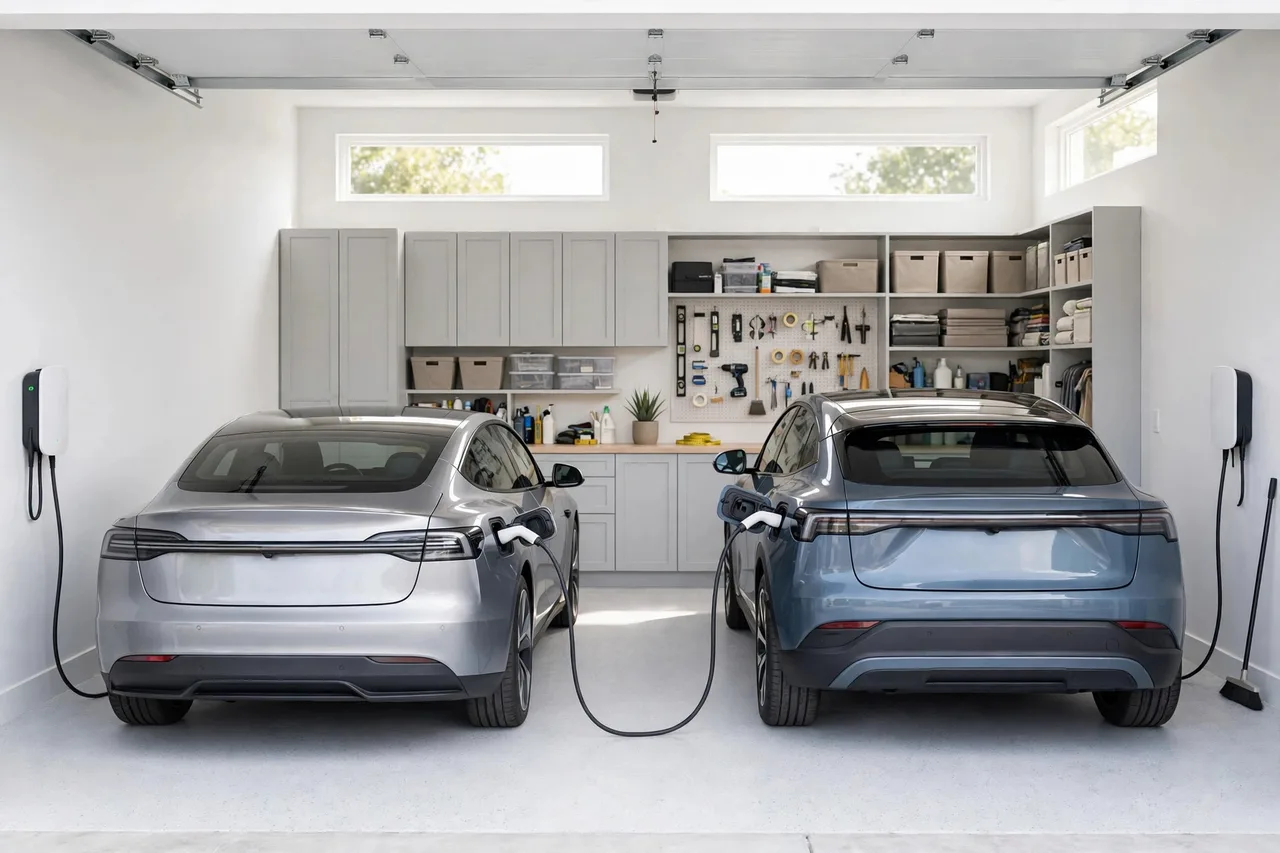
EV charging services in Waco
Three of the network's services lead this page because local conditions put them first; the remaining seven are one click away and equally available here. Each card states what the service involves — the matching itself is free of obligation until you accept an installer's quote.
Home EV Charger Installation in Waco
For most households this is the whole project: a Level 2 station mounted where the car sleeps, fed by its own 240-volt circuit. The visit pattern is consistent — load calculation, route the run, mount and configure, inspect — and the variables are your panel, your parking and your permit office.
In Waco: usually the first job a new EV household in Waco books, scoped to the panel the house already has.
Dedicated Circuit & Electrical Panel Upgrade in Waco
The upgrade is unglamorous and transformative: a modern panel with honest capacity, labelled circuits, and room for the decade's next three electrical ideas after the charger. Houses rarely regret capacity; they regret its absence annually.
In Waco: relevant in Waco wherever a 100-amp panel already carries cooking, heating and hot water before a charger asks for room.
Level 2 Charger Installation in Waco
The step from a household receptacle to a Level 2 circuit is the step from sipping to drinking: the car takes energy at the rate family life actually consumes it. The work is a breaker, a run of appropriately gauged conductor, and a connection made to torque — modest materials, permanent consequences.
In Waco: the circuit class behind nearly every home install in Waco, from first car to second.
Utility programs and electricity in Waco
Electricity in Waco comes from HILCO Electric Cooperative, Inc.. Parts of the wider metro are served by Navasota Valley Elec Coop, Inc, Heart of Texas Electric Coop, Oncor Electric Delivery Company LLC. The utility matters twice over for a charger install: it sets the time-of-use rates that decide what overnight charging costs you, and it is the organisation that may — or may not — currently help pay for the equipment.
Plan on no rebate in Waco at the moment. In the sources checked for this page, HILCO Electric Cooperative, Inc. publishes no residential charger rebate, Texas runs no state scheme for typical home installs, and the federal credit that once filled this gap closed on September 30, 2025. Installers quote the work; utilities fund programs; the second list is currently empty here, and any quote that implies otherwise should come with the program's published terms attached.
Renters and condo owners should note the metering question early: whose meter the charger hangs off decides who pays for the energy, and HILCO Electric Cooperative, Inc.'s options for submetering are part of the multifamily conversation below.
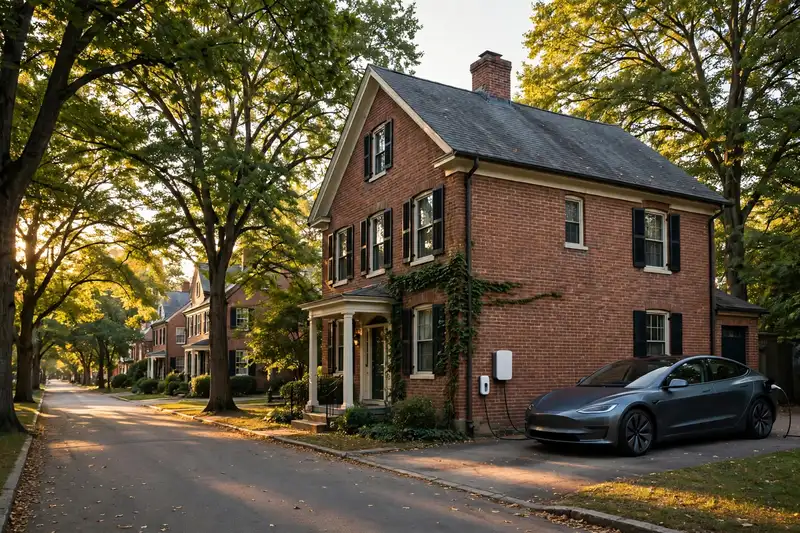
Condos, HOAs and the law in Texas
No statute promises a charger approval in Texas. Unlike the states that have enacted right-to-charge laws, Texas leaves the question entirely to each community's covenants and board discretion. For Waco owners that is not the end of the road — it is a sign that the negotiation, the metering design and the written application carry the weight a statute would otherwise carry.
There is also a longer game available to Waco owners: associations revise their documents, boards turn over, and state legislatures have been adding right-to-charge laws year after year. A written application — and, if it comes to it, a written refusal — is the record that each of those futures works from.
Our condo and HOA guide was written for both kinds of state; the chapters on application packages, metering and cost allocation are the ones that matter in Waco, where no statute does the persuading for you.
Climate, garages and charger placement
Heat also argues for headroom in the circuit decision. A car managing a hot battery after a hot commute draws on its own schedule; a generously sized circuit finishes the session inside the cool window instead of straddling the morning. It is a small thing, decided once, felt all summer.
The overnight window in a hot metro is a thermal decision before it is a tariff one. Air that has given up the day's heat asks less of the car's cooling, less of the garage, less of the equipment — the schedule that saves money is the same schedule that is kind to hardware, and both point after midnight.

Permits and inspection in Waco
The normal sequence is the same across the metro: the installer files the electrical permit, installs to the current National Electrical Code (a charger is a continuous load, so the circuit is sized at 125% of the draw), and the city inspects before the job is signed off. Keep the passed inspection record — insurers, future buyers and warranty claims all ask for it.

Neighbourhoods and ZIP codes served
The page covers 16 ZIP codes in and around Waco — including 76701, 76702, 76703, 76704, 76705, 76706, 76707, 76708, 76710, 76711, 76714, 76715, 76716, 76797, 76798, 76799 — across McLennan. If your ZIP is not in the first set shown, ask anyway: installer coverage follows the metro, not a postcode fence.
The same working area takes in the neighbouring localities of Woodway, Hewitt, Elm Mott, Lorena, Riesel, Axtell, Ross, China Spring, Crawford, Leroy, West, Mc Gregor, Bruceville, Mart — the county ring an installer based in Waco actually drives. Requests from those communities route exactly as city requests do: same services, same permit discipline, same local facts where they differ.
McLennan County accounts for 32 of the ZIP codes and 17 named postal localities in the research file, the nearest of them Woodway, Hewitt, Elm Mott, Lorena, Riesel. The survey counts 266,067 residents in the county, with a median household income of $66,643 and a median home value of $243,600. Measured across its ZIP codes, the Waco footprint runs about 9 miles north to south and 6 east to west, from ZIP 76701 to 76799 — the ground an installer based here actually covers in a working week.
Beyond the county seats, the working area takes in Woodway, Hewitt, Elm Mott, Lorena, Riesel, Axtell, Ross, China Spring, Crawford, Leroy, Satin, West, Mc Gregor, Bruceville, Mart, Chilton, Eddy, Mount Calm, Prairie Hill, Valley Mills, Aquilla, Marlin, Penelope, Abbott, Oglesby, Laguna Park, Lott, Clifton, Hubbard, Malone, Coolidge, Whitney, Reagan, Bynum, Hillsboro, Rosebud, Kosse, Dawson, Irene, Groesbeck, Mertens, Brandon, Tehuacana, Thornton, Mexia, Bremond, Meridian, Frost, Cranfills Gap, Morgan, Blum, Purdon, Burlington, Itasca, Milford, Covington, Wortham, Blooming Grove, Kopperl — the named localities for which Waco is the nearest metro in the network (neighbouring metros' pages cover their own ground), each routing to the same installer-matching service.
The wider working area also reaches Moody, Troy, Pendleton, Flat, Mound, Gatesville, Temple, Belton, Jonesboro, Heidenheimer, Little River Academy, Nolanville, Rogers, Killeen, Harker Heights — ground shared with neighbouring metros, where installers cross the same county lines in both directions.
ZIP codes in that shared ground include 76501, 76502, 76503, 76504, 76508, 76513, 76526, 76528, 76533, 76538, 76540, 76541, 76543, 76547, 76548, 76554, 76557, 76558, 76559, 76564, 76569, 76579, 76596, 76597, 76598, 76599.
The largest communities in that working area after Waco itself, by the GeoNames populated-place file: Stephenville (population 20,120), Hewitt (population 14,252), Robinson (population 11,484), Bellmead (population 10,164), Woodway (population 8,777), Hillsboro (population 8,321), Mexia (population 7,406), Lacy-Lakeview (population 6,604), Center (population 5,727), Marlin (population 5,682), McGregor (population 5,064), Groesbeck (population 4,304), Teague (population 3,572), Clifton (population 3,361), Fairfield (population 2,912), West (population 2,883), Glen Rose (population 2,580), Beverly (population 2,162), Whitney (population 2,101), Beverly Hills (population 2,033). Charging demand follows those populations — the subdivisions and town centres where the next driveways, and the next panels, are.
Hill County reaches into the working area with 37,328 residents, a median household income of $64,591 and a median home value of $179,200; its localities on this page include Mount Calm, Aquilla, Penelope, Abbott, Hubbard. Limestone County reaches into the working area with 22,283 residents, a median household income of $60,573 and a median home value of $164,200; its localities on this page include Prairie Hill, Coolidge, Kosse, Groesbeck, Tehuacana. Bosque County reaches into the working area with 18,687 residents, a median household income of $68,914 and a median home value of $200,900; its localities on this page include Valley Mills, Laguna Park, Clifton, Meridian, Cranfills Gap. Falls County reaches into the working area with 17,291 residents, a median household income of $57,247 and a median home value of $110,900; its localities on this page include Satin, Chilton, Marlin, Lott, Reagan. Navarro County reaches into the working area with 54,711 residents, a median household income of $63,111 and a median home value of $172,600; its localities on this page include Dawson, Frost, Purdon, Blooming Grove.
| ZIP | Locality | County |
|---|---|---|
| 76701 | Waco | McLennan |
| 76702 | Waco | McLennan |
| 76707 | Waco | McLennan |
| 76798 | Waco | McLennan |
| 76799 | Waco | McLennan |
| 76704 | Waco | McLennan |
| 76711 | Waco | McLennan |
| 76706 | Waco | McLennan |
| 76708 | Waco | McLennan |
| 76710 | Waco | McLennan |
| 76703 | Waco | McLennan |
| 76714 | Waco | McLennan |
| 76715 | Waco | McLennan |
| 76716 | Waco | McLennan |
| 76797 | Waco | McLennan |
| 76712 | Woodway | McLennan |
| 76705 | Waco | McLennan |
| 76643 | Hewitt | McLennan |
| 76640 | Elm Mott | McLennan |
| 76655 | Lorena | McLennan |
| 76682 | Riesel | McLennan |
| 76624 | Axtell | McLennan |
| 76684 | Ross | McLennan |
| 76633 | China Spring | McLennan |
| 76638 | Crawford | McLennan |
| 76654 | Leroy | McLennan |
| 76685 | Satin | Falls |
| 76691 | West | McLennan |
| 76657 | Mc Gregor | McLennan |
| 76630 | Bruceville | McLennan |
| 76664 | Mart | McLennan |
| 76632 | Chilton | Falls |
| 76524 | Eddy | McLennan |
| 76673 | Mount Calm | Hill |
| 76678 | Prairie Hill | Limestone |
| 76689 | Valley Mills | Bosque |
| 76622 | Aquilla | Hill |
| 76661 | Marlin | Falls |
| 76676 | Penelope | Hill |
| 76621 | Abbott | Hill |
| 76561 | Oglesby | Coryell |
| 76644 | Laguna Park | Bosque |
| 76656 | Lott | Falls |
| 76634 | Clifton | Bosque |
| 76648 | Hubbard | Hill |
| 76660 | Malone | Hill |
| 76635 | Coolidge | Limestone |
| 76692 | Whitney | Hill |
| 76680 | Reagan | Falls |
| 76631 | Bynum | Hill |
| 76645 | Hillsboro | Hill |
| 76570 | Rosebud | Falls |
| 76653 | Kosse | Limestone |
| 76639 | Dawson | Navarro |
| 76650 | Irene | Hill |
| 76642 | Groesbeck | Limestone |
| 76666 | Mertens | Hill |
| 76628 | Brandon | Hill |
| 76686 | Tehuacana | Limestone |
| 76687 | Thornton | Limestone |
| 76667 | Mexia | Limestone |
| 76629 | Bremond | Robertson |
| 76665 | Meridian | Bosque |
| 76641 | Frost | Navarro |
| 76637 | Cranfills Gap | Bosque |
| 76671 | Morgan | Bosque |
| 76627 | Blum | Hill |
| 76679 | Purdon | Navarro |
| 76519 | Burlington | Milam |
| 76055 | Itasca | Hill |
| 76670 | Milford | Ellis |
| 76636 | Covington | Hill |
| 76693 | Wortham | Freestone |
| 76626 | Blooming Grove | Navarro |
| 76652 | Kopperl | Bosque |

Planning the install: from panel to parking
A useful way to read any Waco quote is to ask which of three jobs it describes. Job one: the panel has room and the run is short — a circuit and a station. Job two: the panel is full — capacity work joins the quote, as an upgrade or as load management. Job three: the property adds people — an HOA, a landlord, a building's shared service — and the approvals timeline joins the electrical one. None of the three is a bad job; they are simply different scopes, and a clear quote says which one you are in.
Future-proofing, in this trade, is mostly conduit and capacity: an oversized conduit run costs little during the first install and everything later; a panel position reserved is a breaker that never has to move. If a second EV, a workshop or an electrified water heater is anywhere in your five-year picture, say so at the site visit.
Home charging know-how for Waco households
The autumn checklist
Households in seasonal country develop a small autumn ritual around the charger: the connector and holster checked before the weather turns, the cable's route confirmed clear of the snow-storage corner and the plough's line, the schedule revisited against winter tariffs and winter range. Ten minutes, once a year, timed with the rest of the house's changeover. It belongs to the same family as the inspection file — the unglamorous habits that make an installation feel, five winters later, like it was designed by someone who had met the climate before.
Charging on a shift worker's clock
Night-shift households run the tariff backwards: the car works while others charge and charges through the day while others work. Their design questions differ — daytime sessions against the household's sleeping hours, schedules that flip with the rota, and the second car's opposite rhythm. None of it is complicated, but all of it must be said at the site visit, because the default schedule baked into every station assumes a nine-to-five that this household does not live.
Light, reach and the midnight plug-in
Most charging happens in the dark, in winter clothes, carrying something. The installations that feel effortless share three traits: light where the connector lives, a mounting height that asks no stretching or crouching, and a cable path with nothing to trip over between the car door and the wall. Households with mobility limits in the family should say so at the site visit — height, reach and holster style are all adjustable at install time and awkward afterwards. Design for the worst trip, not the easiest one.
Adapters and other false economies
Continuous loads forgive nothing, and adapters are where charging setups go to be forgiven anyway: a chain of plugs between the wall and a device that draws near its circuit's limit for eight hours is a chain of warm connections. The standing rule from installers is plain — the station connects as its listing intends, hardwired or into a receptacle rated and installed for the duty, and borrowed dryer outlets and travel adapters are emergency expedients, not a charging system. Households that need the car charged nightly should own the boring version of the setup: one circuit, one connection, no improvisation.

Frequently asked questions
What happened to the federal home-charger credit in Waco, TX?
Checked and dated: in the sources reviewed for this page, HILCO Electric Cooperative, Inc. runs no residential charger rebate, Texas runs no home-charger programme, and the federal credit that once filled the gap ended on September 30, 2025. If a salesperson's spreadsheet shows a rebate line for a Waco install, the published programme page is the only acceptable evidence.
Can my HOA or condo board in Waco, TX refuse my charger?
In Waco, they can — there is no Texas statute stopping them. Right-to-charge protection simply has not been enacted here, so the board's own rules decide. Owners do still get approved regularly: the applications that succeed answer the board's concerns (metering, insurance, restoration, a licensed installer) before the meeting, in writing.
Panel upgrade or not — how do Waco, TX homeowners find out?
It hinges on two numbers you cannot read off the panel door: the service's rating, and what the load calculation says it already carries. The vintage of Waco's stock — median build year 1981, about 49% of homes from before 1980 — means both answers are common here. The charger enters the arithmetic at 125% of its draw; whatever room survives that entry decides between a circuit, a management device, and an upgrade.
How quickly will a Level 2 charger fill my car in Waco, TX?
In parked hours: a Level 1 cord returns about 3–5 miles for each of them, and a Level 2 circuit returns roughly 25–40, set by its amperage and the car's acceptance. For a Waco household parking ten hours, that is the difference between recovering a short errand day and recovering any day the car can legally drive.
What happens next after I send a request?
Send the request and it is matched against installers covering Waco — your service, ZIP, property type and timing travel with it. An installer then arranges the site visit and quotes in writing. Our role ends at the introduction; your contract, permit and paperwork are with the installer.
How long does a typical home charger installation take in Waco, TX?
Plan on a day of electrical work for the standard layout, plus the permit and inspection appointments that bracket it on the city's calendar. Capacity work — an upgrade or a subpanel — extends the electrical day; approvals in a condo or HOA extend the calendar, not the tools. Your site visit ends with all three durations stated separately.
Nearby cities in Texas
- EV charger installation in Killeen — about 44 miles from Waco, metro population 500,000
- EV charger installation in College Station — about 80 miles from Waco, metro population 275,000
- EV charger installation in Dallas — about 87 miles from Waco, metro population 7,900,000
- EV charger installation in Austin — about 92 miles from Waco, metro population 2,400,000
- EV charger installation in Tyler — about 115 miles from Waco, metro population 240,000
- EV charger installation in Longview — about 149 miles from Waco, metro population 285,000
- EV charger installation in Shreveport, LA — about 198 miles from Waco, metro population 395,000
- EV charger installation in Lake Charles, LA — about 236 miles from Waco, metro population 210,000
- EV charger installation in Alexandria, LA — about 259 miles from Waco, metro population 150,000
Ready to charge at home in Waco?
Two minutes of form, and the request is in front of licensed installers who cover this city — quotes follow site visits, in writing.