EV Charger Installation in Dallas, TX
Everything a Dallas homeowner needs before booking a charger install — the panel question, the utility's current programs, the HOA law and the permit — sourced, dated and local.
Homeowners in Dallas tend to research the charger first and the circuit second; installers work the other way round. The circuit is the project — its capacity, its route, its paperwork — and the station is the appliance that hangs off the end of it. Dallas itself is home to about 1,326,093 people, and Texas's roads carried 387,400 battery-electric vehicles and 79,900 plug-in hybrids by the end of 2025. This page is organised the installer's way: panel and housing realities first, then the utility's programs and tariffs, the law for shared properties, climate placement, and the permit that closes the job out properly.
Nothing on this page is decorative. The statutes are quoted because boards respect them, the survey numbers are shown because quotes should follow them, and the program status is stated plainly — including when the plain statement is that no verified program currently exists for Dallas. Informed homeowners get better installs; this page is the informing.
What the Experian and AFDC registration data say about Dallas–Fort Worth–Arlington: Experian used-EV 16K+; TX 387K BEVs; no state credit, utility-led. Translated out of market language: your neighbours are already charging at home, the permit office already knows the paperwork, and the installers already know the housing stock.
Survey context for Dallas, in the three lines installers actually use: median household income $74,323; owner-occupation at 42%; single-unit detached homes at 40%. Income tracks adoption pace, tenure decides whose signature a job needs, and structure decides whether the answer is a garage circuit or a building negotiation.

Every city charges differently, and Dallas's difference is legible in the data: an older housing fabric, where panel archaeology is a normal part of the first visit; a genuinely mixed city — houses, townhouses and larger buildings all carry weight; buildings of five or more units hold a substantial share of homes, which keeps the multifamily sections of this page in daily use; renters form a large share of households, so the landlord conversation is a first-class topic here. Read the sections below through that profile and the local advice resolves into specifics — which questions are routine here, and which are rare.
Keep six figures and you keep Dallas's whole electrical character: 599,962 housing units; 537,317 occupied homes; 226,859 owner-occupied; 241,750 detached houses; 276,526 pre-1980 homes; 285,757 homes in buildings of five or more units. Percentages elsewhere on this page are these numbers in disguise — the counts are the originals, and they are the numbers a local installer's experience is actually made of. The page's geography is equally concrete: 105 ZIP codes across Dallas, centred near 32.79 degrees north latitude. The city anchors the Dallas–Fort Worth–Arlington metropolitan area, home to roughly 7,900,000 people on the research file's metro estimate — the wider labour and housing market this page's installers work across.
The same survey release fills in the household economics around the housing stock: a median home value of $340,400, median gross rent of $1,599, per-capita income of $46,605, and a median resident age of 33. The movement data matters as much as the money data: 69% of Dallas workers drive to work alone — the commute pattern home charging is built around; 14% work from home, a population whose cars charge on daytime and overnight schedules alike; 2% commute by public transit; 40% of adults hold a bachelor's degree or higher. Vehicle ownership, from the same release: 265,315 households in Dallas run two or more vehicles, and 50,771 run none — the two ends of the market this page serves and does not serve.
The cost-burden lines say who feels housing costs most in Dallas: 47% of renters spend 30% or more of income on rent, and 0% of owners with mortgages spend the same share on housing costs. Family households are 53% of all households — the two-car, school-run demographic whose charging patterns this page's planning sections keep circling back to.
The signature matters because installs follow it, street by street. Where so much of the stock predates modern code cycles, the site visit doubles as a survey — grounding electrode, service entrance, panel provenance — before it is ever a quote. Shared form means shared infrastructure decisions: a building that solves charging solves it for a generation of residents, which raises the stakes of the first design and the value of getting the metering right.
Renter weight gives this metro's charging story a negotiation at its centre: the circuit is easy, the permission is the project, and the paperwork patterns in the guides matter as much as any load calculation. Here the tariff conversation is a budget conversation: the overnight window's arithmetic, done honestly once, pays out every night of the car's life without further attention. The regulatory calendar is the programme calendar: rate cases, electrification plans and pilot approvals move through the commission on public timetables, and installers plan their marketing around them.
At this volume the binding constraints move upstream — panel capacity in older districts, transformer headroom on particular streets, the diary of the good installer rather than the existence of one. Scale also brings the full menu of property types at full volume: towers, garden complexes, brownstones or bungalows by the thousand, each with an established local playbook. Without a state charging statute, shared-property approvals in this metro are won on paper quality: metering clarity, licensed installers, insurance, reversibility — the complete package the guides set out.
The electrical reality in Dallas homes
Tenure first, because tenure allocates the decisions: 42% of Dallas's occupied homes are owner-occupied, free to commission electrical work outright. The stock they occupy has a median build year of 1983; 46% predates 1980; 40% is detached single-unit. For the owner-occupied majority, the charger question is purely electrical, and these are the electrical facts. Age shows up electrically before it shows up anywhere else: services sized for a house with a third of today's appliances. Expect the first conversation to be about capacity — what the panel is, what it already feeds, and which of the three routes (circuit, management, upgrade) your numbers support. Housing age also tracks wire-run reality: older homes more often place the panel in a basement or interior wall far from the garage, and distance is copper, conduit and labour.
The fuel table adds one more local fact: 352,904 Dallas homes — 66% of the stock — heat with electricity. Those households already think in kilowatts through the winter, their panels carry the load to prove it, and a charger's overnight appetite joins a system that is, in the useful sense, already electrified.
The tenure split cuts the other way too: roughly 310,458 occupied homes in Dallas are rented. For those households the charger question is a negotiation with a property owner — written proposal, licensed installer, metering clarity — and it succeeds often enough that installers here keep the pattern ready.
One more structural fact shapes Dallas's charging map: 48% of the city's housing units sit in buildings of five or more units. Those households cannot simply book a circuit — their charger runs through a building, a board and a shared electrical service, which is why the multifamily service and the law section below carry unusual weight on this page.
EV charging services in Dallas
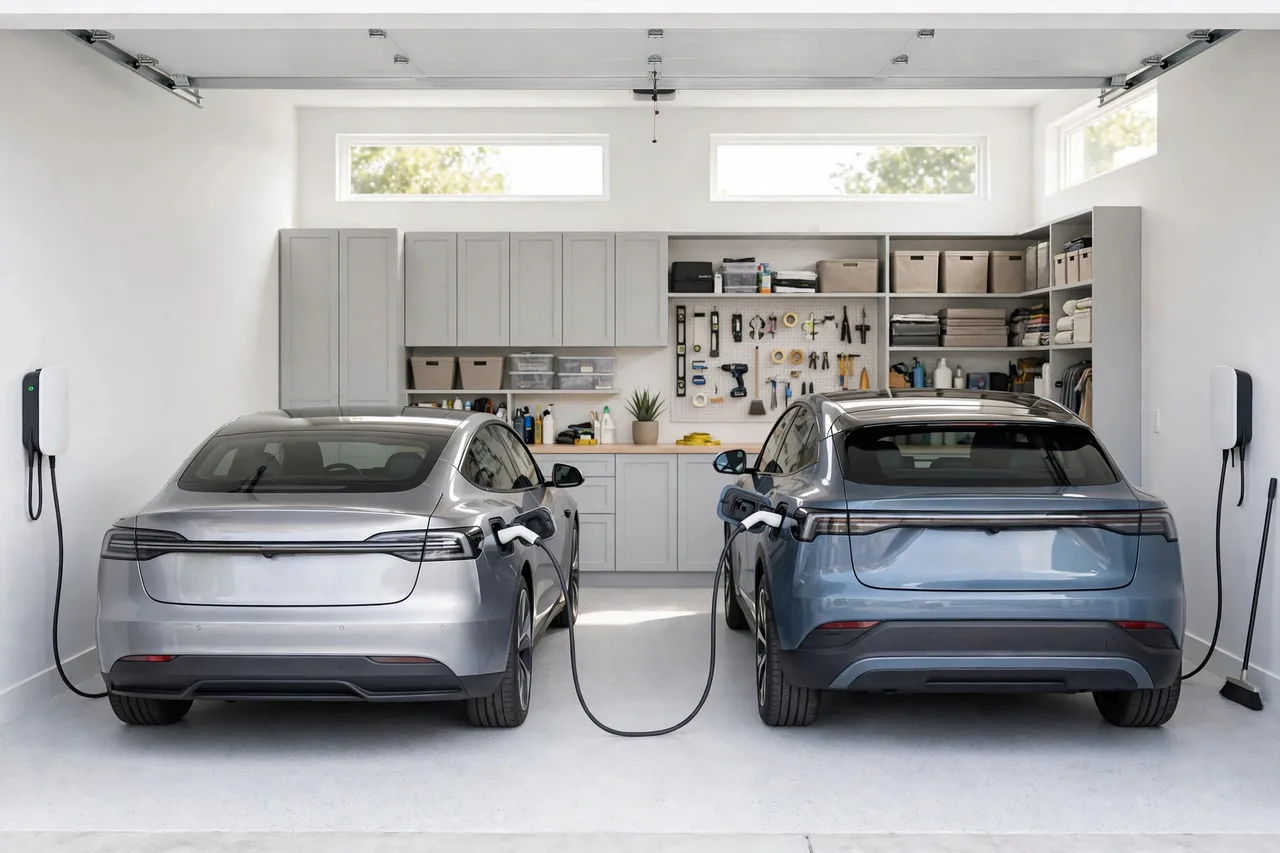
The services below are ordered by what Dallas households most often need first, judged from the housing and fleet facts on this page. The full menu follows in the grid — every service is offered in this metro.
Home EV Charger Installation in Dallas
One circuit, one station, one inspection: the residential install in its usual form. An installer sizes the circuit to the household's driving, mounts the station where the cable reaches the port without drama, sets its output to the circuit it landed on, and leaves the paperwork filed with the house.
In Dallas: usually the first job a new EV household in Dallas books, scoped to the panel the house already has.
Dedicated Circuit & Electrical Panel Upgrade in Dallas
The capacity project behind the charger project. A load calculation decides whether the answer is a service increase, a panel replacement, a subpanel or load management — and the work is sequenced with the utility and the inspector so the house is live again the same day in most cases.
In Dallas: the capacity fix that lets the charger circuit go in without the rest of the house living at its limit.
Level 2 Charger Installation in Dallas
Level 2 is where home charging becomes effortless: a dedicated 240-volt circuit returning a full battery overnight instead of a partial one by morning. The installer's work is the circuit itself — breaker, conductor, connection type — and the station's settings matched to it.
In Dallas: the circuit class behind nearly every home install in Dallas, from first car to second.
Utility programs and electricity in Dallas
Electricity in Dallas comes from Farmers Electric Coop, Inc. Parts of the wider metro are served by Trinity Valley Elec Coop Inc, City of Garland, HILCO Electric Cooperative, Inc.. The utility matters twice over for a charger install: it sets the time-of-use rates that decide what overnight charging costs you, and it is the organisation that may — or may not — currently help pay for the equipment.
Plan on no rebate in Dallas at the moment. In the sources checked for this page, Farmers Electric Coop, Inc publishes no residential charger rebate, Texas runs no state scheme for typical home installs, and the federal credit that once filled this gap closed on September 30, 2025. Installers quote the work; utilities fund programs; the second list is currently empty here, and any quote that implies otherwise should come with the program's published terms attached.
Solar households should read the export terms alongside the charging ones: the pair decides whether midday charging on home-working days beats the overnight window, and the answer is written in your tariff, not in general advice.
Condos, HOAs and the law in Texas
Texas has no statewide right-to-charge law. That needs saying plainly, because roundups on the internet sometimes claim otherwise: in the authoritative statute indexes checked for this page, no Texas law prevents a homeowners association or condominium from refusing a charger in a common or assigned space. Your community's own covenants and board govern the question in Dallas.
There is also a longer game available to Dallas owners: associations revise their documents, boards turn over, and state legislatures have been adding right-to-charge laws year after year. A written application — and, if it comes to it, a written refusal — is the record that each of those futures works from.
Our condo and HOA guide covers both kinds of state; in Dallas the chapters on complete applications and cost allocation are the operative ones.
Climate, garages and charger placement
Afternoon is the design hour: a station, a cable and a car that all sit in the day's peak heat age on the local schedule, not the brochure's. West-facing walls are the last choice here; the shaded side of the garage, the eave's shadow and the overnight schedule are the three cheap protections every local installer reaches for.
Shade is a specification here, not a nicety. Outdoor stations belong under eaves or on the wall that escapes the afternoon sun; connectors left baking in a holder weather faster, and cables stiffen and crack on a shorter clock. The site walk should include a look at where the sun actually lands at four in the afternoon — that is the hour the equipment has to survive.

Permits and inspection in Dallas
Timelines are set by the city's counter, not the installer: the electrical work itself is typically a day, while permit issuance and the inspection visit follow the department's queue. A quote that promises a date should tell you which parts of that date the installer actually controls.

Neighbourhoods and ZIP codes served
The page covers 105 ZIP codes in and around Dallas — including 75201, 75202, 75203, 75204, 75205, 75206, 75207, 75208, 75209, 75210, 75211, 75212, 75214, 75215, 75216, 75217, 75218, 75219, 75220, 75221, 75222, 75223, 75224, 75225, 75226, 75227, 75228, 75229, 75230, 75231, 75232, 75233, 75234, 75235, 75236, 75237, 75238, 75240, 75241, 75242, 75243, 75244, 75246, 75247, 75248, 75249, 75250, 75251, 75252, 75253, 75254, 75260, 75261, 75262, 75263, 75264, 75265, 75266, 75267, 75270 — across Dallas. If your ZIP is not in the first set shown, ask anyway: installer coverage follows the metro, not a postcode fence.
The same working area takes in the neighbouring localities of Irving, Richardson, Duncanville, Mesquite, Balch Springs, Garland, Grand Prairie, Hutchins, Addison, Lancaster, Carrollton, Desoto, Sunnyvale, Wilmer — the county ring an installer based in Dallas actually drives. Requests from those communities route exactly as city requests do: same services, same permit discipline, same local facts where they differ.
Dallas County accounts for 165 of the ZIP codes and 21 named postal localities in the research file, the nearest of them Irving, Richardson, Duncanville, Mesquite, Balch Springs. The survey counts 2,621,179 residents in the county, with a median household income of $76,547 and a median home value of $303,000. Measured across its ZIP codes, the Dallas footprint runs about 25 miles north to south and 20 east to west, from ZIP 75201 to 75398 — the ground an installer based here actually covers in a working week.
Beyond the county seats, the working area takes in Irving, Richardson, Duncanville, Mesquite, Balch Springs, Garland, Grand Prairie, Hutchins, Addison, Lancaster, Carrollton, Desoto, Sunnyvale, Fort Worth, Wilmer, Rowlett, Arlington, Coppell, Cedar Hill, Euless, Sachse, Plano, Seagoville, Grapevine, Red Oak, Bedford, Lewisville, Forney, Colleyville, Ferris, Hurst, Wylie, The Colony, Southlake, Crandall, Allen, Flower Mound, Rockwall, North Richland Hills, Mansfield, Midlothian, Frisco, Kennedale, Palmer, Lavon, Fate, Haltom City, Lake Dallas, Keller, Royse City, Roanoke, Little Elm, Waxahachie, Denton, Lillian, Naval Air Station Jrb, Terrell, Argyle, Nevada, Copeville, Rosser, Venus, Mckinney, Princeton, Elmo, Prosper, Scurry, Haslet, Ennis, Burleson, Alvarado, Josephine, Kaufman, Justin, Crowley, Farmersville, Celina, Maypearl, Aubrey, Bardwell, Melissa, Caddo Mills, Forreston, Ponder, Quinlan, Weston, Joshua, Keene, Avalon, Anna, Pilot Point, Newark, Chatfield, Azle, Grandview, Rhome, Krum, Cleburne, Merit, Blue Ridge, Italy, Rice, Westminster, Greenville, Wills Point, Sanger, Aledo — the named localities for which Dallas is the nearest metro in the network (neighbouring metros' pages cover their own ground), each routing to the same installer-matching service.
The largest communities in that working area after Dallas itself, by the GeoNames populated-place file: Fort Worth (population 1,008,106), Arlington (population 388,125), Plano (population 283,558), Garland (population 236,897), Irving (population 236,607), Grand Prairie (population 187,809), McKinney (population 162,898), Frisco (population 154,407). Charging demand follows those populations — the subdivisions and town centres where the next driveways, and the next panels, are.
| ZIP | Locality | County |
|---|---|---|
| 75201 | Dallas | Dallas |
| 75270 | Dallas | Dallas |
| 75202 | Dallas | Dallas |
| 75204 | Dallas | Dallas |
| 75207 | Dallas | Dallas |
| 75219 | Dallas | Dallas |
| 75221 | Dallas | Dallas |
| 75246 | Dallas | Dallas |
| 75226 | Dallas | Dallas |
| 75014 | Irving | Dallas |
| 75017 | Irving | Dallas |
| 75083 | Richardson | Dallas |
| 75085 | Richardson | Dallas |
| 75138 | Duncanville | Dallas |
| 75187 | Mesquite | Dallas |
| 75222 | Dallas | Dallas |
| 75242 | Dallas | Dallas |
| 75250 | Dallas | Dallas |
| 75260 | Dallas | Dallas |
| 75261 | Dallas | Dallas |
| 75262 | Dallas | Dallas |
| 75263 | Dallas | Dallas |
| 75264 | Dallas | Dallas |
| 75265 | Dallas | Dallas |
| 75266 | Dallas | Dallas |
| 75267 | Dallas | Dallas |
| 75275 | Dallas | Dallas |
| 75277 | Dallas | Dallas |
| 75283 | Dallas | Dallas |
| 75284 | Dallas | Dallas |
| 75285 | Dallas | Dallas |
| 75301 | Dallas | Dallas |
| 75303 | Dallas | Dallas |
| 75312 | Dallas | Dallas |
| 75313 | Dallas | Dallas |
| 75315 | Dallas | Dallas |
| 75320 | Dallas | Dallas |
| 75326 | Dallas | Dallas |
| 75336 | Dallas | Dallas |
| 75339 | Dallas | Dallas |
| 75342 | Dallas | Dallas |
| 75354 | Dallas | Dallas |
| 75355 | Dallas | Dallas |
| 75356 | Dallas | Dallas |
| 75357 | Dallas | Dallas |
| 75359 | Dallas | Dallas |
| 75360 | Dallas | Dallas |
| 75367 | Dallas | Dallas |
| 75368 | Dallas | Dallas |
| 75370 | Dallas | Dallas |
| 75371 | Dallas | Dallas |
| 75372 | Dallas | Dallas |
| 75373 | Dallas | Dallas |
| 75374 | Dallas | Dallas |
| 75376 | Dallas | Dallas |
| 75378 | Dallas | Dallas |
| 75379 | Dallas | Dallas |
| 75380 | Dallas | Dallas |
| 75381 | Dallas | Dallas |
| 75382 | Dallas | Dallas |
| 75389 | Dallas | Dallas |
| 75390 | Dallas | Dallas |
| 75391 | Dallas | Dallas |
| 75392 | Dallas | Dallas |
| 75393 | Dallas | Dallas |
| 75394 | Dallas | Dallas |
| 75395 | Dallas | Dallas |
| 75397 | Dallas | Dallas |
| 75398 | Dallas | Dallas |
| 75358 | Dallas | Dallas |
| 75205 | Dallas | Dallas |
| 75235 | Dallas | Dallas |
| 75203 | Dallas | Dallas |
| 75223 | Dallas | Dallas |
| 75215 | Dallas | Dallas |
| 75206 | Dallas | Dallas |
| 75208 | Dallas | Dallas |
| 75210 | Dallas | Dallas |
| 75212 | Dallas | Dallas |
| 75214 | Dallas | Dallas |
| 75209 | Dallas | Dallas |
| 75247 | Dallas | Dallas |
| 75225 | Dallas | Dallas |
| 75216 | Dallas | Dallas |
| 75224 | Dallas | Dallas |
| 75220 | Dallas | Dallas |
| 75231 | Dallas | Dallas |
| 75227 | Dallas | Dallas |
| 75211 | Dallas | Dallas |
| 75233 | Dallas | Dallas |

Planning the install: from panel to parking
Walk the route before anyone quotes the route. Between Dallas's panels and its parking spaces lie the job's real variables: a finished ceiling or an open one, a straight shot through a shared wall or a tour of the attic, forty feet of conductor or a hundred and forty. Installers who quote from photographs quote the average of all routes; installers who walk yours quote the one you actually have. The site visit is where the quote stops being a genre and becomes a document.
One more piece of sequencing advice Dallas installers give consistently: if the panel is being opened anyway, settle the other electrical maybes in the same visit — the circuit you will want next year costs least while the permit and the electrician are already in the house.
Home charging know-how for Dallas households
Breakers: the household's safety switches
A breaker is a switch that watches current and opens when the current stops being safe — heat in a conductor is the thing it exists to prevent. Two household rules follow. First, a tripping breaker is reporting, not malfunctioning by default: reset once, and if it repeats, the circuit gets an electrician, not another reset. Second, the forbidden fix: never answer a trip by fitting a larger breaker. The breaker protects the wire in the wall; upsizing the guard without upsizing the wire removes the protection and keeps the problem.
Home as the road-trip base
A home charger changes road trips at both ends. Departure: the car leaves full, on the household's lowest-cost energy, at the household's chosen hour. Return: it arrives home low without anxiety, because the recovery is the driveway rather than a detour. The middle belongs to the public networks; the ends — the parts travellers actually remember — belong to the wall at home. Households that tour often find this, quietly, is the feature they would surrender last.
Whose meter? The metering designs
Every shared-parking install eventually asks the same question: whose electricity is this? The designs that answer it cleanly are few and known — a circuit from the owner's own meter where the geometry allows, a submeter on a shared supply with readings the association can audit, a networked station billing each user directly, or a flat arrangement the community's documents permit. The right choice is the one the building's wiring and its paperwork both support. What never works is leaving the question open: energy without an owner is the objection that sinks applications, so the metering design travels with the application, not after it.
Charging alongside rooftop solar
A house that generates as well as consumes plans its charging differently. The naive pattern — charge at night, export by day — is often fine; the refined pattern shifts some charging into the solar hours on home-working days, stores the commute in the car when the panels are producing, and leans on the overnight window only for the balance. None of this changes the circuit; it changes the schedule, and occasionally the case for a station whose output can follow the house's generation. Tell the installer the array exists — it belongs in the first conversation.
Charging through the summer
Summer's version of the same lesson runs through temperature rather than ice. Batteries and charging electronics both prefer the cool hours, and a car that has baked in a driveway all afternoon will manage its own charging rate until its pack settles. Scheduling the session for after midnight hands the car the mildest air of the day; placing the station out of the sun line and keeping the garage ventilated does the rest. None of it requires attention once set — summer-proofing a home charger is a configuration, not a chore.

Frequently asked questions
Can I still get the federal tax credit for a home charger in Dallas, TX?
Treat the answer as a standing no with a watching brief. The 30C credit is finished, Texas has not replaced it for homeowners, and no verified Farmers Electric Coop, Inc rebate was running in the sources checked for this page. Should that change, the utility's program page will say so first — and this page will be updated to match.
Can my association in Dallas, TX say no to a home charger?
In Dallas the honest answer is yes, they can refuse: Texas gives owners no statutory charging right, so the board's discretion governs. What changes outcomes is the quality of the file in front of them — drawings, metering, insurance, a named licensed installer — and a growing number of boards here approve exactly that file.
Panel upgrade or not — how do Dallas, TX homeowners find out?
Nobody can answer that from a photograph of your panel's door, and you should be suspicious of anyone who tries. In a city where the median home dates to 1983 and about 46% of units predate 1980, the honest answer is a load calculation: what your service is, what it already carries, and what a continuous charger load does to the total. Then the options — circuit, load management, or upgrade — compare on paper.
How quickly will a Level 2 charger fill my car in Dallas, TX?
Level 2 is several-fold faster in the only unit that matters — miles back per hour parked: roughly 25–40 against Level 1's 3–5. The exact figure follows the circuit: a 40-amp circuit and a 60-amp circuit are both Level 2, and the car's onboard limit may sit below either. Your installer matches the three numbers at the site visit.
What happens after I request an installer through this page?
Your request is matched to licensed installers covering Dallas, Texas — service, ZIP, property type and timing travel with it. The installer who takes it arranges the site visit and quotes in writing; PlugReady USA's part is the research on this page and the introduction, and your contract is with the installer throughout.
My Dallas home has no garage — where does the charger go?
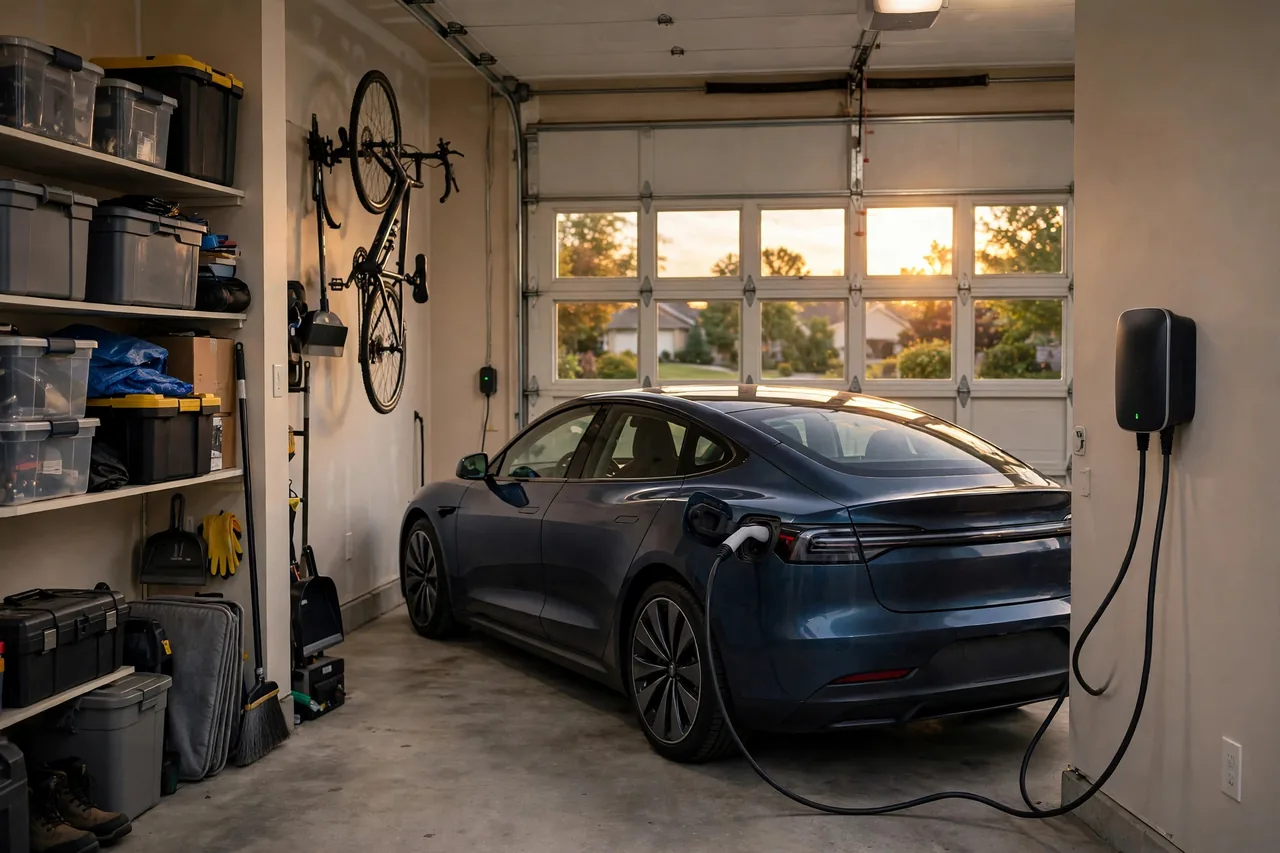
On the exterior wall beside the driveway, on a pedestal at the parking pad, or in a carport — outdoor-rated equipment is routine. The design adds weather sealing, a cable route the weather and the snow shovel both respect, and a position checked against where the car actually noses in. A large share of installs in attached and urban housing are exactly this shape.
Nearby cities in Texas
- EV charger installation in Waco — about 87 miles from Dallas, metro population 285,000
- EV charger installation in Tyler — about 89 miles from Dallas, metro population 240,000
- EV charger installation in Longview — about 116 miles from Dallas, metro population 285,000
- EV charger installation in Wichita Falls — about 121 miles from Dallas, metro population 150,000
- EV charger installation in Killeen — about 126 miles from Dallas, metro population 500,000
- EV charger installation in Texarkana — about 151 miles from Dallas, metro population 150,000
- EV charger installation in Shreveport, LA — about 170 miles from Dallas, metro population 395,000
- EV charger installation in Oklahoma City, OK — about 191 miles from Dallas, metro population 1,450,000
- EV charger installation in Fort Smith, AR — about 221 miles from Dallas, metro population 280,000
Ready to charge at home in Dallas?
Send the essentials — what you need, where, and what kind of property — and a licensed local installer will pick it up from there.