EV Charger Installation in Tyler, TX
Everything a Tyler homeowner needs before booking a charger install — the panel question, the utility's current programs, the HOA law and the permit — sourced, dated and local.
Ask EV owners in Tyler what changed their routine and most give the same answer: the car charges where it parks. Tyler itself is home to about 112,204 people. Statewide, Texas counted 387,400 battery-electric vehicles and 79,900 plug-in hybrids on the road through 2025, and the metro's share of that fleet keeps growing. A home charger installation is not complicated, but it is local — the utility that serves your street, the age of your panel, your community's rules and your city's permit office all shape the job. This page pulls those Tyler specifics together in one place, with the numbers sourced rather than rounded into slogans.
How this page is organised matters less than what is in it: verified local facts, stated with their sources, so you can check them yourself. PlugReady USA matches homeowners in Tyler with licensed local installers; the detail below is the homework we would want done before anyone quotes the job.
Measured demand, not enthusiasm, put Tyler in Tier C of this network: East TX anchor. For a homeowner the useful translation is simpler — installers here do this work weekly, know the local permit counter, and have seen your housing stock before.
Three percentages describe the working conditions for charging in Tyler: 53% owner-occupied, 61% single-unit detached, and a median household income of $70,101 standing behind both. Everything in the sections below — panels, permissions, metering — is commentary on those proportions.

Every city charges differently, and Tyler's difference is legible in the data: an older housing fabric, where panel archaeology is a normal part of the first visit; a detached-house majority with a real attached and multifamily minority; buildings of five or more units hold a substantial share of homes, which keeps the multifamily sections of this page in daily use; owners hold a working majority, with renters a significant minority. Read the sections below through that profile and the local advice resolves into specifics — which questions are routine here, and which are rare.
Keep six figures and you keep Tyler's whole electrical character: 45,971 housing units; 41,116 occupied homes; 21,627 owner-occupied; 28,079 detached houses; 25,584 pre-1980 homes; 11,348 homes in buildings of five or more units. Percentages elsewhere on this page are these numbers in disguise — the counts are the originals, and they are the numbers a local installer's experience is actually made of. The page's geography is equally concrete: 15 ZIP codes across Smith, centred near 32.33 degrees north latitude. The city anchors the Tyler metropolitan area, home to roughly 240,000 people on the research file's metro estimate — the wider labour and housing market this page's installers work across.
The same survey release fills in the household economics around the housing stock: a median home value of $235,300, median gross rent of $1,252, per-capita income of $34,724, and a median resident age of 35. And the daily rhythms behind the housing numbers: 79% of Tyler workers drive to work alone — the commute pattern home charging is built around; 8% work from home, a population whose cars charge on daytime and overnight schedules alike; 31% of adults hold a bachelor's degree or higher; 16% of housing units stood vacant at the survey. Vehicle ownership, from the same release: 22,222 households in Tyler run two or more vehicles, and 2,986 run none — the two ends of the market this page serves and does not serve.
Two burden statistics frame the economics: in Tyler, 50% of renters and 0% of mortgage-holding owners are housing-cost burdened at the standard 30% threshold. And 64% of households are family households, the segment most likely to run the two-vehicle, two-schedule pattern the second-vehicle planning notes address.
What follows is the city read as an electrical place rather than a dot on a map. Where so much of the stock predates modern code cycles, the site visit doubles as a survey — grounding electrode, service entrance, panel provenance — before it is ever a quote. Installers here run two trades in one van — domestic circuits in the morning, a building's shared-service design in the afternoon — and the city's pages, this one included, have to serve both readers.
Renter weight gives this metro's charging story a negotiation at its centre: the circuit is easy, the permission is the project, and the paperwork patterns in the guides matter as much as any load calculation. Value engineering is the local dialect: load management weighed against panel work on merit, quotes compared line by line, the site visit treated as the moment the scope becomes honest. Tariff design is the quiet policy: the shape of the overnight window, the demand charges commercial customers face, the interconnection queue's pace — all set in dockets the diligent can read.
The state fleet is well past the early-adopter chapter: dealer lots, workplace car parks and school runs all show it, and the installer market has professionalised in response. Smaller metros adopt on their own clock: the fleet follows the dealers and the demographics, and each install is a visible event a street notices. The association dimension here runs on persuasion rather than statute — no state charging law frames the application, so the complete, professional proposal carries the whole argument, as the law section above explains.
The electrical reality in Tyler homes
Tenure first, because tenure allocates the decisions: 53% of Tyler's occupied homes are owner-occupied, free to commission electrical work outright. The stock they occupy has a median build year of 1977; 56% predates 1980; 61% is detached single-unit. For the owner-occupied majority, the charger question is purely electrical, and these are the electrical facts. Age shows up electrically before it shows up anywhere else: services sized for a house with a third of today's appliances. Expect the first conversation to be about capacity — what the panel is, what it already feeds, and which of the three routes (circuit, management, upgrade) your numbers support. Owner-occupiers can plan on their own timeline; renters and condo owners have an extra approval layer, which the law section below covers for this state.
One further survey line belongs in any Tyler install conversation: 45% of the city's homes heat with electricity — 17,269 households whose panels already carry a major winter load before a charger is contemplated. Electric heat and EV charging are the two largest discretionary loads a house can host, and where they coincide, the load calculation stops being a formality.
The tenure split cuts the other way too: roughly 19,489 occupied homes in Tyler are rented. For those households the charger question is a negotiation with a property owner — written proposal, licensed installer, metering clarity — and it succeeds often enough that installers here keep the pattern ready.
The city's stock is not all houses: 25% of units are in structures of five or more. Shared buildings mean shared panels, assigned parking and association process — the substance of the multifamily sections below.
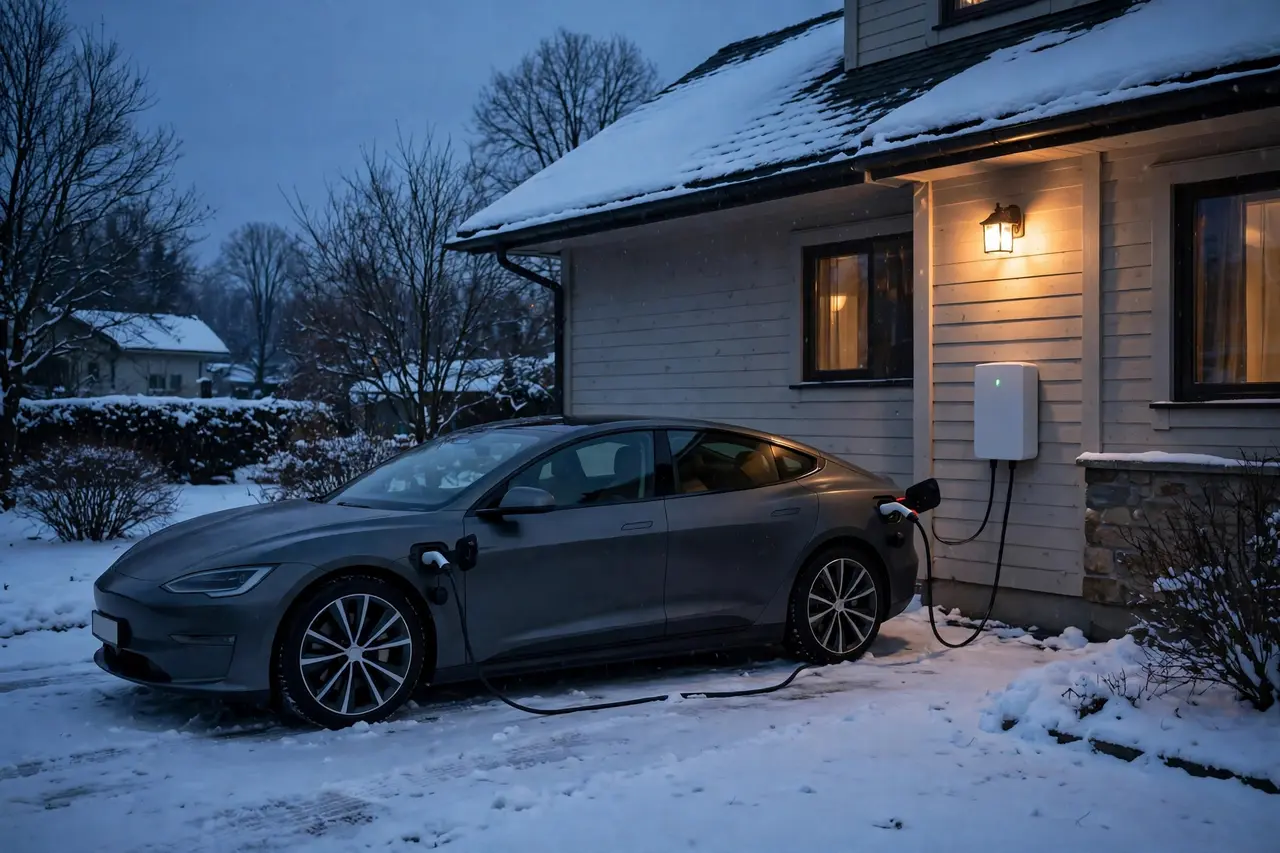
EV charging services in Tyler
Ten services cover the work installers do in Tyler. Three lead the list here because of what this city's housing and law actually look like — each links to its national service page, where scope and process are set out in full.
Home EV Charger Installation in Tyler
Think of it as plumbing for electrons, with the same virtues: correct sizing, honest materials, tidy runs, tested joints. The installers who do it weekly follow a pattern — assess, calculate, route, mount, configure, document — and the pattern is why their installs rarely make news afterwards.
In Tyler: where most Tyler projects start and finish: one circuit, one station, one inspection.
Dedicated Circuit & Electrical Panel Upgrade in Tyler
Some homes meet the charger at the panel door: the service is already spoken for by cooking, heating and hot water. This service is the honest fix — capacity added properly, grounding brought current, and a panel schedule that finally matches the house it feeds.
In Tyler: relevant in Tyler wherever a 100-amp panel already carries cooking, heating and hot water before a charger asks for room.
Level 2 Charger Installation in Tyler
Level 2's numbers explain its dominance: several times the overnight recovery of a wall outlet, on equipment sized to the circuit by a factor the code fixes. The install is a circuit project with a station at the end of it, and it is quoted that way by anyone who does it weekly.
In Tyler: the circuit class behind nearly every home install in Tyler, from first car to second.
Utility programs and electricity in Tyler
Electricity in Tyler comes from Southwestern Electric Power Co. Parts of the wider metro are served by Upshur Rural Elec Coop Corp, Wood County Electric Coop, Inc, Cherokee County Elec Coop Assn. The utility matters twice over for a charger install: it sets the time-of-use rates that decide what overnight charging costs you, and it is the organisation that may — or may not — currently help pay for the equipment.
Why does this page labour the absence of a rebate? Because in Tyler the phantom rebate is the most common distortion in charger quotes: a figure justified by money that is not, at present, claimable. The verified position: federal 30C ended September 30, 2025; no Texas replacement for typical home installs; no Southwestern Electric Power Co residential charger rebate in the sources checked. If someone quotes you a rebate, the follow-up is one sentence — show me the program page — and its answer decides the quote's credibility.
While you are reading your tariff, check how your plan treats the evening peak. A charger scheduled to start after the peak window is the single easiest saving in home charging, and it is set once, in the car or the station, then forgotten.
Condos, HOAs and the law in Texas
There is no Texas right-to-charge statute to lean on. Some national roundups list protection that does not exist in this state's code; the statute indexes checked for this page are clear. In Tyler, a condo or HOA charger is approved — or not — under the community's own documents, which makes the quality of your application the whole ballgame.
Owners of single-family homes in HOA communities should also check the covenants before assuming the driveway is uncomplicated: exterior-equipment and architectural-approval clauses can apply to a visible wall-mounted station even where the garage interior is entirely the owner's business.
For the full playbook — application contents, metering designs, the questions boards ask — see the condo and HOA charging guide. In Tyler it should be read as a negotiation manual, because negotiation is what the absence of a statute leaves you.
Climate, garages and charger placement
Heat also argues for headroom in the circuit decision. A car managing a hot battery after a hot commute draws on its own schedule; a generously sized circuit finishes the session inside the cool window instead of straddling the morning. It is a small thing, decided once, felt all summer.
The overnight window in a hot metro is a thermal decision before it is a tariff one. Air that has given up the day's heat asks less of the car's cooling, less of the garage, less of the equipment — the schedule that saves money is the same schedule that is kind to hardware, and both point after midnight.

Permits and inspection in Tyler
Expect the permit to name the circuit, the breaker and the equipment. An installer who suggests skipping it is saving an afternoon by spending your liability; the inspection is also your independent check that the continuous-load sizing was done properly.

Neighbourhoods and ZIP codes served
The page covers 15 ZIP codes in and around Tyler — including 75701, 75702, 75703, 75704, 75705, 75706, 75707, 75708, 75709, 75710, 75711, 75712, 75713, 75798, 75799 — across Smith. If your ZIP is not in the first set shown, ask anyway: installer coverage follows the metro, not a postcode fence.
The same working area takes in the neighbouring localities of Whitehouse, Flint, Winona, Lindale, Arp, Bullard, Troup — the county ring an installer based in Tyler actually drives. Requests from those communities route exactly as city requests do: same services, same permit discipline, same local facts where they differ.
Smith County accounts for 22 of the ZIP codes and 8 named postal localities in the research file, the nearest of them Whitehouse, Flint, Winona, Lindale, Arp. The survey counts 241,740 residents in the county, with a median household income of $74,192 and a median home value of $240,700. Measured across its ZIP codes, the Tyler footprint runs about 12 miles north to south and 16 east to west, from ZIP 75701 to 75799 — the ground an installer based here actually covers in a working week.
Beyond the county seats, the working area takes in Whitehouse, Flint, Winona, Lindale, Arp, Chandler, Bullard, Brownsboro, Troup, Overton, Big Sandy, Ben Wheeler, Larue, New London, Cuney, Selman City, Price, Hawkins, Frankston, Joinerville, Poynor, Van, Jacksonville, Mineola, New Summerfield, Murchison, Athens, Gallatin, Golden, Grand Saline, Neches, Quitman, Reklaw, Alba, Laneville, Maydelle, Canton, Fruitvale, Rusk, Montalba, Eustace, Sacul, Malakoff, Edgewood, Palestine, Mabank, Yantis, Cushing — the named localities for which Tyler is the nearest metro in the network (neighbouring metros' pages cover their own ground), each routing to the same installer-matching service.
The wider working area also reaches Laird Hill, Kilgore, Gladewater, White Oak, Henderson, Longview, Gilmer, Judson, Tatum, Minden, Easton, Winnsboro, Ore City, Hallsville, Diana — ground shared with neighbouring metros, where installers cross the same county lines in both directions.
ZIP codes in that shared ground include 75494, 75601, 75602, 75603, 75604, 75605, 75606, 75607, 75608, 75615, 75640, 75641, 75644, 75645, 75647, 75650, 75652, 75653, 75654, 75660, 75662, 75663, 75666, 75680, 75683, 75691, 75693, 75755.
The largest communities in that working area after Tyler itself, by the GeoNames populated-place file: Lufkin (population 36,333), Nacogdoches (population 33,894), Palestine (population 18,288), Sulphur Springs (population 16,098), Jacksonville (population 14,884), Athens (population 12,788), Whitehouse (population 8,189), Gun Barrel City (population 5,985), Lindale (population 5,692), Rusk (population 5,618), Diboll (population 5,400), Hudson (population 4,821), Mineola (population 4,625), Canton (population 3,752), Mabank (population 3,309), Grand Saline (population 3,131), Hideaway (population 3,090), Hickory Creek (population 3,066), Chandler (population 2,949), Bullard (population 2,832). Charging demand follows those populations — the subdivisions and town centres where the next driveways, and the next panels, are.
Henderson County reaches into the working area with 84,862 residents, a median household income of $65,179 and a median home value of $211,300; its localities on this page include Chandler, Brownsboro, Larue, Poynor, Murchison. Cherokee County reaches into the working area with 51,886 residents, a median household income of $61,261 and a median home value of $169,300; its localities on this page include Cuney, Jacksonville, New Summerfield, Gallatin, Reklaw. Anderson County reaches into the working area with 58,439 residents, a median household income of $62,068 and a median home value of $185,300; its localities on this page include Frankston, Neches, Montalba, Palestine. Rusk County reaches into the working area with 52,842 residents, a median household income of $68,658 and a median home value of $171,300; its localities on this page include Overton, New London, Selman City, Price, Joinerville. Van Zandt County reaches into the working area with 62,649 residents, a median household income of $69,475 and a median home value of $222,100; its localities on this page include Ben Wheeler, Van, Grand Saline, Canton, Fruitvale.
| ZIP | Locality | County |
|---|---|---|
| 75701 | Tyler | Smith |
| 75710 | Tyler | Smith |
| 75711 | Tyler | Smith |
| 75702 | Tyler | Smith |
| 75703 | Tyler | Smith |
| 75707 | Tyler | Smith |
| 75709 | Tyler | Smith |
| 75712 | Tyler | Smith |
| 75713 | Tyler | Smith |
| 75798 | Tyler | Smith |
| 75799 | Tyler | Smith |
| 75704 | Tyler | Smith |
| 75708 | Tyler | Smith |
| 75791 | Whitehouse | Smith |
| 75706 | Tyler | Smith |
| 75705 | Tyler | Smith |
| 75762 | Flint | Smith |
| 75792 | Winona | Smith |
| 75771 | Lindale | Smith |
| 75750 | Arp | Smith |
| 75758 | Chandler | Henderson |
| 75757 | Bullard | Smith |
| 75756 | Brownsboro | Henderson |
| 75789 | Troup | Smith |
| 75684 | Overton | Rusk |
| 75797 | Big Sandy | Upshur |
| 75754 | Ben Wheeler | Van Zandt |
| 75770 | Larue | Henderson |
| 75682 | New London | Rusk |
| 75759 | Cuney | Cherokee |
| 75689 | Selman City | Rusk |
| 75687 | Price | Rusk |
| 75765 | Hawkins | Wood |
| 75763 | Frankston | Anderson |
| 75658 | Joinerville | Rusk |
| 75782 | Poynor | Henderson |
| 75790 | Van | Van Zandt |
| 75766 | Jacksonville | Cherokee |
| 75773 | Mineola | Wood |
| 75780 | New Summerfield | Cherokee |
| 75778 | Murchison | Henderson |
| 75752 | Athens | Henderson |
| 75764 | Gallatin | Cherokee |
| 75444 | Golden | Wood |
| 75751 | Athens | Henderson |
| 75140 | Grand Saline | Van Zandt |
| 75779 | Neches | Anderson |
| 75783 | Quitman | Wood |
| 75784 | Reklaw | Cherokee |
| 75410 | Alba | Rains |
| 75667 | Laneville | Rusk |
| 75772 | Maydelle | Cherokee |
| 75103 | Canton | Van Zandt |
| 75127 | Fruitvale | Van Zandt |
| 75785 | Rusk | Cherokee |
| 75853 | Montalba | Anderson |
| 75124 | Eustace | Henderson |
| 75788 | Sacul | Nacogdoches |
| 75148 | Malakoff | Henderson |
| 75117 | Edgewood | Van Zandt |
| 75882 | Palestine | Anderson |
| 75147 | Mabank | Kaufman |
| 75802 | Palestine | Anderson |
| 75801 | Palestine | Anderson |
| 75497 | Yantis | Wood |
| 75760 | Cushing | Nacogdoches |
| 75803 | Palestine | Anderson |

Planning the install: from panel to parking
A useful way to read any Tyler quote is to ask which of three jobs it describes. Job one: the panel has room and the run is short — a circuit and a station. Job two: the panel is full — capacity work joins the quote, as an upgrade or as load management. Job three: the property adds people — an HOA, a landlord, a building's shared service — and the approvals timeline joins the electrical one. None of the three is a bad job; they are simply different scopes, and a clear quote says which one you are in.
Future-proofing, in this trade, is mostly conduit and capacity: an oversized conduit run costs little during the first install and everything later; a panel position reserved is a breaker that never has to move. If a second EV, a workshop or an electrified water heater is anywhere in your five-year picture, say so at the site visit.
Home charging know-how for Tyler households
The labelled breaker
Panel directories are autobiographies written in pencil, and a charger install adds a chapter. The new breaker gets labelled — circuit, station, date — in the directory and, in thorough households, on the panel schedule taped inside the door. It reads as pedantry until the night something trips at 11 pm and the labelled directory turns a flashlight search into a ten-second answer. It also serves the future: the next electrician, the inspector, the buyer, each reads the panel's story faster when the latest chapter is legible.
Conduit, finishes and the neatness question
Runs of conduit across a finished garage divide households: some want them invisible, some want them honest. The options are a spectrum — in-wall runs where framing allows, surface conduit painted to the wall, or a route through the ceiling line where neither shows. Each step toward invisible costs labour and sometimes access for future work. Decide at the design stage with the route in view, because the time to care about the charger's industrial look is before it is screwed to the wall, not in the first photograph afterwards.
What commissioning actually includes
Commissioning is the install's final examination, and it has a syllabus: torque verified on the terminations, the station's output configured to the circuit rather than the nameplate, the network connection and schedule set with the household present, a test session run and observed, the paperwork handed over. Households sometimes mistake it for ceremony. It is the opposite — it is the moment latent errors cost least to fix, with the installer still in the driveway and the tools still out.
Why chargers slow themselves down
Charging equipment protects itself thermally: a station whose electronics run hot — a sun-baked wall, a sealed enclosure in a heatwave garage — reduces its output rather than cook. Owners experience it as an unexpectedly slow session on the year's hottest afternoon. It is the equipment working as designed, and the installation answers are environmental: shade, airflow, an enclosure that breathes as its listing intends. A session that derates in mild weather, by contrast, is a symptom worth an electrician's opinion.

Frequently asked questions
Is the federal charger tax credit still available in Tyler, TX?
Treat the answer as a standing no with a watching brief. The 30C credit is finished, Texas has not replaced it for homeowners, and no verified Southwestern Electric Power Co rebate was running in the sources checked for this page. Should that change, the utility's program page will say so first — and this page will be updated to match.
Can my association in Tyler, TX say no to a home charger?
As the law stands, yes: without a Texas right-to-charge statute, an association in Tyler may refuse or condition a charger under its own documents. The practical counterweight is preparation — a complete written package, a metering answer, and a request that the refusal, if it comes, be issued in writing with the covenant cited.
Panel upgrade or not — how do Tyler, TX homeowners find out?
The answer lives in your panel's directory and its arithmetic, not in the car's requirements. With 56% of Tyler's homes predating 1980 (median build 1977), local installers see both situations weekly: the 200-amp panel that takes the circuit directly, and the full 100-amp service that needs capacity work first. The site visit exists to sort your house into one of those two piles, on numbers.
Level 1 or Level 2 in Tyler, TX — what is the real difference?
In parked hours: a Level 1 cord returns about 3–5 miles for each of them, and a Level 2 circuit returns roughly 25–40, set by its amperage and the car's acceptance. For a Tyler household parking ten hours, that is the difference between recovering a short errand day and recovering any day the car can legally drive.
What happens next after I send a request?
Three steps: the request routes to installers who work Tyler, Texas; one contacts you to walk the property; the walk produces the written quote. Everything on this page — the utility position, the law, the housing data — is yours to check that quote against.
I live in a Tyler apartment or condo building — can I charge at home?
With about 25% of Tyler's housing in buildings of five or more units, building charging is a mainstream question here. It is an approvals project before it is an electrical one — board or landlord, metering, load design — and the sections above walk through both the legal position in Texas and the application package that works.
Nearby cities in Texas
- EV charger installation in Longview — about 34 miles from Tyler, metro population 285,000
- EV charger installation in Dallas — about 89 miles from Tyler, metro population 7,900,000
- EV charger installation in Texarkana — about 97 miles from Tyler, metro population 150,000
- EV charger installation in Waco — about 115 miles from Tyler, metro population 285,000
- EV charger installation in College Station — about 131 miles from Tyler, metro population 275,000
- EV charger installation in Killeen — about 158 miles from Tyler, metro population 500,000
- EV charger installation in Shreveport, LA — about 86 miles from Tyler, metro population 395,000
- EV charger installation in Alexandria, LA — about 172 miles from Tyler, metro population 150,000
- EV charger installation in Monroe, LA — about 176 miles from Tyler, metro population 205,000
Ready to charge at home in Tyler?
Two minutes of form, and the request is in front of licensed installers who cover this city — quotes follow site visits, in writing.