EV Charger Installation in Tulsa, OK
Everything a Tulsa homeowner needs before booking a charger install — the panel question, the utility's current programs, the HOA law and the permit — sourced, dated and local.
Every home charger installation is the same four decisions wearing local clothes: capacity in the panel, a route for the circuit, a position for the station, and paperwork that proves it was done properly. What changes from city to city is the content of those decisions — and in Tulsa the content is specific. Tulsa itself is home to about 413,652 people. Oklahoma's registered fleet stood at 26,800 battery-electric vehicles and 29,100 plug-in hybrids at the end of 2025, and this page works through the local version of each decision: your utility and its programs, your state's association law, your permit counter, and your housing stock's electrical habits.
The sections that follow are deliberately unglamorous: statutes, survey data, permit counters, tariff habits. That is what a good install is made of. The car is the exciting part; this page is about the wall it plugs into.
What the Experian and AFDC registration data say about Tulsa: OK No. 2. Translated out of market language: your neighbours are already charging at home, the permit office already knows the paperwork, and the installers already know the housing stock.
Context from the Census Bureau's survey of Tulsa: median household income $60,930; 51% of occupied homes are owner-occupied; 61% of housing units are single-unit detached houses. It is the profile of a city where the typical charger job is a homeowner job — scoped by the panel and the wire run, not by permissions.

Every city charges differently, and Tulsa's difference is legible in the data: an older housing fabric, where panel archaeology is a normal part of the first visit; a detached-house majority with a real attached and multifamily minority; buildings of five or more units hold a substantial share of homes, which keeps the multifamily sections of this page in daily use; owners hold a working majority, with renters a significant minority. Read the sections below through that profile and the local advice resolves into specifics — which questions are routine here, and which are rare.
Keep six figures and you keep Tulsa's whole electrical character: 194,104 housing units; 176,944 occupied homes; 90,269 owner-occupied; 117,938 detached houses; 123,925 pre-1980 homes; 52,702 homes in buildings of five or more units. Percentages elsewhere on this page are these numbers in disguise — the counts are the originals, and they are the numbers a local installer's experience is actually made of. The page's geography is equally concrete: 52 ZIP codes across Creek, Osage, Tulsa, centred near 36.04 degrees north latitude. The city anchors the Tulsa metropolitan area, home to roughly 1,050,000 people on the research file's metro estimate — the wider labour and housing market this page's installers work across.
The same survey release fills in the household economics around the housing stock: a median home value of $234,400, median gross rent of $1,099, per-capita income of $38,442, and a median resident age of 36. The movement data matters as much as the money data: 74% of Tulsa workers drive to work alone — the commute pattern home charging is built around; 10% work from home, a population whose cars charge on daytime and overnight schedules alike; 1% commute by public transit; 35% of adults hold a bachelor's degree or higher. Vehicle ownership, from the same release: 90,534 households in Tulsa run two or more vehicles, and 16,543 run none — the two ends of the market this page serves and does not serve.
Household structure, from the same release: 55% of Tulsa households are family households. The burden shares behind the housing stock: 46% of renting households are cost-burdened at the 30%-of-income line, as are 0% of mortgaged owners — context for why the overnight rate window, once set, is treated here as a household fixture rather than a hobby.
None of these facts is trivia; each one moves a real decision in the project. Where so much of the stock predates modern code cycles, the site visit doubles as a survey — grounding electrode, service entrance, panel provenance — before it is ever a quote. With this much of the stock in shared buildings, the city's charging map is drawn in boardrooms as much as in electrical rooms: deeded spaces, common services, metering subplots in every application.
High renter share also means charging follows the lease cycle: applications cluster at move-in, installations at renewal leverage, and the whole market breathes on the rental calendar. Middle incomes discipline the specification toward the durable middle: not the minimum circuit that passes, not the maximal one that impresses — the one the load calculation actually indicates, documented. The commission's calendar quietly schedules the market: when a new time-of-use design is approved, installer phones ring in a pattern the docket predicted months earlier.
Growth-phase markets reward the prepared household: boards writing their first charging policy, landlords forming their first standard answer — a complete, professional application shapes the precedent it will be judged by. The diary economics differ from the biggest metros: good installers book in weeks, not months, and the household that calls in spring is rarely queueing behind a season of work. The association dimension here runs on persuasion rather than statute — no state charging law frames the application, so the complete, professional proposal carries the whole argument, as the law section above explains.
The electrical reality in Tulsa homes
The survey's housing portrait for Tulsa opens with its median: a home built in 1973, in a stock where 64% of units predate 1980 and 61% stand detached on their own lots. 51% of occupied homes are owner-occupied. An installer reads those lines as a weather forecast: mostly settled conditions, with older wiring fronts moving through the pre-1980 districts. Age shows up electrically before it shows up anywhere else: services sized for a house with a third of today's appliances. Expect the first conversation to be about capacity — what the panel is, what it already feeds, and which of the three routes (circuit, management, upgrade) your numbers support. Porches, carports and parking pads carry a real share of this city's charging, because the stock predates the two-car garage as a standard feature — outdoor-rated equipment is a local staple, not an edge case.
Heating fuel is the survey's quiet clue to panel life: in Tulsa, 40% of homes heat electrically (71,568 households), against 59% heating with gas. A house already heating electrically has a service sized with that load in its history; a gas-heated house may have capacity to spare — either way the fuel mix is part of what the installer is reading.
One further split matters for how this page is organised: about 86,675 of Tulsa's occupied homes are renter-occupied. Everything above assumes you can approve your own electrical work; where you cannot, the approval layer — landlord or association — becomes part of the job, which is why the law section carries unusual weight here.
And 27% of Tulsa's homes are in buildings with five or more units — apartments and condominiums where charging is a building decision before it is an electrical one. If that is your situation, the law and multifamily sections of this page are the ones written for you.
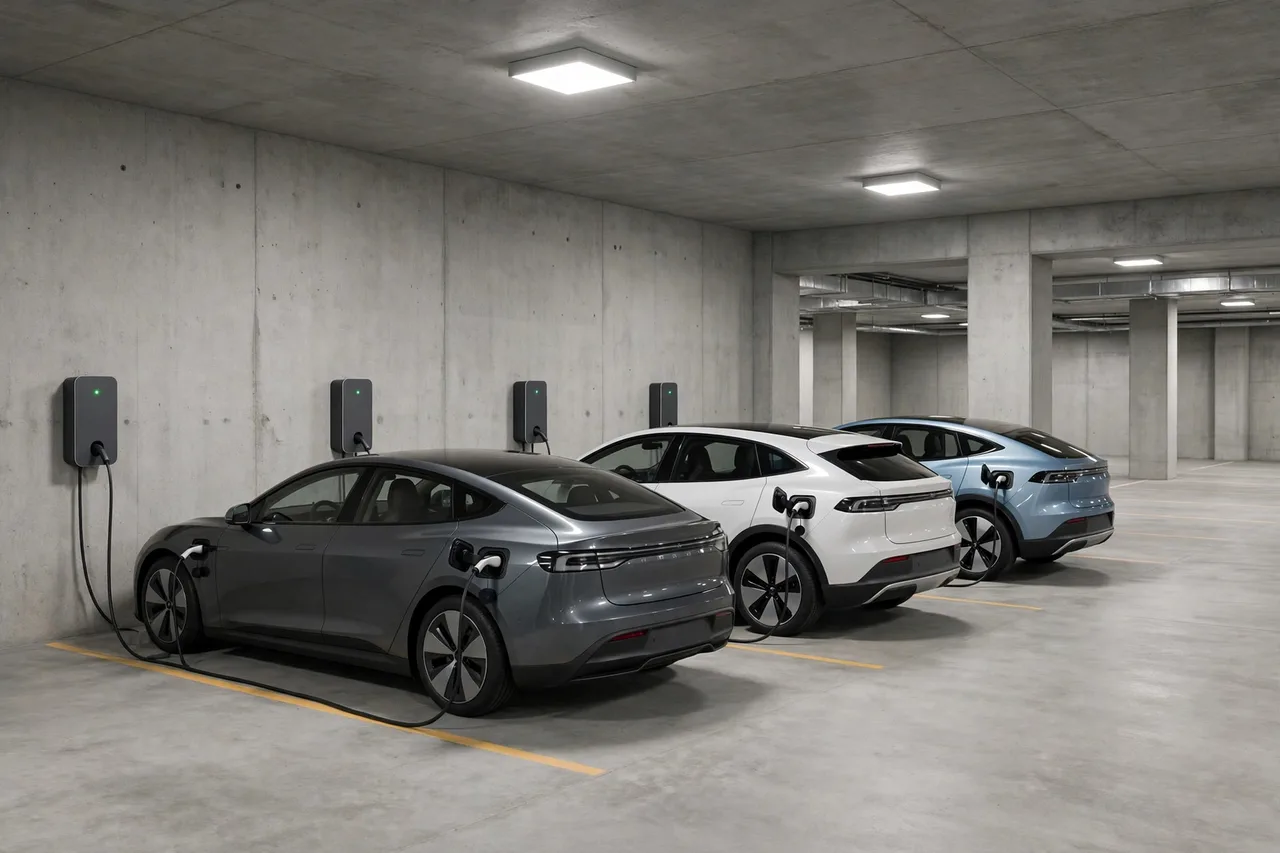
EV charging services in Tulsa
Ten services cover the work installers do in Tulsa. Three lead the list here because of what this city's housing and law actually look like — each links to its national service page, where scope and process are set out in full.
Home EV Charger Installation in Tulsa
The standard first install: a dedicated circuit from the panel to the parking space, a station mounted and configured to that circuit, and a passed inspection to close it out. What changes from house to house is never the recipe — it is the panel's spare capacity, the length of the run, and how the car actually parks.
In Tulsa: where most Tulsa projects start and finish: one circuit, one station, one inspection.
Dedicated Circuit & Electrical Panel Upgrade in Tulsa
When the arithmetic says the service is full, this is the enabling job: a larger panel, or a new dedicated circuit with capacity planned in, done under the same permit umbrella as the charger it feeds. It is also the upgrade the rest of the house quietly benefits from for decades.
In Tulsa: service work that turns 'no room' into a circuit with headroom in Tulsa homes.
Level 2 Charger Installation in Tulsa
The step up from a household outlet to a real circuit: 240 volts, sized as a continuous load, delivering several times the overnight range of a Level 1 cord. The craft is in matching circuit, station configuration and vehicle acceptance so the three agree.
In Tulsa: the upgrade from a wall outlet to a dedicated 240-volt circuit, and the end of range arithmetic at bedtime.
Utility programs and electricity in Tulsa
Electricity in Tulsa comes from Oklahoma Gas & Electric Co. Parts of the wider metro are served by Public Service Co of Oklahoma, Verdigris Valley Elec Coop Inc, East Central Oklahoma Elec Coop Inc. The utility matters twice over for a charger install: it sets the time-of-use rates that decide what overnight charging costs you, and it is the organisation that may — or may not — currently help pay for the equipment.
Program status is a snapshot, and this page dates its snapshot: sources checked at build time found no Oklahoma Gas & Electric Co residential charger rebate, no Oklahoma home-charger program, and a federal credit that ended September 30, 2025. Tulsa households should treat that as the position until a utility announcement changes it — utilities publish openings prominently when budgets exist, because unspent program money is a problem for them too.
While you are reading your tariff, check how your plan treats the evening peak. A charger scheduled to start after the peak window is the single easiest saving in home charging, and it is set once, in the car or the station, then forgotten.
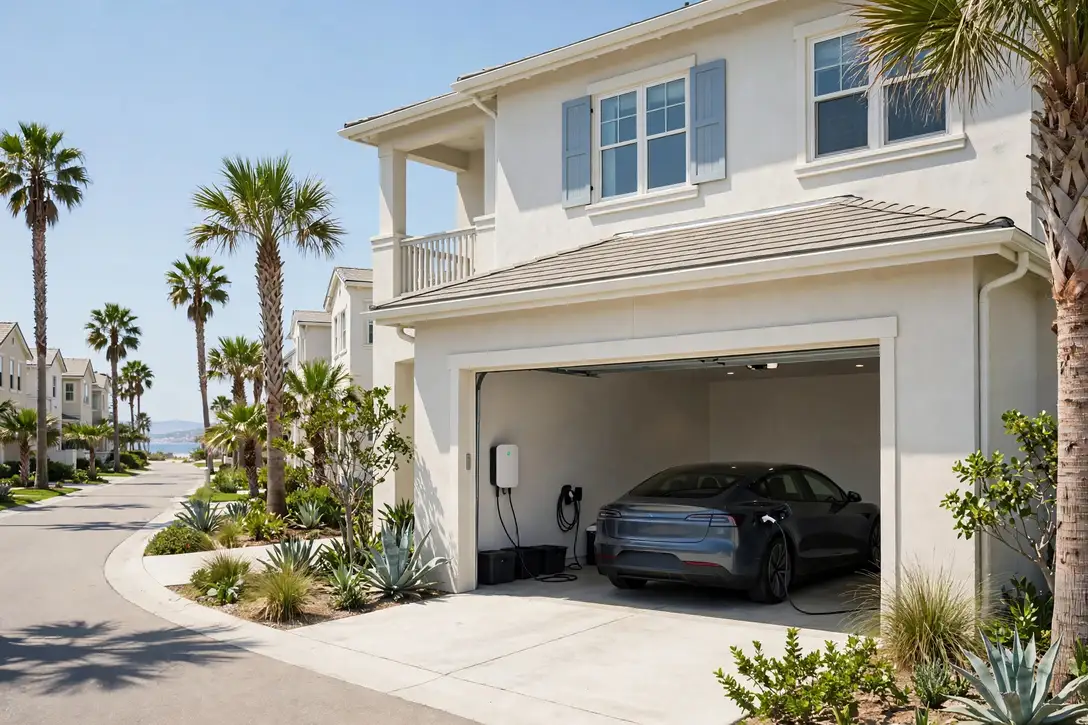
Condos, HOAs and the law in Oklahoma
No statute promises a charger approval in Oklahoma. Unlike the states that have enacted right-to-charge laws, Oklahoma leaves the question entirely to each community's covenants and board discretion. For Tulsa owners that is not the end of the road — it is a sign that the negotiation, the metering design and the written application carry the weight a statute would otherwise carry.
Timing helps too. Boards plan capital work annually; an application that arrives with the community's budget cycle, offering to coordinate with any planned electrical or repaving work, reads as a contribution rather than a demand.
The general process, minus the statute, is still covered in our guide to installing an EV charger in a condo or HOA community — most of its application-package advice applies in Tulsa exactly as written.
Climate, garages and charger placement
Parking orientation is a thermal decision in this metro: a car that bakes in western sun all afternoon starts its session hot, and both the car and the station manage heat before they manage charging. The overnight schedule is partly a shade strategy executed by clock.
Heat also argues for headroom in the circuit decision. A car managing a hot battery after a hot commute draws on its own schedule; a generously sized circuit finishes the session inside the cool window instead of straddling the morning. It is a small thing, decided once, felt all summer.

Permits and inspection in Tulsa
The permit trail also protects the next transaction: a charger circuit on the inspection record is an asset a buyer's inspector reads in one line, while an undocumented circuit is a question that follows the sale. Installers who work this metro treat the filing as part of the deliverable, not an errand.

Neighbourhoods and ZIP codes served
The page covers 52 ZIP codes in and around Tulsa — including 74101, 74102, 74103, 74104, 74105, 74106, 74107, 74108, 74110, 74112, 74114, 74115, 74116, 74117, 74119, 74120, 74121, 74126, 74127, 74128, 74129, 74130, 74131, 74132, 74133, 74134, 74135, 74136, 74137, 74141, 74145, 74146, 74147, 74148, 74149, 74150, 74152, 74153, 74155, 74156, 74157, 74158, 74159, 74169, 74170, 74171, 74172, 74182, 74186, 74187, 74192, 74193 — across Creek, Osage, Tulsa. If your ZIP is not in the first set shown, ask anyway: installer coverage follows the metro, not a postcode fence.
The same working area takes in the neighbouring localities of Broken Arrow, Jenks, Bixby, Glenpool, Leonard, Oakhurst, Kiefer, Sapulpa, Mounds, Sand Springs, Owasso, Sperry, Kellyville, Collinsville — the county ring an installer based in Tulsa actually drives. Requests from those communities route exactly as city requests do: same services, same permit discipline, same local facts where they differ.
Tulsa County accounts for 62 of the ZIP codes and 11 named postal localities in the research file, the nearest of them Broken Arrow, Jenks, Bixby, Glenpool, Leonard. The survey counts 680,794 residents in the county, with a median household income of $69,009 and a median home value of $230,400. Creek County accounts for 14 of the ZIP codes and 13 named postal localities in the research file, the nearest of them Kiefer, Sapulpa, Mounds, Kellyville, Mannford. The survey counts 72,830 residents in the county, with a median household income of $62,338 and a median home value of $182,100. Osage County accounts for 12 of the ZIP codes and 12 named postal localities in the research file, the nearest of them Skiatook, Prue, Osage, Avant, Barnsdall. The survey counts 45,997 residents in the county, with a median household income of $62,847 and a median home value of $182,100. Measured across its ZIP codes, the Tulsa footprint runs about 19 miles north to south and 16 east to west, from ZIP 74101 to 74193 — the ground an installer based here actually covers in a working week.
Beyond the county seats, the working area takes in Broken Arrow, Jenks, Bixby, Glenpool, Leonard, Oakhurst, Catoosa, Kiefer, Sapulpa, Coweta, Mounds, Sand Springs, Owasso, Redbird, Sperry, Haskell, Beggs, Wagoner, Inola, Kellyville, Claremore, Collinsville, Porter, Preston, Skiatook, Morris, Taft, Prue, Mannford, Vera, Slick, Boynton, Okmulgee, Oologah, Chouteau, Muskogee, Bristow, Osage, Avant, Okay, Foyil, Wainwright, Cleveland, Pryor, Council Hill, Oktaha, Hitchita, Terlton, Talala, Drumright, Schulter, Ramona, Barnsdall, Hominy, Ochelata, Fort Gibson, Depew, Hulbert, Locust Grove, Shamrock, Oilton, Jennings, Hallett, Dewar, Henryetta, Rentiesville, Chelsea, Peggs, Adair, Milfay, Wynona — the named localities for which Tulsa is the nearest metro in the network (neighbouring metros' pages cover their own ground), each routing to the same installer-matching service.
The largest communities in that working area after Tulsa itself, by the GeoNames populated-place file: Broken Arrow (population 106,563), Muskogee (population 38,456), Bartlesville (population 36,595), Owasso (population 34,542), Bixby (population 24,657), Jenks (population 20,740), Sapulpa (population 20,579), Sand Springs (population 19,783). Charging demand follows those populations — the subdivisions and town centres where the next driveways, and the next panels, are.
| ZIP | Locality | County |
|---|---|---|
| 74101 | Tulsa | Tulsa |
| 74133 | Tulsa | Tulsa |
| 74012 | Broken Arrow | Tulsa |
| 74137 | Tulsa | Tulsa |
| 74145 | Tulsa | Tulsa |
| 74013 | Broken Arrow | Tulsa |
| 74136 | Tulsa | Tulsa |
| 74011 | Broken Arrow | Tulsa |
| 74146 | Tulsa | Tulsa |
| 74135 | Tulsa | Tulsa |
| 74134 | Tulsa | Tulsa |
| 74129 | Tulsa | Tulsa |
| 74037 | Jenks | Tulsa |
| 74105 | Tulsa | Tulsa |
| 74008 | Bixby | Tulsa |
| 74114 | Tulsa | Tulsa |
| 74128 | Tulsa | Tulsa |
| 74112 | Tulsa | Tulsa |
| 74014 | Broken Arrow | Wagoner |
| 74108 | Tulsa | Tulsa |
| 74104 | Tulsa | Tulsa |
| 74132 | Tulsa | Tulsa |
| 74033 | Glenpool | Tulsa |
| 74043 | Leonard | Tulsa |
| 74120 | Tulsa | Tulsa |
| 74116 | Tulsa | Tulsa |
| 74115 | Tulsa | Tulsa |
| 74107 | Tulsa | Tulsa |
| 74119 | Tulsa | Tulsa |
| 74172 | Tulsa | Tulsa |
| 74102 | Tulsa | Tulsa |
| 74171 | Tulsa | Tulsa |
| 74182 | Tulsa | Tulsa |
| 74186 | Tulsa | Tulsa |
| 74187 | Tulsa | Tulsa |
| 74192 | Tulsa | Tulsa |
| 74103 | Tulsa | Tulsa |
| 74131 | Tulsa | Creek |
| 74110 | Tulsa | Tulsa |
| 74050 | Oakhurst | Tulsa |
| 74121 | Tulsa | Tulsa |
| 74141 | Tulsa | Tulsa |
| 74147 | Tulsa | Tulsa |
| 74148 | Tulsa | Tulsa |
| 74149 | Tulsa | Tulsa |
| 74150 | Tulsa | Tulsa |
| 74152 | Tulsa | Tulsa |
| 74153 | Tulsa | Tulsa |
| 74155 | Tulsa | Tulsa |
| 74157 | Tulsa | Tulsa |
| 74158 | Tulsa | Tulsa |
| 74169 | Tulsa | Tulsa |
| 74170 | Tulsa | Tulsa |
| 74193 | Tulsa | Tulsa |
| 74015 | Catoosa | Rogers |
| 74127 | Tulsa | Osage |
| 74159 | Tulsa | Tulsa |
| 74106 | Tulsa | Tulsa |
| 74041 | Kiefer | Creek |
| 74067 | Sapulpa | Creek |
| 74429 | Coweta | Wagoner |
| 74066 | Sapulpa | Creek |
| 74117 | Tulsa | Tulsa |
| 74130 | Tulsa | Tulsa |
| 74126 | Tulsa | Tulsa |
| 74047 | Mounds | Creek |
| 74063 | Sand Springs | Tulsa |
| 74055 | Owasso | Tulsa |
| 74458 | Redbird | Wagoner |
| 74073 | Sperry | Tulsa |
| 74436 | Haskell | Muskogee |
| 74156 | Tulsa | Tulsa |
| 74421 | Beggs | Okmulgee |
| 74477 | Wagoner | Wagoner |
| 74036 | Inola | Rogers |
| 74039 | Kellyville | Creek |
| 74019 | Claremore | Wagoner |
| 74021 | Collinsville | Tulsa |
| 74454 | Porter | Wagoner |
| 74456 | Preston | Okmulgee |
| 74070 | Skiatook | Osage |
| 74017 | Claremore | Rogers |
| 74018 | Claremore | Rogers |
| 74445 | Morris | Okmulgee |
| 74463 | Taft | Muskogee |
| 74060 | Prue | Osage |
| 74044 | Mannford | Creek |
| 74082 | Vera | Washington |
| 74071 | Slick | Creek |
| 74422 | Boynton | Muskogee |

Planning the install: from panel to parking
Homeowners sometimes ask why a job that looks like 'one outlet' needs a site visit at all. The visit exists because the three variables that set the scope — spare capacity, the run's route, and the property's approval layer — are all invisible from a photograph. In Tulsa an experienced installer reads them in minutes, in the panel's directory card, the garage's geometry and the community's documents. The quote that follows a visit is a different species from the quote that precedes one: it can be held to.
Finally, photograph the finished work — station, nameplate, panel directory with the new breaker labelled — and file it with the inspection record. When the car changes, the house sells or a second station joins the first, that folder is the difference between a five-minute answer and an archaeological dig.
Home charging know-how for Tulsa households
Protecting the station from the car
The most likely assailant of a garage charger is the car itself: a misjudged nose-in, a bicycle's handlebar, a ladder's fall. Placement is the first defence — out of the door swing, off the parking line's edge — and a simple bollard or wheel stop is the second where the geometry is tight. Outdoor pedestals earn the same thought against the snowplough's line and the delivery van's arc. It is carpentry, not electronics, and it belongs in the install conversation because the right time to protect a station is the day it is mounted.
The paperwork is part of the installation
A finished install leaves two legacies: a working charger and a file. The file — permit, passed inspection, the station's configuration recorded, the panel schedule updated, a photograph of the finished work — is what the future runs on. It answers the insurer's question, the buyer's question, the second installer's load calculation, and the warranty conversation, each in one page. Households that treat the paperwork as part of the deliverable never have to reconstruct it; households that do not, eventually do. Ask for the file at handover and keep it with the house documents.
A receptacle is not a station
The portable cord in the car's boot and a wall-mounted station both deliver Level 2 energy, and the resemblance ends there. The fixed station is torqued, configured, weather-sealed and holstered as a permanent appliance; the receptacle route asks a domestic outlet and plug to sustain a continuous load for a decade of nightly cycles. Both are legitimate in the code's eyes when done properly — but the daily-living difference, and the wear pattern on the receptacle, are why permanent parking places graduate to permanent equipment.
Three cars, one driveway
Households with more vehicles than bays run a small nightly logistics operation, and charging joins the rotation. The patterns that work: the station positioned to serve two parking spots in sequence, a household habit about whose night it is, and — where two of the fleet are electric — power sharing that removes the rotation entirely. The design conversation should start from the household's actual parking choreography, observed on a normal evening, because the charger serves the pattern that exists, not the one the driveway promised.
Reading the bill after the charger arrives
The first bills after an install reward a careful read. Charging appears as consumption, not as a line item — the household's kilowatt-hours rise by roughly the car's appetite, and the rate applied to the new hours depends on when they happened. Owners who check the schedule actually ran — that the car charged inside the intended window — catch the one configuration mistake that costs money monthly. After that, the bill becomes the household's quietest document: the car simply costs what the overnight rate says it should.

Frequently asked questions
What happened to the federal home-charger credit in Tulsa, OK?
Treat the answer as a standing no with a watching brief. The 30C credit is finished, Oklahoma has not replaced it for homeowners, and no verified Oklahoma Gas & Electric Co rebate was running in the sources checked for this page. Should that change, the utility's program page will say so first — and this page will be updated to match.
What can my HOA in Tulsa, OK do about a charger install?
In Tulsa, they can — there is no Oklahoma statute stopping them. Right-to-charge protection simply has not been enacted here, so the board's own rules decide. Owners do still get approved regularly: the applications that succeed answer the board's concerns (metering, insurance, restoration, a licensed installer) before the meeting, in writing.
Will my Tulsa, OK home need a panel upgrade for a Level 2 charger?
Sometimes — and Tulsa's housing stock is exactly why the question is worth asking properly. With a median build year of 1973 and roughly 64% of homes predating 1980, plenty of local panels are 100-amp units already carrying a full modern load. Those homes choose between an upgrade and load management; newer 200-amp homes usually just add the circuit. The site visit's load calculation is the decider.
How quickly will a Level 2 charger fill my car in Tulsa, OK?
In parked hours: a Level 1 cord returns about 3–5 miles for each of them, and a Level 2 circuit returns roughly 25–40, set by its amperage and the car's acceptance. For a Tulsa household parking ten hours, that is the difference between recovering a short errand day and recovering any day the car can legally drive.
How does the installer matching on this page work?
Send the request and it is matched against installers covering Tulsa — your service, ZIP, property type and timing travel with it. An installer then arranges the site visit and quotes in writing. Our role ends at the introduction; your contract, permit and paperwork are with the installer.
How long does a typical home charger installation take in Tulsa, OK?
The electrical work itself is usually a half day to a day for a straightforward house — panel near the parking, one circuit, one station. Around it sit two calendars the installer does not control: the permit's issuance and the inspection visit, which follow the local department's queue. Ask any quote to separate the three timelines; a blended promise hides which part might slip.
Nearby cities in Oklahoma
- EV charger installation in Oklahoma City — about 101 miles from Tulsa, metro population 1,450,000
- EV charger installation in Fort Smith, AR — about 93 miles from Tulsa, metro population 280,000
- EV charger installation in Fayetteville, AR — about 95 miles from Tulsa, metro population 600,000
- EV charger installation in Joplin, MO — about 105 miles from Tulsa, metro population 185,000
Ready to charge at home in Tulsa?
Two minutes of form, and the request is in front of licensed installers who cover this city — quotes follow site visits, in writing.