EV Charger Installation in McAllen, TX
Home Level 2 charging, panel upgrades and condo installs in McAllen — matched to licensed local installers, with the local facts that shape the job set out below.
Start with the vehicle you already own and the driveway it already sleeps in: home charging succeeds when the electrical side is treated as a small building project rather than an accessory purchase. In McAllen that project has local coordinates. McAllen itself is home to about 148,784 people, inside a state counting 387,400 battery-electric vehicles and 79,900 plug-in hybrids through 2025. The utility serving your street, the vintage of your panel, the rules of your community and the habits of your permit office are the four coordinates — this page fixes each one for McAllen.
A note on what PlugReady USA is and is not: we publish the local research and run the matching; the installation itself belongs to licensed electricians and installer companies working in McAllen. Everything below is written so you can hold your own in that conversation — numbers first, sales language nowhere.
The demand picture for the McAllen–Edinburg–Mission metro, from the registration data this site is built on: Rio Grande Valley anchor. Registration counts are the honest way to size a charging market — they count households, not headlines — and they are why McAllen sits where it does in our build order (rank 65 of 300 metros, Tier B).
Three survey lines do most of the predictive work on this page. Income — a median of $60,907 per household — tracks the pace at which McAllen households adopt EVs at all. Tenure — 63% owner-occupied — decides whose signature the work needs. And structure — 64% single-unit detached — decides how often the answer is a simple garage circuit rather than a building negotiation.

Put the survey together and McAllen's charging profile reads like this: a housing stock of mixed vintages, where both electrical eras appear on the same street; a detached-house majority with a real attached and multifamily minority; buildings of five or more units are a visible minority of the stock; and owners hold a working majority, with renters a significant minority. That combination — more than any single number — is what the installers working here plan around, and it is the lens for everything on this page.
In absolute terms, the survey counts 56,730 housing units in McAllen — 49,555 occupied, 31,074 of them by their owners. The stock resolves into 36,171 single-unit detached houses, 14,791 homes standing since before 1980, and 9,156 units in larger buildings. Those six counts are the city's charging map drawn without percentages, and every section of this page is a consequence of one of them. The page's geography is equally concrete: 5 ZIP codes across Hidalgo, centred near 26.22 degrees north latitude. The city anchors the McAllen–Edinburg–Mission metropolitan area, home to roughly 875,000 people on the research file's metro estimate — the wider labour and housing market this page's installers work across.
The same survey release fills in the household economics around the housing stock: a median home value of $218,500, median gross rent of $970, per-capita income of $31,981, and a median resident age of 34. And the daily rhythms behind the housing numbers: 76% of McAllen workers drive to work alone — the commute pattern home charging is built around; 8% work from home, a population whose cars charge on daytime and overnight schedules alike; 0% commute by public transit; 32% of adults hold a bachelor's degree or higher. And the fleet in the driveways: 16,126 households in McAllen have exactly one vehicle, 29,369 have two or more, and 4,060 have none.
Household structure, from the same release: 73% of McAllen households are family households. The burden shares behind the housing stock: 51% of renting households are cost-burdened at the 30%-of-income line, as are 0% of mortgaged owners — context for why the overnight rate window, once set, is treated here as a household fixture rather than a hobby.
Taken as one portrait, the numbers describe a specific charging market. The stock reads in strata: a pre-war core, a ranch-era ring, subdivisions from the nineties, infill from the last decade — four electrical eras sharing one permit office and one installer workforce. Mixed form means mixed timelines: a homeowner's install is a fortnight's scheduling, a condo's is a season's governance; the metro's charging growth arrives on both clocks at once.
Tenure splits the readership cleanly down the middle: owners reading for circuits, renters reading for proposals, both arriving at the same page with different first questions. The specification pattern at this income band is disciplined: capacity for today's car and a conduit sized for tomorrow's, the upgrade deferred until the load calculation insists. Filed tariffs and public dockets give this territory a paper trail most markets lack: the diligent household can read the utility's own electrification plan and know which programmes are funded, piloted or merely proposed.
Volume professionalises everyone it touches: permit clerks who process charger applications as routine, inspectors who have seen every configuration, dealers who ask about home charging as a standard part of the sale. The diary economics differ from the biggest metros: good installers book in weeks, not months, and the household that calls in spring is rarely queueing behind a season of work. The association dimension here runs on persuasion rather than statute — no state charging law frames the application, so the complete, professional proposal carries the whole argument, as the law section above explains.
The electrical reality in McAllen homes
Four numbers organise everything an installer expects in McAllen: median build year 1997; 26% of units built before 1980; 64% of the stock detached; 63% of occupied homes owner-occupied. Capacity, circuit routes and approval layers all correlate with those four. The paragraphs below are their commentary. The metro's building booms left two electrical eras side by side. Post-1990s subdivisions were wired for modern loads and usually take a charger circuit directly; the established in-town stock asks harder questions of its panels. Knowing which era your street belongs to tells you most of what your site visit will conclude. Porches, carports and parking pads carry a real share of this city's charging, because the stock predates the two-car garage as a standard feature — outdoor-rated equipment is a local staple, not an edge case.
One further survey line belongs in any McAllen install conversation: 92% of the city's homes heat with electricity — 44,782 households whose panels already carry a major winter load before a charger is contemplated. Electric heat and EV charging are the two largest discretionary loads a house can host, and where they coincide, the load calculation stops being a formality.
The tenure split cuts the other way too: roughly 18,481 occupied homes in McAllen are rented. For those households the charger question is a negotiation with a property owner — written proposal, licensed installer, metering clarity — and it succeeds often enough that installers here keep the pattern ready.
The city's stock is not all houses: 16% of units are in structures of five or more. Shared buildings mean shared panels, assigned parking and association process — the substance of the multifamily sections below.
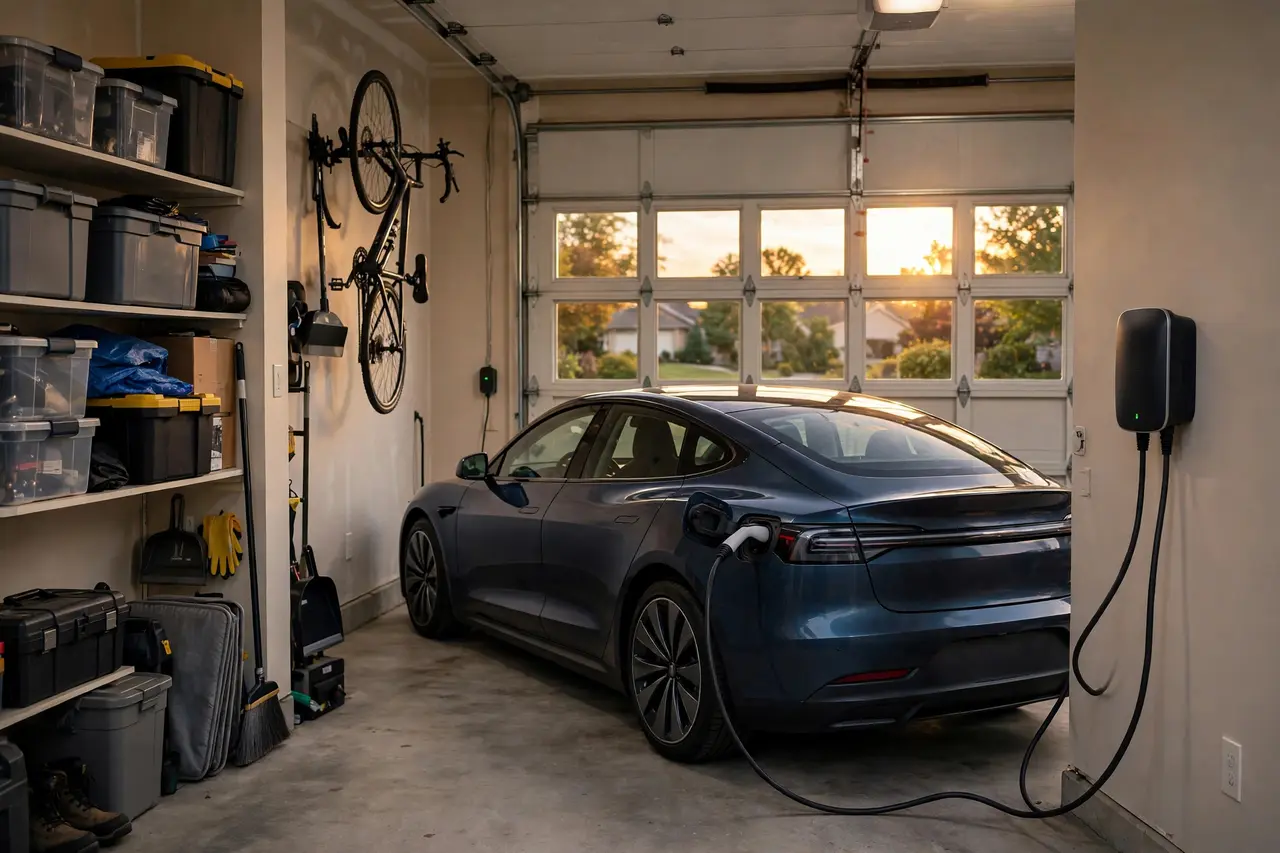
EV charging services in McAllen
Installers in McAllen book the same ten services as everywhere — but not in the same proportions. The three leading cards below are this city's pattern, set by its panels, its buildings and its statute book.
Home EV Charger Installation in McAllen
Think of it as plumbing for electrons, done once: capacity checked, circuit run, station mounted and configured, inspection passed. The households that report the smoothest projects describe the same shape — a visit that measured, a quote that itemised, and a car that simply charged from the first night.
In McAllen: the core residential job in McAllen: circuit, mounting, configuration and inspection in one visit pattern.
Level 2 Charger Installation in McAllen
Level 2 earns its keep on the worst week of the year: the cold snap, the back-to-back long days, the evening the car comes home empty with a dawn departure. A circuit sized for those weeks makes the ordinary ones invisible.
In McAllen: what most McAllen drivers mean when they say they want 'a real charger' — 240 volts, sized to the circuit.
Load Management & Smart Charging Setup in McAllen
The alternative to a bigger service: a listed management system caps the charger's draw against the home's real-time load, which the code recognises in the load calculation itself. Houses that only occasionally approach their limit are exactly the houses this fits.
In McAllen: the alternative to a bigger service in McAllen homes that only occasionally approach their panel's limit.
Utility programs and electricity in McAllen
Electricity in McAllen comes from Magic Valley Electric Coop Inc. Parts of the wider metro are served by Oncor Electric Delivery Company LLC, AEP Texas Central Company. The utility matters twice over for a charger install: it sets the time-of-use rates that decide what overnight charging costs you, and it is the organisation that may — or may not — currently help pay for the equipment.
Rebate status in McAllen: none verified. The utility and state sources checked for this page list no active residential charger rebate from Magic Valley Electric Coop Inc, no Texas replacement program for home installs, and the federal 30C credit ended on September 30, 2025. When a funded round opens it appears on the utility's own program pages with terms and dates; until one does, the honest budget for a charger install here is the install itself.
While you are reading your tariff, check how your plan treats the evening peak. A charger scheduled to start after the peak window is the single easiest saving in home charging, and it is set once, in the car or the station, then forgotten.
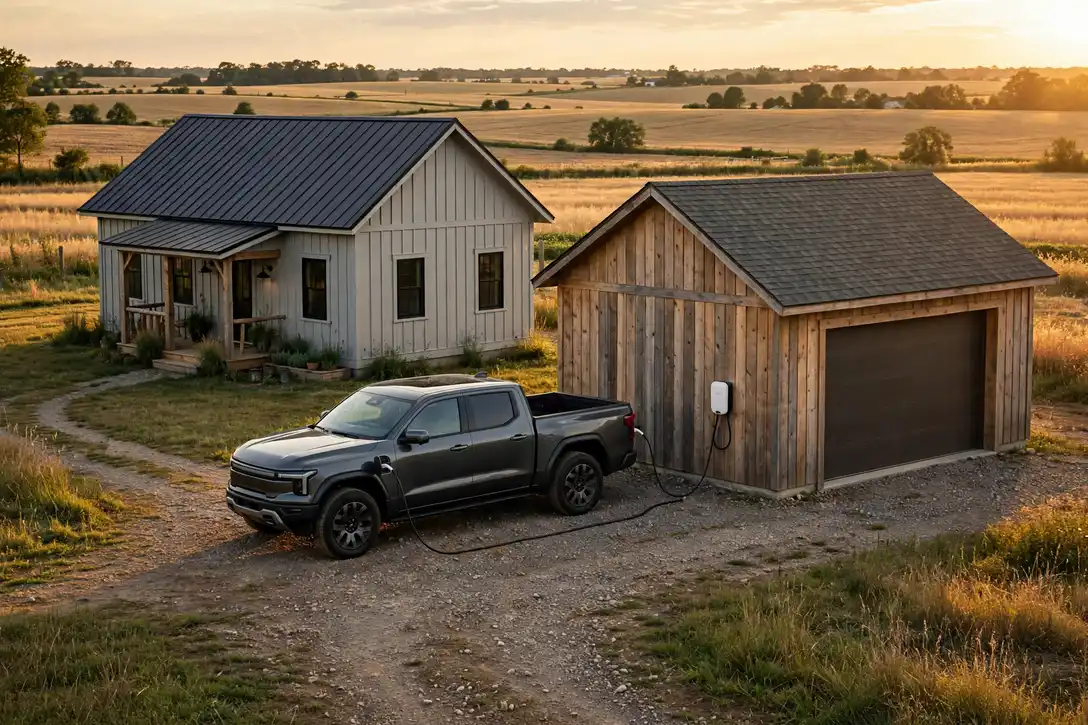
Condos, HOAs and the law in Texas
Texas has no statewide right-to-charge law. That needs saying plainly, because roundups on the internet sometimes claim otherwise: in the authoritative statute indexes checked for this page, no Texas law prevents a homeowners association or condominium from refusing a charger in a common or assigned space. Your community's own covenants and board govern the question in McAllen.
No law does not mean no path. Boards approve chargers every week when the proposal answers their real concerns in advance: a licensed installer, a dedicated circuit that touches nothing shared, metering that keeps the electricity cost on the owner, insurance, and a commitment to restore the space on removal. Bring that package, in writing, before the meeting — not during it.
For the full playbook — application contents, metering designs, the questions boards ask — see the condo and HOA charging guide. In McAllen it should be read as a negotiation manual, because negotiation is what the absence of a statute leaves you.
Climate, garages and charger placement
Thermal habits separate durable installs from tired ones in this region: connectors holstered out of the sun, enclosures with room to breathe, and charge sessions pushed past midnight when the air gives the equipment its easiest working conditions of the day.
The overnight window in a hot metro is a thermal decision before it is a tariff one. Air that has given up the day's heat asks less of the car's cooling, less of the garage, less of the equipment — the schedule that saves money is the same schedule that is kind to hardware, and both point after midnight.

Permits and inspection in McAllen
Expect the permit to name the circuit, the breaker and the equipment. An installer who suggests skipping it is saving an afternoon by spending your liability; the inspection is also your independent check that the continuous-load sizing was done properly.

Neighbourhoods and ZIP codes served
The page covers 5 ZIP codes in and around McAllen — including 78501, 78502, 78503, 78504, 78505 — across Hidalgo. If your ZIP is not in the first set shown, ask anyway: installer coverage follows the metro, not a postcode fence.
The same working area takes in the neighbouring localities of Pharr, San Juan, Mission, Edinburg, Alamo, Hidalgo, Donna, La Blanca, Penitas, La Joya, Weslaco, Elsa, Edcouch, Progreso — the county ring an installer based in McAllen actually drives. Requests from those communities route exactly as city requests do: same services, same permit discipline, same local facts where they differ.
Hidalgo County accounts for 30 of the ZIP codes and 21 named postal localities in the research file, the nearest of them Mcallen, Pharr, San Juan, Mission, Edinburg, Alamo. The survey counts 891,977 residents in the county, with a median household income of $54,338 and a median home value of $140,900. Measured across its ZIP codes, the McAllen footprint runs about 5 miles north to south and 3 east to west, from ZIP 78501 to 78505 — the ground an installer based here actually covers in a working week.
Beyond the county seats, the working area takes in Pharr, San Juan, Mission, Edinburg, Alamo, Hidalgo, Donna, La Blanca, Penitas, La Joya, Weslaco, Elsa, Edcouch, Progreso, Mercedes, Los Ebanos, La Villa, Sullivan City, Hargill, Santa Rosa, La Feria, Grulla, Lasara, Sebastian, Garciasville, Lyford, Linn, Santa Elena, Raymondville, Delmita, Rio Grande City, San Isidro, San Perlita, Roma — the named localities for which McAllen is the nearest metro in the network (neighbouring metros' pages cover their own ground), each routing to the same installer-matching service.
The wider working area also reaches Santa Maria, Harlingen, Combes, Los Indios, San Benito, Rio Hondo, Lozano, Olmito, Brownsville — ground shared with neighbouring metros, where installers cross the same county lines in both directions.
ZIP codes in that shared ground include 78520, 78523, 78535, 78550, 78551, 78552, 78553, 78567, 78568, 78575, 78583, 78586, 78592.
The largest communities in that working area after McAllen itself, by the GeoNames populated-place file: Edinburg (population 84,497), Mission (population 83,298), Pharr (population 76,538), Weslaco (population 39,474), San Juan (population 36,556), Alamo (population 19,246), Mercedes (population 16,657), Donna (population 16,523), Alton (population 15,760), Rio Grande City (population 14,404), Hidalgo (population 13,709), La Homa (population 11,985), Raymondville (population 11,139), Roma (population 10,223), Roma-Los Saenz (population 9,765), Murillo Colonia (population 7,344), Elsa (population 6,647), Mila Doce (population 6,222), Progreso (population 5,922), Palmview (population 5,715). Charging demand follows those populations — the subdivisions and town centres where the next driveways, and the next panels, are.
Starr County reaches into the working area with 66,067 residents, a median household income of $37,639 and a median home value of $95,100; its localities on this page include Grulla, Garciasville, Santa Elena, Delmita, Rio Grande City. Willacy County reaches into the working area with 20,139 residents, a median household income of $54,180 and a median home value of $73,600; its localities on this page include Mission, Lasara, Sebastian, Lyford, Raymondville. Cameron County reaches into the working area with 426,120 residents, a median household income of $52,601 and a median home value of $136,500; its localities on this page include Santa Rosa, La Feria.
| ZIP | Locality | County |
|---|---|---|
| 78501 | Mcallen | Hidalgo |
| 78505 | Mcallen | Hidalgo |
| 78503 | Mcallen | Hidalgo |
| 78504 | Mcallen | Hidalgo |
| 78502 | Mcallen | Hidalgo |
| 78577 | Pharr | Hidalgo |
| 78589 | San Juan | Hidalgo |
| 78572 | Mission | Hidalgo |
| 78539 | Edinburg | Hidalgo |
| 78573 | Mission | Hidalgo |
| 78516 | Alamo | Hidalgo |
| 78540 | Edinburg | Hidalgo |
| 78557 | Hidalgo | Hidalgo |
| 78574 | Mission | Willacy |
| 78537 | Donna | Hidalgo |
| 78558 | La Blanca | Hidalgo |
| 78576 | Penitas | Hidalgo |
| 78560 | La Joya | Hidalgo |
| 78596 | Weslaco | Hidalgo |
| 78599 | Weslaco | Hidalgo |
| 78543 | Elsa | Hidalgo |
| 78541 | Edinburg | Hidalgo |
| 78538 | Edcouch | Hidalgo |
| 78579 | Progreso | Hidalgo |
| 78570 | Mercedes | Hidalgo |
| 78565 | Los Ebanos | Hidalgo |
| 78562 | La Villa | Hidalgo |
| 78595 | Sullivan City | Hidalgo |
| 78542 | Edinburg | Hidalgo |
| 78549 | Hargill | Hidalgo |
| 78593 | Santa Rosa | Cameron |
| 78559 | La Feria | Cameron |
| 78548 | Grulla | Starr |
| 78561 | Lasara | Willacy |
| 78594 | Sebastian | Willacy |
| 78547 | Garciasville | Starr |
| 78569 | Lyford | Willacy |
| 78563 | Linn | Hidalgo |
| 78591 | Santa Elena | Starr |
| 78580 | Raymondville | Willacy |
| 78536 | Delmita | Starr |
| 78582 | Rio Grande City | Starr |
| 78588 | San Isidro | Starr |
| 78590 | San Perlita | Willacy |
| 78584 | Roma | Starr |

Planning the install: from panel to parking
Experienced McAllen installers talk about 'the tell': the small observation that predicts the job. A panel directory in pencil with three generations of handwriting. A garage converted, then converted back. A charger-shaped hole in the household's plans — the second car already ordered. Mention your own tells at the visit; they are scope information, and scope named early is scope settled fairly.
One more piece of sequencing advice McAllen installers give consistently: if the panel is being opened anyway, settle the other electrical maybes in the same visit — the circuit you will want next year costs least while the permit and the electrician are already in the house.
Home charging know-how for McAllen households
Long runs and voltage drop
Distance taxes a circuit twice: in materials, and in voltage. A long run at charging currents loses voltage along its length, and the code's remedy is conductor sized a step beyond the minimum so the station at the far end still receives what it expects. This is one of the reasons a detached structure or a far-corner panel turns a simple circuit into a designed one — the arithmetic is easy, but it has to be done, and it is invisible in any quote that scopes the job from the charger box alone. The site visit is where the tape measure settles it.
Dust, grime and the working garage
Garages are workshops, and workshops make dust. A charging connector living in one needs its holster the way a tool needs its hook — off the bench, out of the sawdust's fall line, capped by its dock rather than dangling. Metal filings and charger contacts are particular enemies; grinding and charging do not share a corner happily. None of this asks for a cleanroom — just the ordinary discipline of a space that works for a living, extended to the one appliance that is also a fuel line.
What an outage does and does not change
When the grid goes down, a standard home charging station goes quiet with everything else — it is a load, not a source, and it neither drains the car nor feeds the house. Sessions resume or restart when power returns, and the car's own settings govern which. Households in outage country plan around this plainly: charge ahead of forecast storms the way you would fill a fuel tank, and treat the car as the household's largest battery-shaped object — one that, with today's standard equipment, keeps its energy to itself.
The new owner's first week
Week one with a home charger is about building the reflex: park, plug, forget. Set the schedule once, against your rate window; confirm the car wakes to the charge level your commute wants; learn where the station's indicator confirms a session at a glance from the door. By the second week the public-charging arithmetic of the old routine — detours, queues, weather — is already hard to remember. The households that struggle are the ones still treating the wall like a petrol station: sessions are not events, they are the background of parking.
Adapters and other false economies
Continuous loads forgive nothing, and adapters are where charging setups go to be forgiven anyway: a chain of plugs between the wall and a device that draws near its circuit's limit for eight hours is a chain of warm connections. The standing rule from installers is plain — the station connects as its listing intends, hardwired or into a receptacle rated and installed for the duty, and borrowed dryer outlets and travel adapters are emergency expedients, not a charging system. Households that need the car charged nightly should own the boring version of the setup: one circuit, one connection, no improvisation.

Frequently asked questions
Can I still get the federal tax credit for a home charger in McAllen, TX?
That credit is finished: 30C ended on September 30, 2025. What about locally? In the utility and state sources checked for this page, nothing verified was running for McAllen homeowners — no Magic Valley Electric Coop Inc rebate, no state scheme. If one opens, it will appear on the utility's site with dates; plan your install without it meanwhile.
Can my association in McAllen, TX say no to a home charger?
In McAllen the honest answer is yes, they can refuse: Texas gives owners no statutory charging right, so the board's discretion governs. What changes outcomes is the quality of the file in front of them — drawings, metering, insurance, a named licensed installer — and a growing number of boards here approve exactly that file.
Panel upgrade or not — how do McAllen, TX homeowners find out?
It depends on the panel, and McAllen's housing makes the question common: the median home here was built in 1997, and about 26% of housing units predate 1980. Homes with 100-amp service that is already well used often need an upgrade or a load-management device; homes with 200-amp service and spare breaker space usually do not. A load calculation during the site visit settles it — ask to see it.
Level 1 or Level 2 in McAllen, TX — what is the real difference?
Level 2 is several-fold faster in the only unit that matters — miles back per hour parked: roughly 25–40 against Level 1's 3–5. The exact figure follows the circuit: a 40-amp circuit and a 60-amp circuit are both Level 2, and the car's onboard limit may sit below either. Your installer matches the three numbers at the site visit.
What happens after I request an installer through this page?
Three steps: the request routes to installers who work McAllen, Texas; one contacts you to walk the property; the walk produces the written quote. Everything on this page — the utility position, the law, the housing data — is yours to check that quote against.
Do installers cover the communities around McAllen, TX?
They do. Coverage follows the metro: Pharr, San Juan, Mission, Edinburg, Alamo and their neighbouring communities are worked by the same installers who cover McAllen itself, and a request from those ZIP codes routes identically — service, property type and timing are all the form asks for.
Nearby cities in Texas
- EV charger installation in Brownsville — about 44 miles from McAllen, metro population 425,000
- EV charger installation in Laredo — about 114 miles from McAllen, metro population 270,000
- EV charger installation in Corpus Christi — about 118 miles from McAllen, metro population 425,000
- EV charger installation in Victoria — about 192 miles from McAllen, metro population 100,000
- EV charger installation in San Antonio — about 225 miles from McAllen, metro population 2,650,000
- EV charger installation in Austin — about 285 miles from McAllen, metro population 2,400,000
- EV charger installation in Lake Charles, LA — about 393 miles from McAllen, metro population 210,000
- EV charger installation in Lafayette, LA — about 442 miles from McAllen, metro population 480,000
- EV charger installation in Alexandria, LA — about 473 miles from McAllen, metro population 150,000
Ready to charge at home in McAllen?
Send the essentials — what you need, where, and what kind of property — and a licensed local installer will pick it up from there.