EV Charger Installation in Victoria, TX
Charging where you park, in Victoria: the utility programs, state law, permit process and housing facts behind a home charger install, gathered in one place.
There is a short list of things that never change about a charger install — it needs capacity, a route, a position and a permit — and a longer list of things that change with the ZIP code. This page is the longer list, for Victoria. Victoria itself is home to about 66,025 people. Texas's registered electric fleet reached 387,400 battery-electric vehicles and 79,900 plug-in hybrids through 2025, and the installers working this metro have local habits worth borrowing. The utility section states what is verified and what is not; the law section quotes the position as it stands; the housing section works from survey data rather than vibes.
One honest note before the detail: PlugReady USA does not install chargers. We collect your requirements and pass them to licensed installers who cover Victoria, and this page exists so that you can judge those conversations with the local facts already in hand.
Why Victoria ranks 266 in this network's 300-metro build order: South TX. Those are registration figures, not projections, and they translate directly into installation work — every newly registered plug-in vehicle is a household deciding where it will charge.
Context from the Census Bureau's survey of Victoria: median household income $56,874; 52% of occupied homes are owner-occupied; 58% of housing units are single-unit detached houses. It is the profile of a city where the typical charger job is a homeowner job — scoped by the panel and the wire run, not by permissions.

The composite picture matters more than any single statistic. In Victoria: an older housing fabric, where panel archaeology is a normal part of the first visit; a detached-house majority with a real attached and multifamily minority; buildings of five or more units hold a substantial share of homes, which keeps the multifamily sections of this page in daily use; meanwhile, owners hold a working majority, with renters a significant minority. A page that ignored that profile would give the same advice everywhere; this one is ordered by it.
The counts behind the percentages, for the record: Victoria has 31,143 housing units on the survey's count, 27,775 of them occupied, and 14,329 owner-occupied households making their own electrical decisions. Detached houses number 17,942; homes built before 1980 number 14,295; units in buildings of five or more number 6,742. An installer's week in this city is a walk through exactly that distribution. The page's geography is equally concrete: 5 ZIP codes across Victoria, centred near 28.81 degrees north latitude. The city anchors the Victoria metropolitan area, home to roughly 100,000 people on the research file's metro estimate — the wider labour and housing market this page's installers work across.
The same survey release fills in the household economics around the housing stock: a median home value of $207,100, median gross rent of $1,172, per-capita income of $32,142, and a median resident age of 35. The movement data matters as much as the money data: 81% of Victoria workers drive to work alone — the commute pattern home charging is built around; 7% work from home, a population whose cars charge on daytime and overnight schedules alike; 0% commute by public transit; 20% of adults hold a bachelor's degree or higher. Vehicle ownership, from the same release: 15,660 households in Victoria run two or more vehicles, and 2,543 run none — the two ends of the market this page serves and does not serve.
Two burden statistics frame the economics: in Victoria, 43% of renters and 0% of mortgage-holding owners are housing-cost burdened at the standard 30% threshold. And 54% of households are family households, the segment most likely to run the two-vehicle, two-schedule pattern the second-vehicle planning notes address.
Read together, the local facts draw a recognisable picture. A stock this old wires its history into the walls: cloth-wrapped conductors in the deepest streets, fuse boxes that outlived their century, panels added in layers by generations of electricians each solving their own decade's problem. The housing variety shows up in the permit data as variety: single-family circuits in volume, building projects in ones and twos, each teaching the local workforce a different half of the trade.
Renter weight gives this metro's charging story a negotiation at its centre: the circuit is easy, the permission is the project, and the paperwork patterns in the guides matter as much as any load calculation. Budget discipline shapes the specification — the circuit sized exactly, the management device considered wherever it defers a service upgrade, every scope line asked to justify itself. The commission's calendar quietly schedules the market: when a new time-of-use design is approved, installer phones ring in a pattern the docket predicted months earlier.
Households here are rarely the first on their street; the local knowledge pool — which installer, which tariff, which board precedent — is deep and shared freely. The permit counter in a smaller city is a conversation, not a queue: applications are read by people who may know the street, and complete paperwork is remembered kindly. The association dimension here runs on persuasion rather than statute — no state charging law frames the application, so the complete, professional proposal carries the whole argument, as the law section above explains.
The electrical reality in Victoria homes
Four numbers organise everything an installer expects in Victoria: median build year 1983; 46% of units built before 1980; 58% of the stock detached; 52% of occupied homes owner-occupied. Capacity, circuit routes and approval layers all correlate with those four. The paragraphs below are their commentary. Age shows up electrically before it shows up anywhere else: services sized for a house with a third of today's appliances. Expect the first conversation to be about capacity — what the panel is, what it already feeds, and which of the three routes (circuit, management, upgrade) your numbers support. Attics, basements and interior panel locations are common in this vintage of stock, which is why the run's route gets its own line in any serious quote: distance and finish decide labour more than the charger does.
The fuel table adds one more local fact: 16,153 Victoria homes — 63% of the stock — heat with electricity. Those households already think in kilowatts through the winter, their panels carry the load to prove it, and a charger's overnight appetite joins a system that is, in the useful sense, already electrified.
Renters are the other constituency in these numbers: about 13,446 of Victoria's occupied homes are rented rather than owned. Their charging route runs through a landlord conversation instead of a panel they control — a different project, covered by the rentals guide and the law section below, but a routine one in a city with this many renting households.
The city's stock is not all houses: 22% of units are in structures of five or more. Shared buildings mean shared panels, assigned parking and association process — the substance of the multifamily sections below.
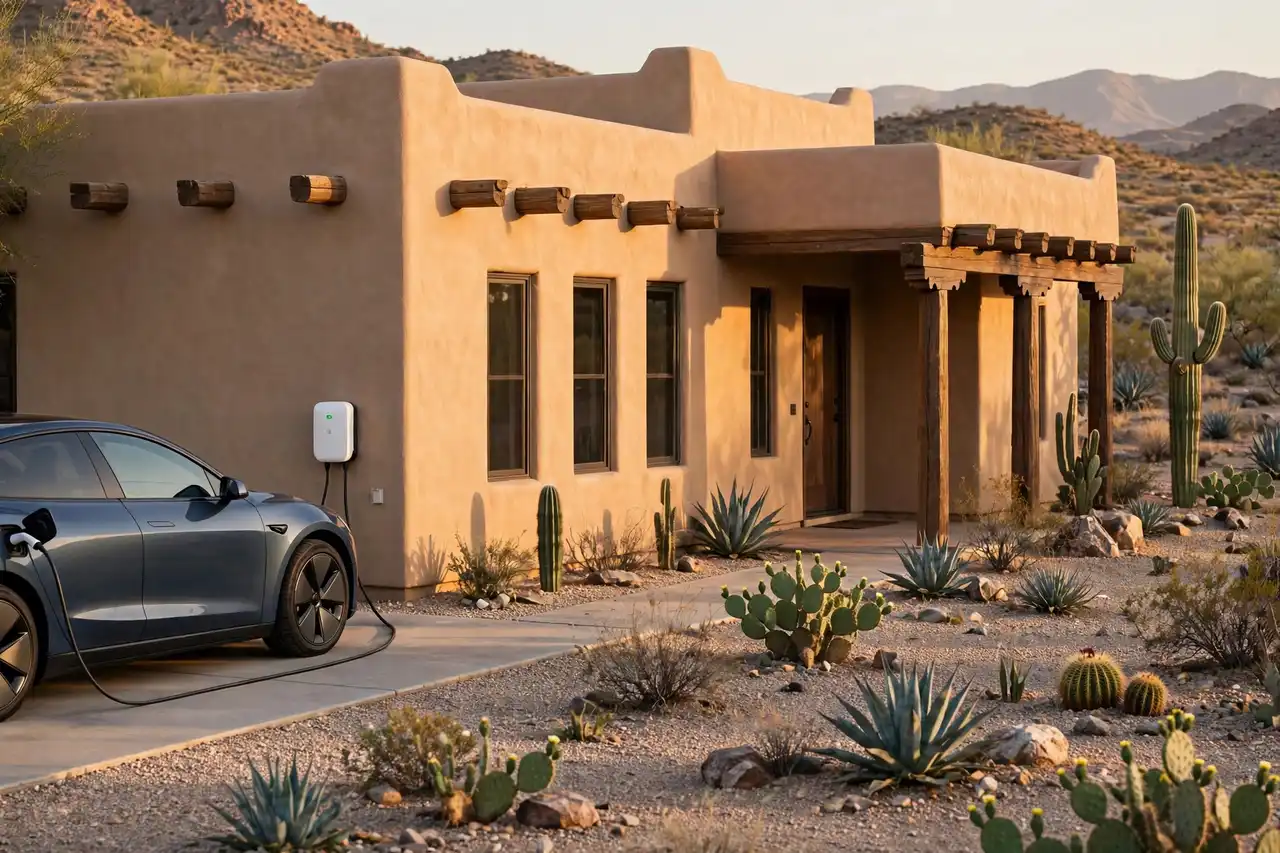
EV charging services in Victoria
An installer's work in Victoria usually starts with one of the three lead services below. The cards describe the job as it is actually scoped; the grid underneath carries the rest of the menu.
Home EV Charger Installation in Victoria
Think of it as plumbing for electrons, with the same virtues: correct sizing, honest materials, tidy runs, tested joints. The installers who do it weekly follow a pattern — assess, calculate, route, mount, configure, document — and the pattern is why their installs rarely make news afterwards.
In Victoria: the default first install for Victoria's EV households — a station where the car already parks.
Dedicated Circuit & Electrical Panel Upgrade in Victoria
Panel work is the one part of a charger project that outlives the car, the station and possibly the household's tenure. Specified generously and documented properly, it is less an expense than a permanent alteration in what the house can do.
In Victoria: relevant in Victoria wherever a 100-amp panel already carries cooking, heating and hot water before a charger asks for room.
Level 2 Charger Installation in Victoria
Level 2's numbers explain its dominance: several times the overnight recovery of a wall outlet, on equipment sized to the circuit by a factor the code fixes. The install is a circuit project with a station at the end of it, and it is quoted that way by anyone who does it weekly.
In Victoria: 240 volts, sized honestly — the working definition of home charging in Victoria.
Utility programs and electricity in Victoria
Electricity in Victoria comes from Guadalupe Valley Elec Coop Inc. Parts of the wider metro are served by Victoria Electric Coop, Inc, AEP Texas Central Company. The utility matters twice over for a charger install: it sets the time-of-use rates that decide what overnight charging costs you, and it is the organisation that may — or may not — currently help pay for the equipment.
Rebate status in Victoria: none verified. The utility and state sources checked for this page list no active residential charger rebate from Guadalupe Valley Elec Coop Inc, no Texas replacement program for home installs, and the federal 30C credit ended on September 30, 2025. When a funded round opens it appears on the utility's own program pages with terms and dates; until one does, the honest budget for a charger install here is the install itself.
While you are in the tariff pages, look at how the plan values the evening ramp — the hours when cooking, cooling and charging would otherwise stack. A charger that starts after the ramp is the simplest scheduling decision in home charging, and it is set once.
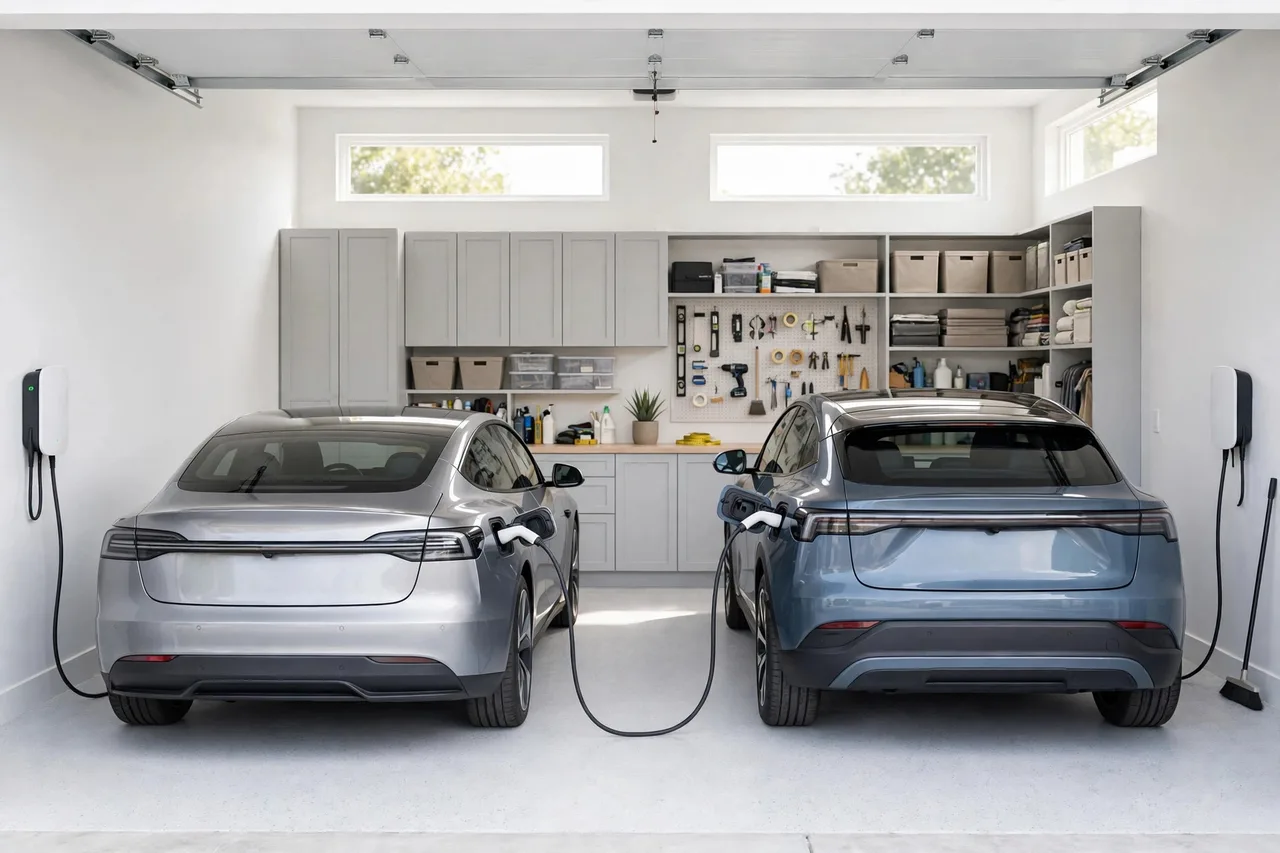
Condos, HOAs and the law in Texas
Texas has no statewide right-to-charge law. That needs saying plainly, because roundups on the internet sometimes claim otherwise: in the authoritative statute indexes checked for this page, no Texas law prevents a homeowners association or condominium from refusing a charger in a common or assigned space. Your community's own covenants and board govern the question in Victoria.
Strategy, then, is the local substitute for statute. In Victoria the applications that succeed tend to share a shape: they arrive before the meeting rather than at it, they answer metering and insurance in the first paragraph, and they offer the board a design it can approve once and reuse for the next owner who asks.
Our condo and HOA guide was written for both kinds of state; the chapters on application packages, metering and cost allocation are the ones that matter in Victoria, where no statute does the persuading for you.
Climate, garages and charger placement
Heat is the local design variable. A garage that bakes all afternoon asks more of a charging station than the nameplate assumes: electronics age faster, and a car that arrives hot from the road charges under the management of its own thermal system. Sensible installs here keep the station out of the direct sun line, favour walls with airflow, and leave the cable where it will not lie across sun-heated concrete all day.
The grid's evening peak and the house's cooling peak are the same peak here, which makes the charger's start time a small act of grid citizenship as well as thrift: after the air-conditioning army stands down, energy is cheaper and cooler-headed.

Permits and inspection in Victoria
Bring the panel schedule up to date while the electrician is in it — the new circuit labelled, in the directory, in pen. Inspectors notice; future electricians bless you for it; and the load calculation for any second circuit starts from that card.

Neighbourhoods and ZIP codes served
The page covers 5 ZIP codes in and around Victoria — including 77901, 77902, 77903, 77904, 77905 — across Victoria. If your ZIP is not in the first set shown, ask anyway: installer coverage follows the metro, not a postcode fence.
The same working area takes in the neighbouring localities of Telferner, Nursery, Bloomington, Placedo, Inez, Mcfaddin — the county ring an installer based in Victoria actually drives. Requests from those communities route exactly as city requests do: same services, same permit discipline, same local facts where they differ.
Victoria County accounts for 11 of the ZIP codes and 7 named postal localities in the research file, the nearest of them Telferner, Nursery, Bloomington, Placedo, Inez. The survey counts 91,413 residents in the county, with a median household income of $70,896 and a median home value of $209,900. Measured across its ZIP codes, the Victoria footprint runs about 12 miles north to south and 6 east to west, from ZIP 77901 to 77905 — the ground an installer based here actually covers in a working week.
Beyond the county seats, the working area takes in Telferner, Nursery, Bloomington, Placedo, Inez, Fannin, Thomaston, Mcfaddin, Meyersville, La Salle, Edna, Vanderbilt, Goliad, Tivoli, Weesatche, Cuero, Port Lavaca, Point Comfort, Lolita, Austwell, La Ward, Yorktown, Ganado, Seadrift, Yoakum, Nordheim, Westhoff, Francitas, Sweet Home, Berclair, Hochheim, Louise, Runge, Port O Connor, Blessing, Midfield, Shiner, Palacios, Hallettsville, Ecleto — the named localities for which Victoria is the nearest metro in the network (neighbouring metros' pages cover their own ground), each routing to the same installer-matching service.
The largest communities in that working area after Victoria itself, by the GeoNames populated-place file: Bay City (population 17,598), Port Lavaca (population 12,416), El Campo (population 11,604), Gonzales (population 7,544), Cuero (population 7,115), Yoakum (population 6,016), Edna (population 5,792), Palacios (population 4,634), Kenedy (population 3,421), Karnes City (population 3,371), Schulenburg (population 2,925), Hallettsville (population 2,592), Bloomington (population 2,459), Weimar (population 2,161), Yorktown (population 2,145), Shiner (population 2,139), Inez (population 2,098), Ganado (population 2,095), Goliad (population 1,986), Van Vleck (population 1,844). Charging demand follows those populations — the subdivisions and town centres where the next driveways, and the next panels, are.
DeWitt County reaches into the working area with 20,016 residents, a median household income of $63,730 and a median home value of $170,900; its localities on this page include Thomaston, Meyersville, Cuero, Yorktown, Nordheim. Jackson County reaches into the working area with 15,152 residents, a median household income of $65,414 and a median home value of $203,900; its localities on this page include La Salle, Edna, Vanderbilt, Lolita, La Ward. Goliad County reaches into the working area with 7,141 residents, a median household income of $59,359 and a median home value of $192,500; its localities on this page include Fannin, Goliad, Weesatche, Berclair. Calhoun County reaches into the working area with 19,868 residents, a median household income of $79,959 and a median home value of $171,200; its localities on this page include Port Lavaca, Point Comfort, Seadrift, Port O Connor. Lavaca County reaches into the working area with 20,552 residents, a median household income of $63,240 and a median home value of $228,300; its localities on this page include Yoakum, Sweet Home, Shiner, Hallettsville.
| ZIP | Locality | County |
|---|---|---|
| 77901 | Victoria | Victoria |
| 77903 | Victoria | Victoria |
| 77904 | Victoria | Victoria |
| 77905 | Victoria | Victoria |
| 77988 | Telferner | Victoria |
| 77902 | Victoria | Victoria |
| 77976 | Nursery | Victoria |
| 77951 | Bloomington | Victoria |
| 77977 | Placedo | Victoria |
| 77968 | Inez | Victoria |
| 77960 | Fannin | Goliad |
| 77989 | Thomaston | DeWitt |
| 77973 | Mcfaddin | Victoria |
| 77974 | Meyersville | DeWitt |
| 77969 | La Salle | Jackson |
| 77957 | Edna | Jackson |
| 77991 | Vanderbilt | Jackson |
| 77963 | Goliad | Goliad |
| 77990 | Tivoli | Refugio |
| 77993 | Weesatche | Goliad |
| 77954 | Cuero | DeWitt |
| 77979 | Port Lavaca | Calhoun |
| 77978 | Point Comfort | Calhoun |
| 77971 | Lolita | Jackson |
| 77950 | Austwell | Refugio |
| 77970 | La Ward | Jackson |
| 78164 | Yorktown | DeWitt |
| 77962 | Ganado | Jackson |
| 77983 | Seadrift | Calhoun |
| 77995 | Yoakum | Lavaca |
| 78141 | Nordheim | DeWitt |
| 77994 | Westhoff | DeWitt |
| 77961 | Francitas | Jackson |
| 77987 | Sweet Home | Lavaca |
| 78107 | Berclair | Goliad |
| 77967 | Hochheim | DeWitt |
| 77455 | Louise | Wharton |
| 78151 | Runge | Karnes |
| 77982 | Port O Connor | Calhoun |
| 77419 | Blessing | Matagorda |
| 77458 | Midfield | Matagorda |
| 77984 | Shiner | Lavaca |
| 77465 | Palacios | Matagorda |
| 77964 | Hallettsville | Lavaca |
| 78111 | Ecleto | Karnes |

Planning the install: from panel to parking
Think of the project as a chain with four links: capacity, route, placement, paperwork. Capacity is the load calculation. Route is the path copper takes from panel to parking — through a shared wall if you are lucky, across a ceiling or a trench if you are not. Placement is the unglamorous decision that governs daily life with the car for a decade: reach, cable slack, and which side the port is on. Paperwork is the permit and the passed inspection, the proof that outlives the installer's visit.
Finally, photograph the finished work — station, nameplate, panel directory with the new breaker labelled — and file it with the inspection record. When the car changes, the house sells or a second station joins the first, that folder is the difference between a five-minute answer and an archaeological dig.
Home charging know-how for Victoria households
Getting onto the board's agenda
Association decisions happen inside a procedure, and the procedure has a door: the agenda. Applications that miss the submission deadline wait a full cycle regardless of merit, so the first question for any board is clerical — when do items close for the next meeting, and in what format. Arrive inside the procedure with a complete package and the discussion is about your design; arrive outside it and the discussion is about process, and process always wins the evening. Property managers, asked politely, will tell you the format they prefer applications in.
The school-run charge window
Households organised around school runs live on a distinctive charge curve: two short hops, a long parked day, an afternoon of activities. The car sits at home for the middle of the day — which, for solar households, is precisely the generation window, and for everyone else makes the overnight session almost an afterthought. Scheduling follows the family's actual day, not the tariff's assumption of one, and the installer who asks about the school run is designing, not chatting.
Charging alongside rooftop solar
A house that generates as well as consumes plans its charging differently. The naive pattern — charge at night, export by day — is often fine; the refined pattern shifts some charging into the solar hours on home-working days, stores the commute in the car when the panels are producing, and leans on the overnight window only for the balance. None of this changes the circuit; it changes the schedule, and occasionally the case for a station whose output can follow the house's generation. Tell the installer the array exists — it belongs in the first conversation.
The new owner's first week
Week one with a home charger is about building the reflex: park, plug, forget. Set the schedule once, against your rate window; confirm the car wakes to the charge level your commute wants; learn where the station's indicator confirms a session at a glance from the door. By the second week the public-charging arithmetic of the old routine — detours, queues, weather — is already hard to remember. The households that struggle are the ones still treating the wall like a petrol station: sessions are not events, they are the background of parking.

Frequently asked questions
What happened to the federal home-charger credit in Victoria, TX?
The three possible pots are all, at present, empty for a Victoria homeowner: no Guadalupe Valley Elec Coop Inc residential rebate in current published sources, no Texas home programme, and a federal credit that closed on September 30, 2025. Programmes do relaunch — on the utility's site, with dates — and until one does, the honest quote is the one with no rebate line at all.
What can my HOA in Victoria, TX do about a charger install?
As the law stands, yes: without a Texas right-to-charge statute, an association in Victoria may refuse or condition a charger under its own documents. The practical counterweight is preparation — a complete written package, a metering answer, and a request that the refusal, if it comes, be issued in writing with the covenant cited.
Does a Level 2 charger mean a panel upgrade for a Victoria, TX home?
It hinges on two numbers you cannot read off the panel door: the service's rating, and what the load calculation says it already carries. The vintage of Victoria's stock — median build year 1983, about 46% of homes from before 1980 — means both answers are common here. The charger enters the arithmetic at 125% of its draw; whatever room survives that entry decides between a circuit, a management device, and an upgrade.
Level 1 or Level 2 in Victoria, TX — what is the real difference?
In parked hours: a Level 1 cord returns about 3–5 miles for each of them, and a Level 2 circuit returns roughly 25–40, set by its amperage and the car's acceptance. For a Victoria household parking ten hours, that is the difference between recovering a short errand day and recovering any day the car can legally drive.
How does the installer matching on this page work?
Your request is matched to licensed installers covering Victoria, Texas — service, ZIP, property type and timing travel with it. The installer who takes it arranges the site visit and quotes in writing; PlugReady USA's part is the research on this page and the introduction, and your contract is with the installer throughout.
I live in a Victoria apartment or condo building — can I charge at home?
With about 22% of Victoria's housing in buildings of five or more units, building charging is a mainstream question here. It is an approvals project before it is an electrical one — board or landlord, metering, load design — and the sections above walk through both the legal position in Texas and the application package that works.
Nearby cities in Texas
- EV charger installation in Corpus Christi — about 73 miles from Victoria, metro population 425,000
- EV charger installation in San Antonio — about 96 miles from Victoria, metro population 2,650,000
- EV charger installation in Austin — about 113 miles from Victoria, metro population 2,400,000
- EV charger installation in Houston — about 116 miles from Victoria, metro population 7,300,000
- EV charger installation in College Station — about 130 miles from Victoria, metro population 275,000
- EV charger installation in Killeen — about 164 miles from Victoria, metro population 500,000
- EV charger installation in Lake Charles, LA — about 232 miles from Victoria, metro population 210,000
- EV charger installation in Lafayette, LA — about 293 miles from Victoria, metro population 480,000
- EV charger installation in Alexandria, LA — about 303 miles from Victoria, metro population 150,000
Ready to charge at home in Victoria?
Two minutes of form, and the request is in front of licensed installers who cover this city — quotes follow site visits, in writing.