EV Charger Installation in Laredo, TX
Home Level 2 charging, panel upgrades and condo installs in Laredo — matched to licensed local installers, with the local facts that shape the job set out below.
Consider what a home charger actually replaces: the weekly detour, the public station's queue, the arithmetic of arriving home low. In Laredo, the replacement project is well understood because the fleet is already here — 387,400 battery-electric vehicles and 79,900 plug-in hybrids registered across Texas through 2025. Laredo itself is home to about 261,408 people. This page is the project's local brief: your utility and its programs, your state's law, your city's permit process, and your housing stock's electrical character, each stated with its source.
One honest note before the detail: PlugReady USA does not install chargers. We collect your requirements and pass them to licensed installers who cover Laredo, and this page exists so that you can judge those conversations with the local facts already in hand.
The demand picture for the Laredo metro, from the registration data this site is built on: Border metro. Registration counts are the honest way to size a charging market — they count households, not headlines — and they are why Laredo sits where it does in our build order (rank 145 of 300 metros, Tier C).
Context from the Census Bureau's survey of Laredo: median household income $61,519; 65% of occupied homes are owner-occupied; 66% of housing units are single-unit detached houses. It is the profile of a city where the typical charger job is a homeowner job — scoped by the panel and the wire run, not by permissions.
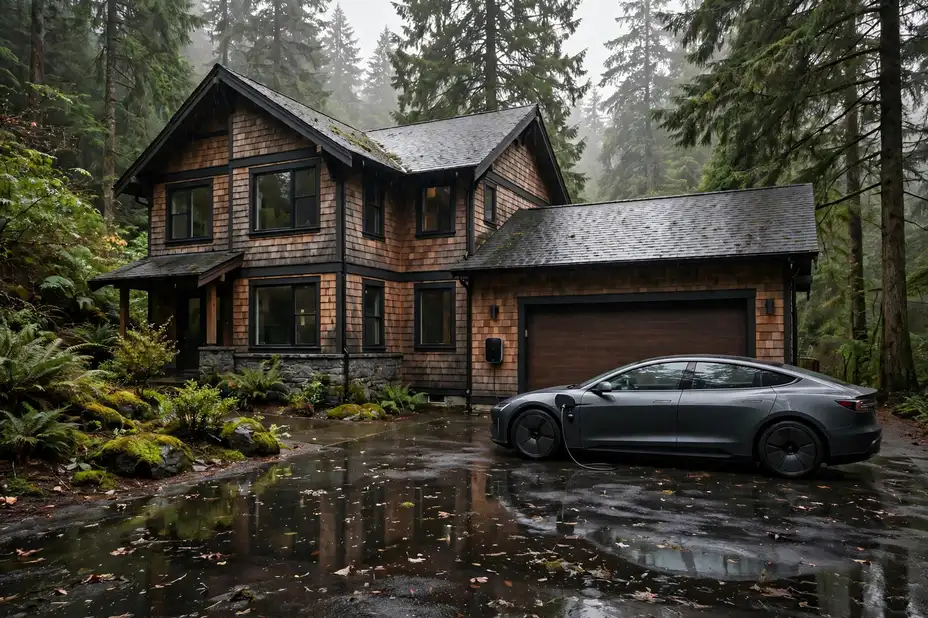
Put the survey together and Laredo's charging profile reads like this: a housing stock of mixed vintages, where both electrical eras appear on the same street; a detached-house majority with a real attached and multifamily minority; buildings of five or more units are a visible minority of the stock; and owners hold a working majority, with renters a significant minority. That combination — more than any single number — is what the installers working here plan around, and it is the lens for everything on this page.
The counts behind the percentages, for the record: Laredo has 87,698 housing units on the survey's count, 80,968 of them occupied, and 52,589 owner-occupied households making their own electrical decisions. Detached houses number 58,251; homes built before 1980 number 22,895; units in buildings of five or more number 13,671. An installer's week in this city is a walk through exactly that distribution. The page's geography is equally concrete: 7 ZIP codes across Webb, centred near 27.52 degrees north latitude. The city anchors the Laredo metropolitan area, home to roughly 270,000 people on the research file's metro estimate — the wider labour and housing market this page's installers work across.
The same survey release fills in the household economics around the housing stock: a median home value of $210,100, median gross rent of $1,062, per-capita income of $26,411, and a median resident age of 30. How the city moves completes the picture: 80% of Laredo workers drive to work alone — the commute pattern home charging is built around; 5% work from home, a population whose cars charge on daytime and overnight schedules alike; 1% commute by public transit; 24% of adults hold a bachelor's degree or higher. Vehicle ownership, from the same release: 50,230 households in Laredo run two or more vehicles, and 5,421 run none — the two ends of the market this page serves and does not serve.
Two burden statistics frame the economics: in Laredo, 55% of renters and 0% of mortgage-holding owners are housing-cost burdened at the standard 30% threshold. And 77% of households are family households, the segment most likely to run the two-vehicle, two-schedule pattern the second-vehicle planning notes address.
Taken as one portrait, the numbers describe a specific charging market. Growth rings are the city's autobiography: each decade's standard — service size, wiring method, garage provision — survives intact in its ring, and the charger wave is now writing the next ring's standard. Mixed form means mixed timelines: a homeowner's install is a fortnight's scheduling, a condo's is a season's governance; the metro's charging growth arrives on both clocks at once.
The tenure profile quietly predicts the second-car pattern too: owners with garages and long horizons are the households that come back for the second circuit. Middle-income arithmetic governs the metro's installs: the circuit specced to the need, the schedule set to the overnight window, the tariff read carefully because the monthly difference is real money over a car's life. Scale brings a call centre, but it also brings published everything — interconnection standards, programme terms, complaint statistics — and the published page, not the phone call, is where this utility is most honest.
A fleet this size changes the questions at the kerb: not whether the neighbours approve of EVs, but whose installer did their circuit and whether the panel needed work — consumer intelligence, traded over fences. The permit counter in a smaller city is a conversation, not a queue: applications are read by people who may know the street, and complete paperwork is remembered kindly. The association dimension here runs on persuasion rather than statute — no state charging law frames the application, so the complete, professional proposal carries the whole argument, as the law section above explains.
The electrical reality in Laredo homes
Read the stock the way a panel schedule reads it. Median build year 1997 means half of Laredo's homes were wired to codes of that era or earlier; 26% predate 1980 entirely. 66% of units are detached houses, and 65% of occupied homes are owned by their occupants — so most charger conversations here happen between a homeowner and an electrician, with no third party at the table. The metro's building booms left two electrical eras side by side. Post-1990s subdivisions were wired for modern loads and usually take a charger circuit directly; the established in-town stock asks harder questions of its panels. Knowing which era your street belongs to tells you most of what your site visit will conclude. Owner-occupiers can plan on their own timeline; renters and condo owners have an extra approval layer, which the law section below covers for this state.
One further survey line belongs in any Laredo install conversation: 84% of the city's homes heat with electricity — 67,812 households whose panels already carry a major winter load before a charger is contemplated. Electric heat and EV charging are the two largest discretionary loads a house can host, and where they coincide, the load calculation stops being a formality.
The tenure split cuts the other way too: roughly 28,379 occupied homes in Laredo are rented. For those households the charger question is a negotiation with a property owner — written proposal, licensed installer, metering clarity — and it succeeds often enough that installers here keep the pattern ready.
The city's stock is not all houses: 16% of units are in structures of five or more. Shared buildings mean shared panels, assigned parking and association process — the substance of the multifamily sections below.
EV charging services in Laredo
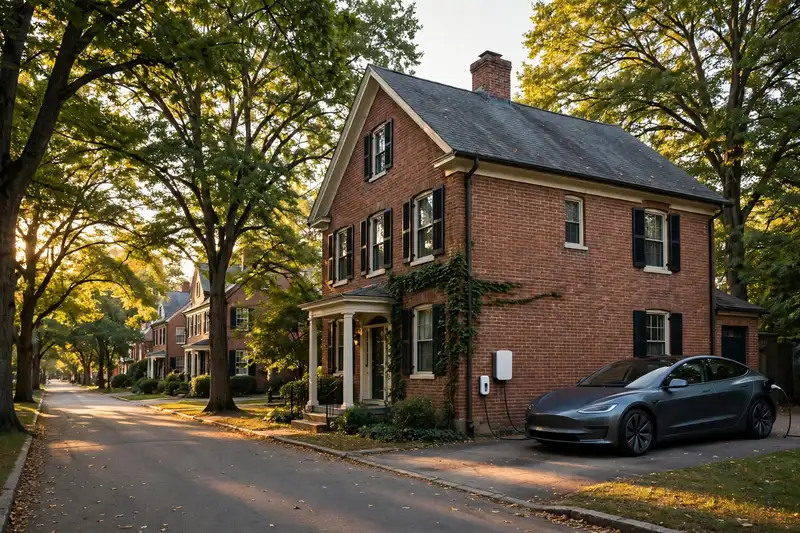
The services below are ordered by what Laredo households most often need first, judged from the housing and fleet facts on this page. The full menu follows in the grid — every service is offered in this metro.
Home EV Charger Installation in Laredo
One circuit, one station, one inspection: the residential install in its usual form. An installer sizes the circuit to the household's driving, mounts the station where the cable reaches the port without drama, sets its output to the circuit it landed on, and leaves the paperwork filed with the house.
In Laredo: usually the first job a new EV household in Laredo books, scoped to the panel the house already has.
Level 2 Charger Installation in Laredo
The step from a household receptacle to a Level 2 circuit is the step from sipping to drinking: the car takes energy at the rate family life actually consumes it. The work is a breaker, a run of appropriately gauged conductor, and a connection made to torque — modest materials, permanent consequences.
In Laredo: the upgrade from a wall outlet to a dedicated 240-volt circuit, and the end of range arithmetic at bedtime.
Load Management & Smart Charging Setup in Laredo
The alternative to a bigger service: a listed management system caps the charger's draw against the home's real-time load, which the code recognises in the load calculation itself. Houses that only occasionally approach their limit are exactly the houses this fits.
In Laredo: the managed-charger route around Laredo's capacity limits.
Utility programs and electricity in Laredo
Electricity in Laredo comes from Medina Electric Coop, Inc. Parts of the wider metro are served by Rio Grande Electric Coop, Inc, AEP Texas Central Company. The utility matters twice over for a charger install: it sets the time-of-use rates that decide what overnight charging costs you, and it is the organisation that may — or may not — currently help pay for the equipment.
Rebate archaeology is a local sport: an old Medina Electric Coop, Inc program page, a neighbour's 2023 install story, a screenshot of terms nobody can date. The record for Laredo, as checked for this page, is simpler. The federal credit closed on September 30, 2025; Texas operates no home-charger program; and no active Medina Electric Coop, Inc residential charger rebate appears in current published sources. Funded rounds do reopen in this industry — on the utility's timetable, announced on the utility's site, and worth exactly what their published terms say on the day you read them.
One more utility habit worth copying from Laredo's EV owners: charge on the overnight rate window if your plan has one. The charger itself can usually be scheduled from the car or the station, so the habit costs nothing once it is set.
Condos, HOAs and the law in Texas
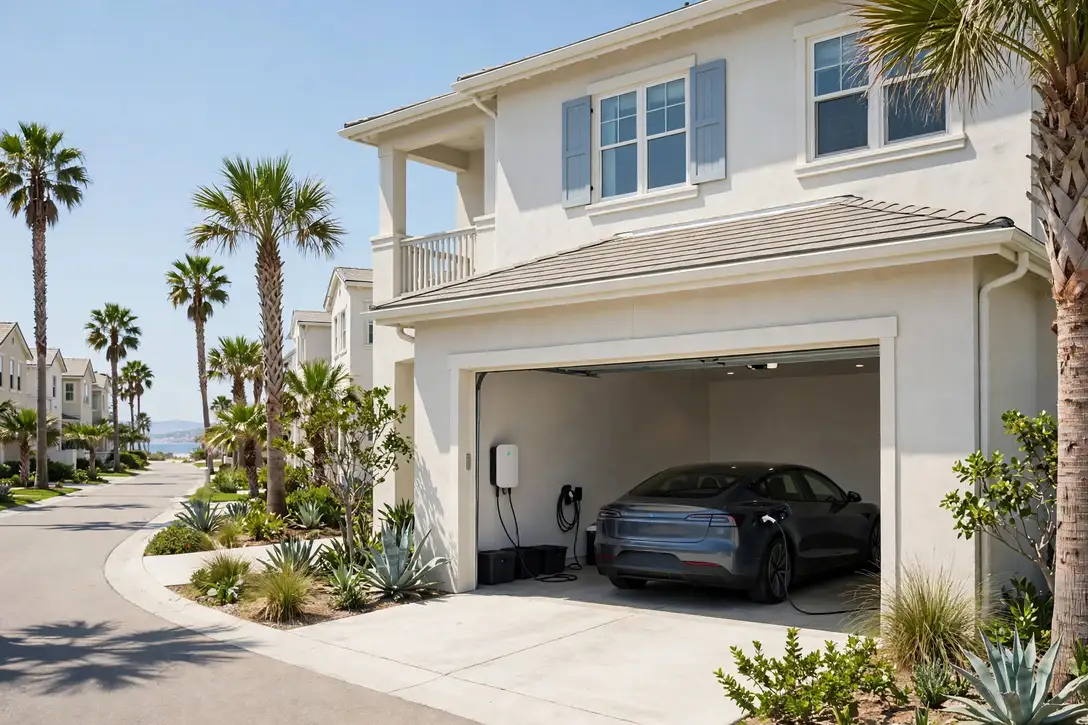
There is no Texas right-to-charge statute to lean on. Some national roundups list protection that does not exist in this state's code; the statute indexes checked for this page are clear. In Laredo, a condo or HOA charger is approved — or not — under the community's own documents, which makes the quality of your application the whole ballgame.
Strategy, then, is the local substitute for statute. In Laredo the applications that succeed tend to share a shape: they arrive before the meeting rather than at it, they answer metering and insurance in the first paragraph, and they offer the board a design it can approve once and reuse for the next owner who asks.
The negotiation playbook — application contents, metering options, the wording that answers boards' standard objections — is set out in our condo and HOA guide, read here as a persuasion manual rather than a rights manual.
Climate, garages and charger placement
Humidity does quiet electrical work of its own: connections in damp garages live harder lives than their desert counterparts, which is one more reason the installer's torque and the enclosure's seal deserve their moment at commissioning. The charger itself is sealed and rated for this climate; the discipline is in the joints.
The grid's evening peak and the house's cooling peak are the same peak here, which makes the charger's start time a small act of grid citizenship as well as thrift: after the air-conditioning army stands down, energy is cheaper and cooler-headed.

Permits and inspection in Laredo
Inspection day itself is undramatic by design: access to the panel and the station, the calculation on hand, the equipment's settings matching the circuit. Jobs fail inspection on paperwork mismatches far more often than on wiring — a fact that quietly grades installers.

Neighbourhoods and ZIP codes served
The page covers 7 ZIP codes in and around Laredo — including 78040, 78041, 78042, 78043, 78044, 78045, 78046 — across Webb. If your ZIP is not in the first set shown, ask anyway: installer coverage follows the metro, not a postcode fence.
The same working area takes in the neighbouring localities of Mirando City, Oilton, Bruni — the county ring an installer based in Laredo actually drives. Requests from those communities route exactly as city requests do: same services, same permit discipline, same local facts where they differ.
Webb County accounts for 10 of the ZIP codes and 4 named postal localities in the research file, the nearest of them Mirando City, Oilton, Bruni. The survey counts 269,294 residents in the county, with a median household income of $63,058 and a median home value of $189,900. Measured across its ZIP codes, the Laredo footprint runs about 19 miles north to south and 23 east to west, from ZIP 78040 to 78046 — the ground an installer based here actually covers in a working week.
Beyond the county seats, the working area takes in Mirando City, Oilton, San Ygnacio, Bruni, Encinal, Zapata, Hebbronville, Artesia Wells, Realitos, Guerra, Freer, Catarina, Asherton, Cotulla, Carrizo Springs, Big Wells, El Indio, Crystal City, Eagle Pass — the named localities for which Laredo is the nearest metro in the network (neighbouring metros' pages cover their own ground), each routing to the same installer-matching service.
The wider working area also reaches Lopeno, Concepcion, San Diego, Salineno, Fowlerton, Premont, Falfurrias, Ben Bolt, Alice, San Isidro, Roma, Tilden, Dilley, Encino, Delmita, Santa Elena, Rio Grande City, Orange Grove, Agua Dulce, Kingsville, Calliham, Garciasville, Sarita, George West, Bishop, Riviera, Banquete, Sandia, Grulla, Driscoll, Pearsall, Batesville, Dinero, Three Rivers, Edinburg — ground shared with neighbouring metros, where installers cross the same county lines in both directions.
ZIP codes in that shared ground include 78007, 78017, 78021, 78022, 78061, 78071, 78072, 78330, 78332, 78333, 78339, 78341, 78342, 78343, 78349, 78350, 78351, 78353, 78355, 78363, 78364, 78372, 78375, 78379, 78383, 78384, 78385, 78536, 78541, 78545, 78547, 78548, 78563, 78564, 78582, 78584, 78585, 78588, 78591, 78829.
The largest communities in that working area after Laredo itself, by the GeoNames populated-place file: Eagle Pass (population 28,765), Eidson Road (population 8,960), Crystal City (population 7,496), Carrizo Springs (population 5,898), Zapata (population 5,089), Rio Bravo (population 4,818), Hebbronville (population 4,558), Cotulla (population 4,216), Medina (population 3,935), Rosita North (population 3,818), Las Quintas Fronterizas (population 3,290), Las Quintas Fronterizas Colonia (population 3,290), El Cenizo (population 3,273), Freer (population 2,732), Cactus (population 2,722), Rosita South (population 2,704), Siesta Shores (population 1,382), Gardendale (population 1,247), Asherton (population 1,084), Falcon Lake Estates (population 1,036). Charging demand follows those populations — the subdivisions and town centres where the next driveways, and the next panels, are.
Dimmit County reaches into the working area with 8,380 residents, a median household income of $38,808 and a median home value of $85,500; its localities on this page include Catarina, Asherton, Carrizo Springs, Big Wells. La Salle County reaches into the working area with 6,839 residents, a median household income of $57,716 and a median home value of $97,800; its localities on this page include Encinal, Artesia Wells, Cotulla. Zapata County reaches into the working area with 13,841 residents, a median household income of $39,239 and a median home value of $97,100; its localities on this page include San Ygnacio, Zapata. Jim Hogg County reaches into the working area with 4,727 residents, a median household income of $42,211 and a median home value of $129,400; its localities on this page include Hebbronville, Guerra. Duval County reaches into the working area with 9,742 residents, a median household income of $49,038 and a median home value of $89,400; its localities on this page include Realitos, Freer.
| ZIP | Locality | County |
|---|---|---|
| 78040 | Laredo | Webb |
| 78041 | Laredo | Webb |
| 78042 | Laredo | Webb |
| 78046 | Laredo | Webb |
| 78045 | Laredo | Webb |
| 78044 | Laredo | Webb |
| 78043 | Laredo | Webb |
| 78369 | Mirando City | Webb |
| 78371 | Oilton | Webb |
| 78067 | San Ygnacio | Zapata |
| 78344 | Bruni | Webb |
| 78019 | Encinal | La Salle |
| 78076 | Zapata | Zapata |
| 78361 | Hebbronville | Jim Hogg |
| 78001 | Artesia Wells | La Salle |
| 78376 | Realitos | Duval |
| 78360 | Guerra | Jim Hogg |
| 78357 | Freer | Duval |
| 78836 | Catarina | Dimmit |
| 78827 | Asherton | Dimmit |
| 78014 | Cotulla | La Salle |
| 78834 | Carrizo Springs | Dimmit |
| 78830 | Big Wells | Dimmit |
| 78860 | El Indio | Maverick |
| 78839 | Crystal City | Zavala |
| 78853 | Eagle Pass | Maverick |
| 78852 | Eagle Pass | Maverick |

Planning the install: from panel to parking
Consider the two households inside every Laredo install. The first owns the panel, the parking and the decision; the second — a partner, a teenager with the next car, a future buyer — inherits all three. Designing for the second household is the difference between an install and an asset: capacity reserved, conduit honest, paperwork filed. The first conversation with an installer should name both households explicitly.
Future-proofing, in this trade, is mostly conduit and capacity: an oversized conduit run costs little during the first install and everything later; a panel position reserved is a breaker that never has to move. If a second EV, a workshop or an electrified water heater is anywhere in your five-year picture, say so at the site visit.
Home charging know-how for Laredo households
Three cars, one driveway
Households with more vehicles than bays run a small nightly logistics operation, and charging joins the rotation. The patterns that work: the station positioned to serve two parking spots in sequence, a household habit about whose night it is, and — where two of the fleet are electric — power sharing that removes the rotation entirely. The design conversation should start from the household's actual parking choreography, observed on a normal evening, because the charger serves the pattern that exists, not the one the driveway promised.
Household safety habits around the charger
A charging setup joins a household's ordinary safety landscape — the same category as the stove and the water heater: respected, listed, and left to do its job. The household habits are few. The cable lives off the floor where small feet and wheels travel; the connector is docked, not dangled; children learn the house rule that the charger is an appliance, not a toy, the way they learn the oven's. Nothing about a properly installed station asks for anxiety — just the standard respect electricity has always been owed.
Shutoffs and sensible safety
Every charger installation contains its own off switch: the breaker in the panel, and, on larger circuits, a disconnect within sight of the equipment that the code requires. Knowing where both are — and that the station itself stops the session when the connector is unlatched — is the whole safety briefing, and a good installer gives it unprompted at handover. The equipment is listed, protected and designed to be operated daily by non-electricians; the homeowner's part is simply to know the two switches and to treat any change in behaviour — heat, noise, repeated trips — as a reason to call rather than to reset.
When you move: take it or leave it
The station is portable in a way the circuit is not. A plug-in unit unplugs and travels; a hardwired one leaves with an electrician's half hour. The circuit — the larger share of the original project — stays with the house, where the paperwork decides what it is worth: documented as a permitted charger circuit, it is a listing feature for the next EV household; undocumented, it is a mystery outlet in the garage. Owners planning a move inside a few years can say so at install time; the plug-in-versus-hardwired choice reads differently with a departure date attached.

Frequently asked questions
What happened to the federal home-charger credit in Laredo, TX?
That credit is finished: 30C ended on September 30, 2025. What about locally? In the utility and state sources checked for this page, nothing verified was running for Laredo homeowners — no Medina Electric Coop, Inc rebate, no state scheme. If one opens, it will appear on the utility's site with dates; plan your install without it meanwhile.
What can my HOA in Laredo, TX do about a charger install?
They hold the stronger hand in Texas: with no right-to-charge statute on the books, a Laredo association's covenants are the law of the car park. The applications that succeed anyway share a shape — owner-funded, licensed installer, metered energy, insured, reversible — because they answer the board's risk questions in advance and in writing.
Does a Level 2 charger mean a panel upgrade for a Laredo, TX home?
The answer lives in your panel's directory and its arithmetic, not in the car's requirements. With 26% of Laredo's homes predating 1980 (median build 1997), local installers see both situations weekly: the 200-amp panel that takes the circuit directly, and the full 100-amp service that needs capacity work first. The site visit exists to sort your house into one of those two piles, on numbers.
Level 1 or Level 2 in Laredo, TX — what is the real difference?
In parked hours: a Level 1 cord returns about 3–5 miles for each of them, and a Level 2 circuit returns roughly 25–40, set by its amperage and the car's acceptance. For a Laredo household parking ten hours, that is the difference between recovering a short errand day and recovering any day the car can legally drive.
How does the installer matching on this page work?
Three steps: the request routes to installers who work Laredo, Texas; one contacts you to walk the property; the walk produces the written quote. Everything on this page — the utility position, the law, the housing data — is yours to check that quote against.
How long does a typical home charger installation take in Laredo, TX?
Separate the three clocks. The installer's clock: typically a day of electrical work for the standard layout. The permit office's clock: issuance on the department's queue. The inspector's clock: a visit scheduled after the work. A realistic quote in Laredo, Texas names all three; the total is usually days to a few weeks, dominated by the two clocks nobody on the crew controls.
Nearby cities in Texas
- EV charger installation in McAllen — about 114 miles from Laredo, metro population 875,000
- EV charger installation in Corpus Christi — about 117 miles from Laredo, metro population 425,000
- EV charger installation in San Antonio — about 145 miles from Laredo, metro population 2,650,000
- EV charger installation in Brownsville — about 155 miles from Laredo, metro population 425,000
- EV charger installation in Victoria — about 164 miles from Laredo, metro population 100,000
- EV charger installation in Austin — about 216 miles from Laredo, metro population 2,400,000
- EV charger installation in Lake Charles, LA — about 395 miles from Laredo, metro population 210,000
- EV charger installation in Lafayette, LA — about 454 miles from Laredo, metro population 480,000
- EV charger installation in Alexandria, LA — about 468 miles from Laredo, metro population 150,000
Ready to charge at home in Laredo?
Two minutes of form, and the request is in front of licensed installers who cover this city — quotes follow site visits, in writing.