EV Charger Installation in Baton Rouge, LA
Everything a Baton Rouge homeowner needs before booking a charger install — the panel question, the utility's current programs, the HOA law and the permit — sourced, dated and local.
Homeowners in Baton Rouge tend to research the charger first and the circuit second; installers work the other way round. The circuit is the project — its capacity, its route, its paperwork — and the station is the appliance that hangs off the end of it. Baton Rouge itself is home to about 220,901 people, and Louisiana's roads carried 22,600 battery-electric vehicles and 5,700 plug-in hybrids by the end of 2025. This page is organised the installer's way: panel and housing realities first, then the utility's programs and tariffs, the law for shared properties, climate placement, and the permit that closes the job out properly.
PlugReady USA is a matching service, not the installer: you tell us the job, and we route the request to licensed local electricians and EV-installer companies who work in Baton Rouge. Use the local detail below to arrive at that conversation informed — the sections are ordered the way an installer will think about your project, from the panel outward.
Measured demand, not enthusiasm, put Baton Rouge in Tier B of this network: Entergy LA. For a homeowner the useful translation is simpler — installers here do this work weekly, know the local permit counter, and have seen your housing stock before.
Survey context for Baton Rouge, in the three lines installers actually use: median household income $50,332; owner-occupation at 53%; single-unit detached homes at 56%. Income tracks adoption pace, tenure decides whose signature a job needs, and structure decides whether the answer is a garage circuit or a building negotiation.

Put the survey together and Baton Rouge's charging profile reads like this: an older housing fabric, where panel archaeology is a normal part of the first visit; a detached-house majority with a real attached and multifamily minority; buildings of five or more units hold a substantial share of homes, which keeps the multifamily sections of this page in daily use; and owners hold a working majority, with renters a significant minority. That combination — more than any single number — is what the installers working here plan around, and it is the lens for everything on this page.
Keep six figures and you keep Baton Rouge's whole electrical character: 108,987 housing units; 88,745 occupied homes; 47,375 owner-occupied; 60,696 detached houses; 61,996 pre-1980 homes; 32,095 homes in buildings of five or more units. Percentages elsewhere on this page are these numbers in disguise — the counts are the originals, and they are the numbers a local installer's experience is actually made of. The page's geography is equally concrete: 42 ZIP codes across East Baton Rouge Parish, centred near 30.45 degrees north latitude. The city anchors the Baton Rouge metropolitan area, home to roughly 900,000 people on the research file's metro estimate — the wider labour and housing market this page's installers work across.
The same survey release fills in the household economics around the housing stock: a median home value of $251,100, median gross rent of $1,081, per-capita income of $33,350, and a median resident age of 32. The movement data matters as much as the money data: 75% of Baton Rouge workers drive to work alone — the commute pattern home charging is built around; 8% work from home, a population whose cars charge on daytime and overnight schedules alike; 1% commute by public transit; 38% of adults hold a bachelor's degree or higher. Vehicle ownership, from the same release: 40,276 households in Baton Rouge run two or more vehicles, and 10,572 run none — the two ends of the market this page serves and does not serve.
Two burden statistics frame the economics: in Baton Rouge, 56% of renters and 0% of mortgage-holding owners are housing-cost burdened at the standard 30% threshold. And 54% of households are family households, the segment most likely to run the two-vehicle, two-schedule pattern the second-vehicle planning notes address.
None of these facts is trivia; each one moves a real decision in the project. Where so much of the stock predates modern code cycles, the site visit doubles as a survey — grounding electrode, service entrance, panel provenance — before it is ever a quote. The renter-and-condo share makes the law section of this page load-bearing: statutory rights, application windows and metering rules are not fine print here, they are the project's first phase.
High renter share also means charging follows the lease cycle: applications cluster at move-in, installations at renewal leverage, and the whole market breathes on the rental calendar. The install market that serves modest incomes runs on referrals and repetition: neighbourhoods where one good install, fairly scoped, produces the street's next five customers. The commission's calendar quietly schedules the market: when a new time-of-use design is approved, installer phones ring in a pattern the docket predicted months earlier.
The state fleet is young, and Baton Rouge's charging story is being written by its first draft of households — the ones whose installs will be the precedents boards and neighbours cite for a decade. At this scale the city's charging infrastructure is legible — a household can learn the whole local system, its programmes, precedents and people, in an evening's reading. This page is most of that evening. Boards here decide without a statutory script, which makes precedent the currency: the first well-built application in a community quietly writes the policy for everyone after it.
The electrical reality in Baton Rouge homes
The survey's housing portrait for Baton Rouge opens with its median: a home built in 1977, in a stock where 57% of units predate 1980 and 56% stand detached on their own lots. 53% of occupied homes are owner-occupied. An installer reads those lines as a weather forecast: mostly settled conditions, with older wiring fronts moving through the pre-1980 districts. A housing stock this age leans on smaller electrical services — 100-amp panels are common, and fuse-era equipment still turns up in the oldest streets. For many of those homes the honest answer is a panel upgrade or a load-management device before the charger circuit goes in, and a good installer will show you the load calculation rather than asking you to take it on faith. Garages here earn their keep across the year — workshop, storage and storm shelter by turns — so a station position that survives the household's real parking pattern matters more than the technically neatest wall.
The fuel table adds one more local fact: 58,806 Baton Rouge homes — 67% of the stock — heat with electricity. Those households already think in kilowatts through the winter, their panels carry the load to prove it, and a charger's overnight appetite joins a system that is, in the useful sense, already electrified.
Renters are the other constituency in these numbers: about 41,370 of Baton Rouge's occupied homes are rented rather than owned. Their charging route runs through a landlord conversation instead of a panel they control — a different project, covered by the rentals guide and the law section below, but a routine one in a city with this many renting households.
The city's stock is not all houses: 29% of units are in structures of five or more. Shared buildings mean shared panels, assigned parking and association process — the substance of the multifamily sections below.
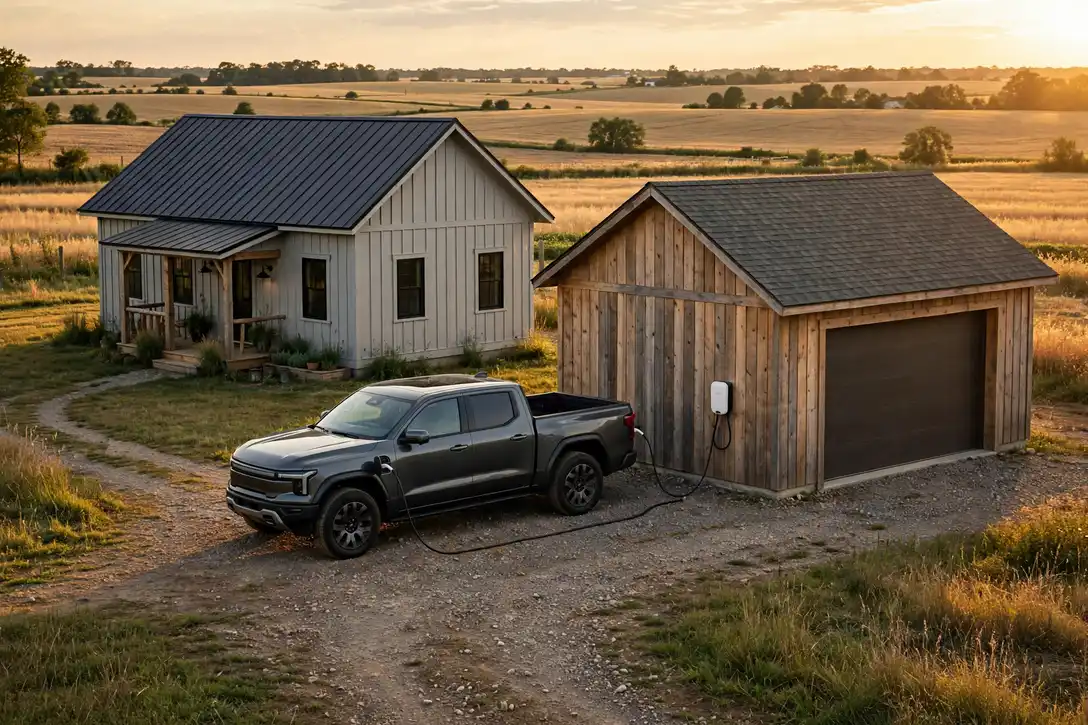
EV charging services in Baton Rouge
The full menu runs to ten services; the three cards at the top are the ones Baton Rouge's housing stock and state law push to the front. Everything links to its national service page for scope and process in full.
Home EV Charger Installation in Baton Rouge
The core service, stated plainly: a dedicated 240-volt circuit run from your panel to your parking place, a station mounted and configured to that circuit, and the paperwork closed out with the permit office. Everything else in this section of the site exists to support or unblock this one job.
In Baton Rouge: the core residential job in Baton Rouge: circuit, mounting, configuration and inspection in one visit pattern.
Dedicated Circuit & Electrical Panel Upgrade in Baton Rouge
When the arithmetic says the service is full, this is the enabling job: a larger panel, or a new dedicated circuit with capacity planned in, done under the same permit umbrella as the charger it feeds. It is also the upgrade the rest of the house quietly benefits from for decades.
In Baton Rouge: the job that surfaces wherever housing is older — and Baton Rouge's stock makes it a routine conversation, settled by a load calculation.
Level 2 Charger Installation in Baton Rouge
A Level 2 circuit turns charging from a ration into a routine. The job is electrical rather than electronic — breaker and conductor sized at the continuous-load factor, the run routed to the parking position, and the station dialled to the circuit rather than to its own headline maximum.
In Baton Rouge: the 240-volt step that turns overnight charging in Baton Rouge from a trickle into a full battery by morning.
Utility programs and electricity in Baton Rouge
Electricity in Baton Rouge comes from Entergy Louisiana LLC. Parts of the wider metro are served by Dixie Electric Membership Corp. The utility matters twice over for a charger install: it sets the time-of-use rates that decide what overnight charging costs you, and it is the organisation that may — or may not — currently help pay for the equipment.
Do not budget for a rebate in Baton Rouge right now. As of the sources checked for this page, Entergy Louisiana LLC publishes no residential charger rebate, Louisiana offers no state program for typical home installs, and the federal 30C credit ended on September 30, 2025. If that changes, the utility's program page will say so with an as-of date — and this page will be updated to match. Until then, judge quotes on the work itself.
Renters and condo owners should note the metering question early: whose meter the charger hangs off decides who pays for the energy, and Entergy Louisiana LLC's options for submetering are part of the multifamily conversation below.
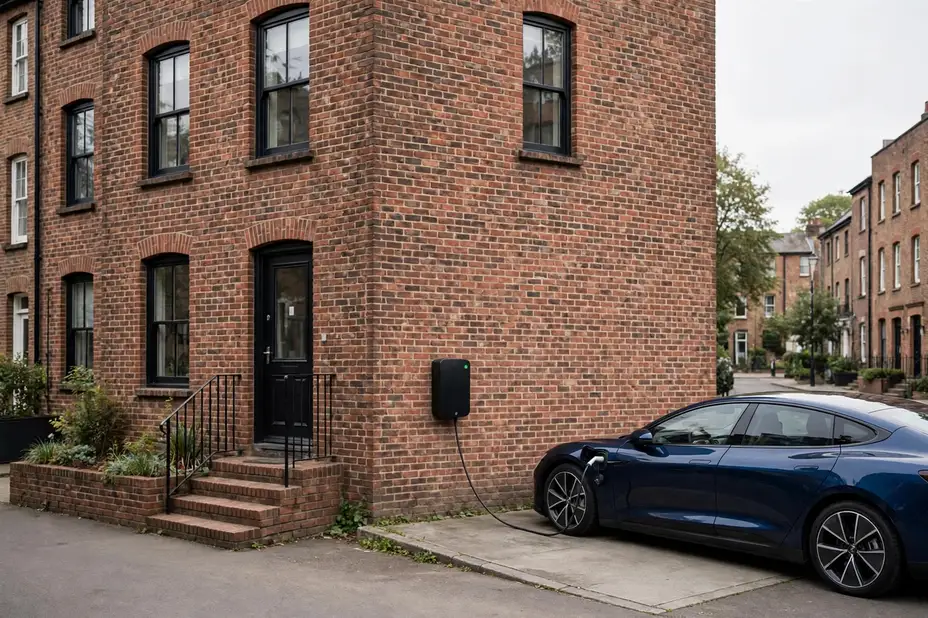
Condos, HOAs and the law in Louisiana
Louisiana has no statewide right-to-charge law. That needs saying plainly, because roundups on the internet sometimes claim otherwise: in the authoritative statute indexes checked for this page, no Louisiana law prevents a homeowners association or condominium from refusing a charger in a common or assigned space. Your community's own covenants and board govern the question in Baton Rouge.
Strategy, then, is the local substitute for statute. In Baton Rouge the applications that succeed tend to share a shape: they arrive before the meeting rather than at it, they answer metering and insurance in the first paragraph, and they offer the board a design it can approve once and reuse for the next owner who asks.
The negotiation playbook — application contents, metering options, the wording that answers boards' standard objections — is set out in our condo and HOA guide, read here as a persuasion manual rather than a rights manual.
Climate, garages and charger placement
Humidity does quiet electrical work of its own: connections in damp garages live harder lives than their desert counterparts, which is one more reason the installer's torque and the enclosure's seal deserve their moment at commissioning. The charger itself is sealed and rated for this climate; the discipline is in the joints.
Shade is a specification here, not a nicety. Outdoor stations belong under eaves or on the wall that escapes the afternoon sun; connectors left baking in a holder weather faster, and cables stiffen and crack on a shorter clock. The site walk should include a look at where the sun actually lands at four in the afternoon — that is the hour the equipment has to survive.

Permits and inspection in Baton Rouge
Inspection day itself is undramatic by design: access to the panel and the station, the calculation on hand, the equipment's settings matching the circuit. Jobs fail inspection on paperwork mismatches far more often than on wiring — a fact that quietly grades installers.

Neighbourhoods and ZIP codes served
The page covers 42 ZIP codes in and around Baton Rouge — including 70801, 70802, 70803, 70804, 70805, 70806, 70807, 70808, 70809, 70810, 70811, 70812, 70813, 70814, 70815, 70816, 70817, 70818, 70819, 70820, 70821, 70822, 70823, 70825, 70826, 70827, 70831, 70833, 70835, 70836, 70837, 70873, 70874, 70879, 70884, 70891, 70892, 70893, 70894, 70895, 70896, 70898 — across East Baton Rouge Parish. If your ZIP is not in the first set shown, ask anyway: installer coverage follows the metro, not a postcode fence.
The same working area takes in the neighbouring localities of Baker, Zachary, Pride, Greenwell Springs — the county ring an installer based in Baton Rouge actually drives. Requests from those communities route exactly as city requests do: same services, same permit discipline, same local facts where they differ.
East Baton Rouge Parish County accounts for 47 of the ZIP codes and 5 named postal localities in the research file, the nearest of them Baker, Zachary, Pride, Greenwell Springs. The survey counts 452,938 residents in the county, with a median household income of $63,071 and a median home value of $248,800. Measured across its ZIP codes, the Baton Rouge footprint runs about 16 miles north to south and 13 east to west, from ZIP 70801 to 70898 — the ground an installer based here actually covers in a working week.
Beyond the county seats, the working area takes in Port Allen, Brusly, Baker, Addis, Sunshine, Plaquemine, Watson, Zachary, Erwinville, Grosse Tete, Saint Gabriel, Rosedale, Rougon, Pride, Glynn, Denham Springs, Greenwell Springs, Lakeland, Prairieville, Carville, Duplessis, Maringouin, Oscar, Jarreau, Geismar, Walker, Ventress, Gonzales, White Castle, Livonia, Slaughter, New Roads, Livingston, Saint Amant, French Settlement, Brittany, Jackson, Darrow, Ethel, Sorrento, Burnside, Fordoche, Donaldsonville, Lottie, Pine Grove, Maurepas, Clinton, Morganza, Holden, Belle Rose, Saint Francisville, Albany, Springfield, Wakefield, Wilson, Norwood, Weyanoke, Greensburg, Batchelor, Independence, Hammond, Natalbany, Tickfaw, Innis, Tunica, Amite, Angola, Roseland, Centreville, Fluker — the named localities for which Baton Rouge is the nearest metro in the network (neighbouring metros' pages cover their own ground), each routing to the same installer-matching service.
The wider working area also reaches Krotz Springs, Paincourtville, Plattenville, Saint James, Pierre Part, Melville, Convent, Uncle Sam, Saint Martinville, Napoleonville, Hester, Loreauville, Breaux Bridge, Cecilia, Paulina, Lutcher, Gramercy, Mount Airy, Arnaudville, Ponchatoula, Garyville, Port Barre, Vacherie, New Iberia, Leonville, Charenton, Palmetto, Edgard, Reserve, Labadieville, Akers — ground shared with neighbouring metros, where installers cross the same county lines in both directions.
ZIP codes in that shared ground include 70049, 70051, 70052, 70071, 70076, 70084, 70086, 70090, 70339, 70372, 70390, 70391, 70393, 70421, 70454, 70512, 70517, 70521, 70523, 70551, 70552, 70563, 70577, 70582, 70723, 70743, 70750, 70763, 70792, 71353, 71358.
The largest communities in that working area after Baton Rouge itself, by the GeoNames populated-place file: Central (population 28,295), Prairieville (population 26,895), Hammond (population 20,480), Shenandoah (population 18,399), Zachary (population 16,448), Baker (population 13,695), Gonzales (population 10,678), Gardere (population 10,580), Denham Springs (population 10,125), Merrydale (population 9,772), Oak Hills Place (population 8,195), Donaldsonville (population 7,792), Village Saint George (population 7,104), Old Jefferson (population 6,980), Plaquemine (population 6,871), Saint Gabriel (population 6,677), Walker (population 6,318), Inniswold (population 6,180), Brownsfield (population 5,401), Monticello (population 5,172). Charging demand follows those populations — the subdivisions and town centres where the next driveways, and the next panels, are.
Ascension County reaches into the working area with 130,314 residents, a median household income of $91,549 and a median home value of $279,600; its localities on this page include Prairieville, Duplessis, Geismar, Gonzales, Saint Amant. Iberville County reaches into the working area with 29,815 residents, a median household income of $54,000 and a median home value of $172,800; its localities on this page include Sunshine, Plaquemine, Grosse Tete, Saint Gabriel. Pointe Coupee County reaches into the working area with 20,217 residents, a median household income of $65,961 and a median home value of $179,300; its localities on this page include Rougon, Glynn, Lakeland, Oscar, Jarreau. Livingston County reaches into the working area with 148,115 residents, a median household income of $80,122 and a median home value of $230,600; its localities on this page include Watson, Denham Springs, Walker. West Baton Rouge County reaches into the working area with 27,974 residents, a median household income of $87,299 and a median home value of $229,900; its localities on this page include Port Allen, Brusly, Addis, Erwinville.
| ZIP | Locality | County |
|---|---|---|
| 70801 | Baton Rouge | East Baton Rouge Parish |
| 70802 | Baton Rouge | East Baton Rouge Parish |
| 70891 | Baton Rouge | East Baton Rouge Parish |
| 70892 | Baton Rouge | East Baton Rouge Parish |
| 70893 | Baton Rouge | East Baton Rouge Parish |
| 70803 | Baton Rouge | East Baton Rouge Parish |
| 70806 | Baton Rouge | East Baton Rouge Parish |
| 70805 | Baton Rouge | East Baton Rouge Parish |
| 70808 | Baton Rouge | East Baton Rouge Parish |
| 70767 | Port Allen | West Baton Rouge |
| 70820 | Baton Rouge | East Baton Rouge Parish |
| 70813 | Baton Rouge | East Baton Rouge Parish |
| 70804 | Baton Rouge | East Baton Rouge Parish |
| 70812 | Baton Rouge | East Baton Rouge Parish |
| 70719 | Brusly | West Baton Rouge |
| 70827 | Baton Rouge | East Baton Rouge Parish |
| 70809 | Baton Rouge | East Baton Rouge Parish |
| 70836 | Baton Rouge | East Baton Rouge Parish |
| 70873 | Baton Rouge | East Baton Rouge Parish |
| 70811 | Baton Rouge | East Baton Rouge Parish |
| 70814 | Baton Rouge | East Baton Rouge Parish |
| 70815 | Baton Rouge | East Baton Rouge Parish |
| 70704 | Baker | East Baton Rouge Parish |
| 70822 | Baton Rouge | East Baton Rouge Parish |
| 70823 | Baton Rouge | East Baton Rouge Parish |
| 70825 | Baton Rouge | East Baton Rouge Parish |
| 70826 | Baton Rouge | East Baton Rouge Parish |
| 70831 | Baton Rouge | East Baton Rouge Parish |
| 70833 | Baton Rouge | East Baton Rouge Parish |
| 70835 | Baton Rouge | East Baton Rouge Parish |
| 70837 | Baton Rouge | East Baton Rouge Parish |
| 70879 | Baton Rouge | East Baton Rouge Parish |
| 70884 | Baton Rouge | East Baton Rouge Parish |
| 70894 | Baton Rouge | East Baton Rouge Parish |
| 70895 | Baton Rouge | East Baton Rouge Parish |
| 70896 | Baton Rouge | East Baton Rouge Parish |
| 70898 | Baton Rouge | East Baton Rouge Parish |
| 70710 | Addis | West Baton Rouge |
| 70821 | Baton Rouge | East Baton Rouge Parish |
| 70810 | Baton Rouge | East Baton Rouge Parish |
| 70816 | Baton Rouge | East Baton Rouge Parish |
| 70807 | Baton Rouge | East Baton Rouge Parish |
| 70714 | Baker | East Baton Rouge Parish |
| 70819 | Baton Rouge | East Baton Rouge Parish |
| 70874 | Baton Rouge | East Baton Rouge Parish |
| 70818 | Baton Rouge | East Baton Rouge Parish |
| 70780 | Sunshine | Iberville |
| 70817 | Baton Rouge | East Baton Rouge Parish |
| 70765 | Plaquemine | Iberville |
| 70764 | Plaquemine | Iberville |
| 70786 | Watson | Livingston |
| 70791 | Zachary | East Baton Rouge Parish |
| 70729 | Erwinville | West Baton Rouge |
| 70740 | Grosse Tete | Iberville |
| 70776 | Saint Gabriel | Iberville |
| 70772 | Rosedale | Iberville |
| 70773 | Rougon | Pointe Coupee |
| 70770 | Pride | East Baton Rouge Parish |
| 70736 | Glynn | Pointe Coupee |
| 70726 | Denham Springs | Livingston |
| 70739 | Greenwell Springs | East Baton Rouge Parish |
| 70752 | Lakeland | Pointe Coupee |
| 70769 | Prairieville | Ascension |
| 70721 | Carville | Iberville |
| 70728 | Duplessis | Ascension |
| 70757 | Maringouin | Iberville |
| 70762 | Oscar | Pointe Coupee |
| 70749 | Jarreau | Pointe Coupee |
| 70734 | Geismar | Ascension |
| 70785 | Walker | Livingston |
| 70706 | Denham Springs | Livingston |
| 70783 | Ventress | Pointe Coupee |
| 70737 | Gonzales | Ascension |
| 70788 | White Castle | Iberville |
| 70727 | Denham Springs | Livingston |
| 70755 | Livonia | Pointe Coupee |
| 70777 | Slaughter | East Feliciana |
| 70760 | New Roads | Pointe Coupee |
| 70754 | Livingston | Livingston |
| 70774 | Saint Amant | Ascension |
| 70733 | French Settlement | Livingston |
| 70707 | Gonzales | Ascension |
| 70718 | Brittany | Ascension |
| 70748 | Jackson | East Feliciana |
| 70725 | Darrow | Ascension |
| 70730 | Ethel | East Feliciana |
| 70778 | Sorrento | Ascension |
| 70738 | Burnside | Ascension |
| 70732 | Fordoche | Pointe Coupee |
| 70346 | Donaldsonville | Ascension |

Planning the install: from panel to parking
Homeowners sometimes ask why a job that looks like 'one outlet' needs a site visit at all. The visit exists because the three variables that set the scope — spare capacity, the run's route, and the property's approval layer — are all invisible from a photograph. In Baton Rouge an experienced installer reads them in minutes, in the panel's directory card, the garage's geometry and the community's documents. The quote that follows a visit is a different species from the quote that precedes one: it can be held to.
Finally, photograph the finished work — station, nameplate, panel directory with the new breaker labelled — and file it with the inspection record. When the car changes, the house sells or a second station joins the first, that folder is the difference between a five-minute answer and an archaeological dig.
Home charging know-how for Baton Rouge households
The new owner's first week
Week one with a home charger is about building the reflex: park, plug, forget. Set the schedule once, against your rate window; confirm the car wakes to the charge level your commute wants; learn where the station's indicator confirms a session at a glance from the door. By the second week the public-charging arithmetic of the old routine — detours, queues, weather — is already hard to remember. The households that struggle are the ones still treating the wall like a petrol station: sessions are not events, they are the background of parking.
Conduit, finishes and the neatness question
Runs of conduit across a finished garage divide households: some want them invisible, some want them honest. The options are a spectrum — in-wall runs where framing allows, surface conduit painted to the wall, or a route through the ceiling line where neither shows. Each step toward invisible costs labour and sometimes access for future work. Decide at the design stage with the route in view, because the time to care about the charger's industrial look is before it is screwed to the wall, not in the first photograph afterwards.
The sounds a station makes
A charging station is mostly silent, but not entirely: a contactor's clunk when a session starts, a faint hum under load, occasionally a small fan in warm weather. These are the sounds of switching and cooling, and they are normal. The sounds that earn attention are changes — buzzing that was not there last month, clicking cycles, a hum that grows. Electricity should be boring to listen to; when it stops being boring, that is information, and the correct response is an electrician rather than a search engine.
Planning for the second EV
The second electric car rarely arrives as a surprise — it is the household's own verdict on the first one. Planning for it at the first install costs little: conduit sized a step up, panel capacity reserved on the schedule, and a station position that can serve a second bay or share its circuit through power-sharing equipment. Retrofitting the same readiness later means reopening finished work. Installers ask about the five-year picture during the site visit because the honest answers change today's scope more cheaply than any other conversation in the project.
Garage layout: the unglamorous decider
More charging routines are decided by garage geography than by equipment. Which bay the EV takes, which side its port sits on, where the freezer, bikes and workbench have permanent tenure — the station belongs at the intersection of those facts, with a cable that reaches the port without crossing the walking line to the door. Installers who walk the layout with the car in place are not being thorough for its own sake; they are preventing the daily, decade-long annoyance of a station mounted for a parking pattern nobody uses.
Frequently asked questions
Can I still get the federal tax credit for a home charger in Baton Rouge, LA?
The three possible pots are all, at present, empty for a Baton Rouge homeowner: no Entergy Louisiana LLC residential rebate in current published sources, no Louisiana home programme, and a federal credit that closed on September 30, 2025. Programmes do relaunch — on the utility's site, with dates — and until one does, the honest quote is the one with no rebate line at all.
Can my HOA or condo board in Baton Rouge, LA refuse my charger?
They hold the stronger hand in Louisiana: with no right-to-charge statute on the books, a Baton Rouge association's covenants are the law of the car park. The applications that succeed anyway share a shape — owner-funded, licensed installer, metered energy, insured, reversible — because they answer the board's risk questions in advance and in writing.
Will my Baton Rouge, LA home need a panel upgrade for a Level 2 charger?
The answer lives in your panel's directory and its arithmetic, not in the car's requirements. With 57% of Baton Rouge's homes predating 1980 (median build 1977), local installers see both situations weekly: the 200-amp panel that takes the circuit directly, and the full 100-amp service that needs capacity work first. The site visit exists to sort your house into one of those two piles, on numbers.
How quickly will a Level 2 charger fill my car in Baton Rouge, LA?
Level 2 is several-fold faster in the only unit that matters — miles back per hour parked: roughly 25–40 against Level 1's 3–5. The exact figure follows the circuit: a 40-amp circuit and a 60-amp circuit are both Level 2, and the car's onboard limit may sit below either. Your installer matches the three numbers at the site visit.
What happens next after I send a request?
Three steps: the request routes to installers who work Baton Rouge, Louisiana; one contacts you to walk the property; the walk produces the written quote. Everything on this page — the utility position, the law, the housing data — is yours to check that quote against.
Can a charger be added to a detached garage in Baton Rouge?
It can. With roughly 56% of Baton Rouge's stock in detached houses, the detached-garage run is a routine local job: conduit buried at code depth from the panel, or a subpanel that also serves the workshop. The trench, not the charger, is what the quote is really about.
Nearby cities in Louisiana
- EV charger installation in Lafayette — about 48 miles from Baton Rouge, metro population 480,000
- EV charger installation in Houma — about 64 miles from Baton Rouge, metro population 205,000
- EV charger installation in New Orleans — about 70 miles from Baton Rouge, metro population 1,250,000
- EV charger installation in Alexandria — about 91 miles from Baton Rouge, metro population 150,000
- EV charger installation in Lake Charles — about 112 miles from Baton Rouge, metro population 210,000
- EV charger installation in Monroe — about 152 miles from Baton Rouge, metro population 205,000
- EV charger installation in Gulfport, MS — about 115 miles from Baton Rouge, metro population 420,000
- EV charger installation in Hattiesburg, MS — about 120 miles from Baton Rouge, metro population 175,000
- EV charger installation in Jackson, MS — about 139 miles from Baton Rouge, metro population 600,000
Ready to charge at home in Baton Rouge?
Tell us the job — service, ZIP and property type — and licensed local installers will take it from there.