EV Charger Installation in Hattiesburg, MS
Charging where you park, in Hattiesburg: the utility programs, state law, permit process and housing facts behind a home charger install, gathered in one place.
There is a short list of things that never change about a charger install — it needs capacity, a route, a position and a permit — and a longer list of things that change with the ZIP code. This page is the longer list, for Hattiesburg. Hattiesburg itself is home to about 48,619 people. Mississippi's registered electric fleet reached 7,200 battery-electric vehicles and 3,000 plug-in hybrids through 2025, and the installers working this metro have local habits worth borrowing. The utility section states what is verified and what is not; the law section quotes the position as it stands; the housing section works from survey data rather than vibes.
PlugReady USA is a matching service, not the installer: you tell us the job, and we route the request to licensed local electricians and EV-installer companies who work in Hattiesburg. Use the local detail below to arrive at that conversation informed — the sections are ordered the way an installer will think about your project, from the panel outward.
Measured demand, not enthusiasm, put Hattiesburg in Tier C of this network: MS No. 2. For a homeowner the useful translation is simpler — installers here do this work weekly, know the local permit counter, and have seen your housing stock before.
The same survey puts median household income in Hattiesburg at $46,342, with 37% of occupied homes owner-occupied and 50% of the housing stock single-unit detached. For charging, those are the operative facts: owners can approve their own electrical work, and detached homes put the car, the panel and the parking under one roof.

The composite picture matters more than any single statistic. In Hattiesburg: an older housing fabric, where panel archaeology is a normal part of the first visit; a genuinely mixed city — houses, townhouses and larger buildings all carry weight; buildings of five or more units hold a substantial share of homes, which keeps the multifamily sections of this page in daily use; meanwhile, renters form a large share of households, so the landlord conversation is a first-class topic here. A page that ignored that profile would give the same advice everywhere; this one is ordered by it.
Keep six figures and you keep Hattiesburg's whole electrical character: 23,300 housing units; 20,659 occupied homes; 7,688 owner-occupied; 11,606 detached houses; 11,499 pre-1980 homes; 8,447 homes in buildings of five or more units. Percentages elsewhere on this page are these numbers in disguise — the counts are the originals, and they are the numbers a local installer's experience is actually made of. The page's geography is equally concrete: 6 ZIP codes across Forrest, centred near 31.31 degrees north latitude. The city anchors the Hattiesburg metropolitan area, home to roughly 175,000 people on the research file's metro estimate — the wider labour and housing market this page's installers work across.
The same survey release fills in the household economics around the housing stock: a median home value of $165,900, median gross rent of $1,005, per-capita income of $31,585, and a median resident age of 29. And the daily rhythms behind the housing numbers: 80% of Hattiesburg workers drive to work alone — the commute pattern home charging is built around; 5% work from home, a population whose cars charge on daytime and overnight schedules alike; 0% commute by public transit; 37% of adults hold a bachelor's degree or higher. And the fleet in the driveways: 8,842 households in Hattiesburg have exactly one vehicle, 9,962 have two or more, and 1,855 have none.
Two burden statistics frame the economics: in Hattiesburg, 46% of renters and 0% of mortgage-holding owners are housing-cost burdened at the standard 30% threshold. And 50% of households are family households, the segment most likely to run the two-vehicle, two-schedule pattern the second-vehicle planning notes address.
None of these facts is trivia; each one moves a real decision in the project. A stock this old wires its history into the walls: cloth-wrapped conductors in the deepest streets, fuse boxes that outlived their century, panels added in layers by generations of electricians each solving their own decade's problem. The renter-and-condo share makes the law section of this page load-bearing: statutory rights, application windows and metering rules are not fine print here, they are the project's first phase.
Property managers are the metro's charging gatekeepers at this tenure mix, and the installers who thrive are the ones whose proposals arrive manager-shaped: standardised, insured, reversible on paper. Modest incomes make the overnight tariff the headline act: the difference between peak and off-peak charging, compounded nightly for years, is the largest single number in the ownership equation. Filed tariffs and public dockets give this territory a paper trail most markets lack: the diligent household can read the utility's own electrification plan and know which programmes are funded, piloted or merely proposed.
Early-market conditions have their own economics: fewer specialist installers, general electricians carrying the work, and a premium on the household arriving informed — which is the gap this page exists to close. Smaller metros adopt on their own clock: the fleet follows the dealers and the demographics, and each install is a visible event a street notices. Boards here decide without a statutory script, which makes precedent the currency: the first well-built application in a community quietly writes the policy for everyone after it.
The electrical reality in Hattiesburg homes
Four numbers organise everything an installer expects in Hattiesburg: median build year 1981; 49% of units built before 1980; 50% of the stock detached; 37% of occupied homes owner-occupied. Capacity, circuit routes and approval layers all correlate with those four. The paragraphs below are their commentary. Age shows up electrically before it shows up anywhere else: services sized for a house with a third of today's appliances. Expect the first conversation to be about capacity — what the panel is, what it already feeds, and which of the three routes (circuit, management, upgrade) your numbers support. Housing age also tracks wire-run reality: older homes more often place the panel in a basement or interior wall far from the garage, and distance is copper, conduit and labour.
Heating fuel is the survey's quiet clue to panel life: in Hattiesburg, 70% of homes heat electrically (14,513 households), against 28% heating with gas. A house already heating electrically has a service sized with that load in its history; a gas-heated house may have capacity to spare — either way the fuel mix is part of what the installer is reading.
The tenure split cuts the other way too: roughly 12,971 occupied homes in Hattiesburg are rented. For those households the charger question is a negotiation with a property owner — written proposal, licensed installer, metering clarity — and it succeeds often enough that installers here keep the pattern ready.
The city's stock is not all houses: 36% of units are in structures of five or more. Shared buildings mean shared panels, assigned parking and association process — the substance of the multifamily sections below.
EV charging services in Hattiesburg
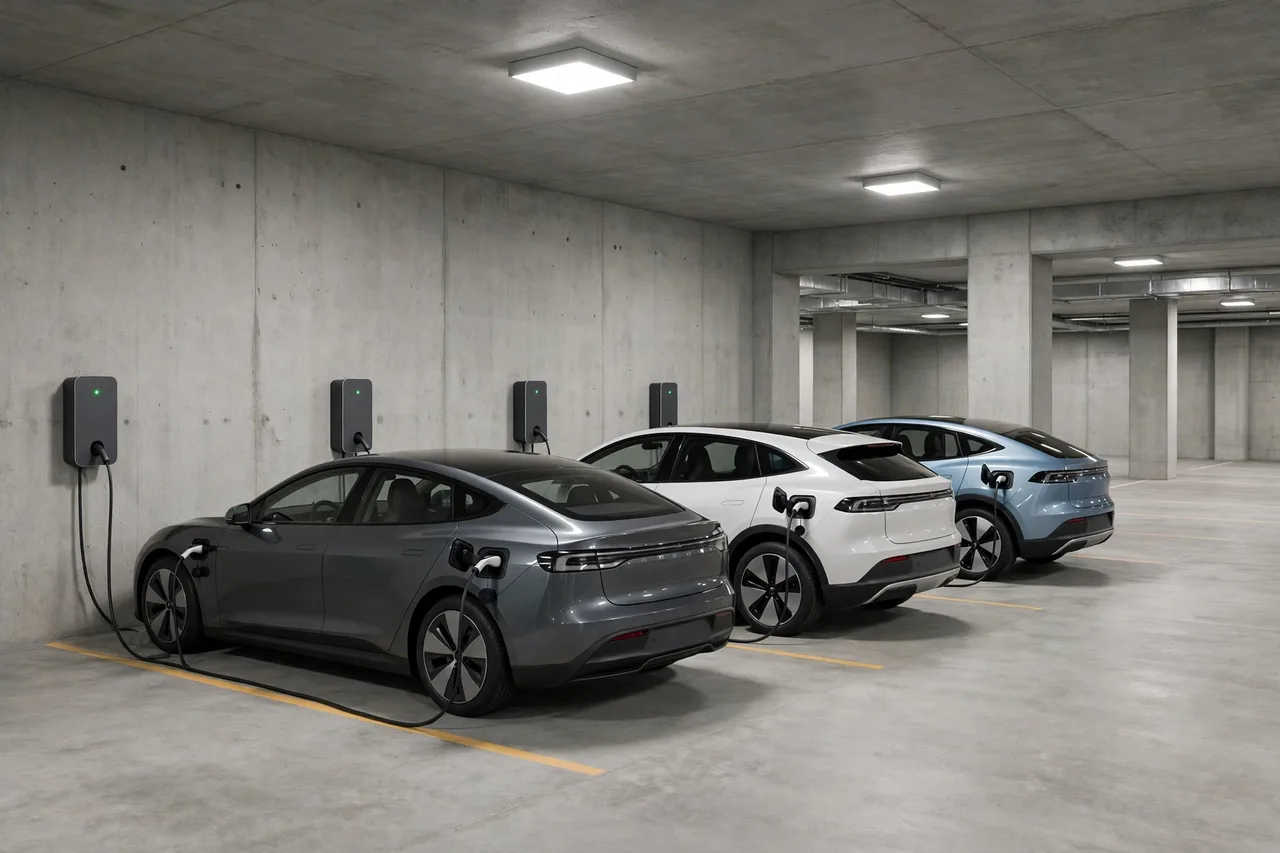
Installers in Hattiesburg book the same ten services as everywhere — but not in the same proportions. The three leading cards below are this city's pattern, set by its panels, its buildings and its statute book.
Home EV Charger Installation in Hattiesburg
Think of it as plumbing for electrons, with the same virtues: correct sizing, honest materials, tidy runs, tested joints. The installers who do it weekly follow a pattern — assess, calculate, route, mount, configure, document — and the pattern is why their installs rarely make news afterwards.
In Hattiesburg: where most Hattiesburg projects start and finish: one circuit, one station, one inspection.
Dedicated Circuit & Electrical Panel Upgrade in Hattiesburg
Capacity work wears three costumes — more amps, a fresh panel, or management electronics that make the existing amps behave like more. The load calculation is the fitting room: it shows which costume your house actually needs, and a trustworthy quote names the calculation before the costume.
In Hattiesburg: service work that turns 'no room' into a circuit with headroom in Hattiesburg homes.
Level 2 Charger Installation in Hattiesburg
The step from a household receptacle to a Level 2 circuit is the step from sipping to drinking: the car takes energy at the rate family life actually consumes it. The work is a breaker, a run of appropriately gauged conductor, and a connection made to torque — modest materials, permanent consequences.
In Hattiesburg: what most Hattiesburg drivers mean when they say they want 'a real charger' — 240 volts, sized to the circuit.
Utility programs and electricity in Hattiesburg
Electricity in Hattiesburg comes from Mississippi Power Co. Parts of the wider metro are served by Southern Pine Electric Cooperative, Pearl River Valley El Pwr Assn, Dixie Electric Power Assn. The utility matters twice over for a charger install: it sets the time-of-use rates that decide what overnight charging costs you, and it is the organisation that may — or may not — currently help pay for the equipment.
Do not budget for a rebate in Hattiesburg right now. As of the sources checked for this page, Mississippi Power Co publishes no residential charger rebate, Mississippi offers no state program for typical home installs, and the federal 30C credit ended on September 30, 2025. If that changes, the utility's program page will say so with an as-of date — and this page will be updated to match. Until then, judge quotes on the work itself.
Before the install, it is worth a two-minute look at your tariff. Many Mississippi Power Co customers can move to a time-of-use plan where overnight energy is charged at a lower rate, and a scheduled charger makes that saving automatic.
Condos, HOAs and the law in Mississippi
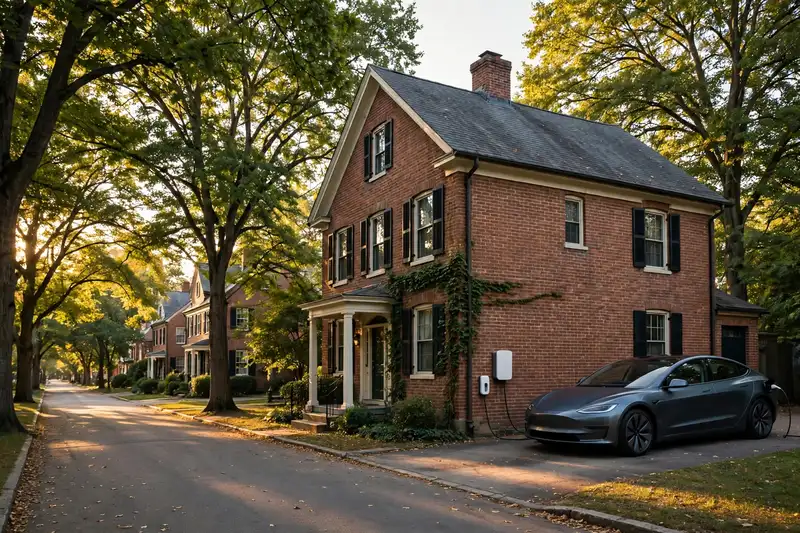
Mississippi has no statewide right-to-charge law. That needs saying plainly, because roundups on the internet sometimes claim otherwise: in the authoritative statute indexes checked for this page, no Mississippi law prevents a homeowners association or condominium from refusing a charger in a common or assigned space. Your community's own covenants and board govern the question in Hattiesburg.
Strategy, then, is the local substitute for statute. In Hattiesburg the applications that succeed tend to share a shape: they arrive before the meeting rather than at it, they answer metering and insurance in the first paragraph, and they offer the board a design it can approve once and reuse for the next owner who asks.
Our condo and HOA guide covers both kinds of state; in Hattiesburg the chapters on complete applications and cost allocation are the operative ones.
Climate, garages and charger placement
Shade is a specification here, not a nicety. Outdoor stations belong under eaves or on the wall that escapes the afternoon sun; connectors left baking in a holder weather faster, and cables stiffen and crack on a shorter clock. The site walk should include a look at where the sun actually lands at four in the afternoon — that is the hour the equipment has to survive.
Heat also argues for headroom in the circuit decision. A car managing a hot battery after a hot commute draws on its own schedule; a generously sized circuit finishes the session inside the cool window instead of straddling the morning. It is a small thing, decided once, felt all summer.

Permits and inspection in Hattiesburg
Bring the panel schedule up to date while the electrician is in it — the new circuit labelled, in the directory, in pen. Inspectors notice; future electricians bless you for it; and the load calculation for any second circuit starts from that card.

Neighbourhoods and ZIP codes served
The page covers 6 ZIP codes in and around Hattiesburg — including 39401, 39402, 39403, 39404, 39406, 39407 — across Forrest. If your ZIP is not in the first set shown, ask anyway: installer coverage follows the metro, not a postcode fence.
Forrest County accounts for 8 of the ZIP codes and 3 named postal localities in the research file, the nearest of them Petal, Brooklyn. The survey counts 78,272 residents in the county, with a median household income of $53,640 and a median home value of $168,000. Measured across its ZIP codes, the Hattiesburg footprint runs about 13 miles north to south and 5 east to west, from ZIP 39401 to 39407 — the ground an installer based here actually covers in a working week.
Beyond the county seats, the working area takes in Petal, Eastabuchie, Moselle, Purvis, Sumrall, New Augusta, Seminary, Ovett, Ellisville, Brooklyn, Richton, Lumberton, Beaumont, Bassfield, Columbia, Collins, Laurel, Soso, Carson, Mc Lain, Wiggins, Neely, Sandy Hook, Foxworth, Poplarville, Moss, Sandersville, Mount Olive, Taylorsville, Stringer, Prentiss, Oak Vale, Clara, Mize, Kokomo, Angie, Varnado, Waynesboro, Silver Creek, State Line — the named localities for which Hattiesburg is the nearest metro in the network (neighbouring metros' pages cover their own ground), each routing to the same installer-matching service.
The wider working area also reaches Perkinston, Heidelberg, Leakesville, Mc Henry, Bay Springs, Magee — ground shared with neighbouring metros, where installers cross the same county lines in both directions.
The largest communities in that working area after Hattiesburg itself, by the GeoNames populated-place file: Laurel (population 18,837), McComb (population 12,661), Bogalusa (population 11,933), Petal (population 10,701), Holly Springs (population 7,901), Columbia (population 6,229), West Hattiesburg (population 5,909), Waynesboro (population 4,975), Ellisville (population 4,573), Wiggins (population 4,550), Franklinton (population 3,782), Poplarville (population 2,985), Collins (population 2,570), Purvis (population 2,335), Lumberton (population 2,223), Belmont (population 1,941), Arnold Line (population 1,719), Sumrall (population 1,711), Summit (population 1,682), Glendale (population 1,657). Charging demand follows those populations — the subdivisions and town centres where the next driveways, and the next panels, are.
Jones County reaches into the working area with 66,472 residents, a median household income of $52,216 and a median home value of $143,100; its localities on this page include Eastabuchie, Moselle, Ellisville, Laurel. Perry County reaches into the working area with 11,449 residents, a median household income of $49,634 and a median home value of $124,000; its localities on this page include New Augusta, Ovett, Richton, Beaumont. Marion County reaches into the working area with 24,193 residents, a median household income of $45,110 and a median home value of $122,800; its localities on this page include Columbia, Sandy Hook, Foxworth, Kokomo. Lamar County reaches into the working area with 65,713 residents, a median household income of $70,909 and a median home value of $224,700; its localities on this page include Purvis, Sumrall, Lumberton. Covington County reaches into the working area with 18,148 residents, a median household income of $45,051 and a median home value of $105,100; its localities on this page include Seminary, Collins, Mount Olive.
| ZIP | Locality | County |
|---|---|---|
| 39401 | Hattiesburg | Forrest |
| 39402 | Hattiesburg | Forrest |
| 39403 | Hattiesburg | Forrest |
| 39465 | Petal | Forrest |
| 39436 | Eastabuchie | Jones |
| 39404 | Hattiesburg | Forrest |
| 39406 | Hattiesburg | Forrest |
| 39407 | Hattiesburg | Forrest |
| 39459 | Moselle | Jones |
| 39475 | Purvis | Lamar |
| 39482 | Sumrall | Lamar |
| 39462 | New Augusta | Perry |
| 39479 | Seminary | Covington |
| 39464 | Ovett | Perry |
| 39437 | Ellisville | Jones |
| 39425 | Brooklyn | Forrest |
| 39476 | Richton | Perry |
| 39455 | Lumberton | Lamar |
| 39423 | Beaumont | Perry |
| 39421 | Bassfield | Jefferson Davis |
| 39429 | Columbia | Marion |
| 39428 | Collins | Covington |
| 39440 | Laurel | Jones |
| 39442 | Laurel | Jones |
| 39443 | Laurel | Jones |
| 39480 | Soso | Jones |
| 39427 | Carson | Jefferson Davis |
| 39441 | Laurel | Jones |
| 39456 | Mc Lain | Greene |
| 39577 | Wiggins | Stone |
| 39461 | Neely | Greene |
| 39478 | Sandy Hook | Marion |
| 39483 | Foxworth | Marion |
| 39470 | Poplarville | Pearl River |
| 39460 | Moss | Jasper |
| 39477 | Sandersville | Jones |
| 39119 | Mount Olive | Covington |
| 39168 | Taylorsville | Smith |
| 39481 | Stringer | Jasper |
| 39474 | Prentiss | Jefferson Davis |
| 39656 | Oak Vale | Lawrence |
| 39324 | Clara | Wayne |
| 39116 | Mize | Smith |
| 39643 | Kokomo | Marion |
| 70426 | Angie | Washington |
| 70467 | Varnado | Washington |
| 39367 | Waynesboro | Wayne |
| 39663 | Silver Creek | Lawrence |
| 39362 | State Line | Greene |

Planning the install: from panel to parking
The order of operations protects you. Load calculation before equipment choice, because the circuit sizes the station's settings. Route before purchase, because reach decides models. Permit before work, because inspection closes the file the insurer will one day read. In Hattiesburg the sequence is the same as everywhere — what varies is only how much of it your particular house asks for, and finding that out is the site visit's entire purpose.
One more piece of sequencing advice Hattiesburg installers give consistently: if the panel is being opened anyway, settle the other electrical maybes in the same visit — the circuit you will want next year costs least while the permit and the electrician are already in the house.
Home charging know-how for Hattiesburg households
Planning the second visit on the first
Nearly every install leaves a known future: a second car, a workshop circuit, a battery or a heat pump queuing for capacity. The first visit is when that future costs least to serve — conduit runs made while walls are open, panel positions reserved, the load study documented so the next calculation starts from evidence. Installers call it roughing in the future; households experience it, years later, as the second project that was mysteriously half done already.
The school-run charge window
Households organised around school runs live on a distinctive charge curve: two short hops, a long parked day, an afternoon of activities. The car sits at home for the middle of the day — which, for solar households, is precisely the generation window, and for everyone else makes the overnight session almost an afterthought. Scheduling follows the family's actual day, not the tariff's assumption of one, and the installer who asks about the school run is designing, not chatting.
Long runs and voltage drop
Distance taxes a circuit twice: in materials, and in voltage. A long run at charging currents loses voltage along its length, and the code's remedy is conductor sized a step beyond the minimum so the station at the far end still receives what it expects. This is one of the reasons a detached structure or a far-corner panel turns a simple circuit into a designed one — the arithmetic is easy, but it has to be done, and it is invisible in any quote that scopes the job from the charger box alone. The site visit is where the tape measure settles it.
The new owner's first week
Week one with a home charger is about building the reflex: park, plug, forget. Set the schedule once, against your rate window; confirm the car wakes to the charge level your commute wants; learn where the station's indicator confirms a session at a glance from the door. By the second week the public-charging arithmetic of the old routine — detours, queues, weather — is already hard to remember. The households that struggle are the ones still treating the wall like a petrol station: sessions are not events, they are the background of parking.

Frequently asked questions
What happened to the federal home-charger credit in Hattiesburg, MS?
The three possible pots are all, at present, empty for a Hattiesburg homeowner: no Mississippi Power Co residential rebate in current published sources, no Mississippi home programme, and a federal credit that closed on September 30, 2025. Programmes do relaunch — on the utility's site, with dates — and until one does, the honest quote is the one with no rebate line at all.
Can my HOA or condo board in Hattiesburg, MS refuse my charger?
Legally, yes — and it is better to know that before you buy the car. Mississippi has enacted no right-to-charge law, so an association in Hattiesburg may refuse, condition or delay a charger under its covenants. The counterweight is a complete, documented application and, if refused, a written refusal citing the covenant — the record a future board or a future statute works from.
Panel upgrade or not — how do Hattiesburg, MS homeowners find out?
Start from the median, then verify: the median Hattiesburg home was built in 1981, and 49% of the stock predates 1980, so 100-amp panels are a normal sight here — and a normal candidate for either an upgrade or a load-management device. The load calculation distinguishes the two in one visit, and any quote that skips it is guessing with your money.
How much faster is Level 2 charging at home in Hattiesburg, MS?
Level 2 is several-fold faster in the only unit that matters — miles back per hour parked: roughly 25–40 against Level 1's 3–5. The exact figure follows the circuit: a 40-amp circuit and a 60-amp circuit are both Level 2, and the car's onboard limit may sit below either. Your installer matches the three numbers at the site visit.
How does the installer matching on this page work?
Your request — service, Hattiesburg ZIP, property type and timing — goes to licensed local installers who cover Hattiesburg. They contact you directly to arrange a site visit and quote. PlugReady USA is the matching service, not the installer, and the sections above exist so you can judge any quote against the local facts.
My Hattiesburg home has no garage — where does the charger go?
Exterior installs are standard practice in Hattiesburg: a station listed for outdoor use, mounted on the wall by the drive or on a pedestal at the pad, with conduit sealed and the cable's reach checked against your parking position. Snow, sun and storm each have their local paragraph in the climate section above — the design answers all three at mounting time.
Nearby cities in Mississippi
- EV charger installation in Gulfport — about 65 miles from Hattiesburg, metro population 420,000
- EV charger installation in Meridian — about 80 miles from Hattiesburg, metro population 100,000
- EV charger installation in Jackson — about 83 miles from Hattiesburg, metro population 600,000
- EV charger installation in Tupelo — about 205 miles from Hattiesburg, metro population 140,000
- EV charger installation in Mobile, AL — about 82 miles from Hattiesburg, metro population 425,000
- EV charger installation in New Orleans, LA — about 103 miles from Hattiesburg, metro population 1,250,000
- EV charger installation in Baton Rouge, LA — about 120 miles from Hattiesburg, metro population 900,000
Ready to charge at home in Hattiesburg?
Tell us the job — service, ZIP and property type — and licensed local installers will take it from there.