EV Charger Installation in Jackson, MS
Everything a Jackson homeowner needs before booking a charger install — the panel question, the utility's current programs, the HOA law and the permit — sourced, dated and local.
Ask EV owners in Jackson what changed their routine and most give the same answer: the car charges where it parks. Jackson itself is home to about 141,376 people. Statewide, Mississippi counted 7,200 battery-electric vehicles and 3,000 plug-in hybrids on the road through 2025, and the metro's share of that fleet keeps growing. A home charger installation is not complicated, but it is local — the utility that serves your street, the age of your panel, your community's rules and your city's permit office all shape the job. This page pulls those Jackson specifics together in one place, with the numbers sourced rather than rounded into slogans.
How PlugReady USA works, in one breath: you describe the job once, licensed local installers who cover Jackson receive it, and the conversations happen with them directly. The rest of this page exists so those conversations start from facts — yours about the house, ours about the metro — rather than from a sales script.
The registration ledger for the Jackson metro reads: MS capital. Ledgers like this are what installer rounds are built from — they show where the cars already are, which is where the circuits get requested, permitted and inspected week after week.
Three survey lines do most of the predictive work on this page. Income — a median of $44,516 per household — tracks the pace at which Jackson households adopt EVs at all. Tenure — 50% owner-occupied — decides whose signature the work needs. And structure — 67% single-unit detached — decides how often the answer is a simple garage circuit rather than a building negotiation.

The composite picture matters more than any single statistic. In Jackson: an older housing fabric, where panel archaeology is a normal part of the first visit; a detached-house majority with a real attached and multifamily minority; buildings of five or more units hold a substantial share of homes, which keeps the multifamily sections of this page in daily use; meanwhile, owners hold a working majority, with renters a significant minority. A page that ignored that profile would give the same advice everywhere; this one is ordered by it.
The counts behind the percentages, for the record: Jackson has 74,917 housing units on the survey's count, 60,638 of them occupied, and 30,372 owner-occupied households making their own electrical decisions. Detached houses number 50,210; homes built before 1980 number 52,662; units in buildings of five or more number 16,863. An installer's week in this city is a walk through exactly that distribution. The page's geography is equally concrete: 27 ZIP codes across Hinds, Rankin, centred near 32.29 degrees north latitude. The city anchors the Jackson metropolitan area, home to roughly 600,000 people on the research file's metro estimate — the wider labour and housing market this page's installers work across.
The same survey release fills in the household economics around the housing stock: a median home value of $111,700, median gross rent of $1,055, per-capita income of $26,811, and a median resident age of 34. And the daily rhythms behind the housing numbers: 73% of Jackson workers drive to work alone — the commute pattern home charging is built around; 9% work from home, a population whose cars charge on daytime and overnight schedules alike; 0% commute by public transit; 29% of adults hold a bachelor's degree or higher. And the fleet in the driveways: 24,087 households in Jackson have exactly one vehicle, 29,286 have two or more, and 7,265 have none.
Two burden statistics frame the economics: in Jackson, 56% of renters and 0% of mortgage-holding owners are housing-cost burdened at the standard 30% threshold. And 54% of households are family households, the segment most likely to run the two-vehicle, two-schedule pattern the second-vehicle planning notes address.
None of these facts is trivia; each one moves a real decision in the project. A stock this old wires its history into the walls: cloth-wrapped conductors in the deepest streets, fuse boxes that outlived their century, panels added in layers by generations of electricians each solving their own decade's problem. The housing variety shows up in the permit data as variety: single-family circuits in volume, building projects in ones and twos, each teaching the local workforce a different half of the trade.
Property managers are the metro's charging gatekeepers at this tenure mix, and the installers who thrive are the ones whose proposals arrive manager-shaped: standardised, insured, reversible on paper. Budget discipline shapes the specification — the circuit sized exactly, the management device considered wherever it defers a service upgrade, every scope line asked to justify itself. Tariff design is the quiet policy: the shape of the overnight window, the demand charges commercial customers face, the interconnection queue's pace — all set in dockets the diligent can read.
In an early market every install is disproportionately instructive: the permit counter learns, the association learns, the street learns, and the second install on any street is always easier than the first. Mid-sized metros feel fleet growth personally: each year's registrations are visible in the school car park and the permit statistics, and the installer market grows in step rather than in surges. The association dimension here runs on persuasion rather than statute — no state charging law frames the application, so the complete, professional proposal carries the whole argument, as the law section above explains.
The electrical reality in Jackson homes
The Census Bureau's latest American Community Survey puts the median Jackson home's build year at 1971: about 70% of the city's housing units were built before 1980, 67% are single-unit detached houses, and 50% of occupied homes are owner-occupied. Those three numbers predict most of what an installer will find. Age shows up electrically before it shows up anywhere else: services sized for a house with a third of today's appliances. Expect the first conversation to be about capacity — what the panel is, what it already feeds, and which of the three routes (circuit, management, upgrade) your numbers support. Housing age also tracks wire-run reality: older homes more often place the panel in a basement or interior wall far from the garage, and distance is copper, conduit and labour.
Heating fuel is the survey's quiet clue to panel life: in Jackson, 51% of homes heat electrically (31,487 households), against 47% heating with gas. A house already heating electrically has a service sized with that load in its history; a gas-heated house may have capacity to spare — either way the fuel mix is part of what the installer is reading.
One further split matters for how this page is organised: about 30,266 of Jackson's occupied homes are renter-occupied. Everything above assumes you can approve your own electrical work; where you cannot, the approval layer — landlord or association — becomes part of the job, which is why the law section carries unusual weight here.
The city's stock is not all houses: 23% of units are in structures of five or more. Shared buildings mean shared panels, assigned parking and association process — the substance of the multifamily sections below.
EV charging services in Jackson
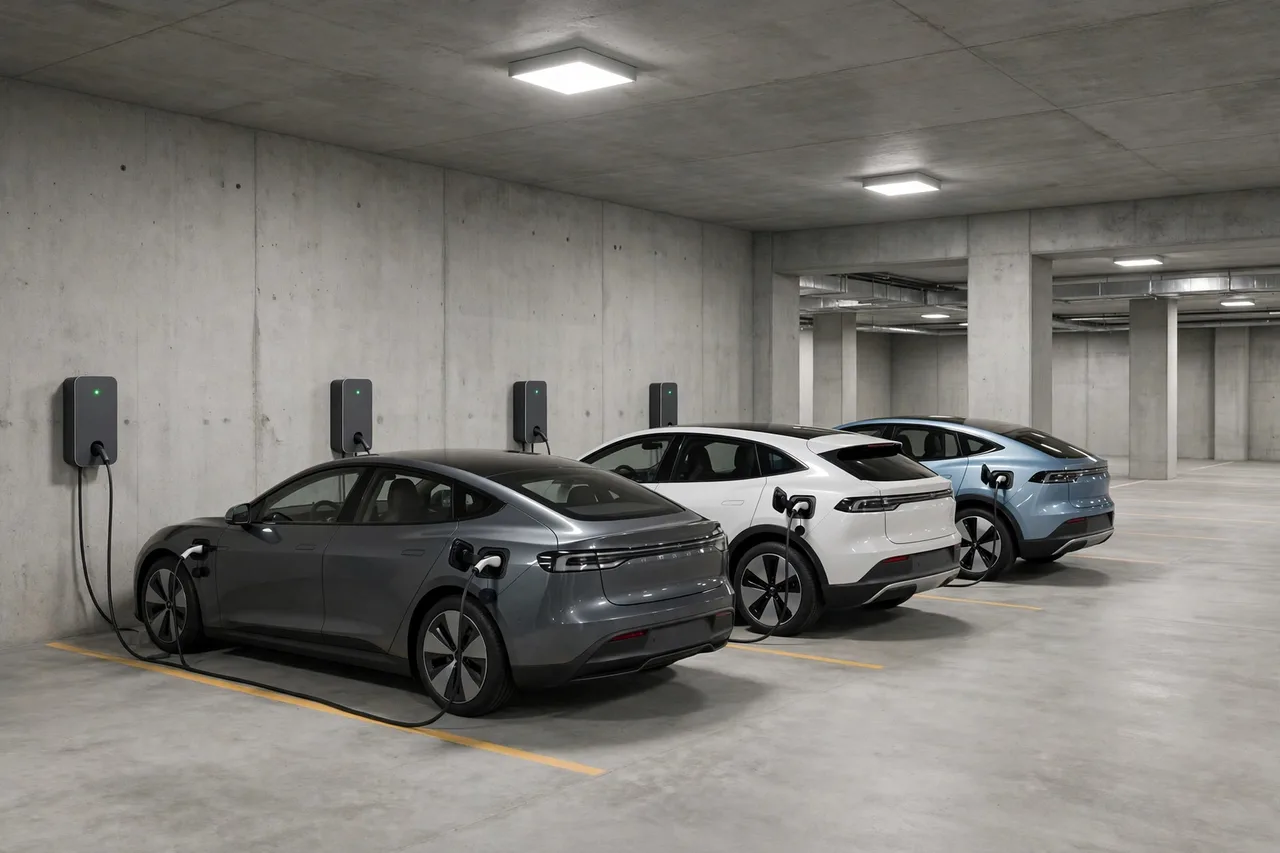
The full menu runs to ten services; the three cards at the top are the ones Jackson's housing stock and state law push to the front. Everything links to its national service page for scope and process in full.
Home EV Charger Installation in Jackson
One circuit, one station, one inspection: the residential install in its usual form. An installer sizes the circuit to the household's driving, mounts the station where the cable reaches the port without drama, sets its output to the circuit it landed on, and leaves the paperwork filed with the house.
In Jackson: the core residential job in Jackson: circuit, mounting, configuration and inspection in one visit pattern.
Dedicated Circuit & Electrical Panel Upgrade in Jackson
Capacity work wears three costumes — more amps, a fresh panel, or management electronics that make the existing amps behave like more. The load calculation is the fitting room: it shows which costume your house actually needs, and a trustworthy quote names the calculation before the costume.
In Jackson: service work that turns 'no room' into a circuit with headroom in Jackson homes.
Level 2 Charger Installation in Jackson
Level 2's numbers explain its dominance: several times the overnight recovery of a wall outlet, on equipment sized to the circuit by a factor the code fixes. The install is a circuit project with a station at the end of it, and it is quoted that way by anyone who does it weekly.
In Jackson: the upgrade from a wall outlet to a dedicated 240-volt circuit, and the end of range arithmetic at bedtime.
Utility programs and electricity in Jackson
Electricity in Jackson comes from Entergy Mississippi LLC. Parts of the wider metro are served by Southern Pine Electric Cooperative, Central Electric Power Assn, Southwest Mississippi E P A. The utility matters twice over for a charger install: it sets the time-of-use rates that decide what overnight charging costs you, and it is the organisation that may — or may not — currently help pay for the equipment.
Why does this page labour the absence of a rebate? Because in Jackson the phantom rebate is the most common distortion in charger quotes: a figure justified by money that is not, at present, claimable. The verified position: federal 30C ended September 30, 2025; no Mississippi replacement for typical home installs; no Entergy Mississippi LLC residential charger rebate in the sources checked. If someone quotes you a rebate, the follow-up is one sentence — show me the program page — and its answer decides the quote's credibility.
Solar households should read the export terms alongside the charging ones: the pair decides whether midday charging on home-working days beats the overnight window, and the answer is written in your tariff, not in general advice.
Condos, HOAs and the law in Mississippi
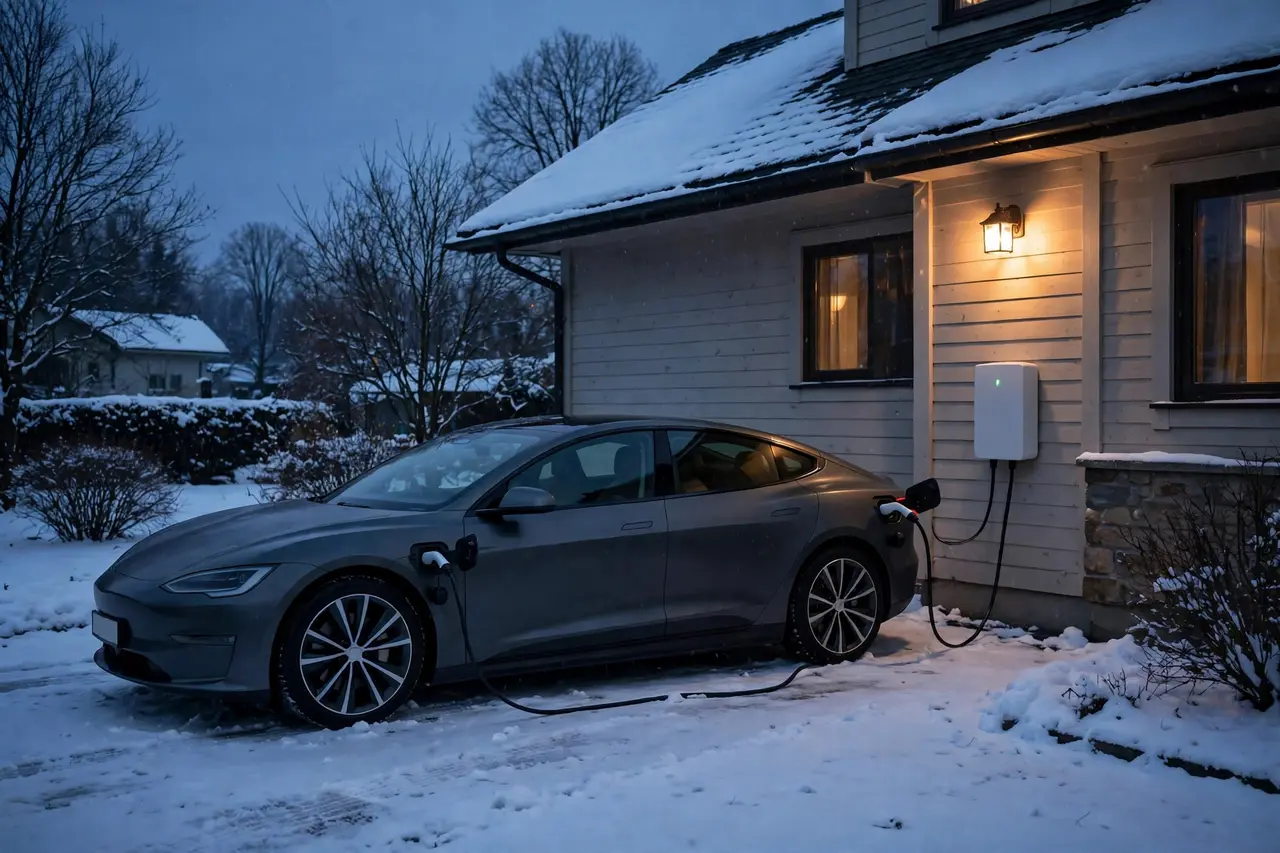
There is no Mississippi right-to-charge statute to lean on. Some national roundups list protection that does not exist in this state's code; the statute indexes checked for this page are clear. In Jackson, a condo or HOA charger is approved — or not — under the community's own documents, which makes the quality of your application the whole ballgame.
No law does not mean no path. Boards approve chargers every week when the proposal answers their real concerns in advance: a licensed installer, a dedicated circuit that touches nothing shared, metering that keeps the electricity cost on the owner, insurance, and a commitment to restore the space on removal. Bring that package, in writing, before the meeting — not during it.
For the full playbook — application contents, metering designs, the questions boards ask — see the condo and HOA charging guide. In Jackson it should be read as a negotiation manual, because negotiation is what the absence of a statute leaves you.
Climate, garages and charger placement
The grid's evening peak and the house's cooling peak are the same peak here, which makes the charger's start time a small act of grid citizenship as well as thrift: after the air-conditioning army stands down, energy is cheaper and cooler-headed.
In this climate the overnight window does double duty — rates are kinder and so are temperatures. Scheduling the charge for the small hours lets the car and the station work in the coolest air the day offers, which is easier on both. An installer who raises scheduling unprompted during the site visit is telling you they install in this heat regularly.

Permits and inspection in Jackson
Expect the permit to name the circuit, the breaker and the equipment. An installer who suggests skipping it is saving an afternoon by spending your liability; the inspection is also your independent check that the continuous-load sizing was done properly.

Neighbourhoods and ZIP codes served
The page covers 27 ZIP codes in and around Jackson — including 39201, 39202, 39203, 39204, 39205, 39206, 39207, 39209, 39210, 39211, 39212, 39213, 39215, 39216, 39217, 39225, 39236, 39250, 39269, 39271, 39282, 39283, 39284, 39286, 39289, 39296, 39298 — across Hinds, Rankin. If your ZIP is not in the first set shown, ask anyway: installer coverage follows the metro, not a postcode fence.
The same working area takes in the neighbouring localities of Pearl, Richland, Flowood, Tougaloo, Whitfield, Clinton, Byram, Florence, Brandon, Terry, Bolton, Star, Raymond, Piney Woods — the county ring an installer based in Jackson actually drives. Requests from those communities route exactly as city requests do: same services, same permit discipline, same local facts where they differ.
Hinds County accounts for 36 of the ZIP codes and 9 named postal localities in the research file, the nearest of them Tougaloo, Clinton, Byram, Terry, Bolton. The survey counts 218,533 residents in the county, with a median household income of $49,402 and a median home value of $159,900. Rankin County accounts for 15 of the ZIP codes and 12 named postal localities in the research file, the nearest of them Pearl, Richland, Flowood, Whitfield, Florence. The survey counts 158,854 residents in the county, with a median household income of $79,357 and a median home value of $237,400. Measured across its ZIP codes, the Jackson footprint runs about 9 miles north to south and 16 east to west, from ZIP 39201 to 39298 — the ground an installer based here actually covers in a working week.
Beyond the county seats, the working area takes in Pearl, Richland, Flowood, Tougaloo, Whitfield, Clinton, Byram, Ridgeland, Florence, Brandon, Madison, Terry, Bolton, Star, Raymond, Piney Woods, Flora, Pelahatchie, Sandhill, Edwards, Harrisville, Crystal Springs, Braxton, Sharon, Canton, Puckett, Utica, D Lo, Gallman, Bentonia, Georgetown, Satartia, Mendenhall, Ludlow, Hazlehurst, Morton, Pinola, Tinsley, Pulaski, Vaughan, Redwood, Benton, Vicksburg, Camden, Hillsboro, Magee, Forest, Newhebron, Harperville, Yazoo City, Delta, Raleigh, Lena, Pickens, Hermanville, Wesson, Valley Park, Sontag — the named localities for which Jackson is the nearest metro in the network (neighbouring metros' pages cover their own ground), each routing to the same installer-matching service.
The largest communities in that working area after Jackson itself, by the GeoNames populated-place file: Pearl (population 26,462), Madison (population 25,799), Clinton (population 25,254), Ridgeland (population 24,351), Brandon (population 23,529), Vicksburg (population 23,131), Greenwood (population 15,431), Canton (population 13,676). Charging demand follows those populations — the subdivisions and town centres where the next driveways, and the next panels, are.
Madison County reaches into the working area with 111,647 residents, a median household income of $83,441 and a median home value of $311,100; its localities on this page include Ridgeland, Madison, Flora. Simpson County reaches into the working area with 25,691 residents, a median household income of $56,381 and a median home value of $122,200; its localities on this page include Harrisville, Braxton, D Lo, Mendenhall, Pinola. Yazoo County reaches into the working area with 24,835 residents, a median household income of $39,295 and a median home value of $153,800; its localities on this page include Bentonia, Satartia, Tinsley, Vaughan, Benton.
| ZIP | Locality | County |
|---|---|---|
| 39201 | Jackson | Hinds |
| 39205 | Jackson | Hinds |
| 39207 | Jackson | Hinds |
| 39215 | Jackson | Hinds |
| 39225 | Jackson | Hinds |
| 39236 | Jackson | Hinds |
| 39250 | Jackson | Hinds |
| 39271 | Jackson | Hinds |
| 39282 | Jackson | Hinds |
| 39283 | Jackson | Hinds |
| 39284 | Jackson | Hinds |
| 39286 | Jackson | Hinds |
| 39289 | Jackson | Hinds |
| 39296 | Jackson | Hinds |
| 39269 | Jackson | Hinds |
| 39217 | Jackson | Hinds |
| 39203 | Jackson | Hinds |
| 39202 | Jackson | Hinds |
| 39210 | Jackson | Hinds |
| 39204 | Jackson | Hinds |
| 39216 | Jackson | Hinds |
| 39288 | Pearl | Rankin |
| 39209 | Jackson | Hinds |
| 39213 | Jackson | Hinds |
| 39218 | Richland | Rankin |
| 39206 | Jackson | Hinds |
| 39212 | Jackson | Hinds |
| 39208 | Pearl | Rankin |
| 39232 | Flowood | Rankin |
| 39211 | Jackson | Hinds |
| 39174 | Tougaloo | Hinds |
| 39193 | Whitfield | Rankin |
| 39058 | Clinton | Hinds |
| 39056 | Clinton | Hinds |
| 39272 | Byram | Hinds |
| 39157 | Ridgeland | Madison |
| 39158 | Ridgeland | Madison |
| 39073 | Florence | Rankin |
| 39298 | Jackson | Rankin |
| 39043 | Brandon | Rankin |
| 39060 | Clinton | Hinds |
| 39130 | Madison | Madison |
| 39042 | Brandon | Rankin |
| 39110 | Madison | Madison |
| 39047 | Brandon | Rankin |
| 39170 | Terry | Hinds |
| 39041 | Bolton | Hinds |
| 39167 | Star | Rankin |
| 39154 | Raymond | Hinds |
| 39148 | Piney Woods | Rankin |
| 39071 | Flora | Madison |
| 39145 | Pelahatchie | Rankin |
| 39161 | Sandhill | Rankin |
| 39066 | Edwards | Hinds |
| 39082 | Harrisville | Simpson |
| 39059 | Crystal Springs | Copiah |
| 39044 | Braxton | Simpson |
| 39163 | Sharon | Madison |
| 39046 | Canton | Madison |
| 39151 | Puckett | Rankin |
| 39175 | Utica | Hinds |
| 39062 | D Lo | Simpson |
| 39077 | Gallman | Copiah |
| 39040 | Bentonia | Yazoo |
| 39078 | Georgetown | Copiah |
| 39162 | Satartia | Yazoo |
| 39114 | Mendenhall | Simpson |
| 39098 | Ludlow | Scott |
| 39083 | Hazlehurst | Copiah |
| 39117 | Morton | Scott |
| 39149 | Pinola | Simpson |
| 39173 | Tinsley | Yazoo |
| 39152 | Pulaski | Scott |
| 39179 | Vaughan | Yazoo |
| 39156 | Redwood | Warren |
| 39039 | Benton | Yazoo |
| 39183 | Vicksburg | Warren |
| 39180 | Vicksburg | Warren |
| 39181 | Vicksburg | Warren |
| 39182 | Vicksburg | Warren |
| 39045 | Camden | Madison |
| 39087 | Hillsboro | Scott |
| 39111 | Magee | Simpson |
| 39074 | Forest | Scott |
| 39140 | Newhebron | Lawrence |
| 39080 | Harperville | Scott |
| 39194 | Yazoo City | Yazoo |
| 71233 | Delta | Madison |
| 39153 | Raleigh | Smith |
| 39094 | Lena | Leake |

Planning the install: from panel to parking
Consider the two households inside every Jackson install. The first owns the panel, the parking and the decision; the second — a partner, a teenager with the next car, a future buyer — inherits all three. Designing for the second household is the difference between an install and an asset: capacity reserved, conduit honest, paperwork filed. The first conversation with an installer should name both households explicitly.
One more piece of sequencing advice Jackson installers give consistently: if the panel is being opened anyway, settle the other electrical maybes in the same visit — the circuit you will want next year costs least while the permit and the electrician are already in the house.
Home charging know-how for Jackson households
The insurance conversation
A permitted charger installation is a short conversation with your insurer, and it is worth having before rather than after. The documented install — permit, inspection, listed equipment, licensed electrician — is the version insurers process without friction, because every question they ask is answered by the file. Undocumented electrical work is where claims go to become arguments. Tell the insurer the circuit exists, keep the paperwork with the policy documents, and the charger's insurance chapter closes in one phone call.
The paperwork is part of the installation
A finished install leaves two legacies: a working charger and a file. The file — permit, passed inspection, the station's configuration recorded, the panel schedule updated, a photograph of the finished work — is what the future runs on. It answers the insurer's question, the buyer's question, the second installer's load calculation, and the warranty conversation, each in one page. Households that treat the paperwork as part of the deliverable never have to reconstruct it; households that do not, eventually do. Ask for the file at handover and keep it with the house documents.
Reading the bill after the charger arrives
The first bills after an install reward a careful read. Charging appears as consumption, not as a line item — the household's kilowatt-hours rise by roughly the car's appetite, and the rate applied to the new hours depends on when they happened. Owners who check the schedule actually ran — that the car charged inside the intended window — catch the one configuration mistake that costs money monthly. After that, the bill becomes the household's quietest document: the car simply costs what the overnight rate says it should.
Cable discipline: the daily five seconds
The connector and cable are the parts of the installation you touch twice a day, and they age by handling rather than by electricity. The habits that matter are small: the connector returns to its holster rather than the floor, the cable hangs in a loose loop rather than a kinked coil, the run never crosses the path of the other car's door swing or the bins' weekly journey. Drive-over is the cable's particular enemy — route so that tyres never cross it. Five seconds of discipline per park is the whole maintenance philosophy of the visible half of the system.
What an outage does and does not change
When the grid goes down, a standard home charging station goes quiet with everything else — it is a load, not a source, and it neither drains the car nor feeds the house. Sessions resume or restart when power returns, and the car's own settings govern which. Households in outage country plan around this plainly: charge ahead of forecast storms the way you would fill a fuel tank, and treat the car as the household's largest battery-shaped object — one that, with today's standard equipment, keeps its energy to itself.

Frequently asked questions
Can I still get the federal tax credit for a home charger in Jackson, MS?
No. The federal Alternative Fuel Refueling Property Credit (30C) ended for equipment placed in service after September 30, 2025. In the sources checked for this page, Entergy Mississippi LLC had no verified residential charger rebate running either — if an installer names a current program, ask for its published terms.
Can my association in Jackson, MS say no to a home charger?
As the law stands, yes: without a Mississippi right-to-charge statute, an association in Jackson may refuse or condition a charger under its own documents. The practical counterweight is preparation — a complete written package, a metering answer, and a request that the refusal, if it comes, be issued in writing with the covenant cited.
Does a Level 2 charger mean a panel upgrade for a Jackson, MS home?
Start from the median, then verify: the median Jackson home was built in 1971, and 70% of the stock predates 1980, so 100-amp panels are a normal sight here — and a normal candidate for either an upgrade or a load-management device. The load calculation distinguishes the two in one visit, and any quote that skips it is guessing with your money.
How much faster is Level 2 charging at home in Jackson, MS?
In parked hours: a Level 1 cord returns about 3–5 miles for each of them, and a Level 2 circuit returns roughly 25–40, set by its amperage and the car's acceptance. For a Jackson household parking ten hours, that is the difference between recovering a short errand day and recovering any day the car can legally drive.
What happens after I request an installer through this page?
Three steps: the request routes to installers who work Jackson, Mississippi; one contacts you to walk the property; the walk produces the written quote. Everything on this page — the utility position, the law, the housing data — is yours to check that quote against.
I live in a Jackson apartment or condo building — can I charge at home?
With about 23% of Jackson's housing in buildings of five or more units, building charging is a mainstream question here. It is an approvals project before it is an electrical one — board or landlord, metering, load design — and the sections above walk through both the legal position in Mississippi and the application package that works.
Nearby cities in Mississippi
- EV charger installation in Hattiesburg — about 83 miles from Jackson, metro population 175,000
- EV charger installation in Meridian — about 85 miles from Jackson, metro population 100,000
- EV charger installation in Gulfport — about 145 miles from Jackson, metro population 420,000
- EV charger installation in Tupelo — about 158 miles from Jackson, metro population 140,000
- EV charger installation in Monroe, LA — about 107 miles from Jackson, metro population 205,000
- EV charger installation in Baton Rouge, LA — about 139 miles from Jackson, metro population 900,000
- EV charger installation in Alexandria, LA — about 144 miles from Jackson, metro population 150,000
Ready to charge at home in Jackson?
Tell us the job — service, ZIP and property type — and licensed local installers will take it from there.