EV Charger Installation in Houma, LA
Everything a Houma homeowner needs before booking a charger install — the panel question, the utility's current programs, the HOA law and the permit — sourced, dated and local.
Ask EV owners in Houma what changed their routine and most give the same answer: the car charges where it parks. Houma itself is home to about 32,392 people. Statewide, Louisiana counted 22,600 battery-electric vehicles and 5,700 plug-in hybrids on the road through 2025, and the metro's share of that fleet keeps growing. A home charger installation is not complicated, but it is local — the utility that serves your street, the age of your panel, your community's rules and your city's permit office all shape the job. This page pulls those Houma specifics together in one place, with the numbers sourced rather than rounded into slogans.
How this page is organised matters less than what is in it: verified local facts, stated with their sources, so you can check them yourself. PlugReady USA matches homeowners in Houma with licensed local installers; the detail below is the homework we would want done before anyone quotes the job.
The registration ledger for the Houma–Bayou Cane–Thibodaux metro reads: Bayou region. Ledgers like this are what installer rounds are built from — they show where the cars already are, which is where the circuits get requested, permitted and inspected week after week.
Context from the Census Bureau's survey of Houma: median household income $58,194; 72% of occupied homes are owner-occupied; 85% of housing units are single-unit detached houses. It is the profile of a city where the typical charger job is a homeowner job — scoped by the panel and the wire run, not by permissions.

The composite picture matters more than any single statistic. In Houma: an older housing fabric, where panel archaeology is a normal part of the first visit; overwhelmingly a detached-house city, so most installs are the simple garage pattern; larger buildings are a small share, so the multifamily route matters to a minority of readers; meanwhile, owner-occupiers dominate, so most readers can approve their own electrical work outright. A page that ignored that profile would give the same advice everywhere; this one is ordered by it.
Keep six figures and you keep Houma's whole electrical character: 14,945 housing units; 13,346 occupied homes; 9,660 owner-occupied; 12,713 detached houses; 9,385 pre-1980 homes; 1,154 homes in buildings of five or more units. Percentages elsewhere on this page are these numbers in disguise — the counts are the originals, and they are the numbers a local installer's experience is actually made of. The page's geography is equally concrete: 4 ZIP codes across Terrebonne, centred near 29.59 degrees north latitude. The city anchors the Houma–Bayou Cane–Thibodaux metropolitan area, home to roughly 205,000 people on the research file's metro estimate — the wider labour and housing market this page's installers work across.
The same survey release fills in the household economics around the housing stock: a median home value of $205,900, median gross rent of $1,058, per-capita income of $34,076, and a median resident age of 35. The movement data matters as much as the money data: 80% of Houma workers drive to work alone — the commute pattern home charging is built around; 4% work from home, a population whose cars charge on daytime and overnight schedules alike; 0% commute by public transit; 24% of adults hold a bachelor's degree or higher. Vehicle ownership, from the same release: 7,191 households in Houma run two or more vehicles, and 1,054 run none — the two ends of the market this page serves and does not serve.
Household structure, from the same release: 64% of Houma households are family households. The burden shares behind the housing stock: 44% of renting households are cost-burdened at the 30%-of-income line, as are 0% of mortgaged owners — context for why the overnight rate window, once set, is treated here as a household fixture rather than a hobby.
None of these facts is trivia; each one moves a real decision in the project. Where so much of the stock predates modern code cycles, the site visit doubles as a survey — grounding electrode, service entrance, panel provenance — before it is ever a quote. House-by-house urbanism gives the metro a house-by-house charging pattern — no building-scale projects, just thousands of individual circuits appearing one permit at a time.
Long tenures justify long specifications: conduit oversized for the second car, capacity bought for the decade — arithmetic that only makes sense where households stay, and here they stay. Modest incomes make the overnight tariff the headline act: the difference between peak and off-peak charging, compounded nightly for years, is the largest single number in the ownership equation. Tariff design is the quiet policy: the shape of the overnight window, the demand charges commercial customers face, the interconnection queue's pace — all set in dockets the diligent can read.
The state fleet is young, and Houma's charging story is being written by its first draft of households — the ones whose installs will be the precedents boards and neighbours cite for a decade. A smaller metro runs on relationships: the electrical firms are few, known, and booked through reputations maintained across decades of local work. Without a state charging statute, shared-property approvals in this metro are won on paper quality: metering clarity, licensed installers, insurance, reversibility — the complete package the guides set out.
The electrical reality in Houma homes
Start with the survey's three operative figures for Houma: median build year 1973; 63% of housing units standing since before 1980; 85% of the stock in single-unit detached houses, with 72% of occupied homes owner-occupied. Between them, they sketch the electrical city an installer works in. Age shows up electrically before it shows up anywhere else: services sized for a house with a third of today's appliances. Expect the first conversation to be about capacity — what the panel is, what it already feeds, and which of the three routes (circuit, management, upgrade) your numbers support. Attics, basements and interior panel locations are common in this vintage of stock, which is why the run's route gets its own line in any serious quote: distance and finish decide labour more than the charger does.
The fuel table adds one more local fact: 8,126 Houma homes — 61% of the stock — heat with electricity. Those households already think in kilowatts through the winter, their panels carry the load to prove it, and a charger's overnight appetite joins a system that is, in the useful sense, already electrified.
One further split matters for how this page is organised: about 3,686 of Houma's occupied homes are renter-occupied. Everything above assumes you can approve your own electrical work; where you cannot, the approval layer — landlord or association — becomes part of the job, which is why the law section carries unusual weight here.
And 8% of Houma's homes are in buildings with five or more units — apartments and condominiums where charging is a building decision before it is an electrical one. If that is your situation, the law and multifamily sections of this page are the ones written for you.
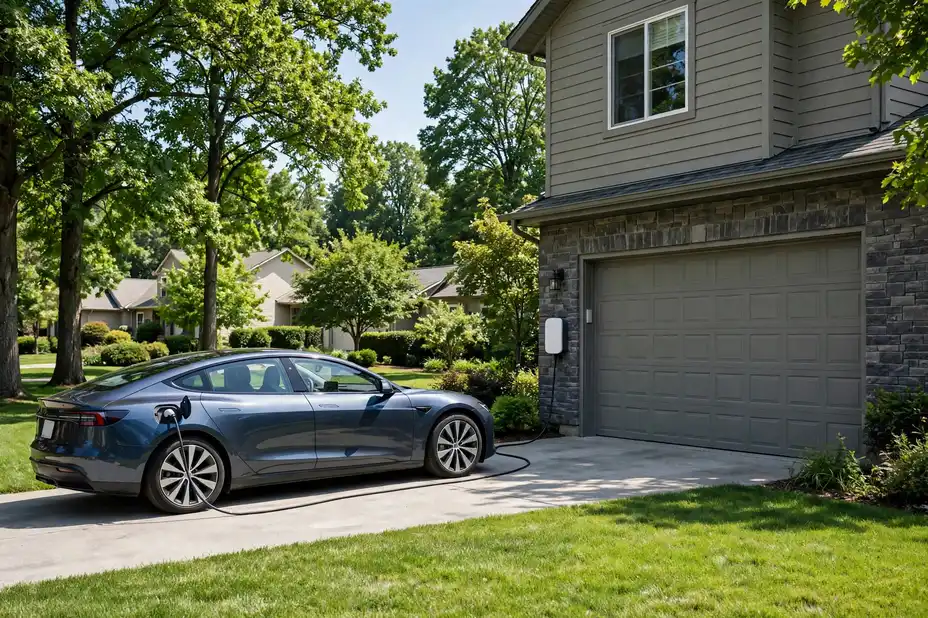
EV charging services in Houma
Three of the network's services lead this page because local conditions put them first; the remaining seven are one click away and equally available here. Each card states what the service involves — the matching itself is free of obligation until you accept an installer's quote.
Home EV Charger Installation in Houma
Think of it as plumbing for electrons, done once: capacity checked, circuit run, station mounted and configured, inspection passed. The households that report the smoothest projects describe the same shape — a visit that measured, a quote that itemised, and a car that simply charged from the first night.
In Houma: where most Houma projects start and finish: one circuit, one station, one inspection.
Dedicated Circuit & Electrical Panel Upgrade in Houma
Where the load calculation fails the existing service, the upgrade is not an upsell — it is the finding. Done under permit with the utility's meter work coordinated, it converts the charger project into the house's electrical reset, and every later project inherits the headroom.
In Houma: the job that surfaces wherever housing is older — and Houma's stock makes it a routine conversation, settled by a load calculation.
Level 2 Charger Installation in Houma
What is being bought is recovery rate. A Level 2 circuit returns in one overnight session what a household receptacle returns in a day and a half, and that margin is the difference between planning around the car and forgetting about it.
In Houma: 240 volts, sized honestly — the working definition of home charging in Houma.
Utility programs and electricity in Houma
Electricity in Houma comes from Entergy Louisiana LLC. Parts of the wider metro are served by South Louisiana Elec Coop Assn, Terrebonne Parish Consol Gov't. The utility matters twice over for a charger install: it sets the time-of-use rates that decide what overnight charging costs you, and it is the organisation that may — or may not — currently help pay for the equipment.
Do not budget for a rebate in Houma right now. As of the sources checked for this page, Entergy Louisiana LLC publishes no residential charger rebate, Louisiana offers no state program for typical home installs, and the federal 30C credit ended on September 30, 2025. If that changes, the utility's program page will say so with an as-of date — and this page will be updated to match. Until then, judge quotes on the work itself.
Net-metering households — rooftop solar is common across the metro — should tell the installer: charging schedules and load management are planned differently when the house generates as well as consumes.
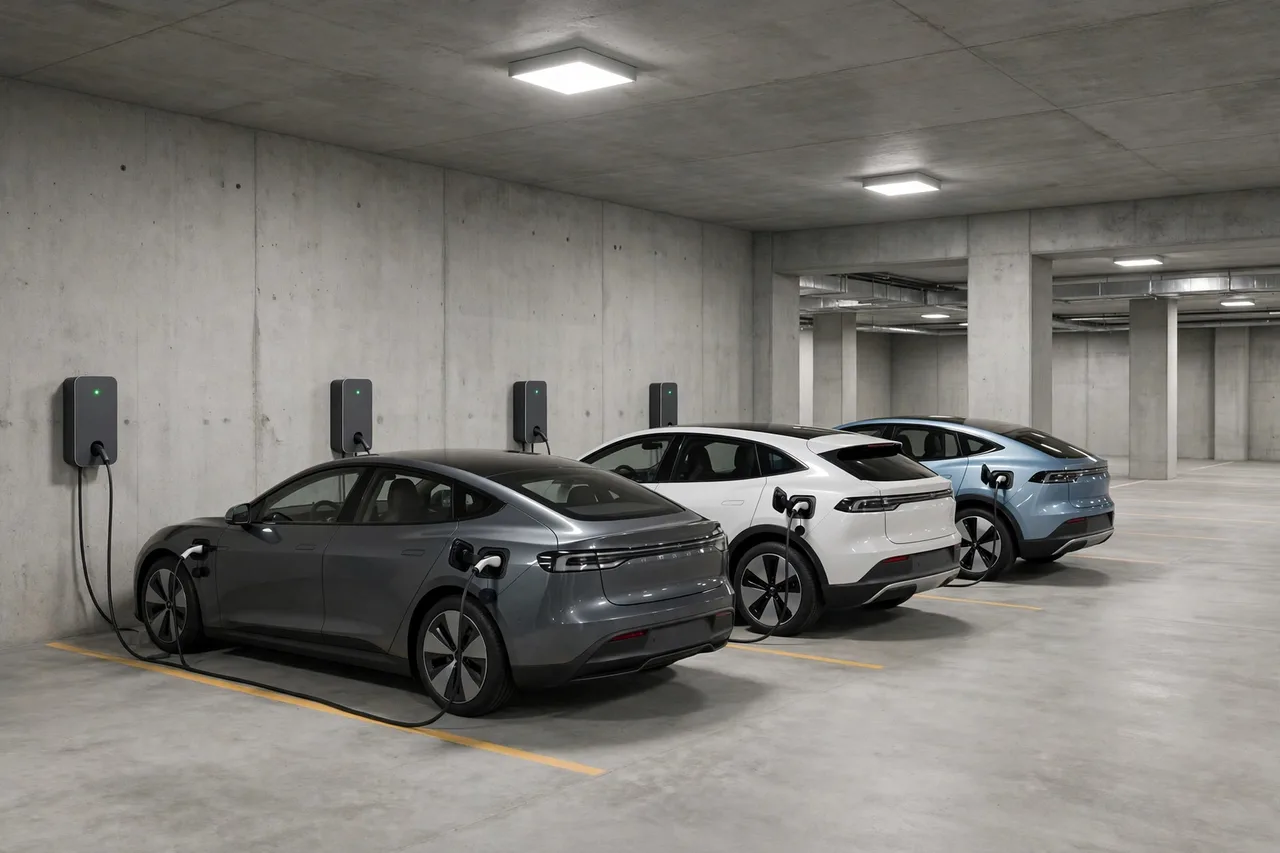
Condos, HOAs and the law in Louisiana
Louisiana has no statewide right-to-charge law. That needs saying plainly, because roundups on the internet sometimes claim otherwise: in the authoritative statute indexes checked for this page, no Louisiana law prevents a homeowners association or condominium from refusing a charger in a common or assigned space. Your community's own covenants and board govern the question in Houma.
There is also a longer game available to Houma owners: associations revise their documents, boards turn over, and state legislatures have been adding right-to-charge laws year after year. A written application — and, if it comes to it, a written refusal — is the record that each of those futures works from.
For the full playbook — application contents, metering designs, the questions boards ask — see the condo and HOA charging guide. In Houma it should be read as a negotiation manual, because negotiation is what the absence of a statute leaves you.
Climate, garages and charger placement
In this climate the overnight window does double duty — rates are kinder and so are temperatures. Scheduling the charge for the small hours lets the car and the station work in the coolest air the day offers, which is easier on both. An installer who raises scheduling unprompted during the site visit is telling you they install in this heat regularly.
The grid's evening peak and the house's cooling peak are the same peak here, which makes the charger's start time a small act of grid citizenship as well as thrift: after the air-conditioning army stands down, energy is cheaper and cooler-headed.
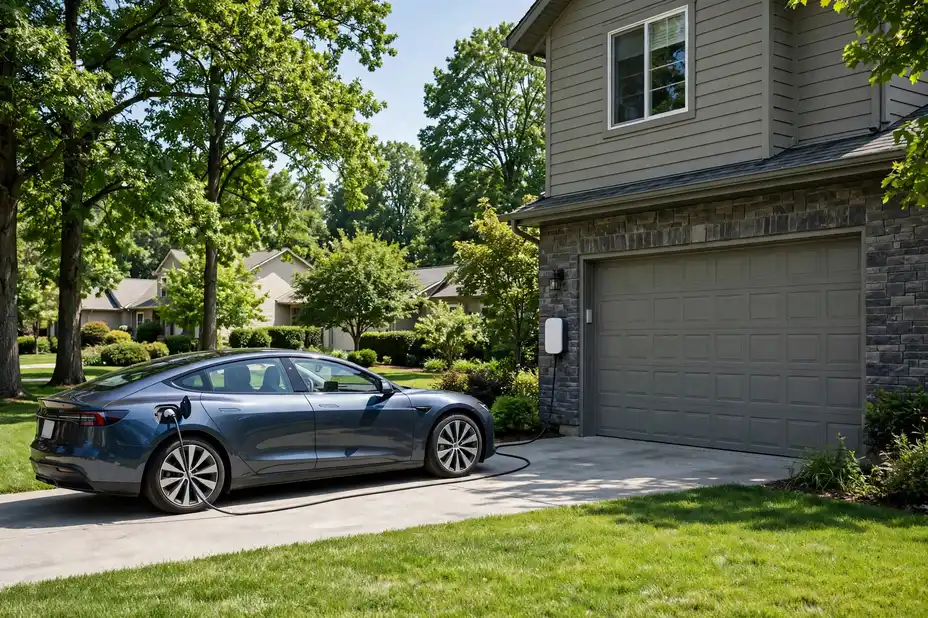
Permits and inspection in Houma
If your install is part of a larger job — a panel upgrade, a garage build — the charger usually rides on the same permit set. Ask for the charger circuit to be listed explicitly so the inspection record shows it.

Neighbourhoods and ZIP codes served
The page covers 4 ZIP codes in and around Houma — including 70360, 70361, 70363, 70364 — across Terrebonne. If your ZIP is not in the first set shown, ask anyway: installer coverage follows the metro, not a postcode fence.
The same working area takes in the neighbouring localities of Gray, Bourg, Schriever, Theriot, Chauvin, Donner, Gibson, Montegut, Dulac — the county ring an installer based in Houma actually drives. Requests from those communities route exactly as city requests do: same services, same permit discipline, same local facts where they differ.
Terrebonne County accounts for 13 of the ZIP codes and 10 named postal localities in the research file, the nearest of them Gray, Bourg, Schriever, Theriot, Chauvin. The survey counts 106,186 residents in the county, with a median household income of $64,836 and a median home value of $187,200. Measured across its ZIP codes, the Houma footprint runs about 5 miles north to south and 4 east to west, from ZIP 70360 to 70364 — the ground an installer based here actually covers in a working week.
Beyond the county seats, the working area takes in Gray, Bourg, Schriever, Theriot, Raceland, Chauvin, Donner, Gibson, Mathews, Montegut, Thibodaux, Dulac, Gheens, Lockport, Amelia, Labadieville, Kraemer, Larose, Cut Off, Vacherie, Napoleonville, Galliano, Berwick, Morgan City, Hester, Convent, Patterson, Uncle Sam, Paulina, Saint James, Golden Meadow, Lutcher, Plattenville, Gramercy, Paincourtville, Pierre Part, Centerville, Garden City — the named localities for which Houma is the nearest metro in the network (neighbouring metros' pages cover their own ground), each routing to the same installer-matching service.
The wider working area also reaches Des Allemands, Paradis, Boutte, Luling, Edgard, Hahnville, Garyville, Mount Airy, Destrehan, New Sarpy, Belle Rose, Norco, Reserve, Saint Rose, Ama, Barataria, La Place, Lafitte, Kenner, Westwego, New Orleans, Donaldsonville, Burnside, Darrow, Marrero, Metairie, Sorrento, Brittany, Harvey, Gonzales, Franklin, Gretna, Belle Chasse, Saint Amant — ground shared with neighbouring metros, where installers cross the same county lines in both directions.
ZIP codes in that shared ground include 70004, 70005, 70006, 70009, 70010, 70011, 70030, 70031, 70033, 70039, 70049, 70051, 70054, 70058, 70059, 70064, 70065, 70068, 70069, 70072, 70073, 70076, 70078, 70080, 70084, 70094, 70113, 70115, 70118, 70121, 70125, 70158, 70163, 70341, 70538, 70707, 70725, 70738, 70774, 70778.
The largest communities in that working area after Houma itself, by the GeoNames populated-place file: Bayou Cane (population 19,355), Thibodaux (population 14,584), Bayou Boeuf (population 14,195), Grand Bayou Mobile Home Park (population 14,195), Morgan City (population 11,835), Raceland (population 10,193), Galliano (population 7,676), Larose (population 7,400), Schriever (population 6,853), Patterson (population 6,106), Cut Off (population 5,976), Gray (population 5,584), Chackbay (population 5,177), Berwick (population 4,765), Bayou Vista (population 4,652), South Vacherie (population 3,642), Gramercy (population 3,457), Lutcher (population 3,373), Chauvin (population 2,912), Bourg (population 2,579). Charging demand follows those populations — the subdivisions and town centres where the next driveways, and the next panels, are.
Lafourche County reaches into the working area with 96,252 residents, a median household income of $63,135 and a median home value of $193,900; its localities on this page include Raceland, Mathews, Thibodaux. St. James County reaches into the working area with 19,528 residents, a median household income of $65,531 and a median home value of $211,800; its localities on this page include Vacherie, Hester, Convent, Uncle Sam, Paulina. St. Mary County reaches into the working area with 47,828 residents, a median household income of $52,576 and a median home value of $138,900; its localities on this page include Amelia, Berwick, Morgan City, Patterson. Assumption County reaches into the working area with 20,484 residents, a median household income of $51,423 and a median home value of $150,300; its localities on this page include Labadieville, Napoleonville, Plattenville, Paincourtville, Pierre Part.
| ZIP | Locality | County |
|---|---|---|
| 70360 | Houma | Terrebonne |
| 70361 | Houma | Terrebonne |
| 70364 | Houma | Terrebonne |
| 70363 | Houma | Terrebonne |
| 70359 | Gray | Terrebonne |
| 70343 | Bourg | Terrebonne |
| 70395 | Schriever | Terrebonne |
| 70397 | Theriot | Terrebonne |
| 70394 | Raceland | Lafourche |
| 70344 | Chauvin | Terrebonne |
| 70352 | Donner | Terrebonne |
| 70356 | Gibson | Terrebonne |
| 70375 | Mathews | Lafourche |
| 70377 | Montegut | Terrebonne |
| 70302 | Thibodaux | Lafourche |
| 70301 | Thibodaux | Lafourche |
| 70310 | Thibodaux | Lafourche |
| 70353 | Dulac | Terrebonne |
| 70355 | Gheens | Lafourche |
| 70374 | Lockport | Lafourche |
| 70340 | Amelia | St. Mary |
| 70372 | Labadieville | Assumption |
| 70371 | Kraemer | Lafourche |
| 70373 | Larose | Lafourche |
| 70345 | Cut Off | Lafourche |
| 70090 | Vacherie | St. James |
| 70390 | Napoleonville | Assumption |
| 70354 | Galliano | Lafourche |
| 70342 | Berwick | St. Mary |
| 70381 | Morgan City | St. Mary |
| 70380 | Morgan City | St. Mary |
| 70743 | Hester | St. James |
| 70723 | Convent | St. James |
| 70392 | Patterson | St. Mary |
| 70792 | Uncle Sam | St. James |
| 70763 | Paulina | St. James |
| 70086 | Saint James | St. James |
| 70357 | Golden Meadow | Lafourche |
| 70071 | Lutcher | St. James |
| 70393 | Plattenville | Assumption |
| 70052 | Gramercy | St. James |
| 70391 | Paincourtville | Assumption |
| 70339 | Pierre Part | Assumption |
| 70522 | Centerville | St. Mary |
| 70540 | Garden City | St. Mary |

Planning the install: from panel to parking
Consider the two households inside every Houma install. The first owns the panel, the parking and the decision; the second — a partner, a teenager with the next car, a future buyer — inherits all three. Designing for the second household is the difference between an install and an asset: capacity reserved, conduit honest, paperwork filed. The first conversation with an installer should name both households explicitly.
One more piece of sequencing advice Houma installers give consistently: if the panel is being opened anyway, settle the other electrical maybes in the same visit — the circuit you will want next year costs least while the permit and the electrician are already in the house.
Home charging know-how for Houma households
The landlord's side of the charger
For a landlord, a charger circuit is an amenity with unusual arithmetic: it is visible in listings, filterable in searches, and durable across tenancies in a way paint is not. The questions that decide it are practical rather than visionary — whose meter the circuit hangs from, how the cost is recovered, what the end-of-tenancy position is — and each has a standard answer the multifamily sections of this site describe. Landlords who run the numbers tenant by tenant usually conclude the circuit earns its wall space.
Planning the second visit on the first
Nearly every install leaves a known future: a second car, a workshop circuit, a battery or a heat pump queuing for capacity. The first visit is when that future costs least to serve — conduit runs made while walls are open, panel positions reserved, the load study documented so the next calculation starts from evidence. Installers call it roughing in the future; households experience it, years later, as the second project that was mysteriously half done already.
Charging through the winter
Winter changes the arithmetic of home charging without changing its logic. A cold battery accepts energy more slowly and spends some of it on staying warm, so the same commute consumes more of the overnight window in January than in June. The household answers are unglamorous: park plugged in every night rather than in long sessions twice a week, let the car precondition from the wall before departure, and keep the connector holstered out of the weather. A Level 2 circuit with headroom absorbs all of this invisibly — which is precisely why northern households tend to size the circuit generously at install time rather than return to the question later.
Household safety habits around the charger
A charging setup joins a household's ordinary safety landscape — the same category as the stove and the water heater: respected, listed, and left to do its job. The household habits are few. The cable lives off the floor where small feet and wheels travel; the connector is docked, not dangled; children learn the house rule that the charger is an appliance, not a toy, the way they learn the oven's. Nothing about a properly installed station asks for anxiety — just the standard respect electricity has always been owed.

Frequently asked questions
Is the federal charger tax credit still available in Houma, LA?
The three possible pots are all, at present, empty for a Houma homeowner: no Entergy Louisiana LLC residential rebate in current published sources, no Louisiana home programme, and a federal credit that closed on September 30, 2025. Programmes do relaunch — on the utility's site, with dates — and until one does, the honest quote is the one with no rebate line at all.
What can my HOA in Houma, LA do about a charger install?
In Houma, they can — there is no Louisiana statute stopping them. Right-to-charge protection simply has not been enacted here, so the board's own rules decide. Owners do still get approved regularly: the applications that succeed answer the board's concerns (metering, insurance, restoration, a licensed installer) before the meeting, in writing.
Will my Houma, LA home need a panel upgrade for a Level 2 charger?
It hinges on two numbers you cannot read off the panel door: the service's rating, and what the load calculation says it already carries. The vintage of Houma's stock — median build year 1973, about 63% of homes from before 1980 — means both answers are common here. The charger enters the arithmetic at 125% of its draw; whatever room survives that entry decides between a circuit, a management device, and an upgrade.
How quickly will a Level 2 charger fill my car in Houma, LA?
A Level 1 cord on a household outlet adds roughly 3–5 miles of range per hour; a Level 2 station on a 240-volt circuit typically adds about 25–40 miles per hour depending on the circuit's amperage and the vehicle. For most drivers that is the difference between rationing the battery and never thinking about it.
What happens after I request an installer through this page?
Your request — service, Houma ZIP, property type and timing — goes to licensed local installers who cover Houma. They contact you directly to arrange a site visit and quote. PlugReady USA is the matching service, not the installer, and the sections above exist so you can judge any quote against the local facts.
Does Entergy Louisiana LLC offer a time-of-use rate for EV charging in Houma?
Worth checking before the install, because it changes the setup rather than the circuit: if Entergy Louisiana LLC offers your address a time-of-use plan, the station's schedule is programmed to its overnight window at commissioning. The tariff pages or a call to the utility confirm your plan's windows; guessing from a neighbour's bill is how households end up charging at peak by default.
Nearby cities in Louisiana
- EV charger installation in New Orleans — about 45 miles from Houma, metro population 1,250,000
- EV charger installation in Baton Rouge — about 64 miles from Houma, metro population 900,000
- EV charger installation in Lafayette — about 82 miles from Houma, metro population 480,000
- EV charger installation in Lake Charles — about 141 miles from Houma, metro population 210,000
- EV charger installation in Alexandria — about 150 miles from Houma, metro population 150,000
- EV charger installation in Monroe — about 216 miles from Houma, metro population 205,000
- EV charger installation in Gulfport, MS — about 106 miles from Houma, metro population 420,000
- EV charger installation in Hattiesburg, MS — about 143 miles from Houma, metro population 175,000
- EV charger installation in Mobile, AL — about 168 miles from Houma, metro population 425,000
Ready to charge at home in Houma?
Two minutes of form, and the request is in front of licensed installers who cover this city — quotes follow site visits, in writing.