EV Charger Installation in Chico, CA
Everything a Chico homeowner needs before booking a charger install — the panel question, the utility's current programs, the HOA law and the permit — sourced, dated and local.
The overnight plug is the least glamorous and most consequential part of owning an electric car, and Chico households have been adopting it at pace: 1,843,100 battery-electric vehicles and 490,900 plug-in hybrids were registered across California by the end of 2025. Chico itself is home to about 102,907 people. What follows is the local field guide — utility programs as they actually stand, the association law as it actually reads, the permit as it is actually filed, and the housing numbers that predict your install before anyone opens the panel.
How to read this page in four minutes: the data band tells you what kind of housing city Chico is; the utility section tells you whether money is on the table; the law section tells you whether permission is a process or a negotiation; and the permit section tells you what proof the finished job leaves behind. The rest is elaboration.
The demand picture for the Chico metro, from the registration data this site is built on: Northern CA. Registration counts are the honest way to size a charging market — they count households, not headlines — and they are why Chico sits where it does in our build order (rank 187 of 300 metros, Tier C).
The same survey puts median household income in Chico at $65,422, with 42% of occupied homes owner-occupied and 46% of the housing stock single-unit detached. For charging, those are the operative facts: owners can approve their own electrical work, and detached homes put the car, the panel and the parking under one roof.

Put the survey together and Chico's charging profile reads like this: a housing stock of mixed vintages, where both electrical eras appear on the same street; a genuinely mixed city — houses, townhouses and larger buildings all carry weight; buildings of five or more units hold a substantial share of homes, which keeps the multifamily sections of this page in daily use; and renters form a large share of households, so the landlord conversation is a first-class topic here. That combination — more than any single number — is what the installers working here plan around, and it is the lens for everything on this page.
In absolute terms, the survey counts 49,392 housing units in Chico — 45,083 occupied, 18,870 of them by their owners. The stock resolves into 22,528 single-unit detached houses, 20,493 homes standing since before 1980, and 12,598 units in larger buildings. Those six counts are the city's charging map drawn without percentages, and every section of this page is a consequence of one of them. The page's geography is equally concrete: 6 ZIP codes across Butte, centred near 39.75 degrees north latitude. The city anchors the Chico metropolitan area, home to roughly 210,000 people on the research file's metro estimate — the wider labour and housing market this page's installers work across.
The same survey release fills in the household economics around the housing stock: a median home value of $468,100, median gross rent of $1,488, per-capita income of $38,830, and a median resident age of 31. The movement data matters as much as the money data: 69% of Chico workers drive to work alone — the commute pattern home charging is built around; 14% work from home, a population whose cars charge on daytime and overnight schedules alike; 1% commute by public transit; 42% of adults hold a bachelor's degree or higher. The survey's vehicle table is the one an EV page should quote first: 3,561 of Chico's households have no vehicle at all, while 24,267 have two or more — the multi-car households for whom the second circuit is a when, not an if.
Two burden statistics frame the economics: in Chico, 57% of renters and 0% of mortgage-holding owners are housing-cost burdened at the standard 30% threshold. And 45% of households are family households, the segment most likely to run the two-vehicle, two-schedule pattern the second-vehicle planning notes address.
None of these facts is trivia; each one moves a real decision in the project. Neither old nor new, the housing is layered, and the installer's week is a tour of the layers: a 1960s split-level on Monday, a 2008 subdivision house on Wednesday, a 1920s four-square on Friday. Shared form means shared infrastructure decisions: a building that solves charging solves it for a generation of residents, which raises the stakes of the first design and the value of getting the metering right.
Property managers are the metro's charging gatekeepers at this tenure mix, and the installers who thrive are the ones whose proposals arrive manager-shaped: standardised, insured, reversible on paper. Households here run the numbers — which is why the honest sections of this page, the ones that say what is verified and what is not, earn their keep. The commission's calendar quietly schedules the market: when a new time-of-use design is approved, installer phones ring in a pattern the docket predicted months earlier.
The state's fleet has reached the scale where charging is unremarkable infrastructure: installers booked out, permit clerks fluent, neighbours comparing circuits over fences. Chico sits inside that normalisation. Smaller metros adopt on their own clock: the fleet follows the dealers and the demographics, and each install is a visible event a street notices. The association dimension, at least, comes with a statutory frame in this state — the law section above sets out what boards may and may not do, and applications written inside that frame travel noticeably faster.
The electrical reality in Chico homes
Tenure first, because tenure allocates the decisions: 42% of Chico's occupied homes are owner-occupied, free to commission electrical work outright. The stock they occupy has a median build year of 1986; 41% predates 1980; 46% is detached single-unit. For the owner-occupied majority, the charger question is purely electrical, and these are the electrical facts. A mixed-age stock like this splits installs into two camps: newer subdivisions where a 200-amp panel usually has planned capacity, and established neighbourhoods where the panel conversation comes first. Neither is a problem — but they are different jobs, and the estimate you get should say which camp your home falls into and why. Owner-occupiers can plan on their own timeline; renters and condo owners have an extra approval layer, which the law section below covers for this state.
Heating fuel is the survey's quiet clue to panel life: in Chico, 42% of homes heat electrically (18,703 households), against 54% heating with gas. A house already heating electrically has a service sized with that load in its history; a gas-heated house may have capacity to spare — either way the fuel mix is part of what the installer is reading.
Renters are the other constituency in these numbers: about 26,213 of Chico's occupied homes are rented rather than owned. Their charging route runs through a landlord conversation instead of a panel they control — a different project, covered by the rentals guide and the law section below, but a routine one in a city with this many renting households.
And 26% of Chico's homes are in buildings with five or more units — apartments and condominiums where charging is a building decision before it is an electrical one. If that is your situation, the law and multifamily sections of this page are the ones written for you.
EV charging services in Chico
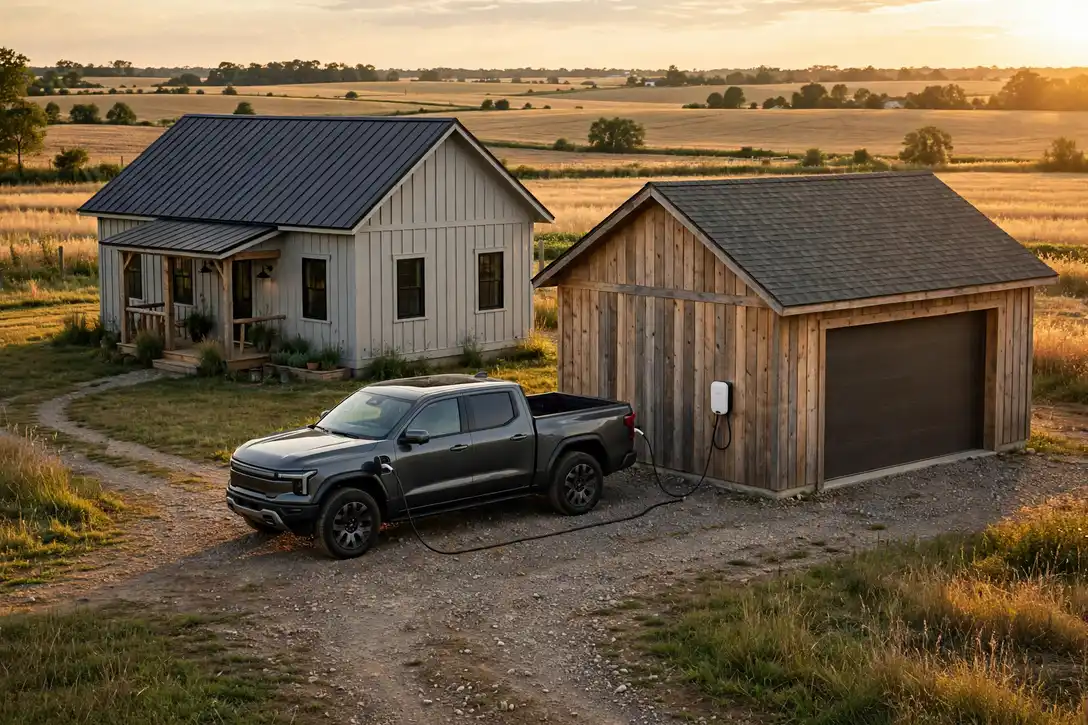
An installer's work in Chico usually starts with one of the three lead services below. The cards describe the job as it is actually scoped; the grid underneath carries the rest of the menu.
Home EV Charger Installation in Chico
Think of it as plumbing for electrons, done once: capacity checked, circuit run, station mounted and configured, inspection passed. The households that report the smoothest projects describe the same shape — a visit that measured, a quote that itemised, and a car that simply charged from the first night.
In Chico: where most Chico projects start and finish: one circuit, one station, one inspection.
Dedicated Circuit & Electrical Panel Upgrade in Chico
Some homes meet the charger at the panel door: the service is already spoken for by cooking, heating and hot water. This service is the honest fix — capacity added properly, grounding brought current, and a panel schedule that finally matches the house it feeds.
In Chico: the capacity fix that lets the charger circuit go in without the rest of the house living at its limit.
Multifamily & Condo EV Charging in Chico
In a multifamily building the charger is the easy half. The craft is the route to yes: a complete board application, a metering design that bills the right owner, load management that shares the building's capacity, and only then the circuit. Installers who do this work weekly carry the paperwork templates with them.
In Chico: the route from board agenda to working charger in Chico's communities.
Utility programs and electricity in Chico
Electricity in Chico comes from Pacific Gas & Electric Co.. Parts of the wider metro are served by City of Biggs, WAPA-- Western Area Power Administration, City of Gridley. The utility matters twice over for a charger install: it sets the time-of-use rates that decide what overnight charging costs you, and it is the organisation that may — or may not — currently help pay for the equipment.
No verified residential charger rebate was in place for Pacific Gas & Electric Co. in the sources checked for this page (the federal Alternative Fuel Refueling Property Credit ended on September 30, 2025, and no California state program replaced it for typical home installs). That can change — utilities open and close funded rounds — so an installer quoting you today should be able to name any current program precisely, with its published terms. If they cannot name it, it is not part of your job.
While you are reading your tariff, check how your plan treats the evening peak. A charger scheduled to start after the peak window is the single easiest saving in home charging, and it is set once, in the car or the station, then forgotten.
Condos, HOAs and the law in California
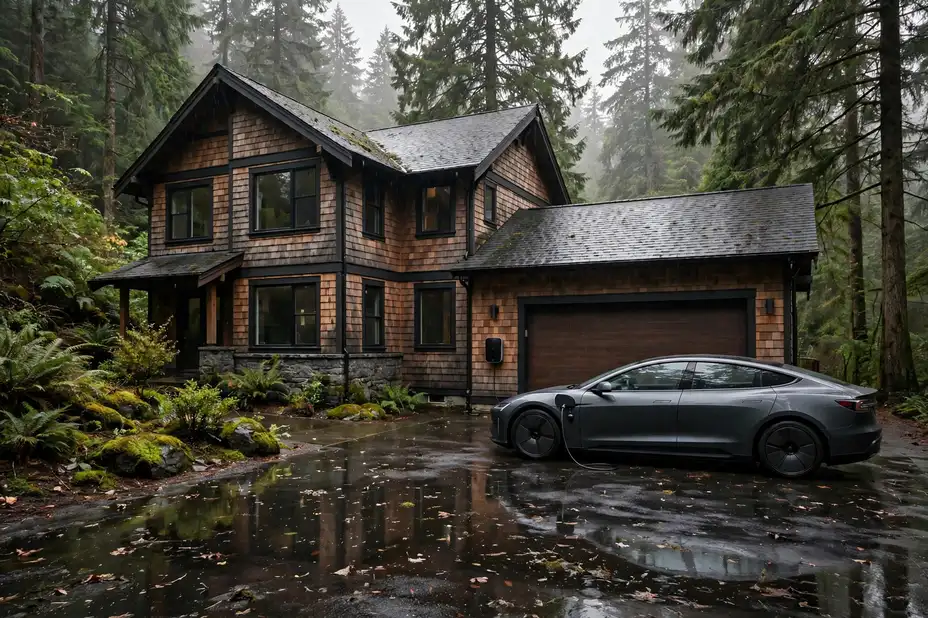
California law protects an owner's charger. Civ. Code §4745; §1947.6 (renters) gives owners in association communities a statutory route to a charging station in their own space: the association may set reasonable conditions on how the installation looks, where exactly it sits, and how it is insured, but a flat prohibition is not one of its options. Owners fund the work, use licensed installers, and remain responsible for the equipment — the statute allocates the burdens; it does not remove them.
Owners in Chico should also know the statute travels with the space, not the car: a documented installation, permitted and recorded, stays an asset of the unit when it sells — one more reason the paperwork deserves the same care as the wiring.
Both the process and the paperwork are covered in the condo and HOA guide; Chico readers can skip the chapters about persuading reluctant boards and go straight to the compliance checklist.
Climate, garages and charger placement
The seasons rotate the charging advice: precondition from the wall in winter, dodge the afternoon peak in summer, and let the shoulder months do what they like. Households here learn the two settings and change them with the clocks.
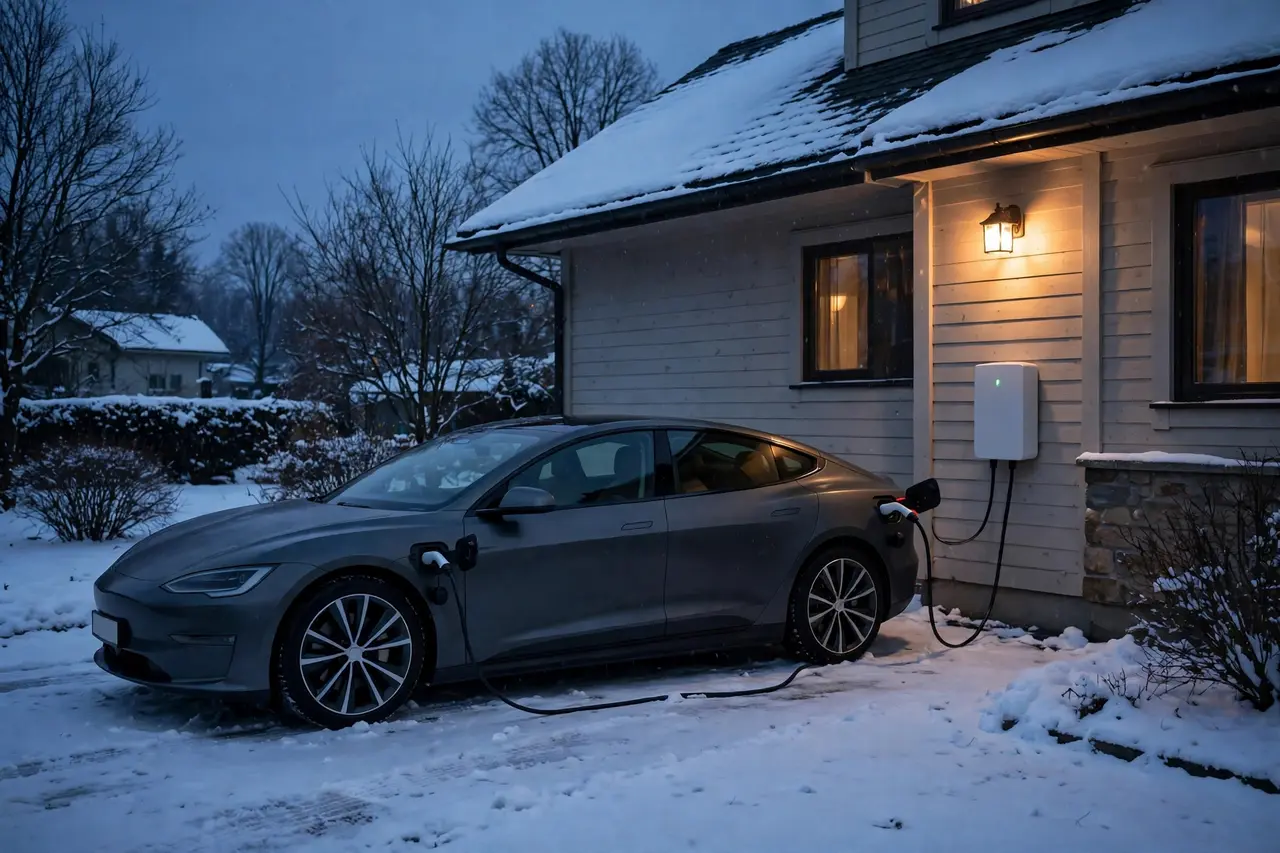
A four-season climate asks the installation to be boring in every month: cable that stays flexible in January, an enclosure untroubled by August humidity, and drainage that keeps spring melt away from the connector. None of this is exotic — it is the standard outdoor discipline, and it is why station placement gets a full minute of the site visit rather than a wave at the nearest wall.

Permits and inspection in Chico
Expect the permit to name the circuit, the breaker and the equipment. An installer who suggests skipping it is saving an afternoon by spending your liability; the inspection is also your independent check that the continuous-load sizing was done properly.
Neighbourhoods and ZIP codes served
The page covers 6 ZIP codes in and around Chico — including 95926, 95927, 95928, 95929, 95973, 95976 — across Butte. If your ZIP is not in the first set shown, ask anyway: installer coverage follows the metro, not a postcode fence.
The same working area takes in the neighbouring localities of Durham, Paradise, Forest Ranch, Nelson, Magalia, Oroville, Richvale, Stirling City, Biggs, Berry Creek, Palermo, Gridley, Feather Falls, Bangor — the county ring an installer based in Chico actually drives. Requests from those communities route exactly as city requests do: same services, same permit discipline, same local facts where they differ.
Butte County accounts for 24 of the ZIP codes and 17 named postal localities in the research file, the nearest of them Durham, Paradise, Forest Ranch, Nelson, Magalia. The survey counts 207,929 residents in the county, with a median household income of $67,928 and a median home value of $424,700. Measured across its ZIP codes, the Chico footprint runs about 6 miles north to south and 7 east to west, from ZIP 95926 to 95976 — the ground an installer based here actually covers in a working week.
Beyond the county seats, the working area takes in Durham, Hamilton City, Paradise, Forest Ranch, Nelson, Glenn, Vina, Magalia, Oroville, Richvale, Canyon Dam, Stirling City, Butte City, Artois, Orland, Corning, Tehama, Los Molinos, Princeton, Berry Creek, Gerber, Willows, Proberta, Storrie, Feather Falls, Flournoy, Belden, Paskenta, Mill Creek, Strawberry Valley, Mineral, Twain, Elk Creek — the named localities for which Chico is the nearest metro in the network (neighbouring metros' pages cover their own ground), each routing to the same installer-matching service.
The wider working area also reaches Biggs, Palermo, Gridley, Live Oak, Bangor, Maxwell, Rackerby, Forbestown, Colusa, Red Bluff, Brownsville, Sutter, Clipper Mills, Challenge, Paynes Creek, Oregon House, Browns Valley, Dobbins, Marysville, Yuba City — ground shared with neighbouring metros, where installers cross the same county lines in both directions.
ZIP codes in that shared ground include 95901, 95914, 95917, 95918, 95919, 95925, 95930, 95932, 95935, 95941, 95948, 95953, 95955, 95962, 95968, 95972, 95982, 95993, 96075, 96080.
The largest communities in that working area after Chico itself, by the GeoNames populated-place file: Paradise (population 26,476), Oroville (population 16,260), Magalia (population 11,310), Oroville East (population 8,280), Orland (population 7,550), Corning (population 7,548), Thermalito (population 6,646), Willows (population 6,069), South Oroville (population 5,742), Durham (population 5,518), East Quincy (population 2,489), Chester (population 2,144), Los Molinos (population 2,037), Hamilton City (population 1,759), Quincy (population 1,728), Westwood (population 1,647), Rancho Tehama Reserve (population 1,485), Berry Creek (population 1,424), Forest Ranch (population 1,184), Greenville (population 1,129). Charging demand follows those populations — the subdivisions and town centres where the next driveways, and the next panels, are.
Tehama County reaches into the working area with 65,167 residents, a median household income of $63,784 and a median home value of $339,600; its localities on this page include Vina, Corning, Tehama, Los Molinos, Gerber. Glenn County reaches into the working area with 28,494 residents, a median household income of $67,139 and a median home value of $352,400; its localities on this page include Hamilton City, Glenn, Butte City, Artois, Orland. Plumas County reaches into the working area with 19,423 residents, a median household income of $66,031 and a median home value of $360,200; its localities on this page include Canyon Dam, Storrie, Belden, Twain. Colusa County reaches into the working area with 21,984 residents, a median household income of $75,672 and a median home value of $393,400; its localities on this page include Princeton. Yuba County reaches into the working area with 84,507 residents, a median household income of $76,373 and a median home value of $412,300; its localities on this page include Strawberry Valley.
| ZIP | Locality | County |
|---|---|---|
| 95926 | Chico | Butte |
| 95976 | Chico | Butte |
| 95929 | Chico | Butte |
| 95928 | Chico | Butte |
| 95973 | Chico | Butte |
| 95927 | Chico | Butte |
| 95938 | Durham | Butte |
| 95951 | Hamilton City | Glenn |
| 95967 | Paradise | Butte |
| 95969 | Paradise | Butte |
| 95942 | Forest Ranch | Butte |
| 95958 | Nelson | Butte |
| 95943 | Glenn | Glenn |
| 96092 | Vina | Tehama |
| 95954 | Magalia | Butte |
| 95965 | Oroville | Butte |
| 95974 | Richvale | Butte |
| 95923 | Canyon Dam | Plumas |
| 95978 | Stirling City | Butte |
| 95920 | Butte City | Glenn |
| 95913 | Artois | Glenn |
| 95963 | Orland | Glenn |
| 96021 | Corning | Tehama |
| 96090 | Tehama | Tehama |
| 96055 | Los Molinos | Tehama |
| 95970 | Princeton | Colusa |
| 95916 | Berry Creek | Butte |
| 96035 | Gerber | Tehama |
| 95988 | Willows | Glenn |
| 95966 | Oroville | Butte |
| 96078 | Proberta | Tehama |
| 95980 | Storrie | Plumas |
| 95940 | Feather Falls | Butte |
| 96029 | Flournoy | Tehama |
| 95915 | Belden | Plumas |
| 96074 | Paskenta | Tehama |
| 96061 | Mill Creek | Tehama |
| 95981 | Strawberry Valley | Yuba |
| 96063 | Mineral | Tehama |
| 95984 | Twain | Plumas |
| 95939 | Elk Creek | Glenn |

Planning the install: from panel to parking
The order of operations protects you. Load calculation before equipment choice, because the circuit sizes the station's settings. Route before purchase, because reach decides models. Permit before work, because inspection closes the file the insurer will one day read. In Chico the sequence is the same as everywhere — what varies is only how much of it your particular house asks for, and finding that out is the site visit's entire purpose.
Plan for the household you will be, not just the car you have. A second EV is the most common reason a charger circuit gets revisited, and the cheap moment to prepare for it — conduit sized up, panel capacity reserved, station placement that serves two bays — is during the first install, while the permit is open and the electrician is already in the panel.
Home charging know-how for Chico households
Shutoffs and sensible safety
Every charger installation contains its own off switch: the breaker in the panel, and, on larger circuits, a disconnect within sight of the equipment that the code requires. Knowing where both are — and that the station itself stops the session when the connector is unlatched — is the whole safety briefing, and a good installer gives it unprompted at handover. The equipment is listed, protected and designed to be operated daily by non-electricians; the homeowner's part is simply to know the two switches and to treat any change in behaviour — heat, noise, repeated trips — as a reason to call rather than to reset.
Older wiring, honestly assessed
Homes from the early electrical eras sometimes carry wiring methods — knob-and-tube runs, early cloth-insulated cable, fused services — that change an installer's reading of a house. None of it automatically disqualifies a charger: the new circuit is new work, run to current code from the panel. What the older fabric changes is the assessment — the panel's condition, the grounding system's state, and occasionally a recommendation that some inherited work be corrected while the electricians are in the house. A candid survey at the site visit is the whole answer; surprises belong to houses whose installers did not look.
Orientation: the garage's compass
A garage's orientation decides its microclimate: south- and west-facing doors take the day's heat load, north-facing ones hold the cold. The charger inherits the microclimate — electronics ageing in the hot wall's summer, cables stiffening in the cold one's January. Orientation is nobody's choice by install time, but it informs placement inside the room: the interior wall over the door wall, the shaded corner over the sun line, decided by someone who has read the room's compass.
Getting onto the board's agenda
Association decisions happen inside a procedure, and the procedure has a door: the agenda. Applications that miss the submission deadline wait a full cycle regardless of merit, so the first question for any board is clerical — when do items close for the next meeting, and in what format. Arrive inside the procedure with a complete package and the discussion is about your design; arrive outside it and the discussion is about process, and process always wins the evening. Property managers, asked politely, will tell you the format they prefer applications in.

Frequently asked questions
Is the federal charger tax credit still available in Chico, CA?
The three possible pots are all, at present, empty for a Chico homeowner: no Pacific Gas & Electric Co. residential rebate in current published sources, no California home programme, and a federal credit that closed on September 30, 2025. Programmes do relaunch — on the utility's site, with dates — and until one does, the honest quote is the one with no rebate line at all.
Can my association in Chico, CA say no to a home charger?
Only within limits the statute sets. California law (Civ. Code §4745; §1947.6 (renters)) protects an owner's right to install in their own space; associations may regulate placement, appearance and insurance and require restoration on removal, but a blanket refusal is not theirs to give. If a board stalls, a complete written application citing the statute is the standard remedy.
Will my Chico, CA home need a panel upgrade for a Level 2 charger?
It depends on the panel, and Chico's housing makes the question common: the median home here was built in 1986, and about 41% of housing units predate 1980. Homes with 100-amp service that is already well used often need an upgrade or a load-management device; homes with 200-amp service and spare breaker space usually do not. A load calculation during the site visit settles it — ask to see it.
How quickly will a Level 2 charger fill my car in Chico, CA?
In parked hours: a Level 1 cord returns about 3–5 miles for each of them, and a Level 2 circuit returns roughly 25–40, set by its amperage and the car's acceptance. For a Chico household parking ten hours, that is the difference between recovering a short errand day and recovering any day the car can legally drive.
What happens next after I send a request?
Three steps: the request routes to installers who work Chico, California; one contacts you to walk the property; the walk produces the written quote. Everything on this page — the utility position, the law, the housing data — is yours to check that quote against.
Do installers cover the communities around Chico, CA?
They do. Coverage follows the metro: Durham, Paradise, Forest Ranch, Nelson, Magalia and their neighbouring communities are worked by the same installers who cover Chico itself, and a request from those ZIP codes routes identically — service, property type and timing are all the form asks for.
Nearby cities in California
- EV charger installation in Yuba City — about 46 miles from Chico, metro population 185,000
- EV charger installation in Redding — about 64 miles from Chico, metro population 180,000
- EV charger installation in Sacramento — about 83 miles from Chico, metro population 2,400,000
- EV charger installation in Napa — about 92 miles from Chico, metro population 140,000
- EV charger installation in Santa Rosa — about 103 miles from Chico, metro population 500,000
- EV charger installation in Vallejo — about 112 miles from Chico, metro population 450,000
- EV charger installation in Reno, NV — about 113 miles from Chico, metro population 500,000
- EV charger installation in Medford, OR — about 185 miles from Chico, metro population 220,000
- EV charger installation in Bend, OR — about 301 miles from Chico, metro population 205,000
Ready to charge at home in Chico?
Send the essentials — what you need, where, and what kind of property — and a licensed local installer will pick it up from there.