EV Charger Installation in La Crosse, WI
Everything a La Crosse homeowner needs before booking a charger install — the panel question, the utility's current programs, the HOA law and the permit — sourced, dated and local.
The charger is the visible tenth of the project. Below it sit a load calculation, a wire run, a statute, a tariff and a permit — and in La Crosse each of those has a local answer. La Crosse itself is home to about 51,356 people. Wisconsin's fleet stood at 41,900 battery-electric vehicles plus 18,600 plug-in hybrids through 2025, so the local answers are no longer theoretical: installers here run this job weekly. What follows gathers the La Crosse version of each layer — utility programs as they actually stand, condo and HOA law as written, permit practice, and the survey data on the housing stock — so the one conversation that matters, the site visit, starts informed.
One honest note before the detail: PlugReady USA does not install chargers. We collect your requirements and pass them to licensed installers who cover La Crosse, and this page exists so that you can judge those conversations with the local facts already in hand.
The registration ledger for the La Crosse–Onalaska metro reads: WI/MN border. Ledgers like this are what installer rounds are built from — they show where the cars already are, which is where the circuits get requested, permitted and inspected week after week.
Three percentages describe the working conditions for charging in La Crosse: 46% owner-occupied, 48% single-unit detached, and a median household income of $55,866 standing behind both. Everything in the sections below — panels, permissions, metering — is commentary on those proportions.

Put the survey together and La Crosse's charging profile reads like this: an older housing fabric, where panel archaeology is a normal part of the first visit; a genuinely mixed city — houses, townhouses and larger buildings all carry weight; buildings of five or more units hold a substantial share of homes, which keeps the multifamily sections of this page in daily use; and renters form a large share of households, so the landlord conversation is a first-class topic here. That combination — more than any single number — is what the installers working here plan around, and it is the lens for everything on this page.
In absolute terms, the survey counts 24,404 housing units in La Crosse — 22,965 occupied, 10,594 of them by their owners. The stock resolves into 11,618 single-unit detached houses, 16,030 homes standing since before 1980, and 7,454 units in larger buildings. Those six counts are the city's charging map drawn without percentages, and every section of this page is a consequence of one of them. The page's geography is equally concrete: 3 ZIP codes across La Crosse, centred near 43.80 degrees north latitude. The city anchors the La Crosse–Onalaska metropolitan area, home to roughly 140,000 people on the research file's metro estimate — the wider labour and housing market this page's installers work across.
The same survey release fills in the household economics around the housing stock: a median home value of $210,100, median gross rent of $1,010, per-capita income of $34,439, and a median resident age of 30. And the daily rhythms behind the housing numbers: 69% of La Crosse workers drive to work alone — the commute pattern home charging is built around; 12% work from home, a population whose cars charge on daytime and overnight schedules alike; 2% commute by public transit; 35% of adults hold a bachelor's degree or higher. The survey's vehicle table is the one an EV page should quote first: 2,243 of La Crosse's households have no vehicle at all, while 11,118 have two or more — the multi-car households for whom the second circuit is a when, not an if.
Two burden statistics frame the economics: in La Crosse, 45% of renters and 0% of mortgage-holding owners are housing-cost burdened at the standard 30% threshold. And 42% of households are family households, the segment most likely to run the two-vehicle, two-schedule pattern the second-vehicle planning notes address.
The signature matters because installs follow it, street by street. Pre-war and immediate post-war streets dominate the map, and their electrical fabric is stratified — original services beneath mid-century additions beneath modern subpanels, an archaeology the load calculation reads layer by layer. Multifamily weight changes the installer market too — the firms that thrive here carry association paperwork fluency alongside their licences, and their references are buildings, not just households.
Renter weight gives this metro's charging story a negotiation at its centre: the circuit is easy, the permission is the project, and the paperwork patterns in the guides matter as much as any load calculation. The install market that serves modest incomes runs on referrals and repetition: neighbourhoods where one good install, fairly scoped, produces the street's next five customers. Scale brings a call centre, but it also brings published everything — interconnection standards, programme terms, complaint statistics — and the published page, not the phone call, is where this utility is most honest.
In a growing market the installer you want is bookable but not yet booked out; the diaries fill as the fleet does, and the household that plans a season ahead keeps its choice of firms. The permit counter in a smaller city is a conversation, not a queue: applications are read by people who may know the street, and complete paperwork is remembered kindly. The association dimension here runs on persuasion rather than statute — no state charging law frames the application, so the complete, professional proposal carries the whole argument, as the law section above explains.
The electrical reality in La Crosse homes
La Crosse's housing, in Census Bureau survey numbers: a median build year of 1965, 66% of units predating 1980, a stock that is 48% single-unit detached, and 46% of occupied homes owned by their occupants. Everything in this section is commentary on those four facts. Age shows up electrically before it shows up anywhere else: services sized for a house with a third of today's appliances. Expect the first conversation to be about capacity — what the panel is, what it already feeds, and which of the three routes (circuit, management, upgrade) your numbers support. Detached houses matter for a practical reason: a garage or driveway on your own lot means the charger, the car and the circuit are all under one roof and one owner's control, which is the simplest configuration there is.
The fuel table adds one more local fact: 8,175 La Crosse homes — 36% of the stock — heat with electricity. Those households already think in kilowatts through the winter, their panels carry the load to prove it, and a charger's overnight appetite joins a system that is, in the useful sense, already electrified.
Renters are the other constituency in these numbers: about 12,371 of La Crosse's occupied homes are rented rather than owned. Their charging route runs through a landlord conversation instead of a panel they control — a different project, covered by the rentals guide and the law section below, but a routine one in a city with this many renting households.
One more structural fact shapes La Crosse's charging map: 31% of the city's housing units sit in buildings of five or more units. Those households cannot simply book a circuit — their charger runs through a building, a board and a shared electrical service, which is why the multifamily service and the law section below carry unusual weight on this page.
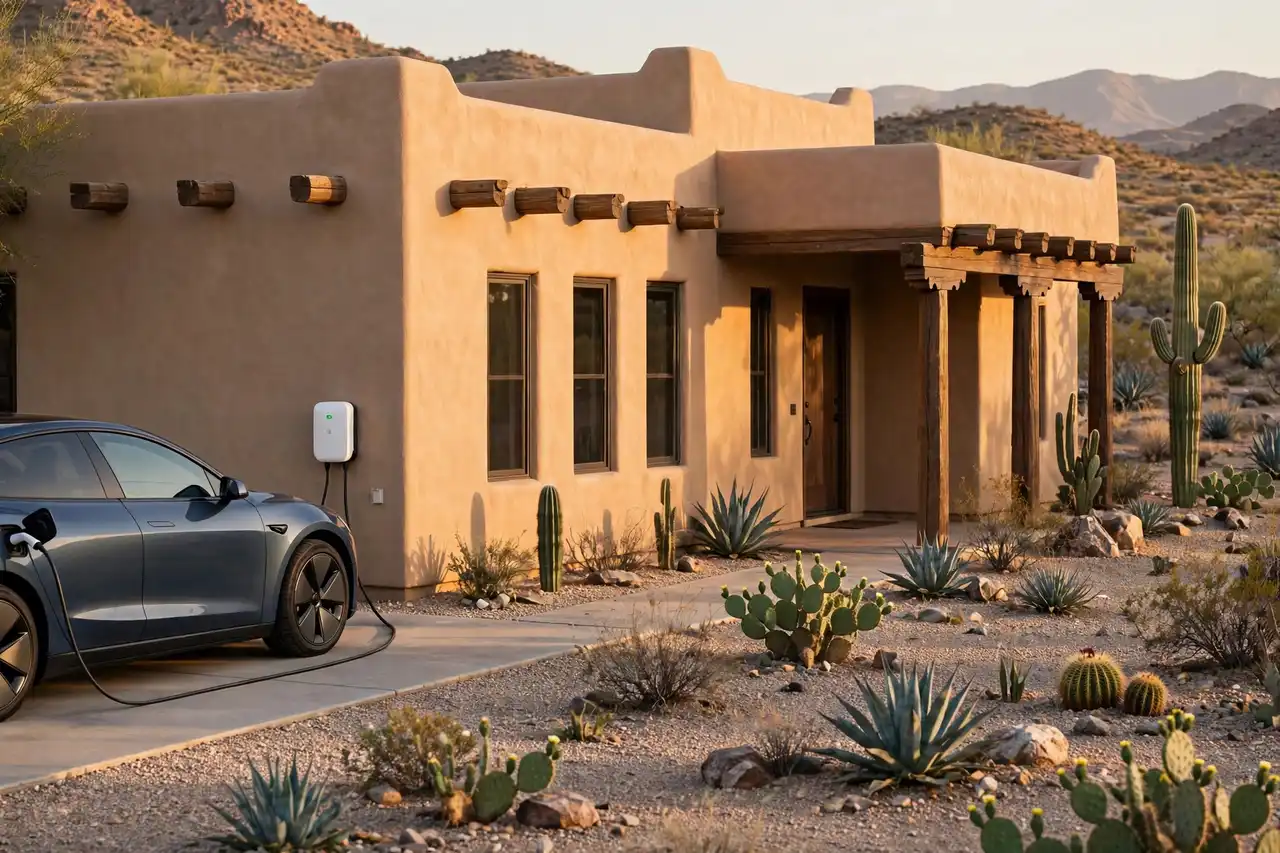
EV charging services in La Crosse
The full menu runs to ten services; the three cards at the top are the ones La Crosse's housing stock and state law push to the front. Everything links to its national service page for scope and process in full.
Home EV Charger Installation in La Crosse
For most households this is the whole project: a Level 2 station mounted where the car sleeps, fed by its own 240-volt circuit. The visit pattern is consistent — load calculation, route the run, mount and configure, inspect — and the variables are your panel, your parking and your permit office.
In La Crosse: the core residential job in La Crosse: circuit, mounting, configuration and inspection in one visit pattern.
Dedicated Circuit & Electrical Panel Upgrade in La Crosse
Panel work is the one part of a charger project that outlives the car, the station and possibly the household's tenure. Specified generously and documented properly, it is less an expense than a permanent alteration in what the house can do.
In La Crosse: the capacity answer when La Crosse's older panels meet a continuous load.
Level 2 Charger Installation in La Crosse
What is being bought is time: the hours between arriving home and leaving again, converted into range at 240 volts. The conversion hardware is ordinary — breaker, conductor, station — and the design work is matching the three to the household's miles and the panel's arithmetic.
In La Crosse: the circuit class behind nearly every home install in La Crosse, from first car to second.
Utility programs and electricity in La Crosse
Electricity in La Crosse comes from Northern States Power Co. Parts of the wider metro are served by Riverland Energy Cooperative, Village of Bangor, Jackson Electric Coop, Inc. The utility matters twice over for a charger install: it sets the time-of-use rates that decide what overnight charging costs you, and it is the organisation that may — or may not — currently help pay for the equipment.
There is a strategic consequence to the empty incentive shelf in La Crosse: the install decision reduces to the work itself and the tariff it runs on. With no rebate distorting the comparison, quotes compete on scope, licensing and the load calculation's honesty — which is the competition homeowners should want. And the overnight rate window, where Northern States Power Co offers one, quietly returns more over the car's life than most one-off rebates ever did.
While you are reading your tariff, check how your plan treats the evening peak. A charger scheduled to start after the peak window is the single easiest saving in home charging, and it is set once, in the car or the station, then forgotten.
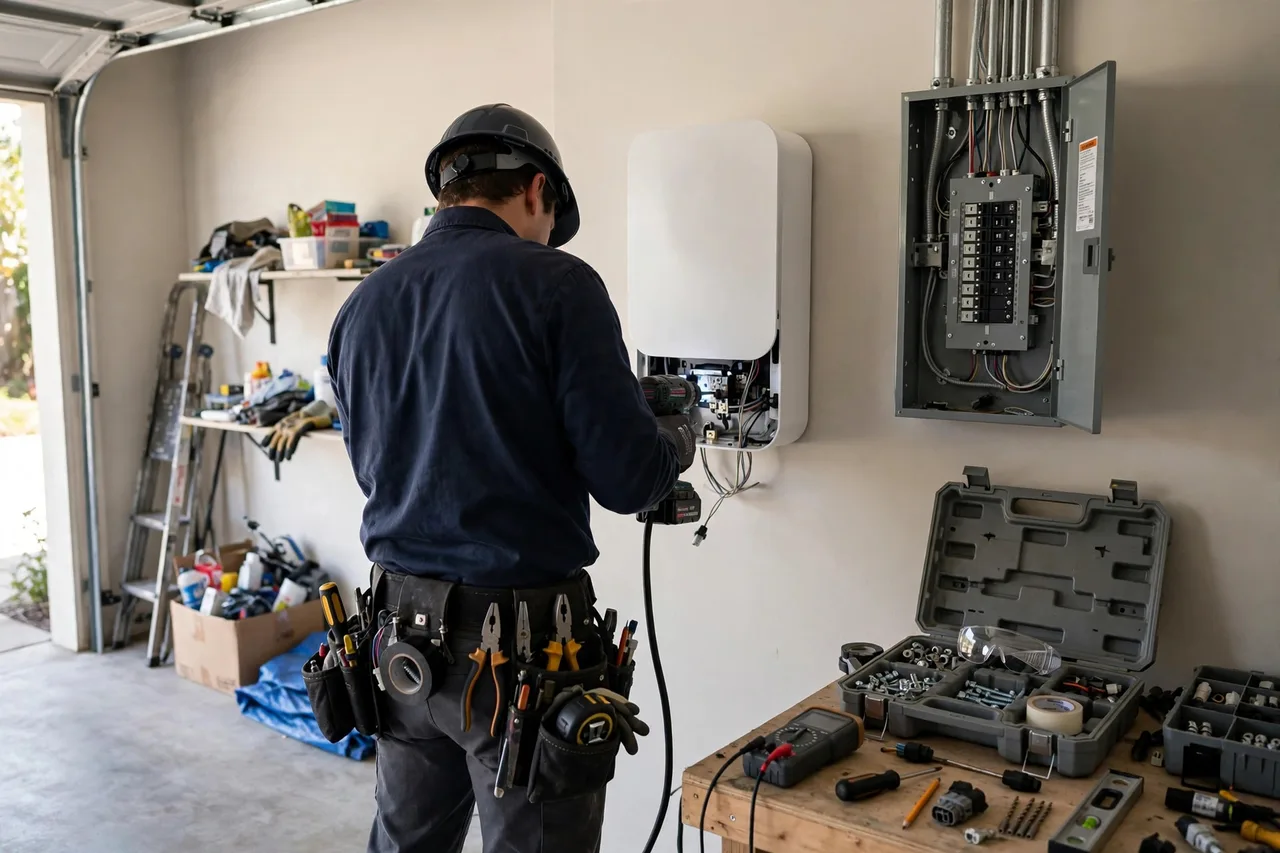
Condos, HOAs and the law in Wisconsin
There is no Wisconsin right-to-charge statute to lean on. Some national roundups list protection that does not exist in this state's code; the statute indexes checked for this page are clear. In La Crosse, a condo or HOA charger is approved — or not — under the community's own documents, which makes the quality of your application the whole ballgame.
Metering is the objection that sinks more applications than any other, and it is the easiest to pre-empt: propose, in the application itself, how the electricity will be measured and paid for by you — a submeter, a separately metered circuit, or a flat arrangement the board can audit. Boards refuse ambiguity far more often than they refuse chargers.
Our condo and HOA guide was written for both kinds of state; the chapters on application packages, metering and cost allocation are the ones that matter in La Crosse, where no statute does the persuading for you.
Climate, garages and charger placement
Cord flexibility is a rated property, and January is when the rating is read. Cables specified for cold service coil and uncoil at temperatures that make lesser jackets crack; where the station is chosen locally, this line of the specification has already been read for you — one of the quieter values of a local installer.
Winter hardware habits are simple and worth copying: a holster the connector returns to every night (a connector left in a snowbank is a connector full of ice), a cable route that survives the snow-clearing line, and a station position the plough's output does not bury. Installers here raise all three without being asked.

Permits and inspection in La Crosse
Inspection day itself is undramatic by design: access to the panel and the station, the calculation on hand, the equipment's settings matching the circuit. Jobs fail inspection on paperwork mismatches far more often than on wiring — a fact that quietly grades installers.

Neighbourhoods and ZIP codes served
The page covers 3 ZIP codes in and around La Crosse — including 54601, 54602, 54603 — across La Crosse. If your ZIP is not in the first set shown, ask anyway: installer coverage follows the metro, not a postcode fence.
The same working area takes in the neighbouring localities of Onalaska, West Salem, Holmen, Bangor, Mindoro, Rockland — the county ring an installer based in La Crosse actually drives. Requests from those communities route exactly as city requests do: same services, same permit discipline, same local facts where they differ.
La Crosse County accounts for 9 of the ZIP codes and 7 named postal localities in the research file, the nearest of them Onalaska, West Salem, Holmen, Bangor, Mindoro. The survey counts 120,488 residents in the county, with a median household income of $73,013 and a median home value of $257,000. Measured across its ZIP codes, the La Crosse footprint runs about 8 miles north to south and 4 east to west, from ZIP 54601 to 54603 — the ground an installer based here actually covers in a working week.
Beyond the county seats, the working area takes in La Crescent, Onalaska, Stoddard, Hokah, Brownsville, West Salem, Chaseburg, Holmen, Coon Valley, Dakota, Bangor, Genoa, Mindoro, Rockland, Houston, Caledonia, Trempealeau, Westby, Galesville, New Albin, De Soto, Eitzen, Sparta, Viroqua, Melrose, Cashton, Ettrick, Spring Grove, Cataract, Dodge, Dorchester, Ferryville, Rushford, Norwalk, Homer, Lansing, Winona, Ontario, Stockton, Blair, Taylor, Fountain City, Arcadia, Peterson, Highlandville, La Farge, Readstown, Minnesota City, Mabel, Mount Sterling, Viola, Soldiers Grove, Wilton, Tunnel City, Lynxville, Seneca, Waukon, Gays Mills, Black River Falls, Waterville, Canton, Millston, Tomah, Eastman, Harpers Ferry — the named localities for which La Crosse is the nearest metro in the network (neighbouring metros' pages cover their own ground), each routing to the same installer-matching service.
The wider working area also reaches Lewiston, Rollingstone, Whitehall, Utica, Hixton, Lanesboro, Pigeon Falls, Independence, Cochrane — ground shared with neighbouring metros, where installers cross the same county lines in both directions.
The largest communities in that working area after La Crosse itself, by the GeoNames populated-place file: North La Crosse (population 50,470), Winona (population 27,094), Onalaska (population 18,468), Sparta (population 9,679), Holmen (population 9,651), Tomah (population 9,357), Decorah (population 7,907), West Salem (population 5,014), Richland Center (population 5,013), La Crescent (population 4,826), Viroqua (population 4,362), French Island (population 4,207), Goodview (population 4,144), Waukon (population 3,736), Black River Falls (population 3,564), Arcadia (population 2,991), Caledonia (population 2,787), New Lisbon (population 2,486), Nekoosa (population 2,474), Westby (population 2,263). Charging demand follows those populations — the subdivisions and town centres where the next driveways, and the next panels, are.
Vernon County reaches into the working area with 31,049 residents, a median household income of $71,893 and a median home value of $223,800; its localities on this page include Stoddard, Chaseburg, Coon Valley, Genoa, Westby. Monroe County reaches into the working area with 46,208 residents, a median household income of $69,467 and a median home value of $210,000; its localities on this page include Sparta, Cashton, Cataract, Norwalk, Wilton. Crawford County reaches into the working area with 16,042 residents, a median household income of $64,094 and a median home value of $183,400; its localities on this page include Ferryville, Mount Sterling, Soldiers Grove, Lynxville, Seneca. Trempealeau County reaches into the working area with 30,839 residents, a median household income of $76,313 and a median home value of $216,700; its localities on this page include Trempealeau, Galesville, Ettrick, Dodge, Blair. Jackson County reaches into the working area with 20,981 residents, a median household income of $68,110 and a median home value of $196,100; its localities on this page include Melrose, Taylor, Black River Falls, Millston.
| ZIP | Locality | County |
|---|---|---|
| 54601 | La Crosse | La Crosse |
| 54603 | La Crosse | La Crosse |
| 55947 | La Crescent | Houston |
| 54650 | Onalaska | La Crosse |
| 54658 | Stoddard | Vernon |
| 55941 | Hokah | Houston |
| 54602 | La Crosse | La Crosse |
| 55919 | Brownsville | Houston |
| 54669 | West Salem | La Crosse |
| 54621 | Chaseburg | Vernon |
| 54636 | Holmen | La Crosse |
| 54623 | Coon Valley | Vernon |
| 55925 | Dakota | Winona |
| 54614 | Bangor | La Crosse |
| 54632 | Genoa | Vernon |
| 54644 | Mindoro | La Crosse |
| 54653 | Rockland | La Crosse |
| 55943 | Houston | Houston |
| 55921 | Caledonia | Houston |
| 54661 | Trempealeau | Trempealeau |
| 54667 | Westby | Vernon |
| 54630 | Galesville | Trempealeau |
| 52160 | New Albin | Allamakee |
| 54624 | De Soto | Vernon |
| 55931 | Eitzen | Houston |
| 54656 | Sparta | Monroe |
| 54665 | Viroqua | Vernon |
| 54642 | Melrose | Jackson |
| 54619 | Cashton | Monroe |
| 54627 | Ettrick | Trempealeau |
| 55974 | Spring Grove | Houston |
| 54620 | Cataract | Monroe |
| 54625 | Dodge | Trempealeau |
| 52140 | Dorchester | Allamakee |
| 54628 | Ferryville | Crawford |
| 55971 | Rushford | Fillmore |
| 54648 | Norwalk | Monroe |
| 55942 | Homer | Winona |
| 52151 | Lansing | Allamakee |
| 55987 | Winona | Winona |
| 54651 | Ontario | Vernon |
| 55988 | Stockton | Winona |
| 54616 | Blair | Trempealeau |
| 54659 | Taylor | Jackson |
| 54629 | Fountain City | Buffalo |
| 54612 | Arcadia | Trempealeau |
| 55962 | Peterson | Fillmore |
| 52149 | Highlandville | Winneshiek |
| 54639 | La Farge | Vernon |
| 54652 | Readstown | Vernon |
| 55959 | Minnesota City | Winona |
| 55954 | Mabel | Fillmore |
| 54645 | Mount Sterling | Crawford |
| 54664 | Viola | Vernon |
| 54655 | Soldiers Grove | Crawford |
| 54670 | Wilton | Monroe |
| 54662 | Tunnel City | Monroe |
| 54640 | Lynxville | Crawford |
| 54654 | Seneca | Crawford |
| 52172 | Waukon | Allamakee |
| 54631 | Gays Mills | Crawford |
| 54615 | Black River Falls | Jackson |
| 52170 | Waterville | Allamakee |
| 55922 | Canton | Fillmore |
| 54643 | Millston | Jackson |
| 54660 | Tomah | Monroe |
| 54626 | Eastman | Crawford |
| 52146 | Harpers Ferry | Allamakee |

Planning the install: from panel to parking
A useful way to read any La Crosse quote is to ask which of three jobs it describes. Job one: the panel has room and the run is short — a circuit and a station. Job two: the panel is full — capacity work joins the quote, as an upgrade or as load management. Job three: the property adds people — an HOA, a landlord, a building's shared service — and the approvals timeline joins the electrical one. None of the three is a bad job; they are simply different scopes, and a clear quote says which one you are in.
Finally, photograph the finished work — station, nameplate, panel directory with the new breaker labelled — and file it with the inspection record. When the car changes, the house sells or a second station joins the first, that folder is the difference between a five-minute answer and an archaeological dig.
Home charging know-how for La Crosse households
Charging through the summer
Summer's version of the same lesson runs through temperature rather than ice. Batteries and charging electronics both prefer the cool hours, and a car that has baked in a driveway all afternoon will manage its own charging rate until its pack settles. Scheduling the session for after midnight hands the car the mildest air of the day; placing the station out of the sun line and keeping the garage ventilated does the rest. None of it requires attention once set — summer-proofing a home charger is a configuration, not a chore.
Charging alongside rooftop solar
A house that generates as well as consumes plans its charging differently. The naive pattern — charge at night, export by day — is often fine; the refined pattern shifts some charging into the solar hours on home-working days, stores the commute in the car when the panels are producing, and leans on the overnight window only for the balance. None of this changes the circuit; it changes the schedule, and occasionally the case for a station whose output can follow the house's generation. Tell the installer the array exists — it belongs in the first conversation.
Making the rate window automatic
Time-of-use tariffs reward households whose charging happens while the grid sleeps, and the reward compounds silently: every night, for the life of the car. The mechanism is trivial — a schedule set in the vehicle or the station — but the details decide whether it survives contact with real life: the window must fit the household's latest departure, the schedule must yield gracefully on the nights the car comes home empty, and the settings must live somewhere the household can find them again. Set it up at commissioning, with the installer, and the saving becomes infrastructure rather than intention.
The charger and the home network
A networked station asks one thing of the house: a wireless signal that actually reaches the garage. Exterior walls, metal cladding and distance tax domestic Wi-Fi exactly where chargers live, and the household that checks signal strength at the mounting position before install day avoids the dead-zone discovery afterwards. Where the signal will not reach, the honest options are a network extension, a station chosen for offline competence, or cellular-connected equipment — decided in advance, not improvised on the day.

Frequently asked questions
What happened to the federal home-charger credit in La Crosse, WI?
Checked and dated: in the sources reviewed for this page, Northern States Power Co runs no residential charger rebate, Wisconsin runs no home-charger programme, and the federal credit that once filled the gap ended on September 30, 2025. If a salesperson's spreadsheet shows a rebate line for a La Crosse install, the published programme page is the only acceptable evidence.
What can my HOA in La Crosse, WI do about a charger install?
In La Crosse the honest answer is yes, they can refuse: Wisconsin gives owners no statutory charging right, so the board's discretion governs. What changes outcomes is the quality of the file in front of them — drawings, metering, insurance, a named licensed installer — and a growing number of boards here approve exactly that file.
Does a Level 2 charger mean a panel upgrade for a La Crosse, WI home?
It depends on the panel, and La Crosse's housing makes the question common: the median home here was built in 1965, and about 66% of housing units predate 1980. Homes with 100-amp service that is already well used often need an upgrade or a load-management device; homes with 200-amp service and spare breaker space usually do not. A load calculation during the site visit settles it — ask to see it.
How quickly will a Level 2 charger fill my car in La Crosse, WI?
In parked hours: a Level 1 cord returns about 3–5 miles for each of them, and a Level 2 circuit returns roughly 25–40, set by its amperage and the car's acceptance. For a La Crosse household parking ten hours, that is the difference between recovering a short errand day and recovering any day the car can legally drive.
What happens next after I send a request?
Your request is matched to licensed installers covering La Crosse, Wisconsin — service, ZIP, property type and timing travel with it. The installer who takes it arranges the site visit and quotes in writing; PlugReady USA's part is the research on this page and the introduction, and your contract is with the installer throughout.
How long does a typical home charger installation take in La Crosse, WI?
Separate the three clocks. The installer's clock: typically a day of electrical work for the standard layout. The permit office's clock: issuance on the department's queue. The inspector's clock: a visit scheduled after the work. A realistic quote in La Crosse, Wisconsin names all three; the total is usually days to a few weeks, dominated by the two clocks nobody on the crew controls.
Nearby cities in Wisconsin
- EV charger installation in Eau Claire — about 70 miles from La Crosse, metro population 175,000
- EV charger installation in Madison — about 111 miles from La Crosse, metro population 700,000
- EV charger installation in Appleton — about 159 miles from La Crosse, metro population 245,000
- EV charger installation in Green Bay — about 183 miles from La Crosse, metro population 330,000
- EV charger installation in Milwaukee — about 190 miles from La Crosse, metro population 1,575,000
- EV charger installation in Rochester, MN — about 72 miles from La Crosse, metro population 230,000
- EV charger installation in Dubuque, IA — about 93 miles from La Crosse, metro population 100,000
- EV charger installation in Waterloo, IA — about 111 miles from La Crosse, metro population 170,000
Ready to charge at home in La Crosse?
Two minutes of form, and the request is in front of licensed installers who cover this city — quotes follow site visits, in writing.