EV Charger Installation in Rochester, MN
Everything a Rochester homeowner needs before booking a charger install — the panel question, the utility's current programs, the HOA law and the permit — sourced, dated and local.
Ask EV owners in Rochester what changed their routine and most give the same answer: the car charges where it parks. Rochester itself is home to about 123,616 people. Statewide, Minnesota counted 59,800 battery-electric vehicles and 24,800 plug-in hybrids on the road through 2025, and the metro's share of that fleet keeps growing. A home charger installation is not complicated, but it is local — the utility that serves your street, the age of your panel, your community's rules and your city's permit office all shape the job. This page pulls those Rochester specifics together in one place, with the numbers sourced rather than rounded into slogans.
PlugReady USA is a matching service, not the installer: you tell us the job, and we route the request to licensed local electricians and EV-installer companies who work in Rochester. Use the local detail below to arrive at that conversation informed — the sections are ordered the way an installer will think about your project, from the panel outward.
Why Rochester ranks 151 in this network's 300-metro build order: Mayo Clinic market. Those are registration figures, not projections, and they translate directly into installation work — every newly registered plug-in vehicle is a household deciding where it will charge.
Three survey lines do most of the predictive work on this page. Income — a median of $90,020 per household — tracks the pace at which Rochester households adopt EVs at all. Tenure — 65% owner-occupied — decides whose signature the work needs. And structure — 59% single-unit detached — decides how often the answer is a simple garage circuit rather than a building negotiation.

Put the survey together and Rochester's charging profile reads like this: a housing stock of mixed vintages, where both electrical eras appear on the same street; a detached-house majority with a real attached and multifamily minority; buildings of five or more units hold a substantial share of homes, which keeps the multifamily sections of this page in daily use; and owner-occupiers dominate, so most readers can approve their own electrical work outright. That combination — more than any single number — is what the installers working here plan around, and it is the lens for everything on this page.
The counts behind the percentages, for the record: Rochester has 56,179 housing units on the survey's count, 51,882 of them occupied, and 33,955 owner-occupied households making their own electrical decisions. Detached houses number 33,145; homes built before 1980 number 21,618; units in buildings of five or more number 14,965. An installer's week in this city is a walk through exactly that distribution. The page's geography is equally concrete: 6 ZIP codes across Olmsted, centred near 44.05 degrees north latitude. The city anchors the Rochester metropolitan area, home to roughly 230,000 people on the research file's metro estimate — the wider labour and housing market this page's installers work across.
The same survey release fills in the household economics around the housing stock: a median home value of $326,100, median gross rent of $1,500, per-capita income of $56,597, and a median resident age of 37. How the city moves completes the picture: 64% of Rochester workers drive to work alone — the commute pattern home charging is built around; 13% work from home, a population whose cars charge on daytime and overnight schedules alike; 4% commute by public transit; 54% of adults hold a bachelor's degree or higher. Vehicle ownership, from the same release: 27,310 households in Rochester run two or more vehicles, and 4,003 run none — the two ends of the market this page serves and does not serve.
Household structure, from the same release: 53% of Rochester households are family households. The burden shares behind the housing stock: 48% of renting households are cost-burdened at the 30%-of-income line, as are 0% of mortgaged owners — context for why the overnight rate window, once set, is treated here as a household fixture rather than a hobby.
This is the context an installer works against, whether it is written down or not. Growth rings are the city's autobiography: each decade's standard — service size, wiring method, garage provision — survives intact in its ring, and the charger wave is now writing the next ring's standard. Shared form means shared infrastructure decisions: a building that solves charging solves it for a generation of residents, which raises the stakes of the first design and the value of getting the metering right.
Ownership depth shows in the streetscape: driveways improved, garages converted and converted back, the visible sediment of households investing in houses they intend to keep — charger circuits are simply the newest sediment layer. Households at this band comparison-shop on scope rather than on slogans, which rewards the installer whose quote shows its working — the load study, the route, the permit, itemised. Tariff design is the quiet policy: the shape of the overnight window, the demand charges commercial customers face, the interconnection queue's pace — all set in dockets the diligent can read.
In a growing market the installer you want is bookable but not yet booked out; the diaries fill as the fleet does, and the household that plans a season ahead keeps its choice of firms. A smaller metro runs on relationships: the electrical firms are few, known, and booked through reputations maintained across decades of local work. Without a state charging statute, shared-property approvals in this metro are won on paper quality: metering clarity, licensed installers, insurance, reversibility — the complete package the guides set out.
The electrical reality in Rochester homes
Four numbers organise everything an installer expects in Rochester: median build year 1991; 38% of units built before 1980; 59% of the stock detached; 65% of occupied homes owner-occupied. Capacity, circuit routes and approval layers all correlate with those four. The paragraphs below are their commentary. A mixed-age stock like this splits installs into two camps: newer subdivisions where a 200-amp panel usually has planned capacity, and established neighbourhoods where the panel conversation comes first. Neither is a problem — but they are different jobs, and the estimate you get should say which camp your home falls into and why. Detached houses matter for a practical reason: a garage or driveway on your own lot means the charger, the car and the circuit are all under one roof and one owner's control, which is the simplest configuration there is.
Heating fuel is the survey's quiet clue to panel life: in Rochester, 21% of homes heat electrically (10,635 households), against 77% heating with gas. A house already heating electrically has a service sized with that load in its history; a gas-heated house may have capacity to spare — either way the fuel mix is part of what the installer is reading.
Renters are the other constituency in these numbers: about 17,927 of Rochester's occupied homes are rented rather than owned. Their charging route runs through a landlord conversation instead of a panel they control — a different project, covered by the rentals guide and the law section below, but a routine one in a city with this many renting households.
One more structural fact shapes Rochester's charging map: 27% of the city's housing units sit in buildings of five or more units. Those households cannot simply book a circuit — their charger runs through a building, a board and a shared electrical service, which is why the multifamily service and the law section below carry unusual weight on this page.
EV charging services in Rochester
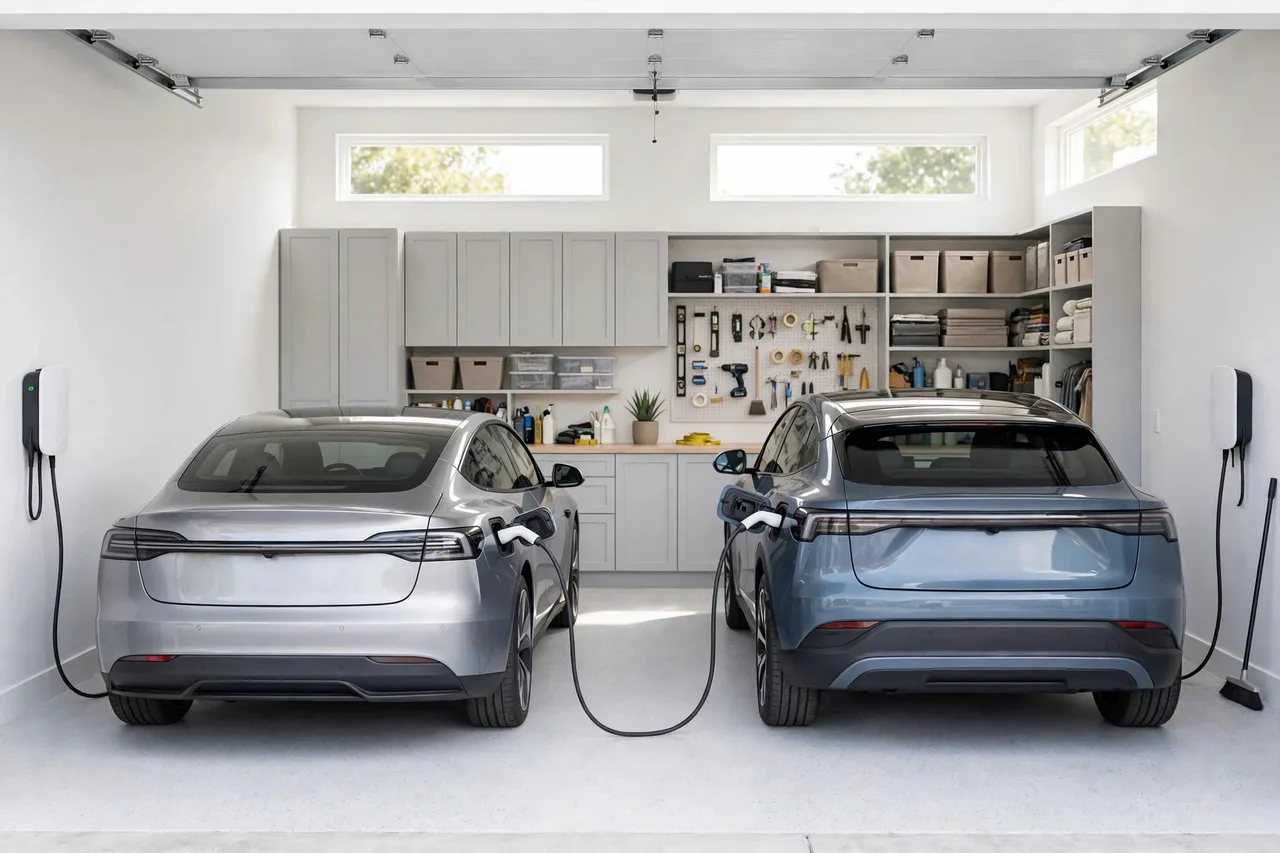
Ten services cover the work installers do in Rochester. Three lead the list here because of what this city's housing and law actually look like — each links to its national service page, where scope and process are set out in full.
Home EV Charger Installation in Rochester
The standard first install: a dedicated circuit from the panel to the parking space, a station mounted and configured to that circuit, and a passed inspection to close it out. What changes from house to house is never the recipe — it is the panel's spare capacity, the length of the run, and how the car actually parks.
In Rochester: the install Rochester's new EV households book first, and the one the rest of this page keeps returning to.
Dedicated Circuit & Electrical Panel Upgrade in Rochester
Where the load calculation fails the existing service, the upgrade is not an upsell — it is the finding. Done under permit with the utility's meter work coordinated, it converts the charger project into the house's electrical reset, and every later project inherits the headroom.
In Rochester: relevant in Rochester wherever a 100-amp panel already carries cooking, heating and hot water before a charger asks for room.
Level 2 Charger Installation in Rochester
Level 2's numbers explain its dominance: several times the overnight recovery of a wall outlet, on equipment sized to the circuit by a factor the code fixes. The install is a circuit project with a station at the end of it, and it is quoted that way by anyone who does it weekly.
In Rochester: the 240-volt step that turns overnight charging in Rochester from a trickle into a full battery by morning.
Utility programs and electricity in Rochester
Electricity in Rochester comes from Northern States Power Co - Minnesota. Parts of the wider metro are served by Rochester Public Utilities, People's Cooperative Services, Freeborn Mower Electric Cooperative. The utility matters twice over for a charger install: it sets the time-of-use rates that decide what overnight charging costs you, and it is the organisation that may — or may not — currently help pay for the equipment.
There is a strategic consequence to the empty incentive shelf in Rochester: the install decision reduces to the work itself and the tariff it runs on. With no rebate distorting the comparison, quotes compete on scope, licensing and the load calculation's honesty — which is the competition homeowners should want. And the overnight rate window, where Northern States Power Co - Minnesota offers one, quietly returns more over the car's life than most one-off rebates ever did.
One more utility habit worth copying from Rochester's EV owners: charge on the overnight rate window if your plan has one. The charger itself can usually be scheduled from the car or the station, so the habit costs nothing once it is set.
Condos, HOAs and the law in Minnesota
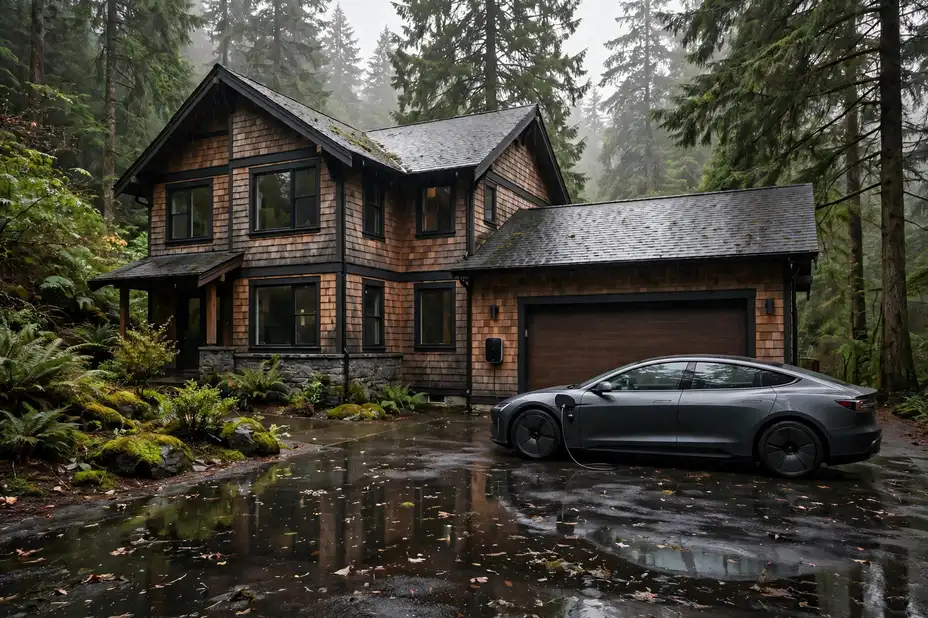
No statute promises a charger approval in Minnesota. Unlike the states that have enacted right-to-charge laws, Minnesota leaves the question entirely to each community's covenants and board discretion. For Rochester owners that is not the end of the road — it is a sign that the negotiation, the metering design and the written application carry the weight a statute would otherwise carry.
If the board says no, ask for the refusal in writing with the covenant cited. Rules change — several states added right-to-charge laws in 2025 alone — and a documented refusal is what a future rule change, or a future board, works from.
Our condo and HOA guide was written for both kinds of state; the chapters on application packages, metering and cost allocation are the ones that matter in Rochester, where no statute does the persuading for you.
Climate, garages and charger placement
The shoulder seasons deserve a mention: freeze-thaw cycles work on exterior conduit and enclosures, and the connector that was easy in October can be stiff company in February. Equipment listed for the exposure, mounted where the melt does not drip across it, is the whole answer — local installers apply it without being asked.
Ice discipline is the third local habit: a cable route that never crosses the shovelled path's landing zone, a holster at a height the snowbank does not reach, and a station position the roof does not shed onto. Winter rewards the installs that were designed in it.

Permits and inspection in Rochester
Bring the panel schedule up to date while the electrician is in it — the new circuit labelled, in the directory, in pen. Inspectors notice; future electricians bless you for it; and the load calculation for any second circuit starts from that card.
Neighbourhoods and ZIP codes served
The page covers 6 ZIP codes in and around Rochester — including 55901, 55902, 55903, 55904, 55905, 55906 — across Olmsted. If your ZIP is not in the first set shown, ask anyway: installer coverage follows the metro, not a postcode fence.
The same working area takes in the neighbouring localities of Oronoco, Byron, Eyota, Stewartville, Dover — the county ring an installer based in Rochester actually drives. Requests from those communities route exactly as city requests do: same services, same permit discipline, same local facts where they differ.
Olmsted County accounts for 11 of the ZIP codes and 6 named postal localities in the research file, the nearest of them Oronoco, Byron, Eyota, Stewartville, Dover. The survey counts 164,498 residents in the county, with a median household income of $95,406 and a median home value of $331,700. Measured across its ZIP codes, the Rochester footprint runs about 8 miles north to south and 7 east to west, from ZIP 55901 to 55906 — the ground an installer based here actually covers in a working week.
Beyond the county seats, the working area takes in Oronoco, Byron, Eyota, Stewartville, Zumbro Falls, Kasson, Elgin, Pine Island, Mazeppa, Mantorville, Millville, Racine, Dover, Plainview, Zumbrota, Dodge Center, Hayfield, Sargeant, West Concord, Chatfield, Grand Meadow, Goodhue, Saint Charles, Wanamingo, Kellogg, Wykoff, Spring Valley, Dexter, Waltham, Claremont, Lake City, Altura, Fountain, Brownsdale, Utica, Elkton, Ostrander, Kenyon, Reads Landing, Blooming Prairie, Frontenac, Wabasha, Lansing, Pepin, Preston, Stockholm, Lewiston, Red Wing, Taopi, Le Roy, Lanesboro, Rose Creek, Adams, Dennison, Cannon Falls, Rollingstone, Austin, Nerstrand, Bay City, Hager City, Chester, Maiden Rock, Owatonna, Mc Intire, Harmony, Medford, Lime Springs, Lyle, Hope, Hollandale, Stacyville — the named localities for which Rochester is the nearest metro in the network (neighbouring metros' pages cover their own ground), each routing to the same installer-matching service.
The wider working area also reaches Nelson, Stockton, Peterson, Welch, Minnesota City, Cochrane, Winona, Rushford, Plum City, Randolph, Homer — ground shared with neighbouring metros, where installers cross the same county lines in both directions.
ZIP codes in that shared ground include 54622, 54756, 54761, 55065, 55089, 55942, 55959, 55962, 55971, 55987, 55988.
The largest communities in that working area after Rochester itself, by the GeoNames populated-place file: Owatonna (population 25,725), Austin (population 24,563), Faribault (population 23,650), Albert Lea (population 17,674), Red Wing (population 16,445), Waseca (population 9,241), Kasson (population 6,123), Stewartville (population 6,037), Byron (population 5,328), Lake City (population 5,027), Forest City (population 4,018), Cresco (population 3,833), Saint Charles (population 3,735), Osage (population 3,654), Zumbrota (population 3,365), Pine Island (population 3,337), Plainview (population 3,237), Blue Earth (population 3,236), Chatfield (population 2,799), Dodge Center (population 2,690). Charging demand follows those populations — the subdivisions and town centres where the next driveways, and the next panels, are.
Mower County reaches into the working area with 40,343 residents, a median household income of $73,074 and a median home value of $185,200; its localities on this page include Racine, Sargeant, Grand Meadow, Dexter, Waltham. Wabasha County reaches into the working area with 21,565 residents, a median household income of $82,007 and a median home value of $264,400; its localities on this page include Zumbro Falls, Elgin, Mazeppa, Millville, Plainview. Goodhue County reaches into the working area with 47,943 residents, a median household income of $84,171 and a median home value of $285,100; its localities on this page include Pine Island, Zumbrota, Goodhue, Wanamingo, Kenyon. Fillmore County reaches into the working area with 21,414 residents, a median household income of $77,512 and a median home value of $221,100; its localities on this page include Chatfield, Wykoff, Spring Valley, Fountain, Ostrander. Dodge County reaches into the working area with 21,045 residents, a median household income of $95,739 and a median home value of $287,700; its localities on this page include Kasson, Mantorville, Dodge Center, Hayfield, West Concord.
| ZIP | Locality | County |
|---|---|---|
| 55901 | Rochester | Olmsted |
| 55905 | Rochester | Olmsted |
| 55902 | Rochester | Olmsted |
| 55903 | Rochester | Olmsted |
| 55904 | Rochester | Olmsted |
| 55906 | Rochester | Olmsted |
| 55960 | Oronoco | Olmsted |
| 55920 | Byron | Olmsted |
| 55934 | Eyota | Olmsted |
| 55976 | Stewartville | Olmsted |
| 55991 | Zumbro Falls | Wabasha |
| 55944 | Kasson | Dodge |
| 55932 | Elgin | Wabasha |
| 55963 | Pine Island | Goodhue |
| 55956 | Mazeppa | Wabasha |
| 55955 | Mantorville | Dodge |
| 55957 | Millville | Wabasha |
| 55967 | Racine | Mower |
| 55929 | Dover | Olmsted |
| 55964 | Plainview | Wabasha |
| 55992 | Zumbrota | Goodhue |
| 55927 | Dodge Center | Dodge |
| 55940 | Hayfield | Dodge |
| 55973 | Sargeant | Mower |
| 55985 | West Concord | Dodge |
| 55923 | Chatfield | Fillmore |
| 55936 | Grand Meadow | Mower |
| 55027 | Goodhue | Goodhue |
| 55972 | Saint Charles | Winona |
| 55983 | Wanamingo | Goodhue |
| 55945 | Kellogg | Wabasha |
| 55990 | Wykoff | Fillmore |
| 55975 | Spring Valley | Fillmore |
| 55926 | Dexter | Mower |
| 55982 | Waltham | Mower |
| 55924 | Claremont | Dodge |
| 55041 | Lake City | Wabasha |
| 55910 | Altura | Winona |
| 55935 | Fountain | Fillmore |
| 55918 | Brownsdale | Mower |
| 55979 | Utica | Winona |
| 55933 | Elkton | Mower |
| 55961 | Ostrander | Fillmore |
| 55946 | Kenyon | Goodhue |
| 55968 | Reads Landing | Wabasha |
| 55917 | Blooming Prairie | Steele |
| 55026 | Frontenac | Goodhue |
| 55981 | Wabasha | Wabasha |
| 55950 | Lansing | Mower |
| 54759 | Pepin | Pepin |
| 55965 | Preston | Fillmore |
| 54769 | Stockholm | Pepin |
| 55952 | Lewiston | Winona |
| 55066 | Red Wing | Goodhue |
| 55977 | Taopi | Mower |
| 55951 | Le Roy | Mower |
| 55949 | Lanesboro | Fillmore |
| 55970 | Rose Creek | Mower |
| 55909 | Adams | Mower |
| 55018 | Dennison | Goodhue |
| 55009 | Cannon Falls | Goodhue |
| 55969 | Rollingstone | Winona |
| 55912 | Austin | Mower |
| 55053 | Nerstrand | Rice |
| 54723 | Bay City | Pierce |
| 54014 | Hager City | Pierce |
| 52134 | Chester | Howard |
| 54750 | Maiden Rock | Pierce |
| 55060 | Owatonna | Steele |
| 50455 | Mc Intire | Mitchell |
| 55939 | Harmony | Fillmore |
| 55049 | Medford | Steele |
| 52155 | Lime Springs | Howard |
| 55953 | Lyle | Mower |
| 56046 | Hope | Steele |
| 56045 | Hollandale | Freeborn |
| 50476 | Stacyville | Mitchell |

Planning the install: from panel to parking
The order of operations protects you. Load calculation before equipment choice, because the circuit sizes the station's settings. Route before purchase, because reach decides models. Permit before work, because inspection closes the file the insurer will one day read. In Rochester the sequence is the same as everywhere — what varies is only how much of it your particular house asks for, and finding that out is the site visit's entire purpose.
Finally, photograph the finished work — station, nameplate, panel directory with the new breaker labelled — and file it with the inspection record. When the car changes, the house sells or a second station joins the first, that folder is the difference between a five-minute answer and an archaeological dig.
Home charging know-how for Rochester households
HOA rules and the single-family exterior
Owning the house does not always settle the charger's exterior chapter: architectural-approval clauses in many communities reach visible equipment, conduit runs on front elevations, and anything mounted streetside. The practical route is a five-minute check of the covenants before the install, and, where approval applies to exterior work, a small application — equipment photo, mounting position, conduit path — that reads as a courtesy because it is one. Interior garage installs in most single-family communities are entirely the owner's affair; it is the visible fraction that earns the paperwork.
The sounds a station makes
A charging station is mostly silent, but not entirely: a contactor's clunk when a session starts, a faint hum under load, occasionally a small fan in warm weather. These are the sounds of switching and cooling, and they are normal. The sounds that earn attention are changes — buzzing that was not there last month, clicking cycles, a hum that grows. Electricity should be boring to listen to; when it stops being boring, that is information, and the correct response is an electrician rather than a search engine.
Planning the second visit on the first
Nearly every install leaves a known future: a second car, a workshop circuit, a battery or a heat pump queuing for capacity. The first visit is when that future costs least to serve — conduit runs made while walls are open, panel positions reserved, the load study documented so the next calculation starts from evidence. Installers call it roughing in the future; households experience it, years later, as the second project that was mysteriously half done already.
When you move: take it or leave it
The station is portable in a way the circuit is not. A plug-in unit unplugs and travels; a hardwired one leaves with an electrician's half hour. The circuit — the larger share of the original project — stays with the house, where the paperwork decides what it is worth: documented as a permitted charger circuit, it is a listing feature for the next EV household; undocumented, it is a mystery outlet in the garage. Owners planning a move inside a few years can say so at install time; the plug-in-versus-hardwired choice reads differently with a departure date attached.

Frequently asked questions
What happened to the federal home-charger credit in Rochester, MN?
That credit is finished: 30C ended on September 30, 2025. What about locally? In the utility and state sources checked for this page, nothing verified was running for Rochester homeowners — no Northern States Power Co - Minnesota rebate, no state scheme. If one opens, it will appear on the utility's site with dates; plan your install without it meanwhile.
Can my association in Rochester, MN say no to a home charger?
In Rochester the honest answer is yes, they can refuse: Minnesota gives owners no statutory charging right, so the board's discretion governs. What changes outcomes is the quality of the file in front of them — drawings, metering, insurance, a named licensed installer — and a growing number of boards here approve exactly that file.
Does a Level 2 charger mean a panel upgrade for a Rochester, MN home?
The question has a correct instrument: the load calculation. It totals what your service already carries — with the code's demand factors, not nameplate panic — and sets the charger's continuous load against the remainder. In Rochester, where the median home dates to 1991 and about 38% of units predate 1980, the answer splits by street: post-war and newer 200-amp homes usually proceed; older 100-amp homes choose between capacity work and load management. Anyone answering without the calculation is guessing in a uniform.
How quickly will a Level 2 charger fill my car in Rochester, MN?
Think of it in parked hours. Level 1 gives you back 3–5 miles for each of them; Level 2 gives back about 25–40, set by the circuit's amperage and what the car can accept. Overnight, that is the gap between 'enough for tomorrow' and 'full, every morning'.
How does the installer matching on this page work?
Your request — service, Rochester ZIP, property type and timing — goes to licensed local installers who cover Rochester. They contact you directly to arrange a site visit and quote. PlugReady USA is the matching service, not the installer, and the sections above exist so you can judge any quote against the local facts.
Do installers cover the communities around Rochester, MN?
Yes — an installer's working area is the county ring, not the city limit. From this page the same request flow covers Oronoco, Byron, Eyota, Stewartville, Dover and the rest of Rochester's surrounding localities, under the same permit discipline and the same local facts where they differ.
Nearby cities in Minnesota
- EV charger installation in Minneapolis — about 77 miles from Rochester, metro population 3,700,000
- EV charger installation in St. Cloud — about 139 miles from Rochester, metro population 200,000
- EV charger installation in Duluth — about 190 miles from Rochester, metro population 280,000
- EV charger installation in La Crosse, WI — about 72 miles from Rochester, metro population 140,000
- EV charger installation in Eau Claire, WI — about 75 miles from Rochester, metro population 175,000
- EV charger installation in Waterloo, IA — about 109 miles from Rochester, metro population 170,000
Ready to charge at home in Rochester?
Tell us the job — service, ZIP and property type — and licensed local installers will take it from there.