EV Charger Installation in Duluth, MN
Home Level 2 charging, panel upgrades and condo installs in Duluth — matched to licensed local installers, with the local facts that shape the job set out below.
The charger is the visible tenth of the project. Below it sit a load calculation, a wire run, a statute, a tariff and a permit — and in Duluth each of those has a local answer. Duluth itself is home to about 87,990 people. Minnesota's fleet stood at 59,800 battery-electric vehicles plus 24,800 plug-in hybrids through 2025, so the local answers are no longer theoretical: installers here run this job weekly. What follows gathers the Duluth version of each layer — utility programs as they actually stand, condo and HOA law as written, permit practice, and the survey data on the housing stock — so the one conversation that matters, the site visit, starts informed.
PlugReady USA is a matching service, not the installer: you tell us the job, and we route the request to licensed local electricians and EV-installer companies who work in Duluth. Use the local detail below to arrive at that conversation informed — the sections are ordered the way an installer will think about your project, from the panel outward.
Why Duluth ranks 162 in this network's 300-metro build order: MN No. 3. Those are registration figures, not projections, and they translate directly into installation work — every newly registered plug-in vehicle is a household deciding where it will charge.
Survey context for Duluth, in the three lines installers actually use: median household income $69,255; owner-occupation at 57%; single-unit detached homes at 59%. Income tracks adoption pace, tenure decides whose signature a job needs, and structure decides whether the answer is a garage circuit or a building negotiation.

The composite picture matters more than any single statistic. In Duluth: an older housing fabric, where panel archaeology is a normal part of the first visit; a detached-house majority with a real attached and multifamily minority; buildings of five or more units hold a substantial share of homes, which keeps the multifamily sections of this page in daily use; meanwhile, owners hold a working majority, with renters a significant minority. A page that ignored that profile would give the same advice everywhere; this one is ordered by it.
In absolute terms, the survey counts 41,325 housing units in Duluth — 39,376 occupied, 22,584 of them by their owners. The stock resolves into 24,176 single-unit detached houses, 33,024 homes standing since before 1980, and 9,485 units in larger buildings. Those six counts are the city's charging map drawn without percentages, and every section of this page is a consequence of one of them. The page's geography is equally concrete: 14 ZIP codes across St. Louis, centred near 46.78 degrees north latitude. The city anchors the Duluth metropolitan area, home to roughly 280,000 people on the research file's metro estimate — the wider labour and housing market this page's installers work across.
The same survey release fills in the household economics around the housing stock: a median home value of $242,700, median gross rent of $1,087, per-capita income of $41,503, and a median resident age of 35. And the daily rhythms behind the housing numbers: 69% of Duluth workers drive to work alone — the commute pattern home charging is built around; 13% work from home, a population whose cars charge on daytime and overnight schedules alike; 3% commute by public transit; 44% of adults hold a bachelor's degree or higher. The survey's vehicle table is the one an EV page should quote first: 3,994 of Duluth's households have no vehicle at all, while 21,380 have two or more — the multi-car households for whom the second circuit is a when, not an if.
Two burden statistics frame the economics: in Duluth, 46% of renters and 0% of mortgage-holding owners are housing-cost burdened at the standard 30% threshold. And 49% of households are family households, the segment most likely to run the two-vehicle, two-schedule pattern the second-vehicle planning notes address.
This is the context an installer works against, whether it is written down or not. Pre-war and immediate post-war streets dominate the map, and their electrical fabric is stratified — original services beneath mid-century additions beneath modern subpanels, an archaeology the load calculation reads layer by layer. Variety is the installer's training programme here: no two days alike, the van stocked for houses and buildings alike, and a diary that reads like the housing survey performed live.
Neither side dominates, so neither side's pattern sets the norm: the local market's standard documents include both the homeowner work order and the tenant proposal, kept in the same drawer. Households here run the numbers — which is why the honest sections of this page, the ones that say what is verified and what is not, earn their keep. The commission's calendar quietly schedules the market: when a new time-of-use design is approved, installer phones ring in a pattern the docket predicted months earlier.
The state fleet is in its growth chapter: registrations climbing from a modest base, installer capacity being built ahead of demand, and early local precedents carrying outsized weight. Smaller metros adopt on their own clock: the fleet follows the dealers and the demographics, and each install is a visible event a street notices. Boards here decide without a statutory script, which makes precedent the currency: the first well-built application in a community quietly writes the policy for everyone after it.
The electrical reality in Duluth homes
The survey's housing portrait for Duluth opens with its median: a home built in 1952, in a stock where 80% of units predate 1980 and 59% stand detached on their own lots. 57% of occupied homes are owner-occupied. An installer reads those lines as a weather forecast: mostly settled conditions, with older wiring fronts moving through the pre-1980 districts. A housing stock this age leans on smaller electrical services — 100-amp panels are common, and fuse-era equipment still turns up in the oldest streets. For many of those homes the honest answer is a panel upgrade or a load-management device before the charger circuit goes in, and a good installer will show you the load calculation rather than asking you to take it on faith. Attics, basements and interior panel locations are common in this vintage of stock, which is why the run's route gets its own line in any serious quote: distance and finish decide labour more than the charger does.
One further survey line belongs in any Duluth install conversation: 22% of the city's homes heat with electricity — 8,685 households whose panels already carry a major winter load before a charger is contemplated. Electric heat and EV charging are the two largest discretionary loads a house can host, and where they coincide, the load calculation stops being a formality.
Renters are the other constituency in these numbers: about 16,792 of Duluth's occupied homes are rented rather than owned. Their charging route runs through a landlord conversation instead of a panel they control — a different project, covered by the rentals guide and the law section below, but a routine one in a city with this many renting households.
One more structural fact shapes Duluth's charging map: 23% of the city's housing units sit in buildings of five or more units. Those households cannot simply book a circuit — their charger runs through a building, a board and a shared electrical service, which is why the multifamily service and the law section below carry unusual weight on this page.
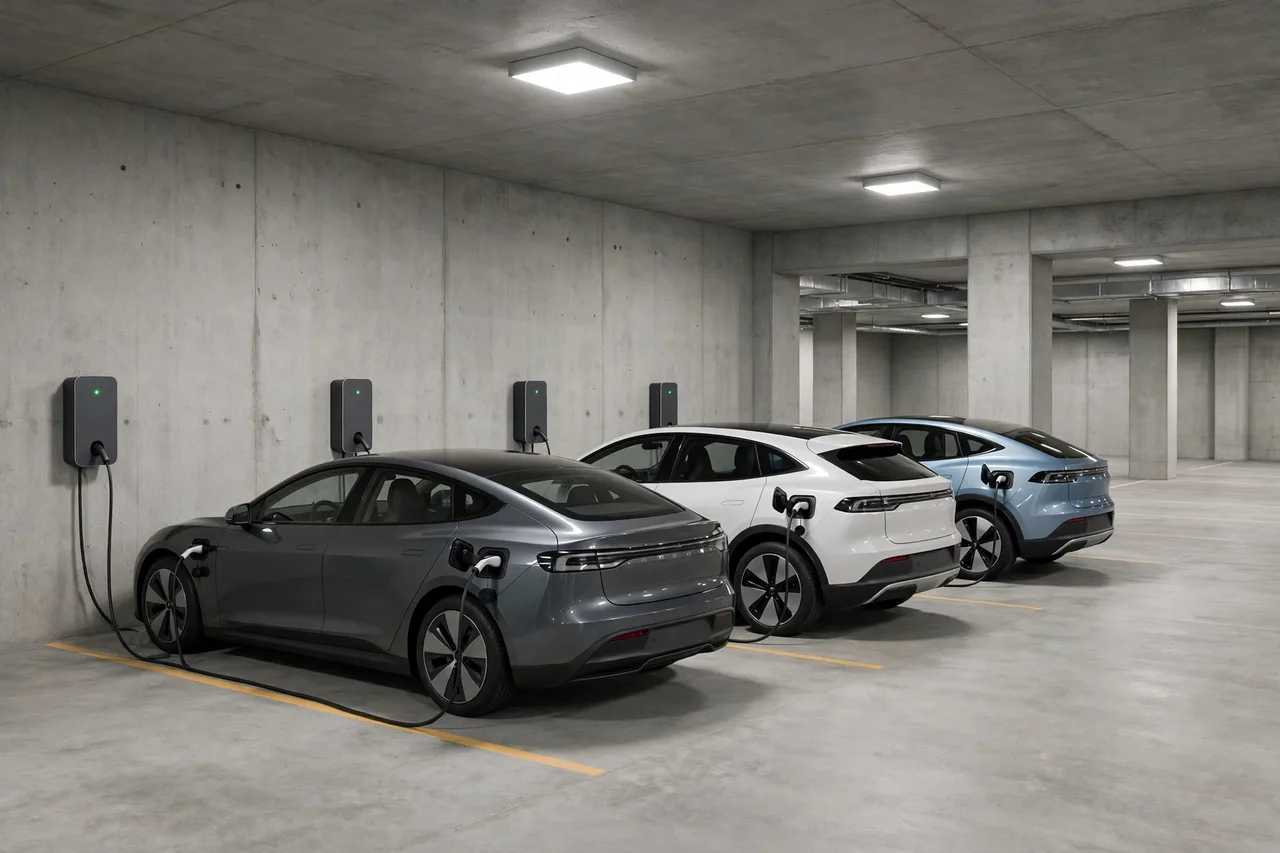
EV charging services in Duluth
Ten services cover the work installers do in Duluth. Three lead the list here because of what this city's housing and law actually look like — each links to its national service page, where scope and process are set out in full.
Home EV Charger Installation in Duluth
One circuit, one station, one inspection: the residential install in its usual form. An installer sizes the circuit to the household's driving, mounts the station where the cable reaches the port without drama, sets its output to the circuit it landed on, and leaves the paperwork filed with the house.
In Duluth: the install Duluth's new EV households book first, and the one the rest of this page keeps returning to.
Dedicated Circuit & Electrical Panel Upgrade in Duluth
Some homes meet the charger at the panel door: the service is already spoken for by cooking, heating and hot water. This service is the honest fix — capacity added properly, grounding brought current, and a panel schedule that finally matches the house it feeds.
In Duluth: relevant in Duluth wherever a 100-amp panel already carries cooking, heating and hot water before a charger asks for room.
Level 2 Charger Installation in Duluth
A Level 2 circuit turns charging from a ration into a routine. The job is electrical rather than electronic — breaker and conductor sized at the continuous-load factor, the run routed to the parking position, and the station dialled to the circuit rather than to its own headline maximum.
In Duluth: the 240-volt step that turns overnight charging in Duluth from a trickle into a full battery by morning.
Utility programs and electricity in Duluth
Electricity in Duluth comes from ALLETE, Inc.. Parts of the wider metro are served by Lake Country Power, Cooperative L&P Assn Lake County, Hibbing Public Utilities Comm. The utility matters twice over for a charger install: it sets the time-of-use rates that decide what overnight charging costs you, and it is the organisation that may — or may not — currently help pay for the equipment.
Do not budget for a rebate in Duluth right now. As of the sources checked for this page, ALLETE, Inc. publishes no residential charger rebate, Minnesota offers no state program for typical home installs, and the federal 30C credit ended on September 30, 2025. If that changes, the utility's program page will say so with an as-of date — and this page will be updated to match. Until then, judge quotes on the work itself.
Renters and condo owners should note the metering question early: whose meter the charger hangs off decides who pays for the energy, and ALLETE, Inc.'s options for submetering are part of the multifamily conversation below.
Condos, HOAs and the law in Minnesota
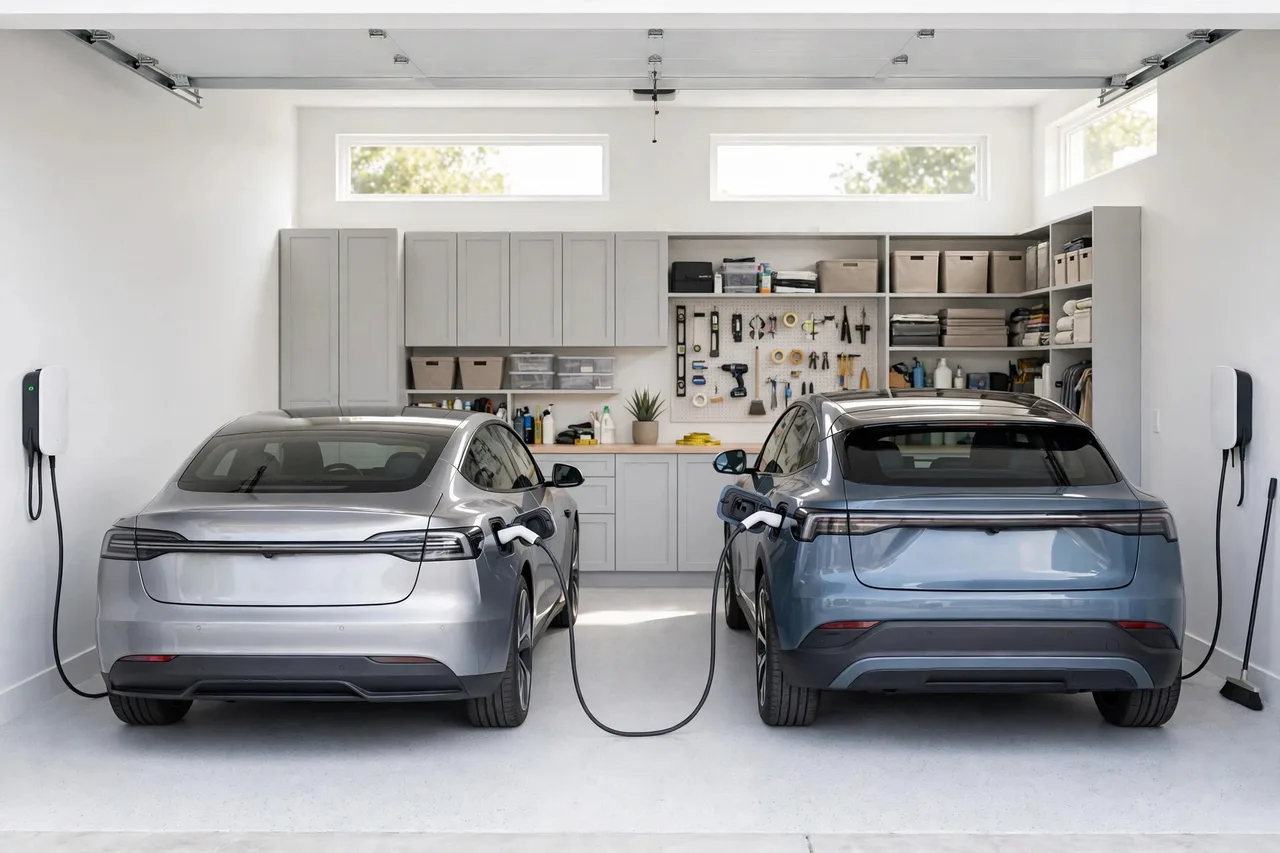
No statute promises a charger approval in Minnesota. Unlike the states that have enacted right-to-charge laws, Minnesota leaves the question entirely to each community's covenants and board discretion. For Duluth owners that is not the end of the road — it is a sign that the negotiation, the metering design and the written application carry the weight a statute would otherwise carry.
Timing helps too. Boards plan capital work annually; an application that arrives with the community's budget cycle, offering to coordinate with any planned electrical or repaving work, reads as a contribution rather than a demand.
The negotiation playbook — application contents, metering options, the wording that answers boards' standard objections — is set out in our condo and HOA guide, read here as a persuasion manual rather than a rights manual.
Climate, garages and charger placement
The first cold morning is the audit: cable flexibility, connector seating with gloved hands, the holster reachable without crossing the ice zone by the door. Installs designed in spring are graded in January, and local installers design for the grade.
Cord flexibility is a rated property, and January is when the rating is read. Cables specified for cold service coil and uncoil at temperatures that make lesser jackets crack; where the station is chosen locally, this line of the specification has already been read for you — one of the quieter values of a local installer.

Permits and inspection in Duluth
Bring the panel schedule up to date while the electrician is in it — the new circuit labelled, in the directory, in pen. Inspectors notice; future electricians bless you for it; and the load calculation for any second circuit starts from that card.

Neighbourhoods and ZIP codes served
The page covers 14 ZIP codes in and around Duluth — including 55801, 55802, 55803, 55804, 55805, 55806, 55807, 55808, 55810, 55811, 55812, 55814, 55815, 55816 — across St. Louis. If your ZIP is not in the first set shown, ask anyway: installer coverage follows the metro, not a postcode fence.
The same working area takes in the neighbouring localities of Twig, Saginaw, Canyon, Alborn, Brookston, Cotton, Melrude, Brimson, Makinen, Meadowlands, Floodwood, Forbes, Aurora, Hoyt Lakes — the county ring an installer based in Duluth actually drives. Requests from those communities route exactly as city requests do: same services, same permit discipline, same local facts where they differ.
St. Louis County accounts for 53 of the ZIP codes and 38 named postal localities in the research file, the nearest of them Twig, Saginaw, Canyon, Alborn, Brookston. The survey counts 200,123 residents in the county, with a median household income of $70,069 and a median home value of $221,400. Measured across its ZIP codes, the Duluth footprint runs about 13 miles north to south and 12 east to west, from ZIP 55801 to 55816 — the ground an installer based here actually covers in a working week.
Beyond the county seats, the working area takes in Superior, Esko, Twig, Saginaw, South Range, Wrenshall, Foxboro, Poplar, Knife River, Carlton, Hawthorne, Cloquet, Maple, Holyoke, Lake Nebagamon, Canyon, Alborn, Two Harbors, Brookston, Solon Springs, Cotton, Sawyer, Brule, Barnum, Melrude, Kerrick, Brimson, Port Wing, Iron River, Makinen, Gordon, Moose Lake, Cromwell, Meadowlands, Bruno — the named localities for which Duluth is the nearest metro in the network (neighbouring metros' pages cover their own ground), each routing to the same installer-matching service.
The largest communities in that working area after Duluth itself, by the GeoNames populated-place file: Superior (population 26,579), Hibbing (population 16,204), Cloquet (population 12,075), Grand Rapids (population 11,127), Hermantown (population 9,706), Virginia (population 8,587), Ashland (population 8,040), Chisholm (population 4,981), Eveleth (population 3,673), Two Harbors (population 3,578), Ely (population 3,408), Proctor (population 3,068), Arnold (population 2,960), Mountain Iron (population 2,880), Sandstone (population 2,768), Moose Lake (population 2,748), Cohasset (population 2,745), Spooner (population 2,586), Parkville (population 2,525), Hayward (population 2,296). Charging demand follows those populations — the subdivisions and town centres where the next driveways, and the next panels, are.
Douglas County reaches into the working area with 39,575 residents, a median household income of $79,043 and a median home value of $321,400; its localities on this page include Superior, South Range, Foxboro, Poplar, Hawthorne. Carlton County reaches into the working area with 36,518 residents, a median household income of $80,573 and a median home value of $245,100; its localities on this page include Esko, Wrenshall, Carlton, Cloquet, Holyoke. Lake County reaches into the working area with 10,879 residents, a median household income of $75,541 and a median home value of $241,300; its localities on this page include Knife River, Two Harbors. Pine County reaches into the working area with 29,640 residents, a median household income of $71,146 and a median home value of $239,300; its localities on this page include Kerrick, Bruno.
| ZIP | Locality | County |
|---|---|---|
| 55801 | Duluth | St. Louis |
| 55814 | Duluth | St. Louis |
| 55815 | Duluth | St. Louis |
| 55816 | Duluth | St. Louis |
| 55805 | Duluth | St. Louis |
| 55806 | Duluth | St. Louis |
| 55802 | Duluth | St. Louis |
| 55812 | Duluth | St. Louis |
| 55807 | Duluth | St. Louis |
| 55811 | Duluth | St. Louis |
| 54880 | Superior | Douglas |
| 55803 | Duluth | St. Louis |
| 55804 | Duluth | St. Louis |
| 55810 | Duluth | St. Louis |
| 55808 | Duluth | St. Louis |
| 55733 | Esko | Carlton |
| 55791 | Twig | St. Louis |
| 55779 | Saginaw | St. Louis |
| 54874 | South Range | Douglas |
| 55797 | Wrenshall | Carlton |
| 54836 | Foxboro | Douglas |
| 54864 | Poplar | Douglas |
| 55609 | Knife River | Lake |
| 55718 | Carlton | Carlton |
| 54842 | Hawthorne | Douglas |
| 55720 | Cloquet | Carlton |
| 54854 | Maple | Douglas |
| 55749 | Holyoke | Carlton |
| 54849 | Lake Nebagamon | Douglas |
| 55717 | Canyon | St. Louis |
| 55702 | Alborn | St. Louis |
| 55616 | Two Harbors | Lake |
| 55711 | Brookston | St. Louis |
| 54873 | Solon Springs | Douglas |
| 55724 | Cotton | St. Louis |
| 55780 | Sawyer | Carlton |
| 54820 | Brule | Douglas |
| 55707 | Barnum | Carlton |
| 55766 | Melrude | St. Louis |
| 55756 | Kerrick | Pine |
| 55602 | Brimson | St. Louis |
| 54865 | Port Wing | Bayfield |
| 54847 | Iron River | Bayfield |
| 55763 | Makinen | St. Louis |
| 54838 | Gordon | Douglas |
| 55767 | Moose Lake | Carlton |
| 55726 | Cromwell | Carlton |
| 55765 | Meadowlands | St. Louis |
| 55712 | Bruno | Pine |

Planning the install: from panel to parking
A useful way to read any Duluth quote is to ask which of three jobs it describes. Job one: the panel has room and the run is short — a circuit and a station. Job two: the panel is full — capacity work joins the quote, as an upgrade or as load management. Job three: the property adds people — an HOA, a landlord, a building's shared service — and the approvals timeline joins the electrical one. None of the three is a bad job; they are simply different scopes, and a clear quote says which one you are in.
Plan for the household you will be, not just the car you have. A second EV is the most common reason a charger circuit gets revisited, and the cheap moment to prepare for it — conduit sized up, panel capacity reserved, station placement that serves two bays — is during the first install, while the permit is open and the electrician is already in the panel.
Home charging know-how for Duluth households
Orientation: the garage's compass
A garage's orientation decides its microclimate: south- and west-facing doors take the day's heat load, north-facing ones hold the cold. The charger inherits the microclimate — electronics ageing in the hot wall's summer, cables stiffening in the cold one's January. Orientation is nobody's choice by install time, but it informs placement inside the room: the interior wall over the door wall, the shaded corner over the sun line, decided by someone who has read the room's compass.
Two-storey houses and the vertical run
In a two-storey house the panel often lives in a utility room, a laundry or a ground-floor wall far from the garage, and the circuit's path becomes a vertical problem: chases, soffits and floor cavities are the route's vocabulary. Experienced installers read a house's structure the way a plumber does — where the stacked walls are, which cavities run uninterrupted — and the quote follows that reading. Expect the site visit to include a look upstairs; the ceiling above the garage is part of the job.
Outdoor and carport positions
Plenty of charging happens without a garage at all — on driveway walls, posts and carports. The outdoor version of the job adds its own discipline: equipment listed for the exposure, an enclosure that sheds rather than traps water, cable reach checked against the car's real nose-in position, and protection from the ordinary impacts of a working driveway. A pedestal adds a foundation and a conduit approach below grade. None of it is exotic, and all of it is cheaper decided on paper than corrected in concrete.
Older wiring, honestly assessed
Homes from the early electrical eras sometimes carry wiring methods — knob-and-tube runs, early cloth-insulated cable, fused services — that change an installer's reading of a house. None of it automatically disqualifies a charger: the new circuit is new work, run to current code from the panel. What the older fabric changes is the assessment — the panel's condition, the grounding system's state, and occasionally a recommendation that some inherited work be corrected while the electricians are in the house. A candid survey at the site visit is the whole answer; surprises belong to houses whose installers did not look.

Frequently asked questions
Can I still get the federal tax credit for a home charger in Duluth, MN?
The three possible pots are all, at present, empty for a Duluth homeowner: no ALLETE, Inc. residential rebate in current published sources, no Minnesota home programme, and a federal credit that closed on September 30, 2025. Programmes do relaunch — on the utility's site, with dates — and until one does, the honest quote is the one with no rebate line at all.
Can my HOA or condo board in Duluth, MN refuse my charger?
They hold the stronger hand, and it is better to plan with that admitted. Minnesota has enacted no right-to-charge law, so in Duluth the covenants and the board govern. Owners who treat the application as a design submission — circuit, metering, insurance, restoration — rather than a request for a favour are the ones charging by the following quarter.
Panel upgrade or not — how do Duluth, MN homeowners find out?
The answer lives in your panel's directory and its arithmetic, not in the car's requirements. With 80% of Duluth's homes predating 1980 (median build 1952), local installers see both situations weekly: the 200-amp panel that takes the circuit directly, and the full 100-amp service that needs capacity work first. The site visit exists to sort your house into one of those two piles, on numbers.
How quickly will a Level 2 charger fill my car in Duluth, MN?
Level 2 is several-fold faster in the only unit that matters — miles back per hour parked: roughly 25–40 against Level 1's 3–5. The exact figure follows the circuit: a 40-amp circuit and a 60-amp circuit are both Level 2, and the car's onboard limit may sit below either. Your installer matches the three numbers at the site visit.
How does the installer matching on this page work?
Send the request and it is matched against installers covering Duluth — your service, ZIP, property type and timing travel with it. An installer then arranges the site visit and quotes in writing. Our role ends at the introduction; your contract, permit and paperwork are with the installer.
How long does a typical home charger installation take in Duluth, MN?
For the common layout — panel near parking, capacity available — the hands-on work in Duluth, Minnesota is a half day to a day. Panel upgrades add a coordinated day of their own, and association approvals add meetings rather than labour. The date an installer can honestly promise is the electrical day; the rest is calendar, and a good quote says so.
Nearby cities in Minnesota
- EV charger installation in Minneapolis — about 140 miles from Duluth, metro population 3,700,000
- EV charger installation in St. Cloud — about 143 miles from Duluth, metro population 200,000
- EV charger installation in Rochester — about 190 miles from Duluth, metro population 230,000
- EV charger installation in Eau Claire, WI — about 142 miles from Duluth, metro population 175,000
- EV charger installation in La Crosse, WI — about 212 miles from Duluth, metro population 140,000
- EV charger installation in Fargo, ND — about 261 miles from Duluth, metro population 265,000
Ready to charge at home in Duluth?
Two minutes of form, and the request is in front of licensed installers who cover this city — quotes follow site visits, in writing.