EV Charger Installation in Minneapolis, MN
Charging where you park, in Minneapolis: the utility programs, state law, permit process and housing facts behind a home charger install, gathered in one place.
The overnight plug is the least glamorous and most consequential part of owning an electric car, and Minneapolis households have been adopting it at pace: 59,800 battery-electric vehicles and 24,800 plug-in hybrids were registered across Minnesota by the end of 2025. Minneapolis itself is home to about 428,572 people. What follows is the local field guide — utility programs as they actually stand, the association law as it actually reads, the permit as it is actually filed, and the housing numbers that predict your install before anyone opens the panel.
A note on what PlugReady USA is and is not: we publish the local research and run the matching; the installation itself belongs to licensed electricians and installer companies working in Minneapolis. Everything below is written so you can hold your own in that conversation — numbers first, sales language nowhere.
What the Experian and AFDC registration data say about Minneapolis–St. Paul–Bloomington: MN 59.8K BEVs; Xcel circuit rebate home turf. Translated out of market language: your neighbours are already charging at home, the permit office already knows the paperwork, and the installers already know the housing stock.
Three percentages describe the working conditions for charging in Minneapolis: 46% owner-occupied, 40% single-unit detached, and a median household income of $77,732 standing behind both. Everything in the sections below — panels, permissions, metering — is commentary on those proportions.

Every city charges differently, and Minneapolis's difference is legible in the data: an older housing fabric, where panel archaeology is a normal part of the first visit; a genuinely mixed city — houses, townhouses and larger buildings all carry weight; buildings of five or more units hold a substantial share of homes, which keeps the multifamily sections of this page in daily use; renters form a large share of households, so the landlord conversation is a first-class topic here. Read the sections below through that profile and the local advice resolves into specifics — which questions are routine here, and which are rare.
Keep six figures and you keep Minneapolis's whole electrical character: 216,155 housing units; 194,480 occupied homes; 90,363 owner-occupied; 85,943 detached houses; 155,178 pre-1980 homes; 102,017 homes in buildings of five or more units. Percentages elsewhere on this page are these numbers in disguise — the counts are the originals, and they are the numbers a local installer's experience is actually made of. The page's geography is equally concrete: 69 ZIP codes across Anoka, Carver, Hennepin, centred near 44.98 degrees north latitude. The city anchors the Minneapolis–St. Paul–Bloomington metropolitan area, home to roughly 3,700,000 people on the research file's metro estimate — the wider labour and housing market this page's installers work across.
The same survey release fills in the household economics around the housing stock: a median home value of $368,300, median gross rent of $1,340, per-capita income of $52,288, and a median resident age of 34. How the city moves completes the picture: 52% of Minneapolis workers drive to work alone — the commute pattern home charging is built around; 21% work from home, a population whose cars charge on daytime and overnight schedules alike; 7% commute by public transit; 57% of adults hold a bachelor's degree or higher. Vehicle ownership, from the same release: 69,692 households in Minneapolis run two or more vehicles, and 34,772 run none — the two ends of the market this page serves and does not serve.
Two burden statistics frame the economics: in Minneapolis, 45% of renters and 0% of mortgage-holding owners are housing-cost burdened at the standard 30% threshold. And 40% of households are family households, the segment most likely to run the two-vehicle, two-schedule pattern the second-vehicle planning notes address.
What follows is the city read as an electrical place rather than a dot on a map. A stock this old wires its history into the walls: cloth-wrapped conductors in the deepest streets, fuse boxes that outlived their century, panels added in layers by generations of electricians each solving their own decade's problem. With this much of the stock in shared buildings, the city's charging map is drawn in boardrooms as much as in electrical rooms: deeded spaces, common services, metering subplots in every application.
High renter share also means charging follows the lease cycle: applications cluster at move-in, installations at renewal leverage, and the whole market breathes on the rental calendar. Middle incomes discipline the specification toward the durable middle: not the minimum circuit that passes, not the maximal one that impresses — the one the load calculation actually indicates, documented. Filed tariffs and public dockets give this territory a paper trail most markets lack: the diligent household can read the utility's own electrification plan and know which programmes are funded, piloted or merely proposed.
The growth market's households are researchers by necessity: fewer neighbours to copy, thinner local precedent, and pages like this one carrying more of the orientation load. In a market this size the matching problem inverts: not finding an installer, but filtering — licence, charging specialism, diary, and references from your own quadrant of the metro. Without a state charging statute, shared-property approvals in this metro are won on paper quality: metering clarity, licensed installers, insurance, reversibility — the complete package the guides set out.
The electrical reality in Minneapolis homes
The survey's housing portrait for Minneapolis opens with its median: a home built in 1954, in a stock where 72% of units predate 1980 and 40% stand detached on their own lots. 46% of occupied homes are owner-occupied. An installer reads those lines as a weather forecast: mostly settled conditions, with older wiring fronts moving through the pre-1980 districts. A housing stock this age leans on smaller electrical services — 100-amp panels are common, and fuse-era equipment still turns up in the oldest streets. For many of those homes the honest answer is a panel upgrade or a load-management device before the charger circuit goes in, and a good installer will show you the load calculation rather than asking you to take it on faith. Attics, basements and interior panel locations are common in this vintage of stock, which is why the run's route gets its own line in any serious quote: distance and finish decide labour more than the charger does.
One further survey line belongs in any Minneapolis install conversation: 26% of the city's homes heat with electricity — 50,848 households whose panels already carry a major winter load before a charger is contemplated. Electric heat and EV charging are the two largest discretionary loads a house can host, and where they coincide, the load calculation stops being a formality.
The tenure split cuts the other way too: roughly 104,117 occupied homes in Minneapolis are rented. For those households the charger question is a negotiation with a property owner — written proposal, licensed installer, metering clarity — and it succeeds often enough that installers here keep the pattern ready.
One more structural fact shapes Minneapolis's charging map: 47% of the city's housing units sit in buildings of five or more units. Those households cannot simply book a circuit — their charger runs through a building, a board and a shared electrical service, which is why the multifamily service and the law section below carry unusual weight on this page.
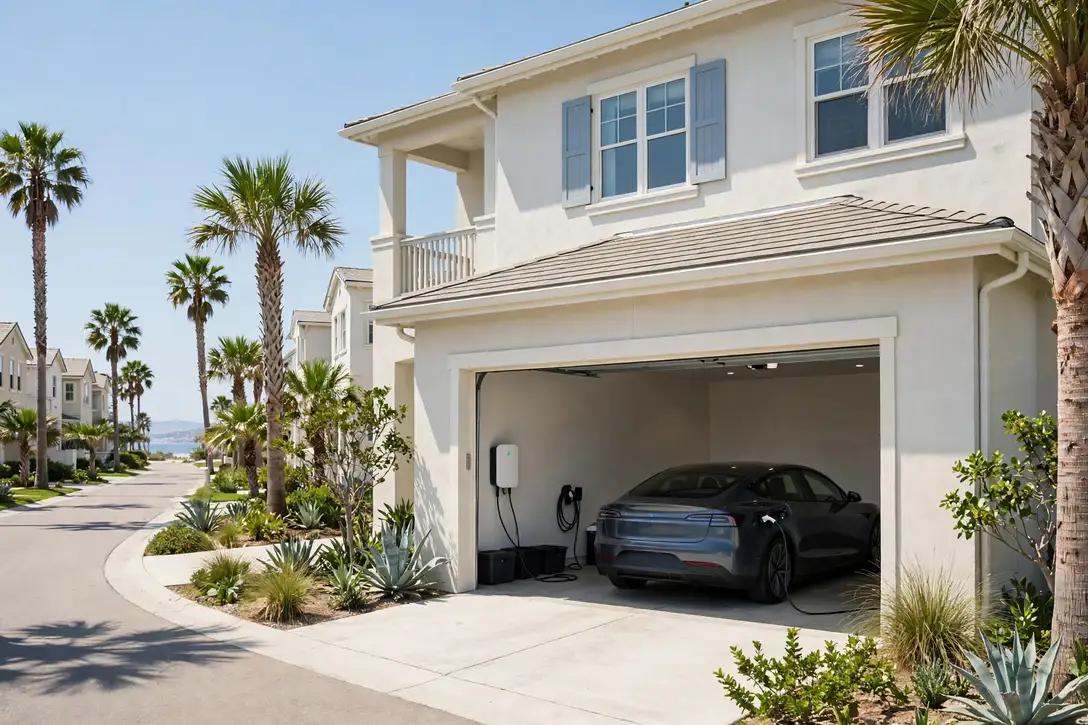
EV charging services in Minneapolis
An installer's work in Minneapolis usually starts with one of the three lead services below. The cards describe the job as it is actually scoped; the grid underneath carries the rest of the menu.
Home EV Charger Installation in Minneapolis
The core service, stated plainly: a dedicated 240-volt circuit run from your panel to your parking place, a station mounted and configured to that circuit, and the paperwork closed out with the permit office. Everything else in this section of the site exists to support or unblock this one job.
In Minneapolis: the core residential job in Minneapolis: circuit, mounting, configuration and inspection in one visit pattern.
Dedicated Circuit & Electrical Panel Upgrade in Minneapolis
The capacity project behind the charger project. A load calculation decides whether the answer is a service increase, a panel replacement, a subpanel or load management — and the work is sequenced with the utility and the inspector so the house is live again the same day in most cases.
In Minneapolis: the capacity fix that lets the charger circuit go in without the rest of the house living at its limit.
Level 2 Charger Installation in Minneapolis
The step up from a household outlet to a real circuit: 240 volts, sized as a continuous load, delivering several times the overnight range of a Level 1 cord. The craft is in matching circuit, station configuration and vehicle acceptance so the three agree.
In Minneapolis: the upgrade from a wall outlet to a dedicated 240-volt circuit, and the end of range arithmetic at bedtime.
Utility programs and electricity in Minneapolis
Electricity in Minneapolis comes from Northern States Power Co - Minnesota. Parts of the wider metro are served by Connexus Energy, Wright-Hennepin Coop Elec Assn, Minnesota Valley Electric Coop. The utility matters twice over for a charger install: it sets the time-of-use rates that decide what overnight charging costs you, and it is the organisation that may — or may not — currently help pay for the equipment.
No verified residential charger rebate was in place for Northern States Power Co - Minnesota in the sources checked for this page (the federal Alternative Fuel Refueling Property Credit ended on September 30, 2025, and no Minnesota state program replaced it for typical home installs). That can change — utilities open and close funded rounds — so an installer quoting you today should be able to name any current program precisely, with its published terms. If they cannot name it, it is not part of your job.
Solar households should read the export terms alongside the charging ones: the pair decides whether midday charging on home-working days beats the overnight window, and the answer is written in your tariff, not in general advice.
Condos, HOAs and the law in Minnesota
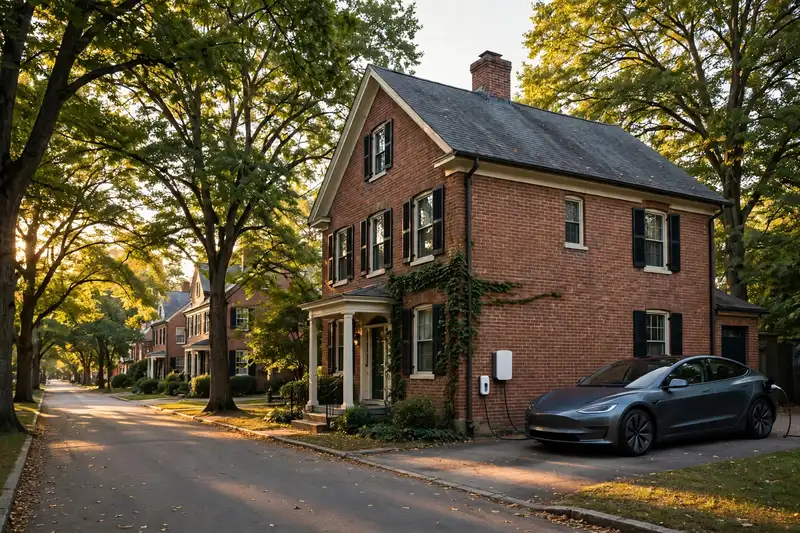
No statute promises a charger approval in Minnesota. Unlike the states that have enacted right-to-charge laws, Minnesota leaves the question entirely to each community's covenants and board discretion. For Minneapolis owners that is not the end of the road — it is a sign that the negotiation, the metering design and the written application carry the weight a statute would otherwise carry.
There is also a longer game available to Minneapolis owners: associations revise their documents, boards turn over, and state legislatures have been adding right-to-charge laws year after year. A written application — and, if it comes to it, a written refusal — is the record that each of those futures works from.
Our condo and HOA guide covers both kinds of state; in Minneapolis the chapters on complete applications and cost allocation are the operative ones.
Climate, garages and charger placement
Garage temperature is a charging feature here. An insulated garage that holds even a modest margin over the street's cold shortens the battery's warm-up and steadies winter range; a carport install accepts the full season and plans the circuit's headroom accordingly. Either works — they are simply different designs, and the site visit should name which one you own.
Snow management decides charger geography in cold metros more than any electrical factor: the station out of the plough's throw, the parking position out of the drift line, the cable route off the shovelled path. Walk the site in your head in February before signing the layout in June.

Permits and inspection in Minneapolis
Inspection day itself is undramatic by design: access to the panel and the station, the calculation on hand, the equipment's settings matching the circuit. Jobs fail inspection on paperwork mismatches far more often than on wiring — a fact that quietly grades installers.

Neighbourhoods and ZIP codes served
The page covers 69 ZIP codes in and around Minneapolis — including 55401, 55402, 55403, 55404, 55405, 55406, 55407, 55408, 55409, 55410, 55411, 55412, 55413, 55414, 55415, 55416, 55417, 55418, 55419, 55420, 55421, 55422, 55423, 55424, 55425, 55426, 55427, 55428, 55429, 55430, 55431, 55432, 55433, 55434, 55435, 55436, 55437, 55438, 55439, 55440, 55441, 55442, 55443, 55444, 55445, 55446, 55447, 55448, 55449, 55450, 55454, 55455, 55458, 55459, 55460, 55467, 55470, 55472, 55473, 55474 — across Anoka, Carver, Hennepin. If your ZIP is not in the first set shown, ask anyway: installer coverage follows the metro, not a postcode fence.
The same working area takes in the neighbouring localities of Saint Paul, Hopkins, Young America, Maple Plain, Loretto, Navarre, Osseo, Maple Grove, Eden Prairie, Minnetonka, Circle Pines, Champlin, Wayzata, Chanhassen — the county ring an installer based in Minneapolis actually drives. Requests from those communities route exactly as city requests do: same services, same permit discipline, same local facts where they differ.
Hennepin County accounts for 104 of the ZIP codes and 25 named postal localities in the research file, the nearest of them Saint Paul, Hopkins, Maple Plain, Loretto, Navarre. The survey counts 1,269,496 residents in the county, with a median household income of $97,653 and a median home value of $392,900. Carver County accounts for 22 of the ZIP codes and 14 named postal localities in the research file, the nearest of them Chanhassen, Chaska, Victoria, Carver, Waconia. The survey counts 110,041 residents in the county, with a median household income of $125,946 and a median home value of $453,600. Anoka County accounts for 12 of the ZIP codes and 7 named postal localities in the research file, the nearest of them Circle Pines, Andover, Anoka, Cedar, Bethel. The survey counts 370,349 residents in the county, with a median household income of $101,869 and a median home value of $346,500. Measured across its ZIP codes, the Minneapolis footprint runs about 25 miles north to south and 15 east to west, from ZIP 55401 to 55488 — the ground an installer based here actually covers in a working week.
Beyond the county seats, the working area takes in Saint Paul, Mendota, Hopkins, Navarre, Maple Plain, Young America, Loretto, Osseo, Maple Grove, Eden Prairie, Minnetonka, Circle Pines, South Saint Paul, Champlin, Inver Grove Heights, Wayzata, Burnsville, Savage, Stillwater, Newport, Chanhassen, Crystal Bay, Long Lake, Andover, Willernie, Excelsior, Minnetonka Beach, Hamel, Dayton, Rosemount, Saint Paul Park, Shakopee, Lake Elmo, Prior Lake, Spring Park, Cottage Grove, Lakeville, Rogers, Mound, Anoka, Chaska, Hugo, Farmington, Victoria, Cedar, Hanover, Forest Lake, Afton, Rockford, Saint Michael, Bayport, Vermillion, Saint Bonifacius, Lakeland, Albertville, Bethel, Saint Francis, Marine On Saint Croix, Elk River, Houlton, Jordan, Elko New Market, Hastings, Wyoming, Carver, Waconia, Delano, Hudson, Norwood, Castle Rock, Scandia, Hampton, Stacy, Watertown, Prescott, Cologne, Chisago City, Isanti, Somerset, Webster, Randolph, Mayer, New Prague, Montrose, River Falls, Lindstrom, Northfield, Belle Plaine, Lonsdale, Shafer, Norwood Young America, Roberts, New Germany, Osceola, Cambridge, North Branch, Welch, Dundas, New Richmond, Center City, Montgomery, Almelund, Hamburg, Star Prairie, Taylors Falls, Lester Prairie, Harris — the named localities for which Minneapolis is the nearest metro in the network (neighbouring metros' pages cover their own ground), each routing to the same installer-matching service.
The wider working area also reaches Buffalo, Big Lake, Monticello, Zimmerman, Waverly, Cannon Falls, Maple Lake, Dennison, Winsted, Becker, Howard Lake, Nerstrand — ground shared with neighbouring metros, where installers cross the same county lines in both directions.
ZIP codes in that shared ground include 55009, 55018, 55053, 55308, 55309, 55313, 55349, 55358, 55362, 55390, 55395, 55398, 55575, 55592.
The largest communities in that working area after Minneapolis itself, by the GeoNames populated-place file: Saint Paul (population 303,176), Bloomington (population 86,435), Brooklyn Park (population 79,149), Plymouth (population 75,907), Maple Grove (population 68,385), Woodbury (population 67,855), Eagan (population 66,286), Eden Prairie (population 63,496). Charging demand follows those populations — the subdivisions and town centres where the next driveways, and the next panels, are.
Ramsey County reaches into the working area with 542,945 residents, a median household income of $81,568 and a median home value of $326,600; its localities on this page include Saint Paul. Dakota County reaches into the working area with 445,771 residents, a median household income of $106,318 and a median home value of $381,000; its localities on this page include Mendota, Saint Paul.
| ZIP | Locality | County |
|---|---|---|
| 55401 | Minneapolis | Hennepin |
| 55467 | Minneapolis | Hennepin |
| 55473 | Minneapolis | Carver |
| 55440 | Minneapolis | Hennepin |
| 55458 | Minneapolis | Hennepin |
| 55459 | Minneapolis | Hennepin |
| 55460 | Minneapolis | Hennepin |
| 55470 | Minneapolis | Hennepin |
| 55472 | Minneapolis | Hennepin |
| 55474 | Minneapolis | Hennepin |
| 55478 | Minneapolis | Hennepin |
| 55479 | Minneapolis | Hennepin |
| 55480 | Minneapolis | Hennepin |
| 55483 | Minneapolis | Hennepin |
| 55484 | Minneapolis | Hennepin |
| 55485 | Minneapolis | Hennepin |
| 55486 | Minneapolis | Hennepin |
| 55487 | Minneapolis | Hennepin |
| 55488 | Minneapolis | Hennepin |
| 55402 | Minneapolis | Hennepin |
| 55415 | Minneapolis | Hennepin |
| 55413 | Minneapolis | Hennepin |
| 55403 | Minneapolis | Hennepin |
| 55404 | Minneapolis | Hennepin |
| 55454 | Minneapolis | Hennepin |
| 55455 | Minneapolis | Hennepin |
| 55411 | Minneapolis | Hennepin |
| 55405 | Minneapolis | Hennepin |
| 55414 | Minneapolis | Hennepin |
| 55408 | Minneapolis | Hennepin |
| 55418 | Minneapolis | Hennepin |
| 55407 | Minneapolis | Hennepin |
| 55412 | Minneapolis | Hennepin |
| 55409 | Minneapolis | Hennepin |
| 55114 | Saint Paul | Ramsey |
| 55406 | Minneapolis | Hennepin |
| 55416 | Minneapolis | Hennepin |
| 55422 | Minneapolis | Hennepin |
| 55421 | Minneapolis | Anoka |
| 55108 | Saint Paul | Ramsey |
| 55410 | Minneapolis | Hennepin |
| 55417 | Minneapolis | Hennepin |
| 55419 | Minneapolis | Hennepin |
| 55430 | Minneapolis | Hennepin |
| 55104 | Saint Paul | Ramsey |
| 55113 | Saint Paul | Ramsey |
| 55105 | Saint Paul | Ramsey |
| 55426 | Minneapolis | Hennepin |
| 55424 | Minneapolis | Hennepin |
| 55427 | Minneapolis | Hennepin |
| 55429 | Minneapolis | Hennepin |
| 55116 | Saint Paul | Ramsey |
| 55423 | Minneapolis | Hennepin |
| 55450 | Minneapolis | Hennepin |
| 55432 | Minneapolis | Anoka |
| 55111 | Saint Paul | Hennepin |
| 55112 | Saint Paul | Ramsey |
| 55436 | Minneapolis | Hennepin |
| 55103 | Saint Paul | Ramsey |
| 55428 | Minneapolis | Hennepin |
| 55435 | Minneapolis | Hennepin |
| 55441 | Minneapolis | Hennepin |
| 55102 | Saint Paul | Ramsey |
| 55164 | Saint Paul | Ramsey |
| 55150 | Mendota | Dakota |
| 55133 | Saint Paul | Ramsey |
| 55144 | Saint Paul | Ramsey |
| 55165 | Saint Paul | Ramsey |
| 55172 | Saint Paul | Ramsey |
| 55175 | Saint Paul | Ramsey |
| 55187 | Saint Paul | Ramsey |
| 55188 | Saint Paul | Ramsey |
| 55444 | Minneapolis | Hennepin |
| 55126 | Saint Paul | Ramsey |
| 55117 | Saint Paul | Ramsey |
| 55305 | Hopkins | Hennepin |
| 55439 | Minneapolis | Hennepin |
| 55155 | Saint Paul | Ramsey |
| 55425 | Minneapolis | Hennepin |
| 55442 | Minneapolis | Hennepin |
| 55145 | Saint Paul | Ramsey |
| 55170 | Saint Paul | Ramsey |
| 55101 | Saint Paul | Ramsey |
| 55420 | Minneapolis | Hennepin |
| 55443 | Minneapolis | Hennepin |
| 55130 | Saint Paul | Ramsey |
| 55131 | Saint Paul | Ramsey |
| 55120 | Saint Paul | Dakota |
| 55107 | Saint Paul | Ramsey |
| 55146 | Saint Paul | Ramsey |

Planning the install: from panel to parking
The order of operations protects you. Load calculation before equipment choice, because the circuit sizes the station's settings. Route before purchase, because reach decides models. Permit before work, because inspection closes the file the insurer will one day read. In Minneapolis the sequence is the same as everywhere — what varies is only how much of it your particular house asks for, and finding that out is the site visit's entire purpose.
Finally, photograph the finished work — station, nameplate, panel directory with the new breaker labelled — and file it with the inspection record. When the car changes, the house sells or a second station joins the first, that folder is the difference between a five-minute answer and an archaeological dig.
Home charging know-how for Minneapolis households
HOA rules and the single-family exterior
Owning the house does not always settle the charger's exterior chapter: architectural-approval clauses in many communities reach visible equipment, conduit runs on front elevations, and anything mounted streetside. The practical route is a five-minute check of the covenants before the install, and, where approval applies to exterior work, a small application — equipment photo, mounting position, conduit path — that reads as a courtesy because it is one. Interior garage installs in most single-family communities are entirely the owner's affair; it is the visible fraction that earns the paperwork.
The charger among workshop loads
Garages that double as workshops put the charger in interesting company: welders, compressors, dust collectors — loads with appetites and opinions. The load calculation for such a house reads the whole tenancy, and the honest conversation includes which loads genuinely coincide. A station scheduled into the workshop's quiet hours lives peacefully; one competing with the table saw's startup surge teaches the household about breaker curves the experiential way.
The new owner's first week
Week one with a home charger is about building the reflex: park, plug, forget. Set the schedule once, against your rate window; confirm the car wakes to the charge level your commute wants; learn where the station's indicator confirms a session at a glance from the door. By the second week the public-charging arithmetic of the old routine — detours, queues, weather — is already hard to remember. The households that struggle are the ones still treating the wall like a petrol station: sessions are not events, they are the background of parking.
Three cars, one driveway
Households with more vehicles than bays run a small nightly logistics operation, and charging joins the rotation. The patterns that work: the station positioned to serve two parking spots in sequence, a household habit about whose night it is, and — where two of the fleet are electric — power sharing that removes the rotation entirely. The design conversation should start from the household's actual parking choreography, observed on a normal evening, because the charger serves the pattern that exists, not the one the driveway promised.
Charging through the winter
Winter changes the arithmetic of home charging without changing its logic. A cold battery accepts energy more slowly and spends some of it on staying warm, so the same commute consumes more of the overnight window in January than in June. The household answers are unglamorous: park plugged in every night rather than in long sessions twice a week, let the car precondition from the wall before departure, and keep the connector holstered out of the weather. A Level 2 circuit with headroom absorbs all of this invisibly — which is precisely why northern households tend to size the circuit generously at install time rather than return to the question later.

Frequently asked questions
What happened to the federal home-charger credit in Minneapolis, MN?
The honest ledger for Minneapolis reads: federal credit, ended September 30, 2025; state program, none for typical home installs; Northern States Power Co - Minnesota residential rebate, none verified in the sources checked. If a salesperson's quote leans on any of the three, the correct response is a request for the program's published page.
What can my HOA in Minneapolis, MN do about a charger install?
As the law stands, yes: without a Minnesota right-to-charge statute, an association in Minneapolis may refuse or condition a charger under its own documents. The practical counterweight is preparation — a complete written package, a metering answer, and a request that the refusal, if it comes, be issued in writing with the covenant cited.
Does a Level 2 charger mean a panel upgrade for a Minneapolis, MN home?
Sometimes, and the honest route to the answer is arithmetic rather than opinion. Minneapolis's median home was built in 1954; roughly 72% of the stock predates 1980, which is where the 100-amp panels concentrate. If yours is one, expect the upgrade-or-management conversation; if it is a modern 200-amp service with spare spaces, expect a circuit. The site visit's calculation decides, and you are entitled to see it.
How quickly will a Level 2 charger fill my car in Minneapolis, MN?
In parked hours: a Level 1 cord returns about 3–5 miles for each of them, and a Level 2 circuit returns roughly 25–40, set by its amperage and the car's acceptance. For a Minneapolis household parking ten hours, that is the difference between recovering a short errand day and recovering any day the car can legally drive.
How does the installer matching on this page work?
Your request — service, Minneapolis ZIP, property type and timing — goes to licensed local installers who cover Minneapolis. They contact you directly to arrange a site visit and quote. PlugReady USA is the matching service, not the installer, and the sections above exist so you can judge any quote against the local facts.
Does Northern States Power Co - Minnesota offer a time-of-use rate for EV charging in Minneapolis?
Worth checking before the install, because it changes the setup rather than the circuit: if Northern States Power Co - Minnesota offers your address a time-of-use plan, the station's schedule is programmed to its overnight window at commissioning. The tariff pages or a call to the utility confirm your plan's windows; guessing from a neighbour's bill is how households end up charging at peak by default.
Nearby cities in Minnesota
- EV charger installation in St. Cloud — about 63 miles from Minneapolis, metro population 200,000
- EV charger installation in Rochester — about 77 miles from Minneapolis, metro population 230,000
- EV charger installation in Duluth — about 140 miles from Minneapolis, metro population 280,000
- EV charger installation in Eau Claire, WI — about 99 miles from Minneapolis, metro population 175,000
- EV charger installation in La Crosse, WI — about 140 miles from Minneapolis, metro population 140,000
- EV charger installation in Waterloo, IA — about 180 miles from Minneapolis, metro population 170,000
Ready to charge at home in Minneapolis?
Two minutes of form, and the request is in front of licensed installers who cover this city — quotes follow site visits, in writing.