EV Charger Installation in Appleton, WI
Charging where you park, in Appleton: the utility programs, state law, permit process and housing facts behind a home charger install, gathered in one place.
Start with the vehicle you already own and the driveway it already sleeps in: home charging succeeds when the electrical side is treated as a small building project rather than an accessory purchase. In Appleton that project has local coordinates. Appleton itself is home to about 74,439 people, inside a state counting 41,900 battery-electric vehicles and 18,600 plug-in hybrids through 2025. The utility serving your street, the vintage of your panel, the rules of your community and the habits of your permit office are the four coordinates — this page fixes each one for Appleton.
One honest note before the detail: PlugReady USA does not install chargers. We collect your requirements and pass them to licensed installers who cover Appleton, and this page exists so that you can judge those conversations with the local facts already in hand.
The demand picture for the Appleton metro, from the registration data this site is built on: Fox Cities. Registration counts are the honest way to size a charging market — they count households, not headlines — and they are why Appleton sits where it does in our build order (rank 158 of 300 metros, Tier C).
Survey context for Appleton, in the three lines installers actually use: median household income $82,155; owner-occupation at 68%; single-unit detached homes at 66%. Income tracks adoption pace, tenure decides whose signature a job needs, and structure decides whether the answer is a garage circuit or a building negotiation.

Put the survey together and Appleton's charging profile reads like this: an older housing fabric, where panel archaeology is a normal part of the first visit; a detached-house majority with a real attached and multifamily minority; buildings of five or more units are a visible minority of the stock; and owner-occupiers dominate, so most readers can approve their own electrical work outright. That combination — more than any single number — is what the installers working here plan around, and it is the lens for everything on this page.
In absolute terms, the survey counts 31,280 housing units in Appleton — 29,624 occupied, 20,110 of them by their owners. The stock resolves into 20,789 single-unit detached houses, 18,764 homes standing since before 1980, and 5,118 units in larger buildings. Those six counts are the city's charging map drawn without percentages, and every section of this page is a consequence of one of them. The page's geography is equally concrete: 6 ZIP codes across Outagamie, centred near 44.28 degrees north latitude. The city anchors the Appleton metropolitan area, home to roughly 245,000 people on the research file's metro estimate — the wider labour and housing market this page's installers work across.
The same survey release fills in the household economics around the housing stock: a median home value of $231,400, median gross rent of $1,030, per-capita income of $50,397, and a median resident age of 38. The movement data matters as much as the money data: 74% of Appleton workers drive to work alone — the commute pattern home charging is built around; 13% work from home, a population whose cars charge on daytime and overnight schedules alike; 1% commute by public transit; 38% of adults hold a bachelor's degree or higher. And the fleet in the driveways: 10,125 households in Appleton have exactly one vehicle, 18,262 have two or more, and 1,237 have none.
The cost-burden lines say who feels housing costs most in Appleton: 43% of renters spend 30% or more of income on rent, and 0% of owners with mortgages spend the same share on housing costs. Family households are 61% of all households — the two-car, school-run demographic whose charging patterns this page's planning sections keep circling back to.
This is the context an installer works against, whether it is written down or not. Where so much of the stock predates modern code cycles, the site visit doubles as a survey — grounding electrode, service entrance, panel provenance — before it is ever a quote. Where form is mixed, advice must be conditional — the honest page, like the honest installer, keeps asking which housing the reader actually lives in before prescribing.
An owner-majority market also writes its own references: every completed install is visible to the neighbours who share the owner's incentives, and the street-level demonstration effect compounds quietly. Value engineering is the local dialect: load management weighed against panel work on merit, quotes compared line by line, the site visit treated as the moment the scope becomes honest. The regulatory calendar is the programme calendar: rate cases, electrification plans and pilot approvals move through the commission on public timetables, and installers plan their marketing around them.
The state fleet is in its growth chapter: registrations climbing from a modest base, installer capacity being built ahead of demand, and early local precedents carrying outsized weight. The permit counter in a smaller city is a conversation, not a queue: applications are read by people who may know the street, and complete paperwork is remembered kindly. Boards here decide without a statutory script, which makes precedent the currency: the first well-built application in a community quietly writes the policy for everyone after it.
The electrical reality in Appleton homes
The Census Bureau counts Appleton's housing in ways that turn out to be an installer's briefing: the median home dates to 1974, 60% of units stood before 1980, 66% are detached single-unit houses, and 68% of occupied homes belong to their occupants. Panel sizes, wire routes and even permit histories track those proportions street by street. A housing stock this age leans on smaller electrical services — 100-amp panels are common, and fuse-era equipment still turns up in the oldest streets. For many of those homes the honest answer is a panel upgrade or a load-management device before the charger circuit goes in, and a good installer will show you the load calculation rather than asking you to take it on faith. Housing age also tracks wire-run reality: older homes more often place the panel in a basement or interior wall far from the garage, and distance is copper, conduit and labour.
The fuel table adds one more local fact: 5,472 Appleton homes — 18% of the stock — heat with electricity. Those households already think in kilowatts through the winter, their panels carry the load to prove it, and a charger's overnight appetite joins a system that is, in the useful sense, already electrified.
Renters are the other constituency in these numbers: about 9,514 of Appleton's occupied homes are rented rather than owned. Their charging route runs through a landlord conversation instead of a panel they control — a different project, covered by the rentals guide and the law section below, but a routine one in a city with this many renting households.
And 16% of Appleton's homes are in buildings with five or more units — apartments and condominiums where charging is a building decision before it is an electrical one. If that is your situation, the law and multifamily sections of this page are the ones written for you.
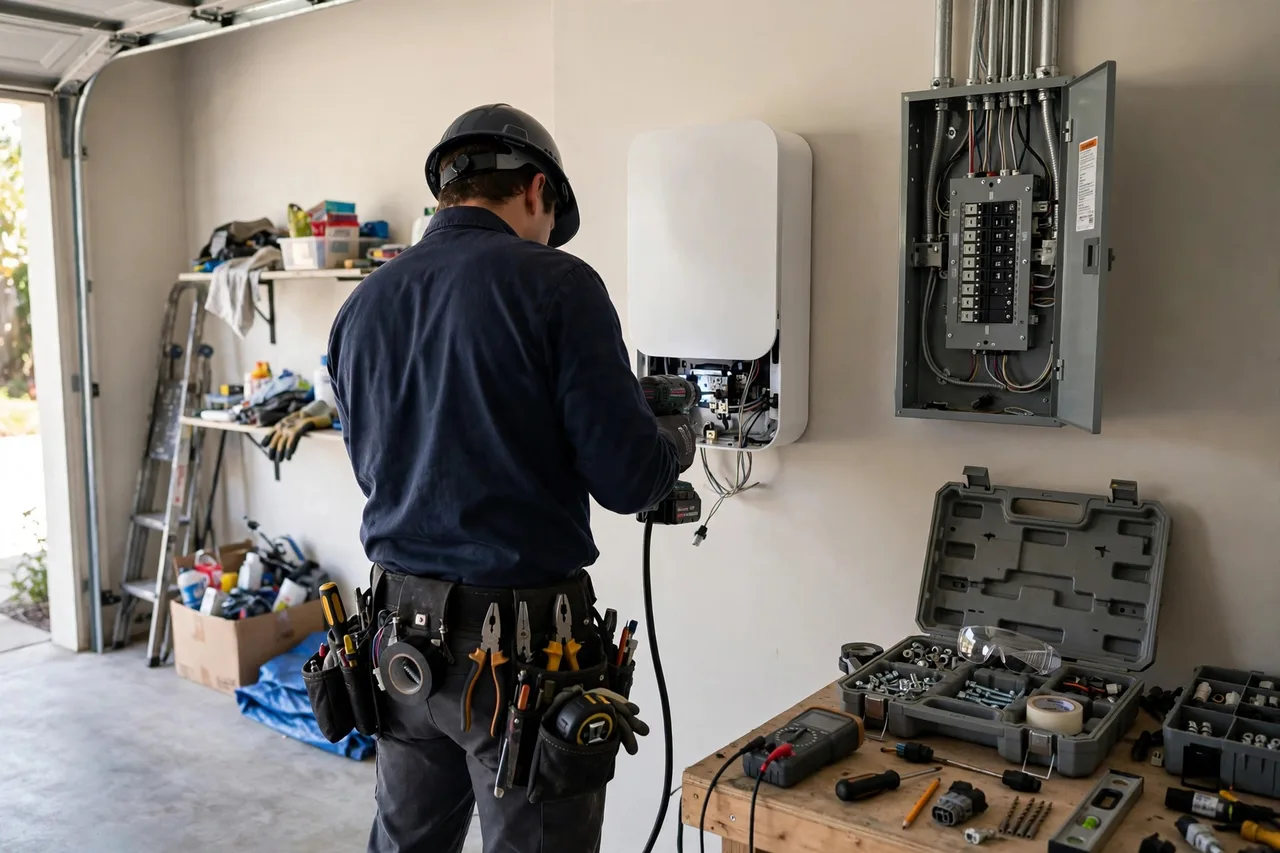
EV charging services in Appleton
The full menu runs to ten services; the three cards at the top are the ones Appleton's housing stock and state law push to the front. Everything links to its national service page for scope and process in full.
Home EV Charger Installation in Appleton
For most households this is the whole project: a Level 2 station mounted where the car sleeps, fed by its own 240-volt circuit. The visit pattern is consistent — load calculation, route the run, mount and configure, inspect — and the variables are your panel, your parking and your permit office.
In Appleton: the core residential job in Appleton: circuit, mounting, configuration and inspection in one visit pattern.
Dedicated Circuit & Electrical Panel Upgrade in Appleton
The capacity project behind the charger project. A load calculation decides whether the answer is a service increase, a panel replacement, a subpanel or load management — and the work is sequenced with the utility and the inspector so the house is live again the same day in most cases.
In Appleton: the capacity answer when Appleton's older panels meet a continuous load.
Level 2 Charger Installation in Appleton
Level 2 earns its keep on the worst week of the year: the cold snap, the back-to-back long days, the evening the car comes home empty with a dawn departure. A circuit sized for those weeks makes the ordinary ones invisible.
In Appleton: what most Appleton drivers mean when they say they want 'a real charger' — 240 volts, sized to the circuit.
Utility programs and electricity in Appleton
Electricity in Appleton comes from Wisconsin Electric Power Co. Parts of the wider metro are served by Wisconsin Public Service Corp, City of Kaukauna, New London Electric&Water Util. The utility matters twice over for a charger install: it sets the time-of-use rates that decide what overnight charging costs you, and it is the organisation that may — or may not — currently help pay for the equipment.
Plan on no rebate in Appleton at the moment. In the sources checked for this page, Wisconsin Electric Power Co publishes no residential charger rebate, Wisconsin runs no state scheme for typical home installs, and the federal credit that once filled this gap closed on September 30, 2025. Installers quote the work; utilities fund programs; the second list is currently empty here, and any quote that implies otherwise should come with the program's published terms attached.
Renters and condo owners should note the metering question early: whose meter the charger hangs off decides who pays for the energy, and Wisconsin Electric Power Co's options for submetering are part of the multifamily conversation below.
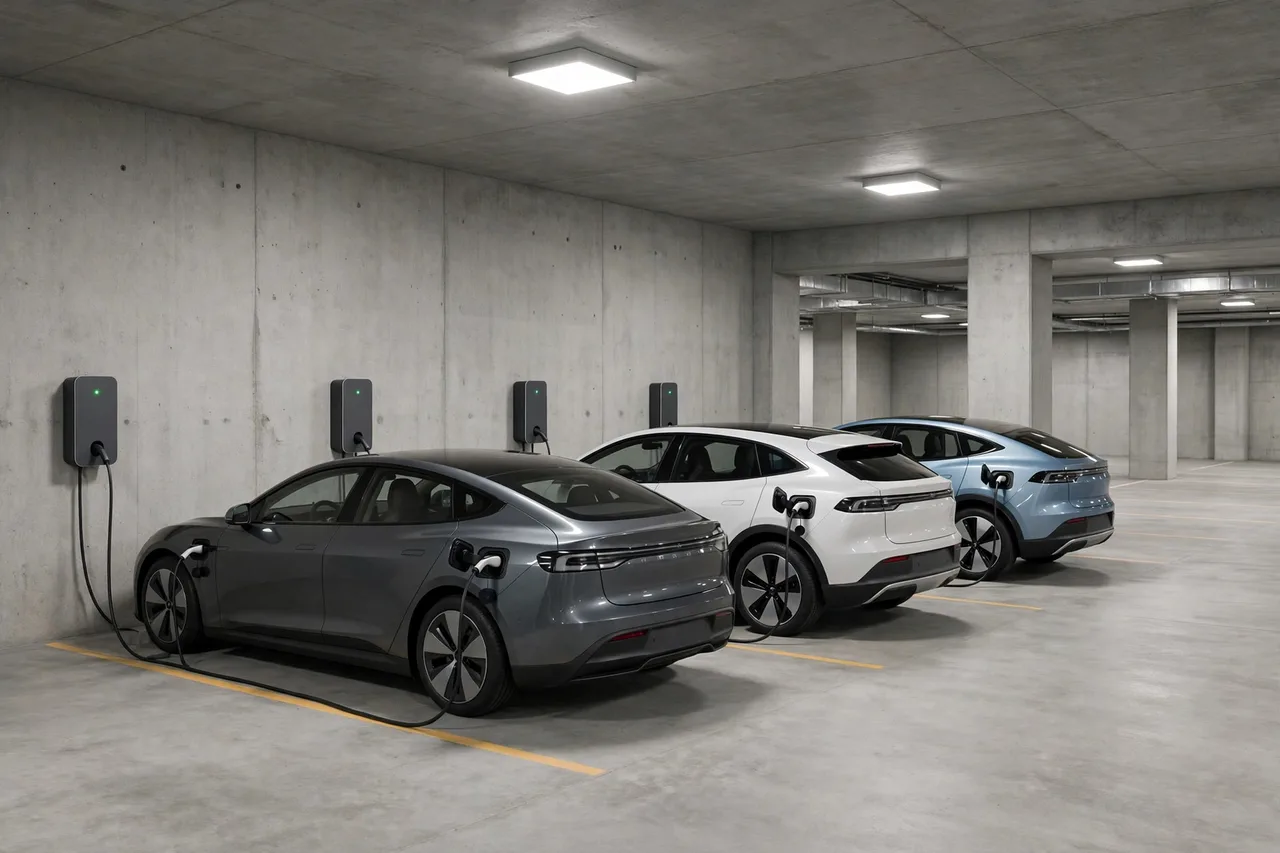
Condos, HOAs and the law in Wisconsin
There is no Wisconsin right-to-charge statute to lean on. Some national roundups list protection that does not exist in this state's code; the statute indexes checked for this page are clear. In Appleton, a condo or HOA charger is approved — or not — under the community's own documents, which makes the quality of your application the whole ballgame.
Owners of single-family homes in HOA communities should also check the covenants before assuming the driveway is uncomplicated: exterior-equipment and architectural-approval clauses can apply to a visible wall-mounted station even where the garage interior is entirely the owner's business.
Our condo and HOA guide covers both kinds of state; in Appleton the chapters on complete applications and cost allocation are the operative ones.
Climate, garages and charger placement
Garages here earn their insulation twice: once for the house, and once for the battery that prefers its nights merely cold rather than arctic. A plugged-in car sips what it needs to stay ready; the building's job is to narrow the gap it sips against.
Cord flexibility is a rated property, and January is when the rating is read. Cables specified for cold service coil and uncoil at temperatures that make lesser jackets crack; where the station is chosen locally, this line of the specification has already been read for you — one of the quieter values of a local installer.

Permits and inspection in Appleton
Inspection day itself is undramatic by design: access to the panel and the station, the calculation on hand, the equipment's settings matching the circuit. Jobs fail inspection on paperwork mismatches far more often than on wiring — a fact that quietly grades installers.
Neighbourhoods and ZIP codes served
The page covers 6 ZIP codes in and around Appleton — including 54911, 54912, 54913, 54914, 54915, 54919 — across Outagamie. If your ZIP is not in the first set shown, ask anyway: installer coverage follows the metro, not a postcode fence.
The same working area takes in the neighbouring localities of Kimberly, Combined Locks, Little Chute, Kaukauna, Greenville, Freedom, Hortonville, Black Creek, Dale, Seymour, Shiocton, Oneida, Nichols, Bear Creek — the county ring an installer based in Appleton actually drives. Requests from those communities route exactly as city requests do: same services, same permit discipline, same local facts where they differ.
Outagamie County accounts for 20 of the ZIP codes and 15 named postal localities in the research file, the nearest of them Kimberly, Combined Locks, Little Chute, Kaukauna, Greenville. The survey counts 192,826 residents in the county, with a median household income of $85,069 and a median home value of $267,300. Measured across its ZIP codes, the Appleton footprint runs about 12 miles north to south and 5 east to west, from ZIP 54911 to 54919 — the ground an installer based here actually covers in a working week.
Beyond the county seats, the working area takes in Kimberly, Menasha, Combined Locks, Little Chute, Kaukauna, Neenah, Greenville, Sherwood, Freedom, Wrightstown, Hortonville, Black Creek, Forest Junction, Hilbert, Stockbridge, Dale, Winnebago, Larsen, New Holstein, Shiocton, Butte Des Morts, Brillion, Oshkosh, Potter, Nichols, Readfield, Winneconne, Chilton, New London, Fremont, Omro, Collins, Bear Creek, Malone, Van Dyne, Waukau, Weyauwega, Eureka, Clintonville, Pickett, Manawa, Embarrass, Saint Nazianz, Kiel, Eldorado, Mount Calvary, Poy Sippi, Ogdensburg, Saint Cloud, Fond Du Lac, Rosendale, Pine River, Berlin, Shawano, Elkhart Lake, Marion, Ripon, Greenbush, Glenbeulah, Waupaca, Saxeville, Eden, Caroline, Big Falls, King, Oakfield, Redgranite, Plymouth, Green Lake, Iola, Leopolis, Brandon, Scandinavia, Wild Rose, Fairwater — the named localities for which Appleton is the nearest metro in the network (neighbouring metros' pages cover their own ground), each routing to the same installer-matching service.
The wider working area also reaches Seymour, Green Bay, Oneida, Greenleaf, De Pere, Reedsville, Pulaski, Bonduel, Zachow, Denmark, Suamico, Whitelaw, Maribel, Valders, Kellnersville, Sobieski, Krakow, Green Valley, Cecil, Little Suamico, New Franken, Francis Creek, Newton, Abrams, Manitowoc, Mishicot, Luxemburg, Cleveland, Tisch Mills, Gillett, Oconto Falls — ground shared with neighbouring metros, where installers cross the same county lines in both directions.
ZIP codes in that shared ground include 53015, 53063, 54101, 54107, 54111, 54115, 54124, 54126, 54127, 54137, 54141, 54162, 54165, 54171, 54173, 54182, 54208, 54214, 54215, 54217, 54220, 54227, 54228, 54229, 54230, 54240, 54245, 54247, 54301, 54302, 54303, 54304, 54305, 54306, 54307, 54308, 54311, 54313, 54324, 54344.
The largest communities in that working area after Appleton itself, by the GeoNames populated-place file: Oshkosh (population 66,555), Fond du Lac (population 42,933), Wausau (population 39,094), Stevens Point (population 26,604), Neenah (population 25,792), Wisconsin Rapids (population 17,897), Menasha (population 17,572), Kaukauna (population 15,854), Weston (population 15,069), Plover (population 12,319), Waupun (population 11,343), Little Chute (population 11,026), Merrill (population 9,233), Shawano (population 9,128), Plymouth (population 8,505), Antigo (population 7,869), Ripon (population 7,700), Kronenwetter (population 7,630), Harrison (population 7,302), New London (population 7,172). Charging demand follows those populations — the subdivisions and town centres where the next driveways, and the next panels, are.
Winnebago County reaches into the working area with 171,769 residents, a median household income of $74,925 and a median home value of $225,800; its localities on this page include Menasha, Neenah, Winnebago, Larsen. Waupaca County reaches into the working area with 51,569 residents, a median household income of $72,830 and a median home value of $211,400; its localities on this page include Readfield, New London, Fremont, Weyauwega, Clintonville. Fond du Lac County reaches into the working area with 104,137 residents, a median household income of $74,275 and a median home value of $222,800; its localities on this page include Malone, Van Dyne, Eldorado, Mount Calvary, Saint Cloud. Calumet County reaches into the working area with 52,942 residents, a median household income of $88,810 and a median home value of $274,200; its localities on this page include Sherwood, Forest Junction, Hilbert, Stockbridge, New Holstein. Waushara County reaches into the working area with 24,868 residents, a median household income of $67,107 and a median home value of $203,100; its localities on this page include Poy Sippi, Pine River, Saxeville, Redgranite, Wild Rose.
| ZIP | Locality | County |
|---|---|---|
| 54911 | Appleton | Outagamie |
| 54914 | Appleton | Outagamie |
| 54136 | Kimberly | Outagamie |
| 54915 | Appleton | Outagamie |
| 54952 | Menasha | Winnebago |
| 54113 | Combined Locks | Outagamie |
| 54140 | Little Chute | Outagamie |
| 54913 | Appleton | Outagamie |
| 54130 | Kaukauna | Outagamie |
| 54957 | Neenah | Winnebago |
| 54942 | Greenville | Outagamie |
| 54956 | Neenah | Winnebago |
| 54169 | Sherwood | Calumet |
| 54131 | Freedom | Outagamie |
| 54912 | Appleton | Outagamie |
| 54919 | Appleton | Outagamie |
| 54180 | Wrightstown | Brown |
| 54944 | Hortonville | Outagamie |
| 54106 | Black Creek | Outagamie |
| 54123 | Forest Junction | Calumet |
| 54129 | Hilbert | Calumet |
| 53088 | Stockbridge | Calumet |
| 54931 | Dale | Outagamie |
| 54985 | Winnebago | Winnebago |
| 54947 | Larsen | Winnebago |
| 53062 | New Holstein | Calumet |
| 54170 | Shiocton | Outagamie |
| 54927 | Butte Des Morts | Winnebago |
| 54110 | Brillion | Calumet |
| 54901 | Oshkosh | Winnebago |
| 54903 | Oshkosh | Winnebago |
| 54906 | Oshkosh | Winnebago |
| 54160 | Potter | Calumet |
| 54152 | Nichols | Outagamie |
| 54904 | Oshkosh | Winnebago |
| 54902 | Oshkosh | Winnebago |
| 54969 | Readfield | Waupaca |
| 54986 | Winneconne | Winnebago |
| 53014 | Chilton | Calumet |
| 54961 | New London | Waupaca |
| 54940 | Fremont | Waupaca |
| 54963 | Omro | Winnebago |
| 54207 | Collins | Manitowoc |
| 54922 | Bear Creek | Outagamie |
| 53049 | Malone | Fond du Lac |
| 53061 | New Holstein | Calumet |
| 54979 | Van Dyne | Fond du Lac |
| 54980 | Waukau | Winnebago |
| 54983 | Weyauwega | Waupaca |
| 54934 | Eureka | Winnebago |
| 54929 | Clintonville | Waupaca |
| 54964 | Pickett | Winnebago |
| 54949 | Manawa | Waupaca |
| 54933 | Embarrass | Waupaca |
| 54232 | Saint Nazianz | Manitowoc |
| 53042 | Kiel | Manitowoc |
| 54932 | Eldorado | Fond du Lac |
| 53057 | Mount Calvary | Fond du Lac |
| 54967 | Poy Sippi | Waushara |
| 54962 | Ogdensburg | Waupaca |
| 53079 | Saint Cloud | Fond du Lac |
| 54936 | Fond Du Lac | Fond du Lac |
| 54935 | Fond Du Lac | Fond du Lac |
| 54974 | Rosendale | Fond du Lac |
| 54965 | Pine River | Waushara |
| 54923 | Berlin | Green Lake |
| 54166 | Shawano | Shawano |
| 54937 | Fond Du Lac | Fond du Lac |
| 53020 | Elkhart Lake | Sheboygan |
| 54950 | Marion | Waupaca |
| 54971 | Ripon | Fond du Lac |
| 53026 | Greenbush | Sheboygan |
| 53023 | Glenbeulah | Sheboygan |
| 54981 | Waupaca | Waupaca |
| 54976 | Saxeville | Waushara |
| 53019 | Eden | Fond du Lac |
| 54928 | Caroline | Shawano |
| 54926 | Big Falls | Waupaca |
| 54946 | King | Waupaca |
| 53065 | Oakfield | Fond du Lac |
| 54970 | Redgranite | Waushara |
| 53073 | Plymouth | Sheboygan |
| 54941 | Green Lake | Green Lake |
| 54990 | Iola | Waupaca |
| 54948 | Leopolis | Shawano |
| 53919 | Brandon | Fond du Lac |
| 54977 | Scandinavia | Waupaca |
| 54945 | Iola | Waupaca |
| 54984 | Wild Rose | Waushara |
| 53931 | Fairwater | Fond du Lac |

Planning the install: from panel to parking
Walk the route before anyone quotes the route. Between Appleton's panels and its parking spaces lie the job's real variables: a finished ceiling or an open one, a straight shot through a shared wall or a tour of the attic, forty feet of conductor or a hundred and forty. Installers who quote from photographs quote the average of all routes; installers who walk yours quote the one you actually have. The site visit is where the quote stops being a genre and becomes a document.
Plan for the household you will be, not just the car you have. A second EV is the most common reason a charger circuit gets revisited, and the cheap moment to prepare for it — conduit sized up, panel capacity reserved, station placement that serves two bays — is during the first install, while the permit is open and the electrician is already in the panel.
Home charging know-how for Appleton households
Breakers: the household's safety switches
A breaker is a switch that watches current and opens when the current stops being safe — heat in a conductor is the thing it exists to prevent. Two household rules follow. First, a tripping breaker is reporting, not malfunctioning by default: reset once, and if it repeats, the circuit gets an electrician, not another reset. Second, the forbidden fix: never answer a trip by fitting a larger breaker. The breaker protects the wire in the wall; upsizing the guard without upsizing the wire removes the protection and keeps the problem.
Etiquette for shared stations
Shared stations run on norms before they run on rules. The norms that work: move the car when the session ends, coil the cable for the next driver, report a fault rather than stepping over it, and never unplug a stranger's session except under the building's posted arrangement. Buildings formalise this gradually — a group message thread, a simple rota in high season — and the households that start with courtesy rarely need the formal version. The equipment is shared; so is the goodwill it runs on.
What an outage does and does not change
When the grid goes down, a standard home charging station goes quiet with everything else — it is a load, not a source, and it neither drains the car nor feeds the house. Sessions resume or restart when power returns, and the car's own settings govern which. Households in outage country plan around this plainly: charge ahead of forecast storms the way you would fill a fuel tank, and treat the car as the household's largest battery-shaped object — one that, with today's standard equipment, keeps its energy to itself.
Long runs and voltage drop
Distance taxes a circuit twice: in materials, and in voltage. A long run at charging currents loses voltage along its length, and the code's remedy is conductor sized a step beyond the minimum so the station at the far end still receives what it expects. This is one of the reasons a detached structure or a far-corner panel turns a simple circuit into a designed one — the arithmetic is easy, but it has to be done, and it is invisible in any quote that scopes the job from the charger box alone. The site visit is where the tape measure settles it.

Frequently asked questions
What happened to the federal home-charger credit in Appleton, WI?
The three possible pots are all, at present, empty for a Appleton homeowner: no Wisconsin Electric Power Co residential rebate in current published sources, no Wisconsin home programme, and a federal credit that closed on September 30, 2025. Programmes do relaunch — on the utility's site, with dates — and until one does, the honest quote is the one with no rebate line at all.
Can my HOA or condo board in Appleton, WI refuse my charger?
As the law stands, yes: without a Wisconsin right-to-charge statute, an association in Appleton may refuse or condition a charger under its own documents. The practical counterweight is preparation — a complete written package, a metering answer, and a request that the refusal, if it comes, be issued in writing with the covenant cited.
Will my Appleton, WI home need a panel upgrade for a Level 2 charger?
The question has a correct instrument: the load calculation. It totals what your service already carries — with the code's demand factors, not nameplate panic — and sets the charger's continuous load against the remainder. In Appleton, where the median home dates to 1974 and about 60% of units predate 1980, the answer splits by street: post-war and newer 200-amp homes usually proceed; older 100-amp homes choose between capacity work and load management. Anyone answering without the calculation is guessing in a uniform.
Level 1 or Level 2 in Appleton, WI — what is the real difference?
Level 2 is several-fold faster in the only unit that matters — miles back per hour parked: roughly 25–40 against Level 1's 3–5. The exact figure follows the circuit: a 40-amp circuit and a 60-amp circuit are both Level 2, and the car's onboard limit may sit below either. Your installer matches the three numbers at the site visit.
How does the installer matching on this page work?
Three things happen, in order. Your request is routed to licensed installers who work in Appleton; one of them contacts you to book a site visit; and the visit produces a written quote based on your actual panel and parking. PlugReady USA runs the matching, not the tools — the contractor on the job is the installer who visits.
Do installers cover the communities around Appleton, WI?
Yes — an installer's working area is the county ring, not the city limit. From this page the same request flow covers Kimberly, Combined Locks, Little Chute, Kaukauna, Greenville and the rest of Appleton's surrounding localities, under the same permit discipline and the same local facts where they differ.
Nearby cities in Wisconsin
- EV charger installation in Green Bay — about 25 miles from Appleton, metro population 330,000
- EV charger installation in Milwaukee — about 90 miles from Appleton, metro population 1,575,000
- EV charger installation in Madison — about 101 miles from Appleton, metro population 700,000
- EV charger installation in La Crosse — about 159 miles from Appleton, metro population 140,000
- EV charger installation in Eau Claire — about 174 miles from Appleton, metro population 175,000
- EV charger installation in Rockford, IL — about 143 miles from Appleton, metro population 340,000
- EV charger installation in Chicago, IL — about 171 miles from Appleton, metro population 9,450,000
- EV charger installation in Dubuque, IA — about 175 miles from Appleton, metro population 100,000
Ready to charge at home in Appleton?
Send the essentials — what you need, where, and what kind of property — and a licensed local installer will pick it up from there.