EV Charger Installation in Chicago, IL
Charging where you park, in Chicago: the utility programs, state law, permit process and housing facts behind a home charger install, gathered in one place.
Ask EV owners in Chicago what changed their routine and most give the same answer: the car charges where it parks. Chicago itself is home to about 2,721,326 people. Statewide, Illinois counted 164,900 battery-electric vehicles and 51,600 plug-in hybrids on the road through 2025, and the metro's share of that fleet keeps growing. A home charger installation is not complicated, but it is local — the utility that serves your street, the age of your panel, your community's rules and your city's permit office all shape the job. This page pulls those Chicago specifics together in one place, with the numbers sourced rather than rounded into slogans.
One honest note before the detail: PlugReady USA does not install chargers. We collect your requirements and pass them to licensed installers who cover Chicago, and this page exists so that you can judge those conversations with the local facts already in hand.
Rank 16 of 300 in this network, Tier A — the placement is arithmetic, and the arithmetic is: IL 164.9K BEVs; ComEd territory; IL right-to-charge. For the homeowner reading, the consequence is a mature local market: electricians who quote this work from experience rather than from a manual.
The same survey puts median household income in Chicago at $80,613, with 47% of occupied homes owner-occupied and 25% of the housing stock single-unit detached. For charging, those are the operative facts: owners can approve their own electrical work, and detached homes put the car, the panel and the parking under one roof.

Every city charges differently, and Chicago's difference is legible in the data: an older housing fabric, where panel archaeology is a normal part of the first visit; a genuinely mixed city — houses, townhouses and larger buildings all carry weight; buildings of five or more units hold a substantial share of homes, which keeps the multifamily sections of this page in daily use; renters form a large share of households, so the landlord conversation is a first-class topic here. Read the sections below through that profile and the local advice resolves into specifics — which questions are routine here, and which are rare.
The counts behind the percentages, for the record: Chicago has 1,282,248 housing units on the survey's count, 1,172,455 of them occupied, and 545,596 owner-occupied households making their own electrical decisions. Detached houses number 326,271; homes built before 1980 number 938,468; units in buildings of five or more number 572,825. An installer's week in this city is a walk through exactly that distribution. The page's geography is equally concrete: 84 ZIP codes across Cook, centred near 41.89 degrees north latitude. The city anchors the Chicago–Naperville–Elgin metropolitan area, home to roughly 9,450,000 people on the research file's metro estimate — the wider labour and housing market this page's installers work across.
The same survey release fills in the household economics around the housing stock: a median home value of $341,200, median gross rent of $1,486, per-capita income of $51,976, and a median resident age of 36. How the city moves completes the picture: 44% of Chicago workers drive to work alone — the commute pattern home charging is built around; 18% work from home, a population whose cars charge on daytime and overnight schedules alike; 20% commute by public transit; 46% of adults hold a bachelor's degree or higher. The survey's vehicle table is the one an EV page should quote first: 321,432 of Chicago's households have no vehicle at all, while 319,454 have two or more — the multi-car households for whom the second circuit is a when, not an if.
The cost-burden lines say who feels housing costs most in Chicago: 47% of renters spend 30% or more of income on rent, and 0% of owners with mortgages spend the same share on housing costs. Family households are 49% of all households — the two-car, school-run demographic whose charging patterns this page's planning sections keep circling back to.
None of these facts is trivia; each one moves a real decision in the project. Where so much of the stock predates modern code cycles, the site visit doubles as a survey — grounding electrode, service entrance, panel provenance — before it is ever a quote. The renter-and-condo share makes the law section of this page load-bearing: statutory rights, application windows and metering rules are not fine print here, they are the project's first phase.
High renter share also means charging follows the lease cycle: applications cluster at move-in, installations at renewal leverage, and the whole market breathes on the rental calendar. The specification pattern at this income band is disciplined: capacity for today's car and a conduit sized for tomorrow's, the upgrade deferred until the load calculation insists. Tariff design is the quiet policy: the shape of the overnight window, the demand charges commercial customers face, the interconnection queue's pace — all set in dockets the diligent can read.
The used-EV wave has arrived at this fleet scale, and it democratises the install question: households that bought electric second-hand, at family-car money, asking the same panel questions as the pioneers — with better local answers available. In a market this size the matching problem inverts: not finding an installer, but filtering — licence, charging specialism, diary, and references from your own quadrant of the metro. The association dimension, at least, comes with a statutory frame in this state — the law section above sets out what boards may and may not do, and applications written inside that frame travel noticeably faster.
The electrical reality in Chicago homes
Four numbers organise everything an installer expects in Chicago: median build year 1954; 73% of units built before 1980; 25% of the stock detached; 47% of occupied homes owner-occupied. Capacity, circuit routes and approval layers all correlate with those four. The paragraphs below are their commentary. Age shows up electrically before it shows up anywhere else: services sized for a house with a third of today's appliances. Expect the first conversation to be about capacity — what the panel is, what it already feeds, and which of the three routes (circuit, management, upgrade) your numbers support. Garages here earn their keep across the year — workshop, storage and storm shelter by turns — so a station position that survives the household's real parking pattern matters more than the technically neatest wall.
The fuel table adds one more local fact: 216,190 Chicago homes — 18% of the stock — heat with electricity. Those households already think in kilowatts through the winter, their panels carry the load to prove it, and a charger's overnight appetite joins a system that is, in the useful sense, already electrified.
Renters are the other constituency in these numbers: about 626,859 of Chicago's occupied homes are rented rather than owned. Their charging route runs through a landlord conversation instead of a panel they control — a different project, covered by the rentals guide and the law section below, but a routine one in a city with this many renting households.
One more structural fact shapes Chicago's charging map: 45% of the city's housing units sit in buildings of five or more units. Those households cannot simply book a circuit — their charger runs through a building, a board and a shared electrical service, which is why the multifamily service and the law section below carry unusual weight on this page.
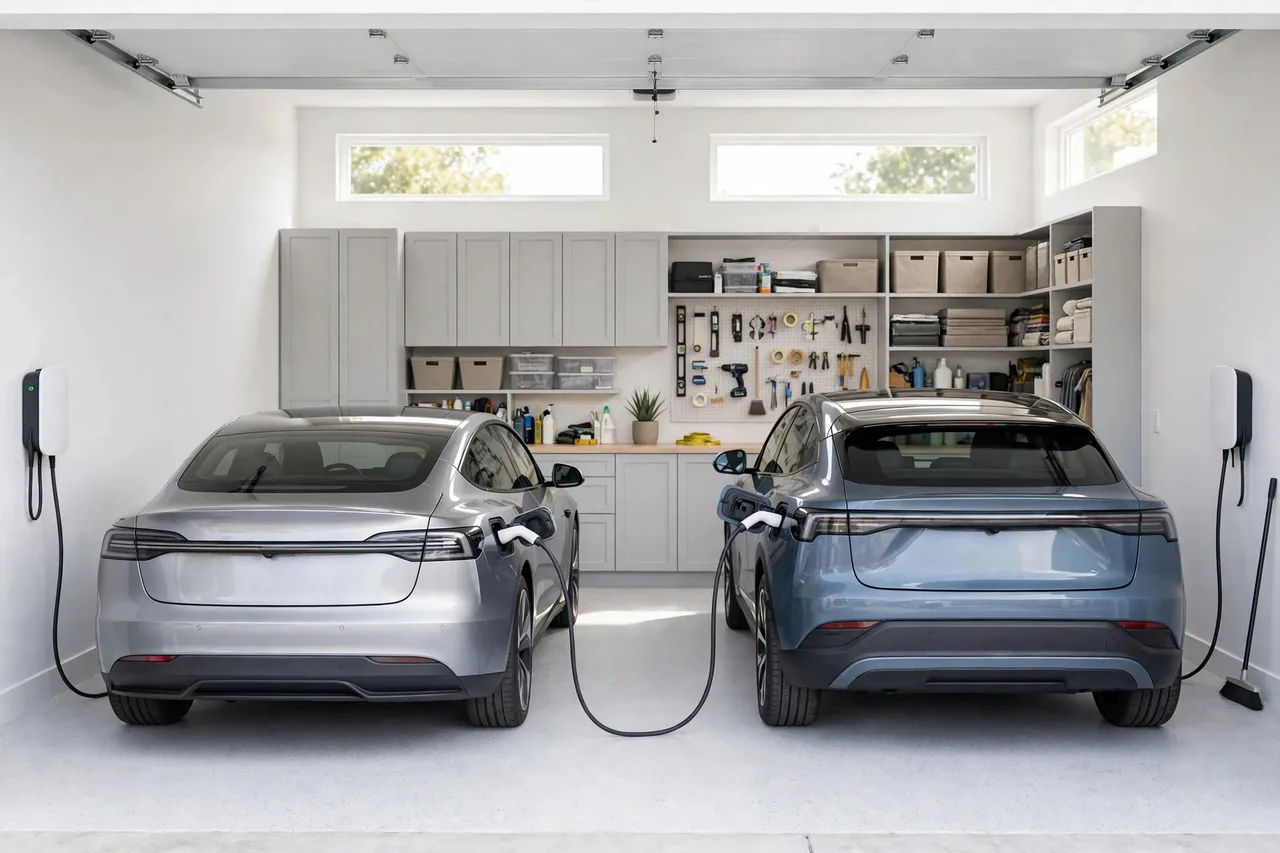
EV charging services in Chicago
Installers in Chicago book the same ten services as everywhere — but not in the same proportions. The three leading cards below are this city's pattern, set by its panels, its buildings and its statute book.
Home EV Charger Installation in Chicago
One circuit, one station, one inspection: the residential install in its usual form. An installer sizes the circuit to the household's driving, mounts the station where the cable reaches the port without drama, sets its output to the circuit it landed on, and leaves the paperwork filed with the house.
In Chicago: the default first install for Chicago's EV households — a station where the car already parks.
Dedicated Circuit & Electrical Panel Upgrade in Chicago
When the arithmetic says the service is full, this is the enabling job: a larger panel, or a new dedicated circuit with capacity planned in, done under the same permit umbrella as the charger it feeds. It is also the upgrade the rest of the house quietly benefits from for decades.
In Chicago: service work that turns 'no room' into a circuit with headroom in Chicago homes.
Multifamily & Condo EV Charging in Chicago
Shared buildings convert charging from a purchase into a policy, and the installers fluent here speak both languages — amperage and agenda items. The electrical design that wins approval is the one whose metering and load answers arrive attached to the application.
In Chicago: constitutions for shared charging in Chicago buildings: metering, load and approvals.
Utility programs and electricity in Chicago
Electricity in Chicago comes from Commonwealth Edison Co. Parts of the wider metro are served by Village of Winnetka, University of Illinois. The utility matters twice over for a charger install: it sets the time-of-use rates that decide what overnight charging costs you, and it is the organisation that may — or may not — currently help pay for the equipment.
Why does this page labour the absence of a rebate? Because in Chicago the phantom rebate is the most common distortion in charger quotes: a figure justified by money that is not, at present, claimable. The verified position: federal 30C ended September 30, 2025; no Illinois replacement for typical home installs; no Commonwealth Edison Co residential charger rebate in the sources checked. If someone quotes you a rebate, the follow-up is one sentence — show me the program page — and its answer decides the quote's credibility.
If your service includes a demand component, the charger's start time matters more than its size: staggered against the house's other big loads, the same circuit costs noticeably less to run across a year.
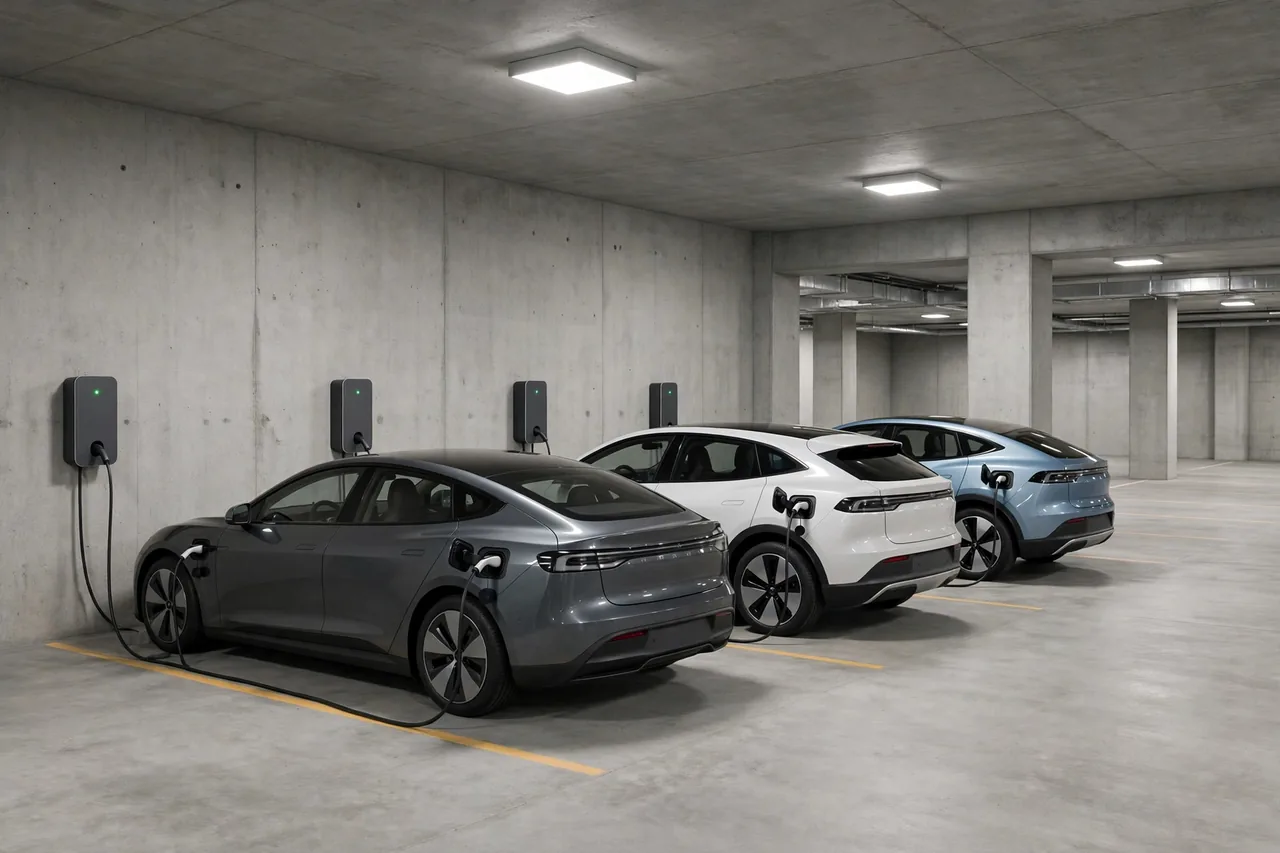
Condos, HOAs and the law in Illinois
Charging is a protected right for association owners in Illinois. The state's right-to-charge statute (765 ILCS 160/1-45) stops a homeowners association or condominium from banning an owner's charging station outright. Conditions still exist — placement, appearance, insurance and restoration can all be regulated, and the owner pays — yet the starting position is yes-with-rules rather than no-unless-persuaded, and that difference decides most applications before they are written.
If your board is stalling, the sequence that works in Chicago is boring and effective: cite the statute, submit a complete application (equipment, circuit, installer licence, insurance), and keep everything in writing.
Read the full process in our guide to installing an EV charger in a condo or HOA community, and the multifamily and condo charging service page for how shared and assigned-space installs are designed.
Climate, garages and charger placement
Seasonal scheduling is the quiet optimisation here: summer peaks and winter range loss both argue for charging deep in the overnight window, when rates and temperatures are kindest. Set the schedule once, in the car or the station, and the seasons stop appearing in the household's charging routine at all.
Garages in this region do double duty across the year — summer's workshop, winter's storage — and the charger competes for wall space with all of it. Mounting height, cable reach and a holster placed for the car's real parking position decide whether the station is used daily or negotiated with. The installer who measures the car in place is designing for the household you actually are.

Permits and inspection in Chicago
Inspection day itself is undramatic by design: access to the panel and the station, the calculation on hand, the equipment's settings matching the circuit. Jobs fail inspection on paperwork mismatches far more often than on wiring — a fact that quietly grades installers.

Neighbourhoods and ZIP codes served
The page covers 84 ZIP codes in and around Chicago — including 60601, 60602, 60603, 60604, 60605, 60606, 60607, 60608, 60609, 60610, 60611, 60612, 60613, 60614, 60615, 60616, 60617, 60618, 60619, 60620, 60621, 60622, 60623, 60624, 60625, 60626, 60628, 60629, 60630, 60631, 60632, 60633, 60634, 60636, 60637, 60638, 60639, 60640, 60641, 60642, 60643, 60644, 60645, 60646, 60647, 60649, 60651, 60652, 60653, 60654, 60655, 60656, 60657, 60659, 60660, 60661, 60664, 60666, 60668, 60669 — across Cook. If your ZIP is not in the first set shown, ask anyway: installer coverage follows the metro, not a postcode fence.
The same working area takes in the neighbouring localities of Oak Lawn, Bedford Park, Cicero, Oak Park, Berwyn, Lincolnwood, Evanston, Forest Park, River Forest, Elmwood Park, Riverside, Hines, Skokie, Harwood Heights — the county ring an installer based in Chicago actually drives. Requests from those communities route exactly as city requests do: same services, same permit discipline, same local facts where they differ.
Cook County accounts for 213 of the ZIP codes and 94 named postal localities in the research file, the nearest of them Oak Lawn, Bedford Park, Cicero, Oak Park, Berwyn. The survey counts 5,182,090 residents in the county, with a median household income of $83,498 and a median home value of $324,500. Measured across its ZIP codes, the Chicago footprint runs about 24 miles north to south and 16 east to west, from ZIP 60601 to 60701 — the ground an installer based here actually covers in a working week.
Beyond the county seats, the working area takes in Oak Lawn, Bedford Park, Cicero, Oak Park, Berwyn, Lincolnwood, Evanston, Forest Park, River Forest, Elmwood Park, Riverside, Hines, Skokie, Harwood Heights, Evergreen Park, Hometown, Lyons, Maywood, River Grove, Burbank, Melrose Park, Broadview, Brookfield, Summit Argo, Bridgeview, Bellwood, Wilmette, Morton Grove, Franklin Park, Stone Park, La Grange Park, Niles, Schiller Park, Westchester, Kenilworth, Park Ridge, Golf, Justice, Chicago Ridge, La Grange, Hillside, Whiting, Glenview, Hickory Hills, Berkeley, Blue Island, Alsip, Riverdale, Worth, Des Plaines, Western Springs, Winnetka, Palos Hills, Robbins, Willow Springs, Elmhurst, Dolton, Crestwood, Hinsdale, Palos Heights, Posen, Wood Dale, Bensenville, Hammond, Midlothian, Glencoe, Calumet City, Harvey, Techny, East Chicago, Oak Brook, Clarendon Hills, Villa Park, South Holland, Willowbrook, Palos Park, Markham, Northbrook, Oak Forest, Elk Grove Village, Westmont, Mount Prospect, Thornton, Addison, Hazel Crest, Lombard, Orland Park, Darien, Lansing, Downers Grove, Highland Park, Homewood, Itasca, Country Club Hills, Lemont, Tinley Park, Prospect Heights, Glenwood, Gary, Arlington Heights, Deerfield, Munster, Flossmoor, Wheeling, Highwood, Fort Sheridan, Glen Ellyn, Medinah, Highland, Woodridge, Glendale Heights, Rolling Meadows, Bloomingdale, Olympia Fields, Chicago Heights, Carol Stream, Wheaton, Naperville, Aurora, Fox Valley, Palatine, Schaumburg, Griffith, Roselle, Matteson, Lisle, Buffalo Grove, Homer Glen, Lake Forest, Lincolnshire, Hoffman Estates, Dyer, Park Forest, Frankfort, Richton Park, Schererville, Mokena, Steger, Bolingbrook, Lake Station, Winfield, Hanover Park, Romeoville, Barrington, Lake Bluff, Vernon Hills, Merrillville, Crete, University Park, Saint John, Lockport, Streamwood, Great Lakes, Warrenville, Hobart, West Chicago, New Lenox, Libertyville, Portage, North Chicago, Bartlett, Monee, Joliet, Mundelein, Lake Zurich, Crest Hill, Crown Point, Waukegan, Eola, Wayne, Wheeler, Cedar Lake, Chesterton, Plainfield, Elgin, Manhattan, Beecher, Gurnee, Beverly Shores, Saint Charles, Geneva, Batavia, South Elgin, Wauconda, Carpentersville, Peotone, Fox River Grove, North Aurora, Mooseheart, Dundee, Lake Villa, Grayslake, Zion, Valparaiso, Elwood, Leroy, Montgomery, Cary, Island Lake, Shorewood, Round Lake, Oswego, Algonquin, Lowell, Grant Park, Lafox, Wasco, Ingleside — the named localities for which Chicago is the nearest metro in the network (neighbouring metros' pages cover their own ground), each routing to the same installer-matching service.
The wider working area also reaches Michigan City, Wadsworth, Winthrop Harbor, Gilberts, Lake In The Hills, Russell — ground shared with neighbouring metros, where installers cross the same county lines in both directions.
The largest communities in that working area after Chicago itself, by the GeoNames populated-place file: Aurora (population 200,661), Joliet (population 147,861), Naperville (population 147,100), Elgin (population 112,111), Waukegan (population 88,475), West Town (population 86,429), Near North Side (population 85,711), Cicero (population 83,886). Charging demand follows those populations — the subdivisions and town centres where the next driveways, and the next panels, are.
| ZIP | Locality | County |
|---|---|---|
| 60601 | Chicago | Cook |
| 60603 | Chicago | Cook |
| 60695 | Chicago | Cook |
| 60602 | Chicago | Cook |
| 60611 | Chicago | Cook |
| 60604 | Chicago | Cook |
| 60605 | Chicago | Cook |
| 60606 | Chicago | Cook |
| 60654 | Chicago | Cook |
| 60689 | Chicago | Cook |
| 60686 | Chicago | Cook |
| 60661 | Chicago | Cook |
| 60610 | Chicago | Cook |
| 60642 | Chicago | Cook |
| 60607 | Chicago | Cook |
| 60696 | Chicago | Cook |
| 60688 | Chicago | Cook |
| 60666 | Chicago | Cook |
| 60693 | Chicago | Cook |
| 60614 | Chicago | Cook |
| 60616 | Chicago | Cook |
| 60622 | Chicago | Cook |
| 60608 | Chicago | Cook |
| 60612 | Chicago | Cook |
| 60657 | Chicago | Cook |
| 60653 | Chicago | Cook |
| 60682 | Chicago | Cook |
| 60613 | Chicago | Cook |
| 60647 | Chicago | Cook |
| 60609 | Chicago | Cook |
| 60624 | Chicago | Cook |
| 60615 | Chicago | Cook |
| 60623 | Chicago | Cook |
| 60618 | Chicago | Cook |
| 60454 | Oak Lawn | Cook |
| 60499 | Bedford Park | Cook |
| 60664 | Chicago | Cook |
| 60668 | Chicago | Cook |
| 60669 | Chicago | Cook |
| 60670 | Chicago | Cook |
| 60673 | Chicago | Cook |
| 60674 | Chicago | Cook |
| 60675 | Chicago | Cook |
| 60677 | Chicago | Cook |
| 60678 | Chicago | Cook |
| 60680 | Chicago | Cook |
| 60681 | Chicago | Cook |
| 60684 | Chicago | Cook |
| 60685 | Chicago | Cook |
| 60687 | Chicago | Cook |
| 60690 | Chicago | Cook |
| 60691 | Chicago | Cook |
| 60694 | Chicago | Cook |
| 60697 | Chicago | Cook |
| 60699 | Chicago | Cook |
| 60701 | Chicago | Cook |
| 60640 | Chicago | Cook |
| 60651 | Chicago | Cook |
| 60632 | Chicago | Cook |
| 60637 | Chicago | Cook |
| 60625 | Chicago | Cook |
| 60660 | Chicago | Cook |
| 60644 | Chicago | Cook |
| 60621 | Chicago | Cook |
| 60639 | Chicago | Cook |
| 60636 | Chicago | Cook |
| 60641 | Chicago | Cook |
| 60804 | Cicero | Cook |
| 60629 | Chicago | Cook |
| 60649 | Chicago | Cook |
| 60626 | Chicago | Cook |
| 60303 | Oak Park | Cook |
| 60304 | Oak Park | Cook |
| 60659 | Chicago | Cook |
| 60645 | Chicago | Cook |
| 60302 | Oak Park | Cook |
| 60619 | Chicago | Cook |
| 60630 | Chicago | Cook |
| 60301 | Oak Park | Cook |
| 60620 | Chicago | Cook |
| 60402 | Berwyn | Cook |
| 60712 | Lincolnwood | Cook |
| 60202 | Evanston | Cook |
| 60130 | Forest Park | Cook |
| 60646 | Chicago | Cook |
| 60305 | River Forest | Cook |
| 60652 | Chicago | Cook |
| 60638 | Chicago | Cook |
| 60634 | Chicago | Cook |
| 60707 | Elmwood Park | Cook |

Planning the install: from panel to parking
Think of the project as a chain with four links: capacity, route, placement, paperwork. Capacity is the load calculation. Route is the path copper takes from panel to parking — through a shared wall if you are lucky, across a ceiling or a trench if you are not. Placement is the unglamorous decision that governs daily life with the car for a decade: reach, cable slack, and which side the port is on. Paperwork is the permit and the passed inspection, the proof that outlives the installer's visit.
Future-proofing, in this trade, is mostly conduit and capacity: an oversized conduit run costs little during the first install and everything later; a panel position reserved is a breaker that never has to move. If a second EV, a workshop or an electrified water heater is anywhere in your five-year picture, say so at the site visit.
Home charging know-how for Chicago households
Charging on a shift worker's clock
Night-shift households run the tariff backwards: the car works while others charge and charges through the day while others work. Their design questions differ — daytime sessions against the household's sleeping hours, schedules that flip with the rota, and the second car's opposite rhythm. None of it is complicated, but all of it must be said at the site visit, because the default schedule baked into every station assumes a nine-to-five that this household does not live.
What commissioning actually includes
Commissioning is the install's final examination, and it has a syllabus: torque verified on the terminations, the station's output configured to the circuit rather than the nameplate, the network connection and schedule set with the household present, a test session run and observed, the paperwork handed over. Households sometimes mistake it for ceremony. It is the opposite — it is the moment latent errors cost least to fix, with the installer still in the driveway and the tools still out.
Surge protection and the connected house
A charging station is a computer that drinks from the service entrance, and it shares that entrance with everything else the house owns. Whole-home surge protection at the panel — increasingly a code expectation in new work — is the standard companion recommendation when a panel is opened for a charger circuit: one device, guarding the charger, the appliances and the electronics alike. In regions with serious lightning seasons the conversation is routine; everywhere, it is a small line item riding on work already happening, and installers raise it in that spirit.
Two-storey houses and the vertical run
In a two-storey house the panel often lives in a utility room, a laundry or a ground-floor wall far from the garage, and the circuit's path becomes a vertical problem: chases, soffits and floor cavities are the route's vocabulary. Experienced installers read a house's structure the way a plumber does — where the stacked walls are, which cavities run uninterrupted — and the quote follows that reading. Expect the site visit to include a look upstairs; the ceiling above the garage is part of the job.
The insurance conversation
A permitted charger installation is a short conversation with your insurer, and it is worth having before rather than after. The documented install — permit, inspection, listed equipment, licensed electrician — is the version insurers process without friction, because every question they ask is answered by the file. Undocumented electrical work is where claims go to become arguments. Tell the insurer the circuit exists, keep the paperwork with the policy documents, and the charger's insurance chapter closes in one phone call.

Frequently asked questions
Can I still get the federal tax credit for a home charger in Chicago, IL?
Checked and dated: in the sources reviewed for this page, Commonwealth Edison Co runs no residential charger rebate, Illinois runs no home-charger programme, and the federal credit that once filled the gap ended on September 30, 2025. If a salesperson's spreadsheet shows a rebate line for a Chicago install, the published programme page is the only acceptable evidence.
What can my HOA in Chicago, IL do about a charger install?
Not outright. Under 765 ILCS 160/1-45, Illinois associations cannot prohibit an owner's charger; they can condition it — reasonably — on placement, insurance and restoration, with the owner funding the work. The disputes that do arise are usually about conditions, and they settle fastest when the application answers them in advance.
Panel upgrade or not — how do Chicago, IL homeowners find out?
It depends on the panel, and Chicago's housing makes the question common: the median home here was built in 1954, and about 73% of housing units predate 1980. Homes with 100-amp service that is already well used often need an upgrade or a load-management device; homes with 200-amp service and spare breaker space usually do not. A load calculation during the site visit settles it — ask to see it.
How quickly will a Level 2 charger fill my car in Chicago, IL?
In parked hours: a Level 1 cord returns about 3–5 miles for each of them, and a Level 2 circuit returns roughly 25–40, set by its amperage and the car's acceptance. For a Chicago household parking ten hours, that is the difference between recovering a short errand day and recovering any day the car can legally drive.
What happens after I request an installer through this page?
Your request — service, Chicago ZIP, property type and timing — goes to licensed local installers who cover Chicago. They contact you directly to arrange a site visit and quote. PlugReady USA is the matching service, not the installer, and the sections above exist so you can judge any quote against the local facts.
How long does a typical home charger installation take in Chicago, IL?
Plan on a day of electrical work for the standard layout, plus the permit and inspection appointments that bracket it on the city's calendar. Capacity work — an upgrade or a subpanel — extends the electrical day; approvals in a condo or HOA extend the calendar, not the tools. Your site visit ends with all three durations stated separately.
Nearby cities in Illinois
- EV charger installation in Rockford — about 87 miles from Chicago, metro population 340,000
- EV charger installation in Bloomington — about 123 miles from Chicago, metro population 190,000
- EV charger installation in Champaign — about 127 miles from Chicago, metro population 210,000
- EV charger installation in Peoria — about 136 miles from Chicago, metro population 400,000
- EV charger installation in Springfield — about 182 miles from Chicago, metro population 210,000
- EV charger installation in South Bend, IN — about 77 miles from Chicago, metro population 325,000
- EV charger installation in Milwaukee, WI — about 81 miles from Chicago, metro population 1,575,000
- EV charger installation in Lafayette, IN — about 109 miles from Chicago, metro population 225,000
Ready to charge at home in Chicago?
Tell us the job — service, ZIP and property type — and licensed local installers will take it from there.