EV Charger Installation in Bloomington, IL
Home Level 2 charging, panel upgrades and condo installs in Bloomington — matched to licensed local installers, with the local facts that shape the job set out below.
Homeowners in Bloomington tend to research the charger first and the circuit second; installers work the other way round. The circuit is the project — its capacity, its route, its paperwork — and the station is the appliance that hangs off the end of it. Bloomington itself is home to about 79,239 people, and Illinois's roads carried 164,900 battery-electric vehicles and 51,600 plug-in hybrids by the end of 2025. This page is organised the installer's way: panel and housing realities first, then the utility's programs and tariffs, the law for shared properties, climate placement, and the permit that closes the job out properly.
How PlugReady USA works, in one breath: you describe the job once, licensed local installers who cover Bloomington receive it, and the conversations happen with them directly. The rest of this page exists so those conversations start from facts — yours about the house, ours about the metro — rather than from a sales script.
The demand picture for the Bloomington–Normal metro, from the registration data this site is built on: an EV manufacturer plant town — local EV salience. Registration counts are the honest way to size a charging market — they count households, not headlines — and they are why Bloomington sits where it does in our build order (rank 157 of 300 metros, Tier C).
Three survey lines do most of the predictive work on this page. Income — a median of $78,106 per household — tracks the pace at which Bloomington households adopt EVs at all. Tenure — 61% owner-occupied — decides whose signature the work needs. And structure — 58% single-unit detached — decides how often the answer is a simple garage circuit rather than a building negotiation.

Every city charges differently, and Bloomington's difference is legible in the data: an older housing fabric, where panel archaeology is a normal part of the first visit; a detached-house majority with a real attached and multifamily minority; buildings of five or more units hold a substantial share of homes, which keeps the multifamily sections of this page in daily use; owners hold a working majority, with renters a significant minority. Read the sections below through that profile and the local advice resolves into specifics — which questions are routine here, and which are rare.
The counts behind the percentages, for the record: Bloomington has 37,624 housing units on the survey's count, 36,445 of them occupied, and 22,160 owner-occupied households making their own electrical decisions. Detached houses number 21,649; homes built before 1980 number 17,466; units in buildings of five or more number 8,796. An installer's week in this city is a walk through exactly that distribution. The page's geography is equally concrete: 8 ZIP codes across McLean, centred near 40.48 degrees north latitude. The city anchors the Bloomington–Normal metropolitan area, home to roughly 190,000 people on the research file's metro estimate — the wider labour and housing market this page's installers work across.
The same survey release fills in the household economics around the housing stock: a median home value of $203,300, median gross rent of $1,050, per-capita income of $45,655, and a median resident age of 36. The movement data matters as much as the money data: 67% of Bloomington workers drive to work alone — the commute pattern home charging is built around; 21% work from home, a population whose cars charge on daytime and overnight schedules alike; 1% commute by public transit; 49% of adults hold a bachelor's degree or higher. And the fleet in the driveways: 14,871 households in Bloomington have exactly one vehicle, 18,629 have two or more, and 2,945 have none.
The cost-burden lines say who feels housing costs most in Bloomington: 35% of renters spend 30% or more of income on rent, and 0% of owners with mortgages spend the same share on housing costs. Family households are 60% of all households — the two-car, school-run demographic whose charging patterns this page's planning sections keep circling back to.
None of these facts is trivia; each one moves a real decision in the project. Pre-war and immediate post-war streets dominate the map, and their electrical fabric is stratified — original services beneath mid-century additions beneath modern subpanels, an archaeology the load calculation reads layer by layer. Installers here run two trades in one van — domestic circuits in the morning, a building's shared-service design in the afternoon — and the city's pages, this one included, have to serve both readers.
A balanced tenure map makes the landlord conversation a standard local genre — proposal letters, metering arrangements, restoration clauses — familiar to installers and property managers alike. Households at this band comparison-shop on scope rather than on slogans, which rewards the installer whose quote shows its working — the load study, the route, the permit, itemised. The commission's calendar quietly schedules the market: when a new time-of-use design is approved, installer phones ring in a pattern the docket predicted months earlier.
Households here are rarely the first on their street; the local knowledge pool — which installer, which tariff, which board precedent — is deep and shared freely. Smaller metros adopt on their own clock: the fleet follows the dealers and the demographics, and each install is a visible event a street notices. Shared-property households here work with a written legal position rather than a board's mood, which changes the application from a petition into a procedure.
The electrical reality in Bloomington homes
Four numbers organise everything an installer expects in Bloomington: median build year 1983; 46% of units built before 1980; 58% of the stock detached; 61% of occupied homes owner-occupied. Capacity, circuit routes and approval layers all correlate with those four. The paragraphs below are their commentary. Age shows up electrically before it shows up anywhere else: services sized for a house with a third of today's appliances. Expect the first conversation to be about capacity — what the panel is, what it already feeds, and which of the three routes (circuit, management, upgrade) your numbers support. Garages here earn their keep across the year — workshop, storage and storm shelter by turns — so a station position that survives the household's real parking pattern matters more than the technically neatest wall.
Heating fuel is the survey's quiet clue to panel life: in Bloomington, 25% of homes heat electrically (8,614 households), against 74% heating with gas. A house already heating electrically has a service sized with that load in its history; a gas-heated house may have capacity to spare — either way the fuel mix is part of what the installer is reading.
One further split matters for how this page is organised: about 14,285 of Bloomington's occupied homes are renter-occupied. Everything above assumes you can approve your own electrical work; where you cannot, the approval layer — landlord or association — becomes part of the job, which is why the law section carries unusual weight here.
One more structural fact shapes Bloomington's charging map: 23% of the city's housing units sit in buildings of five or more units. Those households cannot simply book a circuit — their charger runs through a building, a board and a shared electrical service, which is why the multifamily service and the law section below carry unusual weight on this page.
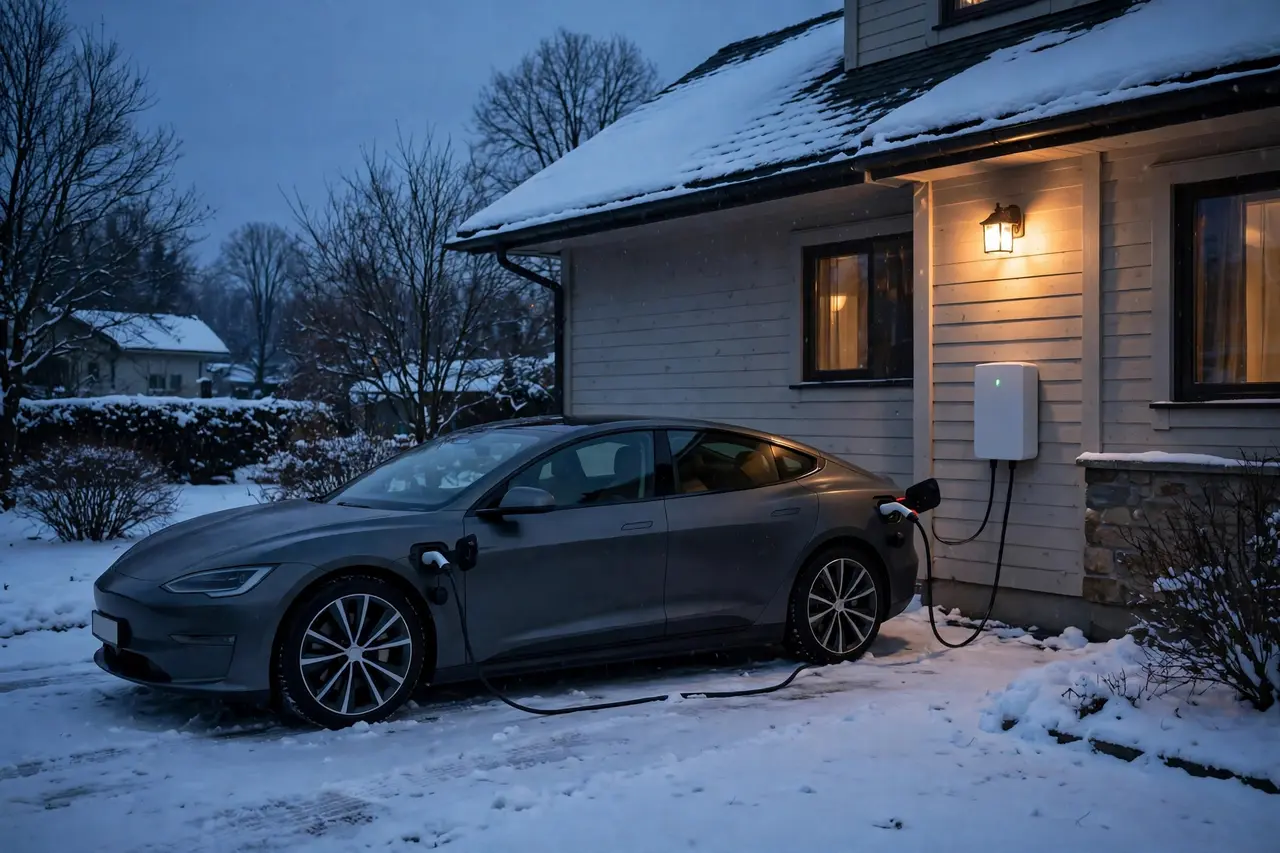
EV charging services in Bloomington
The full menu runs to ten services; the three cards at the top are the ones Bloomington's housing stock and state law push to the front. Everything links to its national service page for scope and process in full.
Home EV Charger Installation in Bloomington
For most households this is the whole project: a Level 2 station mounted where the car sleeps, fed by its own 240-volt circuit. The visit pattern is consistent — load calculation, route the run, mount and configure, inspect — and the variables are your panel, your parking and your permit office.
In Bloomington: usually the first job a new EV household in Bloomington books, scoped to the panel the house already has.
Dedicated Circuit & Electrical Panel Upgrade in Bloomington
The upgrade is unglamorous and transformative: a modern panel with honest capacity, labelled circuits, and room for the decade's next three electrical ideas after the charger. Houses rarely regret capacity; they regret its absence annually.
In Bloomington: the capacity answer when Bloomington's older panels meet a continuous load.
Multifamily & Condo EV Charging in Bloomington
The building version of the home job, with a governance layer on top. Boards approve complete applications; residents pay for their own energy through the metering design; the building's capacity is shared by management rather than by argument. That system is what this service installs.
In Bloomington: the approvals-plus-wiring job for Bloomington's condos and HOA communities, where the process matters as much as the circuit.
Utility programs and electricity in Bloomington
Electricity in Bloomington comes from Ameren Illinois Company. Parts of the wider metro are served by Corn Belt Energy Corporation, Eastern Illinois Elec Coop. The utility matters twice over for a charger install: it sets the time-of-use rates that decide what overnight charging costs you, and it is the organisation that may — or may not — currently help pay for the equipment.
Why does this page labour the absence of a rebate? Because in Bloomington the phantom rebate is the most common distortion in charger quotes: a figure justified by money that is not, at present, claimable. The verified position: federal 30C ended September 30, 2025; no Illinois replacement for typical home installs; no Ameren Illinois Company residential charger rebate in the sources checked. If someone quotes you a rebate, the follow-up is one sentence — show me the program page — and its answer decides the quote's credibility.
Solar households should read the export terms alongside the charging ones: the pair decides whether midday charging on home-working days beats the overnight window, and the answer is written in your tariff, not in general advice.
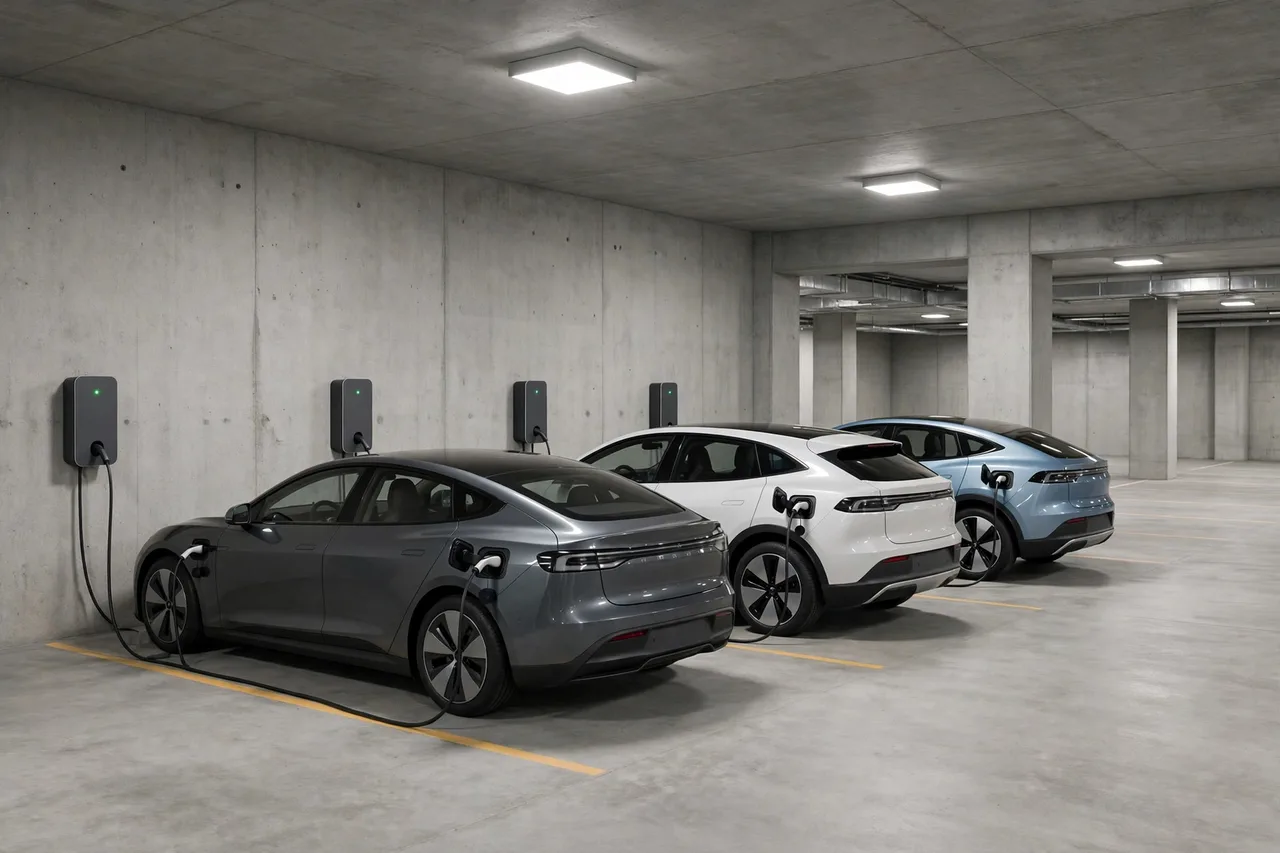
Condos, HOAs and the law in Illinois
An association in Illinois cannot simply say no. The right-to-charge law recorded for this state (765 ILCS 160/1-45) entitles an owner to install charging equipment for their own vehicle in their own parking space, subject to reasonable association conditions on placement, insurance and eventual restoration. For a Bloomington owner, the practical consequence is that the application is a compliance exercise — equipment, circuit, paperwork — rather than a popularity contest at a board meeting.
For renters, coverage in Illinois is recorded as: Limited. If you rent in Bloomington, the practical route is still a written proposal to the landlord — dedicated circuit, licensed installer, your name on the permit — because a charger-ready space is an asset most landlords keep when you leave.
Start with the condo and HOA guide for the application itself, and the multifamily service page for how the electrical design is usually laid out in Illinois buildings.
Climate, garages and charger placement
Humidity is the slow variable: it works on exterior connections across seasons rather than in a single event, which is why coastal-grade habits — protected terminations, sealed entries, a yearly glance at the connector — pay off even well inland in a four-season climate.
The seasons rotate the charging advice: precondition from the wall in winter, dodge the afternoon peak in summer, and let the shoulder months do what they like. Households here learn the two settings and change them with the clocks.

Permits and inspection in Bloomington
What the inspector is checking, in plain terms: conductor size against breaker size, the continuous-load calculation, terminations torqued, protection where the code wants it, and a station whose settings match the circuit it landed on. It is a short visit that validates everything you cannot see.

Neighbourhoods and ZIP codes served
The page covers 8 ZIP codes in and around Bloomington — including 61701, 61702, 61704, 61705, 61709, 61710, 61791, 61799 — across McLean. If your ZIP is not in the first set shown, ask anyway: installer coverage follows the metro, not a postcode fence.
The same working area takes in the neighbouring localities of Normal, Shirley, Towanda, Downs, Merna, Hudson, Heyworth, Carlock, Danvers, Stanford, Ellsworth, Mc Lean, Cooksville, Lexington — the county ring an installer based in Bloomington actually drives. Requests from those communities route exactly as city requests do: same services, same permit discipline, same local facts where they differ.
McLean County accounts for 32 of the ZIP codes and 24 named postal localities in the research file, the nearest of them Normal, Shirley, Towanda, Downs, Merna. The survey counts 171,556 residents in the county, with a median household income of $79,905 and a median home value of $208,400. Measured across its ZIP codes, the Bloomington footprint runs about 5 miles north to south and 11 east to west, from ZIP 61701 to 61799 — the ground an installer based here actually covers in a working week.
Beyond the county seats, the working area takes in Normal, Shirley, Towanda, Downs, Merna, Hudson, Heyworth, Carlock, Danvers, Stanford, Ellsworth, Mc Lean, Cooksville, Lexington, Congerville, Le Roy, Wapella, Waynesville, El Paso, Minier, Secor, Gridley, Armington, Atlanta, Arrowsmith, Colfax, Clinton, Chenoa, Dewitt, Farmer City, Lawndale, Benson, Lane, Beason, Saybrook, Anchor, Kenney, Weldon, Flanagan, Cropsey, Minonk, Graymont, Hartsburg, Maroa, Fairbury, Dana, Pontiac, Strawn, Rutland, Long Point, Forrest, Forsyth, Ancona, Cornell, Chatsworth, Saunemin — the named localities for which Bloomington is the nearest metro in the network (neighbouring metros' pages cover their own ground), each routing to the same installer-matching service.
The wider working area also reaches Goodfield, Deer Creek, Hopedale, Tremont, Bellflower, Washington, Delavan, Chestnut, Lincoln, Mansfield, De Land, Metamora, Foosland, Sibley, Peoria, Creve Coeur, Pekin, Mount Pulaski, Green Valley, Warrensburg, Toluca, New Holland, Oreana, Mahomet, Argenta, Mossville, Elliott, Elkhart, Melvin, Mapleton, Champaign, Harristown, Cornland, Niantic, Cerro Gordo — ground shared with neighbouring metros, where installers cross the same county lines in both directions.
ZIP codes in that shared ground include 60936, 60952, 61540, 61554, 61564, 61568, 61571, 61601, 61604, 61606, 61611, 61612, 61613, 61634, 61636, 61637, 61638, 61643, 61650, 61653, 61656, 61734, 61813, 61818, 61830, 61839, 61840, 61853, 61855, 61875, 61884, 62518, 62522, 62524, 62541, 62573, 62634, 62635, 62666, 62671.
The largest communities in that working area after Bloomington itself, by the GeoNames populated-place file: Normal (population 54,373), Ottawa (population 18,342), Streator (population 13,182), Pontiac (population 11,794), Clinton (population 7,048), Marseilles (population 4,963), Dwight (population 4,063), Fairbury (population 3,630), Forsyth (population 3,584), Le Roy (population 3,582), Heyworth (population 2,890), El Paso (population 2,798), Seneca (population 2,292), Lexington (population 2,059), Minonk (population 2,053), Hudson (population 1,846), Chenoa (population 1,763), Maroa (population 1,739), Atlanta (population 1,648), Twin Grove (population 1,564). Charging demand follows those populations — the subdivisions and town centres where the next driveways, and the next panels, are.
Livingston County reaches into the working area with 35,565 residents, a median household income of $73,790 and a median home value of $142,200; its localities on this page include Flanagan, Graymont, Fairbury, Pontiac, Strawn. De Witt County reaches into the working area with 15,373 residents, a median household income of $71,678 and a median home value of $130,300; its localities on this page include Wapella, Waynesville, Clinton, Dewitt, Farmer City. Woodford County reaches into the working area with 38,312 residents, a median household income of $91,483 and a median home value of $197,600; its localities on this page include Congerville, El Paso, Secor, Benson, Minonk. Logan County reaches into the working area with 27,713 residents, a median household income of $66,358 and a median home value of $134,400; its localities on this page include Atlanta, Lawndale, Beason, Hartsburg. Tazewell County reaches into the working area with 130,290 residents, a median household income of $77,982 and a median home value of $167,500; its localities on this page include Minier, Armington.
| ZIP | Locality | County |
|---|---|---|
| 61701 | Bloomington | McLean |
| 61710 | Bloomington | McLean |
| 61790 | Normal | McLean |
| 61709 | Bloomington | McLean |
| 61761 | Normal | McLean |
| 61704 | Bloomington | McLean |
| 61799 | Bloomington | McLean |
| 61705 | Bloomington | McLean |
| 61772 | Shirley | McLean |
| 61702 | Bloomington | McLean |
| 61791 | Bloomington | McLean |
| 61776 | Towanda | McLean |
| 61736 | Downs | McLean |
| 61758 | Merna | McLean |
| 61748 | Hudson | McLean |
| 61745 | Heyworth | McLean |
| 61725 | Carlock | McLean |
| 61732 | Danvers | McLean |
| 61774 | Stanford | McLean |
| 61737 | Ellsworth | McLean |
| 61754 | Mc Lean | McLean |
| 61730 | Cooksville | McLean |
| 61753 | Lexington | McLean |
| 61729 | Congerville | Woodford |
| 61752 | Le Roy | McLean |
| 61777 | Wapella | De Witt |
| 61778 | Waynesville | De Witt |
| 61738 | El Paso | Woodford |
| 61759 | Minier | Tazewell |
| 61771 | Secor | Woodford |
| 61744 | Gridley | McLean |
| 61721 | Armington | Tazewell |
| 61723 | Atlanta | Logan |
| 61722 | Arrowsmith | McLean |
| 61728 | Colfax | McLean |
| 61727 | Clinton | De Witt |
| 61726 | Chenoa | McLean |
| 61735 | Dewitt | De Witt |
| 61842 | Farmer City | De Witt |
| 61751 | Lawndale | Logan |
| 61516 | Benson | Woodford |
| 61750 | Lane | De Witt |
| 62512 | Beason | Logan |
| 61770 | Saybrook | McLean |
| 61720 | Anchor | McLean |
| 61749 | Kenney | De Witt |
| 61882 | Weldon | De Witt |
| 61740 | Flanagan | Livingston |
| 61731 | Cropsey | McLean |
| 61760 | Minonk | Woodford |
| 61743 | Graymont | Livingston |
| 62643 | Hartsburg | Logan |
| 61756 | Maroa | Macon |
| 61739 | Fairbury | Livingston |
| 61321 | Dana | LaSalle |
| 61764 | Pontiac | Livingston |
| 61775 | Strawn | Livingston |
| 61358 | Rutland | LaSalle |
| 61333 | Long Point | Livingston |
| 61741 | Forrest | Livingston |
| 62535 | Forsyth | Macon |
| 61311 | Ancona | Livingston |
| 61319 | Cornell | Livingston |
| 60921 | Chatsworth | Livingston |
| 61769 | Saunemin | Livingston |

Planning the install: from panel to parking
A useful way to read any Bloomington quote is to ask which of three jobs it describes. Job one: the panel has room and the run is short — a circuit and a station. Job two: the panel is full — capacity work joins the quote, as an upgrade or as load management. Job three: the property adds people — an HOA, a landlord, a building's shared service — and the approvals timeline joins the electrical one. None of the three is a bad job; they are simply different scopes, and a clear quote says which one you are in.
One more piece of sequencing advice Bloomington installers give consistently: if the panel is being opened anyway, settle the other electrical maybes in the same visit — the circuit you will want next year costs least while the permit and the electrician are already in the house.
Home charging know-how for Bloomington households
Shutoffs and sensible safety
Every charger installation contains its own off switch: the breaker in the panel, and, on larger circuits, a disconnect within sight of the equipment that the code requires. Knowing where both are — and that the station itself stops the session when the connector is unlatched — is the whole safety briefing, and a good installer gives it unprompted at handover. The equipment is listed, protected and designed to be operated daily by non-electricians; the homeowner's part is simply to know the two switches and to treat any change in behaviour — heat, noise, repeated trips — as a reason to call rather than to reset.
Reading the bill after the charger arrives
The first bills after an install reward a careful read. Charging appears as consumption, not as a line item — the household's kilowatt-hours rise by roughly the car's appetite, and the rate applied to the new hours depends on when they happened. Owners who check the schedule actually ran — that the car charged inside the intended window — catch the one configuration mistake that costs money monthly. After that, the bill becomes the household's quietest document: the car simply costs what the overnight rate says it should.
How rebate paperwork usually works
Where a utility program does exist, its money moves on paperwork rails: pre-approval before purchase in some programmes, photographs and the inspection record after installation, deadlines measured in weeks. The practical lesson travels even to cities without a current program — keep everything. The permit, the passed inspection, the equipment invoice with model and serial, photographs of the finished work: filed together, they are the application for any programme that opens later, and the file costs nothing to keep.
Bidirectional charging, honestly framed
Vehicles that can return energy to a house or the grid exist, and the standards enabling them are settling — but for most households today it is a horizon technology, not a purchase category: it needs a compatible vehicle, bidirectional equipment, utility interconnection approval and a tariff that rewards it. None of that changes today's installation advice, except in one detail: conduit and panel capacity installed generously now are the same provisions a future bidirectional setup would want. Buy for the car you have; leave room for the one the industry is promising.

Frequently asked questions
What happened to the federal home-charger credit in Bloomington, IL?
That credit is finished: 30C ended on September 30, 2025. What about locally? In the utility and state sources checked for this page, nothing verified was running for Bloomington homeowners — no Ameren Illinois Company rebate, no state scheme. If one opens, it will appear on the utility's site with dates; plan your install without it meanwhile.
Can my HOA or condo board in Bloomington, IL refuse my charger?
Only within limits the statute sets. Illinois law (765 ILCS 160/1-45) protects an owner's right to install in their own space; associations may regulate placement, appearance and insurance and require restoration on removal, but a blanket refusal is not theirs to give. If a board stalls, a complete written application citing the statute is the standard remedy.
Will my Bloomington, IL home need a panel upgrade for a Level 2 charger?
It depends on the panel, and Bloomington's housing makes the question common: the median home here was built in 1983, and about 46% of housing units predate 1980. Homes with 100-amp service that is already well used often need an upgrade or a load-management device; homes with 200-amp service and spare breaker space usually do not. A load calculation during the site visit settles it — ask to see it.
How much faster is Level 2 charging at home in Bloomington, IL?
In parked hours: a Level 1 cord returns about 3–5 miles for each of them, and a Level 2 circuit returns roughly 25–40, set by its amperage and the car's acceptance. For a Bloomington household parking ten hours, that is the difference between recovering a short errand day and recovering any day the car can legally drive.
What happens next after I send a request?
Three things happen, in order. Your request is routed to licensed installers who work in Bloomington; one of them contacts you to book a site visit; and the visit produces a written quote based on your actual panel and parking. PlugReady USA runs the matching, not the tools — the contractor on the job is the installer who visits.
Can a charger be added to a detached garage in Bloomington?
Yes — the charger itself is the same; the route to it is the project. From the house panel, a buried conduit run reaches the garage, or a subpanel goes in out there where distance and future loads argue for it. In Bloomington, with about 58% of homes detached, local installers quote this shape routinely — the trench and the run, settled from a site walk, are the substance of it.
Nearby cities in Illinois
- EV charger installation in Peoria — about 36 miles from Bloomington, metro population 400,000
- EV charger installation in Champaign — about 48 miles from Bloomington, metro population 210,000
- EV charger installation in Springfield — about 59 miles from Bloomington, metro population 210,000
- EV charger installation in Chicago — about 123 miles from Bloomington, metro population 9,450,000
- EV charger installation in Rockford — about 125 miles from Bloomington, metro population 340,000
- EV charger installation in Terre Haute, IN — about 112 miles from Bloomington, metro population 170,000
- EV charger installation in Davenport, IA — about 113 miles from Bloomington, metro population 470,000
- EV charger installation in Lafayette, IN — about 116 miles from Bloomington, metro population 225,000
Ready to charge at home in Bloomington?
Two minutes of form, and the request is in front of licensed installers who cover this city — quotes follow site visits, in writing.