EV Charger Installation in Johnstown, PA
Charging where you park, in Johnstown: the utility programs, state law, permit process and housing facts behind a home charger install, gathered in one place.
There is a reason most charging happens at home: it is the most convenient fuelling an EV owner will ever use, and it happens while the car sits idle anyway. In Johnstown, getting set up means answering a handful of local questions first. Johnstown itself is home to about 18,087 people, inside a state that registered 113,400 battery-electric vehicles and 55,900 plug-in hybrids through 2025. Which utility serves your address, whether it currently funds part of a charger install, what your panel can carry, and what your HOA or condo board can and cannot say no to — this page covers each of them for Johnstown specifically.
Nothing on this page is decorative. The statutes are quoted because boards respect them, the survey numbers are shown because quotes should follow them, and the program status is stated plainly — including when the plain statement is that no verified program currently exists for Johnstown. Informed homeowners get better installs; this page is the informing.
The demand picture for the Johnstown metro, from the registration data this site is built on: PA coverage. Registration counts are the honest way to size a charging market — they count households, not headlines — and they are why Johnstown sits where it does in our build order (rank 173 of 300 metros, Tier C).
The same survey puts median household income in Johnstown at $37,888, with 55% of occupied homes owner-occupied and 52% of the housing stock single-unit detached. For charging, those are the operative facts: owners can approve their own electrical work, and detached homes put the car, the panel and the parking under one roof.

Put the survey together and Johnstown's charging profile reads like this: an older housing fabric, where panel archaeology is a normal part of the first visit; a detached-house majority with a real attached and multifamily minority; buildings of five or more units are a visible minority of the stock; and owners hold a working majority, with renters a significant minority. That combination — more than any single number — is what the installers working here plan around, and it is the lens for everything on this page.
In absolute terms, the survey counts 11,654 housing units in Johnstown — 8,953 occupied, 4,939 of them by their owners. The stock resolves into 6,074 single-unit detached houses, 10,721 homes standing since before 1980, and 2,134 units in larger buildings. Those six counts are the city's charging map drawn without percentages, and every section of this page is a consequence of one of them. The page's geography is equally concrete: 8 ZIP codes across Cambria, centred near 40.33 degrees north latitude. The city anchors the Johnstown metropolitan area, home to roughly 130,000 people on the research file's metro estimate — the wider labour and housing market this page's installers work across.
The same survey release fills in the household economics around the housing stock: a median home value of $45,400, median gross rent of $644, per-capita income of $24,013, and a median resident age of 44. And the daily rhythms behind the housing numbers: 68% of Johnstown workers drive to work alone — the commute pattern home charging is built around; 10% work from home, a population whose cars charge on daytime and overnight schedules alike; 5% commute by public transit; 16% of adults hold a bachelor's degree or higher. Vehicle ownership, from the same release: 2,437 households in Johnstown run two or more vehicles, and 2,314 run none — the two ends of the market this page serves and does not serve.
Two burden statistics frame the economics: in Johnstown, 38% of renters and 0% of mortgage-holding owners are housing-cost burdened at the standard 30% threshold. And 45% of households are family households, the segment most likely to run the two-vehicle, two-schedule pattern the second-vehicle planning notes address.
What follows is the city read as an electrical place rather than a dot on a map. A stock this old wires its history into the walls: cloth-wrapped conductors in the deepest streets, fuse boxes that outlived their century, panels added in layers by generations of electricians each solving their own decade's problem. The mixed stock means the city's charging statistics will always be two statistics wearing one coat: a domestic-circuit count and a building-project count, growing on different clocks for different reasons.
Neither renter-heavy nor owner-dominated, the market rewards installers who can work both sides of the tenure line: the domestic circuit and the negotiated one. The install market that serves modest incomes runs on referrals and repetition: neighbourhoods where one good install, fairly scoped, produces the street's next five customers. The commission's calendar quietly schedules the market: when a new time-of-use design is approved, installer phones ring in a pattern the docket predicted months earlier.
Households here are rarely the first on their street; the local knowledge pool — which installer, which tariff, which board precedent — is deep and shared freely. The permit counter in a smaller city is a conversation, not a queue: applications are read by people who may know the street, and complete paperwork is remembered kindly. The association dimension here runs on persuasion rather than statute — no state charging law frames the application, so the complete, professional proposal carries the whole argument, as the law section above explains.
The electrical reality in Johnstown homes
Johnstown's housing, in Census Bureau survey numbers: a median build year of 1942, 92% of units predating 1980, a stock that is 52% single-unit detached, and 55% of occupied homes owned by their occupants. Everything in this section is commentary on those four facts. A housing stock this age leans on smaller electrical services — 100-amp panels are common, and fuse-era equipment still turns up in the oldest streets. For many of those homes the honest answer is a panel upgrade or a load-management device before the charger circuit goes in, and a good installer will show you the load calculation rather than asking you to take it on faith. Housing age also tracks wire-run reality: older homes more often place the panel in a basement or interior wall far from the garage, and distance is copper, conduit and labour.
Heating fuel is the survey's quiet clue to panel life: in Johnstown, 9% of homes heat electrically (781 households), against 88% heating with gas. A house already heating electrically has a service sized with that load in its history; a gas-heated house may have capacity to spare — either way the fuel mix is part of what the installer is reading.
The tenure split cuts the other way too: roughly 4,014 occupied homes in Johnstown are rented. For those households the charger question is a negotiation with a property owner — written proposal, licensed installer, metering clarity — and it succeeds often enough that installers here keep the pattern ready.
The city's stock is not all houses: 18% of units are in structures of five or more. Shared buildings mean shared panels, assigned parking and association process — the substance of the multifamily sections below.
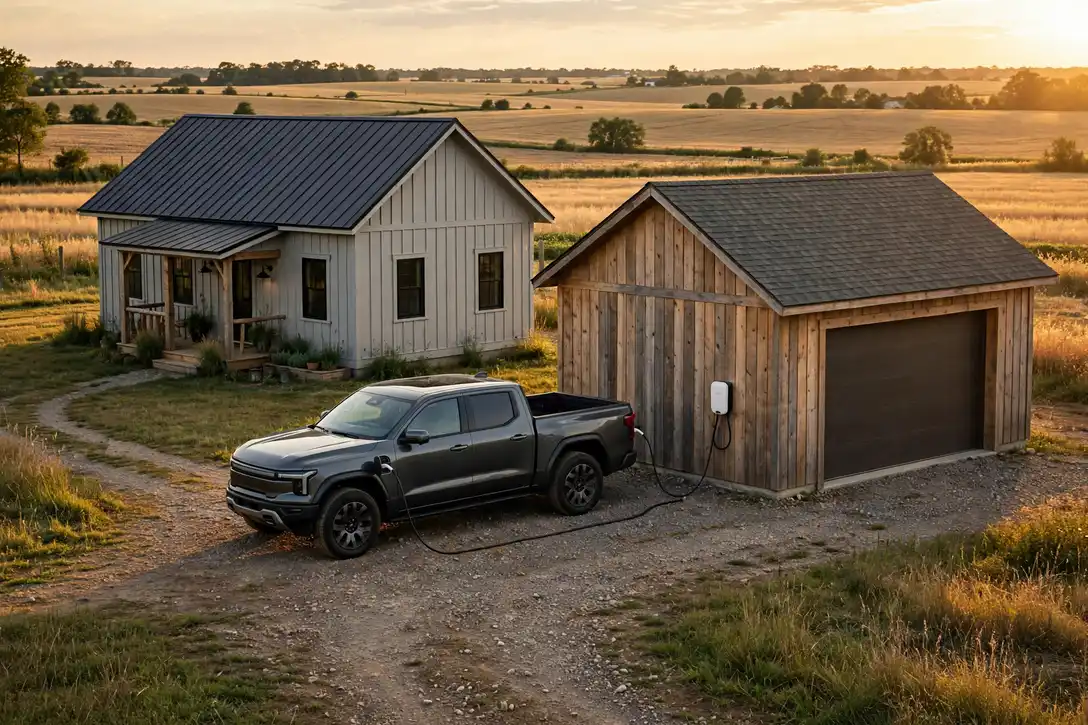
EV charging services in Johnstown
The full menu runs to ten services; the three cards at the top are the ones Johnstown's housing stock and state law push to the front. Everything links to its national service page for scope and process in full.
Home EV Charger Installation in Johnstown
For most households this is the whole project: a Level 2 station mounted where the car sleeps, fed by its own 240-volt circuit. The visit pattern is consistent — load calculation, route the run, mount and configure, inspect — and the variables are your panel, your parking and your permit office.
In Johnstown: the core residential job in Johnstown: circuit, mounting, configuration and inspection in one visit pattern.
Dedicated Circuit & Electrical Panel Upgrade in Johnstown
Where the load calculation fails the existing service, the upgrade is not an upsell — it is the finding. Done under permit with the utility's meter work coordinated, it converts the charger project into the house's electrical reset, and every later project inherits the headroom.
In Johnstown: the capacity fix that lets the charger circuit go in without the rest of the house living at its limit.
Level 2 Charger Installation in Johnstown
A Level 2 circuit turns charging from a ration into a routine. The job is electrical rather than electronic — breaker and conductor sized at the continuous-load factor, the run routed to the parking position, and the station dialled to the circuit rather than to its own headline maximum.
In Johnstown: the 240-volt step that turns overnight charging in Johnstown from a trickle into a full battery by morning.
Utility programs and electricity in Johnstown
Electricity in Johnstown comes from Pennsylvania Electric Co. Parts of the wider metro are served by REA Energy Coop Inc, United Electric Coop, Inc, Borough of East Conemaugh. The utility matters twice over for a charger install: it sets the time-of-use rates that decide what overnight charging costs you, and it is the organisation that may — or may not — currently help pay for the equipment.
Do not budget for a rebate in Johnstown right now. As of the sources checked for this page, Pennsylvania Electric Co publishes no residential charger rebate, Pennsylvania offers no state program for typical home installs, and the federal 30C credit ended on September 30, 2025. If that changes, the utility's program page will say so with an as-of date — and this page will be updated to match. Until then, judge quotes on the work itself.
Before the install, it is worth a two-minute look at your tariff. Many Pennsylvania Electric Co customers can move to a time-of-use plan where overnight energy is charged at a lower rate, and a scheduled charger makes that saving automatic.
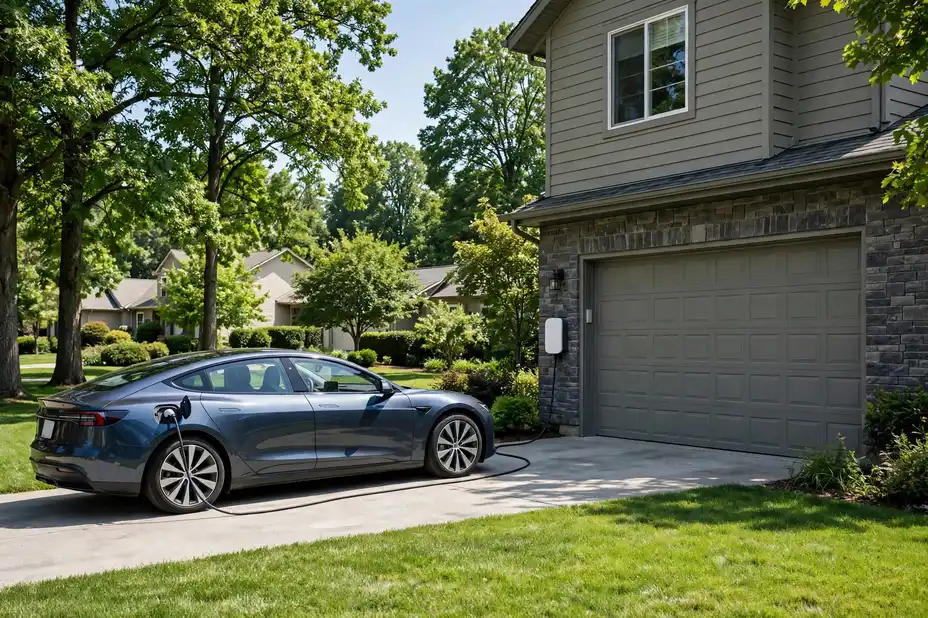
Condos, HOAs and the law in Pennsylvania
There is no Pennsylvania right-to-charge statute to lean on. Some national roundups list protection that does not exist in this state's code; the statute indexes checked for this page are clear. In Johnstown, a condo or HOA charger is approved — or not — under the community's own documents, which makes the quality of your application the whole ballgame.
There is also a longer game available to Johnstown owners: associations revise their documents, boards turn over, and state legislatures have been adding right-to-charge laws year after year. A written application — and, if it comes to it, a written refusal — is the record that each of those futures works from.
For the full playbook — application contents, metering designs, the questions boards ask — see the condo and HOA charging guide. In Johnstown it should be read as a negotiation manual, because negotiation is what the absence of a statute leaves you.
Climate, garages and charger placement
Seasonal scheduling is the quiet optimisation here: summer peaks and winter range loss both argue for charging deep in the overnight window, when rates and temperatures are kindest. Set the schedule once, in the car or the station, and the seasons stop appearing in the household's charging routine at all.
A four-season climate asks the installation to be boring in every month: cable that stays flexible in January, an enclosure untroubled by August humidity, and drainage that keeps spring melt away from the connector. None of this is exotic — it is the standard outdoor discipline, and it is why station placement gets a full minute of the site visit rather than a wave at the nearest wall.

Permits and inspection in Johnstown
Bring the panel schedule up to date while the electrician is in it — the new circuit labelled, in the directory, in pen. Inspectors notice; future electricians bless you for it; and the load calculation for any second circuit starts from that card.

Neighbourhoods and ZIP codes served
The page covers 8 ZIP codes in and around Johnstown — including 15901, 15902, 15904, 15905, 15906, 15907, 15909, 15915 — across Cambria. If your ZIP is not in the first set shown, ask anyway: installer coverage follows the metro, not a postcode fence.
The same working area takes in the neighbouring localities of Parkhill, Mineral Point, Elton, South Fork, Salix, Saint Michael, Sidman, Summerhill, Nanty Glo, Dunlo, Wilmore, Vintondale, Beaverdale, Twin Rocks — the county ring an installer based in Johnstown actually drives. Requests from those communities route exactly as city requests do: same services, same permit discipline, same local facts where they differ.
Cambria County accounts for 52 of the ZIP codes and 44 named postal localities in the research file, the nearest of them Parkhill, Mineral Point, Elton, South Fork, Salix. The survey counts 131,538 residents in the county, with a median household income of $58,418 and a median home value of $121,000. Measured across its ZIP codes, the Johnstown footprint runs about 9 miles north to south and 4 east to west, from ZIP 15901 to 15915 — the ground an installer based here actually covers in a working week.
Beyond the county seats, the working area takes in Parkhill, Tire Hill, Mineral Point, Hollsopple, Elton, Davidsville, South Fork, Salix, Seanor, Saint Michael, Windber, Seward, Jerome, Sidman, Summerhill, Armagh, New Florence, Nanty Glo, Dilltown, Dunlo, Boswell, Wilmore, Vintondale, Beaverdale, Twin Rocks, Hooversville, Belsano, Robinson, Bolivar, Revloc, Jennerstown, Jenners, Ebensburg, Kantner, Portage, Cresson, Stoystown, Cairnbrook, Colver, Gray, Homer City, Central City, Brush Valley, Strongstown, Acosta, Torrance, Laughlintown, Black Lick, Josephine, Sipesville, Coral, Ligonier, Quecreek, Alum Bank, Nicktown, Heilwood, Blairsville, Lucernemines, Rector, Penn Run, Alverda, Shanksville, New Paris, Mentcle, Friedens, Listie, New Derry, Somerset, Fishertown, Derry, Marsteller, Bradenville, Schellsburg, Clymer, Indiana, Osterburg, Loyalhanna, New Baltimore, Kent, Youngstown, Aultman, Commodore, Starford, Stahlstown, Hostetter, Mc Intyre, Hidden Valley, Clune, Dixonville, Latrobe, Whitney, Clarksburg, Ernest, Manns Choice, Berlin, New Alexandria, Jones Mills, Greensburg, Southwest, Hillsdale, Chambersville, Champion, Donegal, Buffalo Mills, Pleasant Unity, Acme, Saltsburg, Rockwood, West Lebanon, Shelocta, Creekside, Bedford, Fairhope, Marion Center, Melcroft, Garrett, White, Indian Head, Normalville, Home, Elderton, Rochester Mills, Plumville, Beyer, Sagamore, Marchand, Hyndman, Meyersdale, Markleton, Smicksburg, Rural Valley, Rossiter, Mill Run, Boynton, Yatesboro, Salisbury, West Salisbury, Fort Hill, Wellersburg, Valier, Springs, Northpoint, Ursina, Hamilton, Dayton, Confluence, Ellerslie, Mount Savage, Corriganville, Walston — the named localities for which Johnstown is the nearest metro in the network (neighbouring metros' pages cover their own ground), each routing to the same installer-matching service.
The wider working area also reaches Cassandra, Claysburg, Spangler, Queen, East Freedom, Duncansville, Roaring Spring, Dysart, Luxor, Curryville, United, Martinsburg, Avonmore, Burnside, Mount Pleasant, Salina, Armbrust, Glen Campbell, Blandburg, Youngwood, Hunker, Grapeville, Irvona, Beccaria, East Vandergrift, Scottdale, Smithmill, Connellsville, Arona, Manor, Punxsutawney, Ramey, Broad Top, Breezewood, Madera — ground shared with neighbouring metros, where installers cross the same county lines in both directions.
ZIP codes in that shared ground include 15425, 15428, 15533, 15535, 15601, 15611, 15612, 15613, 15618, 15624, 15635, 15644, 15647, 15663, 15668, 15673, 15679, 15689, 15692, 15697, 15722, 15757, 15775, 15938, 16601, 16603, 16630, 16631, 16634, 16637, 16640, 16655, 16661, 16663, 16668, 16680, 16682, 16684, 16694, 16861.
The largest communities in that working area after Johnstown itself, by the GeoNames populated-place file: Indiana (population 14,100), Frostburg (population 8,667), Latrobe (population 8,081), Somerset (population 6,032), Westmont (population 4,938), Windber (population 3,974), Acme (population 3,833), Elim (population 3,727), La Vale (population 3,551), Loyalhanna (population 3,428), Blairsville (population 3,321), Ebensburg (population 3,203), Nanty Glo (population 2,901), Belmont (population 2,784), Bedford (population 2,742), Derry (population 2,594), Portage (population 2,508), Geistown (population 2,371), Lawson Heights (population 2,194), Southmont (population 2,175). Charging demand follows those populations — the subdivisions and town centres where the next driveways, and the next panels, are.
Somerset County reaches into the working area with 72,799 residents, a median household income of $61,446 and a median home value of $150,600; its localities on this page include Tire Hill, Hollsopple, Davidsville, Seanor, Windber. Indiana County reaches into the working area with 83,042 residents, a median household income of $60,208 and a median home value of $152,800; its localities on this page include Armagh, Dilltown, Robinson, Homer City, Brush Valley. Westmoreland County reaches into the working area with 352,500 residents, a median household income of $74,109 and a median home value of $203,500; its localities on this page include Seward, New Florence, Bolivar, Torrance, Laughlintown. Bedford County reaches into the working area with 47,513 residents, a median household income of $59,992 and a median home value of $179,000; its localities on this page include Alum Bank, New Paris, Fishertown, Schellsburg, Osterburg.
| ZIP | Locality | County |
|---|---|---|
| 15901 | Johnstown | Cambria |
| 15907 | Johnstown | Cambria |
| 15915 | Johnstown | Cambria |
| 15902 | Johnstown | Cambria |
| 15905 | Johnstown | Cambria |
| 15906 | Johnstown | Cambria |
| 15945 | Parkhill | Cambria |
| 15904 | Johnstown | Cambria |
| 15959 | Tire Hill | Somerset |
| 15942 | Mineral Point | Cambria |
| 15909 | Johnstown | Cambria |
| 15935 | Hollsopple | Somerset |
| 15934 | Elton | Cambria |
| 15928 | Davidsville | Somerset |
| 15956 | South Fork | Cambria |
| 15952 | Salix | Cambria |
| 15953 | Seanor | Somerset |
| 15951 | Saint Michael | Cambria |
| 15963 | Windber | Somerset |
| 15954 | Seward | Westmoreland |
| 15937 | Jerome | Somerset |
| 15955 | Sidman | Cambria |
| 15958 | Summerhill | Cambria |
| 15920 | Armagh | Indiana |
| 15944 | New Florence | Westmoreland |
| 15943 | Nanty Glo | Cambria |
| 15929 | Dilltown | Indiana |
| 15930 | Dunlo | Cambria |
| 15531 | Boswell | Somerset |
| 15962 | Wilmore | Cambria |
| 15961 | Vintondale | Cambria |
| 15921 | Beaverdale | Cambria |
| 15960 | Twin Rocks | Cambria |
| 15936 | Hooversville | Somerset |
| 15922 | Belsano | Cambria |
| 15949 | Robinson | Indiana |
| 15923 | Bolivar | Westmoreland |
| 15948 | Revloc | Cambria |
| 15547 | Jennerstown | Somerset |
| 15546 | Jenners | Somerset |
| 15931 | Ebensburg | Cambria |
| 15548 | Kantner | Somerset |
| 15946 | Portage | Cambria |
| 16699 | Cresson | Cambria |
| 15563 | Stoystown | Somerset |
| 15924 | Cairnbrook | Somerset |
| 15927 | Colver | Cambria |
| 15544 | Gray | Somerset |
| 15748 | Homer City | Indiana |
| 15926 | Central City | Somerset |
| 15720 | Brush Valley | Indiana |
| 15957 | Strongstown | Indiana |
| 15520 | Acosta | Somerset |
| 15779 | Torrance | Westmoreland |
| 15655 | Laughlintown | Westmoreland |
| 15716 | Black Lick | Indiana |
| 15750 | Josephine | Indiana |
| 15561 | Sipesville | Somerset |
| 15731 | Coral | Indiana |
| 15658 | Ligonier | Westmoreland |
| 15555 | Quecreek | Somerset |
| 15521 | Alum Bank | Bedford |
| 15762 | Nicktown | Cambria |
| 15745 | Heilwood | Indiana |
| 15717 | Blairsville | Indiana |
| 15754 | Lucernemines | Indiana |
| 15677 | Rector | Westmoreland |
| 15765 | Penn Run | Indiana |
| 15710 | Alverda | Indiana |
| 15560 | Shanksville | Somerset |
| 15554 | New Paris | Bedford |
| 15761 | Mentcle | Indiana |
| 15541 | Friedens | Somerset |
| 15549 | Listie | Somerset |
| 15671 | New Derry | Westmoreland |
| 15501 | Somerset | Somerset |
| 15539 | Fishertown | Bedford |
| 15627 | Derry | Westmoreland |
| 15760 | Marsteller | Cambria |
| 15620 | Bradenville | Westmoreland |
| 15559 | Schellsburg | Bedford |
| 15728 | Clymer | Indiana |
| 15705 | Indiana | Indiana |
| 16667 | Osterburg | Bedford |
| 15701 | Indiana | Indiana |
| 15661 | Loyalhanna | Westmoreland |
| 15553 | New Baltimore | Somerset |
| 15752 | Kent | Indiana |
| 15696 | Youngstown | Westmoreland |
| 15713 | Aultman | Indiana |

Planning the install: from panel to parking
Homeowners sometimes ask why a job that looks like 'one outlet' needs a site visit at all. The visit exists because the three variables that set the scope — spare capacity, the run's route, and the property's approval layer — are all invisible from a photograph. In Johnstown an experienced installer reads them in minutes, in the panel's directory card, the garage's geometry and the community's documents. The quote that follows a visit is a different species from the quote that precedes one: it can be held to.
One more piece of sequencing advice Johnstown installers give consistently: if the panel is being opened anyway, settle the other electrical maybes in the same visit — the circuit you will want next year costs least while the permit and the electrician are already in the house.
Home charging know-how for Johnstown households
Getting onto the board's agenda
Association decisions happen inside a procedure, and the procedure has a door: the agenda. Applications that miss the submission deadline wait a full cycle regardless of merit, so the first question for any board is clerical — when do items close for the next meeting, and in what format. Arrive inside the procedure with a complete package and the discussion is about your design; arrive outside it and the discussion is about process, and process always wins the evening. Property managers, asked politely, will tell you the format they prefer applications in.
Historic districts and exterior rules
In a designated historic district, the charger's exterior footprint can need a second audience: the preservation commission, whose concern is the streetscape rather than the circuit. The designs that pass keep faith with that concern — equipment inside the garage where possible, conduit routed away from the principal facade, nothing mounted on historic fabric. It adds a step, not a saga, and local installers know their commission's habits the way they know their permit counter's.
Amps, volts and kilowatts without tears
Three numbers describe every charging session. Volts are the pressure — 240 of them on a Level 2 circuit. Amps are the flow — the circuit's rating, of which the car may continuously use eighty percent. Kilowatts are the product of the two and the speedometer of charging: volts times amps, divided by a thousand. A 40-amp circuit at 240 volts delivers 9.6 kilowatts; over a ten-hour night that is roughly 96 kilowatt-hours before losses — more than most batteries hold. Once the multiplication is familiar, every quote and specification sheet becomes readable.
Charging on a shift worker's clock
Night-shift households run the tariff backwards: the car works while others charge and charges through the day while others work. Their design questions differ — daytime sessions against the household's sleeping hours, schedules that flip with the rota, and the second car's opposite rhythm. None of it is complicated, but all of it must be said at the site visit, because the default schedule baked into every station assumes a nine-to-five that this household does not live.

Frequently asked questions
Can I still get the federal tax credit for a home charger in Johnstown, PA?
The honest ledger for Johnstown reads: federal credit, ended September 30, 2025; state program, none for typical home installs; Pennsylvania Electric Co residential rebate, none verified in the sources checked. If a salesperson's quote leans on any of the three, the correct response is a request for the program's published page.
Can my association in Johnstown, PA say no to a home charger?
They hold the stronger hand, and it is better to plan with that admitted. Pennsylvania has enacted no right-to-charge law, so in Johnstown the covenants and the board govern. Owners who treat the application as a design submission — circuit, metering, insurance, restoration — rather than a request for a favour are the ones charging by the following quarter.
Does a Level 2 charger mean a panel upgrade for a Johnstown, PA home?
It depends on the panel, and Johnstown's housing makes the question common: the median home here was built in 1942, and about 92% of housing units predate 1980. Homes with 100-amp service that is already well used often need an upgrade or a load-management device; homes with 200-amp service and spare breaker space usually do not. A load calculation during the site visit settles it — ask to see it.
Level 1 or Level 2 in Johnstown, PA — what is the real difference?
A Level 1 cord on a household outlet adds roughly 3–5 miles of range per hour; a Level 2 station on a 240-volt circuit typically adds about 25–40 miles per hour depending on the circuit's amperage and the vehicle. For most drivers that is the difference between rationing the battery and never thinking about it.
What happens after I request an installer through this page?
Send the request and it is matched against installers covering Johnstown — your service, ZIP, property type and timing travel with it. An installer then arranges the site visit and quotes in writing. Our role ends at the introduction; your contract, permit and paperwork are with the installer.
How long does a typical home charger installation take in Johnstown, PA?
For the common layout — panel near parking, capacity available — the hands-on work in Johnstown, Pennsylvania is a half day to a day. Panel upgrades add a coordinated day of their own, and association approvals add meetings rather than labour. The date an installer can honestly promise is the electrical day; the rest is calendar, and a good quote says so.
Nearby cities in Pennsylvania
- EV charger installation in Altoona — about 31 miles from Johnstown, metro population 125,000
- EV charger installation in Pittsburgh — about 58 miles from Johnstown, metro population 2,400,000
- EV charger installation in State College — about 67 miles from Johnstown, metro population 160,000
- EV charger installation in Harrisburg — about 112 miles from Johnstown, metro population 600,000
- EV charger installation in York — about 123 miles from Johnstown, metro population 455,000
- EV charger installation in Lebanon — about 139 miles from Johnstown, metro population 145,000
- EV charger installation in Hagerstown, MD — about 81 miles from Johnstown, metro population 295,000
- EV charger installation in Winchester, VA — about 88 miles from Johnstown, metro population 135,000
- EV charger installation in Harrisonburg, VA — about 130 miles from Johnstown, metro population 140,000
Ready to charge at home in Johnstown?
Two minutes of form, and the request is in front of licensed installers who cover this city — quotes follow site visits, in writing.