EV Charger Installation in Albuquerque, NM
Charging where you park, in Albuquerque: the utility programs, state law, permit process and housing facts behind a home charger install, gathered in one place.
There is a reason most charging happens at home: it is the most convenient fuelling an EV owner will ever use, and it happens while the car sits idle anyway. In Albuquerque, getting set up means answering a handful of local questions first. Albuquerque itself is home to about 560,333 people, inside a state that registered 16,600 battery-electric vehicles and 7,100 plug-in hybrids through 2025. Which utility serves your address, whether it currently funds part of a charger install, what your panel can carry, and what your HOA or condo board can and cannot say no to — this page covers each of them for Albuquerque specifically.
The sections that follow are deliberately unglamorous: statutes, survey data, permit counters, tariff habits. That is what a good install is made of. The car is the exciting part; this page is about the wall it plugs into.
Why Albuquerque ranks 111 in this network's 300-metro build order: NM's only large market ; PNM territory. Those are registration figures, not projections, and they translate directly into installation work — every newly registered plug-in vehicle is a household deciding where it will charge.
The Census Bureau's portrait of Albuquerque — median household income $71,494, 63% of occupied homes owner-occupied, 62% of units in single-unit detached houses — is, read correctly, a charging forecast. Owners approve their own work; detached houses host their own circuits; the remaining share is where the interesting projects live.

Every city charges differently, and Albuquerque's difference is legible in the data: an older housing fabric, where panel archaeology is a normal part of the first visit; a detached-house majority with a real attached and multifamily minority; buildings of five or more units hold a substantial share of homes, which keeps the multifamily sections of this page in daily use; owners hold a working majority, with renters a significant minority. Read the sections below through that profile and the local advice resolves into specifics — which questions are routine here, and which are rare.
In absolute terms, the survey counts 261,899 housing units in Albuquerque — 243,739 occupied, 152,398 of them by their owners. The stock resolves into 162,207 single-unit detached houses, 119,590 homes standing since before 1980, and 54,448 units in larger buildings. Those six counts are the city's charging map drawn without percentages, and every section of this page is a consequence of one of them. The page's geography is equally concrete: 42 ZIP codes across Bernalillo, centred near 35.20 degrees north latitude. The city anchors the Albuquerque metropolitan area, home to roughly 915,000 people on the research file's metro estimate — the wider labour and housing market this page's installers work across.
The same survey release fills in the household economics around the housing stock: a median home value of $324,600, median gross rent of $1,227, per-capita income of $42,457, and a median resident age of 39. And the daily rhythms behind the housing numbers: 71% of Albuquerque workers drive to work alone — the commute pattern home charging is built around; 13% work from home, a population whose cars charge on daytime and overnight schedules alike; 0% commute by public transit; 39% of adults hold a bachelor's degree or higher. And the fleet in the driveways: 99,809 households in Albuquerque have exactly one vehicle, 131,261 have two or more, and 12,669 have none.
Two burden statistics frame the economics: in Albuquerque, 48% of renters and 0% of mortgage-holding owners are housing-cost burdened at the standard 30% threshold. And 54% of households are family households, the segment most likely to run the two-vehicle, two-schedule pattern the second-vehicle planning notes address.
Read together, the local facts draw a recognisable picture. Where so much of the stock predates modern code cycles, the site visit doubles as a survey — grounding electrode, service entrance, panel provenance — before it is ever a quote. Mixed form means mixed timelines: a homeowner's install is a fortnight's scheduling, a condo's is a season's governance; the metro's charging growth arrives on both clocks at once.
A balanced tenure map makes the landlord conversation a standard local genre — proposal letters, metering arrangements, restoration clauses — familiar to installers and property managers alike. The specification pattern at this income band is disciplined: capacity for today's car and a conduit sized for tomorrow's, the upgrade deferred until the load calculation insists. The commission's calendar quietly schedules the market: when a new time-of-use design is approved, installer phones ring in a pattern the docket predicted months earlier.
Youth in the fleet also means the used-EV wave has not arrived; adoption here is new-car led, and charging installs follow the dealer map more than the classifieds. The permit counter in a smaller city is a conversation, not a queue: applications are read by people who may know the street, and complete paperwork is remembered kindly. The association dimension here runs on persuasion rather than statute — no state charging law frames the application, so the complete, professional proposal carries the whole argument, as the law section above explains.
The electrical reality in Albuquerque homes
Start with the survey's three operative figures for Albuquerque: median build year 1983; 46% of housing units standing since before 1980; 62% of the stock in single-unit detached houses, with 63% of occupied homes owner-occupied. Between them, they sketch the electrical city an installer works in. A housing stock this age leans on smaller electrical services — 100-amp panels are common, and fuse-era equipment still turns up in the oldest streets. For many of those homes the honest answer is a panel upgrade or a load-management device before the charger circuit goes in, and a good installer will show you the load calculation rather than asking you to take it on faith. Owner-occupiers can plan on their own timeline; renters and condo owners have an extra approval layer, which the law section below covers for this state.
The fuel table adds one more local fact: 48,302 Albuquerque homes — 20% of the stock — heat with electricity. Those households already think in kilowatts through the winter, their panels carry the load to prove it, and a charger's overnight appetite joins a system that is, in the useful sense, already electrified.
The tenure split cuts the other way too: roughly 91,341 occupied homes in Albuquerque are rented. For those households the charger question is a negotiation with a property owner — written proposal, licensed installer, metering clarity — and it succeeds often enough that installers here keep the pattern ready.
The city's stock is not all houses: 21% of units are in structures of five or more. Shared buildings mean shared panels, assigned parking and association process — the substance of the multifamily sections below.
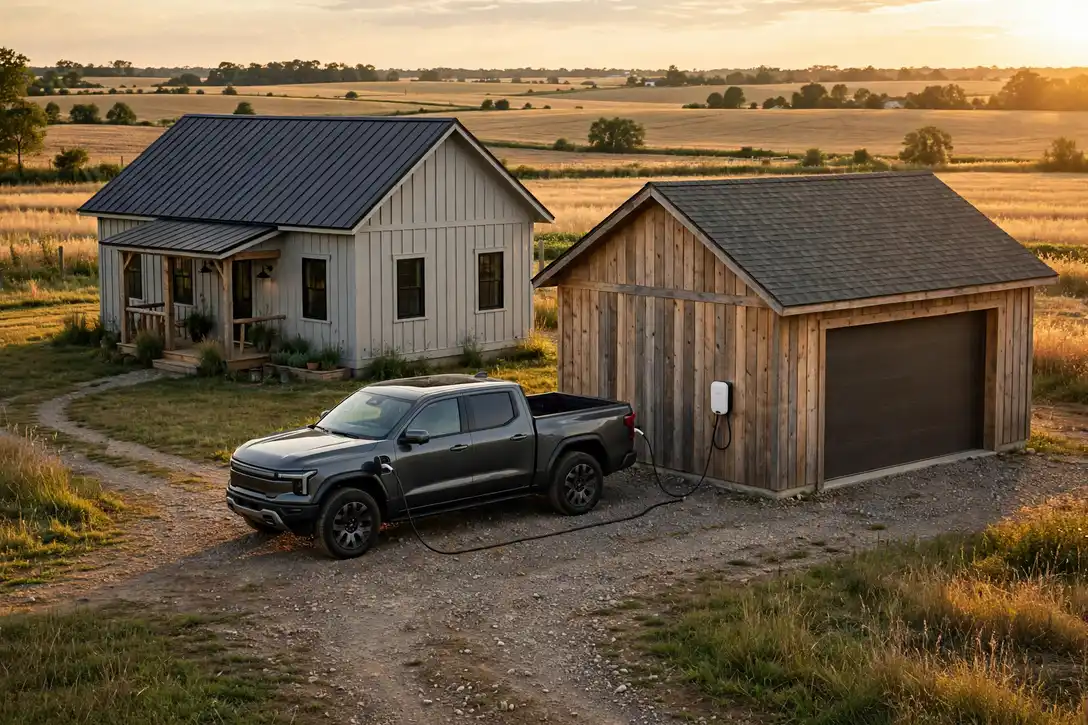
EV charging services in Albuquerque
The services below are ordered by what Albuquerque households most often need first, judged from the housing and fleet facts on this page. The full menu follows in the grid — every service is offered in this metro.
Home EV Charger Installation in Albuquerque
Think of it as plumbing for electrons, with the same virtues: correct sizing, honest materials, tidy runs, tested joints. The installers who do it weekly follow a pattern — assess, calculate, route, mount, configure, document — and the pattern is why their installs rarely make news afterwards.
In Albuquerque: usually the first job a new EV household in Albuquerque books, scoped to the panel the house already has.
Dedicated Circuit & Electrical Panel Upgrade in Albuquerque
The capacity project behind the charger project. A load calculation decides whether the answer is a service increase, a panel replacement, a subpanel or load management — and the work is sequenced with the utility and the inspector so the house is live again the same day in most cases.
In Albuquerque: the capacity answer when Albuquerque's older panels meet a continuous load.
Level 2 Charger Installation in Albuquerque
Level 2 is where home charging becomes effortless: a dedicated 240-volt circuit returning a full battery overnight instead of a partial one by morning. The installer's work is the circuit itself — breaker, conductor, connection type — and the station's settings matched to it.
In Albuquerque: 240 volts, sized honestly — the working definition of home charging in Albuquerque.
Utility programs and electricity in Albuquerque
Electricity in Albuquerque comes from Public Service Co of NM. Parts of the wider metro are served by Continental Divide El Coop Inc, Central New Mexico El Coop, Inc. The utility matters twice over for a charger install: it sets the time-of-use rates that decide what overnight charging costs you, and it is the organisation that may — or may not — currently help pay for the equipment.
Frame the Albuquerque incentive question correctly and it answers itself. Three pots could in principle fund part of a home charger: a federal credit, a New Mexico program, a Public Service Co of NM rebate. The first ended on September 30, 2025. The second does not exist for typical home installs. The third, in the sources checked for this page, is not currently offered for residential customers. Zero plus zero plus zero is the honest budget line — and any future change will arrive through the utility's own program page, with dates, which is where this page will take it from.
Net-metering households — rooftop solar is common across the metro — should tell the installer: charging schedules and load management are planned differently when the house generates as well as consumes.
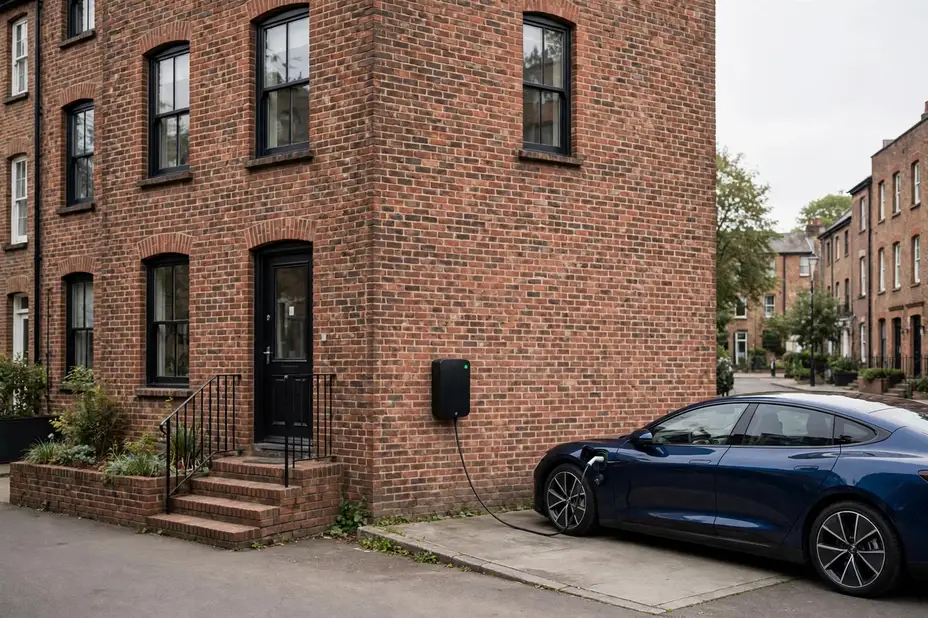
Condos, HOAs and the law in New Mexico
New Mexico has no statewide right-to-charge law. That needs saying plainly, because roundups on the internet sometimes claim otherwise: in the authoritative statute indexes checked for this page, no New Mexico law prevents a homeowners association or condominium from refusing a charger in a common or assigned space. Your community's own covenants and board govern the question in Albuquerque.
Metering is the objection that sinks more applications than any other, and it is the easiest to pre-empt: propose, in the application itself, how the electricity will be measured and paid for by you — a submeter, a separately metered circuit, or a flat arrangement the board can audit. Boards refuse ambiguity far more often than they refuse chargers.
The general process, minus the statute, is still covered in our guide to installing an EV charger in a condo or HOA community — most of its application-package advice applies in Albuquerque exactly as written.
Climate, garages and charger placement
Monsoon season writes one arid rule in water: drainage. The charging position is chosen where the rare but real storm flow does not cross, the pedestal foundation sheds rather than ponds, and conduit entries seal against the driven rain that arrives horizontally a few times a year.
Dust is the desert's weather, and it has an install opinion: enclosures that seal rather than vent where the design allows, connectors holstered capped rather than open, and a cable route that keeps the plug off the ground's grit between sessions. Equipment chosen for the region already assumes it; mounting discipline completes it.

Permits and inspection in Albuquerque
Bring the panel schedule up to date while the electrician is in it — the new circuit labelled, in the directory, in pen. Inspectors notice; future electricians bless you for it; and the load calculation for any second circuit starts from that card.

Neighbourhoods and ZIP codes served
The page covers 42 ZIP codes in and around Albuquerque — including 87101, 87102, 87103, 87104, 87105, 87106, 87107, 87108, 87109, 87110, 87111, 87112, 87113, 87114, 87115, 87116, 87119, 87120, 87121, 87122, 87123, 87125, 87131, 87151, 87153, 87154, 87158, 87176, 87181, 87184, 87185, 87187, 87190, 87191, 87192, 87193, 87194, 87195, 87196, 87197, 87198, 87199 — across Bernalillo. If your ZIP is not in the first set shown, ask anyway: installer coverage follows the metro, not a postcode fence.
The same working area takes in the neighbouring localities of Rio Rancho, Kirtland Afb, Cedar Crest, Sandia Park, Isleta, Tijeras — the county ring an installer based in Albuquerque actually drives. Requests from those communities route exactly as city requests do: same services, same permit discipline, same local facts where they differ.
Bernalillo County accounts for 48 of the ZIP codes and 7 named postal localities in the research file, the nearest of them Rio Rancho, Kirtland Afb, Cedar Crest, Sandia Park, Isleta. The survey counts 673,930 residents in the county, with a median household income of $69,473 and a median home value of $292,900. Measured across its ZIP codes, the Albuquerque footprint runs about 12 miles north to south and 20 east to west, from ZIP 87101 to 87199 — the ground an installer based here actually covers in a working week.
Beyond the county seats, the working area takes in Corrales, Rio Rancho, Placitas, Bernalillo, Kirtland Afb, Cedar Crest, Sandia Park, Isleta, Algodones, Tijeras, Bosque Farms, Peralta, San Ysidro, Edgewood, Los Lunas, Jemez Pueblo, Ponderosa, Tome, Stanley, Moriarty, Laguna, Belen, Torreon, Mcintosh, Paguate, Estancia, Jarales, New Laguna — the named localities for which Albuquerque is the nearest metro in the network (neighbouring metros' pages cover their own ground), each routing to the same installer-matching service.
The wider working area also reaches Santo Domingo Pueblo, Pena Blanca, Cerrillos, Cochiti Pueblo, Cochiti Lake, Lamy, Santa Fe — ground shared with neighbouring metros, where installers cross the same county lines in both directions.
The largest communities in that working area after Albuquerque itself, by the GeoNames populated-place file: Rio Rancho (population 87,521), Enchanted Hills (population 87,521), South Valley (population 40,976), Los Lunas (population 15,336), North Valley (population 11,333), Grants (population 9,239), Bernalillo (population 8,843), Socorro (population 8,722), Corrales (population 8,502), Belen (population 7,152), Los Ranchos de Albuquerque (population 6,063), Lee Acres (population 5,858), Los Chavez (population 5,446), Placitas (population 4,977), Rio Communities (population 4,723), Meadow Lake (population 4,708), El Cerro Mission (population 4,657), Paradise Hills (population 4,256), Bosque Farms (population 3,838), Edgewood (population 3,805). Charging demand follows those populations — the subdivisions and town centres where the next driveways, and the next panels, are.
Sandoval County reaches into the working area with 153,604 residents, a median household income of $86,636 and a median home value of $313,800; its localities on this page include Corrales, Rio Rancho, Placitas, Bernalillo. Valencia County reaches into the working area with 78,458 residents, a median household income of $58,933 and a median home value of $223,000; its localities on this page include Bosque Farms, Peralta, Los Lunas, Tome, Belen. Torrance County reaches into the working area with 15,490 residents, a median household income of $57,842 and a median home value of $159,700; its localities on this page include Moriarty, Torreon, Mcintosh, Estancia. Cibola County reaches into the working area with 26,845 residents, a median household income of $50,759 and a median home value of $125,400; its localities on this page include Laguna, Paguate, New Laguna. Santa Fe County reaches into the working area with 156,105 residents, a median household income of $79,071 and a median home value of $446,300; its localities on this page include Edgewood, Stanley.
| ZIP | Locality | County |
|---|---|---|
| 87101 | Albuquerque | Bernalillo |
| 87114 | Albuquerque | Bernalillo |
| 87048 | Corrales | Sandoval |
| 87113 | Albuquerque | Bernalillo |
| 87124 | Rio Rancho | Sandoval |
| 87107 | Albuquerque | Bernalillo |
| 87120 | Albuquerque | Bernalillo |
| 87109 | Albuquerque | Bernalillo |
| 87104 | Albuquerque | Bernalillo |
| 87110 | Albuquerque | Bernalillo |
| 87122 | Albuquerque | Bernalillo |
| 87158 | Albuquerque | Bernalillo |
| 87197 | Albuquerque | Bernalillo |
| 87198 | Albuquerque | Bernalillo |
| 87111 | Albuquerque | Bernalillo |
| 87102 | Albuquerque | Bernalillo |
| 87106 | Albuquerque | Bernalillo |
| 87144 | Rio Rancho | Sandoval |
| 87108 | Albuquerque | Bernalillo |
| 87112 | Albuquerque | Bernalillo |
| 87043 | Placitas | Sandoval |
| 87103 | Albuquerque | Bernalillo |
| 87119 | Albuquerque | Bernalillo |
| 87125 | Albuquerque | Bernalillo |
| 87131 | Albuquerque | Bernalillo |
| 87153 | Albuquerque | Bernalillo |
| 87154 | Albuquerque | Bernalillo |
| 87174 | Rio Rancho | Bernalillo |
| 87176 | Albuquerque | Bernalillo |
| 87181 | Albuquerque | Bernalillo |
| 87184 | Albuquerque | Bernalillo |
| 87185 | Albuquerque | Bernalillo |
| 87187 | Albuquerque | Bernalillo |
| 87190 | Albuquerque | Bernalillo |
| 87191 | Albuquerque | Bernalillo |
| 87192 | Albuquerque | Bernalillo |
| 87193 | Albuquerque | Bernalillo |
| 87194 | Albuquerque | Bernalillo |
| 87195 | Albuquerque | Bernalillo |
| 87196 | Albuquerque | Bernalillo |
| 87199 | Albuquerque | Bernalillo |
| 87004 | Bernalillo | Sandoval |
| 87105 | Albuquerque | Bernalillo |
| 87116 | Albuquerque | Bernalillo |
| 87121 | Albuquerque | Bernalillo |
| 87115 | Albuquerque | Bernalillo |
| 87123 | Albuquerque | Bernalillo |
| 87117 | Kirtland Afb | Bernalillo |
| 87008 | Cedar Crest | Bernalillo |
| 87151 | Albuquerque | Bernalillo |
| 87047 | Sandia Park | Bernalillo |
| 87022 | Isleta | Bernalillo |
| 87001 | Algodones | Sandoval |
| 87059 | Tijeras | Bernalillo |
| 87068 | Bosque Farms | Valencia |
| 87042 | Peralta | Valencia |
| 87053 | San Ysidro | Sandoval |
| 87015 | Edgewood | Santa Fe |
| 87031 | Los Lunas | Valencia |
| 87024 | Jemez Pueblo | Sandoval |
| 87044 | Ponderosa | Sandoval |
| 87060 | Tome | Valencia |
| 87056 | Stanley | Santa Fe |
| 87035 | Moriarty | Torrance |
| 87026 | Laguna | Cibola |
| 87002 | Belen | Valencia |
| 87061 | Torreon | Torrance |
| 87032 | Mcintosh | Torrance |
| 87040 | Paguate | Cibola |
| 87016 | Estancia | Torrance |
| 87023 | Jarales | Valencia |
| 87038 | New Laguna | Cibola |

Planning the install: from panel to parking
Think of the project as a chain with four links: capacity, route, placement, paperwork. Capacity is the load calculation. Route is the path copper takes from panel to parking — through a shared wall if you are lucky, across a ceiling or a trench if you are not. Placement is the unglamorous decision that governs daily life with the car for a decade: reach, cable slack, and which side the port is on. Paperwork is the permit and the passed inspection, the proof that outlives the installer's visit.
Future-proofing, in this trade, is mostly conduit and capacity: an oversized conduit run costs little during the first install and everything later; a panel position reserved is a breaker that never has to move. If a second EV, a workshop or an electrified water heater is anywhere in your five-year picture, say so at the site visit.
Home charging know-how for Albuquerque households
The paperwork is part of the installation
A finished install leaves two legacies: a working charger and a file. The file — permit, passed inspection, the station's configuration recorded, the panel schedule updated, a photograph of the finished work — is what the future runs on. It answers the insurer's question, the buyer's question, the second installer's load calculation, and the warranty conversation, each in one page. Households that treat the paperwork as part of the deliverable never have to reconstruct it; households that do not, eventually do. Ask for the file at handover and keep it with the house documents.
Bidirectional charging, honestly framed
Vehicles that can return energy to a house or the grid exist, and the standards enabling them are settling — but for most households today it is a horizon technology, not a purchase category: it needs a compatible vehicle, bidirectional equipment, utility interconnection approval and a tariff that rewards it. None of that changes today's installation advice, except in one detail: conduit and panel capacity installed generously now are the same provisions a future bidirectional setup would want. Buy for the car you have; leave room for the one the industry is promising.
Making the rate window automatic
Time-of-use tariffs reward households whose charging happens while the grid sleeps, and the reward compounds silently: every night, for the life of the car. The mechanism is trivial — a schedule set in the vehicle or the station — but the details decide whether it survives contact with real life: the window must fit the household's latest departure, the schedule must yield gracefully on the nights the car comes home empty, and the settings must live somewhere the household can find them again. Set it up at commissioning, with the installer, and the saving becomes infrastructure rather than intention.
Three cars, one driveway
Households with more vehicles than bays run a small nightly logistics operation, and charging joins the rotation. The patterns that work: the station positioned to serve two parking spots in sequence, a household habit about whose night it is, and — where two of the fleet are electric — power sharing that removes the rotation entirely. The design conversation should start from the household's actual parking choreography, observed on a normal evening, because the charger serves the pattern that exists, not the one the driveway promised.

Frequently asked questions
Can I still get the federal tax credit for a home charger in Albuquerque, NM?
That credit is finished: 30C ended on September 30, 2025. What about locally? In the utility and state sources checked for this page, nothing verified was running for Albuquerque homeowners — no Public Service Co of NM rebate, no state scheme. If one opens, it will appear on the utility's site with dates; plan your install without it meanwhile.
Can my HOA or condo board in Albuquerque, NM refuse my charger?
As the law stands, yes: without a New Mexico right-to-charge statute, an association in Albuquerque may refuse or condition a charger under its own documents. The practical counterweight is preparation — a complete written package, a metering answer, and a request that the refusal, if it comes, be issued in writing with the covenant cited.
Does a Level 2 charger mean a panel upgrade for a Albuquerque, NM home?
The answer lives in your panel's directory and its arithmetic, not in the car's requirements. With 46% of Albuquerque's homes predating 1980 (median build 1983), local installers see both situations weekly: the 200-amp panel that takes the circuit directly, and the full 100-amp service that needs capacity work first. The site visit exists to sort your house into one of those two piles, on numbers.
How much faster is Level 2 charging at home in Albuquerque, NM?
A Level 1 cord on a household outlet adds roughly 3–5 miles of range per hour; a Level 2 station on a 240-volt circuit typically adds about 25–40 miles per hour depending on the circuit's amperage and the vehicle. For most drivers that is the difference between rationing the battery and never thinking about it.
How does the installer matching on this page work?
Your request is matched to licensed installers covering Albuquerque, New Mexico — service, ZIP, property type and timing travel with it. The installer who takes it arranges the site visit and quotes in writing; PlugReady USA's part is the research on this page and the introduction, and your contract is with the installer throughout.
Does Public Service Co of NM offer a time-of-use rate for EV charging in Albuquerque?
Worth checking before the install, because it changes the setup rather than the circuit: if Public Service Co of NM offers your address a time-of-use plan, the station's schedule is programmed to its overnight window at commissioning. The tariff pages or a call to the utility confirm your plan's windows; guessing from a neighbour's bill is how households end up charging at peak by default.
Nearby cities in New Mexico
- EV charger installation in Santa Fe — about 50 miles from Albuquerque, metro population 155,000
- EV charger installation in Farmington — about 136 miles from Albuquerque, metro population 130,000
- EV charger installation in Las Cruces — about 201 miles from Albuquerque, metro population 220,000
- EV charger installation in El Paso, TX — about 238 miles from Albuquerque, metro population 875,000
- EV charger installation in Amarillo, TX — about 265 miles from Albuquerque, metro population 310,000
- EV charger installation in Flagstaff, AZ — about 277 miles from Albuquerque, metro population 145,000
Ready to charge at home in Albuquerque?
Send the essentials — what you need, where, and what kind of property — and a licensed local installer will pick it up from there.