EV Charger Installation in Detroit, MI
Everything a Detroit homeowner needs before booking a charger install — the panel question, the utility's current programs, the HOA law and the permit — sourced, dated and local.
Every home charger installation is the same four decisions wearing local clothes: capacity in the panel, a route for the circuit, a position for the station, and paperwork that proves it was done properly. What changes from city to city is the content of those decisions — and in Detroit the content is specific. Detroit itself is home to about 645,702 people. Michigan's registered fleet stood at 112,600 battery-electric vehicles and 42,100 plug-in hybrids at the end of 2025, and this page works through the local version of each decision: your utility and its programs, your state's association law, your permit counter, and your housing stock's electrical habits.
How PlugReady USA works, in one breath: you describe the job once, licensed local installers who cover Detroit receive it, and the conversations happen with them directly. The rest of this page exists so those conversations start from facts — yours about the house, ours about the metro — rather than from a sales script.
Measured demand, not enthusiasm, put Detroit in Tier A of this network: Experian fastest-growing DMA +34.5%; MI 112.6K BEVs; new HOA law. For a homeowner the useful translation is simpler — installers here do this work weekly, know the local permit counter, and have seen your housing stock before.
Survey context for Detroit, in the three lines installers actually use: median household income $39,209; owner-occupation at 51%; single-unit detached homes at 64%. Income tracks adoption pace, tenure decides whose signature a job needs, and structure decides whether the answer is a garage circuit or a building negotiation.

Put the survey together and Detroit's charging profile reads like this: an older housing fabric, where panel archaeology is a normal part of the first visit; a detached-house majority with a real attached and multifamily minority; buildings of five or more units hold a substantial share of homes, which keeps the multifamily sections of this page in daily use; and owners hold a working majority, with renters a significant minority. That combination — more than any single number — is what the installers working here plan around, and it is the lens for everything on this page.
The counts behind the percentages, for the record: Detroit has 343,649 housing units on the survey's count, 268,048 of them occupied, and 136,621 owner-occupied households making their own electrical decisions. Detached houses number 219,621; homes built before 1980 number 310,450; units in buildings of five or more number 69,827. An installer's week in this city is a walk through exactly that distribution. The page's geography is equally concrete: 46 ZIP codes across Wayne, centred near 42.35 degrees north latitude. The city anchors the Detroit–Warren–Dearborn metropolitan area, home to roughly 4,350,000 people on the research file's metro estimate — the wider labour and housing market this page's installers work across.
The same survey release fills in the household economics around the housing stock: a median home value of $95,900, median gross rent of $1,091, per-capita income of $24,766, and a median resident age of 36. How the city moves completes the picture: 67% of Detroit workers drive to work alone — the commute pattern home charging is built around; 10% work from home, a population whose cars charge on daytime and overnight schedules alike; 4% commute by public transit; 19% of adults hold a bachelor's degree or higher. And the fleet in the driveways: 132,120 households in Detroit have exactly one vehicle, 83,898 have two or more, and 52,030 have none.
Two burden statistics frame the economics: in Detroit, 55% of renters and 0% of mortgage-holding owners are housing-cost burdened at the standard 30% threshold. And 52% of households are family households, the segment most likely to run the two-vehicle, two-schedule pattern the second-vehicle planning notes address.
Read together, the local facts draw a recognisable picture. Pre-war and immediate post-war streets dominate the map, and their electrical fabric is stratified — original services beneath mid-century additions beneath modern subpanels, an archaeology the load calculation reads layer by layer. Mixed form means mixed timelines: a homeowner's install is a fortnight's scheduling, a condo's is a season's governance; the metro's charging growth arrives on both clocks at once.
Where renting dominates, the successful install is a document before it is a device — installer licence, insurance, metering clarity, end-of-tenancy position — assembled to make a landlord's yes the path of least resistance. The install market that serves modest incomes runs on referrals and repetition: neighbourhoods where one good install, fairly scoped, produces the street's next five customers. Scale brings a call centre, but it also brings published everything — interconnection standards, programme terms, complaint statistics — and the published page, not the phone call, is where this utility is most honest.
The used-EV wave has arrived at this fleet scale, and it democratises the install question: households that bought electric second-hand, at family-car money, asking the same panel questions as the pioneers — with better local answers available. Metropolitan scale means the page's general facts have street-level exceptions everywhere — micro-territories of other utilities, historic districts with their own rules, buildings with their own regimes — and the installer conversation is where the exception for your address surfaces. Shared-property households here work with a written legal position rather than a board's mood, which changes the application from a petition into a procedure.
The electrical reality in Detroit homes
Start with the survey's three operative figures for Detroit: median build year 1946; 90% of housing units standing since before 1980; 64% of the stock in single-unit detached houses, with 51% of occupied homes owner-occupied. Between them, they sketch the electrical city an installer works in. A housing stock this age leans on smaller electrical services — 100-amp panels are common, and fuse-era equipment still turns up in the oldest streets. For many of those homes the honest answer is a panel upgrade or a load-management device before the charger circuit goes in, and a good installer will show you the load calculation rather than asking you to take it on faith. Housing age also tracks wire-run reality: older homes more often place the panel in a basement or interior wall far from the garage, and distance is copper, conduit and labour.
One further survey line belongs in any Detroit install conversation: 17% of the city's homes heat with electricity — 45,151 households whose panels already carry a major winter load before a charger is contemplated. Electric heat and EV charging are the two largest discretionary loads a house can host, and where they coincide, the load calculation stops being a formality.
The tenure split cuts the other way too: roughly 131,427 occupied homes in Detroit are rented. For those households the charger question is a negotiation with a property owner — written proposal, licensed installer, metering clarity — and it succeeds often enough that installers here keep the pattern ready.
One more structural fact shapes Detroit's charging map: 20% of the city's housing units sit in buildings of five or more units. Those households cannot simply book a circuit — their charger runs through a building, a board and a shared electrical service, which is why the multifamily service and the law section below carry unusual weight on this page.
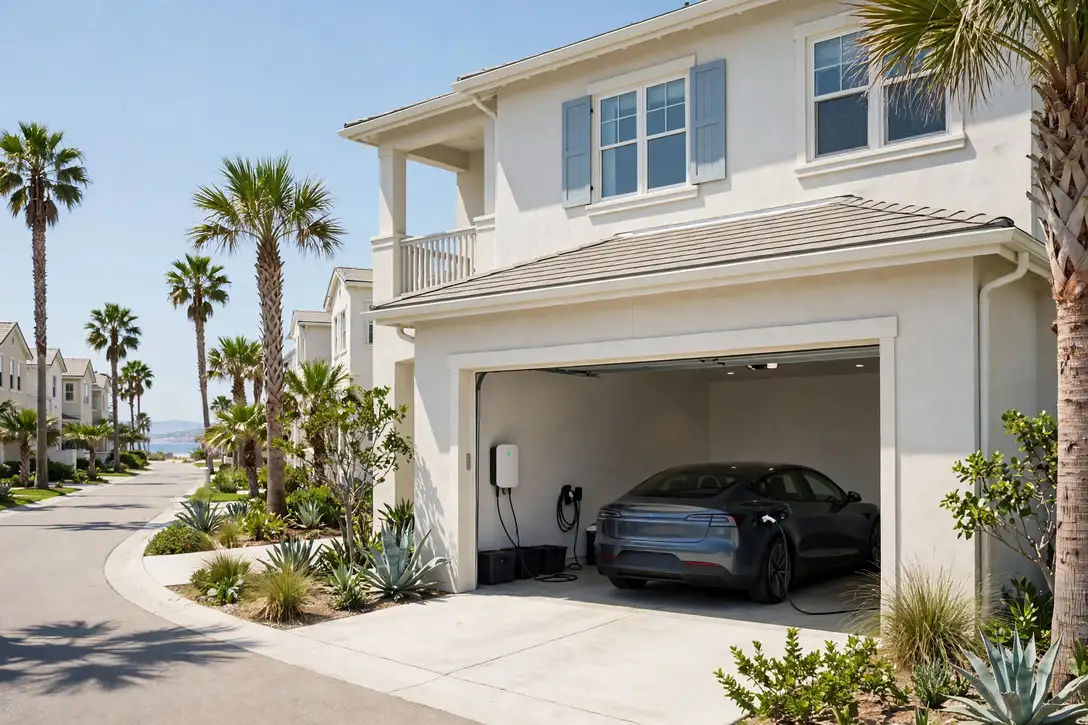
EV charging services in Detroit
The full menu runs to ten services; the three cards at the top are the ones Detroit's housing stock and state law push to the front. Everything links to its national service page for scope and process in full.
Home EV Charger Installation in Detroit
One circuit, one station, one inspection: the residential install in its usual form. An installer sizes the circuit to the household's driving, mounts the station where the cable reaches the port without drama, sets its output to the circuit it landed on, and leaves the paperwork filed with the house.
In Detroit: where most Detroit projects start and finish: one circuit, one station, one inspection.
Dedicated Circuit & Electrical Panel Upgrade in Detroit
Panel work is the one part of a charger project that outlives the car, the station and possibly the household's tenure. Specified generously and documented properly, it is less an expense than a permanent alteration in what the house can do.
In Detroit: the job that surfaces wherever housing is older — and Detroit's stock makes it a routine conversation, settled by a load calculation.
Multifamily & Condo EV Charging in Detroit
The multifamily install is a small constitution before it is a circuit: who may charge, on whose meter, under what cost split, with what path for the next ten applicants. Buildings that write that constitution once stop re-litigating it at every annual meeting.
In Detroit: the approvals-plus-wiring job for Detroit's condos and HOA communities, where the process matters as much as the circuit.
Utility programs and electricity in Detroit
Electricity in Detroit comes from DTE Electric Company. Parts of the wider metro are served by Wyandotte Municipal Serv Comm. The utility matters twice over for a charger install: it sets the time-of-use rates that decide what overnight charging costs you, and it is the organisation that may — or may not — currently help pay for the equipment.
Program status is a snapshot, and this page dates its snapshot: sources checked at build time found no DTE Electric Company residential charger rebate, no Michigan home-charger program, and a federal credit that ended September 30, 2025. Detroit households should treat that as the position until a utility announcement changes it — utilities publish openings prominently when budgets exist, because unspent program money is a problem for them too.
While you are in the tariff pages, look at how the plan values the evening ramp — the hours when cooking, cooling and charging would otherwise stack. A charger that starts after the ramp is the simplest scheduling decision in home charging, and it is set once.
Condos, HOAs and the law in Michigan
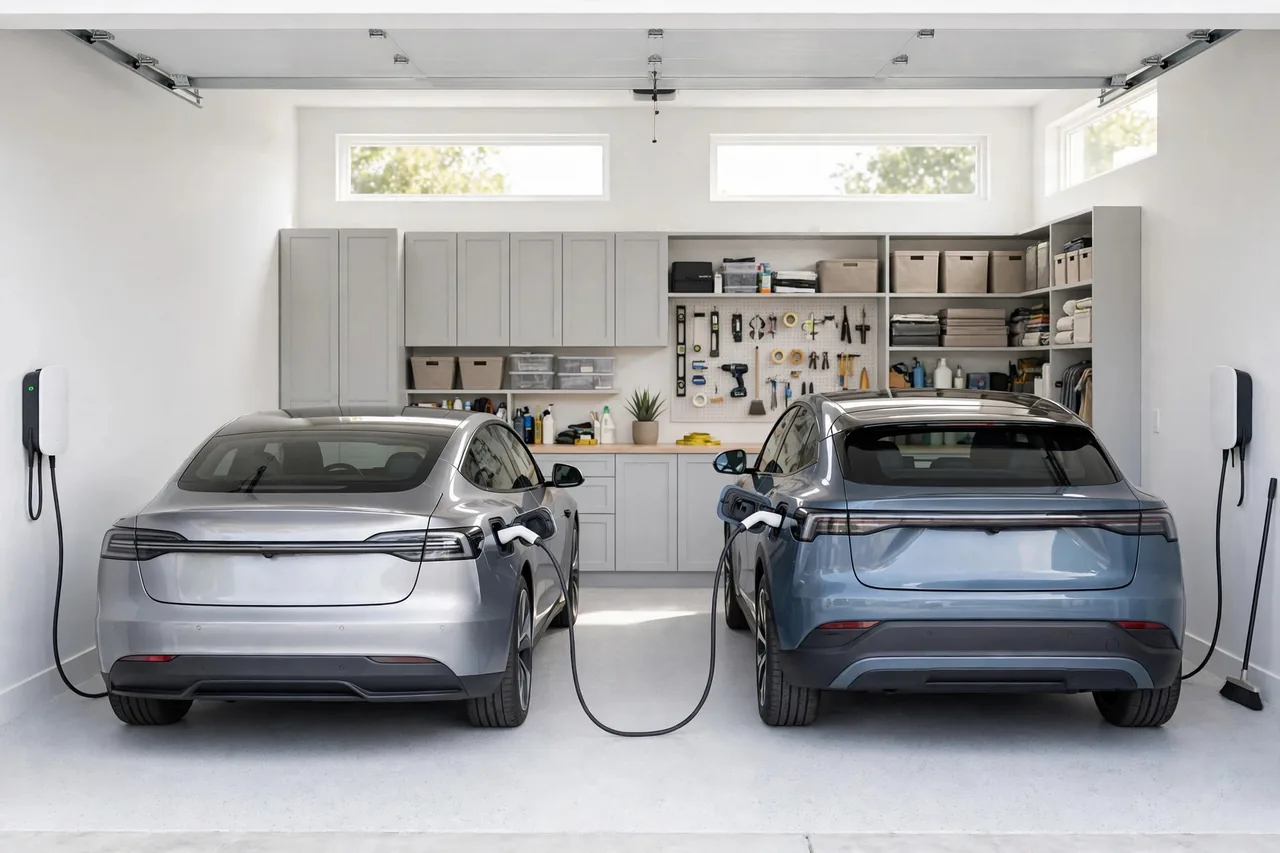
Michigan law protects an owner's charger. Homeowners' Energy Policy Act, MCL 559.305 (eff. Apr 2, 2025) gives owners in association communities a statutory route to a charging station in their own space: the association may set reasonable conditions on how the installation looks, where exactly it sits, and how it is insured, but a flat prohibition is not one of its options. Owners fund the work, use licensed installers, and remain responsible for the equipment — the statute allocates the burdens; it does not remove them.
In practice, boards in Michigan process charger applications the way they process any exterior electrical work — drawings, equipment listing, the installer's licence and insurance — with the statute standing behind the timeline. Applications in Detroit that arrive complete are typically answered in one meeting cycle; incomplete ones teach their owners the meeting calendar.
The step-by-step version lives in our guide to installing an EV charger in a condo or HOA community — the application sequence, the metering designs and the questions boards ask, in order.
Climate, garages and charger placement
Cord flexibility is a rated property, and January is when the rating is read. Cables specified for cold service coil and uncoil at temperatures that make lesser jackets crack; where the station is chosen locally, this line of the specification has already been read for you — one of the quieter values of a local installer.
Garages here earn their insulation twice: once for the house, and once for the battery that prefers its nights merely cold rather than arctic. A plugged-in car sips what it needs to stay ready; the building's job is to narrow the gap it sips against.

Permits and inspection in Detroit
The permit trail also protects the next transaction: a charger circuit on the inspection record is an asset a buyer's inspector reads in one line, while an undocumented circuit is a question that follows the sale. Installers who work this metro treat the filing as part of the deliverable, not an errand.

Neighbourhoods and ZIP codes served
The page covers 46 ZIP codes in and around Detroit — including 48201, 48202, 48204, 48205, 48206, 48207, 48208, 48209, 48210, 48211, 48213, 48214, 48215, 48216, 48217, 48219, 48221, 48222, 48223, 48224, 48226, 48227, 48228, 48231, 48232, 48233, 48234, 48235, 48238, 48242, 48243, 48244, 48255, 48260, 48264, 48265, 48266, 48267, 48268, 48269, 48272, 48275, 48277, 48278, 48279, 48288 — across Wayne. If your ZIP is not in the first set shown, ask anyway: installer coverage follows the metro, not a postcode fence.
The same working area takes in the neighbouring localities of Hamtramck, Highland Park, Dearborn, River Rouge, Grosse Pointe, Melvindale, Ecorse, Garden City, Harper Woods, Lincoln Park, Allen Park, Wyandotte, Dearborn Heights, Southgate — the county ring an installer based in Detroit actually drives. Requests from those communities route exactly as city requests do: same services, same permit discipline, same local facts where they differ.
Wayne County accounts for 94 of the ZIP codes and 32 named postal localities in the research file, the nearest of them Hamtramck, Highland Park, Dearborn, River Rouge, Grosse Pointe. The survey counts 1,772,259 residents in the county, with a median household income of $60,539 and a median home value of $178,500. Measured across its ZIP codes, the Detroit footprint runs about 15 miles north to south and 21 east to west, from ZIP 48201 to 48288 — the ground an installer based here actually covers in a working week.
Beyond the county seats, the working area takes in Hamtramck, Highland Park, Dearborn, River Rouge, Grosse Pointe, Hazel Park, Melvindale, Ecorse, Warren, Ferndale, Garden City, Center Line, Harper Woods, Pleasant Ridge, Lincoln Park, Eastpointe, Allen Park, Oak Park, Royal Oak, Madison Heights, Wyandotte, Huntington Woods, Dearborn Heights, Southfield, Saint Clair Shores, Southgate, Roseville, Redford, Berkley, Taylor, Clawson, Inkster, Fraser, Troy, Sterling Heights, Riverview, Grosse Ile, Birmingham, Franklin, Clinton Township, Livonia, Trenton, Westland, Wayne, Bloomfield Hills, Farmington, Utica, Mount Clemens, Romulus, Flat Rock, Rockwood, Harrison Township, New Boston, Rochester, West Bloomfield, Macomb, Canton, South Rockwood, Plymouth, Novi, Auburn Hills, Pontiac, Keego Harbor, Northville, Belleville, Waterford, Washington, Walled Lake, Carleton, New Baltimore, Clarkston, Drayton Plains, Union Lake, Newport, Lake Orion, Salem, Wixom, Ray, Commerce Township, Ypsilanti, Oakland, White Lake, New Haven, Harsens Island, Willis, Fair Haven, Algonac, Lakeville, Whittaker, Milford, Maybee, New Hudson, South Lyon, Oxford, Romeo, Leonard, Armada, Ann Arbor, Monroe, Casco, Marine City, Highland, Richmond, Davisburg, Milan, Anchorville, Ortonville, Almont, Whitmore Lake, La Salle, Azalia, Brighton, Dryden, East China, Hartland, Allenton, Saline, Hamburg, Luna Pier, Dundee, Metamora, Holly, Columbus, Memphis, Lakeland, Saint Clair, Ida — the named localities for which Detroit is the nearest metro in the network (neighbouring metros' pages cover their own ground), each routing to the same installer-matching service.
The largest communities in that working area after Detroit itself, by the GeoNames populated-place file: Toledo (population 265,638), Warren (population 134,056), Sterling Heights (population 132,052), Ann Arbor (population 117,070), Clinton Township (population 99,753), Dearborn (population 95,171), Livonia (population 94,635), Canton (population 86,825). Charging demand follows those populations — the subdivisions and town centres where the next driveways, and the next panels, are.
Oakland County reaches into the working area with 1,279,825 residents, a median household income of $97,760 and a median home value of $343,600; its localities on this page include Hazel Park, Ferndale, Pleasant Ridge, Oak Park, Royal Oak. Macomb County reaches into the working area with 879,853 residents, a median household income of $77,837 and a median home value of $243,900; its localities on this page include Warren, Center Line.
| ZIP | Locality | County |
|---|---|---|
| 48201 | Detroit | Wayne |
| 48226 | Detroit | Wayne |
| 48231 | Detroit | Wayne |
| 48232 | Detroit | Wayne |
| 48243 | Detroit | Wayne |
| 48255 | Detroit | Wayne |
| 48264 | Detroit | Wayne |
| 48267 | Detroit | Wayne |
| 48268 | Detroit | Wayne |
| 48269 | Detroit | Wayne |
| 48272 | Detroit | Wayne |
| 48275 | Detroit | Wayne |
| 48279 | Detroit | Wayne |
| 48208 | Detroit | Wayne |
| 48216 | Detroit | Wayne |
| 48207 | Detroit | Wayne |
| 48202 | Detroit | Wayne |
| 48211 | Detroit | Wayne |
| 48206 | Detroit | Wayne |
| 48214 | Detroit | Wayne |
| 48210 | Detroit | Wayne |
| 48209 | Detroit | Wayne |
| 48212 | Hamtramck | Wayne |
| 48204 | Detroit | Wayne |
| 48213 | Detroit | Wayne |
| 48203 | Highland Park | Wayne |
| 48238 | Detroit | Wayne |
| 48234 | Detroit | Wayne |
| 48215 | Detroit | Wayne |
| 48120 | Dearborn | Wayne |
| 48126 | Dearborn | Wayne |
| 48218 | River Rouge | Wayne |
| 48205 | Detroit | Wayne |
| 48221 | Detroit | Wayne |
| 48217 | Detroit | Wayne |
| 48224 | Detroit | Wayne |
| 48227 | Detroit | Wayne |
| 48230 | Grosse Pointe | Wayne |
| 48030 | Hazel Park | Oakland |
| 48122 | Melvindale | Wayne |
| 48229 | Ecorse | Wayne |
| 48091 | Warren | Macomb |
| 48228 | Detroit | Wayne |
| 48220 | Ferndale | Oakland |
| 48121 | Dearborn | Wayne |
| 48123 | Dearborn | Wayne |
| 48136 | Garden City | Wayne |
| 48222 | Detroit | Wayne |
| 48233 | Detroit | Wayne |
| 48244 | Detroit | Wayne |
| 48260 | Detroit | Wayne |
| 48265 | Detroit | Wayne |
| 48266 | Detroit | Wayne |
| 48277 | Detroit | Wayne |
| 48278 | Detroit | Wayne |
| 48288 | Detroit | Wayne |
| 48089 | Warren | Macomb |
| 48090 | Warren | Macomb |
| 48235 | Detroit | Wayne |
| 48015 | Center Line | Macomb |
| 48225 | Harper Woods | Wayne |
| 48069 | Pleasant Ridge | Oakland |
| 48146 | Lincoln Park | Wayne |
| 48397 | Warren | Macomb |
| 48021 | Eastpointe | Macomb |
| 48236 | Grosse Pointe | Wayne |
| 48101 | Allen Park | Wayne |
| 48237 | Oak Park | Oakland |
| 48223 | Detroit | Wayne |
| 48067 | Royal Oak | Oakland |
| 48068 | Royal Oak | Oakland |
| 48071 | Madison Heights | Oakland |
| 48192 | Wyandotte | Wayne |
| 48070 | Huntington Woods | Oakland |
| 48124 | Dearborn | Wayne |
| 48092 | Warren | Macomb |
| 48128 | Dearborn | Wayne |
| 48219 | Detroit | Wayne |
| 48125 | Dearborn Heights | Wayne |
| 48093 | Warren | Macomb |
| 48075 | Southfield | Oakland |
| 48080 | Saint Clair Shores | Macomb |
| 48088 | Warren | Macomb |
| 48086 | Southfield | Oakland |
| 48127 | Dearborn Heights | Wayne |
| 48195 | Southgate | Wayne |
| 48066 | Roseville | Macomb |
| 48239 | Redford | Wayne |
| 48072 | Berkley | Oakland |
| 48073 | Royal Oak | Oakland |

Planning the install: from panel to parking
A useful way to read any Detroit quote is to ask which of three jobs it describes. Job one: the panel has room and the run is short — a circuit and a station. Job two: the panel is full — capacity work joins the quote, as an upgrade or as load management. Job three: the property adds people — an HOA, a landlord, a building's shared service — and the approvals timeline joins the electrical one. None of the three is a bad job; they are simply different scopes, and a clear quote says which one you are in.
One more piece of sequencing advice Detroit installers give consistently: if the panel is being opened anyway, settle the other electrical maybes in the same visit — the circuit you will want next year costs least while the permit and the electrician are already in the house.
Home charging know-how for Detroit households
Bidirectional charging, honestly framed
Vehicles that can return energy to a house or the grid exist, and the standards enabling them are settling — but for most households today it is a horizon technology, not a purchase category: it needs a compatible vehicle, bidirectional equipment, utility interconnection approval and a tariff that rewards it. None of that changes today's installation advice, except in one detail: conduit and panel capacity installed generously now are the same provisions a future bidirectional setup would want. Buy for the car you have; leave room for the one the industry is promising.
The driveway is shared infrastructure
In households where the charger serves a shared driveway, the install acquires a social protocol alongside its electrical one: whose night, which side, how the cable crosses, what happens when guests park across the route. The designs that work settle the protocol physically — a station reachable from both bays, a cable path that crosses no one's door swing — rather than relying on nightly negotiation. Infrastructure that requires diplomacy every evening was under-designed in the morning.
Charging alongside rooftop solar
A house that generates as well as consumes plans its charging differently. The naive pattern — charge at night, export by day — is often fine; the refined pattern shifts some charging into the solar hours on home-working days, stores the commute in the car when the panels are producing, and leans on the overnight window only for the balance. None of this changes the circuit; it changes the schedule, and occasionally the case for a station whose output can follow the house's generation. Tell the installer the array exists — it belongs in the first conversation.
The labelled breaker
Panel directories are autobiographies written in pencil, and a charger install adds a chapter. The new breaker gets labelled — circuit, station, date — in the directory and, in thorough households, on the panel schedule taped inside the door. It reads as pedantry until the night something trips at 11 pm and the labelled directory turns a flashlight search into a ten-second answer. It also serves the future: the next electrician, the inspector, the buyer, each reads the panel's story faster when the latest chapter is legible.
Breakers: the household's safety switches
A breaker is a switch that watches current and opens when the current stops being safe — heat in a conductor is the thing it exists to prevent. Two household rules follow. First, a tripping breaker is reporting, not malfunctioning by default: reset once, and if it repeats, the circuit gets an electrician, not another reset. Second, the forbidden fix: never answer a trip by fitting a larger breaker. The breaker protects the wire in the wall; upsizing the guard without upsizing the wire removes the protection and keeps the problem.

Frequently asked questions
Can I still get the federal tax credit for a home charger in Detroit, MI?
You cannot — it no longer exists. The 30C credit closed to equipment placed in service after September 30, 2025, and no Michigan program replaced it for home installs. Nor did the sources checked for this page show a live DTE Electric Company residential rebate. Treat any 'credit' mentioned in a quote as a request for paperwork.
Can my HOA or condo board in Detroit, MI refuse my charger?
Not outright. Under Homeowners' Energy Policy Act, MCL 559.305 (eff. Apr 2, 2025), Michigan associations cannot prohibit an owner's charger; they can condition it — reasonably — on placement, insurance and restoration, with the owner funding the work. The disputes that do arise are usually about conditions, and they settle fastest when the application answers them in advance.
Will my Detroit, MI home need a panel upgrade for a Level 2 charger?
It hinges on two numbers you cannot read off the panel door: the service's rating, and what the load calculation says it already carries. The vintage of Detroit's stock — median build year 1946, about 90% of homes from before 1980 — means both answers are common here. The charger enters the arithmetic at 125% of its draw; whatever room survives that entry decides between a circuit, a management device, and an upgrade.
How quickly will a Level 2 charger fill my car in Detroit, MI?
Level 1 — the cord in the boot, on a normal outlet — returns about 3–5 miles of range an hour. Level 2 on its own 240-volt circuit returns roughly 25–40. A Detroit commuter who parks at seven and leaves at seven stops doing battery arithmetic entirely.
How does the installer matching on this page work?
Your request — service, Detroit ZIP, property type and timing — goes to licensed local installers who cover Detroit. They contact you directly to arrange a site visit and quote. PlugReady USA is the matching service, not the installer, and the sections above exist so you can judge any quote against the local facts.
Can a charger be added to a detached garage in Detroit?
Yes — and detached garages are common in Detroit, where about 64% of homes are single-unit detached. The run out to the building is the substance of the job: a buried conduit from the house panel, or a subpanel in the garage where the distance and future loads justify it. The station itself then behaves like any garage install.
Nearby cities in Michigan
- EV charger installation in Lansing — about 87 miles from Detroit, metro population 550,000
- EV charger installation in Grand Rapids — about 148 miles from Detroit, metro population 1,100,000
- EV charger installation in Cleveland, OH — about 99 miles from Detroit, metro population 2,100,000
- EV charger installation in Akron, OH — about 124 miles from Detroit, metro population 700,000
- EV charger installation in Fort Wayne, IN — about 141 miles from Detroit, metro population 425,000
Ready to charge at home in Detroit?
Send the essentials — what you need, where, and what kind of property — and a licensed local installer will pick it up from there.