EV Charger Installation in Wichita, KS
Everything a Wichita homeowner needs before booking a charger install — the panel question, the utility's current programs, the HOA law and the permit — sourced, dated and local.
Every home charger installation is the same four decisions wearing local clothes: capacity in the panel, a route for the circuit, a position for the station, and paperwork that proves it was done properly. What changes from city to city is the content of those decisions — and in Wichita the content is specific. Wichita itself is home to about 400,993 people. Kansas's registered fleet stood at 18,700 battery-electric vehicles and 7,800 plug-in hybrids at the end of 2025, and this page works through the local version of each decision: your utility and its programs, your state's association law, your permit counter, and your housing stock's electrical habits.
One honest note before the detail: PlugReady USA does not install chargers. We collect your requirements and pass them to licensed installers who cover Wichita, and this page exists so that you can judge those conversations with the local facts already in hand.
Why Wichita ranks 78 in this network's 300-metro build order: KS 18.7K BEVs. Those are registration figures, not projections, and they translate directly into installation work — every newly registered plug-in vehicle is a household deciding where it will charge.
Context from the Census Bureau's survey of Wichita: median household income $65,855; 60% of occupied homes are owner-occupied; 64% of housing units are single-unit detached houses. It is the profile of a city where the typical charger job is a homeowner job — scoped by the panel and the wire run, not by permissions.

Put the survey together and Wichita's charging profile reads like this: an older housing fabric, where panel archaeology is a normal part of the first visit; a detached-house majority with a real attached and multifamily minority; buildings of five or more units are a visible minority of the stock; and owners hold a working majority, with renters a significant minority. That combination — more than any single number — is what the installers working here plan around, and it is the lens for everything on this page.
In absolute terms, the survey counts 178,820 housing units in Wichita — 162,078 occupied, 97,826 of them by their owners. The stock resolves into 115,072 single-unit detached houses, 97,104 homes standing since before 1980, and 33,515 units in larger buildings. Those six counts are the city's charging map drawn without percentages, and every section of this page is a consequence of one of them. The page's geography is equally concrete: 32 ZIP codes across Sedgwick, centred near 37.69 degrees north latitude. The city anchors the Wichita metropolitan area, home to roughly 650,000 people on the research file's metro estimate — the wider labour and housing market this page's installers work across.
The same survey release fills in the household economics around the housing stock: a median home value of $212,900, median gross rent of $989, per-capita income of $37,402, and a median resident age of 36. The movement data matters as much as the money data: 78% of Wichita workers drive to work alone — the commute pattern home charging is built around; 7% work from home, a population whose cars charge on daytime and overnight schedules alike; 1% commute by public transit; 32% of adults hold a bachelor's degree or higher. Vehicle ownership, from the same release: 93,430 households in Wichita run two or more vehicles, and 11,805 run none — the two ends of the market this page serves and does not serve.
The cost-burden lines say who feels housing costs most in Wichita: 42% of renters spend 30% or more of income on rent, and 0% of owners with mortgages spend the same share on housing costs. Family households are 57% of all households — the two-car, school-run demographic whose charging patterns this page's planning sections keep circling back to.
Read together, the local facts draw a recognisable picture. Pre-war and immediate post-war streets dominate the map, and their electrical fabric is stratified — original services beneath mid-century additions beneath modern subpanels, an archaeology the load calculation reads layer by layer. Mixed form means mixed timelines: a homeowner's install is a fortnight's scheduling, a condo's is a season's governance; the metro's charging growth arrives on both clocks at once.
Tenure splits the readership cleanly down the middle: owners reading for circuits, renters reading for proposals, both arriving at the same page with different first questions. Here the tariff conversation is a budget conversation: the overnight window's arithmetic, done honestly once, pays out every night of the car's life without further attention. Scale brings a call centre, but it also brings published everything — interconnection standards, programme terms, complaint statistics — and the published page, not the phone call, is where this utility is most honest.
Youth in the fleet also means the used-EV wave has not arrived; adoption here is new-car led, and charging installs follow the dealer map more than the classifieds. The diary economics differ from the biggest metros: good installers book in weeks, not months, and the household that calls in spring is rarely queueing behind a season of work. Without a state charging statute, shared-property approvals in this metro are won on paper quality: metering clarity, licensed installers, insurance, reversibility — the complete package the guides set out.
The electrical reality in Wichita homes
The Census Bureau's latest American Community Survey puts the median Wichita home's build year at 1976: about 54% of the city's housing units were built before 1980, 64% are single-unit detached houses, and 60% of occupied homes are owner-occupied. Those three numbers predict most of what an installer will find. Age shows up electrically before it shows up anywhere else: services sized for a house with a third of today's appliances. Expect the first conversation to be about capacity — what the panel is, what it already feeds, and which of the three routes (circuit, management, upgrade) your numbers support. Housing age also tracks wire-run reality: older homes more often place the panel in a basement or interior wall far from the garage, and distance is copper, conduit and labour.
Heating fuel is the survey's quiet clue to panel life: in Wichita, 29% of homes heat electrically (46,176 households), against 70% heating with gas. A house already heating electrically has a service sized with that load in its history; a gas-heated house may have capacity to spare — either way the fuel mix is part of what the installer is reading.
The tenure split cuts the other way too: roughly 64,252 occupied homes in Wichita are rented. For those households the charger question is a negotiation with a property owner — written proposal, licensed installer, metering clarity — and it succeeds often enough that installers here keep the pattern ready.
The city's stock is not all houses: 19% of units are in structures of five or more. Shared buildings mean shared panels, assigned parking and association process — the substance of the multifamily sections below.
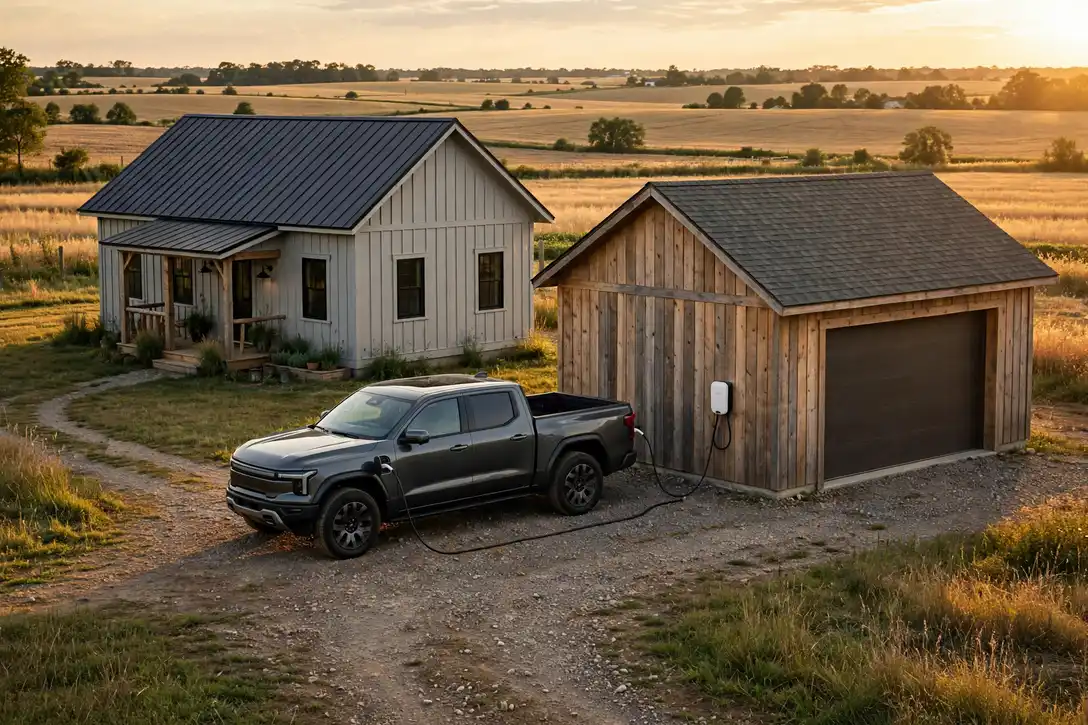
EV charging services in Wichita
Three of the network's services lead this page because local conditions put them first; the remaining seven are one click away and equally available here. Each card states what the service involves — the matching itself is free of obligation until you accept an installer's quote.
Home EV Charger Installation in Wichita
Think of it as plumbing for electrons, done once: capacity checked, circuit run, station mounted and configured, inspection passed. The households that report the smoothest projects describe the same shape — a visit that measured, a quote that itemised, and a car that simply charged from the first night.
In Wichita: usually the first job a new EV household in Wichita books, scoped to the panel the house already has.
Dedicated Circuit & Electrical Panel Upgrade in Wichita
Where the load calculation fails the existing service, the upgrade is not an upsell — it is the finding. Done under permit with the utility's meter work coordinated, it converts the charger project into the house's electrical reset, and every later project inherits the headroom.
In Wichita: relevant in Wichita wherever a 100-amp panel already carries cooking, heating and hot water before a charger asks for room.
Level 2 Charger Installation in Wichita
The step from a household receptacle to a Level 2 circuit is the step from sipping to drinking: the car takes energy at the rate family life actually consumes it. The work is a breaker, a run of appropriately gauged conductor, and a connection made to torque — modest materials, permanent consequences.
In Wichita: the upgrade from a wall outlet to a dedicated 240-volt circuit, and the end of range arithmetic at bedtime.
Utility programs and electricity in Wichita
Electricity in Wichita comes from Evergy Kansas South, Inc. Parts of the wider metro are served by Sumner-Cowley Elec Coop, Inc, Sedgwick County El Coop Assn Inc, Butler Rural El Coop Assn, Inc. The utility matters twice over for a charger install: it sets the time-of-use rates that decide what overnight charging costs you, and it is the organisation that may — or may not — currently help pay for the equipment.
Do not budget for a rebate in Wichita right now. As of the sources checked for this page, Evergy Kansas South, Inc publishes no residential charger rebate, Kansas offers no state program for typical home installs, and the federal 30C credit ended on September 30, 2025. If that changes, the utility's program page will say so with an as-of date — and this page will be updated to match. Until then, judge quotes on the work itself.
Renters and condo owners should note the metering question early: whose meter the charger hangs off decides who pays for the energy, and Evergy Kansas South, Inc's options for submetering are part of the multifamily conversation below.
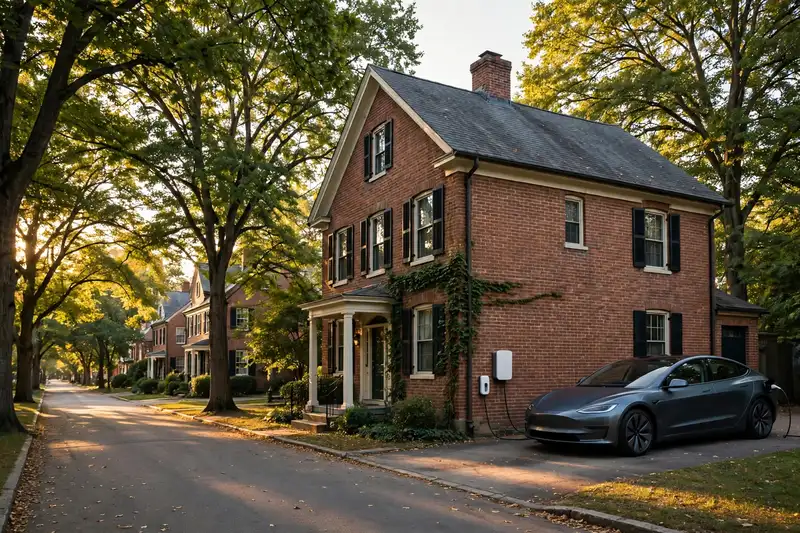
Condos, HOAs and the law in Kansas
Kansas has no statewide right-to-charge law. That needs saying plainly, because roundups on the internet sometimes claim otherwise: in the authoritative statute indexes checked for this page, no Kansas law prevents a homeowners association or condominium from refusing a charger in a common or assigned space. Your community's own covenants and board govern the question in Wichita.
Strategy, then, is the local substitute for statute. In Wichita the applications that succeed tend to share a shape: they arrive before the meeting rather than at it, they answer metering and insurance in the first paragraph, and they offer the board a design it can approve once and reuse for the next owner who asks.
The general process, minus the statute, is still covered in our guide to installing an EV charger in a condo or HOA community — most of its application-package advice applies in Wichita exactly as written.
Climate, garages and charger placement
Cold rewrites the charging routine in this part of the country. Batteries accept charge more slowly when they are cold, range falls, and the car's own systems spend energy on warmth — so the overnight window matters more, not less. A Level 2 circuit sized generously is the household's answer: it restores the day's driving with hours to spare even in the slow weeks of January.
The shoulder seasons deserve a mention: freeze-thaw cycles work on exterior conduit and enclosures, and the connector that was easy in October can be stiff company in February. Equipment listed for the exposure, mounted where the melt does not drip across it, is the whole answer — local installers apply it without being asked.

Permits and inspection in Wichita
Timelines are set by the city's counter, not the installer: the electrical work itself is typically a day, while permit issuance and the inspection visit follow the department's queue. A quote that promises a date should tell you which parts of that date the installer actually controls.

Neighbourhoods and ZIP codes served
The page covers 32 ZIP codes in and around Wichita — including 67201, 67202, 67203, 67204, 67205, 67206, 67207, 67208, 67209, 67210, 67211, 67212, 67213, 67214, 67215, 67216, 67217, 67218, 67219, 67220, 67223, 67226, 67227, 67228, 67230, 67232, 67235, 67260, 67275, 67276, 67277, 67278 — across Sedgwick. If your ZIP is not in the first set shown, ask anyway: installer coverage follows the metro, not a postcode fence.
The same working area takes in the neighbouring localities of Mcconnell Afb, Kechi, Haysville, Maize, Greenwich, Derby, Valley Center, Colwich, Peck, Goddard, Clearwater, Bentley, Andale, Garden Plain — the county ring an installer based in Wichita actually drives. Requests from those communities route exactly as city requests do: same services, same permit discipline, same local facts where they differ.
Sedgwick County accounts for 49 of the ZIP codes and 18 named postal localities in the research file, the nearest of them Mcconnell Afb, Kechi, Haysville, Maize, Greenwich. The survey counts 528,226 residents in the county, with a median household income of $69,365 and a median home value of $203,300. Measured across its ZIP codes, the Wichita footprint runs about 10 miles north to south and 19 east to west, from ZIP 67201 to 67278 — the ground an installer based here actually covers in a working week.
Beyond the county seats, the working area takes in Mcconnell Afb, Kechi, Haysville, Maize, Greenwich, Derby, Andover, Valley Center, Colwich, Peck, Goddard, Rose Hill, Benton, Clearwater, Mulvane, Sedgwick, Bentley, Andale, Garden Plain, Viola, Belle Plaine, Towanda, Augusta, Mount Hope, Whitewater, Douglass, Halstead, Udall, Cheney, Newton, Potwin, Rock, Conway Springs, North Newton, Elbing, El Dorado, Haven, Wellington, Milton, Burrton, Walton, Oxford, Hesston, Leon, Mayfield, Norwich, Yoder, Murdock, Milan, Peabody, Atlanta, Argonia, Pretty Prairie, Moundridge, Winfield, Latham, Goessel, Buhler, Rosalia, Burns, South Hutchinson, Burden, Hutchinson, Danville, Maple City, Geuda Springs, Cassoday, Florence, Kingman, South Haven, Beaumont, Inman — the named localities for which Wichita is the nearest metro in the network (neighbouring metros' pages cover their own ground), each routing to the same installer-matching service.
The largest communities in that working area after Wichita itself, by the GeoNames populated-place file: Hutchinson (population 41,569), Ponca City (population 24,758), Derby (population 23,509), Newton (population 19,216), Great Bend (population 15,717), McPherson (population 13,144), El Dorado (population 12,931), Andover (population 12,745), Winfield (population 12,204), Arkansas City (population 12,136), Haysville (population 11,212), Augusta (population 9,299), Wellington (population 7,987), Park City (population 7,618), Valley Center (population 7,222), Blackwell (population 6,875), Pratt (population 6,849), Mulvane (population 6,314), Alva (population 5,180), Goddard (population 4,719). Charging demand follows those populations — the subdivisions and town centres where the next driveways, and the next panels, are.
Butler County reaches into the working area with 68,287 residents, a median household income of $81,610 and a median home value of $217,600; its localities on this page include Andover, Rose Hill, Benton, Towanda, Augusta. Sumner County reaches into the working area with 22,353 residents, a median household income of $63,951 and a median home value of $135,100; its localities on this page include Mulvane, Belle Plaine, Conway Springs, Wellington, Milton. Harvey County reaches into the working area with 33,756 residents, a median household income of $74,368 and a median home value of $180,300; its localities on this page include Sedgwick, Halstead, Newton, North Newton, Burrton. Cowley County reaches into the working area with 34,411 residents, a median household income of $57,878 and a median home value of $120,900; its localities on this page include Udall, Rock, Atlanta, Winfield. Reno County reaches into the working area with 61,553 residents, a median household income of $60,645 and a median home value of $132,500; its localities on this page include Haven, Yoder, Pretty Prairie, Buhler.
| ZIP | Locality | County |
|---|---|---|
| 67201 | Wichita | Sedgwick |
| 67278 | Wichita | Sedgwick |
| 67202 | Wichita | Sedgwick |
| 67214 | Wichita | Sedgwick |
| 67203 | Wichita | Sedgwick |
| 67213 | Wichita | Sedgwick |
| 67211 | Wichita | Sedgwick |
| 67260 | Wichita | Sedgwick |
| 67208 | Wichita | Sedgwick |
| 67218 | Wichita | Sedgwick |
| 67204 | Wichita | Sedgwick |
| 67217 | Wichita | Sedgwick |
| 67209 | Wichita | Sedgwick |
| 67216 | Wichita | Sedgwick |
| 67212 | Wichita | Sedgwick |
| 67219 | Wichita | Sedgwick |
| 67210 | Wichita | Sedgwick |
| 67226 | Wichita | Sedgwick |
| 67220 | Wichita | Sedgwick |
| 67206 | Wichita | Sedgwick |
| 67221 | Mcconnell Afb | Sedgwick |
| 67215 | Wichita | Sedgwick |
| 67207 | Wichita | Sedgwick |
| 67205 | Wichita | Sedgwick |
| 67067 | Kechi | Sedgwick |
| 67275 | Wichita | Sedgwick |
| 67276 | Wichita | Sedgwick |
| 67277 | Wichita | Sedgwick |
| 67060 | Haysville | Sedgwick |
| 67235 | Wichita | Sedgwick |
| 67101 | Maize | Sedgwick |
| 67223 | Wichita | Sedgwick |
| 67227 | Wichita | Sedgwick |
| 67055 | Greenwich | Sedgwick |
| 67232 | Wichita | Sedgwick |
| 67230 | Wichita | Sedgwick |
| 67037 | Derby | Sedgwick |
| 67228 | Wichita | Sedgwick |
| 67002 | Andover | Butler |
| 67147 | Valley Center | Sedgwick |
| 67030 | Colwich | Sedgwick |
| 67120 | Peck | Sedgwick |
| 67052 | Goddard | Sedgwick |
| 67133 | Rose Hill | Butler |
| 67017 | Benton | Butler |
| 67026 | Clearwater | Sedgwick |
| 67110 | Mulvane | Sumner |
| 67135 | Sedgwick | Harvey |
| 67016 | Bentley | Sedgwick |
| 67001 | Andale | Sedgwick |
| 67050 | Garden Plain | Sedgwick |
| 67149 | Viola | Sedgwick |
| 67013 | Belle Plaine | Sumner |
| 67144 | Towanda | Butler |
| 67010 | Augusta | Butler |
| 67108 | Mount Hope | Sedgwick |
| 67154 | Whitewater | Butler |
| 67039 | Douglass | Butler |
| 67056 | Halstead | Harvey |
| 67146 | Udall | Cowley |
| 67025 | Cheney | Sedgwick |
| 67114 | Newton | Harvey |
| 67123 | Potwin | Butler |
| 67131 | Rock | Cowley |
| 67031 | Conway Springs | Sumner |
| 67117 | North Newton | Harvey |
| 67041 | Elbing | Butler |
| 67042 | El Dorado | Butler |
| 67543 | Haven | Reno |
| 67152 | Wellington | Sumner |
| 67106 | Milton | Sumner |
| 67020 | Burrton | Harvey |
| 67151 | Walton | Harvey |
| 67119 | Oxford | Sumner |
| 67062 | Hesston | Harvey |
| 67074 | Leon | Butler |
| 67103 | Mayfield | Sumner |
| 67118 | Norwich | Kingman |
| 67585 | Yoder | Reno |
| 67111 | Murdock | Kingman |
| 67105 | Milan | Sumner |
| 66866 | Peabody | Marion |
| 67008 | Atlanta | Cowley |
| 67004 | Argonia | Sumner |
| 67570 | Pretty Prairie | Reno |
| 67107 | Moundridge | McPherson |
| 67156 | Winfield | Cowley |
| 67072 | Latham | Butler |
| 67053 | Goessel | Marion |
| 67522 | Buhler | Reno |

Planning the install: from panel to parking
Experienced Wichita installers talk about 'the tell': the small observation that predicts the job. A panel directory in pencil with three generations of handwriting. A garage converted, then converted back. A charger-shaped hole in the household's plans — the second car already ordered. Mention your own tells at the visit; they are scope information, and scope named early is scope settled fairly.
One more piece of sequencing advice Wichita installers give consistently: if the panel is being opened anyway, settle the other electrical maybes in the same visit — the circuit you will want next year costs least while the permit and the electrician are already in the house.
Home charging know-how for Wichita households
Breaker spaces are not capacity
Two different shortages hide inside the phrase 'my panel is full'. A panel can run out of breaker spaces while its service still has honest capacity — answered with a subpanel or, where the listing permits, tandem breakers. Or it can run out of capacity while spaces remain — answered with a service increase or a management system. The load calculation distinguishes the two in minutes, and the distinction is worth real scope: one answer is an afternoon's work, the other is a project. Any quote that treats them as the same problem has skipped the arithmetic.
Long runs and voltage drop
Distance taxes a circuit twice: in materials, and in voltage. A long run at charging currents loses voltage along its length, and the code's remedy is conductor sized a step beyond the minimum so the station at the far end still receives what it expects. This is one of the reasons a detached structure or a far-corner panel turns a simple circuit into a designed one — the arithmetic is easy, but it has to be done, and it is invisible in any quote that scopes the job from the charger box alone. The site visit is where the tape measure settles it.
Older wiring, honestly assessed
Homes from the early electrical eras sometimes carry wiring methods — knob-and-tube runs, early cloth-insulated cable, fused services — that change an installer's reading of a house. None of it automatically disqualifies a charger: the new circuit is new work, run to current code from the panel. What the older fabric changes is the assessment — the panel's condition, the grounding system's state, and occasionally a recommendation that some inherited work be corrected while the electricians are in the house. A candid survey at the site visit is the whole answer; surprises belong to houses whose installers did not look.
Planning for the second EV
The second electric car rarely arrives as a surprise — it is the household's own verdict on the first one. Planning for it at the first install costs little: conduit sized a step up, panel capacity reserved on the schedule, and a station position that can serve a second bay or share its circuit through power-sharing equipment. Retrofitting the same readiness later means reopening finished work. Installers ask about the five-year picture during the site visit because the honest answers change today's scope more cheaply than any other conversation in the project.
Two-storey houses and the vertical run
In a two-storey house the panel often lives in a utility room, a laundry or a ground-floor wall far from the garage, and the circuit's path becomes a vertical problem: chases, soffits and floor cavities are the route's vocabulary. Experienced installers read a house's structure the way a plumber does — where the stacked walls are, which cavities run uninterrupted — and the quote follows that reading. Expect the site visit to include a look upstairs; the ceiling above the garage is part of the job.

Frequently asked questions
Is the federal charger tax credit still available in Wichita, KS?
Checked and dated: in the sources reviewed for this page, Evergy Kansas South, Inc runs no residential charger rebate, Kansas runs no home-charger programme, and the federal credit that once filled the gap ended on September 30, 2025. If a salesperson's spreadsheet shows a rebate line for a Wichita install, the published programme page is the only acceptable evidence.
What can my HOA in Wichita, KS do about a charger install?
Legally, yes — and it is better to know that before you buy the car. Kansas has enacted no right-to-charge law, so an association in Wichita may refuse, condition or delay a charger under its covenants. The counterweight is a complete, documented application and, if refused, a written refusal citing the covenant — the record a future board or a future statute works from.
Panel upgrade or not — how do Wichita, KS homeowners find out?
The answer lives in your panel's directory and its arithmetic, not in the car's requirements. With 54% of Wichita's homes predating 1980 (median build 1976), local installers see both situations weekly: the 200-amp panel that takes the circuit directly, and the full 100-amp service that needs capacity work first. The site visit exists to sort your house into one of those two piles, on numbers.
How quickly will a Level 2 charger fill my car in Wichita, KS?
In parked hours: a Level 1 cord returns about 3–5 miles for each of them, and a Level 2 circuit returns roughly 25–40, set by its amperage and the car's acceptance. For a Wichita household parking ten hours, that is the difference between recovering a short errand day and recovering any day the car can legally drive.
What happens next after I send a request?
Three things happen, in order. Your request is routed to licensed installers who work in Wichita; one of them contacts you to book a site visit; and the visit produces a written quote based on your actual panel and parking. PlugReady USA runs the matching, not the tools — the contractor on the job is the installer who visits.
Does Evergy Kansas South, Inc offer a time-of-use rate for EV charging in Wichita?
Many utilities do — a tariff where overnight energy carries a lower rate, designed for exactly this load. Whether your current plan includes such a window is a two-minute check on your tariff or the utility's rate pages. If it does, the charger's schedule is set once, at commissioning, and the saving runs itself from then on.
Nearby cities in Kansas
- EV charger installation in Manhattan — about 112 miles from Wichita, metro population 135,000
- EV charger installation in Topeka — about 131 miles from Wichita, metro population 230,000
- EV charger installation in Lawrence — about 149 miles from Wichita, metro population 120,000
- EV charger installation in Tulsa, OK — about 140 miles from Wichita, metro population 1,050,000
- EV charger installation in Oklahoma City, OK — about 152 miles from Wichita, metro population 1,450,000
- EV charger installation in Joplin, MO — about 162 miles from Wichita, metro population 185,000
Ready to charge at home in Wichita?
Tell us the job — service, ZIP and property type — and licensed local installers will take it from there.