EV Charger Installation in Miami, FL
Home Level 2 charging, panel upgrades and condo installs in Miami — matched to licensed local installers, with the local facts that shape the job set out below.
The economics of home charging are made in two places: the tariff you charge on, and the circuit you charge through. Both are decided locally, and both are decided before the hardware is chosen. Miami itself is home to about 487,006 people; Florida counted 450,400 battery-electric vehicles and 88,400 plug-in hybrids by the end of 2025, and the metro's households are making these two decisions every week. Below: the utility position for Miami as verified, the state law on association charging, the permit route, and the housing-stock numbers that tell you how much panel conversation to expect at your own address.
How PlugReady USA works, in one breath: you describe the job once, licensed local installers who cover Miami receive it, and the conversations happen with them directly. The rest of this page exists so those conversations start from facts — yours about the house, ours about the metro — rather than from a sales script.
Measured demand, not enthusiasm, put Miami in Tier A of this network: Experian No. 4: 45K+ new 2025; FL No. 2 BEV state ; condo right-to-charge. For a homeowner the useful translation is simpler — installers here do this work weekly, know the local permit counter, and have seen your housing stock before.
The Census Bureau's portrait of Miami — median household income $66,337, 33% of occupied homes owner-occupied, 21% of units in single-unit detached houses — is, read correctly, a charging forecast. Owners approve their own work; detached houses host their own circuits; the remaining share is where the interesting projects live.

The composite picture matters more than any single statistic. In Miami: an older housing fabric, where panel archaeology is a normal part of the first visit; a genuinely mixed city — houses, townhouses and larger buildings all carry weight; buildings of five or more units hold a substantial share of homes, which keeps the multifamily sections of this page in daily use; meanwhile, renters form a large share of households, so the landlord conversation is a first-class topic here. A page that ignored that profile would give the same advice everywhere; this one is ordered by it.
Keep six figures and you keep Miami's whole electrical character: 229,852 housing units; 202,757 occupied homes; 66,206 owner-occupied; 49,360 detached houses; 108,714 pre-1980 homes; 144,743 homes in buildings of five or more units. Percentages elsewhere on this page are these numbers in disguise — the counts are the originals, and they are the numbers a local installer's experience is actually made of. The page's geography is equally concrete: 95 ZIP codes across Miami-Dade, Putnam, centred near 25.78 degrees north latitude. The city anchors the Miami–Fort Lauderdale–West Palm Beach metropolitan area, home to roughly 6,150,000 people on the research file's metro estimate — the wider labour and housing market this page's installers work across.
The same survey release fills in the household economics around the housing stock: a median home value of $598,200, median gross rent of $1,975, per-capita income of $48,147, and a median resident age of 39. How the city moves completes the picture: 58% of Miami workers drive to work alone — the commute pattern home charging is built around; 16% work from home, a population whose cars charge on daytime and overnight schedules alike; 8% commute by public transit; 40% of adults hold a bachelor's degree or higher. The survey's vehicle table is the one an EV page should quote first: 37,765 of Miami's households have no vehicle at all, while 66,454 have two or more — the multi-car households for whom the second circuit is a when, not an if.
Household structure, from the same release: 55% of Miami households are family households. The burden shares behind the housing stock: 63% of renting households are cost-burdened at the 30%-of-income line, as are 0% of mortgaged owners — context for why the overnight rate window, once set, is treated here as a household fixture rather than a hobby.
What follows is the city read as an electrical place rather than a dot on a map. A stock this old wires its history into the walls: cloth-wrapped conductors in the deepest streets, fuse boxes that outlived their century, panels added in layers by generations of electricians each solving their own decade's problem. Multifamily weight changes the installer market too — the firms that thrive here carry association paperwork fluency alongside their licences, and their references are buildings, not just households.
High renter share also means charging follows the lease cycle: applications cluster at move-in, installations at renewal leverage, and the whole market breathes on the rental calendar. Households here run the numbers — which is why the honest sections of this page, the ones that say what is verified and what is not, earn their keep. Filed tariffs and public dockets give this territory a paper trail most markets lack: the diligent household can read the utility's own electrification plan and know which programmes are funded, piloted or merely proposed.
At this fleet volume the questions mature: not whether to install, but how the second circuit shares capacity, how buildings retrofit at scale, how the grid's evening ramp is managed street by street. In a market this size the matching problem inverts: not finding an installer, but filtering — licence, charging specialism, diary, and references from your own quadrant of the metro. Where the state's statute speaks, the local conversation changes register: installers quote the framework, boards keep counsel's template, and approvals become administrative.
The electrical reality in Miami homes
Four numbers organise everything an installer expects in Miami: median build year 1984; 47% of units built before 1980; 21% of the stock detached; 33% of occupied homes owner-occupied. Capacity, circuit routes and approval layers all correlate with those four. The paragraphs below are their commentary. Age shows up electrically before it shows up anywhere else: services sized for a house with a third of today's appliances. Expect the first conversation to be about capacity — what the panel is, what it already feeds, and which of the three routes (circuit, management, upgrade) your numbers support. Porches, carports and parking pads carry a real share of this city's charging, because the stock predates the two-car garage as a standard feature — outdoor-rated equipment is a local staple, not an edge case.
One further survey line belongs in any Miami install conversation: 90% of the city's homes heat with electricity — 183,259 households whose panels already carry a major winter load before a charger is contemplated. Electric heat and EV charging are the two largest discretionary loads a house can host, and where they coincide, the load calculation stops being a formality.
Renters are the other constituency in these numbers: about 136,551 of Miami's occupied homes are rented rather than owned. Their charging route runs through a landlord conversation instead of a panel they control — a different project, covered by the rentals guide and the law section below, but a routine one in a city with this many renting households.
The city's stock is not all houses: 63% of units are in structures of five or more. Shared buildings mean shared panels, assigned parking and association process — the substance of the multifamily sections below.
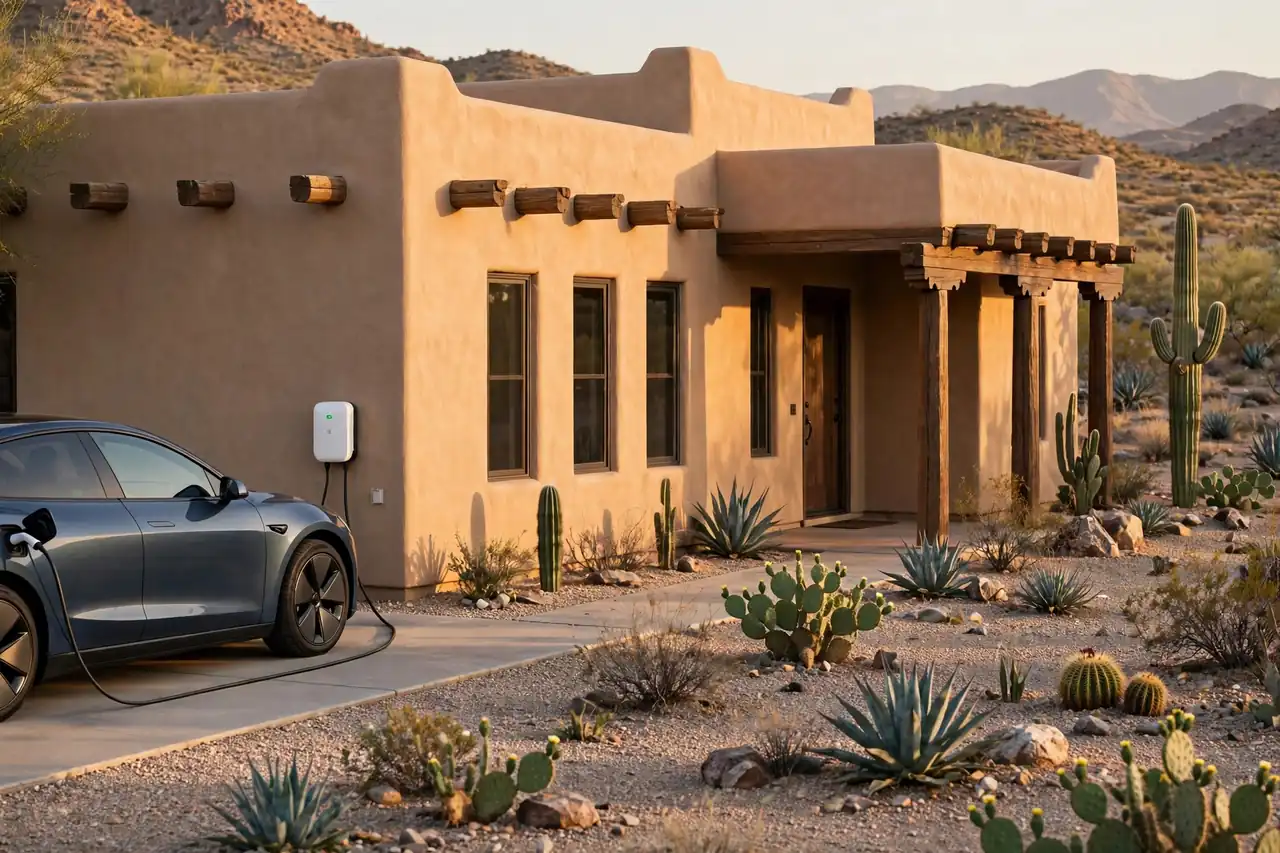
EV charging services in Miami
An installer's work in Miami usually starts with one of the three lead services below. The cards describe the job as it is actually scoped; the grid underneath carries the rest of the menu.
Home EV Charger Installation in Miami
The core service, stated plainly: a dedicated 240-volt circuit run from your panel to your parking place, a station mounted and configured to that circuit, and the paperwork closed out with the permit office. Everything else in this section of the site exists to support or unblock this one job.
In Miami: usually the first job a new EV household in Miami books, scoped to the panel the house already has.
Dedicated Circuit & Electrical Panel Upgrade in Miami
Some homes meet the charger at the panel door: the service is already spoken for by cooking, heating and hot water. This service is the honest fix — capacity added properly, grounding brought current, and a panel schedule that finally matches the house it feeds.
In Miami: service work that turns 'no room' into a circuit with headroom in Miami homes.
Multifamily & Condo EV Charging in Miami
In a multifamily building the charger is the easy half. The craft is the route to yes: a complete board application, a metering design that bills the right owner, load management that shares the building's capacity, and only then the circuit. Installers who do this work weekly carry the paperwork templates with them.
In Miami: constitutions for shared charging in Miami buildings: metering, load and approvals.
Utility programs and electricity in Miami
Electricity in Miami comes from Florida Power & Light Co. Parts of the wider metro are served by Clay Electric Cooperative, Inc. The utility matters twice over for a charger install: it sets the time-of-use rates that decide what overnight charging costs you, and it is the organisation that may — or may not — currently help pay for the equipment.
Why does this page labour the absence of a rebate? Because in Miami the phantom rebate is the most common distortion in charger quotes: a figure justified by money that is not, at present, claimable. The verified position: federal 30C ended September 30, 2025; no Florida replacement for typical home installs; no Florida Power & Light Co residential charger rebate in the sources checked. If someone quotes you a rebate, the follow-up is one sentence — show me the program page — and its answer decides the quote's credibility.
While you are reading your tariff, check how your plan treats the evening peak. A charger scheduled to start after the peak window is the single easiest saving in home charging, and it is set once, in the car or the station, then forgotten.
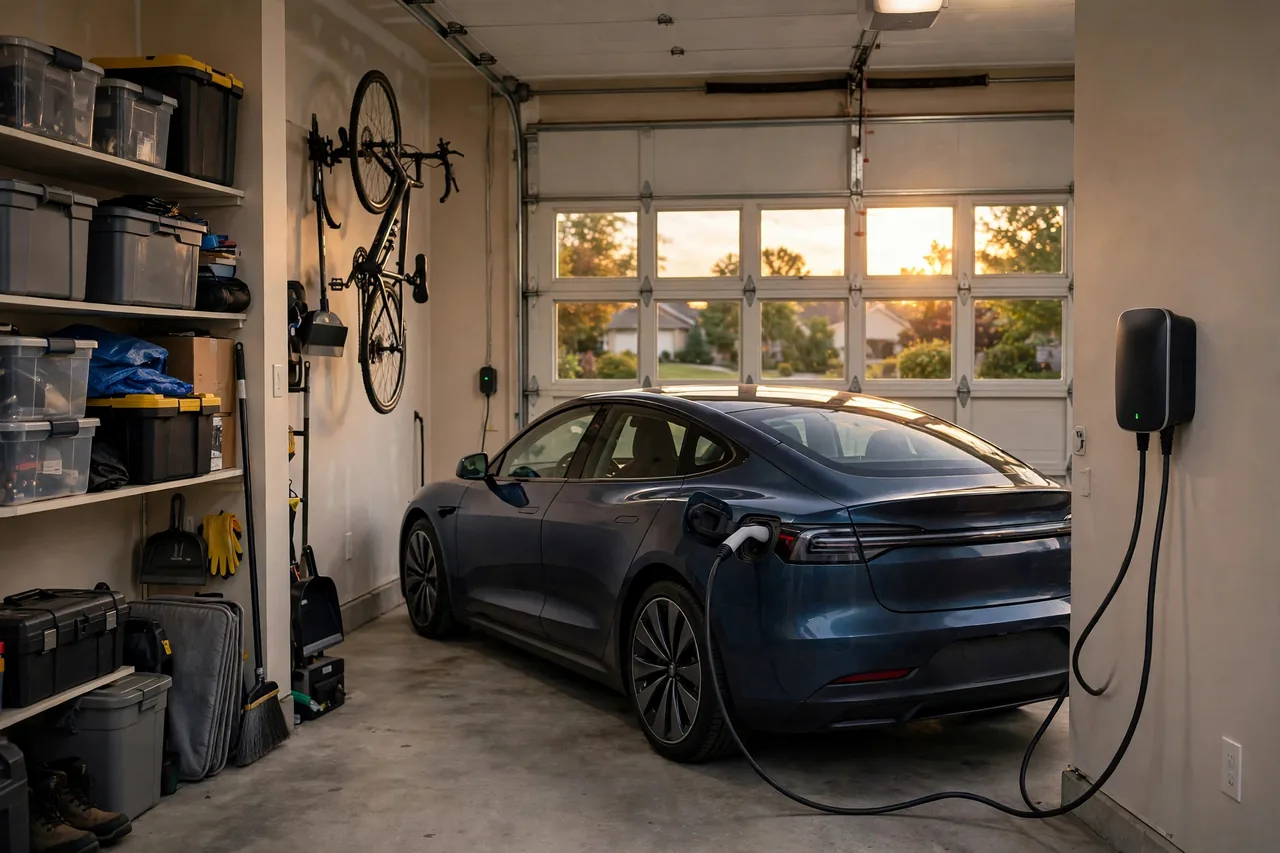
Condos, HOAs and the law in Florida
Florida law protects an owner's charger. Fla. Stat. §718.113(8) gives owners in association communities a statutory route to a charging station in their own space: the association may set reasonable conditions on how the installation looks, where exactly it sits, and how it is insured, but a flat prohibition is not one of its options. Owners fund the work, use licensed installers, and remain responsible for the equipment — the statute allocates the burdens; it does not remove them.
If your board is stalling, the sequence that works in Miami is boring and effective: cite the statute, submit a complete application (equipment, circuit, installer licence, insurance), and keep everything in writing.
For the design side — shared versus assigned spaces, load management across a building, billing per owner — see the multifamily and condo charging service page.
Climate, garages and charger placement
In this climate the overnight window does double duty — rates are kinder and so are temperatures. Scheduling the charge for the small hours lets the car and the station work in the coolest air the day offers, which is easier on both. An installer who raises scheduling unprompted during the site visit is telling you they install in this heat regularly.
Humidity does quiet electrical work of its own: connections in damp garages live harder lives than their desert counterparts, which is one more reason the installer's torque and the enclosure's seal deserve their moment at commissioning. The charger itself is sealed and rated for this climate; the discipline is in the joints.

Permits and inspection in Miami
Expect the permit to name the circuit, the breaker and the equipment. An installer who suggests skipping it is saving an afternoon by spending your liability; the inspection is also your independent check that the continuous-load sizing was done properly.

Neighbourhoods and ZIP codes served
The page covers 95 ZIP codes in and around Miami — including 33101, 33102, 33106, 33111, 33112, 33116, 33122, 33124, 33125, 33126, 33127, 33128, 33129, 33130, 33131, 33132, 33133, 33134, 33135, 33136, 33137, 33138, 33142, 33143, 33144, 33145, 33146, 33147, 33150, 33151, 33152, 33153, 33155, 33156, 33157, 33158, 33161, 33162, 33163, 33164, 33165, 33166, 33167, 33168, 33169, 33170, 33172, 33173, 33174, 33175, 33176, 33177, 33178, 33179, 33180, 33181, 33182, 33183, 33184, 33185 — across Miami-Dade, Putnam. If your ZIP is not in the first set shown, ask anyway: installer coverage follows the metro, not a postcode fence.
The same working area takes in the neighbouring localities of Miami Beach, Coral Gables, Hialeah, Key Biscayne, Opa Locka, Miami Gardens, North Miami Beach, Homestead, Georgetown, Crescent City, Lake Como, Pomona Park, Welaka, Satsuma — the county ring an installer based in Miami actually drives. Requests from those communities route exactly as city requests do: same services, same permit discipline, same local facts where they differ.
Miami-Dade County accounts for 126 of the ZIP codes and 9 named postal localities in the research file, the nearest of them Miami Beach, Coral Gables, Hialeah, Key Biscayne, Opa Locka. The survey counts 2,738,356 residents in the county, with a median household income of $71,753 and a median home value of $463,000. Putnam County accounts for 19 of the ZIP codes and 17 named postal localities in the research file, the nearest of them Georgetown, Crescent City, Lake Como, Pomona Park, Welaka. The survey counts 75,164 residents in the county, with a median household income of $47,934 and a median home value of $160,300. Measured across its ZIP codes, the Miami footprint runs about 28 miles north to south and 23 east to west, from ZIP 33101 to 33299 — the ground an installer based here actually covers in a working week.
Beyond the county seats, the working area takes in Miami Beach, Coral Gables, Hialeah, Key Biscayne, Opa Locka, Miami Gardens, North Miami Beach, Hallandale, Hollywood, Pembroke Pines, Dania, Fort Lauderdale, Homestead, Plantation, Pompano Beach, Margate, Coconut Creek, Coral Springs, Deerfield Beach, Boca Raton — the named localities for which Miami is the nearest metro in the network (neighbouring metros' pages cover their own ground), each routing to the same installer-matching service.
The largest communities in that working area after Miami itself, by the GeoNames populated-place file: Hialeah (population 237,069), Fort Lauderdale (population 183,146), Pembroke Pines (population 166,611), Hollywood (population 149,728), Miramar (population 137,132), Coral Springs (population 129,485), Miami Gardens (population 113,187), Pompano Beach (population 107,762), Davie (population 100,882), Boca Raton (population 93,235), Plantation (population 92,560), Miami Beach (population 92,312), Sunrise (population 84,439), Homestead (population 80,737), Kendall (population 80,241), Deerfield Beach (population 79,768), Doral (population 75,874), Boynton Beach (population 73,966), Lauderhill (population 71,579), Weston (population 69,959). Charging demand follows those populations — the subdivisions and town centres where the next driveways, and the next panels, are.
| ZIP | Locality | County |
|---|---|---|
| 33101 | Miami | Miami-Dade |
| 33102 | Miami | Miami-Dade |
| 33111 | Miami | Miami-Dade |
| 33116 | Miami | Miami-Dade |
| 33124 | Miami | Miami-Dade |
| 33164 | Miami | Miami-Dade |
| 33188 | Miami | Miami-Dade |
| 33191 | Miami | Miami-Dade |
| 33192 | Miami | Miami-Dade |
| 33197 | Miami | Miami-Dade |
| 33198 | Miami | Miami-Dade |
| 33199 | Miami | Miami-Dade |
| 33206 | Miami | Miami-Dade |
| 33231 | Miami | Miami-Dade |
| 33233 | Miami | Miami-Dade |
| 33234 | Miami | Miami-Dade |
| 33238 | Miami | Miami-Dade |
| 33242 | Miami | Miami-Dade |
| 33243 | Miami | Miami-Dade |
| 33245 | Miami | Miami-Dade |
| 33247 | Miami | Miami-Dade |
| 33255 | Miami | Miami-Dade |
| 33256 | Miami | Miami-Dade |
| 33257 | Miami | Miami-Dade |
| 33261 | Miami | Miami-Dade |
| 33265 | Miami | Miami-Dade |
| 33266 | Miami | Miami-Dade |
| 33269 | Miami | Miami-Dade |
| 33280 | Miami | Miami-Dade |
| 33283 | Miami | Miami-Dade |
| 33296 | Miami | Miami-Dade |
| 33299 | Miami | Miami-Dade |
| 33136 | Miami | Miami-Dade |
| 33128 | Miami | Miami-Dade |
| 33195 | Miami | Miami-Dade |
| 33130 | Miami | Miami-Dade |
| 33132 | Miami | Miami-Dade |
| 33131 | Miami | Miami-Dade |
| 33129 | Miami | Miami-Dade |
| 33125 | Miami | Miami-Dade |
| 33135 | Miami | Miami-Dade |
| 33145 | Miami | Miami-Dade |
| 33139 | Miami Beach | Miami-Dade |
| 33127 | Miami | Miami-Dade |
| 33137 | Miami | Miami-Dade |
| 33142 | Miami | Miami-Dade |
| 33133 | Miami | Miami-Dade |
| 33109 | Miami Beach | Miami-Dade |
| 33119 | Miami Beach | Miami-Dade |
| 33151 | Miami | Miami-Dade |
| 33154 | Miami Beach | Miami-Dade |
| 33239 | Miami Beach | Miami-Dade |
| 33134 | Miami | Miami-Dade |
| 33140 | Miami Beach | Miami-Dade |
| 33122 | Miami | Miami-Dade |
| 33150 | Miami | Miami-Dade |
| 33138 | Miami | Miami-Dade |
| 33126 | Miami | Miami-Dade |
| 33147 | Miami | Miami-Dade |
| 33114 | Coral Gables | Miami-Dade |
| 33141 | Miami Beach | Miami-Dade |
| 33146 | Miami | Miami-Dade |
| 33010 | Hialeah | Miami-Dade |
| 33153 | Miami | Miami-Dade |
| 33144 | Miami | Miami-Dade |
| 33166 | Miami | Miami-Dade |
| 33149 | Key Biscayne | Miami-Dade |
| 33152 | Miami | Miami-Dade |
| 33155 | Miami | Miami-Dade |
| 33013 | Hialeah | Miami-Dade |
| 33002 | Hialeah | Miami-Dade |
| 33011 | Hialeah | Miami-Dade |
| 33017 | Hialeah | Miami-Dade |
| 33167 | Miami | Miami-Dade |
| 33106 | Miami | Miami-Dade |
| 33143 | Miami | Miami-Dade |
| 33168 | Miami | Miami-Dade |
| 33161 | Miami | Miami-Dade |
| 33181 | Miami | Miami-Dade |
| 33012 | Hialeah | Miami-Dade |
| 33172 | Miami | Miami-Dade |
| 33178 | Miami | Miami-Dade |
| 33174 | Miami | Miami-Dade |
| 33165 | Miami | Miami-Dade |
| 33054 | Opa Locka | Miami-Dade |
| 33156 | Miami | Miami-Dade |
| 33222 | Miami | Miami-Dade |
| 33014 | Hialeah | Miami-Dade |
| 33162 | Miami | Miami-Dade |
| 33016 | Hialeah | Miami-Dade |

Planning the install: from panel to parking
Think of the project as a chain with four links: capacity, route, placement, paperwork. Capacity is the load calculation. Route is the path copper takes from panel to parking — through a shared wall if you are lucky, across a ceiling or a trench if you are not. Placement is the unglamorous decision that governs daily life with the car for a decade: reach, cable slack, and which side the port is on. Paperwork is the permit and the passed inspection, the proof that outlives the installer's visit.
Future-proofing, in this trade, is mostly conduit and capacity: an oversized conduit run costs little during the first install and everything later; a panel position reserved is a breaker that never has to move. If a second EV, a workshop or an electrified water heater is anywhere in your five-year picture, say so at the site visit.
Home charging know-how for Miami households
Reading the bill after the charger arrives
The first bills after an install reward a careful read. Charging appears as consumption, not as a line item — the household's kilowatt-hours rise by roughly the car's appetite, and the rate applied to the new hours depends on when they happened. Owners who check the schedule actually ran — that the car charged inside the intended window — catch the one configuration mistake that costs money monthly. After that, the bill becomes the household's quietest document: the car simply costs what the overnight rate says it should.
Charging while you travel
Cars left for weeks prefer a middle state of charge and a quiet life: plugged in, scheduled modestly, neither brimmed nor starved. The home station makes this effortless — the car sips as it wants, the household returns to a vehicle that is ready rather than recovered. Tell a housesitter nothing at all; there is nothing to do. It is one of home charging's under-sold virtues: the car manages its own storage, from your wall, while the house is empty.
Selling a house that charges
A documented charger has become a listing fact: the housing market's filters increasingly include charging, and the buyers behind them read a permitted, inspected installation as maintained infrastructure. The operative word is documented. The permit and inspection record, the panel schedule showing the circuit, and the station's manual together convert the charger from a question a buyer's inspector raises into a feature the listing can name. If a sale is anywhere on the horizon, the paperwork conversation with your installer is worth having at install time, while it is free.
Two kinds of protection, one circuit
Modern charging circuits sit at the meeting point of two protection philosophies: the breaker's ground-fault protection watching the circuit, and the station's own ground-fault and monitoring systems watching the session. Coordinating them is a specification task — which device leads, which breaker types the station manufacturer lists as compatible, whether the installation is hardwired or receptacle-fed. Done at design time, the two systems coexist silently for decades; done by trial, they announce themselves at 3 am.
Charging for guests
A home charger quietly becomes hospitality infrastructure: the visiting family's EV, the friend's road-trip top-up, the neighbour mid-renovation. Households handle it with varying ceremony — a standing offer, a holster left accessible, a note in the guest room. The electrical system does not care; the point is social. The charger joins the spare bed and the good coffee in the category of things a house offers the people it likes.

Frequently asked questions
Can I still get the federal tax credit for a home charger in Miami, FL?
No. The federal Alternative Fuel Refueling Property Credit (30C) ended for equipment placed in service after September 30, 2025. In the sources checked for this page, Florida Power & Light Co had no verified residential charger rebate running either — if an installer names a current program, ask for its published terms.
Can my HOA or condo board in Miami, FL refuse my charger?
Only within limits the statute sets. Florida law (Fla. Stat. §718.113(8)) protects an owner's right to install in their own space; associations may regulate placement, appearance and insurance and require restoration on removal, but a blanket refusal is not theirs to give. If a board stalls, a complete written application citing the statute is the standard remedy.
Panel upgrade or not — how do Miami, FL homeowners find out?
Start from the median, then verify: the median Miami home was built in 1984, and 47% of the stock predates 1980, so 100-amp panels are a normal sight here — and a normal candidate for either an upgrade or a load-management device. The load calculation distinguishes the two in one visit, and any quote that skips it is guessing with your money.
Level 1 or Level 2 in Miami, FL — what is the real difference?
Level 2 is several-fold faster in the only unit that matters — miles back per hour parked: roughly 25–40 against Level 1's 3–5. The exact figure follows the circuit: a 40-amp circuit and a 60-amp circuit are both Level 2, and the car's onboard limit may sit below either. Your installer matches the three numbers at the site visit.
What happens after I request an installer through this page?
Your request — service, Miami ZIP, property type and timing — goes to licensed local installers who cover Miami. They contact you directly to arrange a site visit and quote. PlugReady USA is the matching service, not the installer, and the sections above exist so you can judge any quote against the local facts.
I live in a Miami apartment or condo building — can I charge at home?
Yes, with the building as a partner rather than an obstacle. In Miami, about 63% of homes sit in buildings of five or more units, so the pattern is established: a written proposal, a licensed installer, a metering design that charges the energy to you, and the association or landlord approving a package rather than a request. The law section above gives Florida's position; the multifamily service designs the rest.
Nearby cities in Florida
- EV charger installation in Naples — about 92 miles from Miami, metro population 375,000
- EV charger installation in Port St. Lucie — about 104 miles from Miami, metro population 520,000
- EV charger installation in Cape Coral — about 112 miles from Miami, metro population 800,000
- EV charger installation in Punta Gorda — about 129 miles from Miami, metro population 195,000
- EV charger installation in Sebastian — about 140 miles from Miami, metro population 165,000
- EV charger installation in North Port — about 141 miles from Miami, metro population 875,000
- EV charger installation in Brunswick, GA — about 380 miles from Miami, metro population 115,000
- EV charger installation in Valdosta, GA — about 384 miles from Miami, metro population 150,000
- EV charger installation in Savannah, GA — about 437 miles from Miami, metro population 425,000
Ready to charge at home in Miami?
Tell us the job — service, ZIP and property type — and licensed local installers will take it from there.