EV Charger Installation in Sebastian, FL
Charging where you park, in Sebastian: the utility programs, state law, permit process and housing facts behind a home charger install, gathered in one place.
Ask EV owners in Sebastian what changed their routine and most give the same answer: the car charges where it parks. Sebastian itself is home to about 26,262 people. Statewide, Florida counted 450,400 battery-electric vehicles and 88,400 plug-in hybrids on the road through 2025, and the metro's share of that fleet keeps growing. A home charger installation is not complicated, but it is local — the utility that serves your street, the age of your panel, your community's rules and your city's permit office all shape the job. This page pulls those Sebastian specifics together in one place, with the numbers sourced rather than rounded into slogans.
One honest note before the detail: PlugReady USA does not install chargers. We collect your requirements and pass them to licensed installers who cover Sebastian, and this page exists so that you can judge those conversations with the local facts already in hand.
What the Experian and AFDC registration data say about Sebastian–Vero Beach: Indian River County. Translated out of market language: your neighbours are already charging at home, the permit office already knows the paperwork, and the installers already know the housing stock.
Read the survey numbers as an installer reads them. A median household income of $69,409 and an owner-occupation rate of 85% describe a city where most charger decisions are made by the person who owns the panel — no landlord layer, no board layer for the typical job. The 87% of homes that are single-unit detached are the straightforward installs: garage or driveway, one owner, one circuit.

Every city charges differently, and Sebastian's difference is legible in the data: a comparatively young housing fabric, where modern services are the default; overwhelmingly a detached-house city, so most installs are the simple garage pattern; larger buildings are a small share, so the multifamily route matters to a minority of readers; owner-occupiers dominate, so most readers can approve their own electrical work outright. Read the sections below through that profile and the local advice resolves into specifics — which questions are routine here, and which are rare.
Keep six figures and you keep Sebastian's whole electrical character: 12,976 housing units; 11,586 occupied homes; 9,868 owner-occupied; 11,286 detached houses; 1,484 pre-1980 homes; 330 homes in buildings of five or more units. Percentages elsewhere on this page are these numbers in disguise — the counts are the originals, and they are the numbers a local installer's experience is actually made of. The page's geography is equally concrete: 3 ZIP codes across Brevard, Indian River, centred near 27.79 degrees north latitude. The city anchors the Sebastian–Vero Beach metropolitan area, home to roughly 165,000 people on the research file's metro estimate — the wider labour and housing market this page's installers work across.
The same survey release fills in the household economics around the housing stock: a median home value of $317,000, median gross rent of $1,451, per-capita income of $41,293, and a median resident age of 58. The movement data matters as much as the money data: 79% of Sebastian workers drive to work alone — the commute pattern home charging is built around; 9% work from home, a population whose cars charge on daytime and overnight schedules alike; 0% commute by public transit; 27% of adults hold a bachelor's degree or higher. The survey's vehicle table is the one an EV page should quote first: 291 of Sebastian's households have no vehicle at all, while 6,882 have two or more — the multi-car households for whom the second circuit is a when, not an if.
Household structure, from the same release: 62% of Sebastian households are family households. The burden shares behind the housing stock: 56% of renting households are cost-burdened at the 30%-of-income line, as are 0% of mortgaged owners — context for why the overnight rate window, once set, is treated here as a household fixture rather than a hobby.
Read together, the local facts draw a recognisable picture. Recent construction also means recent everything else: AFCI and GFCI protection as built, grounding as designed, services sized for the loads of this century rather than the last one's. Single-family form factor means the approval chain has one link. The design conversation is about copper and placement, not about committees, covenants or common elements.
Ownership depth shows in the streetscape: driveways improved, garages converted and converted back, the visible sediment of households investing in houses they intend to keep — charger circuits are simply the newest sediment layer. Here the tariff conversation is a budget conversation: the overnight window's arithmetic, done honestly once, pays out every night of the car's life without further attention. Tariff design is the quiet policy: the shape of the overnight window, the demand charges commercial customers face, the interconnection queue's pace — all set in dockets the diligent can read.
At this fleet volume the questions mature: not whether to install, but how the second circuit shares capacity, how buildings retrofit at scale, how the grid's evening ramp is managed street by street. The permit counter in a smaller city is a conversation, not a queue: applications are read by people who may know the street, and complete paperwork is remembered kindly. Shared-property households here work with a written legal position rather than a board's mood, which changes the application from a petition into a procedure.
The electrical reality in Sebastian homes
Sebastian's housing, in Census Bureau survey numbers: a median build year of 1995, 11% of units predating 1980, a stock that is 87% single-unit detached, and 85% of occupied homes owned by their occupants. Everything in this section is commentary on those four facts. Newer stock, newer services: 200-amp panels are the norm in the recent subdivisions, and the charger conversation moves quickly from 'can we' to 'where exactly'. The variables left are the run's length and the station's position relative to the car's port. Housing age also tracks wire-run reality: older homes more often place the panel in a basement or interior wall far from the garage, and distance is copper, conduit and labour.
The fuel table adds one more local fact: 10,928 Sebastian homes — 94% of the stock — heat with electricity. Those households already think in kilowatts through the winter, their panels carry the load to prove it, and a charger's overnight appetite joins a system that is, in the useful sense, already electrified.
The tenure split cuts the other way too: roughly 1,718 occupied homes in Sebastian are rented. For those households the charger question is a negotiation with a property owner — written proposal, licensed installer, metering clarity — and it succeeds often enough that installers here keep the pattern ready.
And 3% of Sebastian's homes are in buildings with five or more units — apartments and condominiums where charging is a building decision before it is an electrical one. If that is your situation, the law and multifamily sections of this page are the ones written for you.
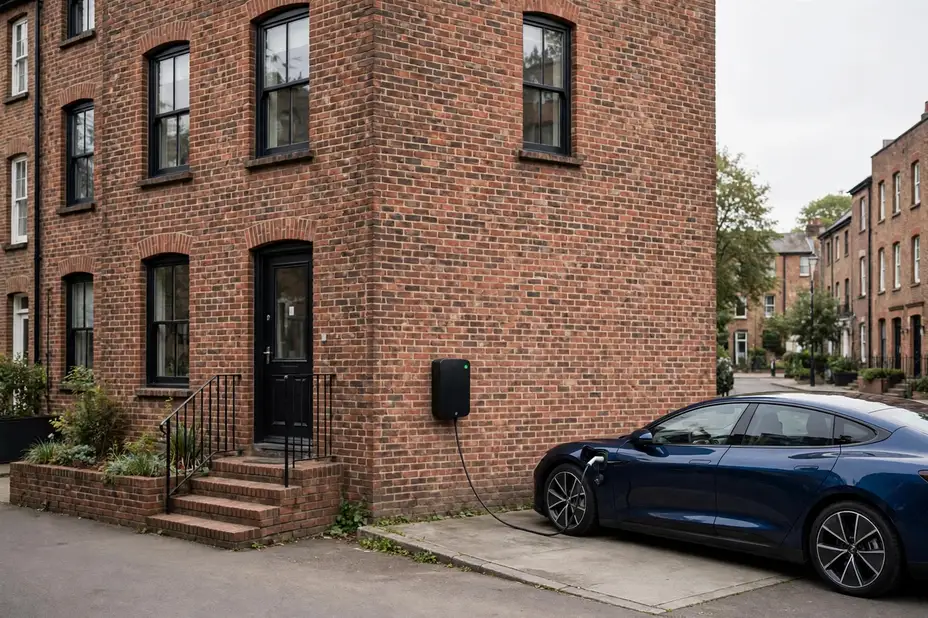
EV charging services in Sebastian
Installers in Sebastian book the same ten services as everywhere — but not in the same proportions. The three leading cards below are this city's pattern, set by its panels, its buildings and its statute book.
Home EV Charger Installation in Sebastian
Think of it as plumbing for electrons, done once: capacity checked, circuit run, station mounted and configured, inspection passed. The households that report the smoothest projects describe the same shape — a visit that measured, a quote that itemised, and a car that simply charged from the first night.
In Sebastian: the core residential job in Sebastian: circuit, mounting, configuration and inspection in one visit pattern.
Multifamily & Condo EV Charging in Sebastian
In shared buildings the deliverable is a system, not a socket: an approved application, a metering design the treasurer can audit, capacity shared by rule rather than by argument, and only then conduit and copper. Firms fluent in the sequence are worth their diary time.
In Sebastian: constitutions for shared charging in Sebastian buildings: metering, load and approvals.
Level 2 Charger Installation in Sebastian
Level 2 earns its keep on the worst week of the year: the cold snap, the back-to-back long days, the evening the car comes home empty with a dawn departure. A circuit sized for those weeks makes the ordinary ones invisible.
In Sebastian: the circuit class behind nearly every home install in Sebastian, from first car to second.
Utility programs and electricity in Sebastian
Electricity in Sebastian comes from Florida Power & Light Co. Parts of the wider metro are served by Duke Energy Florida, LLC, Peace River Electric Coop, Inc. The utility matters twice over for a charger install: it sets the time-of-use rates that decide what overnight charging costs you, and it is the organisation that may — or may not — currently help pay for the equipment.
The honest incentive position in Sebastian is: nothing verified to claim. The federal charger credit (30C) ended on September 30, 2025; Florida runs no state replacement for typical home installs; and in the utility and state sources checked for this page, Florida Power & Light Co had no active residential charger rebate to point to. Programs reopen — when one does, it will be on the utility's own site with terms and dates. Anything an installer describes without that paper trail should be treated as conversation, not money.
Net-metering households — rooftop solar is common across the metro — should tell the installer: charging schedules and load management are planned differently when the house generates as well as consumes.
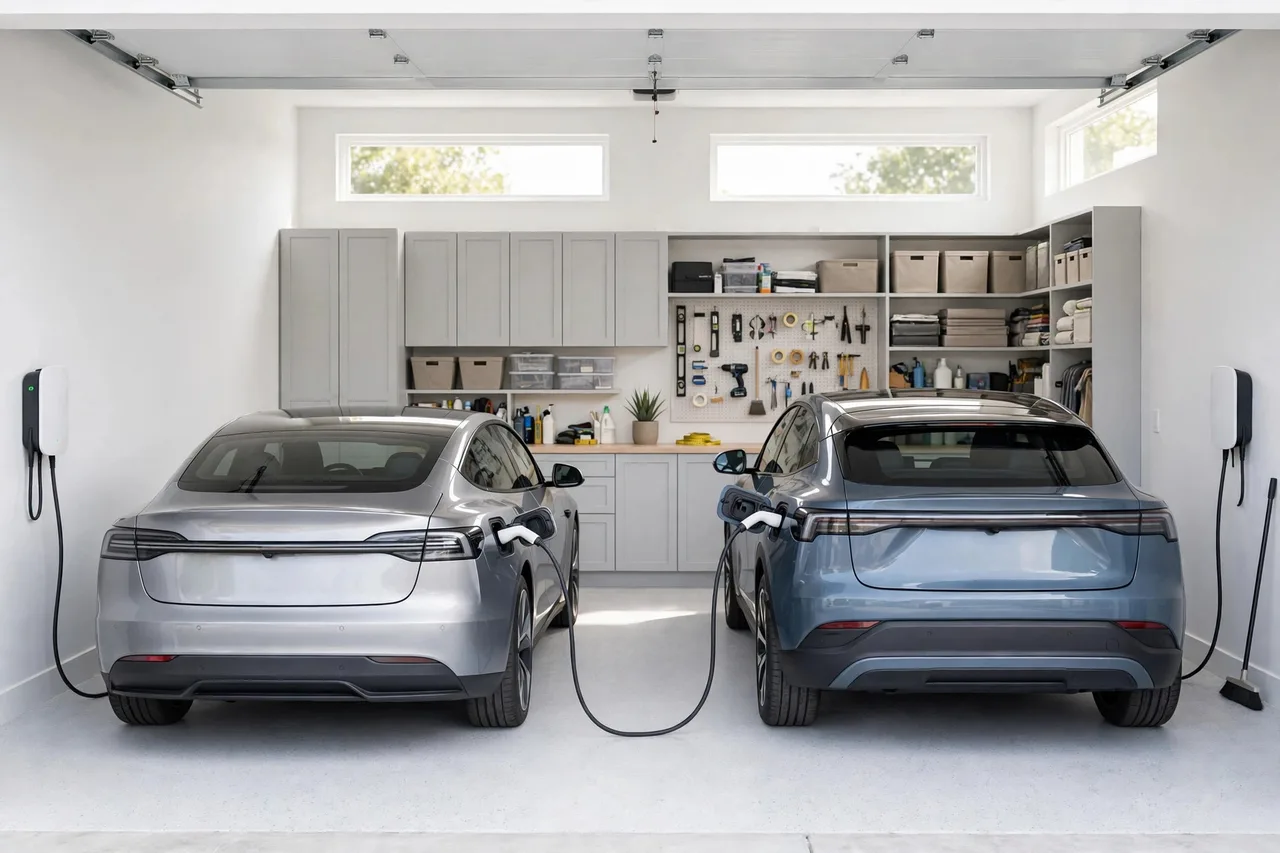
Condos, HOAs and the law in Florida
Charging is a protected right for association owners in Florida. The state's right-to-charge statute (Fla. Stat. §718.113(8)) stops a homeowners association or condominium from banning an owner's charging station outright. Conditions still exist — placement, appearance, insurance and restoration can all be regulated, and the owner pays — yet the starting position is yes-with-rules rather than no-unless-persuaded, and that difference decides most applications before they are written.
For renters, coverage in Florida is recorded as: Owners (condo). If you rent in Sebastian, the practical route is still a written proposal to the landlord — dedicated circuit, licensed installer, your name on the permit — because a charger-ready space is an asset most landlords keep when you leave.
Both the process and the paperwork are covered in the condo and HOA guide; Sebastian readers can skip the chapters about persuading reluctant boards and go straight to the compliance checklist.
Climate, garages and charger placement
Heat is the local design variable. A garage that bakes all afternoon asks more of a charging station than the nameplate assumes: electronics age faster, and a car that arrives hot from the road charges under the management of its own thermal system. Sensible installs here keep the station out of the direct sun line, favour walls with airflow, and leave the cable where it will not lie across sun-heated concrete all day.
Afternoon is the design hour: a station, a cable and a car that all sit in the day's peak heat age on the local schedule, not the brochure's. West-facing walls are the last choice here; the shaded side of the garage, the eave's shadow and the overnight schedule are the three cheap protections every local installer reaches for.

Permits and inspection in Sebastian
Timelines are set by the city's counter, not the installer: the electrical work itself is typically a day, while permit issuance and the inspection visit follow the department's queue. A quote that promises a date should tell you which parts of that date the installer actually controls.

Neighbourhoods and ZIP codes served
The page covers 3 ZIP codes in and around Sebastian — including 32958, 32976, 32978 — across Brevard, Indian River. If your ZIP is not in the first set shown, ask anyway: installer coverage follows the metro, not a postcode fence.
The same working area takes in the neighbouring localities of Roseland, Wabasso, Winter Beach, Vero Beach, Fellsmere, Melbourne, Grant, Malabar, Palm Bay, Melbourne Beach, Indialantic, Patrick Afb, Satellite Beach, Merritt Island — the county ring an installer based in Sebastian actually drives. Requests from those communities route exactly as city requests do: same services, same permit discipline, same local facts where they differ.
Brevard County accounts for 46 of the ZIP codes and 19 named postal localities in the research file, the nearest of them Melbourne, Grant, Malabar, Palm Bay, Melbourne Beach. The survey counts 632,780 residents in the county, with a median household income of $78,476 and a median home value of $339,600. Indian River County accounts for 16 of the ZIP codes and 6 named postal localities in the research file, the nearest of them Roseland, Wabasso, Winter Beach, Vero Beach, Fellsmere. The survey counts 166,936 residents in the county, with a median household income of $73,491 and a median home value of $351,500. Measured across its ZIP codes, the Sebastian footprint runs about 11 miles north to south and 6 east to west, from ZIP 32958 to 32978 — the ground an installer based here actually covers in a working week.
Beyond the county seats, the working area takes in Roseland, Wabasso, Winter Beach, Vero Beach, Fellsmere, Fort Pierce, Okeechobee, Lorida — the named localities for which Sebastian is the nearest metro in the network (neighbouring metros' pages cover their own ground), each routing to the same installer-matching service.
The wider working area also reaches Grant, Indialantic, Patrick Afb, Satellite Beach, Port Saint Lucie, Cocoa Beach, Cocoa, Sebring, Waverly, Canal Point, Intercession City, Lakeshore, West Palm Beach, Palm Beach Gardens, Goldenrod, Palmdale, Maitland, Casselberry, Auburndale, Bowling Green, Oak Hill, Altamonte Springs, Longwood, Lake Mary, Clewiston, South Bay, Ocoee, Eaton Park, Bradley, Killarney, Clermont, Lake Monroe, New Smyrna Beach, Zellwood, Labelle — ground shared with neighbouring metros, where installers cross the same county lines in both directions.
ZIP codes in that shared ground include 32127, 32128, 32132, 32141, 32701, 32703, 32710, 32712, 32713, 32715, 32728, 32733, 32756, 32759, 32762, 32763, 32766, 32771, 32774, 32779, 32792, 32793, 32795, 32802, 32806, 32808, 32822, 32830, 32833, 32835, 32839, 32862, 32867, 32896, 32899, 32902, 32905, 32912, 32926, 32931.
The largest communities in that working area after Sebastian itself, by the GeoNames populated-place file: Vero Beach South (population 23,092), Florida Ridge (population 18,164), Vero Beach (population 16,358), Lakewood Park (population 11,323), Gifford (population 9,590), Micco (population 9,052), West Vero Corridor (population 7,138), Fellsmere (population 5,514), Indian River Shores (population 4,156), South Beach (population 3,501), Winter Beach (population 2,067), Wabasso Beach (population 1,853), Roseland (population 1,472), Wabasso (population 609). Charging demand follows those populations — the subdivisions and town centres where the next driveways, and the next panels, are.
St. Lucie County reaches into the working area with 360,500 residents, a median household income of $71,457 and a median home value of $347,300; its localities on this page include Fort Pierce. Okeechobee County reaches into the working area with 40,816 residents, a median household income of $57,984 and a median home value of $193,000; its localities on this page include Okeechobee.
| ZIP | Locality | County |
|---|---|---|
| 32958 | Sebastian | Indian River |
| 32957 | Roseland | Indian River |
| 32970 | Wabasso | Indian River |
| 32971 | Winter Beach | Indian River |
| 32976 | Sebastian | Brevard |
| 32967 | Vero Beach | Indian River |
| 32948 | Fellsmere | Indian River |
| 32969 | Vero Beach | Indian River |
| 32978 | Sebastian | Indian River |
| 32963 | Vero Beach | Indian River |
| 32966 | Vero Beach | Indian River |
| 32964 | Vero Beach | Indian River |
| 32965 | Vero Beach | Indian River |
| 32960 | Vero Beach | Indian River |
| 32961 | Vero Beach | Indian River |
| 32968 | Vero Beach | Indian River |
| 32962 | Vero Beach | Indian River |
| 34951 | Fort Pierce | St. Lucie |
| 34972 | Okeechobee | Okeechobee |
| 33857 | Lorida | Highlands |
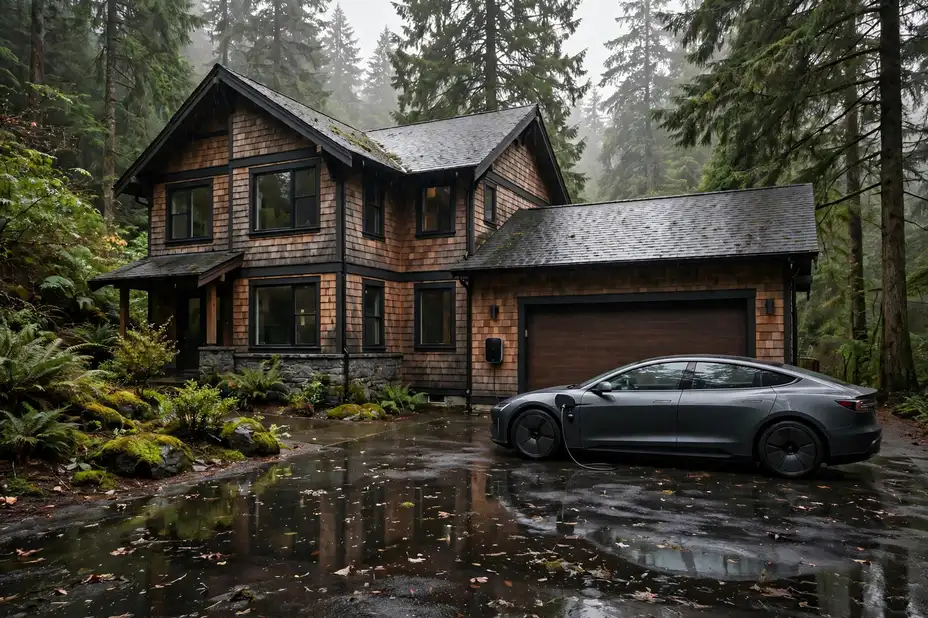
Planning the install: from panel to parking
A useful way to read any Sebastian quote is to ask which of three jobs it describes. Job one: the panel has room and the run is short — a circuit and a station. Job two: the panel is full — capacity work joins the quote, as an upgrade or as load management. Job three: the property adds people — an HOA, a landlord, a building's shared service — and the approvals timeline joins the electrical one. None of the three is a bad job; they are simply different scopes, and a clear quote says which one you are in.
Future-proofing, in this trade, is mostly conduit and capacity: an oversized conduit run costs little during the first install and everything later; a panel position reserved is a breaker that never has to move. If a second EV, a workshop or an electrified water heater is anywhere in your five-year picture, say so at the site visit.
Home charging know-how for Sebastian households
Historic homes, modern loads
A house can be historically significant and electrically contemporary at once, but the marriage takes choreography: circuits routed through secondary spaces, equipment kept off protected fabric, the panel's growth planned where the preservation easement permits. The installers who do this work well treat the house's rules as a design brief rather than an obstacle, and the result — a period street front, a thoroughly modern garage — is the quiet norm in historic districts now.
Orientation: the garage's compass
A garage's orientation decides its microclimate: south- and west-facing doors take the day's heat load, north-facing ones hold the cold. The charger inherits the microclimate — electronics ageing in the hot wall's summer, cables stiffening in the cold one's January. Orientation is nobody's choice by install time, but it informs placement inside the room: the interior wall over the door wall, the shaded corner over the sun line, decided by someone who has read the room's compass.
Smart features, soberly assessed
Connectivity buys three real things in a charging station: scheduling against rate windows, session records the household can actually read, and power sharing between stations. It does not buy speed — the circuit decides that — and a station whose network features fail should still charge the car, which the good ones do. Households deep in a smart-home ecosystem may value the integrations; everyone else should choose on the electrical merits and treat the application as a bonus. Either way, the configuration that matters is set at commissioning: rate, schedule, and the circuit's limit, recorded on the paperwork.
What an outage does and does not change
When the grid goes down, a standard home charging station goes quiet with everything else — it is a load, not a source, and it neither drains the car nor feeds the house. Sessions resume or restart when power returns, and the car's own settings govern which. Households in outage country plan around this plainly: charge ahead of forecast storms the way you would fill a fuel tank, and treat the car as the household's largest battery-shaped object — one that, with today's standard equipment, keeps its energy to itself.
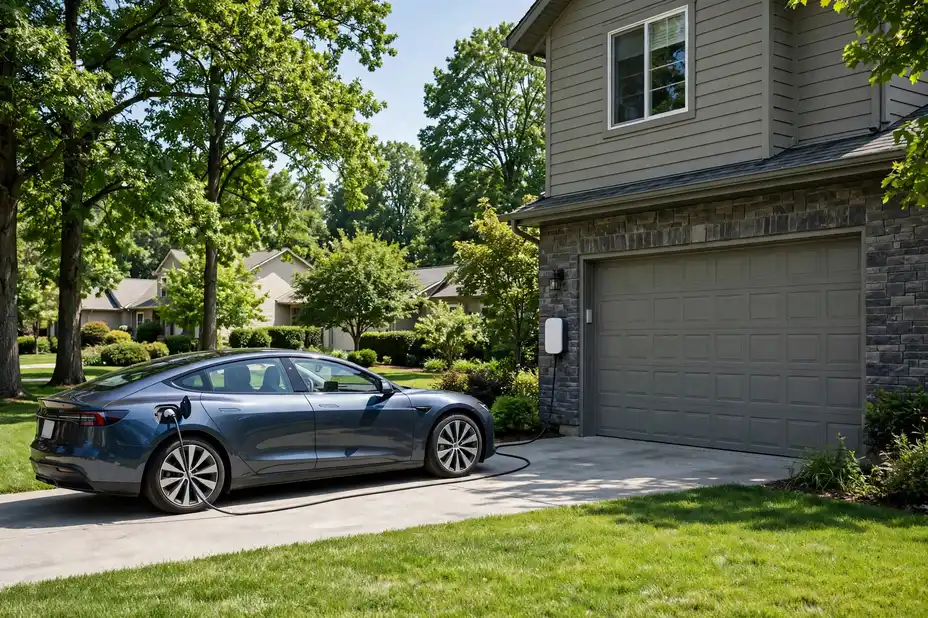
Frequently asked questions
Is the federal charger tax credit still available in Sebastian, FL?
Treat the answer as a standing no with a watching brief. The 30C credit is finished, Florida has not replaced it for homeowners, and no verified Florida Power & Light Co rebate was running in the sources checked for this page. Should that change, the utility's program page will say so first — and this page will be updated to match.
What can my HOA in Sebastian, FL do about a charger install?
Florida law (Fla. Stat. §718.113(8)) limits that: associations cannot prohibit an owner's charger outright, though they can impose reasonable conditions on placement, insurance and restoration, and the owner pays for the installation. The process section above walks through it.
Does a Level 2 charger mean a panel upgrade for a Sebastian, FL home?
Sometimes — and Sebastian's housing stock is exactly why the question is worth asking properly. With a median build year of 1995 and roughly 11% of homes predating 1980, plenty of local panels are 100-amp units already carrying a full modern load. Those homes choose between an upgrade and load management; newer 200-amp homes usually just add the circuit. The site visit's load calculation is the decider.
How much faster is Level 2 charging at home in Sebastian, FL?
Think of it in parked hours. Level 1 gives you back 3–5 miles for each of them; Level 2 gives back about 25–40, set by the circuit's amperage and what the car can accept. Overnight, that is the gap between 'enough for tomorrow' and 'full, every morning'.
How does the installer matching on this page work?
Your request is matched to licensed installers covering Sebastian, Florida — service, ZIP, property type and timing travel with it. The installer who takes it arranges the site visit and quotes in writing; PlugReady USA's part is the research on this page and the introduction, and your contract is with the installer throughout.
Can a charger be added to a detached garage in Sebastian?
Yes — the charger itself is the same; the route to it is the project. From the house panel, a buried conduit run reaches the garage, or a subpanel goes in out there where distance and future loads argue for it. In Sebastian, with about 87% of homes detached, local installers quote this shape routinely — the trench and the run, settled from a site walk, are the substance of it.
Nearby cities in Florida
- EV charger installation in Palm Bay — about 18 miles from Sebastian, metro population 625,000
- EV charger installation in Port St. Lucie — about 36 miles from Sebastian, metro population 520,000
- EV charger installation in Orlando — about 72 miles from Sebastian, metro population 2,700,000
- EV charger installation in Lakeland — about 82 miles from Sebastian, metro population 725,000
- EV charger installation in Deltona — about 87 miles from Sebastian, metro population 700,000
- EV charger installation in Punta Gorda — about 106 miles from Sebastian, metro population 195,000
- EV charger installation in Brunswick, GA — about 241 miles from Sebastian, metro population 115,000
- EV charger installation in Valdosta, GA — about 258 miles from Sebastian, metro population 150,000
- EV charger installation in Savannah, GA — about 298 miles from Sebastian, metro population 425,000
Ready to charge at home in Sebastian?
Two minutes of form, and the request is in front of licensed installers who cover this city — quotes follow site visits, in writing.