EV Charger Installation in Lakeland, FL
Everything a Lakeland homeowner needs before booking a charger install — the panel question, the utility's current programs, the HOA law and the permit — sourced, dated and local.
There is a reason most charging happens at home: it is the most convenient fuelling an EV owner will ever use, and it happens while the car sits idle anyway. In Lakeland, getting set up means answering a handful of local questions first. Lakeland itself is home to about 124,997 people, inside a state that registered 450,400 battery-electric vehicles and 88,400 plug-in hybrids through 2025. Which utility serves your address, whether it currently funds part of a charger install, what your panel can carry, and what your HOA or condo board can and cannot say no to — this page covers each of them for Lakeland specifically.
Treat what follows as the site visit in written form. Each section is one of the stops a thorough installer makes — panel, tariff, property rules, permit — written out with Lakeland's facts in place, so that when the visit happens for real you can follow the reasoning and question it where it matters.
Measured demand, not enthusiasm, put Lakeland in Tier C of this network: Tampa/Orlando between-market. For a homeowner the useful translation is simpler — installers here do this work weekly, know the local permit counter, and have seen your housing stock before.
Context from the Census Bureau's survey of Lakeland: median household income $63,859; 57% of occupied homes are owner-occupied; 50% of housing units are single-unit detached houses. It is the profile of a city where the typical charger job is a homeowner job — scoped by the panel and the wire run, not by permissions.

The composite picture matters more than any single statistic. In Lakeland: a housing stock of mixed vintages, where both electrical eras appear on the same street; a genuinely mixed city — houses, townhouses and larger buildings all carry weight; buildings of five or more units are a visible minority of the stock; meanwhile, owners hold a working majority, with renters a significant minority. A page that ignored that profile would give the same advice everywhere; this one is ordered by it.
In absolute terms, the survey counts 54,975 housing units in Lakeland — 48,654 occupied, 27,943 of them by their owners. The stock resolves into 27,304 single-unit detached houses, 21,591 homes standing since before 1980, and 10,254 units in larger buildings. Those six counts are the city's charging map drawn without percentages, and every section of this page is a consequence of one of them. The page's geography is equally concrete: 13 ZIP codes across Polk, centred near 28.04 degrees north latitude. The city anchors the Lakeland–Winter Haven metropolitan area, home to roughly 725,000 people on the research file's metro estimate — the wider labour and housing market this page's installers work across.
The same survey release fills in the household economics around the housing stock: a median home value of $249,400, median gross rent of $1,395, per-capita income of $35,902, and a median resident age of 39. How the city moves completes the picture: 70% of Lakeland workers drive to work alone — the commute pattern home charging is built around; 14% work from home, a population whose cars charge on daytime and overnight schedules alike; 1% commute by public transit; 29% of adults hold a bachelor's degree or higher. Vehicle ownership, from the same release: 20,730 households in Lakeland run two or more vehicles, and 3,736 run none — the two ends of the market this page serves and does not serve.
Household structure, from the same release: 59% of Lakeland households are family households. The burden shares behind the housing stock: 49% of renting households are cost-burdened at the 30%-of-income line, as are 21% of mortgaged owners — context for why the overnight rate window, once set, is treated here as a household fixture rather than a hobby.
None of these facts is trivia; each one moves a real decision in the project. Neither old nor new, the housing is layered, and the installer's week is a tour of the layers: a 1960s split-level on Monday, a 2008 subdivision house on Wednesday, a 1920s four-square on Friday. The built form refuses a single story: houses with garages on one side of the arterial, garden apartments and mid-rise condos on the other, each population charging by different rules.
The balance also shapes the housing-turnover effect: chargers installed by owners stay as amenities, chargers negotiated by tenants test what the tenancy paperwork said, and both patterns are live here. Here the tariff conversation is a budget conversation: the overnight window's arithmetic, done honestly once, pays out every night of the car's life without further attention. A large utility's scale cuts both ways — programme budgets that dwarf a small co-op's, and call-centre distance between a household and anyone who can decide anything. The published page rules; keep it bookmarked.
Scale brings specialisation: firms here can afford to do nothing but charging installs, and their process shows it — templated applications, standing inspector relationships, diaries booked in weeks. A smaller metro runs on relationships: the electrical firms are few, known, and booked through reputations maintained across decades of local work. Shared-property households here work with a written legal position rather than a board's mood, which changes the application from a petition into a procedure.
The electrical reality in Lakeland homes
The Census Bureau's latest American Community Survey puts the median Lakeland home's build year at 1985: about 39% of the city's housing units were built before 1980, 50% are single-unit detached houses, and 57% of occupied homes are owner-occupied. Those three numbers predict most of what an installer will find. A mixed-age stock like this splits installs into two camps: newer subdivisions where a 200-amp panel usually has planned capacity, and established neighbourhoods where the panel conversation comes first. Neither is a problem — but they are different jobs, and the estimate you get should say which camp your home falls into and why. Attics, basements and interior panel locations are common in this vintage of stock, which is why the run's route gets its own line in any serious quote: distance and finish decide labour more than the charger does.
Heating fuel is the survey's quiet clue to panel life: in Lakeland, 94% of homes heat electrically (45,121 households), against 4% heating with gas. A house already heating electrically has a service sized with that load in its history; a gas-heated house may have capacity to spare — either way the fuel mix is part of what the installer is reading.
The tenure split cuts the other way too: roughly 20,711 occupied homes in Lakeland are rented. For those households the charger question is a negotiation with a property owner — written proposal, licensed installer, metering clarity — and it succeeds often enough that installers here keep the pattern ready.
The city's stock is not all houses: 19% of units are in structures of five or more. Shared buildings mean shared panels, assigned parking and association process — the substance of the multifamily sections below.
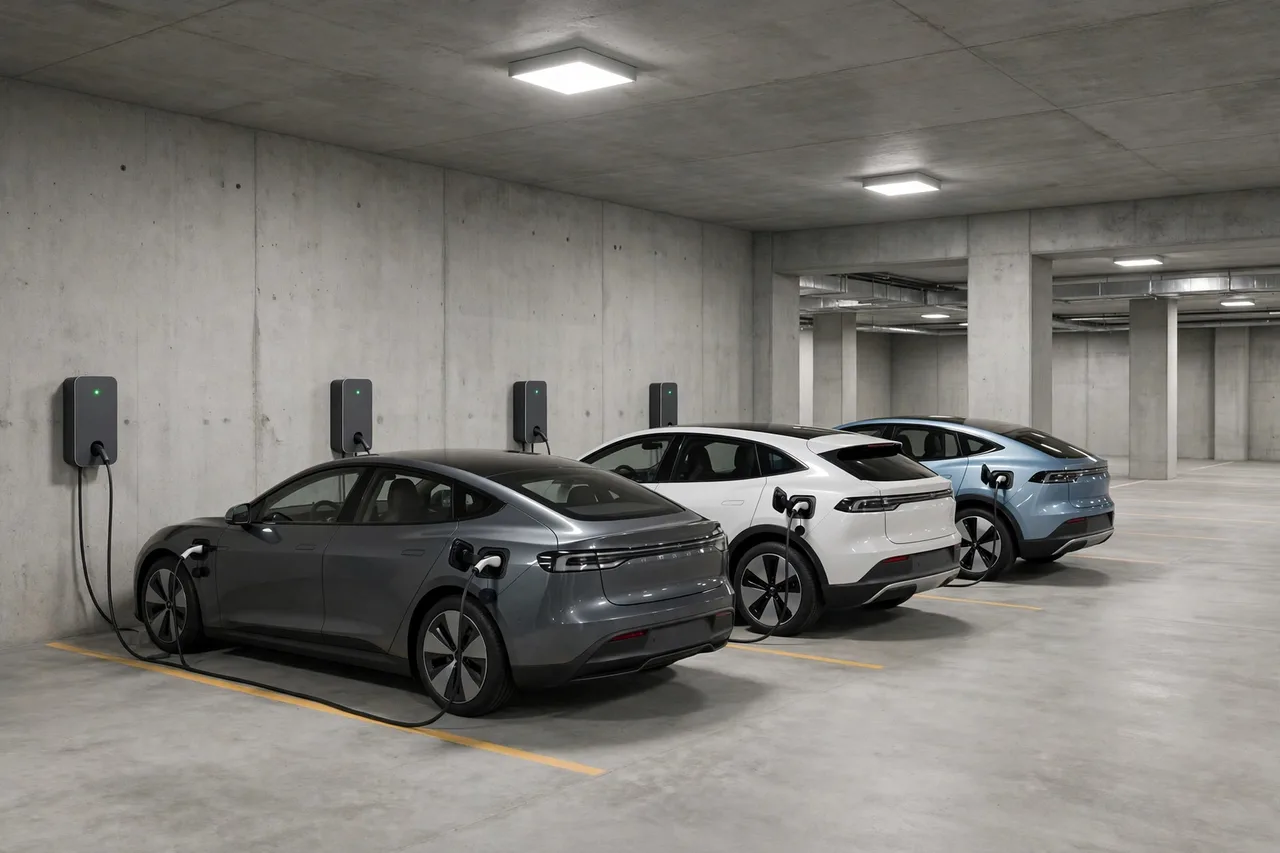
EV charging services in Lakeland
Ten services cover the work installers do in Lakeland. Three lead the list here because of what this city's housing and law actually look like — each links to its national service page, where scope and process are set out in full.
Home EV Charger Installation in Lakeland
Think of it as plumbing for electrons, done once: capacity checked, circuit run, station mounted and configured, inspection passed. The households that report the smoothest projects describe the same shape — a visit that measured, a quote that itemised, and a car that simply charged from the first night.
In Lakeland: the default first install for Lakeland's EV households — a station where the car already parks.
Dedicated Circuit & Electrical Panel Upgrade in Lakeland
Where the load calculation fails the existing service, the upgrade is not an upsell — it is the finding. Done under permit with the utility's meter work coordinated, it converts the charger project into the house's electrical reset, and every later project inherits the headroom.
In Lakeland: relevant in Lakeland wherever a 100-amp panel already carries cooking, heating and hot water before a charger asks for room.
Multifamily & Condo EV Charging in Lakeland
Assigned-space and shared charging for buildings: the application package, the metering arrangement, the load design that lets several cars share one service, and the circuit — in that order, because the first three decide whether the fourth ever happens.
In Lakeland: assigned-space and shared charging for Lakeland buildings, including the metering that keeps costs on the right owner.
Utility programs and electricity in Lakeland
Electricity in Lakeland comes from Duke Energy Florida, LLC. Parts of the wider metro are served by Tampa Electric Co, Withlacoochee River Elec Coop, City of Lakeland. The utility matters twice over for a charger install: it sets the time-of-use rates that decide what overnight charging costs you, and it is the organisation that may — or may not — currently help pay for the equipment.
Plan on no rebate in Lakeland at the moment. In the sources checked for this page, Duke Energy Florida, LLC publishes no residential charger rebate, Florida runs no state scheme for typical home installs, and the federal credit that once filled this gap closed on September 30, 2025. Installers quote the work; utilities fund programs; the second list is currently empty here, and any quote that implies otherwise should come with the program's published terms attached.
Renters and condo owners should note the metering question early: whose meter the charger hangs off decides who pays for the energy, and Duke Energy Florida, LLC's options for submetering are part of the multifamily conversation below.
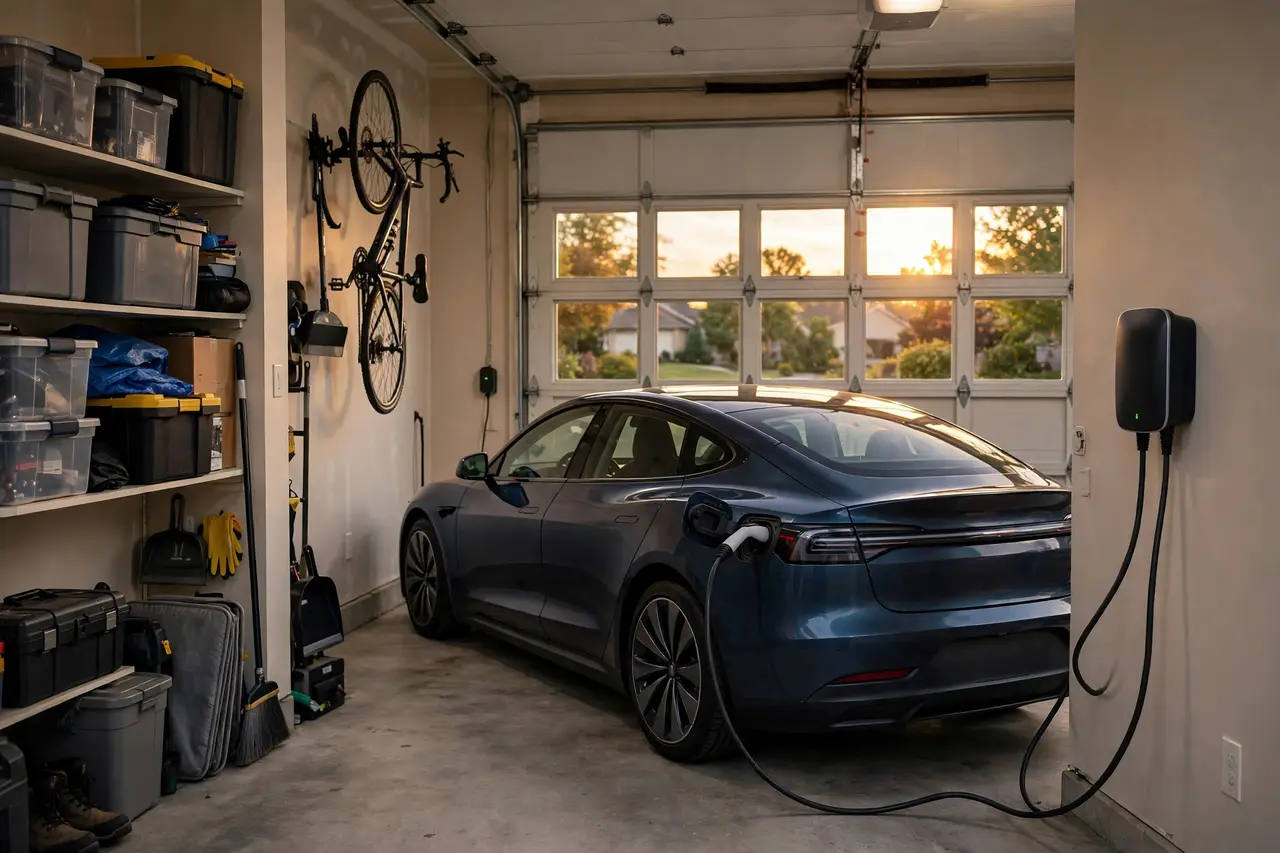
Condos, HOAs and the law in Florida
Charging is a protected right for association owners in Florida. The state's right-to-charge statute (Fla. Stat. §718.113(8)) stops a homeowners association or condominium from banning an owner's charging station outright. Conditions still exist — placement, appearance, insurance and restoration can all be regulated, and the owner pays — yet the starting position is yes-with-rules rather than no-unless-persuaded, and that difference decides most applications before they are written.
The statute is the floor, not the whole negotiation: associations in Florida can still set reasonable conditions on placement, appearance and insurance. In Lakeland, the installers who do multifamily work regularly are the ones who arrive with the application already drafted.
Start with the condo and HOA guide for the application itself, and the multifamily service page for how the electrical design is usually laid out in Florida buildings.
Climate, garages and charger placement
In this climate the overnight window does double duty — rates are kinder and so are temperatures. Scheduling the charge for the small hours lets the car and the station work in the coolest air the day offers, which is easier on both. An installer who raises scheduling unprompted during the site visit is telling you they install in this heat regularly.
Hurricane-season thinking reaches the garage in coastal hot metros: the station mounted above any plausible water line, the circuit's breaker labelled for fast isolation, the cable holstered high. None of it appears in the equipment brochure, and all of it belongs in a local install conversation.

Permits and inspection in Lakeland
Bring the panel schedule up to date while the electrician is in it — the new circuit labelled, in the directory, in pen. Inspectors notice; future electricians bless you for it; and the load calculation for any second circuit starts from that card.

Neighbourhoods and ZIP codes served
The page covers 13 ZIP codes in and around Lakeland — including 33801, 33802, 33803, 33804, 33805, 33806, 33807, 33809, 33810, 33811, 33812, 33813, 33815 — across Polk. If your ZIP is not in the first set shown, ask anyway: installer coverage follows the metro, not a postcode fence.
The same working area takes in the neighbouring localities of Eaton Park, Highland City, Auburndale, Mulberry, Winter Haven, Eagle Lake, Bartow, Nichols, Lake Alfred, Kathleen, Polk City, Lakeshore, Homeland, Lake Hamilton — the county ring an installer based in Lakeland actually drives. Requests from those communities route exactly as city requests do: same services, same permit discipline, same local facts where they differ.
Polk County accounts for 57 of the ZIP codes and 32 named postal localities in the research file, the nearest of them Eaton Park, Highland City, Auburndale, Mulberry, Winter Haven. The survey counts 790,694 residents in the county, with a median household income of $65,978 and a median home value of $266,500. Measured across its ZIP codes, the Lakeland footprint runs about 15 miles north to south and 9 east to west, from ZIP 33801 to 33815 — the ground an installer based here actually covers in a working week.
Beyond the county seats, the working area takes in Eaton Park, Highland City, Auburndale, Plant City, Mulberry, Winter Haven, Eagle Lake, Bartow, Nichols, Lake Alfred, Kathleen, Polk City, Lakeshore, Crystal Springs, Dover, Sydney, Durant, Homeland, Zephyrhills, Lake Hamilton, Dundee, Valrico, Alturas, Haines City, Lithia, Waverly, Davenport, Lake Wales, Fort Meade, Bradley, Kissimmee, Dade City, Saint Leo, Babson Park, San Antonio, Bowling Green, Nalcrest, Frostproof, Lacoochee, Wauchula, Indian Lake Estates, Avon Park — the named localities for which Lakeland is the nearest metro in the network (neighbouring metros' pages cover their own ground), each routing to the same installer-matching service.
The wider working area also reaches Brandon, Tampa, Riverview, Loughman, Balm, Clermont, Gibsonton, Lutz, Wimauma, Land O Lakes, Orlando, Apollo Beach, Sun City Center, Trilby, Groveland, Odessa, Saint Cloud, Sun City, Winter Garden, Oakland, Zolfo Springs, Saint Petersburg, Oldsmar, Gotha, Tarpon Springs, Spring Hill, Safety Harbor, Palm Harbor, New Port Richey, Ferndale, Center Hill, Dunedin, Bushnell, Holiday, Elfers — ground shared with neighbouring metros, where installers cross the same county lines in both directions.
ZIP codes in that shared ground include 32809, 32830, 32835, 32837, 32839, 33503, 33511, 33514, 33534, 33550, 33559, 33573, 33578, 33584, 33597, 33598, 33607, 33610, 33611, 33619, 33626, 33629, 33647, 33660, 33672, 33687, 33702, 33703, 33704, 33730, 33734, 33738, 33741, 33742, 33780, 33848, 34605, 34638, 34639, 34653.
The largest communities in that working area after Lakeland itself, by the GeoNames populated-place file: Poinciana (population 53,193), Winter Haven (population 37,689), Plant City (population 37,406), Valrico (population 35,545), Eloise (population 23,366), Haines City (population 22,807), Bloomingdale (population 22,711), Bartow (population 18,972), Lake Wales (population 15,541), Auburndale (population 15,035), Zephyrhills (population 14,611), Fish Hawk (population 14,087), Lakeland Highlands (population 11,056), Highland City (population 10,834), Sebring (population 10,497), Avon Park (population 10,086), Winston (population 9,050), Cypress Gardens (population 8,917), Medulla (population 8,892), Fuller Heights (population 8,758). Charging demand follows those populations — the subdivisions and town centres where the next driveways, and the next panels, are.
Hillsborough County reaches into the working area with 1,522,748 residents, a median household income of $79,540 and a median home value of $371,500; its localities on this page include Plant City. Pasco County reaches into the working area with 611,444 residents, a median household income of $70,492 and a median home value of $300,900; its localities on this page include Crystal Springs, Zephyrhills. Hardee County reaches into the working area with 25,675 residents, a median household income of $60,489 and a median home value of $153,600; its localities on this page include Bowling Green, Wauchula.
| ZIP | Locality | County |
|---|---|---|
| 33801 | Lakeland | Polk |
| 33804 | Lakeland | Polk |
| 33806 | Lakeland | Polk |
| 33807 | Lakeland | Polk |
| 33803 | Lakeland | Polk |
| 33805 | Lakeland | Polk |
| 33840 | Eaton Park | Polk |
| 33802 | Lakeland | Polk |
| 33815 | Lakeland | Polk |
| 33812 | Lakeland | Polk |
| 33813 | Lakeland | Polk |
| 33811 | Lakeland | Polk |
| 33846 | Highland City | Polk |
| 33823 | Auburndale | Polk |
| 33810 | Lakeland | Polk |
| 33809 | Lakeland | Polk |
| 33566 | Plant City | Hillsborough |
| 33860 | Mulberry | Polk |
| 33880 | Winter Haven | Polk |
| 33564 | Plant City | Hillsborough |
| 33563 | Plant City | Hillsborough |
| 33839 | Eagle Lake | Polk |
| 33831 | Bartow | Polk |
| 33863 | Nichols | Polk |
| 33881 | Winter Haven | Polk |
| 33883 | Winter Haven | Polk |
| 33882 | Winter Haven | Polk |
| 33888 | Winter Haven | Polk |
| 33830 | Bartow | Polk |
| 33850 | Lake Alfred | Polk |
| 33565 | Plant City | Hillsborough |
| 33849 | Kathleen | Polk |
| 33567 | Plant City | Hillsborough |
| 33868 | Polk City | Polk |
| 33854 | Lakeshore | Polk |
| 33884 | Winter Haven | Polk |
| 33524 | Crystal Springs | Pasco |
| 33527 | Dover | Hillsborough |
| 33587 | Sydney | Hillsborough |
| 33530 | Durant | Hillsborough |
| 33847 | Homeland | Polk |
| 33540 | Zephyrhills | Pasco |
| 33851 | Lake Hamilton | Polk |
| 33539 | Zephyrhills | Pasco |
| 33838 | Dundee | Polk |
| 33595 | Valrico | Hillsborough |
| 33820 | Alturas | Polk |
| 33845 | Haines City | Polk |
| 33885 | Winter Haven | Polk |
| 33594 | Valrico | Hillsborough |
| 33547 | Lithia | Hillsborough |
| 33844 | Haines City | Polk |
| 33877 | Waverly | Polk |
| 33542 | Zephyrhills | Pasco |
| 33836 | Davenport | Polk |
| 33596 | Valrico | Hillsborough |
| 33541 | Zephyrhills | Pasco |
| 33859 | Lake Wales | Polk |
| 33837 | Davenport | Polk |
| 33896 | Davenport | Polk |
| 33853 | Lake Wales | Polk |
| 33841 | Fort Meade | Polk |
| 33835 | Bradley | Polk |
| 33898 | Lake Wales | Polk |
| 34759 | Kissimmee | Polk |
| 33526 | Dade City | Pasco |
| 33525 | Dade City | Pasco |
| 33574 | Saint Leo | Pasco |
| 33827 | Babson Park | Polk |
| 33576 | San Antonio | Pasco |
| 33834 | Bowling Green | Hardee |
| 33856 | Nalcrest | Polk |
| 33523 | Dade City | Pasco |
| 33843 | Frostproof | Polk |
| 33537 | Lacoochee | Pasco |
| 33873 | Wauchula | Hardee |
| 33855 | Indian Lake Estates | Polk |
| 33825 | Avon Park | Highlands |
| 33826 | Avon Park | Highlands |

Planning the install: from panel to parking
Homeowners sometimes ask why a job that looks like 'one outlet' needs a site visit at all. The visit exists because the three variables that set the scope — spare capacity, the run's route, and the property's approval layer — are all invisible from a photograph. In Lakeland an experienced installer reads them in minutes, in the panel's directory card, the garage's geometry and the community's documents. The quote that follows a visit is a different species from the quote that precedes one: it can be held to.
Future-proofing, in this trade, is mostly conduit and capacity: an oversized conduit run costs little during the first install and everything later; a panel position reserved is a breaker that never has to move. If a second EV, a workshop or an electrified water heater is anywhere in your five-year picture, say so at the site visit.
Home charging know-how for Lakeland households
Selling a house that charges
A documented charger has become a listing fact: the housing market's filters increasingly include charging, and the buyers behind them read a permitted, inspected installation as maintained infrastructure. The operative word is documented. The permit and inspection record, the panel schedule showing the circuit, and the station's manual together convert the charger from a question a buyer's inspector raises into a feature the listing can name. If a sale is anywhere on the horizon, the paperwork conversation with your installer is worth having at install time, while it is free.
Looking after a charging station
A wall charger asks little: a connector kept holstered and clean, a cable un-kinked, an enclosure whose seals survive, and an owner who notices change — a new hum, a warmer plug, a trip that was not happening last season. Firmware updates arrive through the station's connection where it has one. Once a year, a glance at the connector's contacts for wear or discolouration covers most of the rest. It is infrastructure, not a pet: the correct amount of attention is small, regular, and mostly visual.
The charger among workshop loads
Garages that double as workshops put the charger in interesting company: welders, compressors, dust collectors — loads with appetites and opinions. The load calculation for such a house reads the whole tenancy, and the honest conversation includes which loads genuinely coincide. A station scheduled into the workshop's quiet hours lives peacefully; one competing with the table saw's startup surge teaches the household about breaker curves the experiential way.
Protecting the station from the car
The most likely assailant of a garage charger is the car itself: a misjudged nose-in, a bicycle's handlebar, a ladder's fall. Placement is the first defence — out of the door swing, off the parking line's edge — and a simple bollard or wheel stop is the second where the geometry is tight. Outdoor pedestals earn the same thought against the snowplough's line and the delivery van's arc. It is carpentry, not electronics, and it belongs in the install conversation because the right time to protect a station is the day it is mounted.

Frequently asked questions
What happened to the federal home-charger credit in Lakeland, FL?
Nothing is currently on offer that you should plan around. The federal 30C credit ended on September 30, 2025; Florida operates no replacement for typical home installs; and the sources checked for this page showed no live residential rebate from Duke Energy Florida, LLC. Programs do reopen — on the utility's own pages, with dates. Until one does, the install stands or falls on its own merits.
Can my association in Lakeland, FL say no to a home charger?
Only within limits the statute sets. Florida law (Fla. Stat. §718.113(8)) protects an owner's right to install in their own space; associations may regulate placement, appearance and insurance and require restoration on removal, but a blanket refusal is not theirs to give. If a board stalls, a complete written application citing the statute is the standard remedy.
Panel upgrade or not — how do Lakeland, FL homeowners find out?
The question has a correct instrument: the load calculation. It totals what your service already carries — with the code's demand factors, not nameplate panic — and sets the charger's continuous load against the remainder. In Lakeland, where the median home dates to 1985 and about 39% of units predate 1980, the answer splits by street: post-war and newer 200-amp homes usually proceed; older 100-amp homes choose between capacity work and load management. Anyone answering without the calculation is guessing in a uniform.
How much faster is Level 2 charging at home in Lakeland, FL?
Level 1 — the cord in the boot, on a normal outlet — returns about 3–5 miles of range an hour. Level 2 on its own 240-volt circuit returns roughly 25–40. A Lakeland commuter who parks at seven and leaves at seven stops doing battery arithmetic entirely.
What happens next after I send a request?
Your request is matched to licensed installers covering Lakeland, Florida — service, ZIP, property type and timing travel with it. The installer who takes it arranges the site visit and quotes in writing; PlugReady USA's part is the research on this page and the introduction, and your contract is with the installer throughout.
My Lakeland home has no garage — where does the charger go?
On the exterior wall beside the driveway, on a pedestal at the parking pad, or in a carport — outdoor-rated equipment is routine. The design adds weather sealing, a cable route the weather and the snow shovel both respect, and a position checked against where the car actually noses in. A large share of installs in attached and urban housing are exactly this shape.
Nearby cities in Florida
- EV charger installation in Tampa — about 36 miles from Lakeland, metro population 3,300,000
- EV charger installation in Orlando — about 47 miles from Lakeland, metro population 2,700,000
- EV charger installation in Homosassa Springs — about 63 miles from Lakeland, metro population 155,000
- EV charger installation in North Port — about 68 miles from Lakeland, metro population 875,000
- EV charger installation in Deltona — about 71 miles from Lakeland, metro population 700,000
- EV charger installation in Palm Bay — about 74 miles from Lakeland, metro population 625,000
- EV charger installation in Valdosta, GA — about 203 miles from Lakeland, metro population 150,000
- EV charger installation in Brunswick, GA — about 218 miles from Lakeland, metro population 115,000
- EV charger installation in Albany, GA — about 273 miles from Lakeland, metro population 145,000
Ready to charge at home in Lakeland?
Tell us the job — service, ZIP and property type — and licensed local installers will take it from there.