EV Charger Installation in North Port, FL
Charging where you park, in North Port: the utility programs, state law, permit process and housing facts behind a home charger install, gathered in one place.
Start from the meter. Every home charger in North Port is, underneath the hardware, an arrangement between a car, a panel and Florida's electricity supply — and the households that arrange it well do so in that order. North Port itself is home to about 92,866 people, in a state whose registered fleet reached 450,400 battery-electric vehicles and 88,400 plug-in hybrids by the end of 2025. This page works outward from the meter: the utility that serves your street and whether it currently funds charger installs, the association law that governs shared buildings, the permit counter's expectations, and the housing numbers that predict your panel's mood. Read it before the quotes, and the quotes get shorter.
A note on what PlugReady USA is and is not: we publish the local research and run the matching; the installation itself belongs to licensed electricians and installer companies working in North Port. Everything below is written so you can hold your own in that conversation — numbers first, sales language nowhere.
The registration ledger for the North Port–Sarasota–Bradenton metro reads: Affluent FL coast. Ledgers like this are what installer rounds are built from — they show where the cars already are, which is where the circuits get requested, permitted and inspected week after week.
The Census Bureau's portrait of North Port — median household income $77,318, 87% of occupied homes owner-occupied, 85% of units in single-unit detached houses — is, read correctly, a charging forecast. Owners approve their own work; detached houses host their own circuits; the remaining share is where the interesting projects live.

Put the survey together and North Port's charging profile reads like this: a comparatively young housing fabric, where modern services are the default; overwhelmingly a detached-house city, so most installs are the simple garage pattern; larger buildings are a small share, so the multifamily route matters to a minority of readers; and owner-occupiers dominate, so most readers can approve their own electrical work outright. That combination — more than any single number — is what the installers working here plan around, and it is the lens for everything on this page.
The counts behind the percentages, for the record: North Port has 43,919 housing units on the survey's count, 40,443 of them occupied, and 35,100 owner-occupied households making their own electrical decisions. Detached houses number 37,141; homes built before 1980 number 4,793; units in buildings of five or more number 1,466. An installer's week in this city is a walk through exactly that distribution. The page's geography is equally concrete: 6 ZIP codes across Sarasota, centred near 27.07 degrees north latitude. The city anchors the North Port–Sarasota–Bradenton metropolitan area, home to roughly 875,000 people on the research file's metro estimate — the wider labour and housing market this page's installers work across.
The same survey release fills in the household economics around the housing stock: a median home value of $362,500, median gross rent of $1,894, per-capita income of $43,864, and a median resident age of 49. The movement data matters as much as the money data: 74% of North Port workers drive to work alone — the commute pattern home charging is built around; 12% work from home, a population whose cars charge on daytime and overnight schedules alike; 0% commute by public transit; 30% of adults hold a bachelor's degree or higher. And the fleet in the driveways: 14,089 households in North Port have exactly one vehicle, 25,769 have two or more, and 585 have none.
Household structure, from the same release: 74% of North Port households are family households. The burden shares behind the housing stock: 73% of renting households are cost-burdened at the 30%-of-income line, as are 0% of mortgaged owners — context for why the overnight rate window, once set, is treated here as a household fixture rather than a hobby.
Taken as one portrait, the numbers describe a specific charging market. Where the stock is this new, the city's charging story is a volume story — street after street of similar houses taking similar circuits, and installer pricing sharpened by repetition. The detached-house majority keeps the geometry simple: lot, driveway, garage, panel — four elements under one ownership, arranged by the household rather than negotiated with a building.
Ownership depth shows in the streetscape: driveways improved, garages converted and converted back, the visible sediment of households investing in houses they intend to keep — charger circuits are simply the newest sediment layer. Households at this band comparison-shop on scope rather than on slogans, which rewards the installer whose quote shows its working — the load study, the route, the permit, itemised. The regulatory calendar is the programme calendar: rate cases, electrification plans and pilot approvals move through the commission on public timetables, and installers plan their marketing around them.
The state's fleet has reached the scale where charging is unremarkable infrastructure: installers booked out, permit clerks fluent, neighbours comparing circuits over fences. North Port sits inside that normalisation. Mid-sized metros feel fleet growth personally: each year's registrations are visible in the school car park and the permit statistics, and the installer market grows in step rather than in surges. Where the state's statute speaks, the local conversation changes register: installers quote the framework, boards keep counsel's template, and approvals become administrative.
The electrical reality in North Port homes
The Census Bureau counts North Port's housing in ways that turn out to be an installer's briefing: the median home dates to 2005, 11% of units stood before 1980, 85% are detached single-unit houses, and 87% of occupied homes belong to their occupants. Panel sizes, wire routes and even permit histories track those proportions street by street. A comparatively young housing stock works in a charger's favour: most homes here were built with 200-amp service and modern panels, so the circuit itself is usually the whole job. The questions that remain are placement, wire-run length and whether the garage layout suits a wall-mounted station or a pedestal. Owner-occupiers can plan on their own timeline; renters and condo owners have an extra approval layer, which the law section below covers for this state.
The fuel table adds one more local fact: 31,561 North Port homes — 92% of the stock — heat with electricity. Those households already think in kilowatts through the winter, their panels carry the load to prove it, and a charger's overnight appetite joins a system that is, in the useful sense, already electrified.
The tenure split cuts the other way too: roughly 5,343 occupied homes in North Port are rented. For those households the charger question is a negotiation with a property owner — written proposal, licensed installer, metering clarity — and it succeeds often enough that installers here keep the pattern ready.
The city's stock is not all houses: 3% of units are in structures of five or more. Shared buildings mean shared panels, assigned parking and association process — the substance of the multifamily sections below.
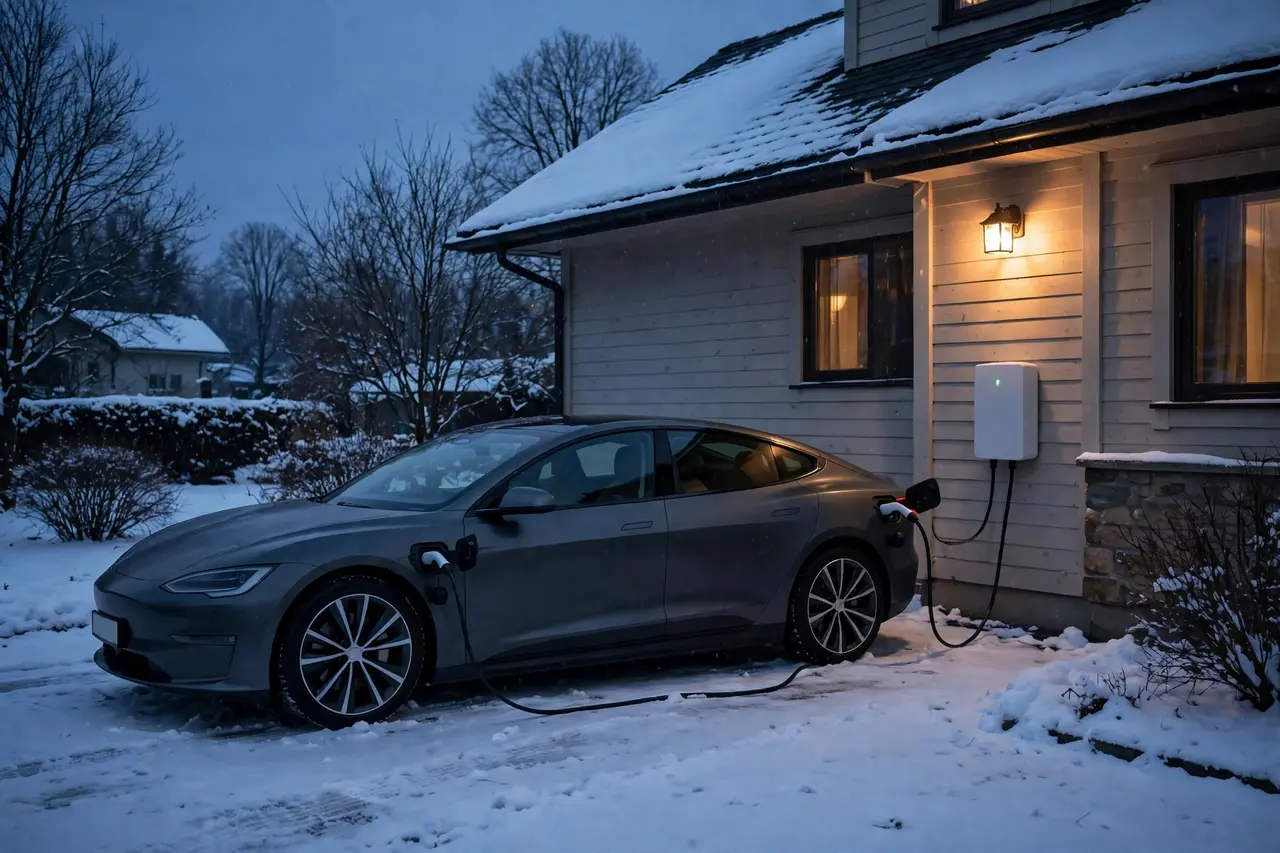
EV charging services in North Port
The services below are ordered by what North Port households most often need first, judged from the housing and fleet facts on this page. The full menu follows in the grid — every service is offered in this metro.
Home EV Charger Installation in North Port
The standard first install: a dedicated circuit from the panel to the parking space, a station mounted and configured to that circuit, and a passed inspection to close it out. What changes from house to house is never the recipe — it is the panel's spare capacity, the length of the run, and how the car actually parks.
In North Port: usually the first job a new EV household in North Port books, scoped to the panel the house already has.
Multifamily & Condo EV Charging in North Port
Shared buildings convert charging from a purchase into a policy, and the installers fluent here speak both languages — amperage and agenda items. The electrical design that wins approval is the one whose metering and load answers arrive attached to the application.
In North Port: the service behind the law section below — boards, applications and shared electrical capacity in North Port buildings.
Level 2 Charger Installation in North Port
The step from a household receptacle to a Level 2 circuit is the step from sipping to drinking: the car takes energy at the rate family life actually consumes it. The work is a breaker, a run of appropriately gauged conductor, and a connection made to torque — modest materials, permanent consequences.
In North Port: the 240-volt step that turns overnight charging in North Port from a trickle into a full battery by morning.
Utility programs and electricity in North Port
Electricity in North Port comes from Florida Power & Light Co. Parts of the wider metro are served by Peace River Electric Coop, Inc. The utility matters twice over for a charger install: it sets the time-of-use rates that decide what overnight charging costs you, and it is the organisation that may — or may not — currently help pay for the equipment.
Plan on no rebate in North Port at the moment. In the sources checked for this page, Florida Power & Light Co publishes no residential charger rebate, Florida runs no state scheme for typical home installs, and the federal credit that once filled this gap closed on September 30, 2025. Installers quote the work; utilities fund programs; the second list is currently empty here, and any quote that implies otherwise should come with the program's published terms attached.
If your service includes a demand component, the charger's start time matters more than its size: staggered against the house's other big loads, the same circuit costs noticeably less to run across a year.
Condos, HOAs and the law in Florida
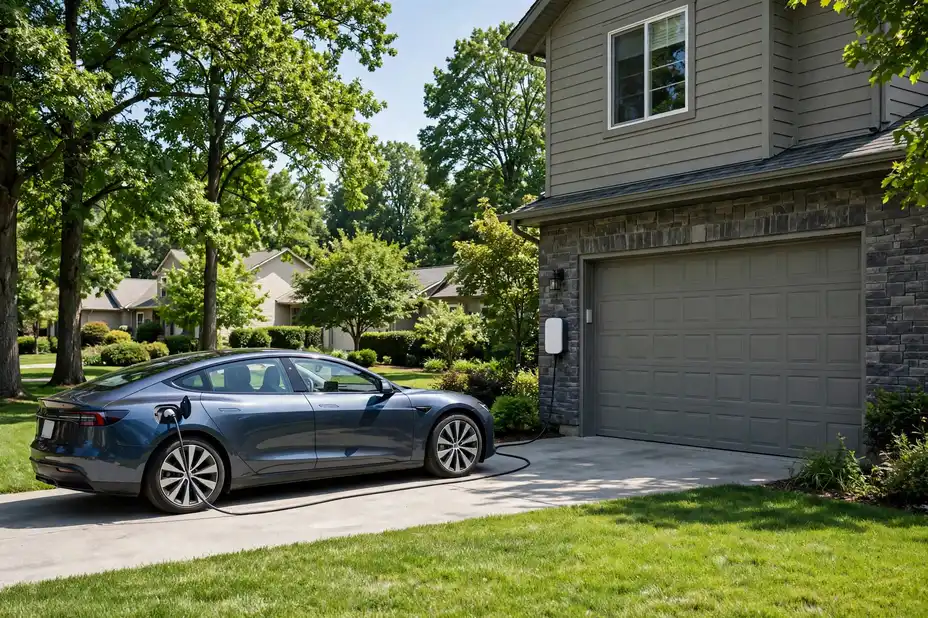
An association in Florida cannot simply say no. The right-to-charge law recorded for this state (Fla. Stat. §718.113(8)) entitles an owner to install charging equipment for their own vehicle in their own parking space, subject to reasonable association conditions on placement, insurance and eventual restoration. For a North Port owner, the practical consequence is that the application is a compliance exercise — equipment, circuit, paperwork — rather than a popularity contest at a board meeting.
The statute is the floor, not the whole negotiation: associations in Florida can still set reasonable conditions on placement, appearance and insurance. In North Port, the installers who do multifamily work regularly are the ones who arrive with the application already drafted.
Both the process and the paperwork are covered in the condo and HOA guide; North Port readers can skip the chapters about persuading reluctant boards and go straight to the compliance checklist.
Climate, garages and charger placement
Afternoon is the design hour: a station, a cable and a car that all sit in the day's peak heat age on the local schedule, not the brochure's. West-facing walls are the last choice here; the shaded side of the garage, the eave's shadow and the overnight schedule are the three cheap protections every local installer reaches for.
Thermal habits separate durable installs from tired ones in this region: connectors holstered out of the sun, enclosures with room to breathe, and charge sessions pushed past midnight when the air gives the equipment its easiest working conditions of the day.
Permits and inspection in North Port
Bring the panel schedule up to date while the electrician is in it — the new circuit labelled, in the directory, in pen. Inspectors notice; future electricians bless you for it; and the load calculation for any second circuit starts from that card.

Neighbourhoods and ZIP codes served
The page covers 6 ZIP codes in and around North Port — including 34286, 34287, 34288, 34289, 34290, 34291 — across Sarasota. If your ZIP is not in the first set shown, ask anyway: installer coverage follows the metro, not a postcode fence.
The same working area takes in the neighbouring localities of Venice, Englewood, Laurel, Nokomis, Osprey, Sarasota — the county ring an installer based in North Port actually drives. Requests from those communities route exactly as city requests do: same services, same permit discipline, same local facts where they differ.
Sarasota County accounts for 34 of the ZIP codes and 7 named postal localities in the research file, the nearest of them Venice, Englewood, Laurel, Nokomis, Osprey. The survey counts 459,547 residents in the county, with a median household income of $83,416 and a median home value of $411,800. Measured across its ZIP codes, the North Port footprint runs about 4 miles north to south and 7 east to west, from ZIP 34286 to 34291 — the ground an installer based here actually covers in a working week.
Beyond the county seats, the working area takes in Port Charlotte, Venice, Arcadia, Englewood, Laurel, Nokomis, Nocatee, Osprey, Sarasota, Myakka City, Fort Ogden, Bradenton, Ona, Manasota, Tallevast, Oneco, Longboat Key, Zolfo Springs — the named localities for which North Port is the nearest metro in the network (neighbouring metros' pages cover their own ground), each routing to the same installer-matching service.
The wider working area also reaches Punta Gorda, El Jobean, Rotonda West, Murdock, Placida, Boca Grande, Bokeelia, Cape Coral, Pineland, North Fort Myers, Fort Myers, Parrish, Ellenton, Palmetto, Saint James City, Fort Myers Beach, Captiva, Wauchula, Alva, Cortez, Lehigh Acres, Bowling Green, Bradenton Beach, Terra Ceia, Holmes Beach, Sanibel, Venus, Anna Maria, Wimauma, Bradley, Sun City — ground shared with neighbouring metros, where installers cross the same county lines in both directions.
ZIP codes in that shared ground include 33598, 33835, 33901, 33905, 33906, 33908, 33909, 33910, 33911, 33912, 33914, 33915, 33916, 33917, 33920, 33921, 33922, 33932, 33936, 33938, 33945, 33947, 33949, 33956, 33957, 33966, 33971, 33972, 33973, 33976, 33982, 33983, 33990, 33991, 33993, 33994, 34209, 34216, 34219, 34250.
The largest communities in that working area after North Port itself, by the GeoNames populated-place file: Sarasota (population 55,118), Venice (population 22,211), South Bradenton (population 22,178), Bayshore Gardens (population 16,323), Englewood (population 14,863), Sarasota Springs (population 14,395), South Venice (population 13,949), Fruitville (population 13,224), Gulf Gate Estates (population 10,911), Bee Ridge (population 9,598), Laurel (population 8,171), Arcadia (population 7,851), Longboat Key (population 7,266), Southgate (population 7,173), Venice Gardens (population 7,104), North Sarasota (population 6,982), Siesta Key (population 6,565), Southeast Arcadia (population 6,554), Osprey (population 6,100), South Gate Ridge (population 5,688). Charging demand follows those populations — the subdivisions and town centres where the next driveways, and the next panels, are.
Manatee County reaches into the working area with 429,792 residents, a median household income of $78,457 and a median home value of $391,400; its localities on this page include Myakka City, Bradenton. DeSoto County reaches into the working area with 35,386 residents, a median household income of $54,417 and a median home value of $174,100; its localities on this page include Arcadia, Nocatee, Fort Ogden. Charlotte County reaches into the working area with 201,064 residents, a median household income of $69,952 and a median home value of $328,900; its localities on this page include Port Charlotte. Hardee County reaches into the working area with 25,675 residents, a median household income of $60,489 and a median home value of $153,600; its localities on this page include Ona, Zolfo Springs.
| ZIP | Locality | County |
|---|---|---|
| 34286 | North Port | Sarasota |
| 34289 | North Port | Sarasota |
| 34291 | North Port | Sarasota |
| 34288 | North Port | Sarasota |
| 34287 | North Port | Sarasota |
| 34290 | North Port | Sarasota |
| 33954 | Port Charlotte | Charlotte |
| 33953 | Port Charlotte | Charlotte |
| 33948 | Port Charlotte | Charlotte |
| 34293 | Venice | Sarasota |
| 33981 | Port Charlotte | Charlotte |
| 34269 | Arcadia | DeSoto |
| 34292 | Venice | Sarasota |
| 34223 | Englewood | Sarasota |
| 34224 | Englewood | Sarasota |
| 34284 | Venice | Sarasota |
| 34295 | Englewood | Sarasota |
| 34272 | Laurel | Sarasota |
| 34285 | Venice | Sarasota |
| 34275 | Nokomis | Sarasota |
| 34274 | Nokomis | Sarasota |
| 34268 | Nocatee | DeSoto |
| 34229 | Osprey | Sarasota |
| 34266 | Arcadia | DeSoto |
| 34241 | Sarasota | Sarasota |
| 34251 | Myakka City | Manatee |
| 34238 | Sarasota | Sarasota |
| 34240 | Sarasota | Sarasota |
| 34249 | Sarasota | Sarasota |
| 34265 | Arcadia | DeSoto |
| 34267 | Fort Ogden | DeSoto |
| 34233 | Sarasota | Sarasota |
| 34231 | Sarasota | Sarasota |
| 34242 | Sarasota | Sarasota |
| 34232 | Sarasota | Sarasota |
| 34239 | Sarasota | Sarasota |
| 34202 | Bradenton | Manatee |
| 34237 | Sarasota | Sarasota |
| 34278 | Sarasota | Sarasota |
| 34235 | Sarasota | Sarasota |
| 34276 | Sarasota | Sarasota |
| 34277 | Sarasota | Sarasota |
| 34236 | Sarasota | Sarasota |
| 34230 | Sarasota | Sarasota |
| 33865 | Ona | Hardee |
| 34201 | Bradenton | Manatee |
| 34234 | Sarasota | Sarasota |
| 34211 | Bradenton | Manatee |
| 34204 | Bradenton | Manatee |
| 34260 | Manasota | Manatee |
| 34280 | Bradenton | Manatee |
| 34281 | Bradenton | Manatee |
| 34282 | Bradenton | Manatee |
| 34243 | Sarasota | Manatee |
| 34270 | Tallevast | Manatee |
| 34212 | Bradenton | Manatee |
| 34264 | Oneco | Manatee |
| 34208 | Bradenton | Manatee |
| 34203 | Bradenton | Manatee |
| 34207 | Bradenton | Manatee |
| 34228 | Longboat Key | Manatee |
| 34210 | Bradenton | Manatee |
| 33890 | Zolfo Springs | Hardee |

Planning the install: from panel to parking
Homeowners sometimes ask why a job that looks like 'one outlet' needs a site visit at all. The visit exists because the three variables that set the scope — spare capacity, the run's route, and the property's approval layer — are all invisible from a photograph. In North Port an experienced installer reads them in minutes, in the panel's directory card, the garage's geometry and the community's documents. The quote that follows a visit is a different species from the quote that precedes one: it can be held to.
Future-proofing, in this trade, is mostly conduit and capacity: an oversized conduit run costs little during the first install and everything later; a panel position reserved is a breaker that never has to move. If a second EV, a workshop or an electrified water heater is anywhere in your five-year picture, say so at the site visit.
Home charging know-how for North Port households
Getting onto the board's agenda
Association decisions happen inside a procedure, and the procedure has a door: the agenda. Applications that miss the submission deadline wait a full cycle regardless of merit, so the first question for any board is clerical — when do items close for the next meeting, and in what format. Arrive inside the procedure with a complete package and the discussion is about your design; arrive outside it and the discussion is about process, and process always wins the evening. Property managers, asked politely, will tell you the format they prefer applications in.
Planning for the second EV
The second electric car rarely arrives as a surprise — it is the household's own verdict on the first one. Planning for it at the first install costs little: conduit sized a step up, panel capacity reserved on the schedule, and a station position that can serve a second bay or share its circuit through power-sharing equipment. Retrofitting the same readiness later means reopening finished work. Installers ask about the five-year picture during the site visit because the honest answers change today's scope more cheaply than any other conversation in the project.
Home as the road-trip base
A home charger changes road trips at both ends. Departure: the car leaves full, on the household's lowest-cost energy, at the household's chosen hour. Return: it arrives home low without anxiety, because the recovery is the driveway rather than a detour. The middle belongs to the public networks; the ends — the parts travellers actually remember — belong to the wall at home. Households that tour often find this, quietly, is the feature they would surrender last.
Outdoor and carport positions
Plenty of charging happens without a garage at all — on driveway walls, posts and carports. The outdoor version of the job adds its own discipline: equipment listed for the exposure, an enclosure that sheds rather than traps water, cable reach checked against the car's real nose-in position, and protection from the ordinary impacts of a working driveway. A pedestal adds a foundation and a conduit approach below grade. None of it is exotic, and all of it is cheaper decided on paper than corrected in concrete.
Breakers: the household's safety switches
A breaker is a switch that watches current and opens when the current stops being safe — heat in a conductor is the thing it exists to prevent. Two household rules follow. First, a tripping breaker is reporting, not malfunctioning by default: reset once, and if it repeats, the circuit gets an electrician, not another reset. Second, the forbidden fix: never answer a trip by fitting a larger breaker. The breaker protects the wire in the wall; upsizing the guard without upsizing the wire removes the protection and keeps the problem.

Frequently asked questions
Is the federal charger tax credit still available in North Port, FL?
You cannot — it no longer exists. The 30C credit closed to equipment placed in service after September 30, 2025, and no Florida program replaced it for home installs. Nor did the sources checked for this page show a live Florida Power & Light Co residential rebate. Treat any 'credit' mentioned in a quote as a request for paperwork.
Can my HOA or condo board in North Port, FL refuse my charger?
Not outright. Under Fla. Stat. §718.113(8), Florida associations cannot prohibit an owner's charger; they can condition it — reasonably — on placement, insurance and restoration, with the owner funding the work. The disputes that do arise are usually about conditions, and they settle fastest when the application answers them in advance.
Does a Level 2 charger mean a panel upgrade for a North Port, FL home?
Start from the median, then verify: the median North Port home was built in 2005, and 11% of the stock predates 1980, so 100-amp panels are a normal sight here — and a normal candidate for either an upgrade or a load-management device. The load calculation distinguishes the two in one visit, and any quote that skips it is guessing with your money.
How much faster is Level 2 charging at home in North Port, FL?
In parked hours: a Level 1 cord returns about 3–5 miles for each of them, and a Level 2 circuit returns roughly 25–40, set by its amperage and the car's acceptance. For a North Port household parking ten hours, that is the difference between recovering a short errand day and recovering any day the car can legally drive.
What happens after I request an installer through this page?
Three things happen, in order. Your request is routed to licensed installers who work in North Port; one of them contacts you to book a site visit; and the visit produces a written quote based on your actual panel and parking. PlugReady USA runs the matching, not the tools — the contractor on the job is the installer who visits.
Does Florida Power & Light Co offer a time-of-use rate for EV charging in North Port?
Check your tariff before the install rather than after: time-of-use plans are common, and an overnight window changes nothing about the circuit but everything about what charging costs across a year. Your installer can set the station's schedule to the window during commissioning — after that the habit is automatic.
Nearby cities in Florida
- EV charger installation in Punta Gorda — about 13 miles from North Port, metro population 195,000
- EV charger installation in Cape Coral — about 35 miles from North Port, metro population 800,000
- EV charger installation in Tampa — about 67 miles from North Port, metro population 3,300,000
- EV charger installation in Naples — about 68 miles from North Port, metro population 375,000
- EV charger installation in Lakeland — about 68 miles from North Port, metro population 725,000
- EV charger installation in Port St. Lucie — about 105 miles from North Port, metro population 520,000
- EV charger installation in Valdosta, GA — about 262 miles from North Port, metro population 150,000
- EV charger installation in Brunswick, GA — about 286 miles from North Port, metro population 115,000
- EV charger installation in Albany, GA — about 329 miles from North Port, metro population 145,000
Ready to charge at home in North Port?
Two minutes of form, and the request is in front of licensed installers who cover this city — quotes follow site visits, in writing.