EV Charger Installation in Santa Cruz, CA
Charging where you park, in Santa Cruz: the utility programs, state law, permit process and housing facts behind a home charger install, gathered in one place.
There is a reason most charging happens at home: it is the most convenient fuelling an EV owner will ever use, and it happens while the car sits idle anyway. In Santa Cruz, getting set up means answering a handful of local questions first. Santa Cruz itself is home to about 61,607 people, inside a state that registered 1,843,100 battery-electric vehicles and 490,900 plug-in hybrids through 2025. Which utility serves your address, whether it currently funds part of a charger install, what your panel can carry, and what your HOA or condo board can and cannot say no to — this page covers each of them for Santa Cruz specifically.
Treat what follows as the site visit in written form. Each section is one of the stops a thorough installer makes — panel, tariff, property rules, permit — written out with Santa Cruz's facts in place, so that when the visit happens for real you can follow the reasoning and question it where it matters.
The demand picture for the Santa Cruz–Watsonville metro, from the registration data this site is built on: Bay Area adjacent. Registration counts are the honest way to size a charging market — they count households, not headlines — and they are why Santa Cruz sits where it does in our build order (rank 182 of 300 metros, Tier C).
The same survey puts median household income in Santa Cruz at $115,475, with 48% of occupied homes owner-occupied and 56% of the housing stock single-unit detached. For charging, those are the operative facts: owners can approve their own electrical work, and detached homes put the car, the panel and the parking under one roof.

Put the survey together and Santa Cruz's charging profile reads like this: an older housing fabric, where panel archaeology is a normal part of the first visit; a detached-house majority with a real attached and multifamily minority; buildings of five or more units hold a substantial share of homes, which keeps the multifamily sections of this page in daily use; and renters form a large share of households, so the landlord conversation is a first-class topic here. That combination — more than any single number — is what the installers working here plan around, and it is the lens for everything on this page.
Keep six figures and you keep Santa Cruz's whole electrical character: 23,888 housing units; 21,713 occupied homes; 10,511 owner-occupied; 13,361 detached houses; 16,167 pre-1980 homes; 4,931 homes in buildings of five or more units. Percentages elsewhere on this page are these numbers in disguise — the counts are the originals, and they are the numbers a local installer's experience is actually made of. The page's geography is equally concrete: 6 ZIP codes across Santa Cruz, centred near 37.03 degrees north latitude. The city anchors the Santa Cruz–Watsonville metropolitan area, home to roughly 275,000 people on the research file's metro estimate — the wider labour and housing market this page's installers work across.
The same survey release fills in the household economics around the housing stock: a median home value of $1,209,000, median gross rent of $2,452, per-capita income of $55,676, and a median resident age of 31. And the daily rhythms behind the housing numbers: 51% of Santa Cruz workers drive to work alone — the commute pattern home charging is built around; 22% work from home, a population whose cars charge on daytime and overnight schedules alike; 5% commute by public transit; 58% of adults hold a bachelor's degree or higher. And the fleet in the driveways: 6,948 households in Santa Cruz have exactly one vehicle, 13,036 have two or more, and 1,729 have none.
Two burden statistics frame the economics: in Santa Cruz, 51% of renters and 0% of mortgage-holding owners are housing-cost burdened at the standard 30% threshold. And 48% of households are family households, the segment most likely to run the two-vehicle, two-schedule pattern the second-vehicle planning notes address.
This is the context an installer works against, whether it is written down or not. Where so much of the stock predates modern code cycles, the site visit doubles as a survey — grounding electrode, service entrance, panel provenance — before it is ever a quote. The mixed stock means the city's charging statistics will always be two statistics wearing one coat: a domestic-circuit count and a building-project count, growing on different clocks for different reasons.
High renter share also means charging follows the lease cycle: applications cluster at move-in, installations at renewal leverage, and the whole market breathes on the rental calendar. The income profile also bends the housing conversation: larger homes, three-car garages, gates and long driveways — runs measured in tens of metres and trenches dug accordingly. Investor-owned utility territory runs on published tariffs and regulator-approved programmes: everything material about charging economics here exists in a filed document with an effective date, findable by anyone who reads filings.
At this fleet volume the questions mature: not whether to install, but how the second circuit shares capacity, how buildings retrofit at scale, how the grid's evening ramp is managed street by street. Smaller metros adopt on their own clock: the fleet follows the dealers and the demographics, and each install is a visible event a street notices. Shared-property households here work with a written legal position rather than a board's mood, which changes the application from a petition into a procedure.
The electrical reality in Santa Cruz homes
The survey's housing portrait for Santa Cruz opens with its median: a home built in 1970, in a stock where 68% of units predate 1980 and 56% stand detached on their own lots. 48% of occupied homes are owner-occupied. An installer reads those lines as a weather forecast: mostly settled conditions, with older wiring fronts moving through the pre-1980 districts. A housing stock this age leans on smaller electrical services — 100-amp panels are common, and fuse-era equipment still turns up in the oldest streets. For many of those homes the honest answer is a panel upgrade or a load-management device before the charger circuit goes in, and a good installer will show you the load calculation rather than asking you to take it on faith. Owner-occupiers can plan on their own timeline; renters and condo owners have an extra approval layer, which the law section below covers for this state.
The fuel table adds one more local fact: 5,775 Santa Cruz homes — 27% of the stock — heat with electricity. Those households already think in kilowatts through the winter, their panels carry the load to prove it, and a charger's overnight appetite joins a system that is, in the useful sense, already electrified.
One further split matters for how this page is organised: about 11,202 of Santa Cruz's occupied homes are renter-occupied. Everything above assumes you can approve your own electrical work; where you cannot, the approval layer — landlord or association — becomes part of the job, which is why the law section carries unusual weight here.
One more structural fact shapes Santa Cruz's charging map: 21% of the city's housing units sit in buildings of five or more units. Those households cannot simply book a circuit — their charger runs through a building, a board and a shared electrical service, which is why the multifamily service and the law section below carry unusual weight on this page.
EV charging services in Santa Cruz
Three of the network's services lead this page because local conditions put them first; the remaining seven are one click away and equally available here. Each card states what the service involves — the matching itself is free of obligation until you accept an installer's quote.
Home EV Charger Installation in Santa Cruz
One circuit, one station, one inspection: the residential install in its usual form. An installer sizes the circuit to the household's driving, mounts the station where the cable reaches the port without drama, sets its output to the circuit it landed on, and leaves the paperwork filed with the house.
In Santa Cruz: usually the first job a new EV household in Santa Cruz books, scoped to the panel the house already has.
Dedicated Circuit & Electrical Panel Upgrade in Santa Cruz
Capacity work wears three costumes — more amps, a fresh panel, or management electronics that make the existing amps behave like more. The load calculation is the fitting room: it shows which costume your house actually needs, and a trustworthy quote names the calculation before the costume.
In Santa Cruz: the job that surfaces wherever housing is older — and Santa Cruz's stock makes it a routine conversation, settled by a load calculation.
Multifamily & Condo EV Charging in Santa Cruz
In shared buildings the deliverable is a system, not a socket: an approved application, a metering design the treasurer can audit, capacity shared by rule rather than by argument, and only then conduit and copper. Firms fluent in the sequence are worth their diary time.
In Santa Cruz: the service behind the law section below — boards, applications and shared electrical capacity in Santa Cruz buildings.
Utility programs and electricity in Santa Cruz
Electricity in Santa Cruz comes from Pacific Gas & Electric Co.. Parts of the wider metro are served by Central Coast Community Energy. The utility matters twice over for a charger install: it sets the time-of-use rates that decide what overnight charging costs you, and it is the organisation that may — or may not — currently help pay for the equipment.
Why does this page labour the absence of a rebate? Because in Santa Cruz the phantom rebate is the most common distortion in charger quotes: a figure justified by money that is not, at present, claimable. The verified position: federal 30C ended September 30, 2025; no California replacement for typical home installs; no Pacific Gas & Electric Co. residential charger rebate in the sources checked. If someone quotes you a rebate, the follow-up is one sentence — show me the program page — and its answer decides the quote's credibility.
While you are reading your tariff, check how your plan treats the evening peak. A charger scheduled to start after the peak window is the single easiest saving in home charging, and it is set once, in the car or the station, then forgotten.
Condos, HOAs and the law in California
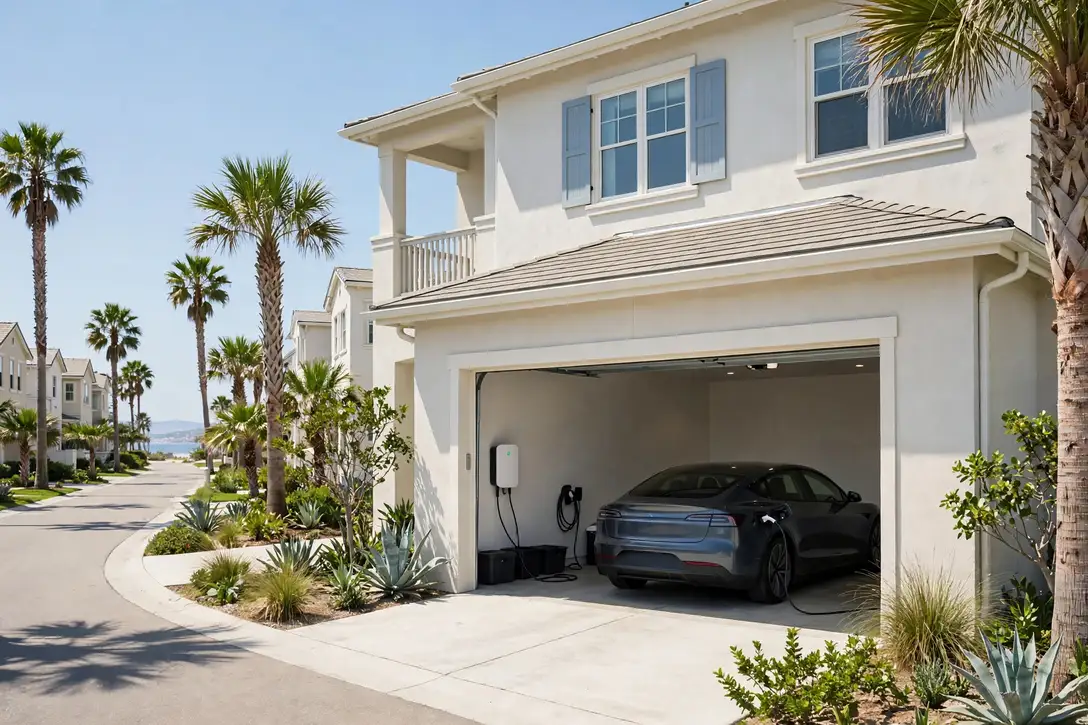
California has a right-to-charge law. Under Civ. Code §4745; §1947.6 (renters), a homeowners association or condominium cannot simply prohibit an owner from installing a charging station in their own parking space. The law does not make the process free or instant — owners typically carry the cost, must use a licensed installer, carry any insurance the statute specifies, and can be required to restore the space if they remove the equipment — but it converts the conversation from a request for permission into a defined process with rules on both sides.
In practice, boards in California process charger applications the way they process any exterior electrical work — drawings, equipment listing, the installer's licence and insurance — with the statute standing behind the timeline. Applications in Santa Cruz that arrive complete are typically answered in one meeting cycle; incomplete ones teach their owners the meeting calendar.
Start with the condo and HOA guide for the application itself, and the multifamily service page for how the electrical design is usually laid out in California buildings.
Climate, garages and charger placement
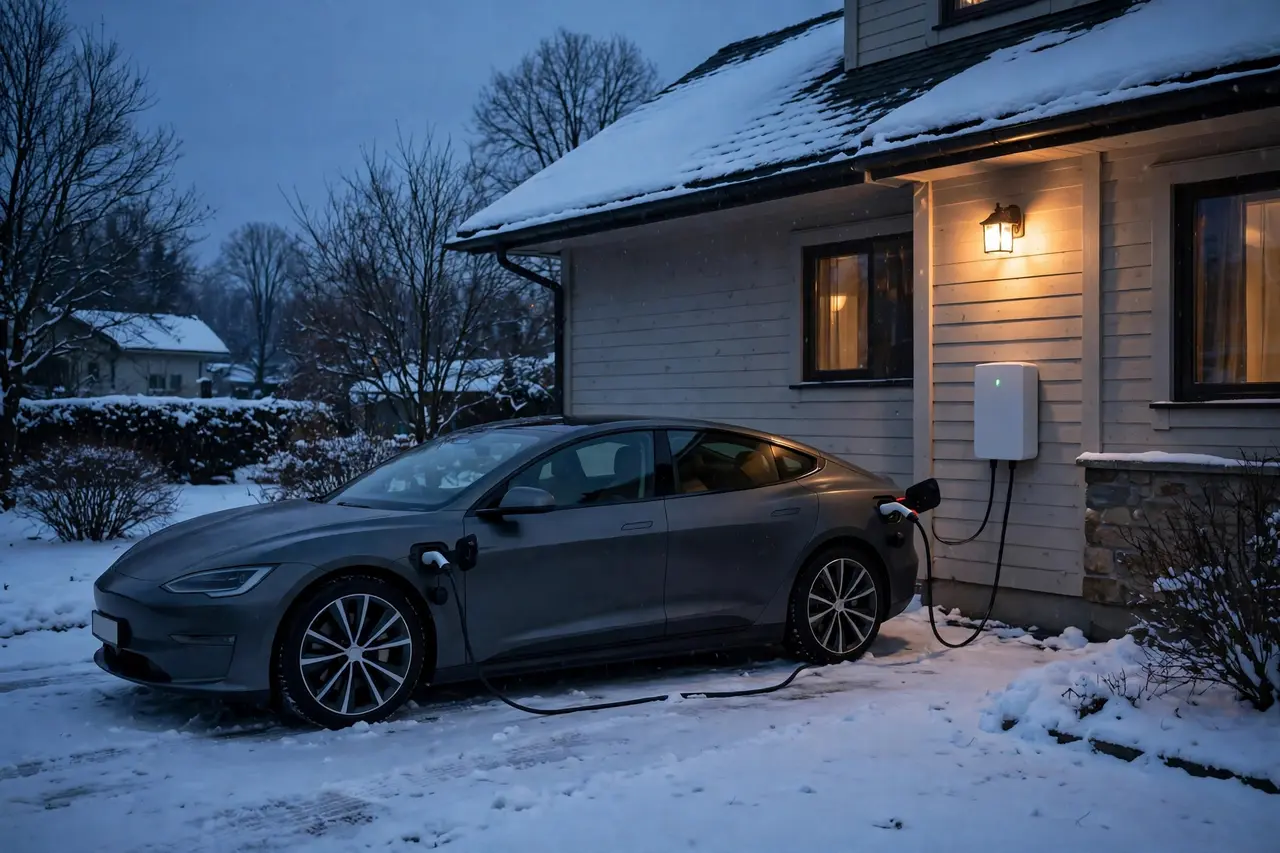
A four-season spec sheet is a compromise written in equipment ratings: cable jackets flexible at the January low, electronics rated past the July high, an enclosure indifferent to both. The listed gear covers it; placement decides the rest.
A four-season climate asks the installation to be boring in every month: cable that stays flexible in January, an enclosure untroubled by August humidity, and drainage that keeps spring melt away from the connector. None of this is exotic — it is the standard outdoor discipline, and it is why station placement gets a full minute of the site visit rather than a wave at the nearest wall.

Permits and inspection in Santa Cruz
The permit trail also protects the next transaction: a charger circuit on the inspection record is an asset a buyer's inspector reads in one line, while an undocumented circuit is a question that follows the sale. Installers who work this metro treat the filing as part of the deliverable, not an errand.

Neighbourhoods and ZIP codes served
The page covers 6 ZIP codes in and around Santa Cruz — including 95060, 95061, 95062, 95063, 95064, 95065 — across Santa Cruz. If your ZIP is not in the first set shown, ask anyway: installer coverage follows the metro, not a postcode fence.
The same working area takes in the neighbouring localities of Mount Hermon, Felton, Ben Lomond, Davenport, Brookdale, Scotts Valley, Boulder Creek, Soquel, Capitola, Aptos, Freedom, Watsonville — the county ring an installer based in Santa Cruz actually drives. Requests from those communities route exactly as city requests do: same services, same permit discipline, same local facts where they differ.
Santa Cruz County accounts for 21 of the ZIP codes and 13 named postal localities in the research file, the nearest of them Mount Hermon, Felton, Ben Lomond, Davenport, Brookdale. The survey counts 264,926 residents in the county, with a median household income of $111,093 and a median home value of $1,027,500. Measured across its ZIP codes, the Santa Cruz footprint runs about 4 miles north to south and 7 east to west, from ZIP 95060 to 95065 — the ground an installer based here actually covers in a working week.
Beyond the county seats, the working area takes in Mount Hermon, Felton, Ben Lomond, Davenport, Brookdale, Scotts Valley, Boulder Creek, Soquel, Capitola, Los Gatos, Holy City, Redwood Estates, Aptos, La Honda, Pescadero, Loma Mar, San Gregorio — the named localities for which Santa Cruz is the nearest metro in the network (neighbouring metros' pages cover their own ground), each routing to the same installer-matching service.
The wider working area also reaches San Jose, Campbell, Freedom, Watsonville, Sunnyvale, Gilroy, San Carlos, Mount Hamilton, Belmont, Union City, Hayward, San Leandro, Pleasanton, Oakland, Chualar, Tres Pinos, Gonzales, Danville, Tracy, Diablo, Alamo, Lafayette, Westley, Soledad, Pleasant Hill, El Sobrante, San Pablo, Brentwood, Pinole, Greenbrae, Hercules, San Rafael, Bolinas, Ross, Greenfield — ground shared with neighbouring metros, where installers cross the same county lines in both directions.
ZIP codes in that shared ground include 93620, 93635, 93906, 93907, 93923, 93924, 93930, 93942, 93950, 93953, 94005, 94011, 94018, 94041, 94043, 94044, 94070, 94085, 94089, 94102, 94105, 94107, 94115, 94116, 94119, 94121, 94122, 94126, 94144, 94147, 94151, 94160, 94164, 94177, 94306, 94402, 94501, 94506, 94510, 94512.
The largest communities in that working area after Santa Cruz itself, by the GeoNames populated-place file: Live Oak (population 17,158), Scotts Valley (population 11,945), Capitola (population 10,189), Soquel (population 9,644), Rio Del Mar (population 9,216), Ben Lomond (population 6,234), Aptos (population 6,220), Boulder Creek (population 4,923), Twin Lakes (population 4,917), Felton (population 4,057), Amesti (population 3,478), Day Valley (population 3,409), Seacliff (population 3,267), La Selva Beach (population 2,843), Bonny Doon (population 2,678), Lexington Hills (population 2,421), Aptos Hills-Larkin Valley (population 2,381), Corralitos (population 2,326), Brookdale (population 1,991), Lompico (population 1,137). Charging demand follows those populations — the subdivisions and town centres where the next driveways, and the next panels, are.
Santa Clara County reaches into the working area with 1,902,047 residents, a median household income of $164,281 and a median home value of $1,490,600; its localities on this page include Los Gatos, Holy City, Redwood Estates. San Mateo County reaches into the working area with 742,340 residents, a median household income of $158,855 and a median home value of $1,559,600; its localities on this page include La Honda, Pescadero, Loma Mar, San Gregorio.
| ZIP | Locality | County |
|---|---|---|
| 95060 | Santa Cruz | Santa Cruz |
| 95041 | Mount Hermon | Santa Cruz |
| 95018 | Felton | Santa Cruz |
| 95064 | Santa Cruz | Santa Cruz |
| 95005 | Ben Lomond | Santa Cruz |
| 95017 | Davenport | Santa Cruz |
| 95007 | Brookdale | Santa Cruz |
| 95067 | Scotts Valley | Santa Cruz |
| 95066 | Scotts Valley | Santa Cruz |
| 95061 | Santa Cruz | Santa Cruz |
| 95063 | Santa Cruz | Santa Cruz |
| 95065 | Santa Cruz | Santa Cruz |
| 95062 | Santa Cruz | Santa Cruz |
| 95006 | Boulder Creek | Santa Cruz |
| 95073 | Soquel | Santa Cruz |
| 95010 | Capitola | Santa Cruz |
| 95033 | Los Gatos | Santa Clara |
| 95026 | Holy City | Santa Clara |
| 95044 | Redwood Estates | Santa Clara |
| 95031 | Los Gatos | Santa Clara |
| 95001 | Aptos | Santa Cruz |
| 95003 | Aptos | Santa Cruz |
| 94020 | La Honda | San Mateo |
| 94060 | Pescadero | San Mateo |
| 94021 | Loma Mar | San Mateo |
| 94074 | San Gregorio | San Mateo |

Planning the install: from panel to parking
Two decisions shape every Santa Cruz install, and both are made before any equipment is ordered. The first is electrical: the load calculation that decides between a straight circuit, a panel upgrade and load management. The second is physical: where the station lives — which wall, which side of the car the charge port sits on, and whether the cable reaches a second vehicle or a future one. Installers in Santa Cruz see the same housing patterns repeat street by street, which is why a ten-minute site visit produces a firmer quote than any online form: the form starts the conversation, the visit settles it.
Finally, photograph the finished work — station, nameplate, panel directory with the new breaker labelled — and file it with the inspection record. When the car changes, the house sells or a second station joins the first, that folder is the difference between a five-minute answer and an archaeological dig.
Home charging know-how for Santa Cruz households
The paperwork is part of the installation
A finished install leaves two legacies: a working charger and a file. The file — permit, passed inspection, the station's configuration recorded, the panel schedule updated, a photograph of the finished work — is what the future runs on. It answers the insurer's question, the buyer's question, the second installer's load calculation, and the warranty conversation, each in one page. Households that treat the paperwork as part of the deliverable never have to reconstruct it; households that do not, eventually do. Ask for the file at handover and keep it with the house documents.
Timing the install with other work
The least disruptive charger circuit is the one installed while other electrical work is already open. A renovation, a panel project, a garage build — each already carries the mobilisation, the permit process and the opened walls that a standalone charger job must pay for alone. The sequencing conversation costs nothing: tell the installer what else the house has planned in the next two years, and let the scope absorb the charger while the house is already a building site. The same logic in reverse — roughing in during this project for a charger planned later — is the EV-ready idea, and it belongs in the same sentence.
Dust, grime and the working garage
Garages are workshops, and workshops make dust. A charging connector living in one needs its holster the way a tool needs its hook — off the bench, out of the sawdust's fall line, capped by its dock rather than dangling. Metal filings and charger contacts are particular enemies; grinding and charging do not share a corner happily. None of this asks for a cleanroom — just the ordinary discipline of a space that works for a living, extended to the one appliance that is also a fuel line.
Orientation: the garage's compass
A garage's orientation decides its microclimate: south- and west-facing doors take the day's heat load, north-facing ones hold the cold. The charger inherits the microclimate — electronics ageing in the hot wall's summer, cables stiffening in the cold one's January. Orientation is nobody's choice by install time, but it informs placement inside the room: the interior wall over the door wall, the shaded corner over the sun line, decided by someone who has read the room's compass.

Frequently asked questions
Can I still get the federal tax credit for a home charger in Santa Cruz, CA?
Nothing is currently on offer that you should plan around. The federal 30C credit ended on September 30, 2025; California operates no replacement for typical home installs; and the sources checked for this page showed no live residential rebate from Pacific Gas & Electric Co.. Programs do reopen — on the utility's own pages, with dates. Until one does, the install stands or falls on its own merits.
What can my HOA in Santa Cruz, CA do about a charger install?
Not outright. Under Civ. Code §4745; §1947.6 (renters), California associations cannot prohibit an owner's charger; they can condition it — reasonably — on placement, insurance and restoration, with the owner funding the work. The disputes that do arise are usually about conditions, and they settle fastest when the application answers them in advance.
Panel upgrade or not — how do Santa Cruz, CA homeowners find out?
The question has a correct instrument: the load calculation. It totals what your service already carries — with the code's demand factors, not nameplate panic — and sets the charger's continuous load against the remainder. In Santa Cruz, where the median home dates to 1970 and about 68% of units predate 1980, the answer splits by street: post-war and newer 200-amp homes usually proceed; older 100-amp homes choose between capacity work and load management. Anyone answering without the calculation is guessing in a uniform.
Level 1 or Level 2 in Santa Cruz, CA — what is the real difference?
Level 1 — the cord in the boot, on a normal outlet — returns about 3–5 miles of range an hour. Level 2 on its own 240-volt circuit returns roughly 25–40. A Santa Cruz commuter who parks at seven and leaves at seven stops doing battery arithmetic entirely.
What happens next after I send a request?
Three steps: the request routes to installers who work Santa Cruz, California; one contacts you to walk the property; the walk produces the written quote. Everything on this page — the utility position, the law, the housing data — is yours to check that quote against.
Does Pacific Gas & Electric Co. offer a time-of-use rate for EV charging in Santa Cruz?
Many utilities do — a tariff where overnight energy carries a lower rate, designed for exactly this load. Whether your current plan includes such a window is a two-minute check on your tariff or the utility's rate pages. If it does, the charger's schedule is set once, at commissioning, and the saving runs itself from then on.
Nearby cities in California
- EV charger installation in San Jose — about 25 miles from Santa Cruz, metro population 2,000,000
- EV charger installation in Salinas — about 36 miles from Santa Cruz, metro population 450,000
- EV charger installation in San Francisco — about 54 miles from Santa Cruz, metro population 6,700,000
- EV charger installation in Modesto — about 76 miles from Santa Cruz, metro population 575,000
- EV charger installation in Vallejo — about 78 miles from Santa Cruz, metro population 450,000
- EV charger installation in Stockton — about 79 miles from Santa Cruz, metro population 800,000
- EV charger installation in Reno, NV — about 214 miles from Santa Cruz, metro population 500,000
- EV charger installation in Medford, OR — about 365 miles from Santa Cruz, metro population 220,000
- EV charger installation in Las Vegas, NV — about 391 miles from Santa Cruz, metro population 2,300,000
Ready to charge at home in Santa Cruz?
Tell us the job — service, ZIP and property type — and licensed local installers will take it from there.